Aero-Stream septic tank 2-stage effluent filter: full guide
By the SepticMind Editorial Team
TL;DR
- The Aero-Stream 2-stage effluent filter is a retrofit cartridge that installs in a standard 4-inch or 6-inch outlet baffle.
- It strains solids from septic effluent before that water reaches the drain field, catching particles down to roughly 1/16 inch across two filtration stages.
- Cleaning takes about 10 minutes and costs nothing.
- The filter runs $65 to $115.
- It won't rescue a failing system, but it genuinely extends drain field life.
What is the Aero-Stream 2-stage effluent filter and what does it actually do?
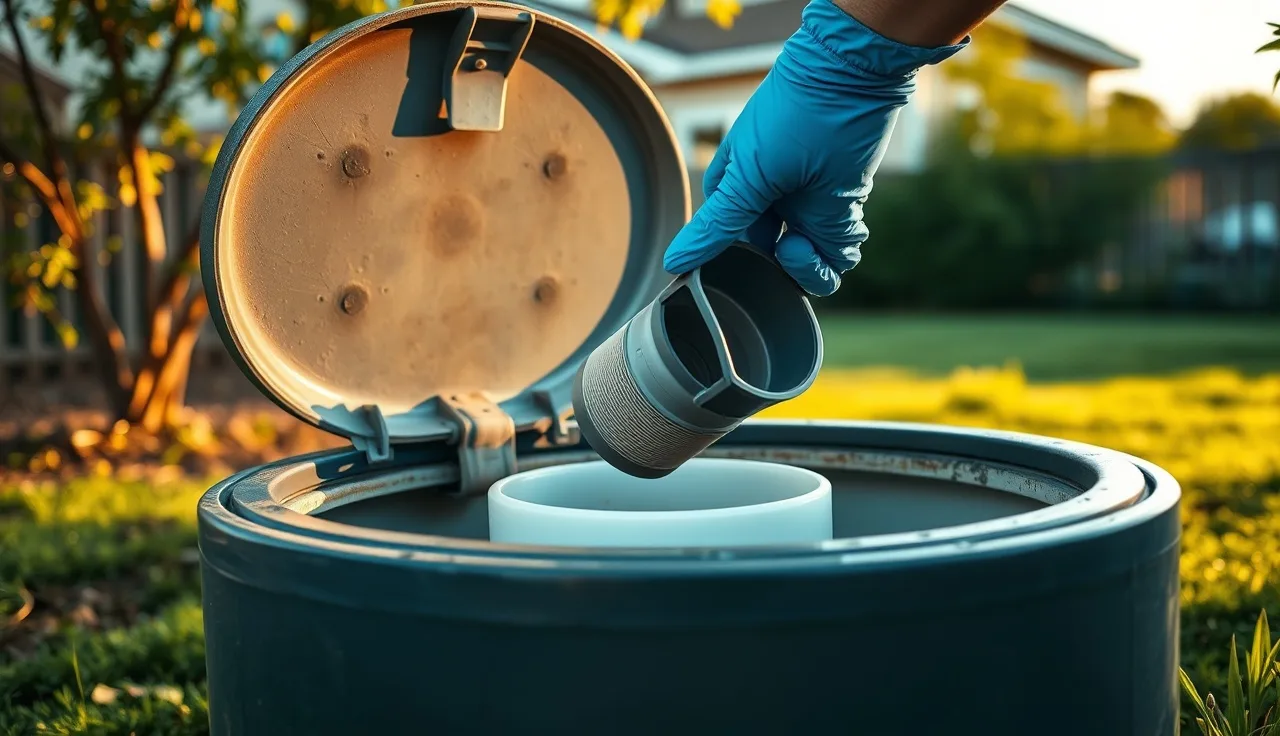
An effluent filter is a screening device that mounts inside or over the outlet pipe of your septic tank. Its job is simple. It catches suspended solids and grease particles before effluent leaves the tank and flows toward your leach field. Skip it, and every flush pushes partially treated liquid through the outlet baffle. Over years, fine particles pack into the drain field soil and clog the biomat layer, and that clogging is how most drain fields die.
The Aero-Stream version adds what the company calls a "2-stage" design. The first stage is a coarse outer sleeve that stops larger solids and floating grease. The second stage is a finer inner core that grabs smaller suspended particles. Both stages are concentric cylinders of slotted or mesh plastic, and effluent has to pass through both before exiting the tank. The filtration threshold is roughly 1/16 inch (about 1.5 mm), small enough to block most problem solids but open enough not to choke flow under normal household use.
This is not sophisticated technology. It's a well-made piece of plastic that works by mechanical screening, nothing more. The value is in durability and how easily it lifts out for cleaning, not in any chemistry. Aero-Stream markets it as compatible with most tanks that have a standard 4-inch or 6-inch outlet tee or baffle, which covers the bulk of residential septic systems installed in the United States since the 1970s [1].
The EPA's SepticSmart program recommends effluent filters as one of the low-cost upgrades homeowners can make to stretch system life [2]. The Aero-Stream is one of several brands in that category, alongside Zoeller, Zabel, and PL-68-style filters.
How does the 2-stage design differ from a standard single-stage filter?
A single-stage effluent filter is one cylindrical sleeve with uniform slot openings. Those work fine, but they load up faster because all the filtration happens on one surface. When that surface clogs, flow backs up quick.
The Aero-Stream 2-stage design splits the work. The outer sleeve, with its larger openings, takes the first pass at solids. That means the finer inner core sees cleaner liquid and doesn't blind off as fast. The idea is longer stretches between cleanings and less risk of a full backup into the house if you miss a cleaning cycle.
Is that claim real? Honest answer: independent head-to-head testing between brands is thin. Aero-Stream publishes performance numbers on its own site, and staged filtration is sound engineering, but I'm not aware of any peer-reviewed study comparing the Aero-Stream 2-stage to, say, a Zabel A100 under controlled flow. What you can say with confidence is that dual-sleeve designs give more consistent solids separation than single-pass filters, a principle backed by the Water Environment Federation's onsite wastewater guidance [3].
For a household of four with typical water use, a good filter in good shape should not need cleaning more than once a year. Some low-solids systems go two years between cleanings with no measurable backup. If yours clogs every three months, the filter is doing its job and your tank needs pumping, not a different filter [4].
Is an effluent filter required by code in your state?
It depends heavily on your state and county. California requires effluent filters on new and replacement septic installations under its statewide OWTS Policy and many county ordinances [5]. Oregon and Washington have made them standard practice in their onsite wastewater rules. Florida, which has roughly 2.6 million onsite systems per the state's environmental agency [6], recommends but does not universally mandate them on existing systems.
Most states don't force you to retrofit a filter onto an existing tank unless you're pulling a permit for a repair or upgrade. But your county health department may set a stricter bar than the state baseline. Check with your county environmental health or building department before you assume anything.
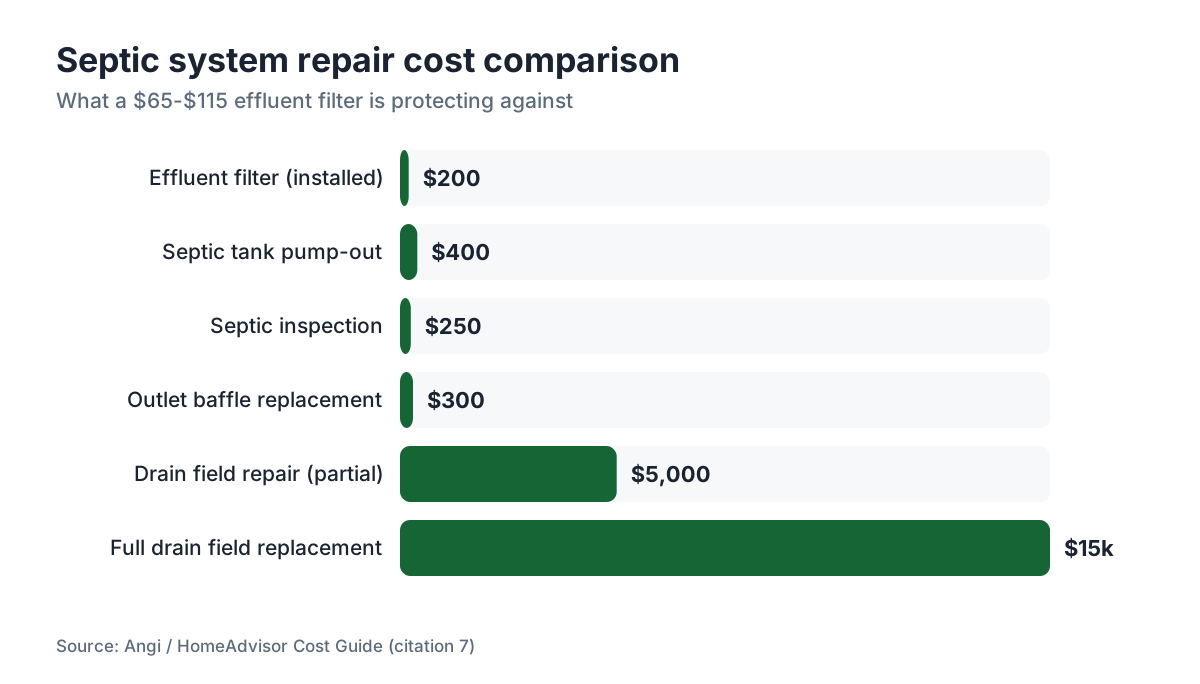
Here's what I'd tell a friend. Even where nobody requires it, adding a filter to an existing tank is almost always worth doing. A septic tank inspection will usually flag a missing filter as a deficiency. Real estate deals in many states now hinge on inspection reports that include filter status. Installing one costs $65 to $115 in materials plus an hour of a pumper's time, against a drain field replacement that runs $3,000 to $30,000 [7].
The EPA's SepticSmart materials put it plainly: "Effluent filters help keep solids from flowing into the drainfield, which helps extend the life of the system" [2]. That's about as direct an endorsement as a federal agency gives a hardware category.
How do you install the Aero-Stream filter in an existing septic tank?
Installation needs tank access, which means pulling the outlet access lid. If your tank was poured without a separate outlet access riser, you or your pumper will have to dig down to the outlet end first. That's a one-time excavation cost, usually $100 to $300 depending on depth and soil.
The filter body slides over or threads into the existing outlet baffle or tee. Most outlet baffles in concrete tanks are 4-inch schedule 40 PVC or cast concrete, and the Aero-Stream fits either. The retrofit goes like this:
- Pump the tank, or at minimum drop the level so you can work cleanly (septic tank pumping).
- Remove or assess the existing outlet baffle. If it's a cracked concrete baffle, replace it with a PVC tee before adding the filter.
- Insert the filter cartridge into the outlet tee opening, handle up, pointed toward the access opening.
- Confirm the top of the handle reaches within easy arm's reach of the open lid. If it doesn't, you may need a riser.
- Replace and seal the access lid.
The whole job takes an experienced pumper 20 to 40 minutes on top of the pump-out. If you're handy, your tank has a good access riser, and you've already booked a septic tank pump out, ask the pumper to drop the filter in while the lid is open. Most will do it for $30 to $75 in labor. Don't try to install it without pumping first. Working over a full tank is unpleasant and it's a real confined-space hazard.
One thing to verify: confirm your outlet pipe is actually the outlet and not the inlet before you cut or modify anything. Flow direction isn't always obvious. Your outlet sits on the opposite end from where your house drain line enters the tank.
How often does the Aero-Stream filter need cleaning and what does that involve?
Plan on cleaning the filter once a year, timed with or just ahead of your regular tank inspection. The EPA recommends most tanks get pumped every 3 to 5 years, and filter cleaning should happen more often than that [2].
Cleaning takes about 10 minutes and needs no tools. Lift the filter straight out by the handle, hold it over the open tank (or a bucket), and hose it off. The dislodged solids drop back into the tank and get pumped out at the next service. That's the whole procedure. Don't use bleach or chemical cleaners on the filter. You'd kill the bacteria the tank needs to do its treatment work.
Signs your filter needs cleaning ahead of schedule:
- Slow drains throughout the house with no obvious plumbing cause
- Gurgling at fixtures
- Sewage odors near the tank or drain field
- Effluent surfacing in the yard
Every one of those symptoms can point to other problems too, so don't assume the filter is the culprit without checking. A septic tank repair call may be warranted if cleaning the filter doesn't fix it.
Inspect the filter for cracks or broken mesh each time you clean it. The Aero-Stream body is high-density polyethylene and should last 10 to 15 years under normal conditions. If the slots are deformed or the end caps are cracked, replace the cartridge. At $65 to $115, it won't break the budget.
What does an Aero-Stream filter cost, and what are the alternatives?
The Aero-Stream 2-stage effluent filter retails for $65 to $115 depending on size (4-inch vs 6-inch) and vendor. Plumbing supply houses and Amazon tend to sit at the low end. Your local septic supplier may charge more but will often match if you ask.
Installation labor, if a pumper does it during a pump-out, adds $30 to $80. If you need excavation to reach the outlet end, add another $100 to $300. So total installed cost lands anywhere from about $95 (open access, DIY) to $450 to $500 in a worst case with deep excavation.
Here's how common effluent filter options stack up:
| Filter | Typical price | Filtration size | Cleaning style | Notes |
|---|---|---|---|---|
| Aero-Stream 2-stage | $65-$115 | ~1/16 in (1.5 mm) | Lift out, hose off | Two-stage sleeve design |
| Zabel A100 | $55-$90 | ~1/32 in (0.8 mm) | Lift out, hose off | Very fine; clogs faster in high-solids tanks |
| Zoeller 10-0859 | $70-$100 | ~1/16 in (1.5 mm) | Lift out, hose off | Widely available |
| PL-68 style (generic) | $30-$55 | ~1/8 in (3 mm) | Lift out, hose off | Basic single-stage; lower cost, less filtration |
| Orenco TM4 | $80-$130 | ~1/16 in (1.5 mm) | Lift out or inline flush | Premium; common in engineered systems |
For most residential tanks, the Aero-Stream or Zoeller are solid middle-ground picks. The Zabel A100 filters beautifully but loads up fast in a tank that's behind on pumping. The generic PL-68 style is fine if money is tight. None of these are bad products. The differences matter less than whether you actually clean the thing on schedule.
For operators running multiple accounts, tracking filter cleaning schedules and service intervals across dozens of properties is where a purpose-built tool like SepticMind's service management platform earns its keep. A missed annual cleaning is where drain field damage starts building quietly.
Can the Aero-Stream filter rescue a failing drain field?
No. That deserves a flat answer, because the marketing for effluent filters (from multiple brands, more than Aero-Stream) sometimes hints at more than the product can do.
An effluent filter prevents future solids from reaching the drain field. It does nothing to fix soil that's already clogged by years of unfiltered effluent. If your leach field is actively failing, a filter may slow the decline a little by cutting ongoing solids input, but it won't reverse biomat clogging or dry out saturated soil.
Aero-Stream also sells a separate aeration product, a different line entirely and often confused with the filter, that injects air to feed aerobic bacteria and attempt drain field restoration. Different technology, separate purchase. The 2-stage effluent filter alone is purely preventive and protective.
When a drain field is failing, the real options are resting and alternating the field (if a second field exists), a timed-dose retrofit, or replacement. A septic system repair evaluation by a licensed engineer or inspector tells you which path fits. Drain field replacement runs from about $3,000 for a simple trench repair to $30,000 or more for a mound or engineered alternative, depending on the site and state rules [7].
What can go wrong with the filter, and how do you troubleshoot it?
The most common problem is forgetting to clean it. A clogged filter backs effluent up inside the tank, raises the liquid level, and can push sewage toward the house through floor drains or low fixtures. It feels like a plumbing backup but it's a septic problem.
Second most common: the filter body installed facing the wrong way. The removal handle has to face up, lined up with the access opening. If it's rotated sideways or pointed down, you can't pull it without special tools or cutting into the pipe.
Other failure modes:
- Cracked PVC end cap. Usually from a freeze event or over-tightening during install. The filter loses structural integrity and can slump into the outlet pipe. Replace the cartridge.
- Biofilm fouling that survives a normal rinse. In tanks with heavy grease loading (a lot of cooking oil, or a garbage disposal running constantly), fats build up in the mesh that water alone won't shift. Soak the filter in hot water for 30 minutes. If that doesn't clear it, the disposal habit needs to change more than the filter needs replacing.
- Riser height mismatch. If your tank lid sits more than about 18 inches above the outlet tee, the standard handle may not reach the opening. Aero-Stream and its distributors sell extension handles. Measure before you order.
Septic tanks sometimes need septic tank cleaning that goes past a routine pump-out, especially when grease has caked onto walls or baffles. A filter helps but doesn't remove the need for periodic deep cleaning.
Does adding an effluent filter void any warranties or permits?
This comes up because some homeowners have newer tanks under warranty from the manufacturer or installer. Short answer: adding a standard effluent filter to an outlet baffle is a non-invasive change that virtually no manufacturer warranty excludes. You're not touching the tank structure. You're inserting a cartridge into the outlet opening.
That said, if your system carries a specific installer or engineer warranty (common with alternative systems like drip irrigation or mounds), read the terms or call and ask before adding any third-party parts.
Permit rules for adding a filter to an existing tank vary. Many states treat it as routine maintenance with no permit needed. Some states with stricter onsite wastewater programs require any modification to a permitted system to be reported to or approved by the county health department. Wisconsin runs one of the more detailed onsite codes in the country under SPS 383 [8], and any system modification technically requires notification. Texas, through TCEQ, requires licensed maintenance providers for certain system types [9]. Check your local rules before you assume it's permit-free.
For new construction or a full septic tank installation, an effluent filter is usually specified on the plans by the engineer and installed as part of the system. Its cost folds into the overall cost to install septic system rather than showing up as a separate line item.
How does the Aero-Stream filter affect how often you need to pump the tank?
Adding a filter does not replace or extend pumping intervals. This trips up a lot of people. The filter keeps solids from leaving the tank, so those solids pile up inside the tank instead of traveling to the drain field. An effective filter actually nudges up the rate your tank fills with sludge, because it's holding onto material that would otherwise have escaped.
EPA SepticSmart guidelines recommend pumping every 3 to 5 years for a typical household, with the exact interval driven by household size, tank volume, and usage [2]. A family of four with a 1,000-gallon tank should generally pump every 3 to 4 years, filter or no filter. The filter's job is to protect the drain field, not to buy you extra time between pump-outs.
If you're wondering how often to pump your septic tank, the honest answer is that most homeowners wait too long. The EPA estimates a household of four generates about 150 to 250 gallons of wastewater a day, and a 1,000-gallon tank fills with sludge faster than people expect [11]. Filter or not, skipping pump-outs is the most predictable road to drain field failure.
When you book your septic tank emptying, ask the pumper to clean and inspect the filter at the same visit. Most will do it for no charge or a small add-on fee.
What do septic inspectors look for when they check an effluent filter?
A licensed inspector doing a standard system inspection pulls the outlet access lid, confirms a filter is present, removes and inspects the cartridge, and notes its condition in the report. That's about five minutes of the visit.
What they check:
- Filter is present and properly seated (plenty of older homes have none at all)
- No cracks or deformation in the filter body
- Removal handle is accessible and in the right orientation
- Filter isn't so badly clogged that it signals the tank hasn't been serviced recently
- Outlet baffle or tee is intact (the filter is only as good as its mount)
A missing filter usually gets written up as a "deficiency" in a real estate inspection report. Plenty of buyers now require filter installation as a condition of sale on properties with older systems. Retrofitting before you list the home skips that whole negotiation.
For operators running a service business, documenting filter condition at every visit protects you if a customer later claims the drain field failed from poor maintenance. Detailed records that include filter status, sludge depth, and photos matter more every year as state regulators add reporting requirements. That's exactly the documentation workflow tools like SepticMind handle, tracking filter service history alongside pump-out records across a full customer base.
A septic tank inspection that includes filter evaluation typically costs $100 to $400 depending on the state and whether it's a full engineering report or a maintenance check [7].
Where should you buy an Aero-Stream filter and what should you watch out for?
You can buy the Aero-Stream filter from the manufacturer's own site, plumbing supply distributors, some septic equipment suppliers, and the major online retailers. Pricing is fairly steady. You're unlikely to find it much below the $65 to $115 range from any legitimate source.
Watch out for:
- Size mismatch. Confirm whether your outlet baffle is 4-inch or 6-inch before ordering. Measure the inside diameter of the outlet pipe, not the outside. Most residential systems are 4-inch, but some commercial and larger residential tanks use 6-inch outlets.
- Counterfeit or off-brand "2-stage" copies. Some overseas products borrow the terminology but ship a single-sleeve design in thinner plastic. If the price looks unusually low (under $35 for a claimed 4-inch 2-stage unit), be skeptical.
- Old inventory. HDPE doesn't degrade sitting in a warehouse, but confirm you're getting the current version, which has improved end-cap retention over older designs according to the manufacturer's current product documentation.
If you're a septic operator buying in volume (10 or more units), contact Aero-Stream or an authorized distributor for contractor pricing. Margins on filter installation are modest, but the customer relationship and the recurring annual cleaning that filters generate are worth real money.
For homeowners sizing up the full cost to put in a septic tank, an effluent filter is one of the lowest cost-to-benefit upgrades in the whole system.
Frequently asked questions
Can I install the Aero-Stream filter myself without pumping the tank first?
You can technically insert a filter without pumping if the outlet tee sits above the liquid level, but it's messy and risky. The tank holds hydrogen sulfide gas, which is dangerous in an enclosed space. Standard guidance is to pump first, or at minimum ensure ventilation and never lean your face over an open tank. Most homeowners are better off letting the pumper install it during a scheduled pump-out.
How do I know if my septic tank already has an effluent filter installed?
Open the outlet-end access lid (the lid opposite the side where your main drain line enters). Look into the outlet pipe opening. If you see a cylindrical plastic cartridge with a handle sticking up, there's a filter. If you see only a pipe or a bare concrete baffle, there's none. If you can't tell which end is the outlet, have a licensed pumper or inspector confirm before you go poking around.
What's the difference between Aero-Stream's effluent filter and their aeration system?
They're two separate products often confused because of the shared brand name. The 2-stage effluent filter is a passive mechanical screen that goes in the outlet baffle to catch solids. The Aero-Stream aeration system uses an air pump and diffuser to inject oxygen into a failing tank or field to feed aerobic bacteria. The filter prevents damage; the aerator tries to reverse existing damage. You can use both together, but they do different jobs.
Will an effluent filter work with a garbage disposal?
Yes, with a caveat. A garbage disposal roughly doubles the food solids entering the tank, so the filter clogs faster and the tank needs more frequent pumping. The EPA advises against disposals on septic systems for this reason. If you run one, expect to clean the filter two or three times a year instead of once, and shorten your pump-out interval by a year or more.
Does the Aero-Stream filter work with plastic septic tanks?
Yes. The cartridge inserts into the outlet pipe or baffle fitting, not the tank body. As long as your plastic tank has a standard 4-inch or 6-inch outlet fitting (nearly all residential plastic tanks do), the Aero-Stream installs the same way it does in a concrete tank. Check the outlet fitting diameter before ordering so you get the right size.
What happens if I never clean the effluent filter?
A neglected filter eventually clogs solid and blocks all effluent from leaving the tank. The tank backs up, the liquid level climbs above the inlet baffle, and sewage pushes back through your house drains. You'll see slow drains, gurgling, or sewage rising through a floor drain. Clean the filter right away, then arrange a pump-out if the backup was severe. Damage to the tank itself is unlikely, but your drain fixtures can suffer.
Can an effluent filter help with septic odors in the yard?
Indirectly, yes. Yard odors near the drain field often come from partially treated effluent surfacing because the soil is overloaded with solids. A working filter cuts the solids load reaching the field, which can reduce surfacing and odor over time. It won't kill an active odor overnight, but as part of a program with regular pumping and sensible water use, it helps.
How long does an Aero-Stream effluent filter last before it needs to be replaced?
The HDPE body is durable and should last 10 to 15 years under normal conditions if cleaned annually. The end caps are the usual failure point, typically from freezing or physical impact during removal. Inspect the cartridge at every cleaning. Cracks, deformed slots, or loose end caps mean it's time to replace. At $65 to $115, replacement is cheap, and a pump-out appointment is the logical time to do it.
Is the Aero-Stream filter NSF certified or code approved?
NSF International certifies effluent filters under NSF/ANSI Standard 46, which covers performance and materials for these products. Confirm current listing status directly with Aero-Stream or in the NSF product certification database at nsf.org, since certification can change. Several states require NSF 46 certification for filters used in permitted systems. Check your state's onsite wastewater code or your county health department before buying for a newly permitted installation.
What size Aero-Stream filter do I need for my septic tank?
Measure the inside diameter of your outlet pipe where the filter will insert. Most residential systems use 4-inch outlet pipes, and the 4-inch Aero-Stream fits those. Tanks over about 1,500 gallons, commercial systems, or some engineered systems may use 6-inch outlets. If you're unsure, your last inspection report may list pipe sizes, or have your pumper measure at the next service visit.
Do effluent filters affect the treatment quality of septic system effluent?
They improve it by removing suspended solids before discharge to the drain field. The filter itself does no biological or chemical treatment; that happens in the tank and the drain field soil. By cutting the solids that reach the field, the filter lets the biomat layer function correctly and lets the soil do the natural filtration it's designed for, which improves the quality of effluent reaching groundwater.
Can I add an Aero-Stream filter to a septic system that serves a vacation home used only seasonally?
Yes, and it's a smart move for seasonal places. Long idle stretches followed by heavy weekend or vacation loading are hard on septic systems. A filter protects the drain field during those spikes. Before you close the property for the season, clean the filter so it's ready for the next round of use. Pumping every 2 to 3 years is still recommended even for seasonal properties.
Sources
- EPA, Septic Systems Overview: Standard residential septic systems use 4-inch outlet pipes and conventional gravity-fed drain fields; effluent filters are a recognized component of these systems.
- EPA, SepticSmart Program: The EPA SepticSmart program recommends effluent filters to extend system life and recommends pumping most tanks every 3 to 5 years.
- Water Environment Federation, Onsite Wastewater Treatment Systems Manual: Two-stage or dual-sleeve filtration designs provide more consistent solids separation than single-pass systems for residential effluent treatment.
- EPA, How to Care for Your Septic System: A filter clogging frequently indicates the tank needs pumping rather than a different filter; solids buildup drives frequent clogging.
- California State Water Resources Control Board, Onsite Wastewater Treatment System Policy: California requires effluent filters on new and replacement septic installations under its OWTS Policy and associated county ordinances.
- Florida Department of Environmental Protection, Onsite Sewage Program: Florida has approximately 2.6 million onsite septic systems; the DEP recommends effluent filters but does not universally mandate them on existing systems.
- Angi, Septic System Cost Guide: Drain field replacement costs range from approximately $3,000 to $30,000+ depending on system type and site conditions; septic inspections run $100-$400.
- Wisconsin Department of Safety and Professional Services, SPS 383 Private Onsite Wastewater Treatment Systems: Wisconsin regulates onsite wastewater systems under administrative code SPS 383, and system modifications technically require notification.
- Texas Commission on Environmental Quality (TCEQ), On-Site Sewage Facilities: Texas TCEQ requires licensed maintenance providers for certain onsite sewage facility types, covering filter installation and service.
- NSF International, NSF/ANSI Standard 46 Certification: NSF/ANSI Standard 46 covers performance and materials requirements for effluent filters used in onsite wastewater treatment systems.
- EPA, How Your Septic System Works: A household of four generates approximately 150-250 gallons of wastewater per day; the EPA estimates most septic tanks need pumping every 3-5 years based on household size and tank volume.
Last updated 2026-07-10