Septic system repair: costs, causes, and how to fix it right
By the SepticMind Editorial Team
TL;DR
- Septic repair costs run from about $500 for a simple pipe fix to $15,000 or more for a full drain field replacement.
- The right fix depends on which part failed: tank, baffle, distribution box, pump, or drain field.
- Catching a problem early often cuts the final bill in half.
- Most repairs need a licensed contractor and a local permit.
What does septic system repair actually cover?
A septic system is a small wastewater treatment plant buried in your yard. Sewage flows from the house into a tank, solids settle out, liquid effluent moves to a drain field (also called a leach field), and the soil finishes the treatment. Break any link in that chain and you have a repair on your hands.
The range is huge. At the cheap end: a cracked lid, a patched inlet baffle, a swapped-out effluent pump. At the painful end: excavating and rebuilding a saturated drain field, or dropping in a full aerobic treatment unit. "Septic system repair" means different things legally in different states, and plenty of jurisdictions make you hire a licensed onsite wastewater contractor and pull a permit even for small work [1].
First job is figuring out which component actually failed. Misdiagnosis is the most expensive mistake homeowners make. Pumping a tank when the real problem is a crushed drain field line just buys you a few weeks before the same backup returns.
What are the most common septic system repairs?
A handful of failures show up over and over. Here's what contractors fix day to day.
Inlet and outlet baffles. These plastic or concrete tees inside the tank keep solids from escaping with the effluent. They crack, corrode, or drop off. Parts run $100, $300, and labor pushes the total to roughly $200, $600 [2]. It's one of the cheapest fixes with one of the worst consequences if you skip it: a missing outlet baffle sends solids straight into the drain field.
Effluent pump failure. Aerobic systems and anything that pumps uphill run on a submersible pump. Pumps last 5 to 15 years. Replacement runs $500, $1,500 for the pump itself, plus labor and float switches [2].
Distribution box (D-box) damage. The D-box splits effluent evenly across the drain field laterals. Crack it or tip it and the flow bunches into one pipe, and that stretch of field saturates. A D-box replacement runs $500, $1,500 including excavation [2].
Clogged or broken pipe. Tree roots, settling soil, and old clay pipe cause blockages and breaks. Hydro-jetting a clog costs $300, $700. Replacing a crushed section adds excavation, so the total lands around $1,000, $3,000.
Tank cracks and structural failure. Concrete tanks crack from ground movement or corrode from hydrogen sulfide gas. A small crack sometimes takes hydraulic cement ($200, $400 in materials). A tank that's structurally gone needs replacement. Our full guide on septic tank repair covers the details.
Drain field failure. This is the expensive one. A saturated or biologically clogged field can sometimes recover with rest or remediation, but often needs partial or full replacement. That's a whole different cost tier, covered below.
How much does septic system repair cost?
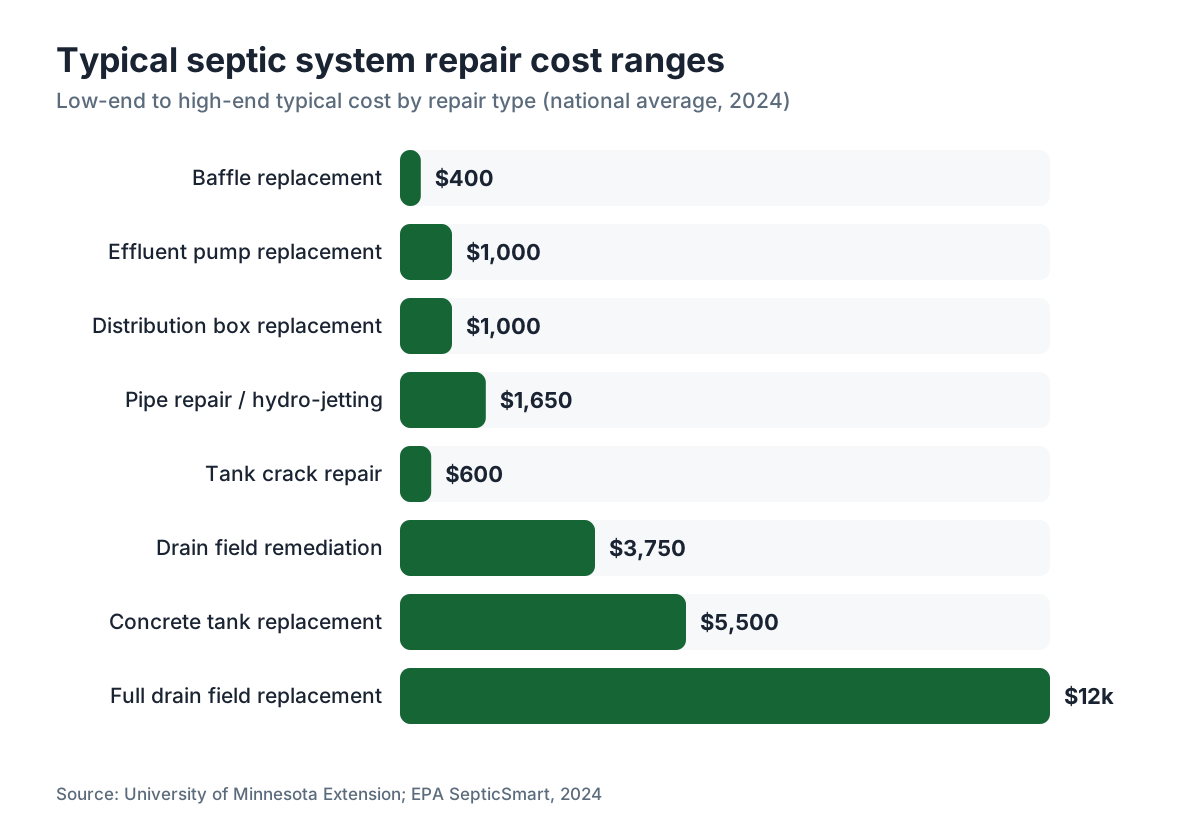
The honest answer: it swings more than almost any home repair category. Labor rates, soil, permit fees, system type, and how deep the crew has to dig all move the number. Here's a realistic breakdown from contractor pricing and extension service surveys [2][3].
| Repair type | Typical cost range |
|---|---|
| Baffle replacement | $200, $600 |
| Effluent filter cleaning | $100, $300 |
| Effluent pump replacement | $500, $1,500 |
| Distribution box replacement | $500, $1,500 |
| Pipe repair or hydro-jetting | $300, $3,000 |
| Tank lid replacement | $150, $500 |
| Tank crack repair (minor) | $300, $900 |
| Concrete tank replacement | $3,000, $8,000 |
| Drain field remediation | $1,500, $6,000 |
| Full drain field replacement | $5,000, $20,000 |
| Aerobic system repair (major) | $2,000, $10,000 |
A few things push a job above the typical range. Bad access (no clean-outs, buried lids, packed soil) adds digging time. Deep systems in northern climates sit below the frost line, which means more excavation. And some states force a full system inspection and updated permit on any significant repair, which adds $300, $800 in fees [1].
For context, the cost to install a septic system runs $10,000, $30,000 nationally for a conventional setup. That's why repair is almost always worth trying first, unless the field is flat-out dead.
How much does an aerobic septic system repair cost?
Aerobic repairs cost more than conventional ones because there's more that can break. An aerobic treatment unit (ATU) has an air compressor or blower, spray heads or drip emitters, a pump tank, UV or chlorine disinfection, and a control panel. Any one of those can fail on its own.
Air compressor replacement runs $300, $800 for the unit plus labor. A control panel issue is $200, $600. Spray heads cost $50, $150 each and usually get swapped in sets. Chlorinator or UV service is $100, $400 per visit. A big repair that hits several parts at once (compressor, pump, and control panel together) can run $2,000, $5,000 [3].
Most states also tie aerobic systems to an annual maintenance contract. Texas mandates a two-year maintenance contract with a licensed provider for every new aerobic install under Title 30, Texas Administrative Code, Chapter 285 [4]. Let that lapse and have something fail, and you can catch a fine on top of the repair bill.
A new aerobic system runs $10,000, $20,000 installed, so repairing an existing ATU is usually the right call unless the tank itself has failed structurally [3].
How do you know when your septic system needs repair?
Some warning signs slap you in the face. Others are easy to shrug off until they get expensive.
The obvious ones: sewage odor inside the house or out near the drain field, toilets and drains backing up or gurgling, soggy spots in the yard above the field even during a dry stretch, and a strip of unusually lush green grass right over the leach field (that's effluent fertilizing the lawn, and it's bad news).
Subtler signs: several fixtures draining slowly at once, a tank alarm sounding on an aerobic system, or water sitting unusually high in the tank access port (a possible sign the field is backing up). The EPA SepticSmart program flags "lush green grass over the drainfield, wet or soggy areas in the yard, and sewage odors indoors or outdoors" as the warning signs homeowners should act on right away [5].
One thing trips people up. A single slow drain is almost always a household plumbing problem, not a septic problem. You're hunting for system-wide slowness or yard symptoms. When in doubt, pump the tank first. A fresh pump-out lets a contractor see the walls, baffles, and inlet and outlet clearly, and that inspection is where most problems get diagnosed correctly. Our guide on septic tank pumping walks through what to look for.
Can a failed drain field be repaired or does it need full replacement?
Every homeowner with a soggy yard hopes the answer here is cheap. Sometimes it is.
Fields fail for a few reasons. The most common is biomat formation: a layer of anaerobic bacteria and grease that builds up at the soil interface in the trenches and blocks water from moving out. Resting the field (diverting flow to a backup field if you have one, or cutting water use way down) for 3 to 6 months can let aerobic bacteria break that biomat down [6]. It works better in light, well-drained soil.
Chemical and biological restoration products get marketed hard. The research on them is mixed. Some university extension programs report modest gains from hydrogen peroxide injection in specific soils; others found no measurable improvement [6]. I'd call it a reasonable gamble at $300, $1,500 before committing to full replacement. Don't expect a miracle.
Other alternatives to full replacement: terralift (pneumatic fracturing of the soil around the laterals), field aeration, and geomat replacement. These run $1,500, $6,000 with results that swing on soil type and how far gone the field is.
Full replacement is unavoidable when the soil is hydraulically dead (won't percolate at all), the laterals have collapsed or roots have shredded the distribution pipe, or the site has no suitable area left. A replacement field needs a fresh perc test and soil evaluation, a design permit, and proper install. In many states that paperwork alone takes 4 to 12 weeks before anyone digs [1]. Our article on the septic drain field covers what replacement involves.
What permits do you need for septic system repair?
Almost every state requires a permit for anything past minor maintenance like cleaning an effluent filter. The threshold varies. Some states want a permit for any work that opens the ground near the system. Others only require one for replacing a tank or field.
Use this as a baseline. Drain field repair or replacement almost always needs a permit and a licensed designer in every state. Tank replacement needs a permit in the vast majority of states. Pump and baffle replacements often need a licensed contractor but not always a permit, depending on local rules [1].
The process usually runs through a site evaluation, sometimes a new soil test, plan approval, an inspection during install, and a final sign-off. Skip the permit and you invite real trouble: it can void your homeowner's insurance on related claims, create liability when you sell, and in some states draw fines running into the thousands [1].
The National Environmental Services Center (NESC) at West Virginia University keeps a state-by-state directory of onsite wastewater regulations [7]. Your county health department or state environmental agency is the permitting authority in most places. Call them before you hire anyone.
Should you repair or replace the entire septic system?
This is a judgment call, but a few rules of thumb hold up.
Repair makes sense when the failure is isolated to one component, the tank and field are in decent shape, the system is under 20 years old, and the repair costs less than 40 to 50% of full replacement. Most baffle, pump, and pipe repairs clear that bar without a second thought.
Replacement wins when the drain field has fully failed with no cost-effective fix, the tank is structurally gone, the system no longer meets current code (and local rules force compliance on major repairs), or you're staring down repeated expensive repairs on an aging system.
Age matters. Concrete tanks poured before 1970 often used a weaker mix and can be badly corroded. A system pushing 40 years with no maintenance records is a genuinely risky place to sink real money.
Buying a house on septic? Get an inspection before closing. The American Society of Home Inspectors recommends a full operational inspection, more than a quick visual look [8]. A failed system you inherit costs exactly as much to fix as one you've owned for years.
For cost comparisons on new systems, our article on septic system installation breaks down what starting fresh would run.
How do you find a qualified septic repair contractor?
Your state environmental or health agency licenses onsite wastewater contractors, and that license is the floor, not the ceiling. Most states publish a searchable license lookup online. A licensed contractor carries the right insurance and knows the local permit rules.
Past the license, look for someone whose scope specifically lists drain field evaluation and repair, more than pumping. Plenty of septic companies do nothing but pump-outs and aren't set up for complex repair work. Nothing wrong with that, but you want a crew that does repairs regularly.
Get two or three quotes for anything over $1,000. Prices genuinely swing 30 to 50% for the same repair depending on the contractor and the local market. Ask each one to put the diagnosis in writing: what they found, what they propose, and what the warranty covers. A solid contractor puts a 1 to 2 year parts and labor warranty on a pump replacement. Field repairs are harder to warranty because soil is unpredictable.
If a contractor quotes a full drain field replacement without a soil evaluation or a permit, that's your cue to walk.
For service companies juggling a lot of repair jobs and maintenance contracts, tools like SepticMind track job status, permit timelines, and maintenance schedules across many accounts. Worth a look if you're on the operations side.
How can you prevent expensive septic system repairs?
Prevention actually works here. The EPA's SepticSmart program says "properly maintained systems can last 25 to 30 years or more," while neglected systems often fail in under 15 [5]. The gap between those two outcomes is almost all maintenance.
The basics aren't complicated. Pump the tank on schedule: every 3 to 5 years for most households, sooner for heavy use or a small tank. Our guide on how often to pump a septic tank has the specifics. Fix household leaks fast. A running toilet can dump 200 extra gallons a day into the system, enough to swamp a field over time. Spread laundry across the week instead of running six loads every Saturday.
Keep roots away. Trees planted within 10 to 20 feet of the tank and field lines are a slow-motion problem. Know where your components sit, and keep vehicles and heavy equipment off them so the soil doesn't compact.
Don't treat the toilet as a trash can. Wipes (even the ones labeled flushable), feminine hygiene products, paper towels, and grease cause most baffle and pipe trouble. No additive replaces a pump-out, and the evidence that tank additives improve performance is weak [9].
If you don't have a septic tank riser, get one. It makes inspections and pump-outs easier and cheaper, which means you'll actually do them on time. A riser costs $200, $400 installed and pays for itself in labor savings within one pump-out cycle.
Running preventive maintenance across a customer base? SepticMind's scheduling and reminder tools are built for exactly that workflow.
What does septic system repair cost in relation to full system cost?
Putting repair costs next to full replacement makes the decision clearer. A conventional septic system costs $10,000, $25,000 installed depending on system type, soil, and location [10]. Aerobic systems run higher, usually $15,000, $25,000. Mound, pressure-dosed, and drip-irrigation systems vary widely.
Here's the rough math. A $1,500 pump-and-D-box repair on a 12-year-old system is a clear yes: it's under 10% of replacement cost, and the system should have 15+ good years left with decent maintenance. A $12,000 field replacement on a 35-year-old system with an aging concrete tank and no maintenance records is murkier. You might be better off putting that money toward a full new system that buys you 25 more years.
For detailed numbers on new construction, our articles on cost to put in a septic tank and septic tank installation break costs down by system type and region.
One thing almost nobody mentions: financing. Some state revolving loan programs and USDA Rural Development grants (Section 504) cover septic repair and replacement for qualifying income levels [11]. If cost is the wall you're hitting, ask your county health department or extension office what assistance exists near you.
Frequently asked questions
How much does a typical septic system repair cost?
Most septic repairs fall between $300 and $5,000. Minor fixes like baffle replacement or pump repair run $200, $1,500. Drain field remediation costs $1,500, $6,000. Full drain field replacement, the most expensive common repair, runs $5,000, $20,000 depending on system size, soil conditions, and local labor rates. Permits add $300, $800 in many states.
What are the signs my septic system needs repair?
The clearest signs are sewage odors inside or outside the house, slow or gurgling drains in multiple fixtures, wet soggy areas over the drain field, and unusually green grass above the leach field. Toilets backing up during heavy rain or heavy use is also a warning sign. A single slow drain is usually a household plumbing issue, not a septic system problem.
Can a failing drain field be saved without full replacement?
Sometimes. If the field has biomat buildup (the most common cause of failure), resting the field or trying remediation treatments can restore partial function, especially in sandy soils. Terralift and aeration services run $1,500, $6,000 and work in some cases. Full replacement is unavoidable when the soil is completely impermeable or pipes have physically collapsed.
Do I need a permit to repair my septic system?
Yes, in most cases. Drain field repairs and tank replacements almost always require a permit and a licensed contractor in every state. Minor repairs like effluent filter cleaning may not, but anything involving excavation or component replacement typically does. Call your county health department before starting any work. Unpermitted repairs can create problems when you sell your home.
How long does a septic system repair take?
Simple repairs (pump replacement, baffle swap) take a few hours to one day. Pipe repairs take one to three days including excavation. Drain field work is longer: permitting alone can take 4 to 12 weeks in many states, and installation takes another two to five days. Plan for at least a month from first call to finished field if a full drain field replacement is involved.
How much does an aerobic septic system repair cost?
Aerobic system repairs range from $200 for a simple spray head or chlorinator service to $5,000+ for a compressor, pump, and control panel replacement. Annual maintenance contracts, required by most states, run $150, $400 per year. Because aerobic systems have more moving parts, they tend to need more frequent attention than conventional gravity systems.
How do you find a qualified septic repair contractor?
Start with your state environmental or health agency's license lookup. Verify the contractor carries a valid onsite wastewater license and appropriate insurance. Get at least two quotes for repairs over $1,000. Ask for the diagnosis in writing, confirm they will pull required permits, and check that the warranty covers both parts and labor. Avoid anyone who won't pull a permit for significant work.
Should I repair or replace my septic system?
Repair makes sense for isolated component failures on systems under 25 years old where repair cost is less than 40 to 50% of replacement cost. Replacement becomes the better choice when the drain field has fully failed, the tank is structurally compromised, the system no longer meets current code, or you're facing repeated expensive repairs on an aging system with no maintenance history.
What is the most expensive septic system repair?
Full drain field replacement is almost always the most expensive common repair, running $5,000, $20,000 for a conventional system. In challenging soil conditions or on large lots, costs can exceed $20,000. Aerobic system overhauls with tank, pump, and control panel replacement can also approach $10,000. Full tank replacement is the second most common large expense at $3,000, $8,000.
How can I avoid costly septic system repairs?
Pump the tank every 3 to 5 years, fix household leaks promptly, spread water use across the week, and keep trees away from system components. The EPA's SepticSmart program notes that properly maintained systems can last 25 to 30 years or more. Avoid flushing wipes, grease, or non-biodegradable items. Schedule an inspection every 3 to 5 years so small problems get caught before they become field-level failures.
What causes septic system failure?
The most common causes are lack of regular pumping (solids overflow into the field), excess water use overwhelming the drain field, flushing non-biodegradable items that clog baffles and pipes, root intrusion, ground shifting that cracks tanks or distribution boxes, and aging materials. In aerobic systems, power outages and skipped maintenance contract visits are leading causes of premature failure.
Does homeowners insurance cover septic system repair?
Standard homeowners insurance generally does not cover septic system failure from wear, neglect, or gradual deterioration. Some policies cover sudden, accidental damage (like a tree falling on the tank). Specialty sewage backup riders can help with interior damage from a backup. Read your policy carefully and ask your insurer specifically about septic coverage. Unpermitted repairs can complicate any claim.
How much does a full septic system cost if I need to replace everything?
A full conventional system replacement runs $10,000, $25,000 nationally, including excavation, tank, drain field, and permit fees. Aerobic systems cost $15,000, $25,000 or more. Mound or pressure-dosed systems in challenging soil can exceed $30,000. Costs vary significantly by region, soil conditions, and system size. Some USDA rural development grants may cover part of the cost for qualifying households.
How often should a septic system be inspected?
The EPA recommends inspecting a conventional septic system every 3 years by a qualified professional, and pumping it every 3 to 5 years depending on household size and tank capacity. Aerobic systems typically require annual or semi-annual inspections under state maintenance contract requirements. More frequent inspections are worthwhile for older systems, systems serving large households, or systems with any prior repair history.
Sources
- EPA SepticSmart: Maintaining Your Septic System: Most states require permits and licensed contractors for septic system repairs, especially any work involving tanks or drain fields
- University of Minnesota Extension: Septic System Costs: Typical costs for septic component repairs including baffles, pumps, and distribution boxes
- Texas A&M AgriLife Extension: Aerobic Septic Systems: Aerobic treatment unit repair and maintenance costs; annual maintenance contract requirements
- Texas Commission on Environmental Quality: Title 30 TAC Chapter 285, On-Site Sewage Facilities: Texas mandates a two-year maintenance contract with a licensed provider for new aerobic installations under 30 TAC Chapter 285
- EPA SepticSmart Program: What to Look for and How to Protect Your System: EPA SepticSmart identifies soggy yard, lush green grass, and sewage odors as key warning signs; properly maintained systems can last 25 to 30 years or more
- Penn State Extension: Septic System Drainfield Failure and Restoration: Biomat formation is the most common cause of drain field failure; resting the field and remediation options have variable results depending on soil type
- National Environmental Services Center (NESC), West Virginia University: State Onsite Wastewater Regulations: NESC maintains a state-by-state directory of onsite wastewater regulations and licensing requirements
- American Society of Home Inspectors (ASHI): Septic Inspection Standards: ASHI recommends a full operational inspection of septic systems when purchasing a home, not just a visual check
- University of Nebraska-Lincoln Extension: Septic System Additives: Evidence for tank additives improving septic system performance is weak; regular pumping remains the most effective maintenance practice
- USDA Rural Development: Water and Environmental Programs: Conventional septic system installation costs $10,000 to $25,000 nationally; USDA grants may cover repair costs for qualifying rural households
- USDA Rural Development: Single Family Housing Repair Loans and Grants (Section 504): USDA Rural Development Section 504 grants and loans can cover septic repair and replacement for qualifying low-income rural homeowners
Last updated 2026-07-09