Septic tank pumping: costs, frequency, and what happens on pump day
By the SepticMind Editorial Team

TL;DR
- Most homeowners pay $250 to $600 to pump a septic tank, with the national average near $400.
- A 1,000-gallon tank serving a family of four needs pumping every 3 to 5 years.
- Skip it too long and solids overflow into the drain field, turning a $400 service call into a repair that runs $5,000 to $30,000.
- Below: costs, frequency, what the technician does, and the warning signs.
What is a septic tank and why does it need to be pumped?
A septic tank is a buried, watertight chamber that catches every drop of wastewater your house sends down the pipes. Most are precast concrete. Some are fiberglass or polyethylene. Heavy solids sink and form sludge. Fats and grease float and form scum. The liquid in the middle, called effluent, flows out through an outlet baffle to the drain field, where soil and microbes finish the treatment.[1]
The tank does not eat the sludge. It just holds it. The sludge layer creeps up from the bottom, the scum layer creeps down from the top, and one day those two layers meet in the middle. That is when solids start slipping past the outlet baffle and into the drain field. Soil pores clog. The field fails. You cannot reverse that without a backhoe.
Pumping empties the sludge and scum before they reach that point. A vacuum truck pulls the contents out, the technician looks over the tank internals, and your system buys another three to five years. Relative to what it costs to skip it, this is the cheapest maintenance a septic home has.
How much does septic tank pumping cost?
Expect $250 to $600 to pump a residential septic tank, with most quotes for a standard 1,000- to 1,500-gallon tank landing near $300 to $500.[2] Five things move that number.
Tank size. Haulers charge by volume. A 1,000-gallon tank costs less than a 2,000-gallon one, usually $50 to $150 more per extra 500 gallons.
Access. If your lids sit at or near grade and you know where they are, the tech opens them in minutes. If they are buried 12 inches down and someone has to probe and dig, add $50 to $150. A septic tank riser installed once kills that fee for every future service call.
Location. Rural properties with long hauls to the disposal site pay more. Dense metro markets with several competing haulers pay less.
Sludge condition. A neglected tank with hardened sludge takes longer and may need water jetting to break the solids loose, which adds $100 to $300.
Inspection add-ons. Some companies fold a basic visual check into the base price. Others charge $50 to $200 for a camera inspection of the outlet line or a baffle condition check.
| Service | Typical cost range |
|---|---|
| Standard pump-out (1,000 to 1,500 gal) | $250 to $500 |
| Large tank pump-out (2,000+ gal) | $400 to $700 |
| Emergency/after-hours call | $400 to $1,000+ |
| Lid locate and excavation (buried lids) | $50 to $150 add-on |
| Baffle inspection / camera | $50 to $200 add-on |
| Jetting (hardened sludge) | $100 to $300 add-on |
For a deeper look at where the money goes, see our companion piece on septic tank pump out costs.[3]
One honest caveat. Price data for this service is thin and regional. The ranges above come from aggregated contractor surveys and consumer reports, not a controlled study. Get two or three quotes from licensed haulers in your county before you book.
How much does a septic tank itself cost to install?
Buying a new tank, the hardware alone runs $700 to $2,000 for precast concrete or $1,200 to $2,500 for fiberglass or polyethylene. The tank is the small line item. A full septic tank installation, meaning permits, excavation, the tank, connecting pipes, and a conventional drain field, typically runs $3,500 to $12,000 on a straightforward site.[4]
Bad soil, a high water table, or a small lot that forces an engineered alternative changes the math. Mound systems, aerobic treatment units, and drip irrigation fields can push the cost to install a septic system to $15,000 to $30,000 or more. Permitting alone runs $500 to $2,000 in some jurisdictions.
Here is the point. Keeping a working tank pumped on schedule is a bargain next to replacing the system it protects. A $400 pump every four years is $100 a year. A drain field replacement is $5,000 to $20,000. Simple math.
For a full cost breakdown of new system construction, see cost to put in a septic tank.
How often should a septic tank be pumped?
The EPA recommends pumping most residential septic tanks every three to five years.[1] That is a fair starting point, but your real interval rides on four things: tank size, how many people live in the house, total wastewater volume, and how much solid material you add. Garbage disposal use matters more than most people think.
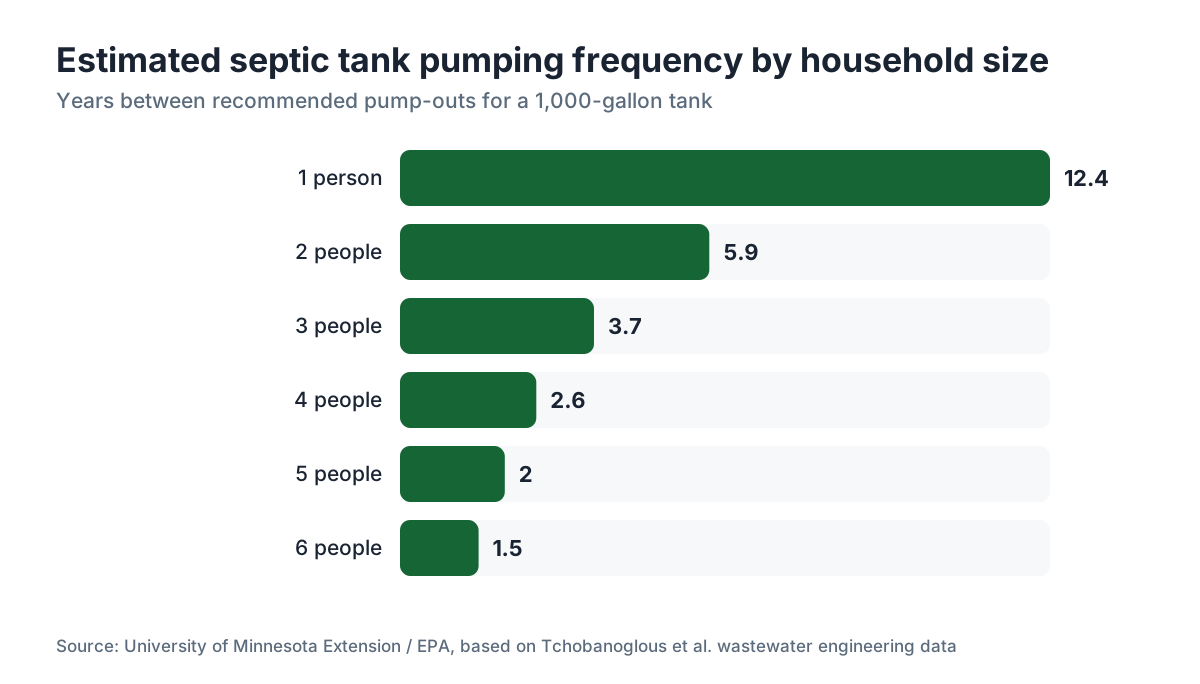
The EPA's SepticSmart program and university extension programs publish reference tables tied to household size and tank capacity. For a 1,000-gallon tank, the estimated interval swings from 2.6 years for a 6-person household to 12.4 years for a 1-person household.[1][5]
| Tank size (gallons) | 1 person | 2 people | 4 people | 6 people |
|---|---|---|---|---|
| 500 | 5.8 yrs | 2.6 yrs | 1.0 yr | 0.5 yr |
| 750 | 9.1 yrs | 4.2 yrs | 1.5 yrs | 0.9 yr |
| 1,000 | 12.4 yrs | 5.9 yrs | 2.6 yrs | 1.5 yrs |
| 1,250 | 15.6 yrs | 7.5 yrs | 3.3 yrs | 2.0 yrs |
| 1,500 | 19.1 yrs | 9.1 yrs | 4.2 yrs | 2.6 yrs |
| 2,000 | 25.4 yrs | 12.4 yrs | 5.9 yrs | 3.7 yrs |
Source: University of Minnesota Extension / EPA, based on Tchobanoglous et al.[1][5]
These numbers assume no garbage disposal. Run one daily and you can knock the interval down 30 to 50 percent. A water softener that backwashes to the tank adds volume too and can speed up sludge buildup.
For a closer look at interval decisions, including what happens when you push it too far, see how often to pump septic tank.
What actually happens when the pump truck shows up?
The whole job takes 30 to 60 minutes on a normally maintained tank. Here is what a good technician does, step by step.
Locate and expose the lids. A single-compartment tank has one or two lids. A two-compartment tank has two. The tech either knows the spot from prior records or probes the yard, then removes or unscrews the lids.
Inspect before pumping. A pro reads the scum and sludge layers before the vacuum kicks on. This is where problems turn up: a missing or rotted outlet baffle (the most common one), inlet pipe damage, or tank cracks letting groundwater seep in.
Pump the tank. The vacuum hose drops in, usually through the port closest to the outlet, and the truck pulls the contents into its own tank. A good tech works the hose to break up and remove all the solids, more than the liquid. This is where operators cut corners. Some pump the middle liquid layer, leave the sludge, and hand you a shorter service interval you did not ask for.
Rinse and re-pump. Some operators add a little water, stir, and pump again to clear settled solids from corners and baffles. Worth asking for.
Post-pump inspection. With the tank empty, the tech can see the walls, the baffles, the inlet and outlet pipes, and the lid seals, and check for cracks, root intrusion, and baffle condition. You should get a written report of what they found.
Dispose of the waste legally. Septage (the pumped contents) is regulated waste. Licensed haulers take it to a permitted municipal treatment plant or an approved land application site. Ask for the disposal receipt if you want proof.[6]
One thing the pump truck cannot do is fix a drain field that is already failing. The septic drain field needs its own diagnosis and, if it is damaged, its own repair.
What are the warning signs that your tank is overdue for pumping?
The clearest sign is slow drains all over the house, worst in the lowest fixtures like a basement toilet or a ground-floor shower. A full tank leaves effluent nowhere to go, so it backs up. One slow fixture usually means a clog in that branch. Slow drains everywhere usually means the tank.
Other signs worth taking seriously:
Sewage odors indoors or out. Gas builds up in an overfull tank and pushes back through drain traps or out the risers. If the yard smells like a sewer near the tank or field, do not wait.
Bright green, spongy grass over the drain field. That lush patch is soaking up nutrient-rich effluent that should have been treated. It looks great. It means your system is failing.
Gurgling after you flush or run water, especially in lower-level fixtures.
Standing water or soggy ground over the tank or field with no recent rain.
Any one of these earns a service call now, not after the weekend. If the field has been taking solids, you may already be in septic system repair territory instead of simple pump-out territory.
Can you pump your own septic tank, or does it require a pro?
No. Every U.S. state requires a license and a permitted vacuum truck to pump and haul septage. Septage is a regulated waste under federal and state environmental codes, and dumping it wrong carries real fines.[6]
What you can do yourself: keep records, keep vehicles and deep-rooted plants off the ground above the tank, and watch for the warning signs above. Some homeowners reach for septic tank cleaning additives, but the evidence that bacterial additives stretch pumping intervals is weak. The EPA does not recommend relying on them in place of pumping.[1]
Hiring the right hauler matters more than most people think. A licensed operator who actually removes all the sludge and hands you a written condition report is worth more than a cheaper one who skims the liquid and hands you a receipt.
How do state regulations affect septic tank pumping requirements?
Federal EPA guidance sets a floor, but states run the actual programs. Most states license pumpers, require permitted disposal sites, and set rules for how septage gets land-applied or treated. Some go further.
Wisconsin requires inspection reporting tied to servicing of private onsite wastewater treatment systems, with reports filed to the local program.[7] Rhode Island's onsite wastewater program sets pumping and record-keeping expectations for systems statewide.[8] California requires licensed pumpers and approved disposal sites, and the specific rules vary by county.[9]
Some counties and towns run mandatory maintenance programs where the local health department tracks pumping records and mails reminders. If your jurisdiction has one, falling out of compliance can block a property sale.
Check your county health department or state environmental agency for the rules at your address. The EPA's SepticSmart program is a solid state-by-state starting point for finding local resources.[1]
Some operators run compliance records, customer pump-out histories, and reminder scheduling through a platform like SepticMind, which makes staying ahead of regulatory reporting less of a scramble.
What happens if you never pump your septic tank?
The sludge and scum keep growing until solids escape the outlet baffle and enter the drain field. Once that happens, the biomat (the organic layer that forms where pipe meets soil) thickens past the point where soil can process the wastewater. Then comes hydraulic failure: effluent backs up into the house or surfaces in the yard.
At that stage, pumping the tank alone does not fix it. The field may need resting (routing flow to an alternate field if you have one), chemical or biological treatment to break down the biomat, or full replacement. This kind of septic tank repair runs $1,000 to $5,000 for minor rehabilitation and $5,000 to $30,000 for drain field replacement, depending on size and site.[4]
There is a public health cost too. Failing systems can leak pathogens and nitrates into groundwater. The EPA identifies septic systems as a significant source of groundwater contamination when they fail, and roughly 1 in 5 U.S. households relies on one.[1]
The blunt version: skipping pumping is not saving money. It is a way to turn a $400 maintenance item into a $15,000 emergency.
How to find and hire a reputable septic pumping service
Start with your state's licensing database. Most states that require pumper licenses keep a public lookup tool. Search the state environmental agency or health department site for "septic pumper license lookup" or "septage hauler" and confirm a contractor is licensed before they touch your system.
After you verify the license:
Ask what the base price includes. Lid location? A baffle inspection? A written condition report?
Ask where they dump the waste. A legit hauler names a specific municipal treatment plant or permitted land application site. Vague answers are a red flag.
Ask about the last service record. If you just bought the place, a good pumper can often read the tank's condition from its appearance even without records.
Get the quote in writing before they start. Verbal quotes that jump $200 once the lid is off are a common complaint.
Operators juggling several service territories sometimes centralize job history, compliance records, and pumping reminders in software like SepticMind, which helps when a state regulator asks for service documentation.
For homeowners, the National Onsite Wastewater Recycling Association (NOWRA) keeps a contractor directory, and the EPA's SepticSmart homepage links to state-specific resources.[1][10]
Do not let price be the only factor. The $50 you save on the cheapest hauler vanishes fast if they leave two inches of sludge in the corners and the field needs rehab two years early.
Does homeowner's insurance or a home warranty cover septic pumping?
Standard homeowner's insurance does not cover routine pumping. It is maintenance, not a loss event. Some policies cover sudden and accidental damage, like a tank collapse or a backup that wrecks interior floors and walls, but the coverage definitions are narrow and vary by policy. Read your water backup and sewer coverage endorsement closely.
Home warranty plans sometimes list septic systems, but the fine print usually excludes pumping (maintenance again) and caps component coverage well below real replacement costs. Check whether the plan covers the tank, the drain field, or only the pump in systems that have one.
The practical answer: budget for pumping yourself. At $300 to $500 every three to five years, that is roughly $75 to $150 a year. Treat it as an annual line in your household budget and you will never be surprised.
For septic tank emptying built into a scheduled maintenance contract, some companies sell pre-paid multi-year plans that lock a price and send automated reminders. Worth it if it means the pumping actually happens on time.
Frequently asked questions
How much does septic tank pumping cost on average?
Most homeowners pay $250 to $600 to pump a residential septic tank, with the national average near $300 to $500 for a 1,000- to 1,500-gallon tank. Prices climb for large tanks, buried lids, after-hours calls, or heavily neglected systems that need jetting. Get two or three local quotes from licensed haulers, since regional pricing varies a lot.
How much is a septic tank cost for a new installation?
The tank hardware alone runs $700 to $2,500 depending on material (concrete, fiberglass, or polyethylene) and size. A complete new system, including the tank, drain field, pipes, permits, and excavation, typically costs $3,500 to $12,000 on a standard site. Sites needing engineered alternatives like mound or aerobic systems can run $15,000 to $30,000 or more.
How often should I pump my septic tank?
The EPA recommends every three to five years for most households. The real interval depends on tank size and how many people live in the home. A 1,000-gallon tank serving four people needs pumping about every 2.6 years. The same tank serving one person can go nearly 12 years. Garbage disposal use and water softener backwash shorten the interval.
What are the signs that a septic tank needs to be pumped?
Slow drains throughout the house, sewage odors indoors or near the tank and drain field, gurgling after flushing, unusually lush grass over the drain field, and soggy ground over the tank or field. Any one of these means you should call a pumper promptly. Several together often mean solids are already escaping into the drain field.
How long does it take to pump a septic tank?
A normally maintained tank takes 30 to 60 minutes from lid-off to lid-on. A neglected tank with hardened sludge can take 90 minutes or more, especially if the tech has to jet the solids loose. Locating buried lids adds time too. Risers at grade and knowing your tank's location cut both service time and cost.
Can I use additives instead of pumping my septic tank?
No. Bacterial and enzymatic additives do not substitute for pumping, and the EPA does not recommend relying on them as a replacement. Solids accumulate no matter what you add. Some additives may help maintain microbial activity in the tank, but the only way to remove accumulated sludge and scum is to physically pump it out.
Is septic tank pumping covered by homeowner's insurance?
Routine pumping is not covered because it is maintenance, not a loss event. Some policies cover sudden and accidental damage (like a sewage backup that damages interior floors) if you carry a water backup endorsement. Home warranty plans sometimes include septic components but usually exclude pumping. Budget for pumping as a routine expense, not an insurance claim.
What does the pumper truck actually remove from the tank?
Everything: sludge at the bottom, liquid effluent in the middle, and the scum layer on top. A thorough job clears all three. Some operators skim only the liquid layer, which is faster but leaves sludge behind and shortens your interval. Ask specifically whether they remove all the sludge and whether you get a written condition report.
Do I need a permit to have my septic tank pumped?
You as a homeowner do not need a permit for a routine pump-out. The contractor, though, must be licensed by your state environmental or health agency and must haul septage to a permitted disposal facility. Ask for the hauler's license number, and if you want documentation, ask for the disposal receipt showing where the waste went.
What happens if I don't pump my septic tank for 10 years?
Sludge and scum accumulate until solids escape the outlet baffle into the drain field. Soil pores clog, the field fails hydraulically, and sewage backs up into the home or surfaces in the yard. At that point, pumping alone is not enough. Drain field rehabilitation or replacement can cost $5,000 to $30,000, far more than the cumulative cost of pumping on schedule.
How do I find a licensed septic pumper near me?
Start with your state environmental or health department website and search for a septic pumper or septage hauler license lookup tool. The EPA's SepticSmart program links to state-specific resources. The National Onsite Wastewater Recycling Association (NOWRA) also keeps a contractor directory. Verify the license before booking, and get a written quote covering exactly what the service includes.
Does a septic tank pump-out include an inspection?
It depends on the company. Basic pump-outs may include only a visual check of the baffles and tank walls while empty. A thorough inspection adds written notes on baffle condition, lid seal integrity, inlet and outlet pipe condition, and any visible cracks. Camera inspection of the outlet line or distribution box is usually a separate add-on. Ask what is included before you book.
How much more does it cost to pump a large septic tank?
Haulers usually charge by volume, adding roughly $50 to $150 per extra 500 gallons beyond the base tank size. A 2,000-gallon tank often runs $400 to $700 compared to $250 to $500 for a 1,000-gallon tank. Very large tanks (3,000+ gallons, common on commercial properties or big households) may need multiple truck loads and cost noticeably more.
Should I be home when the septic tank is pumped?
It is a good idea. Being there lets you ask what the technician observed, get a verbal summary of the tank's condition, confirm they are accessing the right tank, and sign off on any surprise add-ons before work starts. If you cannot be there, at least confirm you will get a written condition report and that the quote is locked before they begin.
Sources
- U.S. EPA, SepticSmart Program: EPA recommends pumping most residential septic tanks every 3 to 5 years; septic failures are a significant cause of groundwater contamination; additives do not replace pumping
- Angi (HomeAdvisor) Cost Guide: Septic Tank Pumping: National average septic tank pumping cost $250, $600, average around $400
- HomeGuide, Septic Tank Pumping Cost Guide: Septic tank pumping cost ranges and breakdown by tank size and service type
- U.S. EPA, Septic Systems Overview: Drain field replacement costs $5,000, $30,000; new system installation typically $3,500, $12,000 for conventional sites
- University of Minnesota Extension, Septic System Pumping Frequency Table: Pumping frequency estimates by tank size and household size based on Tchobanoglous et al. wastewater engineering data
- U.S. EPA, Biosolids and Sewage Sludge (40 CFR Part 503): Septage is regulated waste; licensed haulers must transport to permitted municipal treatment or approved land application sites
- Wisconsin Department of Natural Resources: Wisconsin regulates private onsite wastewater treatment systems and requires inspection reporting tied to servicing
- Rhode Island Department of Environmental Management: Rhode Island's onsite wastewater program sets pumping and record-keeping expectations for systems statewide
- California State Water Resources Control Board: California requires licensed pumpers and approved disposal sites; specific rules vary by county
- National Onsite Wastewater Recycling Association (NOWRA): NOWRA maintains a contractor directory for onsite wastewater professionals including septic pumpers
Last updated 2026-07-09