Eco Strong septic tank treatment: does it actually work?
By the SepticMind Editorial Team
TL;DR
- Eco Strong is a bacteria and enzyme septic additive sold to restore tank microbe populations.
- Independent research and EPA guidance find no reliable evidence that commercial additives improve performance or stretch pumping intervals.
- Regular pumping every 3 to 5 years is the only maintenance step with consistent scientific backing.
- Skip the additive.
- Spend that money on inspections.
What is Eco Strong septic tank treatment and what does it claim to do?
Eco Strong is a septic tank additive sold as a concentrated liquid or single-use packet. The pitch: pour it in to introduce or replenish beneficial bacteria and enzymes inside your tank. The claims stack up fast. It speeds the breakdown of solids, cuts sludge, kills odors, and stretches the interval between pump-outs.
The logic is intuitive, which is why it sells. Your tank runs on anaerobic bacteria that digest organic waste. Kill those bacteria with a heavy dose of bleach, antibacterial soap, or antibiotics flushed down the drain, and the tank can fall behind. Add bacteria, the argument goes, and you're back in business.
That logic isn't completely wrong. Tank bacteria can get knocked back. The real question is whether a store-bought additive does anything measurable, or whether a normal household drain rebuilds the microbial community on its own within a few days anyway. The honest answer, based on the research we have, lands closer to the second one.
Eco Strong competes in a crowded aisle. Hundreds of septic additives sell under different brand names at hardware stores, big-box retailers, and online. They break into three groups: biological additives (live bacteria, enzymes, or yeast), chemical additives (solvents and surfactants), and inorganic compounds. Eco Strong is a biological additive, the group with the mildest risk and the thinnest documented benefit.
What does the EPA say about septic tank additives?
The EPA's SepticSmart program takes additives on directly. The agency's position is plain: biological additives have not been proven to improve septic performance and are no substitute for regular pumping [1]. The EPA warns homeowners against leaning on any additive to stretch pump-out intervals, because no product has shown it can do that under controlled field conditions.
Chemical additives draw a sharper warning. The EPA notes that some chemical solvents sold as additives can harm the tank's bacterial population and push solids into the drain field, clogging the soil and failing the system [1]. Eco Strong, as a biological product, dodges that specific risk. It still sits in a gray zone: not recommended, not banned, just unsupported by evidence.
Here's a structural fact most buyers miss. Septic additives are not regulated like pesticides or drugs. There's no federal pre-market approval. A manufacturer can print performance claims without ever submitting efficacy data to any agency. The burden of proof lands entirely on you, and the independent science isn't on the label's side.
Some states go further than the EPA. Wisconsin bars chemical additives in septic systems under its private onsite wastewater code [2]. A handful of states require any product sold for septic use to carry state registration and labeling. If you live somewhere with tight onsite wastewater rules, check your state environmental agency's site before you buy anything.
What does the independent research actually show?
The most cited review comes from University of Minnesota Extension, which examined the literature on septic additives and concluded there was insufficient evidence that biological or chemical products give any meaningful benefit to system performance or longevity [3]. That finding has held up for two decades. Later work, including a literature review published in Small Flows Quarterly by the National Environmental Services Center, reached the same place: no controlled field study has shown that commercial additives cut sludge accumulation enough to extend pumping intervals [4].
The mechanism doesn't help the additive's case either. A healthy tank already holds billions of anaerobic bacteria. The cell count in a typical Eco Strong dose is tiny next to what's already living down there. Think of pouring a cup of water into a full pool and waiting for the level to change. The added bacteria may survive. They're unlikely to shift the function of a system that's already biologically active.
Recovery timing matters too. When a tank gets partly sterilized by a big slug of bleach or antibacterial product, research suggests the bacterial population largely rebuilds within 3 to 7 days from new waste entering the system [5]. If that's right, the window where an additive could even theoretically help is short, and the tank may recover before the product does a thing.
Nobody has great long-term field data here. The closest studies use lab-scale reactors, not full residential systems, which limits how far you can generalize. But the absence of positive evidence after decades of commercial sale says something on its own. If these products worked as advertised, someone would have proven it by now.
Are there any situations where a biological additive might help?
This is where honest hedging earns its keep. A few edge cases exist where trying a biological additive is reasonable, even with thin evidence.
New tank startup is one. When a fresh septic tank goes into service, the microbial community has to build from scratch. Some installers seed a new tank by flushing a small amount of sludge from a working one. A biological additive is a cleaner version of the same idea, if less proven. University of Minnesota Extension notes this use without fully endorsing it [3].
Tanks pulled out of service for a long stretch, like a vacation home that sits empty six months, hit a similar startup problem. The bacterial population starves and shrinks. Normal household use rebuilds it, but some practitioners use an additive as a jumpstart here. No strong data says it hurts, and the cost is low.
A tank hit hard with antibiotics or bleach over a short period is another candidate. If a plumbing event dumped a large volume of disinfectant down the drain, an additive is unlikely to hurt and might speed recovery. Probably unnecessary. Not harmful.
Outside those three, routine monthly dosing with Eco Strong or any biological additive has no demonstrated benefit. That's money spent on the feeling of doing something, not on a result.
How does Eco Strong compare to other septic additives on the market?
The septic additive market is enormous and almost entirely undifferentiated once you look at the science. Rid-X, Green Gobbler, Cabin Obsession, Bio-Tab, Eco Strong, and dozens more make nearly identical claims with nearly identical mechanisms: live bacteria strains (usually Bacillus species), enzymes, or both.
Rid-X is the most widely sold and the most studied, which mostly means there's more independent data confirming it doesn't change pump-out schedules. A study commissioned by Rid-X's own manufacturer showed some improvement in lab conditions, but independent replication in real systems hasn't produced consistent results.
The table below shows how the major categories stack up.
| Category | Example products | EPA stance | Drain field risk | Cost per year (approx.) |
|---|---|---|---|---|
| Biological (bacteria/enzymes) | Eco Strong, Rid-X, Bio-Tab | Not recommended, not banned | Low | $30-$80 [6] |
| Chemical (solvents) | Some older brands | Avoid; may cause failure | High | $20-$60 |
| Inorganic compounds | Baking soda products | Limited guidance | Low to moderate | $10-$30 |
| No additive | N/A | Recommended approach | None | $0 |
Eco Strong sits in the same biological group as Rid-X. Use one, and you've essentially used the other. Strains vary by brand, but no head-to-head study has shown any one brand's bacterial mix beats another in a real tank.
What separates products is secondary ingredients, concentration, and price. Some add surfactants or digestive enzymes alongside the bacteria. Enzymes can break down fats and proteins in a lab, but the enzyme levels in consumer products are low next to what a working tank already makes on its own.
Could Eco Strong or similar additives actually damage your septic system?
For a pure biological additive with no chemical solvents, the risk is low. The bacteria in Eco Strong are common environmental strains. They're unlikely to displace your existing tank bacteria in any harmful way. The real danger is what people do because they think the additive is handling the job.
That danger is substitution. A homeowner who buys Eco Strong monthly and skips pump-outs isn't running a safer system. They're stacking up sludge and scum while feeling covered. When solids build past the tank's capacity (typically when sludge fills more than a third of the tank), they start passing into the leach field, where they clog soil pores and trigger drain field failure [7]. Drain field replacement runs $5,000 to $25,000 or more depending on soil and system size. No additive prevents that.
If your product contains chemical solvents or surfactants, the risk turns direct. Solvents strip biofilms, kill anaerobic bacteria, and liquefy solids so they slip into the drain field in a form the soil can't handle. Read the full ingredient list before you add anything to your tank. If you see methylene chloride, 1,1,1-trichloroethane, or similar organic solvents, don't use it.
Eco Strong, formulated with biological ingredients, doesn't carry that chemical risk. It also doesn't buy you a pass on regular septic tank pumping.
What maintenance actually works for a septic tank?
The EPA SepticSmart program boils proven maintenance down to four practices: inspect regularly, pump frequently, use water efficiently, and protect the drain field [1]. None of them involve additives.
Pumping is the anchor. The EPA recommends pumping most household tanks every 3 to 5 years [1]. The real interval depends on tank size, household size, and what goes down the drain. A 1,000-gallon tank serving four people usually needs pumping closer to every 3 years. A 1,500-gallon tank serving two can often go 5 years. Your septic tank pump out contractor measures sludge and scum layers during service and tells you where your system actually stands.
Inspections catch problems before they turn into failures. A qualified inspector checks baffles, lids, outlet pipes, and drain field condition. A septic tank inspection every 1 to 3 years is reasonable, and most findings can be handled with minor septic tank repair rather than full replacement when caught early.
Water conservation counts more than people think. Every gallon entering the tank is a gallon that has to be processed and dispersed. High-flow bursts like back-to-back laundry loads push effluent toward the drain field faster than the tank can settle it. Spreading laundry across the week and fixing a leaking toilet (which can dump 200 gallons a day into the system) both cut the hydraulic load.
What not to flush is simple. No wipes, including the ones labeled flushable. No feminine hygiene products, no paper towels, no cooking grease, no medications, no big doses of harsh chemical cleaners. Antibacterial soap in normal amounts is fine. A bottle of bleach down the drain every week is not.
Operators running many systems often use scheduling software to track pump intervals and inspection histories across a client base. Tools like SepticMind give service companies a way to flag overdue tanks and document findings per system, which cuts the chance of a client drifting years past their recommended pump date without a nudge.
How often should you actually pump your septic tank instead of relying on treatment?
The 3-to-5-year rule is a guideline, not a guarantee. The right interval for your system turns on real variables.
The EPA and most state extension programs start with a rough framework: tank volume divided by daily wastewater generation gives you a detention time. The more practical move is to have your contractor measure sludge depth at each pump-out and use the accumulation rate to predict the next service date [1].
Here's a concrete reference. A 1,000-gallon tank serving four people builds sludge at roughly 50 to 60 gallons per year under typical conditions. At that rate, it needs pumping every 3 to 4 years to stay under the one-third threshold. A two-person household in the same tank might go 7 to 8 years, though few state programs recommend exceeding 5 years regardless of occupancy.
To understand your own household's pattern, read the guide on how often to pump septic tank. The answer varies more than most people expect, and your local soil type, water table, and tank age all shape what's appropriate.
One thing pumping does that no additive can: it physically hauls the accumulated solids out. Bacteria digest organic matter, but they don't make it vanish. Inorganic solids like grit, certain paper fibers, and hair pile up forever. The only exit is the pump truck.
What are state regulations saying about septic additives and system maintenance?
State rules vary a lot. Most states regulate septic systems under their onsite wastewater programs, and additive requirements range from total silence to outright prohibition.
Wisconsin's private onsite wastewater code bars the use of chemical additives in septic systems [2]. Minnesota's Pollution Control Agency publishes guidance in line with the EPA: biological additives aren't regulated as harmful but aren't proven effective and shouldn't replace proper maintenance [8]. California's State Water Resources Control Board focuses on system performance standards rather than additive rules, and its guidance doesn't list additives as part of routine maintenance.
Some states require septic inspections at point of sale or on a set schedule. Massachusetts requires a Title 5 inspection before a home sells, covering a full evaluation of the tank and drain field [9]. Passing it means showing the system works. No amount of additive use counts toward that standard.
If your state runs a mandatory maintenance program, know the reporting rules. Some require proof of pump-out receipts on a schedule. Showing a contractor a stack of Eco Strong receipts won't substitute for documented pump-outs in those jurisdictions.
For operators managing compliance across client properties, tracking which system sits in which jurisdiction matters. A Massachusetts system carries different paperwork than one in rural Montana, and a missed compliance date can create liability for both the homeowner and the service company.
Is Eco Strong worth the money, and what should you spend it on instead?
A typical Eco Strong purchase runs about $20 to $40 for a supply meant to last several months. Regular annual use lands between $40 and $80 [6]. That's not much on its own.
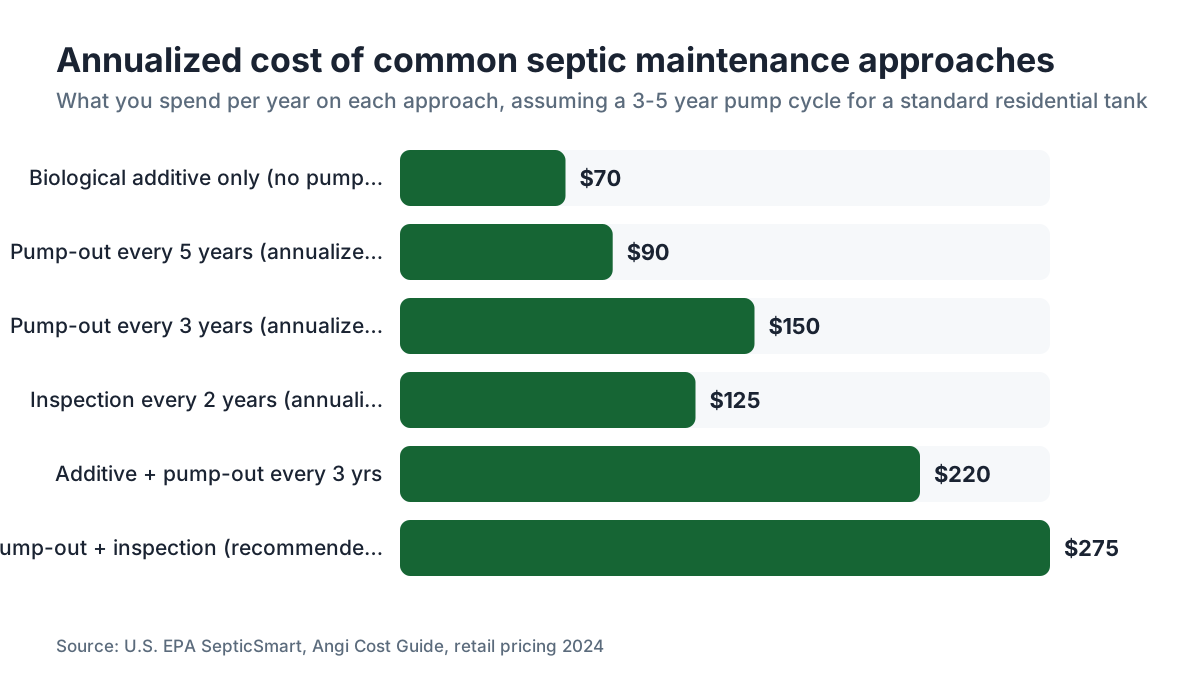
But look at what the same $200 to $400 over five years buys elsewhere. A basic septic inspection costs $100 to $300 depending on your region. A pump-out costs $300 to $600 for a standard residential tank [10]. The inspection tells you what's actually happening inside your system. The pump-out removes what's built up. A bacterial supplement replicates neither.
Here's the honest framing. If you're already pumping on schedule and getting regular inspections, adding Eco Strong does no meaningful harm (assuming it's a pure biological product) and no measurable good. If you're buying Eco Strong instead of pumping, you're taking real risk for a product with no proven benefit.
Want to give your tank's bacteria the best shot? The highest-value moves are free. Don't pour antibacterial cleaners down the drain by the bottle. Fix that slow-running toilet. Spread laundry across the week. Those change the operating conditions for your existing bacteria in ways a monthly packet can't touch.
For homeowners budgeting around their system over the long haul, the septic tank cleaning and pumping cycle is the foundation. Everything else is secondary. SepticMind's maintenance tracking helps homeowners log service history and get reminded when the next pump-out is due, which beats any additive on the market.
What should homeowners ask a septic professional before buying any additive?
If you're on the fence about Eco Strong or any additive, ask your pumping contractor or inspector directly. They've seen inside hundreds of tanks and can tell you whether the tanks of additive users look any different from the tanks of people who never bought a bottle.
Across the practitioner community (pumpers, inspectors, licensed designers), the consensus runs skeptical. Most working pros will tell you a well-maintained tank with regular pump-outs needs nothing added, and a neglected tank can't be rescued by any additive.
Questions worth asking. What's my current sludge depth? When do you recommend the next pump-out based on the accumulation rate? Have you seen any difference in tanks where customers use additives regularly? Is there anything about my system (age, type, soil) that changes the math?
If your tank is showing trouble, like slow drains, gurgling pipes, sewage odor in the yard, or wet spots near the drain field, no additive touches those symptoms. They point to a system that needs a professional look. Read about diagnosing problems in the septic system repair guide, and don't stall a service call hoping a product bails you out.
The best thing Eco Strong's marketing ever did for homeowners is get them thinking about their tank at all. Most people ignore the system until something fails. Redirect that attention toward real maintenance and it's worth a lot.
Frequently asked questions
Does Eco Strong septic treatment actually work?
Independent research has not found reliable evidence that Eco Strong or similar biological additives improve septic tank performance, cut sludge accumulation, or extend time between pump-outs. The EPA's SepticSmart program does not recommend additives as a maintenance substitute. The product is unlikely to cause harm, but no controlled field study shows it delivers the benefits printed on the label.
How often should I use Eco Strong in my septic tank?
The label usually suggests monthly use, but the scientific basis for that schedule isn't established. If you use a biological additive at all, the edge cases where it might plausibly help are a new tank startup or recovery from a heavy disinfectant event. Routine monthly use in a normal tank has no demonstrated benefit and costs $40 to $80 a year that could go toward an inspection or pump-out instead.
Can Eco Strong replace regular septic tank pumping?
No. Pumping physically removes inorganic solids and sludge that bacteria can't digest. No additive eliminates that need. The EPA recommends pumping every 3 to 5 years for most households. Relying on an additive instead of pumping lets sludge build past safe levels, raising the risk of solids entering the drain field and causing failure that can cost $5,000 to $25,000 to repair.
Is Eco Strong safe for septic systems?
As a biological additive with bacteria and enzymes and no chemical solvents, Eco Strong's risk profile is low. It's unlikely to kill your existing tank bacteria or damage the drain field. Chemical additives with solvents like methylene chloride carry serious risks and are actively warned against by the EPA. Read the full ingredient list every time; if it lists organic solvents, don't use it.
What do septic professionals think about additives like Eco Strong?
Most licensed pumpers and inspectors are skeptical. The consistent view is that well-maintained tanks don't need additives, and neglected tanks can't be rescued by them. Professionals who inspect tanks regularly report no visible difference between tanks where customers use additives and tanks where they don't. The common advice is to spend additive money on an inspection or an early pump-out instead.
Does the EPA recommend using septic tank treatment products?
No. The EPA's SepticSmart program states that additives, including biological products with live bacteria, have not been proven to improve system performance. The agency recommends four practices: regular inspections, routine pumping every 3 to 5 years, efficient water use, and protecting the drain field. Additives appear nowhere on that list as a recommended or beneficial practice.
What is the best septic tank treatment you can actually do?
Regular pumping every 3 to 5 years is the single best maintenance step, bar none. After that: fix running toilets, don't flush wipes or grease, spread laundry loads across the week, avoid large doses of chemical cleaners, and get a professional inspection every 1 to 3 years. Those change real operating conditions for your system. Monthly additive packets do not.
How much does Eco Strong cost per year compared to a pump-out?
Regular Eco Strong use costs roughly $40 to $80 per year. A septic pump-out costs $300 to $600 for a typical residential system, but you only need it every 3 to 5 years, putting the annualized cost at $60 to $200. An inspection costs $100 to $300. Per year, the pump-out and inspection deliver proven results. The additive does not.
Are there states where septic additives are banned or regulated?
Yes. Wisconsin bars chemical additives in septic systems under its onsite wastewater code. Several other states require registration or labeling for products sold as septic additives. Most states defer to EPA guidance, which does not recommend additives but does not ban biological products. Check your state environmental agency's onsite wastewater program for the specific rules where you live before buying.
What is the difference between Eco Strong and Rid-X for septic tanks?
Both are biological additives using live bacteria (mostly Bacillus species) and enzymes to break down organic solids. Rid-X is more widely sold and has been around longer, so there's more independent research on it, and that research doesn't confirm its effectiveness. Eco Strong and Rid-X occupy the same category with the same evidence profile: unlikely to harm, no proven benefit in real-world field conditions.
Can a septic additive fix slow drains or sewage odors in the yard?
No. Slow drains and yard odors are symptoms of a system under stress, likely too much sludge in the tank, a blocked outlet, or early drain field failure. Those conditions need professional diagnosis and physical intervention, not a bacterial supplement. Using an additive and waiting when you have active symptoms risks turning a fixable problem into a full failure. Call a licensed contractor.
What happens if I never pump my septic tank but use Eco Strong every month?
Sludge and scum accumulate regardless of additive use. When sludge passes roughly one-third of tank volume, solids start flowing into the drain field and clog the soil matrix. That causes drain field failure. Replacing a drain field costs $5,000 to $25,000 or more depending on system type and site conditions. No additive prevents this. Pumping every 3 to 5 years is the only proven way to avoid it.
Does Eco Strong help a new septic tank get started?
This is the most defensible use for any biological additive. A brand-new tank has no established microbial community. Some practitioners recommend seeding with sludge from an active tank; a biological additive is a cleaner alternative. University of Minnesota Extension notes this application without fully endorsing it. The tank develops its own bacterial population from incoming waste within a few weeks anyway, but startup inoculation does no harm.
Sources
- U.S. EPA, SepticSmart Program - Septic System Maintenance: EPA states additives have not been proven to improve septic system performance and recommends pumping every 3-5 years as the primary maintenance practice.
- Wisconsin Department of Safety and Professional Services, Private Onsite Wastewater Treatment Systems (SPS 383): Wisconsin prohibits the use of chemical additives in septic systems under its private onsite wastewater administrative code.
- University of Minnesota Extension, Septic Systems: Literature review found insufficient evidence that biological or chemical additives provide meaningful benefit to septic system performance or longevity; notes new-tank startup as an edge case.
- Small Flows Quarterly, National Environmental Services Center, West Virginia University: Literature review found no controlled field study demonstrating that commercial additives reduce sludge accumulation rates enough to extend pumping intervals.
- University of Rhode Island, Cooperative Extension: Septic tank bacterial populations largely self-recover within days after disruption from normal waste flow entering the system.
- Retail pricing aggregated from major U.S. retailers (Home Depot, Amazon), 2024: Biological septic additives cost approximately $30-$80 per year for regular use based on retail pricing of leading brands.
- U.S. EPA, Onsite Wastewater Treatment Systems Manual (EPA/625/R-00/008): When sludge accumulates past one-third of tank volume, solids begin passing to the drain field, causing soil clogging and system failure.
- Minnesota Pollution Control Agency, Subsurface Sewage Treatment Systems: Minnesota PCA guidance states biological additives are not regulated as harmful but are not proven effective and should not replace proper maintenance.
- Massachusetts Department of Environmental Protection, Title 5 Septic Systems: Massachusetts requires a Title 5 septic inspection before a home is sold, evaluating tank and drain field function; additive use does not count toward compliance.
- Angi, Septic Tank Pumping Cost Guide, 2024: Average septic tank pump-out costs $300 to $600 for a standard residential system in the United States.
- U.S. EPA, SepticSmart Homeowners: EPA SepticSmart program outlines four core maintenance practices: inspect regularly, pump frequently, use water efficiently, and protect the drain field; no additives are included.
Last updated 2026-07-09