Septic tank repair: costs, common problems, and when to replace
By the SepticMind Editorial Team

TL;DR
- Septic tank repair runs from about $150 for a baffle or float swap to $5,000 or more for a structural concrete job.
- Most repairs land between $500 and $2,500.
- What failed, how old the tank is, and what your local code allows decide whether repair or full replacement is the smarter money move.
- Pump and inspect before you commit to any quote.
What is a septic tank and what does it actually do?
A septic tank is a buried, watertight container, usually concrete, fiberglass, or polyethylene, that catches all the wastewater leaving your house. Solids sink and form sludge. Fats and grease float up as scum. The clearer liquid in the middle, called effluent, flows out an outlet pipe to the drain field.
That's the whole job. The tank doesn't treat waste the way a city plant does. It separates solids from liquid long enough for the liquid to reach the soil, where the real treatment happens. When the tank stops holding water, stops separating, or stops letting effluent out cleanly, you get trouble above ground and below [1].
Most residential tanks hold between 750 and 1,500 gallons. A 1,000-gallon tank is the standard for a three-bedroom home. Size, age, and material all shape which repairs are possible and what they cost. For a wider look at what goes wrong across the whole system, see septic system repair.
What are the most common septic tank problems that need repair?
Most septic tank repairs fall into about six buckets. Knowing them helps you ask sharper questions when a pumper or inspector hands you a quote.
Damaged or missing baffles. Baffles are T-shaped fittings at the inlet and outlet. The inlet baffle slows incoming waste so it doesn't stir up the settled layers. The outlet baffle keeps floating scum from escaping into the drain field. They're made of concrete, PVC, or fiberglass. Concrete baffles in older tanks corrode from hydrogen sulfide gas and crumble. A missing or broken outlet baffle is one of the most common inspection findings, and it's also one of the cheapest fixes: $150 to $500 to swap in a PVC sanitary tee [2].
Cracked or leaking walls and lid. Concrete tanks crack from ground settlement, frost heave, vehicle traffic, or plain age. Small hairline cracks can sometimes be patched with hydraulic cement or epoxy. Large structural cracks are another matter. A crack that lets groundwater in overloads the drain field. A crack that lets sewage out is a public health violation. Serious crack repair runs $1,000 to $4,000, depending on how accessible the tank is and how bad the damage is [3].
Collapsed or crushed inlet/outlet pipes. The pipe from your house to the tank, or the tank to the drain field, can collapse under soil pressure, tree roots, or age. Replacing a short section costs $200 to $700. Longer runs cost more.
Failed or clogged effluent filter. Many newer tanks have an effluent filter in the outlet baffle housing. It needs cleaning every one to three years. Neglect it and it clogs, backing sewage into the house. Cleaning costs $50 to $150 when bundled with a pump-out. A replacement cartridge runs $50 to $250.
Pump failure (pump-assisted systems). If your system uses a pump chamber to push effluent to an elevated drain field or a drip system, the pump can burn out. Pump replacement usually costs $500 to $1,500 for parts and labor [4]. See our article on septic tank pumping for how pump-out schedules tie into overall maintenance.
Tank full of solids. Not broken exactly, but functionally failed. When a tank is overdue for pumping, sludge and scum eat so much of the liquid zone that solids escape into the drain field. The fix starts with a pump-out, which costs $300 to $700 on average nationally, though prices range from $250 to $900 depending on tank size and region [5]. A pump-out won't repair a structurally damaged tank, but it's always the first diagnostic step. More on the process at septic tank pump out.
How much does septic tank repair cost?
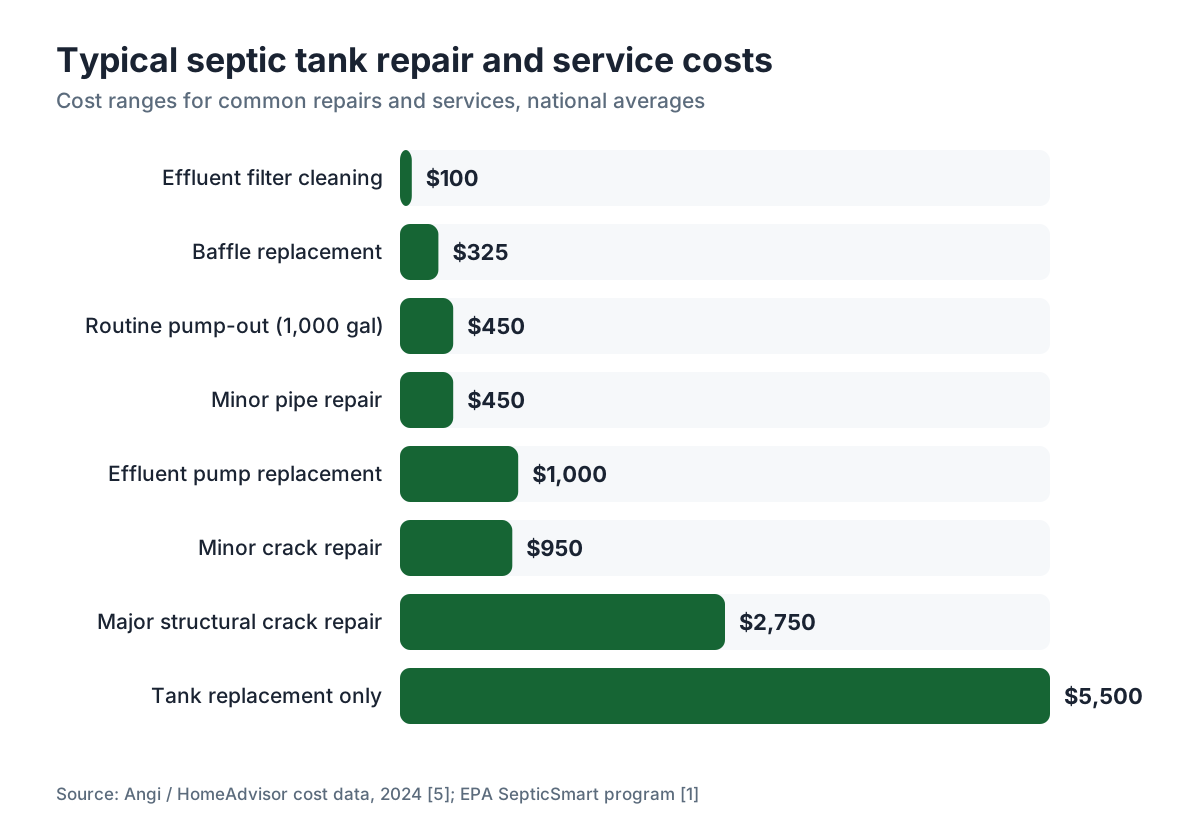
There's no single number here. "Repair" covers everything from a $150 baffle swap to a $5,000 structural concrete job. The table below gives real cost ranges for the common repairs. These are national averages. Your actual cost depends on region, local labor rates, permit requirements, and how easy it is to dig to the tank.
| Repair type | Typical cost range | Notes |
|---|---|---|
| Outlet baffle replacement | $150 to $500 | PVC tee, done during pump-out |
| Inlet baffle replacement | $150 to $500 | Similar to outlet |
| Effluent filter cleaning | $50 to $150 | Often bundled with pump-out |
| Effluent filter replacement | $100 to $350 | Parts plus labor |
| Tank pump-out (routine) | $300 to $700 | Per tank, national average |
| Pipe repair (short section) | $200 to $700 | Depends on depth and access |
| Concrete crack patch (minor) | $400 to $1,500 | Small cracks, tank accessible |
| Concrete crack repair (major) | $1,500 to $4,000 | Large cracks, excavation needed |
| Pump replacement (pump chamber) | $500 to $1,500 | Submersible effluent pump |
| Lid replacement (concrete) | $100 to $400 | Per lid, plus access excavation |
| Riser installation (access improvement) | $300 to $800 | Per riser; saves future dig costs |
| Full tank replacement | $3,000 to $10,000+ | Depends on size and material |
A routine pump-out, covered in more depth at septic tank emptying, is the most common service call and the best way to catch problems before they turn expensive. The EPA's SepticSmart program recommends pumping every three to five years for average households [1].
Labor is usually 40 to 60 percent of total repair cost. A shop charging $150 an hour gives you a very different number than one at $75 an hour. Get at least two quotes for anything over $500.
What does it cost to pump a septic tank?
The average cost to pump a septic tank in the United States is roughly $400 to $500 for a standard 1,000-gallon residential tank, based on industry service data [5]. The honest range is $250 to $900, and regional variation is the biggest driver.
Smaller tanks (750 gallons) cost less. Larger tanks (1,500 to 2,000 gallons) cost more, sometimes $600 to $800 or higher. A tank that hasn't been pumped in 10 years and is packed with solids takes longer to empty and can cost extra. Add-ons like effluent filter cleaning, riser installation, or a full inspection report push the bill up.
The pump truck (a vacuum or "honey wagon" truck) carries high operating costs: fuel, disposal fees at a licensed septage receiving facility, licensing, and maintenance. Those don't swing much by region. What does swing is local disposal fees and how many companies compete for the work. Rural areas with few competitors often cost more per pump-out than suburbs where five outfits fight for the same jobs.
Budget $400 to $500 as your planning number for a standard house. For what the service includes and how often you need it, see how often to pump septic tank.
How do you know if your septic tank needs repair versus just a pump-out?
A handful of signs point past routine pumping toward an actual repair. Slow drains, sewage odors, wet ground over the tank, and backups are the big four. Any of them means pump and inspect now, not next month.
Slow or gurgling drains throughout the house, more than one fixture at once, usually mean the tank is full or something's blocking the line between house and tank. That could be a collapsed pipe or a clogged inlet. A pump-out and camera inspection tells you which.
Sewage odors inside the house or near the tank are a red flag. Outside odors near the tank can be normal for a short while after heavy use, but persistent smell suggests a cracked lid, a damaged baffle, or a tank venting wrong.
Wet, spongy ground or unusually lush grass directly over the tank (not the drain field) points to a leak. Leaking sewage around the tank is both a repair issue and a code violation in most states [6].
Backup at the lowest fixture in the house, usually a basement drain or a ground-floor toilet, typically means the tank or outlet is blocked. Don't ignore it. Sewage backup causes water damage and is a health hazard.
A failed inspection counts too. Real estate inspections and many county health department programs will flag a missing outlet baffle, a cracked tank, or a non-compliant setup. Those findings create a repair or replacement obligation before the property transfers or before you can permit an addition [7].
The simplest sequence is pump first, inspect during the pump-out, then decide. Many problems only show clearly once the tank is empty. A decent pump company looks at the baffles, the walls, the inlet and outlet, and tells you what they see.
Can a cracked concrete septic tank be repaired, or does it need to be replaced?
Small non-structural cracks can usually be sealed. Full-thickness structural cracks usually can't, and many state codes force replacement. This is the question homeowners dread, because the answer is the difference between spending $800 and $8,000.
Fine hairlines that don't run all the way through the concrete can typically be repaired. Contractors use hydraulic cement, polyurethane foam injection, or epoxy coatings. The tank gets pumped and cleaned first. Cost runs $400 to $1,500 depending on how many cracks and how easy the tank is to reach.
Structural cracks that run through the full wall thickness, or cracks that have shifted a section of the tank, are a different animal. A patch may not hold under the constant push of soil and groundwater. Many contractors won't warranty a patch on a structurally compromised tank. Code in a lot of jurisdictions requires replacement, not repair, once a tank has failed structurally [6].
Fiberglass and polyethylene tanks crack less than concrete, but bad backfill or a vehicle driving over them can do it. Fiberglass cracks can sometimes be patched from the inside with repair kits, but a major structural failure still means replacement.
Age changes the math. A 40-year-old concrete tank with one visible crack is probably growing more micro-cracks you can't see. Paying to repair it now and replacing it in three years costs more than replacing it today. A good contractor will tell you straight what they'd do with their own tank. If someone pushes hard for a pricey repair on a clearly aged tank, get a second opinion.
When does repair stop making sense and replacement become the better choice?
The rule of thumb in the trade: if the repair costs more than half the price of a new installed tank, replacement usually wins. Same logic people use for furnaces and water heaters.
A new 1,000-gallon concrete tank installed runs roughly $3,000 to $6,000 depending on region, dig difficulty, and permits [8]. So a repair quote north of $2,000 to $3,000 on a tank that's already 30-plus years old usually favors starting fresh.
Replacement also makes sense when the tank is undersized for your current household (you added bedrooms or people since it went in), when the tank material is no longer accepted under current code (some older steel tanks got phased out), or when access is so bad that any future repair turns prohibitively expensive.
If you're facing drain field failure at the same time, the whole picture shifts. A new tank feeding a dead drain field fixes nothing. You'd address both, which can run $10,000 to $25,000 or more for a full system. For full-system numbers, see cost to install septic system.
What permits and inspections does septic tank repair require?
It depends on your state and county, more than almost any other home repair. Some states require a licensed contractor and a permit for any septic work past routine pumping. Others let homeowners do minor repairs on their own tanks. A few require an engineer to sign off on structural work.
The EPA sets baseline guidance, but real regulation happens at the state level, with many states handing enforcement to counties [1]. Across most of the country, replacing a baffle or an effluent filter needs no permit. Replacing the tank or repairing structural damage almost always does.
Your county health department or environmental services office is where you ask. One phone call before you hire anyone beats getting cited after the work is done. Licensed septic contractors in your state know the permit rules and should handle them as part of the job.
For real estate deals, most states require a septic inspection before transfer, and any deficiency found creates a documented repair obligation. Skipping a required repair and selling anyway puts the liability on the seller.
Operators who juggle multiple service calls and need to track permit status and inspection records across jobs can use tools like SepticMind to keep that workflow in one place instead of paper.
How do you find a qualified septic repair contractor?
Most states require septic installers and repair contractors to hold a state-issued license, separate from a general contractor's license. Some states, including Florida and Washington, also require ongoing continuing education for licensees [9].
The National Onsite Wastewater Recycling Association (NOWRA) and the National Association of Wastewater Technicians (NAWT) both keep member directories. Members agree to professional standards and in some cases have finished training programs. That's not a guarantee, but it's a reasonable filter.
What to ask before hiring: Are you licensed in this state for septic work? Do you pull permits for structural repairs? Can you give me a written quote that itemizes parts and labor? Will you provide a report or photos of what you find? What warranty do you offer?
Don't hire on price alone. A $400 patch that fails in 18 months and contaminates your drain field costs far more than the $900 repair done right the first time. Get two or three quotes for any repair over $500, and ask each contractor point-blank whether they think the repair will hold or whether they'd replace the tank instead.
What can you do to prevent expensive septic tank repairs?
Routine pump-outs are the best prevention, full stop. The EPA SepticSmart program says "the most important step you can take to protect your investment in your septic system is to have it inspected and pumped regularly" [1]. For most households that's every three to five years. Bigger households or smaller tanks need it more often.
Beyond pumping, a few habits pay off. Flush nothing but toilet paper and human waste. "Flushable" wipes don't break down; they pile up as sludge. Keep fats, oils, and grease out of the drain. Go easy on the garbage disposal, which loads the tank with solids fast. Keep vehicles and heavy equipment off the tank. Plant grass over the tank, never trees or shrubs whose roots crack concrete and invade pipes.
Effluent filters, if you have one, need cleaning every one to three years. Plenty of homeowners don't even know they have one. Ask your pump company to check and clean it every visit.
Installing septic tank risers so the lid sits at grade is one of the smartest long-term moves. Without risers, every pump-out means digging to find the lid, which adds $50 to $200 per visit and quietly discourages the regular service the tank needs.
For what a thorough service visit involves, see septic tank cleaning.
How do repair costs compare to the cost of a new septic system?
Put the numbers side by side and the decisions get easier. A full septic system replacement, tank plus drain field, runs $10,000 to $30,000 or more depending on soil, system type, and local permitting [8]. A tank-only replacement, when the drain field is fine, runs $3,000 to $8,000. Routine maintenance, a pump-out every three to five years, costs $300 to $700 a visit.
Regular pump-outs are the price of admission for a tank that lasts 30 to 40 years. That's a good deal next to an emergency replacement. A concrete tank that's pumped on schedule, inspected at each service, and repaired promptly when something small breaks can last 40 years or more. One that goes 15 years untouched and then fails all at once is a far pricier outcome.
The EPA estimates a new septic system installation averages $3,000 to $10,000, though that's on the low end for many regions today [1]. NC State Extension's onsite wastewater program documents that neglected systems fail faster and cost noticeably more over their lifetime than maintained ones [10].
Starting fresh with no system at all? See cost to put in a septic tank and septic tank installation for current cost and process breakdowns.
Are there government programs or tax incentives to help pay for septic repairs?
Some exist, though they're not everywhere and eligibility is usually income-based. The USDA Rural Development Section 504 program (loans and grants for very low-income homeowners in rural areas) can cover septic repairs as part of broader home improvement help. Loans go up to $40,000. Grants go up to $10,000 for qualifying homeowners [11].
HUD's Community Development Block Grant (CDBG) program funds local housing rehabilitation in many counties, and septic repairs often qualify. You apply through your county or city, not HUD directly [12].
Several states add money on top of federal funding. Florida, Virginia, North Carolina, and other Chesapeake Bay states have run programs aimed at failing septic systems near waterways, sometimes covering 50 to 100 percent of replacement cost for low-income households [13].
There's no federal tax deduction or credit specific to residential septic repairs (as of 2025). If you rent the property out, though, repairs are a deductible business expense. For a home office or rental, talk to a tax professional.
SepticMind keeps a resources page for operators working through state program requirements, which helps contractors who assist customers with applications.
If your repair is part of documented environmental remediation (say, a leaking tank near a waterway), your state environmental agency may have emergency cost-share funds. Worth a call to the state office before you assume you're on your own.
Frequently asked questions
How much does it cost to repair a septic tank?
Septic tank repair costs range from $150 for a baffle or effluent filter replacement to $4,000 or more for serious structural crack repair. Most repairs homeowners actually face land between $300 and $1,500. A full tank replacement, when repair no longer makes sense, typically runs $3,000 to $8,000 installed. Always get the tank pumped and inspected before you commit to any repair quote.
How much does it cost to pump a septic tank?
The national average to pump a standard 1,000-gallon septic tank is roughly $400 to $500, with a realistic range of $250 to $900 depending on tank size, region, and time since the last pump-out. Rural areas and regions with few providers tend to cost more. Larger tanks (1,500 to 2,000 gallons) usually run $600 to $900 or more to empty.
Can a cracked septic tank be repaired?
Small non-structural hairline cracks can often be patched with hydraulic cement or epoxy, costing $400 to $1,500 depending on severity and access. Full-thickness structural cracks that have shifted the tank walls are a different problem. Many state codes require replacement rather than repair for structural failures, and most contractors won't warranty a patch on a structurally compromised tank.
What are the signs that a septic tank needs repair?
Watch for slow drains across more than one fixture, sewage odors inside or near the tank, wet or spongy ground over the tank, unusually lush grass above it, and sewage backup at the lowest drain in the house. Any of these warrants an immediate pump-out and inspection. Don't wait. A small problem caught early usually costs under $500 to fix.
How often should you pump a septic tank?
The EPA recommends pumping every three to five years for a typical household. The right interval depends on tank size, number of occupants, and whether you run a garbage disposal. A 1,000-gallon tank serving four people should be pumped every three to four years. Larger tanks or smaller households can stretch longer; smaller tanks or larger households need it more often.
How long does a septic tank last before it needs to be replaced?
A regularly maintained concrete septic tank can last 40 years or more. Fiberglass and polyethylene tanks also have long service lives when installed correctly. Steel tanks, common before the 1970s, rust and often need replacement after 20 to 30 years. Regular pump-outs and prompt minor repairs are what get you to the longer end of that range.
What is a septic tank baffle and how much does it cost to replace?
A baffle is a T-shaped fitting at the inlet or outlet of the tank. The inlet baffle slows incoming waste; the outlet baffle keeps floating scum from leaving the tank and clogging the drain field. Concrete baffles in older tanks corrode and fall apart. Replacing one with a PVC sanitary tee costs $150 to $500, usually done during a pump-out. It's one of the cheapest and most important repairs.
Do I need a permit to repair my septic tank?
It depends on your state and county. Minor repairs like baffle replacement or effluent filter swaps rarely need permits. Structural repairs, tank replacement, or any work that disturbs the soil around the tank almost always require a permit in most states. Call your county health or environmental services department before starting any repair work. A licensed septic contractor will know local requirements.
Is it worth repairing an old septic tank or should I just replace it?
The standard trade rule: if the repair costs more than half the price of a new installed tank, replacement usually makes more sense. A concrete tank costs roughly $3,000 to $6,000 to replace, so repairs above $1,500 to $2,000 on a tank already 30-plus years old often don't pencil out. Factor in whether the tank is also undersized or out of code, which replacement fixes and repair won't.
What is included in a septic tank inspection?
A thorough inspection checks the tank's liquid level (a high level signals a drain field problem), baffle condition, structural integrity (cracks, corrosion), the effluent filter if present, inlet and outlet pipe condition, and the lid. Some inspectors also run a dye test or camera the outlet line. Many counties and real estate deals require a licensed inspector's written report, which is more than a pump company's verbal read.
Can tree roots damage a septic tank and how is that repaired?
Tree roots usually damage the inlet and outlet pipes rather than the tank walls, though roots can exploit existing cracks in concrete. Root damage to pipes usually means excavating the affected section and replacing it, costing $200 to $800 depending on depth and length. The real fix is removing the tree or installing root barriers. Chemical root treatments inside tanks are largely useless and not recommended.
What's the difference between a septic tank repair and a drain field repair?
Septic tank repair addresses the tank structure, baffles, lids, inlet and outlet pipes, and any pumps in the tank. Drain field repair addresses the distribution pipes and the soil absorption area where effluent gets treated. The two fail for different reasons. A failed outlet baffle can wreck a drain field by letting solids escape, but fixing the drain field without fixing the tank first just repeats the problem.
Are there financial assistance programs for septic tank repairs?
Yes, though eligibility is usually income-based and availability varies by state. The USDA Section 504 program offers loans up to $40,000 and grants up to $10,000 for qualifying low-income rural homeowners for repairs including septic work. HUD's CDBG program funds local housing rehabilitation that often covers septic repairs. Some states near the Chesapeake Bay and other priority watersheds offer grants covering part or all of replacement cost.
How much does it cost to put in a new septic tank?
Installing a new septic tank alone, without replacing the drain field, typically costs $3,000 to $8,000 depending on tank size, material, site conditions, and local permit fees. A full system, tank plus new drain field, runs $10,000 to $30,000 or more. Regional variation is big: rural sites with easy soil cost less than rocky or high-water-table sites that need engineered alternatives.
Sources
- U.S. EPA, SepticSmart homeowner guidance: EPA recommends pumping every three to five years and states that regular inspection and pumping is the most important step to protect a septic system investment.
- U.S. EPA, Onsite Wastewater Treatment Systems Manual: Outlet baffles prevent scum from escaping to the drain field; missing or damaged baffles are among the most common inspection findings.
- National Environmental Services Center (NESC), West Virginia University, Septic System Owner's Guide: Concrete tank cracks can result from frost heave, settlement, and corrosion; repair viability depends on crack depth and tank structural integrity.
- University of Minnesota Extension, Septic System Owner's Guide: Effluent pump replacement in pump-chamber systems typically costs $500 to $1,500 including labor.
- HomeAdvisor / Angi, Septic Tank Pumping Cost Guide (2024): National average cost to pump a standard 1,000-gallon residential septic tank is approximately $400 to $500, with a range of $250 to $900.
- Florida Department of Health, Onsite Sewage Program rules (Chapter 64E-6, F.A.C.): Florida code requires replacement rather than repair for septic tanks with structural failure; leaking tanks constitute a code violation.
- U.S. EPA, SepticSmart homeowner guidance: Inspection findings such as a missing baffle or a cracked tank create repair obligations, and inspections are commonly required for property transfers and permits.
- U.S. EPA, Septic System Costs (SepticSmart program page): EPA estimates new septic system installation costs $3,000 to $10,000 on average, with regional and site variation affecting actual costs significantly.
- National Onsite Wastewater Recycling Association (NOWRA), Installer certification and licensing overview: Many states require state-issued licenses for septic installers and repair contractors, separate from general contractor licensing.
- NC State Extension, Septic System Maintenance and Longevity: Regularly maintained septic systems last significantly longer and cost noticeably less over their lifetime than neglected systems.
- USDA Rural Development, Section 504 Home Repair Loans and Grants: USDA Section 504 program offers up to $40,000 in loans and $10,000 in grants for qualifying low-income rural homeowners for home repairs including septic systems.
- HUD, Community Development Block Grant (CDBG) Program: HUD CDBG program funds local housing rehabilitation programs in many counties, and septic system repairs often qualify as eligible activities.
- Virginia Department of Health, Onsite Sewage and Water Services: Virginia has run programs targeting failing septic systems near waterways, with cost-share grants for low-income households in priority watersheds.
Last updated 2026-07-09