DHEC perc test in South Carolina: what to expect and how to pass
By the SepticMind Editorial Team

TL;DR
- A DHEC perc test is a soil evaluation run by the South Carolina Department of Health and Environmental Control to decide whether a parcel can support a septic system.
- It involves soil borings and a timed water-absorption test.
- Results take one to four weeks.
- Total cost runs $400 to $900 for most residential lots.
- Failing is common on clay or wet lots, but alternatives exist.
What is a DHEC perc test and why does South Carolina require one?
A percolation test, or perc test, measures how fast water drains through your soil. DHEC, South Carolina's Department of Health and Environmental Control, requires one before it issues a permit for any new septic system or a big modification to an existing one. The result tells the engineer how large your drain field has to be and whether your land can handle a conventional system at all.
South Carolina law authorizes DHEC to regulate on-site wastewater systems under Title 44 of the state code and the companion regulation R.61-56, the On-Site Wastewater Systems rule [7]. R.61-56 sets the soil and site criteria a property has to meet. If your lot can't meet those criteria, DHEC won't issue a permit. Period.
The practical reason matters too. A drain field built in soil that drains too slowly backs sewage into your yard or your house within a few years. The perc test protects you from that as much as it protects groundwater.
What does the DHEC perc test application process look like?
The application starts at the DHEC Environmental Affairs regional office that covers your county. You can find the right office and download the current application form on DHEC's on-site wastewater page [2]. The form asks for your name and contact info, the parcel's tax map number, acreage, water supply type (public or private well), and the intended use of the structure.
Once you submit the application with the fee, DHEC schedules a site evaluation. A DHEC environmental health specialist visits the property, digs soil borings to check texture, structure, and limiting layers (hardpan or a seasonal high-water table), then runs the percolation test itself.
Most applicants wait two to six weeks for an appointment in normal periods, and results land within a few days of the site visit. Rural counties can take longer. DHEC's stated turnaround target is 30 days from application to written determination, though the agency acknowledges backlogs in high-growth areas [2].
File the application before you break ground on anything. Buying land and building first is a common mistake that leaves people with a lot that can't legally be occupied.
How does a DHEC soil and perc test actually work on the day?
The specialist shows up with boring equipment and a timer. Here's the sequence.
First, the soil profile. The specialist digs or augers two to four holes across the proposed drain field area, usually 36 to 60 inches deep. They describe each soil horizon: color (using Munsell notation), texture (sandy loam versus clay), structure, and any restrictive features. Mottling, those grayish or orange splotches, marks seasonal saturation and sets your effective seasonal high-water table. R.61-56 requires at least 18 inches of usable soil above any limiting layer for a standard system [1].
Second, the percolation test. The specialist pre-soaks the test holes overnight or for a set minimum, then measures how far the water drops over a fixed interval, usually 30 minutes. The result comes out in minutes per inch (MPI). South Carolina's conventional system window is 1 to 90 MPI [1]. Below 1 MPI, the soil drains so fast it can't treat wastewater. Above 90 MPI, it drains too slowly.
Third, site factors. The specialist notes slope (steep lots limit options), lot size, setback distances from wells and property lines, and how close you are to wetlands or surface water.
All of that goes into a written site evaluation report, and you get a copy. The determination reads "suitable," "provisionally suitable" (a modified or alternative system is required), or "unsuitable."
How much does a DHEC perc test cost in South Carolina?
DHEC charges a state application fee set by regulation. On the current fee schedule, the residential on-site wastewater site evaluation fee is $200 [2]. That's just the state fee.
Your real out-of-pocket cost runs higher, because most people hire a licensed soil scientist or septic designer to prep the site or run a private preliminary evaluation first, so they don't burn the state fee on a lot that won't pass. Private evaluators charge $200 to $600 or more depending on lot size, travel, and complexity. Add it up and you're realistically at $400 to $900 total for most residential lots.
If DHEC decides you need an alternative system, an engineer's design fee runs another $500 to $2,000 or more depending on system type. And if you're buying land, a failed perc test hits the wallet hard: see cost to install septic system for what alternative systems actually cost to build.
The fee schedule is public record. Don't pay a third party who offers to "handle your DHEC fees" without confirming line by line what you're paying for.
What soil conditions cause a DHEC perc test to fail?
Four conditions kill perc tests in South Carolina more than anything else.
High clay content. Heavy Piedmont clay can perc slower than 120 MPI. Water just doesn't move. Richland, Lexington, Spartanburg, and Greenville counties see this constantly.
Seasonal high-water table too close to the surface. Mottled soils within 18 inches of grade mean periodic saturation, so your drain field would sit underwater part of the year. The coastal plain gets this a lot. Berkeley, Dorchester, and Horry counties have plenty of wet, low-lying ground.
Restrictive hardpan or fragipan. A dense, cemented layer water can't push through causes standing water above it, even when the soil around it looks fine.
Lot too small for setbacks. If your parcel is tight and you have to keep 50 feet from a well and 10 feet from property lines, you may not have room for the drain field the soil demands, even when the perc rate itself passes.
None of these has to end your plans for the lot. They change which system you're allowed to install.
What happens if your DHEC perc test fails?
"Fail" isn't always the end. DHEC works on a spectrum. A provisional approval means a modified system can work. An unsuitable determination means the lot as evaluated can't support a system under current conditions, and even that isn't always permanent.
Your options after a failed or provisional result:
Alternative systems. R.61-56 allows several alternative on-site systems: drip irrigation, low-pressure pipe, mound systems, and aerobic treatment units (ATUs) [1]. They cost more to install and maintain, but they work on soils that would drown a conventional drain field. Your leach field options open up a lot once alternative designs are on the table.
More engineering review. You can hire a licensed professional engineer or certified soil scientist to submit additional soil data to DHEC. Sometimes a different boring location on the same lot produces a better number.
Appeal. DHEC has an administrative appeals process. It rarely succeeds unless there's a procedural error in the original evaluation, but it exists.
Lot redesign. If the problem is setbacks and geometry, moving where the house and system sit can solve it.
Sell or renegotiate. If you're buying land and the test fails, your purchase contract should have a contingency clause. Use it.
Don't install an unpermitted system. Homeowners try this after a failure. DHEC has authority to force removal at the owner's cost and can issue fines.
How long is a DHEC perc test approval valid?
A DHEC site evaluation approval is valid for five years from the date of issue [1]. If you don't pull a construction permit and start installation inside that window, you need a new evaluation. Land sits longer than people plan for, especially investment parcels, so track your expiration date.
If site conditions change in a real way, say someone puts in a pond or regrades the drainage, DHEC can require a new evaluation even inside the five-year window.
For operators juggling multiple projects, tracking expiration dates across a portfolio of lots is exactly the kind of grind a platform like SepticMind handles, because a missed expiration costs you a new site evaluation fee and another 30-day wait.
Once the system is installed and passes final inspection, the septic tank inspection record becomes part of your property file with DHEC. Keep a copy.
Who can perform a perc test in South Carolina, and do you need to hire someone first?
Only a DHEC environmental health specialist can run the official perc test for permitting. You can't hire a private company to run the test and use those results for a DHEC permit. The state evaluation is the evaluation.
What you can hire privately is a licensed soil scientist, a septic designer, or a licensed professional engineer to do a preliminary site assessment before you spend the DHEC fee. It costs money, but on a borderline lot it tells you whether you'll likely get a conventional approval, need an alternative system, or should walk away.
South Carolina licenses professional engineers and surveyors through the State Board of Registration, though soil science itself isn't independently licensed here the way it is in some states. Most qualified evaluators hold credentials from the Soil Science Society of America [3]. Ask for credentials before you hire anyone for a private pre-evaluation.
Septic installers and pumpers in South Carolina have to hold a DHEC registration [2]. They can help you read site conditions but cannot stand in for the official DHEC evaluation.
How does the DHEC perc test result affect septic system size and cost?
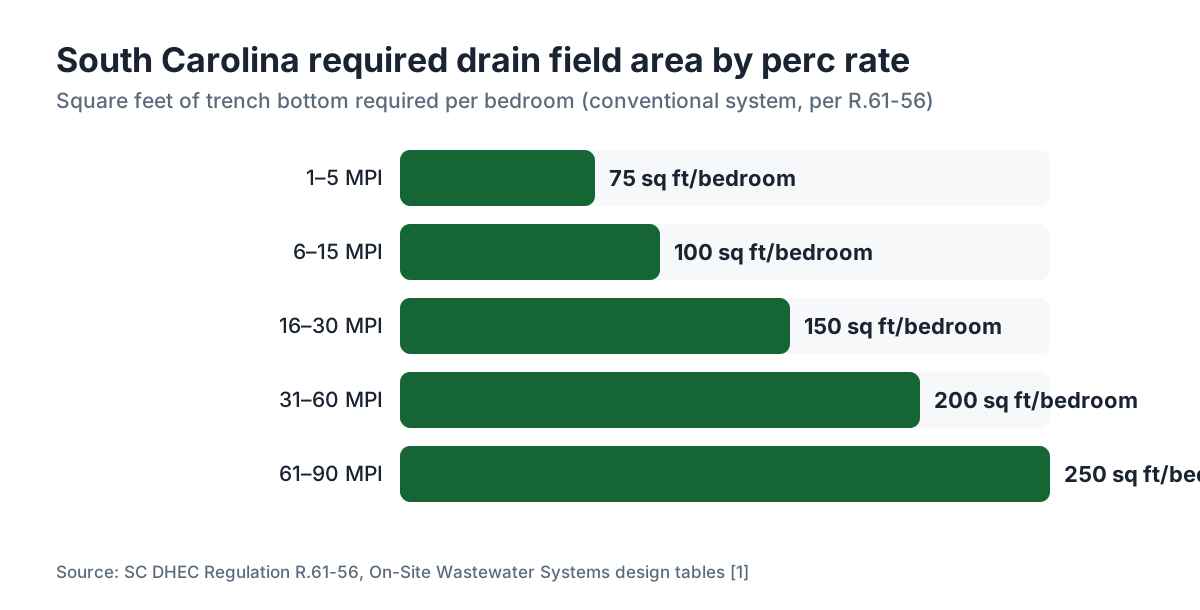
The perc rate drives drain field sizing directly. R.61-56 uses a table that converts MPI to required square footage of drain field per bedroom [1]. Faster soil needs less area. Slower soil needs more.
Here's how it plays out in rough numbers.
| Perc Rate (MPI) | Required Area per Bedroom (sq ft, conventional trench) |
|---|---|
| 1 to 5 | 75 |
| 6 to 15 | 100 |
| 16 to 30 | 150 |
| 31 to 60 | 200 |
| 61 to 90 | 250 |
| >90 | Conventional system not permitted |
These figures come from DHEC's R.61-56 design tables [1]. A three-bedroom house in 30 MPI soil needs roughly 450 square feet of trench bottom. The same house in 90 MPI soil needs 750 square feet. More area means more excavation, more pipe, more stone or chamber fill, and more labor.
That's why the perc result lands straight in your cost to put in a septic tank estimate. Get the number before you lock your budget.
What's the difference between a perc test and a full DHEC site evaluation?
People say "perc test" loosely. What DHEC actually requires is a site evaluation, and the percolation test is one piece of it. The full evaluation covers soil morphology (what the profile looks like from borings), the perc test, topography, setback measurements, and the proposed system design concept.
Some lots have soil that obviously won't perc, and DHEC can rule the lot "unsuitable" from the borings alone, without running the timed portion. On very sandy lots that clearly drain fast, the specialist can confirm suitability from borings and a quick look.
The written output is a site evaluation letter, more than a bare perc number. That letter is what you take to the county building department to pull a permit for the structure. No site evaluation letter, no building permit in most South Carolina counties.
For existing systems, DHEC also inspects during the septic tank inspection process, which is separate from the initial site evaluation and checks the installed system's condition and function.
How do I find and use the DHEC perc test application for South Carolina?
The official application comes through DHEC's Environmental Affairs offices. The current process for a residential site evaluation:
- Go to scdhec.gov and find Environmental Affairs, then On-Site Wastewater [2]. Download the current application form. Forms change, so use the live version from the site, not a copy someone hands you.
- Fill out the parcel information completely. Include the tax map number, which DHEC uses to pull county GIS data on your lot. A missing or wrong parcel number delays scheduling.
- Submit the form with payment to your regional DHEC Environmental Affairs office. DHEC runs eight regional offices across the state [2]. Send it to the one covering your county, not to Columbia.
- DHEC contacts you to schedule the site visit. Be there, or have someone there who can grant access and answer questions about where the structure goes.
- Get your written determination. If approved, it spells out the system type and size requirements. If unsuitable or provisional, it explains why and what alternatives DHEC might consider.
For operators running several SC projects at once, keeping copies of each site evaluation and its expiration date isn't optional. Systems like SepticMind store these documents and flag upcoming expirations so nothing slips.
What should property buyers do before purchasing land in South Carolina?
Make the purchase contingent on a passed DHEC site evaluation. Every real estate attorney in the state gives this advice, and buyers still skip it.
Here's the risk in plain terms. South Carolina has a lot of clay-heavy Piedmont ground and low-lying coastal plain lots that won't support a conventional system. Some of it won't support any system at a reasonable cost. A failed perc test on land you already bought can leave you holding a parcel worth far less than you paid.
The contingency clause should give you enough time to finish the DHEC process, usually 60 to 90 days. Sellers push back sometimes, but on unimproved rural land it's a fair ask.
If the seller says the lot "already has a perc test," ask for the written DHEC determination letter, confirm it's inside the five-year validity window, and confirm the lot boundaries and proposed structure location match what was evaluated. A perc approval is site-specific and structure-specific.
The EPA's SepticSmart program also pushes buyers to verify a property's wastewater capacity first, advising that homeowners should understand what type of system serves their property and make sure it works [4]. That applies to vacant land too.
Frequently asked questions
How much does a DHEC perc test cost in South Carolina?
The state DHEC application fee for a residential site evaluation is $200. Most homeowners also pay $200 to $600 for a private soil scientist to run a preliminary assessment before the state visit. Total out-of-pocket cost is typically $400 to $900 for a standard residential lot. If you need an alternative system design after the evaluation, engineering fees add $500 to $2,000 or more.
How long does it take to get DHEC perc test results in South Carolina?
DHEC's target is 30 days from application to written determination. In practice, the site visit is usually scheduled two to six weeks after you submit, and results come within a few days of the visit. High-growth counties and busy seasons can push that to six to eight weeks. Ask for a scheduling estimate when you submit your application.
Can I do a perc test myself in South Carolina?
No. Only a DHEC environmental health specialist can conduct the official site evaluation and perc test used for permitting. You can hire a private soil scientist for a preliminary assessment to catch problems before you pay the state fee, but that private report cannot substitute for the DHEC evaluation. The official DHEC site visit is mandatory for any septic permit.
How long is a DHEC perc test approval valid?
A DHEC site evaluation approval is valid for five years from the date of issue. If you haven't obtained a construction permit and started installation inside that window, you need a new site evaluation. Track the expiration date carefully, especially on investment land or lots where construction gets delayed.
What perc rate does South Carolina require for a conventional septic system?
R.61-56 requires a percolation rate between 1 and 90 minutes per inch (MPI) for a conventional trench or drip system. Below 1 MPI the soil drains too fast to treat wastewater adequately. Above 90 MPI it drains too slowly. Soils outside that range need an alternative system design or may be declared unsuitable.
What happens if my property fails the DHEC perc test?
A failure doesn't always mean the lot can't be developed. DHEC may issue a provisional approval requiring an alternative system like a mound, drip irrigation, or aerobic treatment unit. You can also hire an engineer to submit more soil data, redesign the structure's footprint to hit better soil, or appeal the determination. On truly unsuitable lots, your best tool is a purchase contingency that lets you exit the deal.
Do I need a DHEC perc test for a septic system repair or replacement?
It depends on the scope. A like-for-like tank repair generally doesn't need a new site evaluation. Big changes, like replacing a failed drain field, expanding capacity, or switching system type, do require DHEC review and often a new or updated evaluation. Contact your regional DHEC Environmental Affairs office before any major work to confirm what's required.
Where do I submit the DHEC perc test application in South Carolina?
Submit to the DHEC regional Environmental Affairs office covering your county. DHEC runs eight regional offices across the state. Applications go to the regional office, not to headquarters in Columbia. Find the correct office and the current application form on scdhec.gov under Environmental Affairs, On-Site Wastewater.
Does a DHEC perc test approval guarantee I can build on the lot?
Not by itself. A site evaluation approval means the lot can support the specific wastewater system named in the determination. You still need county building permits, zoning approval, and a DHEC-registered contractor to install the system. The site approval is a prerequisite for the building permit, not a substitute for it.
Can I transfer a DHEC perc test approval to a new property owner?
Yes. The site evaluation approval is tied to the parcel, not the applicant, so it transfers with the property during a sale as long as it's still inside its five-year validity period and the proposed structure location hasn't changed. The new owner should verify this before closing and get a copy of the original DHEC determination letter from the seller.
What soil conditions in South Carolina most often cause perc test failures?
Heavy clay common in the Piedmont (Richland, Lexington, Spartanburg counties) often exceeds 90 MPI. Shallow seasonal high-water tables in the coastal plain (Berkeley, Dorchester, Horry counties) cut effective soil depth. Hardpan or fragipan layers block drainage in otherwise decent soil. Lots too small for required setbacks also produce unusable approvals even with acceptable perc rates.
How does the perc test result affect the size and cost of my septic system?
Directly and hard. R.61-56 sets required drain field area per bedroom based on perc rate. A 3-bedroom house in 15 MPI soil needs about 300 square feet of trench bottom; the same house in 90 MPI soil needs 750. More area means more excavation, materials, and labor. Know your perc result before you finalize any construction budget.
Are there alternatives to a conventional septic system if my perc test results are poor?
Yes. R.61-56 permits several alternatives for soils that fail conventional criteria: mound systems, low-pressure pipe, drip irrigation, and aerobic treatment units. They work on clay-heavy or high-water-table soils but cost more to install (often $15,000 to $30,000 or more) and require ongoing maintenance contracts. A DHEC-registered designer or licensed engineer can identify which alternative fits your site.
Does the EPA have guidance on septic system site evaluation I should know about?
The EPA's SepticSmart program gives general guidance on on-site systems and recommends verifying a property's wastewater capacity and system condition before purchase. For South Carolina requirements, DHEC's R.61-56 regulation controls. The EPA program is a useful framework, but DHEC's state rules are what actually govern permitting in SC.
Sources
- Soil Science Society of America, Certified Professional Soil Scientist program: The Soil Science Society of America certifies professional soil scientists; credentials to look for when hiring a private evaluator in states without independent soil scientist licensure.
- US EPA, SepticSmart Program: EPA SepticSmart advises homeowners to understand what type of wastewater system serves their property and ensure it is in good working order, including before purchase.
- US EPA, Types of Septic Systems: EPA documents alternative on-site wastewater system types including mound systems, drip irrigation, and aerobic treatment units suitable for poor-percolating soils.
- Clemson University Extension, Home and Garden Information Center: Clemson Extension provides guidance on soil evaluation and septic system siting for South Carolina residential properties, referencing DHEC R.61-56 requirements.
- South Carolina Code of Laws, Title 44 (Health): South Carolina law authorizes DHEC to regulate on-site wastewater systems and issue or deny permits based on site evaluations.
- US EPA, Onsite Wastewater Treatment Systems Manual (EPA/625/R-00/008): EPA manual documents percolation test methodology, soil morphology evaluation procedures, and design loading rates that underlie state regulations including South Carolina's R.61-56 tables.
- University of Florida IFAS Extension (EDIS): Extension documentation of standard percolation test procedures including pre-soak requirements and MPI measurement methodology used across southeastern states.
- National Environmental Services Center, West Virginia University: NESC research and guidance on alternative septic system costs, noting mound and drip systems typically cost $15,000 to $30,000 or more above conventional systems on difficult soils.
Last updated 2026-07-09