Septic tank inspection: what it covers, costs, and when you need one
By the SepticMind Editorial Team

TL;DR
- A septic tank inspection costs roughly $100, $900, depending on whether it's a basic visual check or a full camera and load test.
- An inspector checks the tank, inlet and outlet baffles, drain field, and any pumps or alarms.
- Most states require one at home sale.
- Plan on 2 to 4 hours for a thorough inspection.
What does a septic tank inspection actually check?
A septic inspection is a structured look at every part of your onsite wastewater system, not the tank alone. A qualified inspector will locate the tank, expose the access lids, measure scum and sludge layers, check inlet and outlet baffles (the T-shaped fittings that keep solids from flowing out), verify the water level inside the tank, and then trace the effluent path out to the drain field.
The drain field gets real attention in any inspection worth paying for. The inspector looks for saturated soil, surfacing effluent, dead patches of grass over distribution lines, and any sign the field is hydraulically failing. Some inspectors probe the soil directly; others read it from surface indicators and a dye or water test.
If your system has a pump, alarm float, or pressure manifold, those get tested too. The inspector records the tank size, construction material (concrete, fiberglass, or plastic), and approximate age. They note any cracks, root intrusion, or evidence of previous repairs.
The EPA's SepticSmart program describes the basic components every homeowner should understand: "A typical septic system has four main components: a pipe from the home, a septic tank, a drain field, and the soil." [1] An inspection checks all four, not the buried tank alone.
Here's what the inspector does NOT do in most standard inspections. They don't excavate the entire drain field, they don't pressure-test pipes, and they generally don't camera the lateral lines unless you pay for that upgrade. Know what you're getting before you book.
How much does a septic tank inspection cost?
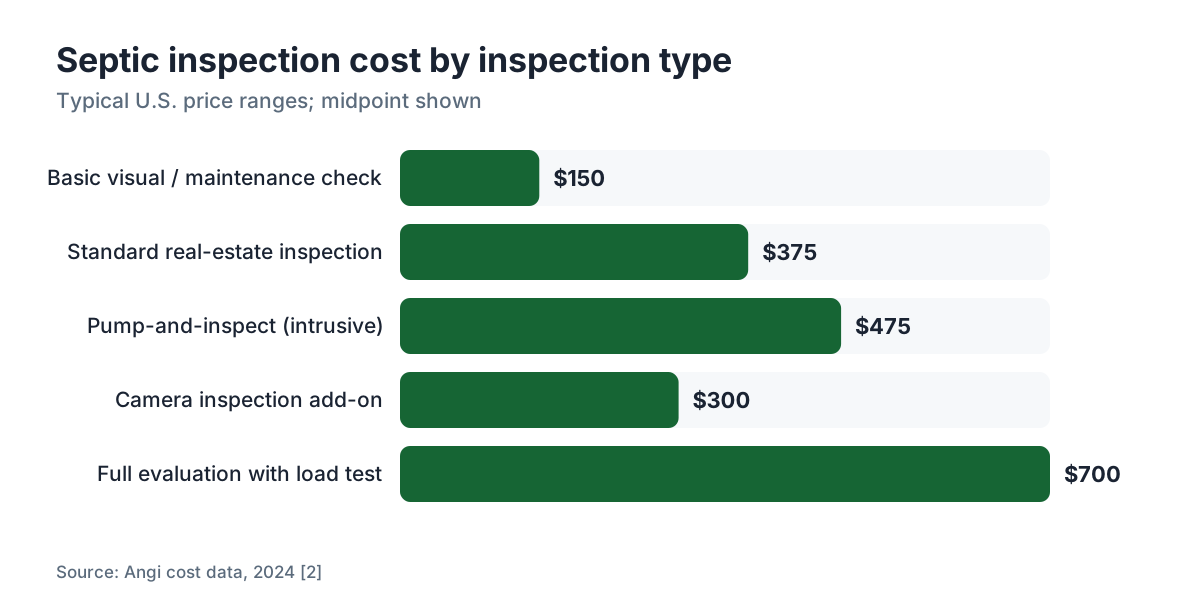
Septic tank inspection cost depends almost entirely on the inspection type and your region. Here's an honest breakdown based on industry pricing data and what contractors report across the U.S. [2]
| Inspection type | Typical cost range | What you get |
|---|---|---|
| Basic visual / maintenance check | $100, $200 | Lid-off look, sludge measurement, field walk |
| Standard real-estate inspection | $250, $500 | Full system evaluation, written report |
| Full intrusive inspection (pump + inspect) | $350, $600 | Tank pumped, interior inspected, baffle condition confirmed |
| Camera inspection of drain lines | $200, $400 add-on | Video of lateral pipes, locates breaks or root intrusion |
| Full evaluation with load test | $500, $900 | Fills system with water, monitors field absorption |
A few cost drivers matter a lot. If the tank has never had risers installed and the lids are 18 to 24 inches underground, you could pay $100, $300 just in excavation labor before the inspection starts. [3] Adding septic tank risers solves that permanently and typically costs $200, $400 installed.
Geography matters too. Rural areas with lower labor rates run toward the bottom of each range; competitive suburban markets in New England or the Pacific Northwest often hit the top. Nobody has perfectly uniform national survey data on this. The ranges above reflect pricing reported by state extension services and contractor associations, not a single controlled study.
Septic system inspection cost also varies by who does the inspection. A licensed home inspector with septic training will generally charge less than a certified septic system inspector or a licensed sanitarian, but the depth of their report differs too. For a home purchase, spend the money on a dedicated septic inspector rather than tacking it onto a general home inspection.
What are the different types of septic inspections?
There are three broadly recognized types, and they're not interchangeable.
Visual inspection. The inspector opens the lids, looks in, probes sludge and scum depths, walks the drain field. No water added, no pumping required. This is the maintenance check your pumper does every few years. It catches obvious problems but can miss a failing drain field that hasn't surfaced yet.
Standard (non-intrusive) inspection. Common in real estate transactions in states without stricter rules. The inspector observes the system under normal household loading, checks baffles and floats, walks the field, and writes a report. Many state regulations specify minimum standards for this type. In Massachusetts, for example, Title 5 (310 CMR 15.000) requires a specific inspection protocol at point of sale that includes pumping the tank. [4]
Full intrusive (or pump-and-inspect) inspection. The tank gets pumped first, then inspected inside. This is the only way to actually see the tank walls, inlet and outlet tees, and the bottom for cracks or structural problems. Buying a home with a septic system? This is the one to insist on. The cost is higher because you're paying for septic tank pumping plus the inspection, but you get real information.
Some states and counties have their own classifications. California, for instance, distinguishes between an inspection conducted by a registered environmental health specialist versus a licensed plumber, and the required scope differs. Check your state's environmental or public health agency website for the actual language in your local code.
When do you actually need a septic tank inspection?
There are four situations where an inspection is non-negotiable.
Home purchase. If the home you're buying has a septic system, get an independent inspection, period. A general home inspector walking the yard and sniffing the air is not enough. Many lenders now require a septic inspection before approving a mortgage on a property with an onsite system. Some states (Massachusetts, New Hampshire, New Jersey) mandate it by law at point of sale. [4][5]
Permit applications. Adding a bedroom, building an accessory dwelling unit, or expanding the home's footprint usually triggers a required septic inspection or capacity evaluation. The logic is simple: more bedrooms mean more expected wastewater flow, and the county needs to know the existing system can handle it.
Routine maintenance. The EPA recommends inspecting septic systems every 1 to 3 years and pumping every 3 to 5 years, depending on household size and tank volume. [1] Most homeowners skip the annual inspection and rely on the pumping visit as their only checkup. That works reasonably well if your pumper actually opens both lids, measures layers, and checks baffles. Many don't, or don't charge for the extra time. Ask explicitly.
Trouble signs. Slow drains throughout the house, gurgling in the plumbing, wet spots or lush green grass over the drain field, sewage odors inside or outside, and sewage backups all warrant an immediate inspection before you spend money on septic tank repair or assume you just need a pump-out.
Bought a home and don't know when the tank was last pumped or inspected? Schedule one now. You're not being paranoid. You're getting baseline data.
How long does a septic inspection take?
A basic visual inspection on a straightforward system with accessible lids runs about 1 to 1.5 hours. A standard real-estate inspection with a written report takes 2 to 3 hours on site. A full intrusive inspection that includes pumping the tank, waiting for the tank to be emptied by the pump truck, and doing a thorough interior and field inspection takes 3 to 4 hours or more.
The written report typically comes 24 to 72 hours after the site visit for real-estate inspections, since the inspector has to compile findings, photograph documentation, and often fill out a state-required form. In Massachusetts under Title 5, the inspector has 30 days to submit the inspection report to the local board of health. [4]
Delays happen when lids can't be located quickly (old systems with no as-built drawings), when the pump truck is dispatched separately and arrives late, or when the drain field needs more investigation than expected. Have the lid locations and an up-to-date as-built diagram of your system? Hand those to the inspector before they arrive. It saves time and may save you money.
Who is qualified to perform a septic inspection?
This varies by state, and the variation is real. In most states, septic inspections at point of sale must be conducted by a licensed or certified professional, but the licensing category differs.
Common license types that authorize septic inspections, depending on the state:
- Licensed sanitarian or registered environmental health specialist
- Licensed septic system installer or site evaluator
- Licensed professional engineer (PE) with onsite wastewater experience
- Certified home inspector with specific septic endorsement (accepted in some states for non-sale inspections only)
The National Onsite Wastewater Recycling Association (NOWRA) maintains a registry of inspectors and sets voluntary certification standards. [6] Your state's environmental or public health agency is the authoritative source for who is legally allowed to sign a point-of-sale inspection report in your jurisdiction.
For routine maintenance inspections, a licensed septic pumping contractor who physically opens the tank and measures layers is practically sufficient, even if they don't produce a formal report. For any transaction or permit, use someone with the appropriate state credential.
One honest caution: inspectors hired by the seller of a home have a subtle conflict of interest. Always hire your own inspector as a buyer, even if the seller provides a recent inspection report.
What can fail a septic inspection?
An inspection result is usually reported as pass, conditional pass, or fail (or equivalent terms, which vary by state). Here's what drives each outcome.
Outright failures typically involve: sewage surfacing in the yard, sewage backup into the home during the inspection, a tank in structural failure (collapsed, cracked through, missing baffles entirely), a drain field that shows zero absorption capacity, or a system discharging to surface water. These require repair or replacement before the property can legally change hands in most states.
Conditional passes are more common. The tank needs pumping, a baffle needs replacement, a riser needs to be added for access, or minor surface saturation is present but the field still functions. These are usually fixable in days to weeks and at moderate cost. Replacing a single concrete baffle, for example, typically costs $150, $300. [3]
What inspectors cannot tell you: whether a drain field will last 5 more years or 15. Soil absorption degrades gradually, and there's no definitive test short of excavation and a perc test that tells you remaining field life with precision. A good inspector will give you their professional read, but treat predictions about a drain field's remaining life as estimates, not guarantees.
If an inspection reveals a failing drain field, the path forward involves septic system repair, which could mean aerating the soil, installing a new drain field section, or full system replacement. Those costs run from a few thousand dollars to $20,000 or more depending on soil conditions and system size.
What happens during the inspection, step by step?
Knowing the sequence helps you prepare and helps you judge whether your inspector is doing a thorough job.
- Pre-inspection review. A good inspector asks for the as-built drawing, permit history, and any maintenance records before arriving. If you don't have these, the county health department or environmental office often has copies on file.
- System locating. If lids aren't visible, the inspector uses a probe rod, a metal detector (for metal lids), or a septic locating device. This step alone can eat 20 to 30 minutes on an older system.
- Lid exposure. Both the inlet and outlet lids should be opened, not one. Inspecting only the outlet side is a shortcut that misses half the tank.
- Interior observation. The inspector measures scum depth (floating solids at the top) and sludge depth (settled solids at the bottom) using a calibrated Sludge Judge or similar tool. When combined scum and sludge take up more than about one-third of the tank's working volume, it's time to pump. [7]
- Baffle inspection. Both baffles are checked visually and with a probe. Concrete baffles corrode from hydrogen sulfide gas over time; a missing or crumbled outlet baffle is one of the most common findings.
- Drain field evaluation. The inspector walks the field area, probes for saturation, and looks for telltale signs of failure. Some inspectors run a dye test or a timed load test at this stage.
- Component checks. Pumps, floats, alarms, distribution boxes, and risers all get tested or visually confirmed.
- Documentation. Photos, measurements, and findings go into the written report.
If an inspector skips steps 3, 5, or 6, you have not received a thorough inspection.
What does a septic inspection report include?
A standard inspection report for real estate purposes typically contains: the date of inspection, the inspector's license number, the property address and system permit number (if available), a sketch or reference to the as-built diagram, the tank size and type, sludge and scum measurements, the condition of all observed components, drain field observations, any deficiencies noted with a severity classification, and the overall pass/fail/conditional determination.
In states with required formats, the report must be submitted to a specific agency. Massachusetts requires submission to the local board of health within 30 days. [4] New Hampshire requires the form be signed by a certified inspector and submitted to the Department of Environmental Services. [5]
For routine maintenance inspections, you'll usually get a simpler one-page summary or even just verbal findings. That's fine for maintenance purposes, but always ask for something in writing so you have a record.
Keep every inspection report you receive. They establish a maintenance history, which matters for resale value and for diagnosing problems down the road. Store them with your property documents.
How do septic inspections differ at home sale versus routine maintenance?
The purpose changes almost everything.
A maintenance inspection is about catching small problems before they become expensive ones. The homeowner knows the system's history. The inspector can be informal, the reporting can be verbal, and the standard is practical: is this system functioning and when does it need service?
A point-of-sale inspection is a legal event in many states. It produces a record that affects whether a transaction can proceed, what repairs are required before closing, and what the seller must disclose. The inspector must be licensed for this purpose, the report format may be state-mandated, and the findings may trigger required repairs before deed transfer.
The stakes also differ for the inspector. A maintenance inspector who misses a minor baffle issue has made an error but probably not a lawsuit-level one. A point-of-sale inspector who misses a failing drain field that costs $18,000 to replace six months after closing faces real liability. That's one reason thorough point-of-sale inspectors cost more.
From the buyer's side: do not skip a real-estate inspection to save $400. A failed drain field discovered after closing is yours to fix, at full cost, with no recourse unless you can prove the seller knew and concealed it. Septic failures are the most common large unexpected repair cost for new homeowners on private systems, according to housing surveys cited by state extension services. [8]
For operators running inspection services, tools like SepticMind help track inspection records, schedule reminders, and manage the documentation workflow across many properties.
Can you do a septic inspection yourself?
For a basic maintenance check, a motivated homeowner can do quite a bit. You can locate your lids, open them (carefully, using two people, concrete lids are heavy and a fall into a septic tank is a serious safety hazard), visually check the water level, look for obvious signs of missing or damaged baffles, and walk the drain field for surface saturation or odors.
You can measure sludge and scum depths using a homemade Sludge Judge (a clear plastic tube with a check valve) or a purchased one for about $40. The EPA's SepticSmart materials describe how to read these measurements. [1]
What you cannot do as a homeowner: produce a legally recognized point-of-sale inspection report, certify a system for a building permit, or safely enter a septic tank for interior inspection. Septic tanks contain hydrogen sulfide and methane gas. Entry without confined space equipment and training has killed people.
For routine maintenance purposes, a self-check between professional visits is genuinely useful. You'll catch a rising sludge level, a floating lid, or early field saturation before they become emergencies. Combine your self-checks with scheduled septic tank pumping every 3 to 5 years and you're ahead of most homeowners.
How do you find a qualified septic inspector near you?
Start with your state's environmental or public health agency. Most states maintain a searchable database of licensed septic system professionals. Search for your state name plus "onsite wastewater" or "septic system inspectors" on the agency site.
The National Onsite Wastewater Recycling Association (NOWRA) has a member locator at nowra.org. [6] The National Association of Wastewater Technicians (NAWT) also certifies inspectors and maintains a directory. Both organizations require passing an exam and continuing education, so a certified member has demonstrated at least baseline knowledge.
For real estate transactions, ask your real estate attorney or agent who they've worked with and, more to the point, who they would personally hire for their own home. Referrals from people who have seen the inspection reports come back are worth more than online reviews.
Get at least two quotes for point-of-sale inspections. Ask specifically: what does the inspection include, will you open both lids, will you measure sludge and scum, will you probe the drain field, and what does the written report look like? An inspector who hedges on any of those questions is worth skipping.
Once you have an inspector lined up, gather everything you have on your system: the original permit, the as-built diagram, any previous inspection reports, and septic tank pumping records. Hand those over before the inspection, not after.
SepticMind's scheduling and records platform is one way service operators organize inspection requests, track documentation, and keep homeowner history in one place. [9]
What should you do to prepare for a septic inspection?
A little preparation makes the inspection faster, more accurate, and sometimes cheaper.
Locate and mark your lids. If you know where they are, mark them with a flag or small stake. If you don't know, look for the inspection port cleanout in the basement or crawl space, trace the main sewer line out of the house, and measure roughly 10 to 25 feet to find the tank. The as-built drawing from your county is more reliable.
Don't pump the tank just before the inspection. This is a common mistake. A pumped tank hides the sludge and scum data the inspector needs. Let the system sit in its normal operating state.
Don't do laundry or run the dishwasher that morning. You want the water level in the tank at normal resting level, not artificially high from a morning's worth of laundry.
Have records ready. Last pump-out date, previous inspection reports, any repair work done. If you've had recent septic tank cleaning or septic tank pump out service, have those receipts.
Clear the area. Move anything sitting on top of the tank lid or the drain field: decorative rocks, garden furniture, woodpiles. The inspector shouldn't have to move your stuff to do their job, and some won't.
Be present. Walk through the findings with the inspector in real time. A verbal debrief in your backyard beats reading the report cold two days later.
Frequently asked questions
How much does a septic inspection cost for a home purchase?
A point-of-sale septic inspection typically runs $250, $600. If the inspection includes pumping the tank first, which many states require and which gives a much fuller picture, expect $350, $700 total. The range depends on your region, tank access difficulty, and whether a load test or camera inspection is included. This is not the place to cut corners when buying a home.
How often should a septic tank be inspected?
The EPA recommends inspecting most septic systems every 1 to 3 years. Systems with mechanical components like pumps and alarms need annual checks. Gravity-fed systems in smaller households can stretch to 3 years between full inspections, but should still be pumped every 3 to 5 years. The inspection at pumping time, when the pumper measures sludge and checks baffles, counts if it's done properly.
Do I need a septic inspection when selling my house?
In many states, yes, it's legally required. Massachusetts, New Hampshire, New Jersey, and others mandate a septic inspection at point of sale, with the seller typically bearing the cost and disclosing the results. Even in states without a mandate, most buyers' lenders require one. Check your state's environmental agency website or ask a local real estate attorney for the specific rule in your jurisdiction.
What does it mean if a septic inspection fails?
A failed inspection means at least one component is in a condition that poses a health or environmental risk, or the system cannot handle the design load. Common causes include a failing drain field, sewage surfacing in the yard, or a structurally compromised tank. In real-estate transactions, a failure usually means required repairs before closing. Costs range from a few hundred dollars for a baffle replacement to $15,000 or more for a new drain field.
Can a septic tank pass inspection and still fail later?
Yes. An inspection is a snapshot of the system's condition on that day. A drain field that passed six months ago can be stressed by a wet winter, more occupants, or an undetected plumbing leak flooding it with water. Inspectors can't see inside pipes or soil. This is why the inspection report includes condition observations but can't guarantee future performance, and why maintenance records over years matter more than any single inspection.
Who pays for the septic inspection when buying or selling a home?
It depends on your state law and your purchase contract. In Massachusetts, the seller pays for the Title 5 inspection because it's a seller-required disclosure. In most other states without a mandate, it's negotiable. Buyers should pay for their own independent inspection regardless of who pays for any seller-provided inspection. Budget $300, $600 for an independent buyer's inspection.
What is a Title 5 septic inspection?
Title 5 is Massachusetts's onsite wastewater regulation (310 CMR 15.000). It requires a formal septic inspection before a property transfers, after certain building permit applications, and when a system fails. The inspection must be performed by a licensed Title 5 inspector, the tank must be pumped, and the report must be submitted to the local board of health. A system that fails Title 5 generally must be repaired or replaced before the sale closes.
How do I find my septic tank for the inspection?
Check your property records for an as-built diagram, usually on file with your county health or environmental department. If you don't have it, trace the main sewer pipe from your basement cleanout; the tank is typically 10 to 25 feet from the house in the direction the pipe runs. A metal detector locates steel lids. Your county permit office, state environmental agency, or a licensed inspector can also locate the tank using probing rods or electronic locators.
Does a septic inspection include the drain field?
A proper inspection does, yes. The inspector walks the drain field area looking for surface saturation, sewage odors, unusually lush or dead grass patterns, and surface effluent. Some inspectors probe the soil. More thorough inspections include a timed load test that observes how quickly the field accepts water under stress. Basic visual-only inspections may just note surface conditions. Ask your inspector explicitly what drain field evaluation is included.
What is a dye test for septic systems?
A dye test adds nontoxic fluorescent dye to the household drains while the inspector watches for the dye to appear at the drain field surface, in nearby ditches, or in surface water. It's a quick indicator of gross failure but has real limits: a failing field can sometimes absorb dye without surfacing it, and the test can be inconclusive in dry conditions. It's a screening tool, not a full evaluation. Most state inspection protocols have moved away from relying on dye tests alone.
Is a septic inspection the same as a septic pump-out?
No. A pump-out removes accumulated solids from the tank. An inspection evaluates the condition and function of the entire system. The two are often combined, and combining them is smart because pumping first lets the inspector see the tank interior clearly. But a pump-out alone is not an inspection, and an inspection doesn't necessarily include pumping. When scheduling, ask specifically for both if you want the full picture.
What questions should I ask a septic inspector before hiring them?
Ask: Are you licensed for point-of-sale inspections in this state? Will you open both the inlet and outlet lids? Will you measure sludge and scum depths? Will you evaluate the drain field? What does the written report include and when will I receive it? Do you carry errors and omissions insurance? How many septic inspections do you do per month? The last question tells you whether this is a regular part of their practice or an occasional side job.
Sources
- U.S. EPA SepticSmart Program: EPA recommends inspecting septic systems every 1 to 3 years and pumping every 3 to 5 years; describes four main system components including pipe, tank, drain field, and soil
- HomeAdvisor / Angi cost data for septic inspection: Typical septic inspection cost ranges from $100 to $900 depending on inspection type and region
- Massachusetts Department of Environmental Protection, Title 5 Inspection Program (310 CMR 15.000): Massachusetts Title 5 requires septic inspection at point of sale, inspector has 30 days to file report with local board of health, tank must be pumped during inspection
- New Hampshire Department of Environmental Services, Subsurface Systems: New Hampshire requires certified inspector to sign and submit septic inspection report to the Department of Environmental Services at point of sale
- National Onsite Wastewater Recycling Association (NOWRA): NOWRA maintains a member registry and sets voluntary certification standards for septic system inspectors
- U.S. EPA, Septic System Maintenance guidance: When combined sludge and scum layers take up more than about one-third of the tank's working volume, pumping is needed
- Virginia Cooperative Extension, Homeowner's Guide to Septic Systems: Septic failures rank among the most common large unexpected repair costs for new homeowners on private systems; describes standard inspection protocols
- SepticMind, septic service operations software: Platform used by septic operators to organize inspection scheduling, documentation, and homeowner records
- National Association of Wastewater Technicians (NAWT): NAWT certifies septic inspectors and maintains a professional directory; certification requires passing an exam and continuing education
- Virginia Cooperative Extension, Homeowner's Guide to Septic Systems: Describes standard septic inspection protocols, drain field evaluation methods including dye tests, and point-of-sale inspection requirements
Last updated 2026-07-09