How to choose a septic tank inspection company (and what they actually do)
By the SepticMind Editorial Team

TL;DR
- A septic tank inspection company sends a licensed inspector to assess your tank, drain field, and connected components.
- A basic visual inspection runs $100, $300; a full camera and load test costs $300, $900.
- You need one before buying a home, after a system alarm, or every 3 to 5 years as routine maintenance.
- Licensing requirements vary by state.
What does a septic tank inspection company actually do?
A septic inspection company does more than peek at a lid. At minimum, the inspector locates the tank, uncovers the access risers, checks water levels inside the tank, looks for inlet and outlet baffle condition, and notes any signs of backup, surfacing effluent, or drain field stress. That is a basic visual inspection.
A more thorough inspection, sometimes called a full system inspection or a Title 5 inspection in Massachusetts, adds a hydraulic load test: water is run through the house fixtures to stress the system while the inspector watches how the tank and drain field respond [1]. Some inspectors also use a camera to scope the inlet and outlet lines for root intrusion, cracks, or offset joints.
The inspector should hand you a written report. That report is what you give a real estate attorney, a lender, or a local health department. Any company that walks away without a written summary is not worth hiring.
What types of septic inspections are there, and which one do you need?
There are roughly four tiers of inspection. Knowing them saves you from paying for more than you need, or from getting less than you need.
Visual inspection (also called a basic inspection): The inspector looks at accessible components without running water or camera equipment. Good for a quick annual check when the system has a clean history. Cost: $100, $200 [2].
Standard inspection: Includes uncovering the tank, checking baffles, measuring scum and sludge layers, and sometimes running a brief water load. This is the most common type for routine maintenance. Cost: $150, $350 [2].
Full inspection: Adds a hydraulic load test, camera scoping of the inlet/outlet pipes, and a drain field probe or inspection port check. Required in many real estate transactions. Cost: $300, $900 [2].
Specialized inspections: Some states require a certified inspection tied to a specific code, like Massachusetts Title 5, New Hampshire RSA 485-A:30, or California's own onsite system rules. These follow a statutory checklist and produce a legally binding pass/fail report [3].
Buying a home? Get the full or state-required inspection. Doing routine maintenance? The standard inspection is usually enough. A basic visual is mainly useful if you just had the tank pumped and want a quick confirmation everything looks normal.
See our guide on septic tank inspection for a deeper walkthrough of what each tier covers.
How much does a septic inspection company charge?
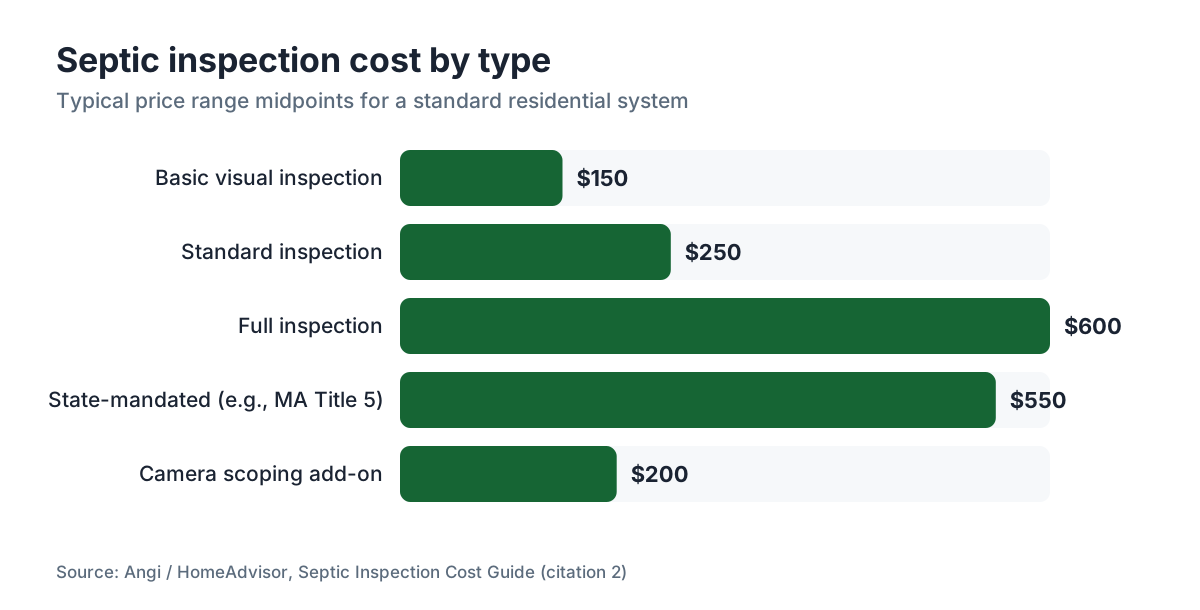
Cost ranges swing with inspection type, region, and whether pumping is bundled in. The table below gives honest ranges based on industry pricing data and EPA guidance.
| Inspection type | Typical cost range | Pumping included? |
|---|---|---|
| Basic visual | $100, $200 | No |
| Standard inspection | $150, $350 | Sometimes |
| Full inspection | $300, $900 | Sometimes |
| State-mandated (e.g., MA Title 5) | $400, $700+ | No, separate |
| Camera scoping add-on | $100, $300 extra | No |
Pumping on its own runs $300, $600 [4]. Many companies bundle a pump-out with the inspection at a discount, and that is usually worth taking. You cannot properly measure sludge and scum depths in an unpumped tank, so an inspector who skips pumping is working with incomplete information. Read more about septic tank pumping before you schedule.
Geography moves prices hard. Rural areas with long drive times cost more. High cost-of-living metros cost more. The $900 ceiling on a full inspection is normal in places like coastal New England or the San Francisco Bay Area.
The EPA's SepticSmart program notes that the average homeowner spends $250, $500 on a routine inspection. That is far less than the $3,000, $7,000 a minor repair can cost and a fraction of the $10,000, $30,000 a drain field replacement runs [5].
How do you verify a septic inspection company is licensed?
Licensing is state-controlled, and the rules are all over the map. Some states license septic inspectors directly. Others require inspections to be performed or supervised by a licensed Professional Engineer (PE), a registered sanitarian, or a certified onsite wastewater professional. A handful of states barely license anyone.
Here is what to check:
- Ask for the inspector's license number and license type.
- Look up your state's licensing board. For most states, that is the state environmental agency or the health department. The EPA's SepticSmart page links to state programs [5].
- Confirm the company carries general liability insurance and errors-and-omissions (E&O) coverage. E&O matters because if the inspector misses a failing drain field and you close on the house, you want a coverage path.
- Ask whether the inspector follows a documented inspection protocol tied to your state's onsite wastewater code.
The National Association of Wastewater Technicians (NAWT) offers a Certified Onsite Wastewater Professional (COWP) credential [6]. The National Environmental Health Association (NEHA) offers the Registered Onsite Wastewater Professional (ROWP) designation [7]. Neither is required by most states, but both signal that the inspector has put in formal training beyond the minimum.
One practical test: call the company and ask what specific checklist they use. If they cannot name one, or if they say they just "look around," find someone else.
What questions should you ask before hiring a septic inspection company?
The conversation before you book tells you a lot. Here are the questions worth asking, and what honest answers sound like.
What does your inspection include? A good answer names specific tasks: uncovering access points, probing sludge/scum layers, checking baffles, testing the distribution box, observing the drain field surface. A vague answer about "checking everything" is a flag.
Do you use a camera? Camera scoping of the inlet and outlet lines is not standard for every inspection type, but you want to know upfront whether it is included or available as an add-on.
Will you pump the tank as part of the inspection, or do I schedule that separately? Many inspection companies also hold a pumping license. Many do not. Know before you book.
What does your written report look like? Ask for a sample. A good report identifies each component, assigns a status (pass, marginal, fail, not accessible), and notes the basis for each finding.
Are you licensed and insured in this state? Ask directly. Then verify.
Have you inspected systems in this area before? Soil type, water table, and local code quirks matter. An inspector who knows your county is worth something.
Do you perform repairs? Some inspection companies also do septic tank repair and septic system repair. That can be convenient, but it creates a potential conflict of interest. Know whether the same person who fails your system will be quoting you on the fix.
When do you actually need a septic inspection?
Four situations genuinely call for one, and a few where you are probably fine skipping it.
Before buying a home. This one is non-negotiable. A failing septic system is expensive and almost never disclosed by sellers. General home inspectors are usually not trained in septic systems, and their inspection almost never includes a hydraulic load test or tank entry. You need a dedicated septic inspection company [5].
Before selling a home. In many states, a passing inspection is required before a property transfer. Even where it is not, a recent passing report kills a common buyer objection and can speed up closing.
Every 3 to 5 years for routine maintenance. The EPA's SepticSmart guidelines recommend inspecting most septic systems every 3 years [5]. Systems with mechanical components (pumps, aerators, float switches) should be inspected every year. How often you schedule an inspection depends partly on how often you pump your septic tank, and the two often happen together.
After any system warning sign. Slow drains, sewage odors in the yard, soggy patches over the drain field, or sewage backup into the house all call for an inspection before they call for anything else. Do not guess. Confirm.
When you probably do not need a full inspection: you had a full inspection 12 months ago, the system passed, nothing has changed, and you just want to confirm the sludge level before pumping. A basic check is fine there.
What does the inspector check in the drain field?
The drain field (also called a leach field or absorption field) is where the system most commonly fails, and it is also the most expensive part to replace. A leach field replacement typically runs $5,000, $20,000 or more depending on size, soil, and location [4].
A good inspector checks several things:
Surface observation. They walk the drain field looking for lush green stripes (a sign of effluent surfacing), wet or spongy ground, sewage odors, and any structures on top of it (sheds, parked vehicles, tree roots).
Inspection ports or distribution box. If accessible, the inspector opens the distribution box to see whether effluent flows evenly to all laterals, or whether one is flooded while others sit dry.
Hydraulic load test response. During a full inspection, the inspector watches how fast the system recovers after a sustained water load. A system that backs up to the tank or shows surfacing during the test is failing.
Probe testing. Some inspectors use a probe rod to check soil saturation depth near the laterals.
The inspector usually cannot directly see inside the lateral pipes without a camera, and even with a camera, partial views are common. Any report that makes flat claims about the full condition of buried laterals without that caveat is overstating what is knowable.
How is a real estate septic inspection different from a routine one?
A real estate inspection carries more legal and financial weight, and the company you hire needs to understand that.
The standard is higher. Buyers, lenders, and their attorneys expect a written pass/fail finding on every major component, more than a general observation. Many mortgage lenders will not fund a loan without a current passing inspection, and some require it to have happened within 30 to 90 days of closing.
State law may dictate exactly what the inspection must cover. Massachusetts Title 5 (310 CMR 15.000) is the most codified example: it sets specific criteria for what counts as a failing system, requires a licensed inspector, and the report must be filed with the local Board of Health [3]. Other states with formal point-of-sale requirements include New Hampshire, Maine, and New Jersey (for certain transactions).
Timing matters. Schedule the inspection early in the due diligence period, not the day before closing. If the system fails or gets a conditional pass, you need time to negotiate repairs or credits. A septic tank pump out is often required before the inspection can be completed anyway, and that takes extra scheduling.
If you are a buyer, pay for the inspection yourself even if the seller offers to provide one. An inspector hired by the seller works for the seller.
What do septic inspection companies use for tools and technology?
The basics have not changed much: a probe rod, a measuring tape, a flashlight, and experience reading what a tank looks like when it is working versus failing. That still matters more than the gear.
Still, tools have improved. Drain camera systems let inspectors scope inlet and outlet pipes with real clarity. Ground-penetrating radar shows up in some markets to locate buried tanks and lateral lines without digging. Some companies use drone imaging to map large drain fields. Dye testing (adding a non-toxic dye to the water supply and watching where it surfaces) is a low-tech but sometimes useful way to confirm suspected surfacing.
For companies managing inspection records and scheduling across many jobs, platforms like SepticMind help operators organize inspection reports, track system history, and flag due-date reminders for clients. That back-end organization matters more to the quality of your documentation than to the physical inspection itself. But if the company you hire cannot tell you the date and findings of your last inspection without digging through paper files, that is a management problem worth noting.
One thing technology cannot replace: an inspector who has seen a hundred failing drain fields knows what a borderline one looks like. That pattern recognition does not come from a camera feed.
What happens if the inspection finds a problem?
A failed inspection report is not the end of the world, but it requires action. Here is how to read one.
Minor issues (damaged baffle, missing riser lid, roots in the outlet line) are repairs, not replacements. Most run $150, $800 and can be scheduled with a licensed septic tank repair company. These do not usually delay a real estate transaction if buyer and seller agree on a credit or a repair timeline.
Moderate issues (distribution box cracks, partial lateral failure in one zone) might be repairable, or might be early signs of a system approaching end-of-life. Get a written repair estimate before deciding how to proceed.
Major failures (complete drain field failure, tank structural collapse, sewage surfacing) mean the system needs replacement or major rehabilitation. This is where costs reach $10,000, $30,000 or more [4]. In a real estate transaction, a major failure is usually a negotiating point: the buyer demands a price reduction, a repair escrow, or a seller-funded replacement before closing.
A failed inspection during due diligence lets the buyer walk away or renegotiate. A failed system discovered after closing becomes the new owner's problem entirely. That is why the timing of the inspection matters so much.
For context on what repairs or full replacement involve, see our guides on septic system repair and cost to install septic system.
How do you find and vet a good septic inspection company in your area?
Start with your state health department or environmental agency. Most keep a public registry of licensed onsite wastewater inspectors searchable by county. That list is the safest starting point because it screens for minimum licensing automatically.
From there, a few practical filters:
Years in business and local focus. A company operating in your county for ten or more years has seen the local soil types, water table conditions, and code interpretations that affect your system. That knowledge is genuinely useful.
Online reviews, read carefully. Look for reviews that describe the inspection process specifically, more than general service satisfaction. Red flags: reviews that mention the inspector rushed through without opening the tank, or that the company pushed repairs hard on a system a second opinion found fine.
Ask your real estate agent or neighbors. In rural and suburban areas with lots of septic systems, local referral networks are often the most reliable source. A neighbor who had a good experience with a specific inspector two years ago is a real data point.
Get two quotes for a full inspection. Not because price is the main criterion, but because the quoting conversation reveals how the company approaches the work.
For homeowners who want to track inspection due dates, maintenance logs, and pump-out history in one place, SepticMind offers a homeowner tool that links into service records. That documentation makes the next inspection easier and gives any new inspector a full system history to work from.
One last thing: do not let urgency drive you to a bad choice. A real estate inspection scheduled two days before closing is almost never a good inspection.
Are home septic tank inspections covered by home warranties or insurance?
Generally, no. Standard homeowners insurance covers sudden accidental damage (a car drives into your tank, lightning hits your pump) but explicitly excludes gradual system failure, maintenance-related issues, and drain field degradation [8]. Most home warranties also exclude septic systems by default, though some offer optional septic add-on coverage for an extra premium.
Home warranty septic add-ons usually cover the mechanical components (pump motor, float switch, control panel) and sometimes the tank itself, but rarely the drain field. Read the exclusions carefully before paying for that rider.
The inspection cost itself is never covered by insurance or warranty. It is an out-of-pocket maintenance expense, the same as an HVAC service call.
One financial note: in some cases, home septic inspections and pump-outs may qualify as a deductible maintenance expense for rental properties. That is a tax question for your accountant, not a septic question.
Frequently asked questions
How long does a septic tank inspection take?
A basic visual inspection takes 30 to 60 minutes. A standard inspection with tank uncovering and measurements runs 1 to 2 hours. A full inspection with hydraulic load test and camera work can take 2 to 4 hours. If pumping is bundled in, add another 30 to 60 minutes. State-mandated real estate inspections like Massachusetts Title 5 often run 2 to 3 hours minimum because of the documentation requirements.
Do I need to be home during the septic inspection?
You do not have to be present, but it is worth being there if you can. The inspector can point out findings in real time, answer questions, and give you a much clearer picture than a written report alone. If you cannot be there, make sure there is clear access to the tank location, that any locked gates are open, and that someone is available to run household water fixtures during a hydraulic load test.
Can a regular home inspector do a septic inspection?
Most general home inspectors are not qualified to do a proper septic inspection. They can note obvious surface problems, but they typically do not open the tank, measure sludge and scum layers, test the drain field, or scope the pipes. A home inspection contingency does not substitute for a dedicated septic inspection from a licensed company. Hire them separately.
What is a passing vs. failing septic inspection?
A passing inspection means the system is working as designed with no code violations and no components in imminent failure. A failing inspection identifies one or more conditions that require repair or replacement under your state's onsite wastewater code. Some states also use a conditional pass category for systems that are working but have minor deficiencies that must be corrected within a set timeframe.
How often should I get a septic tank inspection?
The EPA's SepticSmart program recommends most household septic systems be inspected every 3 years. Systems with pumps, aerators, or other mechanical components should be inspected annually. If your system serves more people than a typical household, or if you have had past issues, annual inspections are worth the cost. Inspection and pumping are often scheduled together.
Does the septic company need to pump the tank before inspecting it?
For a full inspection, yes, pumping is either done before or during the inspection. You cannot accurately measure scum and sludge depths or inspect the tank interior properly without removing the contents. Some inspectors pump first and then inspect; others inspect before pumping to see how the tank has been performing. Either approach is valid as long as both happen.
What is the difference between a septic inspection and a septic cleaning?
A septic inspection assesses the condition and function of the system. Septic cleaning, or pumping, removes accumulated sludge and scum from the tank. They are different services, though many companies offer both. An inspection without cleaning gives you a status report. Cleaning without inspection tells you the tank is empty but nothing about whether the system is healthy. For maximum value, do both together. See our guide on septic tank cleaning for more.
What can fail a septic inspection?
Common failures include cracked or collapsed tank walls, missing or deteriorated inlet/outlet baffles, a full or flooded drain field that cannot absorb effluent, sewage surfacing in the yard, backup to the surface during a hydraulic load test, distribution box damage, and root intrusion that has compromised pipes. The specific criteria depend on your state's onsite wastewater code.
How do I find a licensed septic inspection company near me?
Start with your state health department or environmental agency's online registry of licensed onsite wastewater professionals. The EPA's SepticSmart program links to state program contacts. From there, confirm the company carries liability and E&O insurance, ask for a sample inspection report, and check local reviews. Local real estate agents and neighbors with septic systems are also reliable referral sources.
What is a Title 5 septic inspection?
Title 5 is Massachusetts state regulation 310 CMR 15.000, which sets specific requirements for septic system inspections required at the time of property transfer. It mandates a licensed inspector, a defined checklist, a pass/fail determination based on specific criteria, and filing the report with the local Board of Health. Other states have similar point-of-sale inspection requirements under different regulatory names.
Is a septic inspection required when selling a house?
It depends on the state. Massachusetts, New Hampshire, Maine, and New Jersey (in certain transfer situations) have statutory requirements. Many other states do not require it but lenders often do, especially for FHA and USDA loans. Even where not required by law, a current passing inspection removes a major buyer objection and is almost always worth the cost when selling.
How much does a septic inspection cost for a home purchase?
A full inspection suitable for real estate due diligence typically costs $300, $900 depending on your state, the system size, and whether pumping is included. State-mandated inspections like Massachusetts Title 5 run $400, $700 or more. Budget separately for pumping at $300, $600 if not bundled. The total out-of-pocket for inspection plus pumping is often $500, $1,200 for a home purchase scenario.
What should a septic inspection report include?
A good report documents the inspection date, inspector license number, property address, system type, tank size and material, sludge and scum measurements, condition of all accessible components (baffles, distribution box, drain field), results of any load test, photos, and a clear status finding for each component. It should identify what was not accessible and why. The report should be clear enough for a non-expert to understand without a follow-up call.
Sources
- Massachusetts Department of Environmental Protection, Title 5 Inspection Program (310 CMR 15.000): Massachusetts Title 5 requires a licensed inspector to perform a hydraulic load test and produce a pass/fail report filed with the local Board of Health at the time of property transfer.
- HomeAdvisor / Angi, Septic Inspection Cost Guide: Septic inspection costs range from $100 for a basic visual to $900 or more for a full inspection with camera and hydraulic load test.
- Massachusetts Department of Environmental Protection, Title 5 Regulation Text: 310 CMR 15.000 defines specific criteria for passing and failing a septic system inspection in Massachusetts and requires reports to be filed with the local Board of Health.
- EPA SepticSmart, How to Care for Your Septic System: EPA SepticSmart notes that septic system replacement can cost $3,000 to $7,000 for repairs and $10,000 or more for drain field replacement, making regular inspection a cost-effective investment.
- EPA SepticSmart Program: The EPA SepticSmart program recommends inspecting most septic systems every three years and systems with mechanical components annually; average routine inspection cost is $250, $500.
- National Association of Wastewater Technicians (NAWT), Certified Onsite Wastewater Professional program: NAWT offers the Certified Onsite Wastewater Professional (COWP) credential for inspectors and service technicians working on onsite septic systems.
- National Environmental Health Association (NEHA), Registered Onsite Wastewater Professional designation: NEHA offers the Registered Onsite Wastewater Professional (ROWP) designation as a voluntary credential for septic system inspectors.
- Insurance Information Institute, Homeowners Insurance Coverage FAQ: Standard homeowners insurance covers sudden accidental damage but explicitly excludes gradual system failure and maintenance-related septic issues.
- New Hampshire Department of Environmental Services, Septic System Rules (Env-Wq 1000): New Hampshire RSA 485-A:30 and related rules establish licensing requirements for septic inspectors and define inspection requirements for certain property transfers.
- HomeAdvisor / Angi, Septic Tank Pumping Cost Guide: Septic tank pumping typically costs $300, $600 for a standard residential tank.
Last updated 2026-07-09