Septic tank inspection in Kauai: what to expect and what it costs
By the SepticMind Editorial Team
TL;DR
- A basic septic tank inspection on Kauai costs roughly $150 to $400 for a visual check; a full pumped inspection with video or dye-tracing runs $300 to $600 or more.
- Hawaii state rules under HAR Title 11 Chapter 62 govern all individual wastewater systems, and Kauai County handles local permits.
- Most home sales require an inspection.
- Here's exactly what gets checked and what fails.
What does a septic inspection in Kauai actually involve?
A septic inspection is not one thing. It runs from a quick lid-off look to a full pump-and-camera job, and knowing which one you're getting matters a lot before you hand over money or sign a real estate contract.
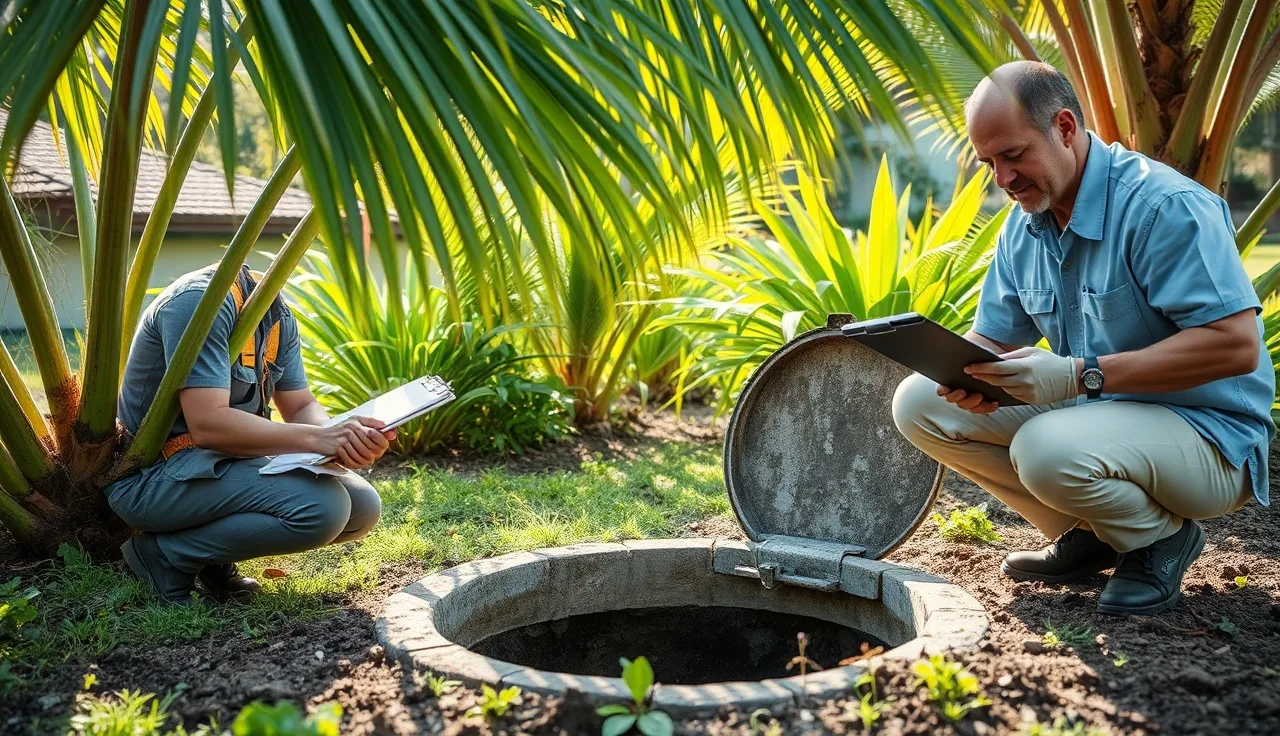
At the basic end, an inspector opens the tank access lid, checks liquid levels, looks at the condition of baffles and inlet/outlet pipes, and notes any obvious signs of overflow or structural damage. This takes 30 to 60 minutes and gives you a general health picture. It's fine for routine peace of mind. It's not enough for most lenders in a real estate transaction.
A full inspection goes further. The tank gets pumped first so the inspector can see the walls, bottom, and components clearly. They check the scum and sludge layers before pumping to gauge how overdue the tank is for service. Then they examine baffles, risers, lids, and the condition of the outlet pipe leading to the drain field or cesspool. Some inspectors do a dye test or load test to verify the drain field is accepting liquid without surfacing. A camera scan of the distribution lines is becoming more common in Kauai, particularly for older systems.
Kauai has a lot of cesspools in addition to septic systems. The distinction matters enormously right now because Hawaii state law (Act 125, signed in 2017) mandates that all cesspools be upgraded or converted by January 1, 2050, with priority areas required to act sooner [1]. If the inspection reveals your system is actually a cesspool rather than a true septic tank and drain field, you're looking at a very different conversation about future costs. An inspector working in Kauai should be able to tell you which system type you have.
What are Hawaii's rules for septic system inspections?
Hawaii regulates individual wastewater systems under Hawaii Administrative Rules (HAR) Title 11, Chapter 62. The Hawaii Department of Health (HDOH) sets the baseline standards statewide, including design criteria, setback distances, soil requirements, and operation standards [2]. Kauai County does not have its own separate septic code that supersedes state rules, but the county issues permits and handles local enforcement.
For new construction or system modifications, a permit from the Kauai County Department of Public Works is required. Inspections for those permitted installations are conducted or supervised by the county. For existing systems, particularly in real estate sales, the rules are less prescriptive about mandatory inspections. Lenders and title companies have filled that gap. FHA and VA loans routinely require evidence of a functioning wastewater system, which in practice means a professional inspection.
HAR 11-62 says individual wastewater systems must be maintained so they don't surface effluent, produce odors affecting neighbors, or discharge to surface water. Inspectors check against those standards. The rule language states that "no individual wastewater system shall be constructed, installed, altered, repaired, or extended" without a valid permit from the approving authority [2]. That means any repair work your inspection turns up will require a permit before a contractor can legally fix it.
The cesspool conversion deadline is the single biggest regulatory factor on Kauai right now. If your property has a cesspool within 500 feet of the shoreline or inside a Special Management Area, the state has indicated those systems face earlier action requirements. That covers a large chunk of desirable Kauai property.
For routine maintenance inspections not tied to a permit or sale, Hawaii does not set a specific frequency by statute. The EPA's SepticSmart program recommends inspecting a typical septic system every one to three years [3].
How much does a septic inspection cost on Kauai?
Kauai is an island with a small contractor base and real logistical costs. That pushes prices above national averages across the board.
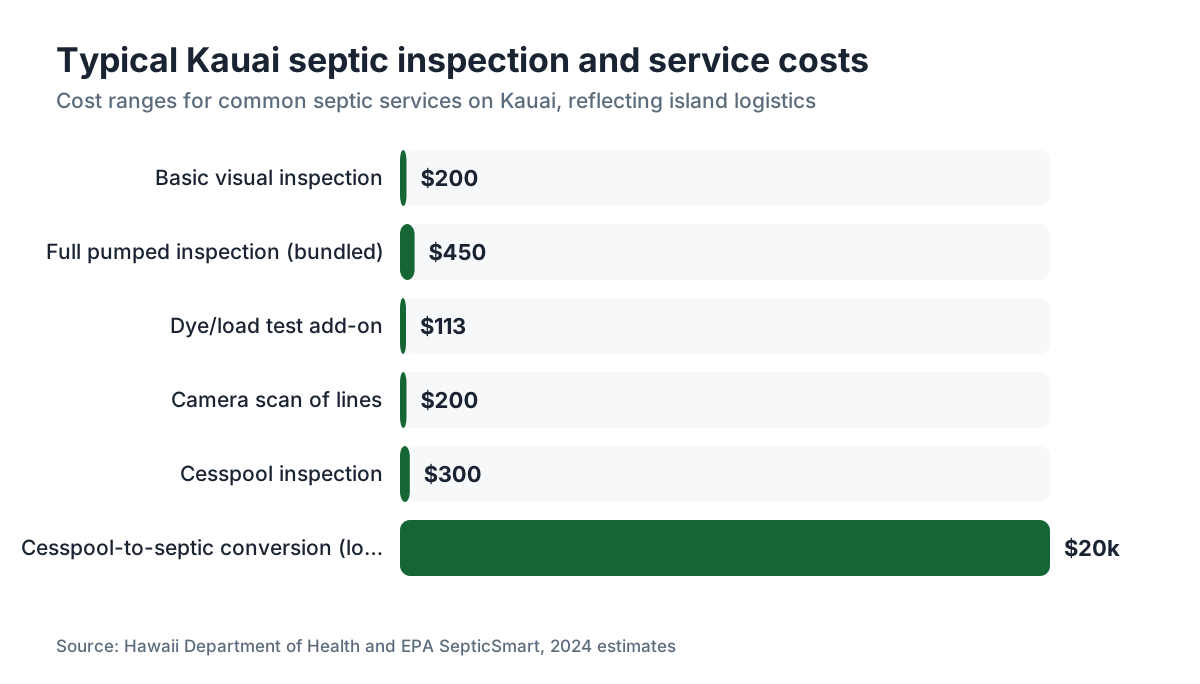
A basic visual inspection runs about $150 to $250. You get a lid-off check, a written report, and a licensed professional's opinion. For a home purchase, most buyers' agents will push you toward a full inspection.
A full pumped inspection, where the tank is emptied and thoroughly examined, costs $300 to $600 on Kauai once you account for the pump-out. The pumping itself runs $300 to $500 separately in Hawaii [4], so some companies bundle it and some don't. Ask before you book.
If the inspector adds a dye test to check the drain field, expect another $75 to $150. A camera inspection of distribution lines adds $100 to $300 depending on line length and condition.
Cesspool inspections can be more involved because there's no true outlet line or drain field to evaluate. The inspector checks depth, condition, and whether there's any surfacing liquid. Those often run $200 to $400.
| Inspection type | Typical Kauai cost range |
|---|---|
| Basic visual (no pump-out) | $150, $250 |
| Full pumped inspection | $300, $600 (pump-out bundled) |
| Dye/load test add-on | $75, $150 |
| Camera scan of lines | $100, $300 |
| Cesspool inspection | $200, $400 |
These ranges reflect what licensed pumpers and environmental health contractors have charged in recent years. Prices move. Always get a written quote that spells out what's included.
How do you find a licensed septic inspector on Kauai?
This is where Kauai gets genuinely tricky. The island does not have dozens of septic contractors to choose from. The pool is small, and some general home inspectors tuck a basic septic visual into a whole-home inspection package without being licensed wastewater professionals.
For anything beyond a cursory look, you want someone licensed by the Hawaii Department of Health as an individual wastewater system installer or inspector, or a licensed engineer (PE) with environmental or civil specialization. The HDOH maintains contractor licensing records, and you can verify a contractor's status through the Hawaii Professional and Vocational Licensing (PVL) database [5].
Local pumping companies that hold a Hawaii wastewater contractor license are often your best starting point. They pump tanks regularly, know the common system types on the island, and can combine the pump-out with the inspection in one trip, saving you money. Ask specifically: are you licensed to inspect individual wastewater systems under HAR Chapter 62, and will you provide a written report?
For real estate transactions, some buyers hire a licensed professional engineer to do the inspection. This adds cost, typically $500 to $800 all-in, but produces a report that satisfies nearly every lender and creates clear professional liability if something is missed. On high-value Kauai properties, that extra assurance is often worth it.
Get at least two quotes. Ask both what their inspection covers, whether pump-out is included, what the report format looks like, and how quickly you'll receive it. In a real estate context, timelines matter.
What does an inspector look for, and what causes a system to fail?
Knowing what gets inspected helps you understand what a failure report actually means and whether it's a minor fix or a major expense.
Inside the tank, inspectors check the inlet baffle (directs incoming waste downward, prevents short-circuiting), the outlet baffle (holds back scum and floating solids before liquid exits), and the overall structural condition of concrete or fiberglass walls. A cracked concrete tank in Kauai's wet, volcanic soil isn't unusual in older systems. Cracks let groundwater in, which overloads the tank, or let effluent leak out before it's treated.
Sludge depth matters. When sludge and scum together fill more than about one-third of the tank volume, solids start escaping to the drain field and clog it [9]. An inspector who pumps the tank first can measure this precisely.
The drain field (or leach field) is often the most expensive problem to find. Signs of failure include soft, wet ground over the field lines, sewage odors, lush green grass in a defined pattern, or slow-draining fixtures inside the house. A dye test puts a non-toxic tracer dye into the system and checks for it surfacing in the yard or in nearby drainage. Surfacing dye is a clear failure. Read more about how drain fields work and fail at our leach field guide.
Common failure causes on Kauai specifically include:
- Roots from tropical vegetation getting into older concrete tanks and lines. This is common with systems installed before current root barrier standards.
- High water table in low-lying areas, especially near the north and east shores where rainfall is extreme (Waialeale is one of the wettest places on earth).
- Overloaded systems from vacation rental use. A system designed for a two-bedroom home used as a six-person vacation rental takes far more hydraulic and organic load than it was engineered for.
- Cesspool systems that have simply silted up over decades.
If a system fails inspection, the inspector must report it to the Kauai County Department of Public Works and the Hawaii DOH when it represents a public health threat (surfacing sewage, proximity to water supply). Minor deficiencies like a damaged baffle can often be repaired without triggering a mandatory report, but confirm this with your inspector before assuming.
Do you need a septic inspection when buying or selling a home on Kauai?
Technically, Hawaii state law does not mandate a septic inspection for every real estate transaction. Practically, you almost always need one.
FHA loans require the appraiser to note the presence of a septic system and confirm it appears functional. If there are visible signs of failure, FHA will require a professional inspection and certification before closing [6]. VA loans have similar requirements. Conventional loans vary by lender, but most will require an inspection if the appraiser flags any concern.
Beyond lender requirements, there's the simple matter of what you're buying. On Kauai, where replacement systems can cost $15,000 to $50,000 or more for a new drain field (and cesspool-to-septic conversions run even higher), skipping the inspection to save $400 is a poor trade. The Hawaii cesspool conversion law alone means that if you buy a property with a cesspool, you're buying a future upgrade obligation.
Sellers should consider a pre-listing inspection for a different reason: surprises at closing are expensive. A seller who knows the system is healthy can document that clearly. A seller who discovers a failed drain field at closing has far less room to negotiate than one who finds it three months earlier and fixes it on their own terms.
Buyers, negotiate that the inspection report be delivered inside the due diligence period, and make sure you understand whether a cesspool vs. septic distinction affects your offer price. The difference in future upgrade cost is big enough to matter in any negotiation.
For related context on general inspection processes, our septic tank inspection article covers the full national framework.
How often should you have your Kauai septic system inspected?
The EPA's SepticSmart program recommends inspecting a standard septic system every one to three years [3]. The HDOH echoes this guidance for routine maintenance.
For Kauai homeowners, I'd lean toward the shorter end of that range, specifically every one to two years, for a few reasons. Kauai's rainfall is extraordinary. The Hanalei and north shore areas see 60 to 100 inches a year; parts of the interior see far more. High rainfall increases soil saturation, which stresses drain fields and can cause faster hydraulic overloading. Checking more often means catching problems while they're still cheap.
Vacation rental properties should be inspected annually without question. The usage patterns are fundamentally different from owner-occupied homes, and the regulatory and liability exposure from a failed system affecting guests is significant.
Pumping frequency and inspection frequency are related but not identical. A household of four with a 1,000-gallon tank should pump every three to five years under normal use, per EPA guidance [3]. An inspection can confirm whether your actual sludge buildup matches that schedule or whether your household's usage calls for more frequent service. How often to pump a septic tank is covered in detail in a separate guide.
After any major storm event on Kauai, which are common, it's worth a visual check of the area over your drain field. Ponding water that clears after a storm is different from ponding that persists. A persistent soft spot is worth having looked at.
What does a septic inspection report include, and what happens next?
A professional inspection report for a Kauai septic system should document the system type (septic tank with drain field, cesspool, aerobic treatment unit, or other), the tank size and material, the condition of all accessible components, the sludge and scum levels measured before pump-out, the drain field condition based on visual and any testing performed, any deficiencies found and their severity, and recommendations for repair, maintenance, or further investigation.
Some inspectors use a pass/fail format; others use a tiered system (satisfactory, marginal, unsatisfactory). For real estate purposes, make sure you understand which terminology the lender will accept.
If the report identifies deficiencies, the path depends on severity. A cracked outlet baffle is a straightforward repair. A failed drain field might mean anything from a simple resting-and-aeration protocol to full replacement. Your contractor should give you a written repair estimate before you decide whether to proceed. For repair context, see our guide on septic tank repair and septic system repair.
Any permitted repair work in Hawaii requires a permit from the county. The contractor pulls the permit, does the work, and the county inspects the completed repair. Budget time for this. Kauai County permit processing can stretch weeks during busy periods.
For serious failures (surfacing sewage, proximity to water sources, cesspool violations), the HDOH may issue a notice of violation with a compliance timeline. Those timelines are not usually generous.
How much does it cost to repair or replace a septic system on Kauai?
Hawaii is one of the most expensive states for septic work. Land, labor, materials, and permitting all cost more here than on the mainland, and on Kauai specifically, the island supply chain adds another layer.
Minor repairs like replacing a baffle, patching a riser, or installing an effluent filter run $150 to $600 for parts and labor. These are genuinely minor.
Drain field repair or partial replacement varies widely depending on how much of the field has failed and soil conditions. Expect $5,000 to $20,000 for a partial repair or field extension. Full drain field replacement, including any required soil testing and permitting, runs $15,000 to $40,000 on Kauai in most scenarios.
Cesspool-to-septic conversions are the big-ticket item many Kauai property owners face because of Act 125. Converting a cesspool to a conventional septic system with a drain field costs $20,000 to $50,000 on Kauai depending on lot size, soil conditions, and accessibility. Properties with limited space or challenging soil (high clay content, proximity to water features) may require more expensive alternative systems like drip-irrigation systems or aerobic treatment units, which push costs higher.
Full new septic system installation on Kauai for a new home runs $15,000 to $35,000 depending on system type and site conditions. See our guide on cost to install a septic system for context on what drives those numbers.
The Hawaii Department of Health has a cesspool conversion assistance program that has offered grants and low-interest loans in prior funding cycles [7]. Check current availability; funding opens and closes.
Scheduling routine septic tank pumping before repairs are needed is almost always the cheaper path.
What's different about septic systems in Kauai compared to the mainland?
Several things set Kauai apart from typical mainland septic scenarios, and they matter for inspection and maintenance decisions.
The rainfall and water table situation is genuinely extreme. Parts of Kauai receive 400 to 460 inches of rain a year at elevation, making it among the wettest places on earth [8]. Even coastal areas that get far less (Lihue averages about 39 inches) see intense rainfall events. Drain fields here work against saturated soil more often than nearly anywhere else in the U.S. A drain field that performs fine in Arizona would fail in months in a wet Kauai location.
Volcanic soil is both a challenge and sometimes an advantage. Highly porous volcanic material can drain well, but areas with heavy clay subsoil, common in some Kauai valleys, drain poorly. Soil testing (a perc test, or percolation test) is essential before any new system installation or major repair, and inspectors should know how local soil affects their reading of drain field performance.
The cesspool prevalence is significant. An estimated 88,000 cesspools exist statewide in Hawaii [1], and Kauai has more than its proportional share given its rural character and older housing stock. Many properties that owners believe have a septic system are actually on cesspools. An inspection is the only way to confirm what you have.
Vacation rental density on Kauai is high relative to permanent population. Many systems run at intensities far above their designed capacity. If you're buying a property with a vacation rental history, ask specifically whether the system was ever engineered for that use level.
The contractor market is thin. There are fewer licensed septic professionals on Kauai than in a similarly-sized mainland county. Scheduling an inspection may take weeks, not days, particularly during busy real estate seasons. Build that into your timeline.
Can software help septic operators manage inspections more efficiently on Kauai?
For the small group of licensed septic inspection and pumping businesses operating on Kauai, the administrative side of running inspections (scheduling, report generation, permit tracking, and customer follow-up) takes real time away from field work.
SepticMind is built for exactly that context: a septic service operator handling a book of inspections, pump-outs, and maintenance appointments with a small crew. The software manages scheduling, generates inspection reports, and tracks which customers are due for their next service. For an island market where every operator watches the schedule carefully, that kind of organized workflow matters.
Beyond software, the operational reality for Kauai inspectors is that coordination with the county permitting office and the HDOH takes planning. Keeping records of system types, past inspections, and repair history for each property address saves time when permits are needed.
For homeowners, the most practical tool is a simple log: date of last inspection, date of last pump-out, any repairs made and by whom, and the system type as confirmed by a professional. Keep it with your property records. It's useful at sale time and helps you track whether your service interval is realistic for your household.
Frequently asked questions
Is a septic inspection required to sell a home on Kauai?
Hawaii state law doesn't mandate a septic inspection for every sale, but FHA and VA loans require evidence of a functioning wastewater system, which in practice means a professional inspection. Most lenders, buyers' agents, and title companies push for one regardless of loan type. On high-value Kauai properties, it's effectively standard practice. Budget $300 to $600 for a full pumped inspection.
How do I know if my Kauai property has a septic tank or a cesspool?
You need a licensed professional to confirm this. Many Kauai homeowners believe they have a septic system when they actually have a cesspool. A cesspool is a covered pit that accepts raw sewage with no treatment and no drain field; a septic tank separates solids and releases treated effluent to a drain field. Hawaii's Act 125 requires all cesspools to be upgraded by 2050, so the distinction has real financial consequences.
How much does a septic pump-out cost on Kauai?
Septic tank pumping on Kauai typically runs $300 to $500 for a standard residential tank, reflecting island logistics and the limited number of licensed pumping contractors. Some inspection companies bundle the pump-out with a full inspection for $400 to $600 total. Always ask whether pump-out is included in the inspection quote before booking.
What is Hawaii's cesspool conversion law and does it affect me?
Hawaii Act 125 (2017) requires all cesspools in the state to be upgraded or replaced by January 1, 2050. Properties in priority areas, including those within 500 feet of shore or in sensitive environmental zones, may face earlier deadlines. If a Kauai septic inspection reveals you have a cesspool, you're buying a future upgrade obligation estimated at $20,000 to $50,000 depending on site conditions.
How long does a septic inspection take on Kauai?
A basic visual inspection takes 30 to 60 minutes on site. A full pumped inspection takes 2 to 3 hours, accounting for pump-out time, inspection of the emptied tank, and any drain field testing. Add another 30 to 60 minutes if the inspector does a dye test. The written report is usually delivered within 24 to 48 hours; some inspectors take a few days.
What happens if my septic system fails inspection on Kauai?
Minor failures like a damaged baffle require a permitted repair before the system can be certified. Serious failures, specifically surfacing sewage or discharge near water, must be reported to the Hawaii Department of Health and Kauai County. The county issues a compliance notice with a repair timeline. Permitted repairs must be inspected by the county before the system is cleared. In a real estate sale, the parties negotiate who pays for remediation.
Can heavy Kauai rainfall damage a septic system?
Yes. Extreme rainfall saturates soil, which prevents the drain field from absorbing effluent. This shows up as wet, soggy ground over the field lines or sewage backing up into the house. Kauai's north shore and east-facing areas are especially vulnerable. After major storm events, check your drain field area for persistent ponding. A system that performs fine in dry months can fail in a wet season on Kauai.
How do I find a licensed septic inspector on Kauai?
Verify any contractor through the Hawaii Professional and Vocational Licensing (PVL) database maintained by DCCA. You want someone licensed as an individual wastewater system installer or a licensed professional engineer. Local pumping companies often hold this licensure and can combine pump-out with inspection. Kauai's contractor pool is small; book well in advance, especially during active real estate seasons.
Does a Kauai septic inspection cover the drain field?
A thorough inspection includes a drain field evaluation, but how deep it goes depends on what you pay for. A basic visual check looks for surface signs of failure: odors, wet spots, lush grass over field lines. A dye test or load test confirms whether the field is actually accepting effluent. Camera inspection of distribution lines goes further still. For a home purchase, insist on at least a dye test.
What's the difference between a septic inspection and a septic cleaning?
An inspection is an evaluation: a professional examines the system and gives you a condition report. Cleaning, or pump-out, is a service: a vacuum truck removes accumulated sludge and scum from the tank. The two are often done together because pumping the tank first lets the inspector see the empty tank clearly. But you can pump without inspecting (just routine maintenance) or inspect without pumping (basic visual only). For a real estate inspection, you want both.
Are there grants available for cesspool conversion on Kauai?
The Hawaii Department of Health has run cesspool conversion assistance programs offering grants and low-interest loans in prior years, funded through state and federal sources. Availability is not continuous; programs open, get funded out, and reopen. Check directly with the Hawaii DOH Environmental Management Division for current program status. The USDA Rural Development program has also funded wastewater upgrades in rural Hawaii areas.
How often should a vacation rental property on Kauai have its septic inspected?
Annually, without exception. Vacation rental use imposes two to three times the hydraulic and organic load of a typical residential household, often with guests who use garbage disposals heavily, do multiple loads of laundry, and stay in the home nearly full time. Systems designed for a two-bedroom home can fail quickly under that kind of load. Annual inspection and more frequent pumping, perhaps every one to two years, is the right approach.
What permits are required for septic work on Kauai?
Any new installation, modification, or repair of an individual wastewater system on Kauai requires a permit from the Kauai County Department of Public Works, consistent with Hawaii Administrative Rules Title 11 Chapter 62. Your licensed contractor pulls the permit. Routine maintenance and pump-outs do not require a permit. The county inspects completed permitted work before sign-off. Permit processing times vary and can run several weeks.
Sources
- Hawaii Department of Health, Cesspool Conversion Program: Hawaii Act 125 (2017) requires all cesspools to be upgraded by January 1, 2050; approximately 88,000 cesspools exist statewide
- Hawaii Department of Health, Hawaii Administrative Rules Title 11 Chapter 62, Individual Wastewater Systems: HAR 11-62 prohibits construction, installation, alteration, or repair of any individual wastewater system without a valid permit from the approving authority
- U.S. EPA, SepticSmart Program: EPA recommends inspecting a septic system every one to three years and pumping every three to five years for a typical household
- Hawaii Department of Health, Environmental Management Division: Individual wastewater system maintenance and pumping costs in Hawaii reflect island logistics and a limited licensed contractor base
- Hawaii Department of Commerce and Consumer Affairs, Professional and Vocational Licensing: Hawaii PVL database allows verification of contractor licensing status for wastewater system installers and inspectors
- U.S. Department of Housing and Urban Development, FHA Single Family Housing Policy Handbook: FHA requires appraisers to note septic system presence and confirm functional operation; visible signs of failure trigger mandatory professional inspection before closing
- Hawaii Department of Health, Cesspool Conversion Assistance: Hawaii DOH has offered cesspool conversion grants and low-interest loans through state and federal funding programs
- NOAA National Centers for Environmental Information, Hawaii Climate Summary: Parts of Kauai receive 400 to 460 inches of annual rainfall, making it among the wettest places on earth; Lihue averages approximately 39 inches annually
- U.S. EPA, How Your Septic System Works: When sludge and scum together occupy more than about one-third of tank volume, solids begin escaping to the drain field, causing clogging
- USDA Rural Development, Water and Waste Disposal Loan and Grant Program: USDA Rural Development has funded wastewater system upgrades in rural Hawaii communities
Last updated 2026-07-09