Septic tank inspection pipe: what it is and why it matters
By the SepticMind Editorial Team
TL;DR
- A septic tank inspection pipe (also called a riser, access pipe, or cleanout pipe) is a vertical tube, usually 4 to 24 inches wide, running from a tank lid or baffle up to ground level.
- It lets inspectors, pumpers, and homeowners reach the tank without digging.
- Most modern codes require them on new systems.
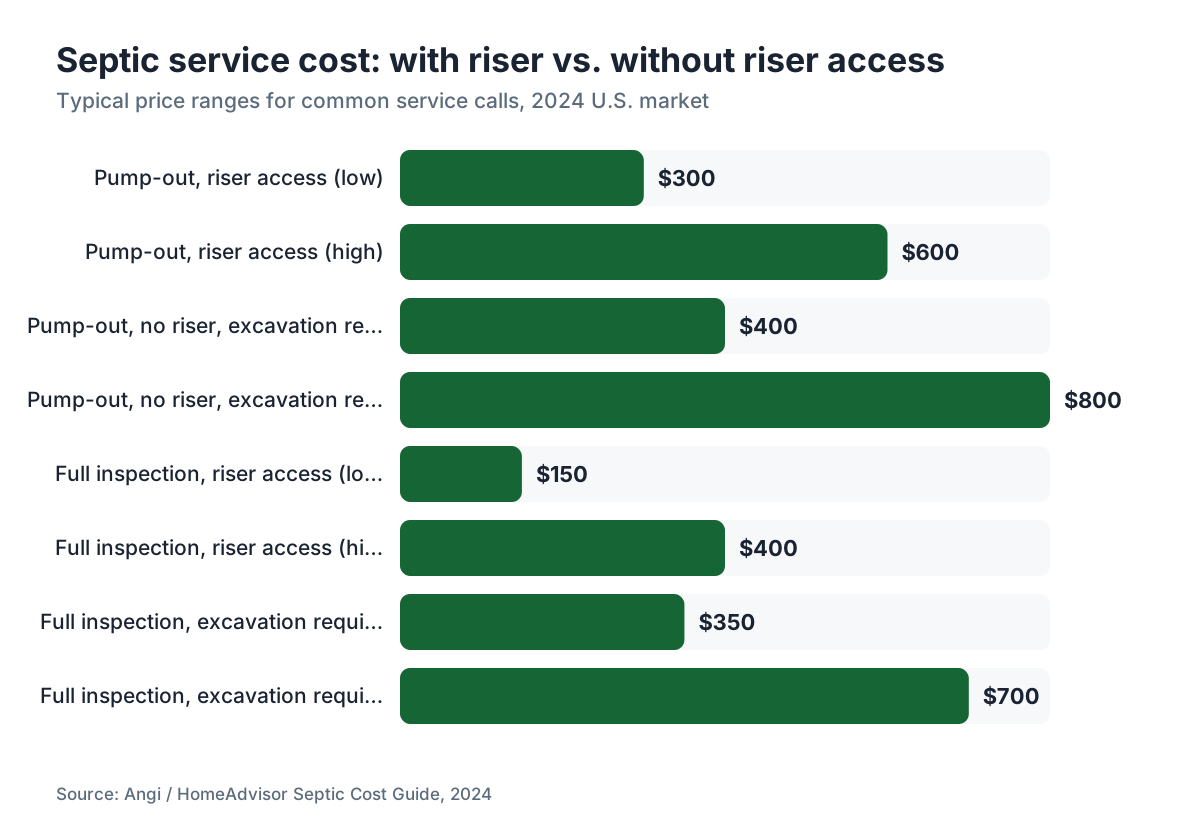
- Without one, every service call starts with a shovel and an extra $100 to $300 in labor.
What is a septic tank inspection pipe?
A septic tank inspection pipe is a vertical tube that connects the buried access opening of your tank to the surface. It gives anyone who needs to look inside, pump out, or sample the tank a clear path down without moving several hundred pounds of soil first.
The term gets used loosely. Depending on who you ask, the same fitting is a riser, an access riser, a cleanout pipe, or an inspection port. They all describe the same thing: a tube, sealed at the top with a removable lid, sitting directly over one of the tank's access openings. Most tanks have two openings, one over the inlet baffle and one over the outlet baffle. Ideally you want a riser over both.
Materials vary. Older installs used concrete or clay pipe sections stacked on top of each other. Modern risers are almost always high-density polyethylene (HDPE) or PVC. They're lighter, they seal better, and they don't crack under freeze-thaw the way concrete does. Diameter runs from 4 inches (barely usable for inspection, useless for pumping) up to 24 inches, which is the practical minimum for getting a pump hose and a person's arm inside comfortably. The EPA's SepticSmart program points to 24-inch risers for pumping access [1].
A riser is not the same as the inlet or outlet cleanout on your house plumbing. Those sit upstream of the tank. The inspection pipe sits at the tank itself, flush with or just above grade, capped with a secure lid that keeps out surface water, children, and animals.
Why does your septic tank need inspection pipes?
Without an inspection pipe, every service visit starts with digging. A pump-out on a tank with no risers can add 30 to 60 minutes of labor just to find and expose the lids [2]. At pumping labor rates of $75 to $150 an hour, that's real money every three to five years, for as long as you own the house.
Then there's the inspection angle. A septic tank inspection that needs excavation costs more than one where the inspector just lifts a lid. Real estate deals get delayed or fall through because a tank couldn't be opened fast. Several states now require risers before a property sale can close.
The safety case is quieter but worth knowing. When inspectors or pumpers can't see into a tank, they work partly blind. Hydrogen sulfide gas builds up in septic tanks, sits heavier than air, and can knock a person out in seconds at high concentration. A properly fitted riser with a sealed lid keeps that gas in the tank and gives workers a controlled way to open and ventilate before they get near the opening.
Risers also sharpen maintenance decisions. When a pumper can check scum and sludge depths at every visit, you build real data on how fast your tank fills. Over a few pumping cycles, that data tells you exactly how often to pump instead of guessing. EPA SepticSmart guidance ties system life directly to routine access and inspection [1]. You can't inspect what you can't reach.
What are the different types of septic tank inspection pipes?
The distinctions matter because installers and suppliers use the terms differently, and you don't want to order the wrong thing.
Riser pipes (full risers) are the standard fix. A section of large-diameter pipe, usually 12, 18, or 24 inches, fits over the existing tank opening with a gasket or sealant and runs up to grade. They come in extension sections so you can stack them to match burial depth. This is what most people mean by inspection pipe.
Inspection ports or T-ports are smaller pipes (4 to 6 inches) set through the tank lid, sometimes positioned to drop a camera or sampling tube into a specific zone. They show up more on newer precast tanks or ATU (advanced treatment unit) systems. They don't replace full risers for pumping.
Effluent filter access pipes look like inspection pipes but run to the outlet baffle where an effluent filter cartridge sits. They have to be wide enough to pull the filter straight up for cleaning, so diameter matters here.
Baffle inspection pipes are small ports over each baffle. Some inspectors use them to check baffle condition with a mirror or camera without opening the whole tank.
For most single-family homes, the answer is simple. One 24-inch HDPE riser over the inlet, one over the outlet, both at grade. That covers pumping, inspection, baffle checks, and effluent filter maintenance in one setup.
| Type | Typical Diameter | Primary Use | Works for Pumping? |
|---|---|---|---|
| Full riser (HDPE/PVC) | 12 to 24 in | Access and pumping | Yes (18"+ recommended, 24" preferred) |
| Inspection port / T-port | 4 to 6 in | Camera, sampling | No |
| Effluent filter access | 6 to 12 in | Filter pull-and-clean | No |
| Baffle inspection port | 4 in | Baffle check only | No |
Where should inspection pipes be located on a septic tank?
Placement follows the tank geometry, not one universal rule. A conventional two-compartment concrete tank has at least two access openings: one over the inlet baffle, one over the outlet baffle. Some older single-compartment tanks have one center lid. Some larger tanks add a third mid-tank access. Every opening should have a riser.
Inlet baffle access matters for checking scum layer thickness and confirming the inlet pipe hasn't shifted. Outlet baffle access is where the pumper checks sludge depth and where any effluent filter lives. Skip one of the two and your inspector works with half the picture.
Grade elevation is the other location question. Standard practice brings the riser top flush with or just above finished grade, 1 to 2 inches is common. Too far below grade and surface water pours in during rain. Too far above and you've got a tripping hazard and an ugly bump in the yard. Some homeowners ring the risers with decorative rock or landscape edging to define the zone.
Distance from the house varies by soil, lot size, and local code, but the tank usually sits 10 to 25 feet from the foundation [3]. So the riser lands in the yard, not under a deck or driveway, if the install was done right. If risers ended up under a hardscape, plan on moving them during the next big renovation.
The leach field usually runs the opposite direction from the house. Knowing both locations keeps you from parking heavy equipment over either one.
How is a septic tank inspection pipe installed?
Adding a riser is a half-day job for a competent septic contractor on a tank with existing access openings. Figure two to four hours of labor plus materials.
The basic process: the contractor locates and exposes the tank lid, cuts or removes an opening in the existing concrete or fiberglass lid to take the riser base, seats the base plate with a flexible rubber gasket or butyl sealant, stacks riser sections to reach grade, and installs a locked or bolted lid. Most HDPE systems use snap-together sections with built-in seals, so there's no field cutting once the base is set.
On an old concrete tank with a solid cast lid, the contractor may core-drill or use an angle grinder to make the opening. Newer tanks often have a pre-molded knockout for a standard riser diameter. Some tanks ship from the factory with risers already attached.
The seal between the riser base and the tank is the part that fails most. Butyl sealant alone can crack as the tank shifts. Better installs use both a gasket and a mechanical anchor (lag bolts or ratchet straps, depending on tank material). Ask your installer which one they're using.
Adding risers to an existing buried tank means paying for excavation too. On a tank buried 12 to 18 inches, a skilled crew can hand-dig and backfill in a couple of hours. Deeper burial or packed clay adds time. Installed cost for two 24-inch HDPE risers on an existing concrete tank usually runs $500 to $1,500 depending on depth and regional labor [2].
On a new build, risers belong in the permit drawings. The cost is trivial at install time compared to retrofitting later. Review the cost to put in a septic tank if you're budgeting a new system and want this baked in from the start.
What do inspectors check through the inspection pipe?
This is the core of any septic tank inspection checklist. Here's what actually happens when the inspector lifts that lid.
Scum layer thickness at the top of the liquid. Scum is the floating grease and light solids. When it gets within 3 inches of the bottom of the inlet baffle, the tank needs pumping [4].
Sludge layer thickness at the bottom. Sludge is the settled heavy solids. The standard rule from the EPA and most state guidance: pump when sludge reaches within 12 inches of the outlet baffle bottom, or when sludge plus scum together fill more than one-third of the tank volume [1].
Baffle condition. The inlet baffle pushes incoming sewage downward so it doesn't stir up the settled layers. The outlet baffle (or tee) keeps floating scum from flowing out to the drain field. Inspectors look for cracks, missing sections, or full collapse. A missing outlet baffle is one of the fastest ways to wreck a leach field.
Effluent clarity in the middle liquid zone. Clear liquid in the middle means good separation. If it looks cloudy or you see particles suspended throughout, something's off.
Water level. The liquid should sit right at the outlet pipe invert. Higher, and the outlet is partly blocked or the drain field is backing up. Lower, and the tank may be leaking.
Tank structural condition. Cracks, spalling concrete, root intrusion, corrosion on the walls. Concrete tanks develop hydrogen sulfide corrosion on the upper walls above the waterline over 20 to 30 years.
Inlet and outlet pipe connections. The inspector confirms they're intact, properly pitched, and not shifted by soil movement.
A good inspector runs all of these in 15 to 30 minutes when the riser is accessible. Without riser access, they skip the harder-to-reach checks, and you get a partial picture you paid full price for.
What do local and state codes say about inspection pipes?
Requirements vary by state and sometimes by county. There's no single federal mandate for risers, but EPA SepticSmart strongly encourages them as part of routine maintenance access, and most state onsite wastewater rules written since 2000 require risers on new installations.
A few examples of how state requirements shake out:
- Washington State requires risers to grade on new septic installations under WAC 246-272A [5].
- Minnesota's Individual Sewage Treatment System rules (Minn. R. 7080) require access risers at final grade on all systems needing a permit [6].
- Florida administrative code (FAC 64E-6) requires access at grade for systems installed after a set date, with size tied to tank type [7].
- California varies by county. Most counties require 24-inch risers on new permits, but retrofit rules for existing tanks are all over the map.
For real estate deals, many states have added inspection requirements that effectively force riser installation. If an inspector can't reach the tank, the inspection fails, and in states with mandatory pre-sale septic inspections (Massachusetts, New Jersey, and others), that can block a closing.
Safest move if you're unsure: call your county health department or environmental office and ask two separate questions. Are risers required on existing tanks? And are they required at time of sale? Those questions can have different answers.
Planning a new install? Risers belong in the permit package automatically. Check the septic tank installation checklist before your contractor submits drawings.
How much does it cost to add an inspection pipe to an existing tank?
Installed cost hangs on three things: how deep the tank sits, how many risers you need, and regional labor rates. The materials are cheap. A 24-inch HDPE riser kit with base, two or three extension sections, and a locking lid runs $150 to $350 at supply houses. Labor and excavation are where the money goes.
For a tank buried at standard depth (18 to 36 inches to the lid):
| Scenario | Estimated Cost |
|---|---|
| One 24" riser, standard depth, 2 hrs labor | $400 to $700 |
| Two 24" risers, standard depth, 3-4 hrs labor | $700 to $1,200 |
| Two risers, deep burial (3-5 ft), plus extra sections | $1,200 to $2,000 |
| New installation (risers included in tank install) | Add $200 to $400 to base tank cost |
These figures reflect 2024 contractor pricing in most U.S. markets. Labor in the Northeast and Pacific Coast runs 20 to 40 percent higher [2].
The payback math is plain. If every pump-out currently costs you an extra $100 to $150 in dig-and-locate labor, two risers pay for themselves in five to eight service visits. Most tanks get pumped every three to five years, so on labor alone that's a 15 to 40 year payback. Sounds long, until you factor in the inspection benefit at home sale, where missing risers can stall a closing worth far more than the riser job.
SepticMind's service scheduling tools help pumping operators track which properties still lack risers and flag them for add-on installation during the next visit. That's a common way contractors sell the work profitably without cold-calling.
For comparison, a septic tank pump out with riser access runs $300 to $600 in most markets. Without riser access, budget $400 to $800 or more once excavation is in the bill.
What can go wrong with a septic tank inspection pipe?
Inspection pipes fail in a handful of predictable ways, and most are fixable without replacing the whole riser.
Lid failure is the most common. Plastic lids exposed to UV degrade over 5 to 10 years and can crack or warp, leaving the opening loose. A cracked lid lets in surface water, which dilutes the tank and can hydraulically overload the drain field during heavy rain. Replacement lids for standard HDPE risers cost $20 to $60 and swap out in five minutes.
Seal failure at the base lets tank gases escape into the soil (minor) or lets groundwater infiltrate (bigger). If your tank keeps showing higher water levels after rain, base seal infiltration is a likely cause. Re-sealing usually means partial excavation and new butyl or polyurethane sealant around the base ring.
Riser offset or heaving happens in freeze-thaw climates when the riser shifts relative to the tank opening. In bad cases the base pulls away from the tank lid. That means re-excavation and re-seating.
Root intrusion is rare on the riser itself (it carries no liquid) but can hit the tank access opening if large tree roots grow under the lid. The roots aren't in the riser. They're pushing up into the tank access from below.
Lid theft or tampering happens more than you'd think. An unsecured lid can be lifted by a kid or a curious adult, and that's a fall hazard into an open tank. OSHA rules on confined spaces and unsecured openings apply during active work [8]. Use a bolted or locking lid, always.
If the riser itself is cracked or badly offset, septic tank repair may be needed at the tank lid or collar, more than the riser section. Get a contractor to look before you assume a simple riser swap fixes it.
How do you find a buried septic tank inspection pipe?
If you bought a house and nobody told you where the risers are, or if there are none at all, start with paperwork.
Most counties have a health department or environmental services office that keeps as-built drawings for permitted septic systems. Those show the tank location, and sometimes the riser positions, tied to the house foundation or property lines. Call the county and ask for the system record. In many states these records are online now.
No records, or records that don't mark the risers? Try a metal probe or soil probe in the area between the house and the likely leach field. Concrete tank lids often have embedded rebar that a metal detector picks up. Some inspectors run a plumber's snake through the house main cleanout to the tank inlet, then track the snake head with a locator wand.
For tanks with no risers at all, probing works. The lid of a buried concrete tank makes a hollow thud compared to the surrounding soil when you push a metal rod down. Flag the corners, then hire a pumper or septic contractor to expose the lid and install risers while they're already there. That way you pay for excavation once.
Once you find and expose the tank, write it down. Take a photo tied to GPS coordinates, note the distance from two fixed points (a foundation corner and a fence post, say), and file it with your home records. Your next service provider will thank you.
How does a riser relate to a full septic tank inspection checklist?
The riser is the infrastructure that makes a complete inspection possible. Without it, several checklist items just can't be done right.
A thorough septic tank inspection checklist, based on EPA SepticSmart guidance and common state onsite wastewater standards, covers [1][3]:
- Locate and expose all access points (skipped if risers are present and at grade)
- Check liquid level relative to outlet invert
- Measure scum layer depth
- Measure sludge layer depth
- Inspect inlet baffle integrity
- Inspect outlet baffle or tee integrity
- Check effluent filter (clean or replace if installed)
- Inspect tank walls and lid for cracks, corrosion, or root intrusion
- Check inlet pipe connection and slope
- Confirm outlet pipe is clear and sloped toward the drain field
- Verify riser seals and lid security
- Document tank volume, materials, age, and pumping history
Items 3, 4, 5, 6, 7, and 8 need physical access through the riser opening. You can't do them from the surface. Some inspectors try a visual check through a small cleanout port with a camera, but that gives a partial view at best.
Technology is changing this part of the job. Some operators run drop cameras on cables through 4-inch inspection ports to get video of baffle condition and liquid clarity without fully opening the tank. That's useful for between-pump checks. It still doesn't replace full riser access for real pumping and maintenance.
For homeowners tracking their system over time, how often to pump septic tank is a question whose answer depends on getting this checklist done properly, repeatedly, over years.
Should you install risers yourself or hire a contractor?
Honest answer: hire a contractor, but know enough to judge the quote.
Adding a riser means opening a tank full of active sewage and, during that work, releasing hydrogen sulfide gas. Hydrogen sulfide above 100 ppm causes rapid loss of consciousness. OSHA treats septic tanks as permit-required confined spaces, and the air right above an open tank access carries real exposure risk even if you never climb in [8].
Beyond safety, most states require permits for changes to a septic system, and adding risers technically changes the system access structure. Some jurisdictions barely enforce it for a simple riser add. But if you do unpermitted work and a buyer's inspector finds it later, the unpermitted modification can complicate a sale.
What you can reasonably do yourself: replace a cracked riser lid, eyeball the seal, clear debris from around the collar, and make sure the lid is secured. None of that requires opening the tank.
When you collect quotes, a legitimate contractor spells out riser diameter, material (HDPE over thin-wall PVC for durability), seal method, and lid type (locking or bolted). If a quote just says "install risers" with no specs, ask. The gap between a 12-inch and a 24-inch riser is enormous for future service access, and some contractors shave diameter to cut material cost.
For operators running a fleet of service accounts, tools like SepticMind can flag accounts with no documented riser so crews quote the add-on proactively. Keeping that data in a system instead of someone's head is what separates an organized shop from a reactive one.
Frequently asked questions
What size should a septic tank inspection pipe be?
24 inches in diameter is the practical standard for pumping access. An 18-inch riser works in a pinch but limits how easily a pump hose and inspection tools move. Anything under 18 inches is inspection-only, not useful for pump-out. The EPA SepticSmart program points to 24-inch risers as the preferred size for maintenance access.
How deep can a septic tank riser go?
Most HDPE and PVC riser systems come in modular sections, typically 6 or 12 inches tall, that stack to any depth. Tanks buried up to 6 feet can be fitted with risers. Past 6 feet of burial, riser installation gets expensive and pump hoses may not reach far enough for effective service. Extremely deep tanks may need a concrete extension collar before a standard riser section attaches.
Is a septic tank riser the same as an inspection pipe?
Yes, functionally. Both terms describe a vertical pipe from the tank access opening up to grade. 'Riser' is more common in the plumbing and contractor trade. 'Inspection pipe' or 'inspection port' shows up more in regulatory and inspection contexts. The distinction that matters is size: a full riser (18 to 24 inches) allows pumping, while a narrow inspection pipe (4 to 6 inches) only allows camera or probe access.
Do both sides of the septic tank need risers?
Yes. A standard two-compartment septic tank has an inlet baffle access and an outlet baffle access. Both should have risers. Skipping the outlet-side riser means an inspector can't check the effluent filter, outlet baffle, or effluent clarity without more excavation. Some tanks also have a mid-tank access that benefits from a riser, especially larger tanks serving commercial or multi-family properties.
How long does a septic tank inspection pipe last?
HDPE risers typically last 30 to 50 years if properly sealed and kept away from heavy vehicle traffic. The weak link is the lid, which degrades from UV in 8 to 15 years depending on material quality. Inspect the lid every year and replace it when cracks appear. Concrete riser sections can last as long as the tank but crack under frost heave and should be checked every few years in cold climates.
Can a car drive over a septic tank inspection pipe?
Standard residential risers are not rated for vehicle load. Even H-10 rated covers, meant for light vehicle traffic, need a properly sized concrete or steel frame to spread the load. Driving over an unprotected riser can crack the lid, shear the riser off the tank base, or damage the tank lid beneath it. Mark your riser locations clearly and keep vehicles and heavy equipment off that area entirely.
What happens if a septic tank has no inspection pipe?
Without a riser, every pump-out and inspection needs excavation to expose the tank lid. That adds $100 to $300 or more to each service call in labor. Inspectors may decline a full inspection or miss key items like baffle condition and effluent filter status. At home sale, many buyers and their inspectors flag missing risers as a deficiency, sometimes requiring installation before closing.
How do I know if my septic tank inspection pipe is leaking?
Signs include a consistently higher water level in the tank after rain (groundwater infiltration through a failed base seal), sewage odor around the riser collar at grade, or visible gaps between the riser base and the tank lid. A pumper can confirm by checking water level right after rain versus during dry conditions. A sustained difference of 6 inches or more usually points to infiltration. Re-sealing the base fixes most cases.
Do septic tank inspection pipes need to be locked?
Yes. An open or unsecured riser lid is a fall hazard and a safety code concern in most jurisdictions. OSHA's confined space and fall protection rules apply to septic openings during active work, and local health codes often require secured lids on residential systems. Use a lid that needs a tool or key to open. Child-resistant lids with bolt locks are standard and cost $30 to $80 to replace if your current lid is loose.
What material is best for a septic tank inspection pipe?
HDPE is the best choice for most installs. It's lightweight, resists hydrogen sulfide corrosion, flexes enough to handle minor soil movement without cracking, and takes freeze-thaw better than concrete or standard PVC. Schedule 40 PVC is acceptable and widely available but can turn brittle in cold climates over time. Avoid thin-wall corrugated pipe for risers. It's not rigid enough to hold a person's weight if someone steps on the lid.
How often should a septic tank inspection pipe be inspected?
Check the lid and visible collar once a year, ideally in spring after freeze-thaw season. A full interior inspection through the riser should happen every time the tank is pumped, typically every three to five years for a household of four. If you've had flooding, vehicle intrusion over the tank area, or sewage odors near the riser, inspect right away. Don't wait for the scheduled service interval after any of those events.
Can I use a septic tank inspection pipe to add bacteria or additives?
Technically yes, but most septic additives are unnecessary and some can harm your system. The EPA does not recommend biological or chemical additives as a substitute for regular pumping, and several state environmental agencies actively discourage them. If you're adding anything to the tank, do it through the household drains, not by opening the riser and pouring it in. Opening the riser releases gases and risks contaminating the surrounding area.
What's the difference between a septic tank inspection pipe and a drain field cleanout?
A septic tank inspection pipe gives access to the tank itself, which holds and separates solids from liquid. A drain field cleanout is a separate access point in the distribution system between the tank and the leach field, used to clear blockages or run a camera into the field laterals. They're different structures at different points in the system. A full system inspection may use both, but most routine pump-outs only need the tank risers.
Sources
- U.S. EPA, SepticSmart: Homeowner Information: EPA SepticSmart recommends 24-inch risers for maintenance access and ties system life to routine access and inspection; also references scum and sludge pumping thresholds.
- Angi, Septic Tank Pumping and Repair Cost Guide: Installed riser costs, additional excavation labor charges, and regional pump-out price ranges used in cost comparisons.
- U.S. EPA, Septic Systems (SepticSmart): Typical tank setback distances from foundation (10 to 25 feet) and overview of standard inspection checklist components.
- Penn State Extension, Septic System Resources: Scum layer pumping threshold: pump when scum is within 3 inches of the bottom of the inlet baffle; sludge threshold of one-third tank volume.
- Washington State Department of Health, Onsite Sewage Systems (WAC 246-272A): Washington State requires risers to grade on all new septic installations under WAC 246-272A.
- Minnesota Pollution Control Agency, Individual Sewage Treatment Systems (Minn. R. 7080): Minnesota rules (Minn. R. 7080) require access risers at final grade on all systems requiring a permit.
- Florida Department of Health, Onsite Sewage Programs (FAC 64E-6): Florida administrative code FAC 64E-6 requires access at grade for septic systems, with size requirements tied to tank type.
- OSHA, Permit-Required Confined Spaces (29 CFR 1910.146): OSHA confined space entry rules apply to septic tank openings; unsecured lids create fall hazards subject to OSHA citation; hydrogen sulfide exposure hazard described.
- U.S. EPA, Septic Systems (SepticSmart): Guidance on inspection frequency (every 1 to 3 years), effluent filter maintenance requirements, and baffle inspection procedures through access risers.
- University of Minnesota Extension, Septic System Owner's Guide: HDPE riser durability characteristics, freeze-thaw performance compared to concrete and PVC, and riser maintenance intervals in cold climates.
Last updated 2026-07-09