Zabel A100 effluent filter: complete guide for homeowners and installers
By the SepticMind Editorial Team
TL;DR
- The Zabel A100 is a baffled effluent filter that slides into a septic tank's outlet tee and blocks solids larger than about 1/16 inch from reaching the drain field.
- It needs cleaning every one to three years, costs $30 to $60 for the cartridge alone, and can add years to a drain field's life when maintained.
What is the Zabel A100 effluent filter and what does it do?
The Zabel A100 is a cylindrical effluent filter made by Zabel Environmental Technology. It slides into the outlet baffle of a septic tank and works as the last barrier before liquid waste travels to your leach field. The filter traps solids, lint, hair, and floating grease that escape the settling process inside the tank.
The unit is injection-molded from high-density polyethylene with vertical slots sized at roughly 1/16 inch (about 1.6 mm). That slot width is intentional. It blocks the particle sizes most likely to clog drain field soil while still letting treated effluent flow through. Without a filter in this position, every pump-out and surge event in the tank can push a slug of partially settled solids straight into the leach field trenches.
A working effluent filter does not treat the wastewater in any biological sense. What it does is protect the biomat at the bottom of the drain field trenches from getting buried in raw solids. The EPA's SepticSmart program says "solids that escape the septic tank can clog and permanently damage the drain field" [1]. The A100 exists to stop exactly that.
The filter sits on a handle that extends up near the tank access riser, so a pumper can pull it, rinse it over the open tank, and drop it back in without special tools. That detail matters more than it sounds. Filters that are hard to service get ignored, an ignored filter becomes a plugged filter, and a plugged filter backs sewage into the house.
How is the Zabel A100 different from the Zabel A1800?
Same filtration mechanism, different sizes. The A100 fits standard 4-inch outlet pipes. The A1800 is a larger-diameter model built for 6-inch outlet baffles or tanks that see higher flow, like commercial properties or large residential systems. These are the two Zabel models homeowners ask about most.
The A1800 also has more screen surface area, which stretches the interval between cleanings in high-use situations. For the average single-family home on a conventional septic system, the A100 is the right call. If your installer specified an A1800, it is almost certainly because your outlet pipe is 6-inch or your tank feeds a multi-unit setup.
Swapping one for the other is not a drop-in job because the housing diameters differ. A comparison of the two models:
| Feature | Zabel A100 | Zabel A1800 |
|---|---|---|
| Outlet pipe size | 4 inch | 6 inch |
| Typical application | Single-family residential | Larger residential, light commercial |
| Filter slot size | ~1/16 inch | ~1/16 inch |
| Approximate retail cost | $30 to $60 | $60 to $110 |
| Cleaning interval | 1 to 3 years | 2 to 4 years (higher flow capacity) |
Prices vary by distributor and region. Confirm your outlet pipe diameter before you order anything.
How does the A100 filter actually work inside the tank?
Picture the inside of a septic tank. Heavy solids sink to the bottom as sludge. Grease and foam float to the top as scum. The clear zone in the middle, called the effluent zone, is the liquid that is supposed to leave the tank and travel to the drain field.
The outlet baffle, traditionally a concrete tee or a PVC sanitary tee, draws from that middle zone so solids do not exit with the effluent. The A100 attaches inside that outlet tee. It is a cylinder with hundreds of narrow vertical slots. Liquid passes through freely. Solids larger than the slot width press against the outside of the cylinder and stay put.
Solids build up on the outside of the screen over time, and the filter's resistance to flow rises gradually. When enough material collects, the level on the inlet side rises slightly. That is actually a useful warning that cleaning is overdue. In cases of real neglect, the filter plugs completely and sewage backs up into the house through the lowest fixture. That is the failure homeowners fear, and it is entirely preventable with routine cleaning.
The filter is not fragile. The polyethylene resists sulfide corrosion and the wide pH swings inside an active tank. Zabel does not publish a rated service life in years, but installers routinely find A100 filters that have been in place 15 or 20 years and still work fine once cleaned.
How do you clean a Zabel A100 effluent filter?
Cleaning is simple, but the order matters so you don't shove solids into the drain field.
Open the septic tank access lid over the outlet baffle compartment. The A100 has a handle that extends upward, usually within reach if the riser is installed right. Grip the handle and lift the filter straight up slowly. Do not yank it. A fast pull can dislodge settled solids that splash into the effluent zone.
With the filter lifted, hold it directly over the open tank so anything that rinses off falls back inside rather than onto the ground. Use a garden hose to spray the exterior of the cylinder, working around the full circumference. The goal is to wash the accumulated solids back into the tank's sludge layer, not into the drain field. Skip high pressure on the interior of the filter body, because you want solids moving backward into the tank.
Once the slots look clear, lower the filter back into the outlet tee until it seats fully. Replace the access lid. That is the whole job. Five to fifteen minutes, start to finish.
Professional pumpers usually clean the filter during a scheduled septic tank pump out. That timing is ideal because the tank is being emptied anyway, so any solids knocked off the filter get pumped out with everything else. If you are booking a septic tank cleaning, just ask the pumper to pull and rinse the filter while they're there.
How often does the Zabel A100 need to be cleaned?
It depends on how many people use the system and how big the tank is, but most residential A100 filters need cleaning every one to three years.
The EPA's SepticSmart guidelines recommend pumping a typical household tank every three to five years [1]. Clean the A100 at least that often, and many installers do it every single time the tank is pumped. Large household, daily garbage disposal use, or frequent guests? Lean toward an annual filter check.
Here is a quick field test. Pull the filter and look at the slots. Half-covered in gray solids means you waited long enough. Almost completely blocked means you waited too long and risked a backup. Nearly clean after 18 months means you can stretch to 24 or 30 months. Let the actual condition of the filter set your schedule instead of following a fixed number blindly.
Some states with regulated onsite wastewater programs, including North Carolina and Florida, now require effluent filters on new installations and may specify inspection intervals in their codes [2][3]. Check your state's rules, because your maintenance interval may not be optional.
What does a Zabel A100 cost, and is it worth the money?
A replacement A100 cartridge runs $30 to $60 at most septic supply distributors and plumbing wholesalers. Some big-box stores carry it. Many do not. Online pricing tends to be competitive, but factor in shipping if you're ordering a single unit.
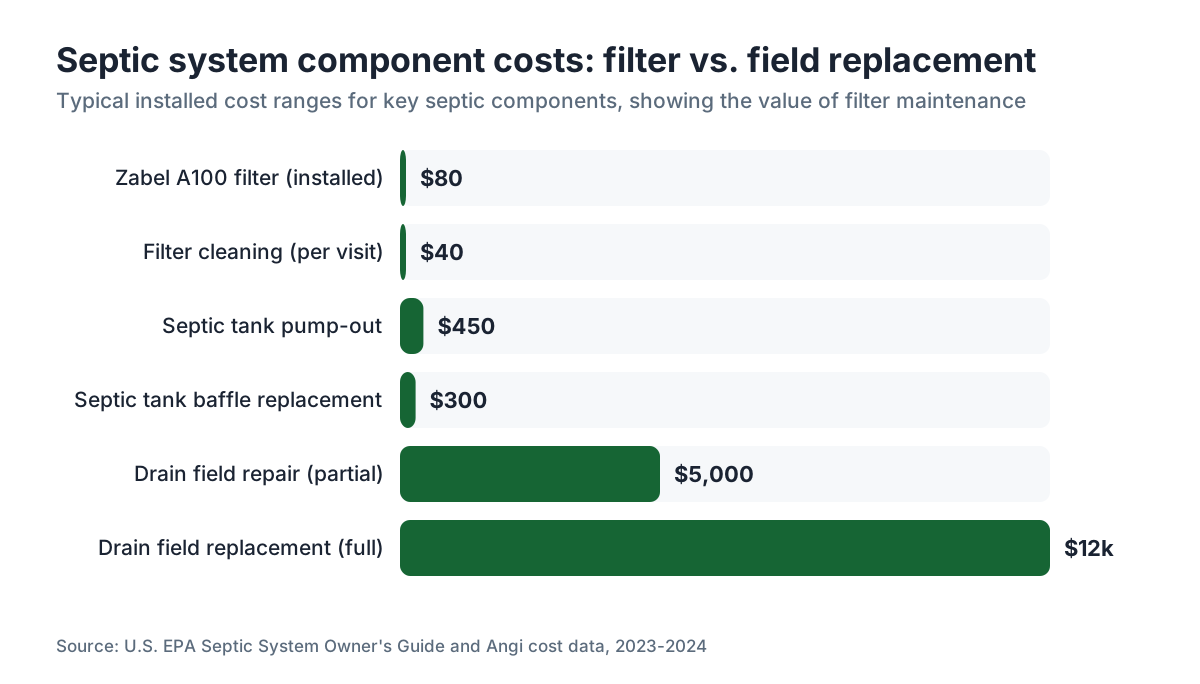
If a pumper installs one during a service call, expect the filter cost plus 15 to 30 minutes of labor. At typical pumper rates of $100 to $175 per hour, that's another $25 to $45 [4]. Total installed cost for an A100 retrofit usually lands between $55 and $105 depending on your region and who does the work.
Is it worth it? Clearly yes. A drain field replacement costs $5,000 to $20,000 or more depending on system size, soil, and local labor [5]. A filter that prevents even one premature field failure pays for itself many times over. The math is not close. The only case where an A100 wouldn't help is a system that's already failing with a clogged field, and by then the filter is beside the point.
For homeowners planning a septic system repair budget, a $50 filter cleaned every two years is one of the cheapest, highest-return maintenance steps on any onsite wastewater system.
Can you install a Zabel A100 yourself, or do you need a professional?
The install is physically simple. If your tank already has a PVC outlet tee and an access riser directly above it, sliding the A100 into the tee takes about ten minutes and needs no special tools. Zabel's instructions call for inserting the filter until the retaining bracket seats on the top of the fitting, handle pointing up toward the access opening.
The complications are regulatory, not mechanical. Many states require any modification to a permitted septic system to be done by a licensed installer, or at least reported to the local health department. Some jurisdictions treat adding an effluent filter as a permitted modification. Before you do this yourself, call your county's environmental health or onsite wastewater program. Ten minutes on the phone can save you a compliance headache.
If your system uses an old concrete outlet baffle instead of a PVC tee, you may need to cut the concrete tee out and install a PVC tee that accepts the A100. That means access, concrete cutting, and proper sealing, which is a professional job. Same goes if the outlet pipe isn't the standard 4-inch diameter the A100 fits.
During a septic tank inspection, inspectors often flag a missing filter and recommend one. If you're already paying for a visit, having them add the A100 at the same time is efficient.
What happens if you never clean the A100 filter?
Nothing good. The screen packs with solids until it restricts flow badly. The sewage level in the tank rises. Eventually wastewater can't exit at a normal rate, and it backs up into the house through low fixtures, usually a basement floor drain or first-floor toilet.
The other failure mode is a corroded or buried handle. If the handle degrades or disappears under years of sludge, you can't pull the filter by hand. Now you need a pumper to vacuum the tank first just to reach it. That adds cost and labor to what should have been a quick rinse.
There's a subtler risk too. A completely plugged filter can sometimes pop out of the tee fitting under the hydraulic pressure of a big flush event, dumping raw solids into the drain field in one concentrated slug. That's the exact event that drives rapid biomat buildup and early field failure.
The pattern is consistent. A filter that gets cleaned is protection. A filter that gets ignored is a liability. The one-to-three-year interval installers push exists because that's roughly how long the filter runs well before it starts to restrict flow enough to matter.
Does the A100 filter affect how often you need to pump the septic tank?
This one comes up constantly, and the answer has a wrinkle. The filter does not reduce sludge accumulation in the tank. Solids still settle to the bottom at the same rate whether a filter is installed or not. So the tank's pumping schedule shouldn't change because of the filter.
What the filter changes is the rate at which solids migrate out of the tank toward the drain field. Over years, that protection can extend the field's service life. It does nothing to the sludge-to-liquid ratio inside the tank, which is what actually drives the pumping decision.
The EPA recommends having a professional measure sludge and scum layers during inspections to decide whether pumping is really needed [1]. That advice holds no matter what filter is installed. If you want to know how often to pump your septic tank, the honest answer depends on household size, tank volume, and garbage disposal use, not on whether you have an A100.
One practical overlap: when the pumper empties the tank, they can pull and clean the filter in the same visit. Combining the two tasks means neither gets skipped. Most experienced pumpers do this automatically if you ask.
Are effluent filters required by code, and does the A100 meet those requirements?
Requirements vary by state and even by county. There's no federal mandate for effluent filters on residential septic systems, but a growing number of states now require them on new construction. Florida's Department of Health onsite sewage rules, for example, have provisions addressing outlet filters on new systems [2]. North Carolina's rules for dispersal systems carry similar language [3].
The A100 meets NSF/ANSI Standard 46, the industry benchmark for septic tank effluent filters. NSF 46 requires filters to retain at least 95 percent of particles 1.6 mm and larger under standardized flow conditions [6]. Zabel's product literature cites NSF 46 compliance, and that's the standard most state codes reference when they specify an "approved" effluent filter.
If your permit or inspection report requires an NSF 46-listed filter, the A100 qualifies. Check the specific listing in the NSF product database if you need to document it for a permit. Some inspectors want the model number and standard number on the paperwork.
For operators managing multiple properties, tracking which systems have compliant filters and when they were last serviced is exactly the kind of record software like SepticMind handles, since regulators increasingly ask for maintenance logs during inspections and permit renewals.
If you're researching installation costs or planning a new system, the cost to install a septic system guide covers a full system budget including components like effluent filters.
What are common problems with Zabel A100 filters and how do you fix them?
The most common problem is plain neglect. A filter that hasn't been cleaned in five or more years can be hard to pull because solids have hardened around the handle, or because the handle itself has degraded. If the handle breaks during extraction, you pump the tank first, then use a long hook or the pump-out hose to fish the filter body out. Not dangerous, just annoying, and it adds time to the call.
A second issue is bad installation. A filter inserted upside down or seated at an angle may not block solids well, or it may leak around the edges. Confirm the filter is fully seated and the retaining bracket sits level with the top of the outlet tee.
Rarely, the polyethylene body cracks. Usually that's from freezing in a very shallow tank where the filter extends above the frost line, or from rough handling during a ham-fisted extraction. Replace a cracked body, don't patch it. At $30 to $60 for a new unit, there's no case for repair.
Some homeowners report brief slow drainage in the house right after a cleaning. That happens when pulling the filter displaces settled solids into the effluent zone, raising suspended solids in the outflow for a bit. It usually clears within a day as the disturbed material re-settles. If slow drainage sticks around more than two or three days, there's probably a separate issue in the drain field or outlet pipe worth checking with a septic tank inspection.
Where can you buy a Zabel A100 filter and what should you look for?
The A100 sells through septic supply distributors, plumbing wholesalers, some independent hardware stores, and online retailers. Zabel products move through trade distributors like Ferguson Waterworks and Core and Main, so a call to a local plumbing supply house is often the fastest way to get one in hand.
Buying online, look for listings that clearly state NSF 46 compliance and confirm the model number matches your outlet pipe size. There are generic effluent filters that look like the A100 but aren't NSF-listed. If your local code requires a listed filter, a generic substitute can create a compliance problem during inspections.
Service operators ordering in bulk for multiple properties usually pay less through a distributor account than at retail. Keeping a few A100 units in the truck means you can replace a damaged or missing filter on the spot during a pump-out instead of scheduling a second visit.
For a wider look at septic tank repair and component costs, comparing a few regional suppliers before ordering is worth the few minutes. Prices for the same Zabel model can vary 20 to 40 percent between sources, especially once shipping is added in.
Frequently asked questions
What size is the Zabel A100 effluent filter?
The A100 fits 4-inch outlet baffles, the standard size on most residential septic tanks in the United States. It's roughly 18 inches long and about 3.5 inches in diameter. If your outlet pipe is 6 inches, you need the Zabel A1800 instead. Measure your outlet tee before ordering.
How do I know if my septic tank already has an effluent filter installed?
Open the access lid over the outlet end of the tank and look into the outlet baffle or tee. A cylindrical plastic body with a handle extending upward means you have a filter. If you see only a concrete or PVC tee with no insert, there's no filter. A pumper can confirm this during a routine service visit.
Can a clogged Zabel A100 cause sewage backup in my house?
Yes. If the filter blocks completely, wastewater can't exit the tank fast enough during normal use and can back up into the house through the lowest fixtures. This is the main risk of skipping maintenance. Cleaning every one to three years prevents it. If you notice slow drains throughout the house, a plugged filter is one of the first things to check.
Does the Zabel A100 replace the outlet baffle in my septic tank?
No. The A100 inserts into an existing outlet baffle or tee; it doesn't replace it. The baffle provides the structural connection to the outlet pipe, and the filter cartridge slides inside it. If your tank has a deteriorated concrete baffle, replace that with a PVC tee before installing the filter.
How long does a Zabel A100 filter last before it needs to be replaced?
The filter body is durable. Many A100 units stay functional after 15 to 20 years with regular cleaning, since the polyethylene resists corrosion well. You'd replace it if the body cracks, the handle breaks off and can't be retrieved, or the slots widen enough to stop blocking solids. Cleaning does not shorten its service life.
Does adding an effluent filter void my septic system warranty?
Generally no, but it depends on your installer warranty terms and your local permit conditions. Some jurisdictions require permits for modifications to existing septic systems. Check with your county health department or the original installer before adding a filter to a newer system still under warranty or permit review.
What is the difference between an effluent filter and a septic tank baffle?
A baffle is a structural tee or wall inside the tank that directs flow to keep solids from leaving with the effluent. An effluent filter adds a slotted physical barrier to catch solids that pass through the baffle zone. They do related but distinct jobs, and a filter does not substitute for a working baffle. A good system has both.
Is the Zabel A100 NSF 46 certified?
Yes. Zabel states the A100 meets NSF/ANSI Standard 46, which requires the filter to retain at least 95 percent of particles 1.6 mm and larger under standardized test conditions. NSF 46 is the standard most state onsite wastewater codes reference when specifying an approved effluent filter. You can verify current listings in the NSF product database.
Can I clean the A100 without pumping the tank at the same time?
Yes. Cleaning the filter is a standalone task that doesn't require pumping. Pull the filter, rinse it over the open tank so solids fall back in, and reinstall it. Pumping and filter cleaning together is efficient, but the filter doesn't have to wait for a pump-out if it's due sooner. Combine them when the timing lines up.
What happens to the solids that rinse off the filter during cleaning?
They fall back into the tank's sludge layer, which is exactly where they belong. That's why you hold the filter over the open tank while rinsing instead of hosing it off on the lawn. Those solids get removed the next time the tank is pumped. Don't rinse the filter onto the ground; it creates a sanitation issue and wastes material that should stay in the tank.
Does the Zabel A100 work with aerobic treatment units (ATUs)?
Effluent filters are mainly a septic tank component. Aerobic treatment units have their own outlet filtration or clarification chambers and typically don't use a simple cartridge filter like the A100. If you have an ATU, follow the system manufacturer's documentation for the correct outlet filtration requirement rather than retrofitting an A100.
How do service operators track A100 filter cleaning across multiple properties?
Paper logs and spreadsheets work but leave gaps. Software that logs each service visit, the filter condition at cleaning, and the next scheduled date reduces missed maintenance. SepticMind is built for septic service operators managing records across multiple customer accounts, which is the kind of workflow that keeps filters serviced on schedule.
Sources
- U.S. EPA, SepticSmart homeowner guidance: EPA SepticSmart notes that 'solids that escape the septic tank can clog and permanently damage the drain field' and recommends pumping every three to five years.
- Florida Department of Health, Onsite Sewage Treatment and Disposal Systems rules (64E-6): Florida's onsite sewage rules include provisions addressing outlet filters on new residential systems.
- North Carolina Department of Health and Human Services, Wastewater / On-Site Water Protection: North Carolina's onsite wastewater rules include language covering effluent filters for dispersal systems.
- Angi, Septic tank service cost data: Pumper labor rates typically run $100 to $175 per hour for residential septic service calls.
- U.S. EPA, Septic System Owner's Guide (Caring for Your Septic System): Drain field replacement is one of the most expensive septic repairs, commonly cited in the $5,000 to $20,000-plus range depending on system type and local conditions.
- NSF International, NSF/ANSI Standard 46 for septic tank effluent filters: NSF/ANSI 46 requires effluent filters to retain at least 95 percent of particles 1.6 mm and larger under standardized flow test conditions.
- University of Minnesota Extension, Septic Systems: University of Minnesota Extension guidance recommends combining septic tank inspections with filter servicing to reduce cost and missed maintenance.
- Penn State Extension, Water and Wastewater resources: Penn State Extension notes that effluent filters protect drain fields from solids migration and are increasingly required in state codes for new construction.
- Texas Commission on Environmental Quality, On-Site Sewage Facilities: State onsite wastewater programs increasingly reference NSF 46-listed components in permitted system designs.
- National Environmental Services Center (NESC), West Virginia University: NESC documents that effluent filter installation can extend drain field service life by reducing suspended solids load to the dispersal area.
Last updated 2026-07-09