How often should you pump your septic tank?
By the SepticMind Editorial Team
TL;DR
- The EPA recommends pumping most septic tanks every 3 to 5 years.
- Your real interval depends on tank size, how many people live in the house, and how much solid waste goes down the drain.
- A 1,000-gallon tank serving four people needs pumping every 3 to 4 years.
- Bigger tanks or smaller households can stretch to 5 or even 7 years.
What is the standard recommendation for how often to pump a septic tank?
Pump every 3 to 5 years, inspect every 3. That's the EPA's SepticSmart guidance for a typical household, and it holds up in practice for a family of four on a conventional 1,000-gallon tank [1]. The range has been the industry baseline for decades.
The reason it's a range and not a fixed number is that "typical" covers a lot of ground. Tank volume, daily water use, garbage disposal habits, and the bacterial health of the tank all shift the real-world interval. Three to five years is your starting point, not your answer.
Want a single number for the calendar and no math? Go with every 3 years. That's the conservative end of the EPA range, and pumping a year early costs almost nothing next to a failed drain field. A septic tank pump out runs $250 to $600 in most markets. A new drain field runs $5,000 to $25,000 [2]. The choice makes itself.
How do tank size and household size actually change the pumping schedule?
These two variables do most of the work. A bigger tank fills with sludge and scum more slowly relative to its capacity, so it buys you time. More people means more solids entering the tank every day, which burns that time faster.
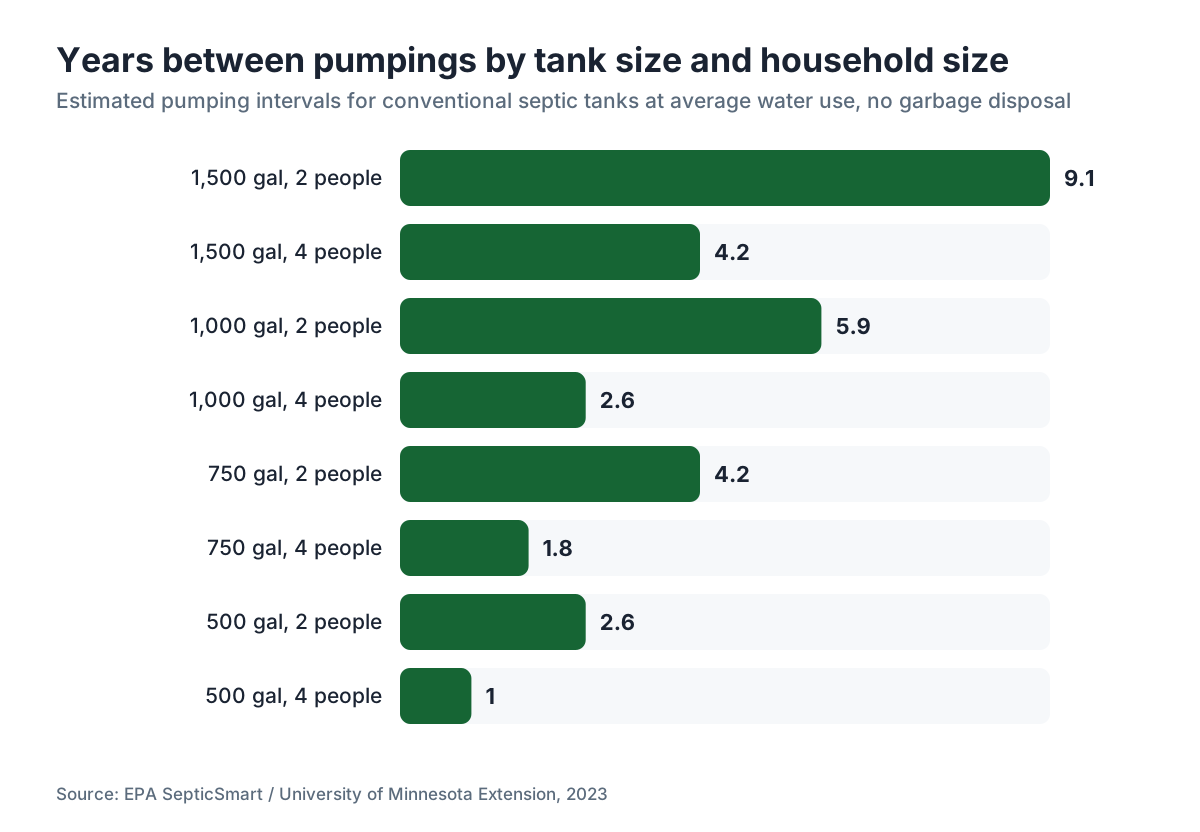
The EPA and the University of Minnesota Extension both publish lookup tables that cross tank size against household size. The figures below come from those sources [1][3]:
| Tank size (gallons) | 1 person | 2 people | 3 people | 4 people | 6 people |
|---|---|---|---|---|---|
| 500 | 5.8 yrs | 2.6 yrs | 1.5 yrs | 1.0 yr | 0.7 yr |
| 750 | 9.1 yrs | 4.2 yrs | 2.6 yrs | 1.8 yrs | 1.3 yrs |
| 1,000 | 12.4 yrs | 5.9 yrs | 3.7 yrs | 2.6 yrs | 1.7 yrs |
| 1,250 | 15.6 yrs | 7.5 yrs | 4.8 yrs | 3.4 yrs | 2.3 yrs |
| 1,500 | 18.9 yrs | 9.1 yrs | 5.9 yrs | 4.2 yrs | 2.8 yrs |
| 2,000 | 25.4 yrs | 12.4 yrs | 8.0 yrs | 5.9 yrs | 4.0 yrs |
A few things jump out. A 500-gallon tank serving four people needs pumping every single year. That's common in older rural homes, and owners are usually stunned to hear it. On the other end, a 2,000-gallon tank with one full-time occupant could run 25 years on paper, though nobody sane lets it go that long without inspection, because you'd miss cracked baffles and other hardware trouble.
Most American households sit at 1,000 to 1,500 gallons serving 3 to 5 people. That maps to a 3-to-5-year interval, exactly where the EPA lands. The table just tells you where you fall inside that band.
These numbers assume no garbage disposal and no unusually high water use. Both push the interval shorter, which I'll cover next.
What else changes how often a septic tank needs to be pumped?
Tank size and household size are the big levers. Several other factors move the interval a year or two in either direction.
Garbage disposals. This one matters more than most homeowners think. A garbage disposal can raise the solid load entering your tank by 50% or more [1]. The EPA names garbage disposals specifically as a reason to pump more often. Use one daily and you should subtract at least a year from whatever the table gives you.
High water use. One big gathering or a week of extra laundry won't hurt a healthy tank. Steady above-average use will. It flushes solids toward the drain field before they settle, so sludge builds faster than the table predicts.
Wipes and hygiene products. These don't break down. They pile up and speed sludge accumulation. If that's a habit in your house, plan to pump more often.
Additives. There's a stubborn belief that enzyme treatments and bacterial inoculants can replace or extend pumping. The honest answer is that the evidence is thin. The EPA does not recommend additives as a substitute for pumping, and some state agencies warn that chemical additives can harm the drain field [1]. Keep your money.
Tank age and condition. Old concrete tanks develop cracks that let groundwater in. That dilutes the contents and throws off sludge readings. If your tank is 30 or 40 years old, a physical inspection matters more than any calendar, and septic tank repair may be coming.
Seasonal homes and rentals. Properties that sit empty for months are a different animal. Sludge still builds, just slower. Check the tank every other visit at minimum, and pump before any stretch of heavy use.
How do you know when a tank actually needs pumping versus just following a schedule?
Schedules are estimates. Measurement is the truth.
When a licensed pumper opens your tank, they measure the sludge at the bottom and the scum at the top with a long probe called a sludge judge. The industry trigger is simple: pump when the combined sludge and scum fill more than one-third of the tank's liquid capacity [9]. Past that point, settling breaks down and solids start slipping out the outlet baffle.
You can buy your own sludge judge for $30 to $60 and check between professional visits. It's a clear tube you lower into the tank; the dark sludge stains the wall of the tube and you read the depth right off it. Some homeowners run this check once a year. It's not glamorous. It takes ten minutes and tells you exactly where you stand.
Signs a tank is already past due: slow drains at more than one fixture (a single slow drain usually means a local clog), gurgling from drains, sewage odors inside or out, and wet or oddly green patches over the drain field. Any of those means call a pumper now, not on the scheduled date.
One honest note. Most homeowners have no idea when their tank was last pumped. Just bought a house with no records? Have it inspected and pumped now, then start a fresh calendar from that date.
What does septic tank pumping actually cost, and what affects the price?
The national average for septic tank pumping runs $250 to $600 for a standard residential tank, with most homeowners paying around $400 [2]. That range comes from contractor surveys and cost aggregators. Your local market may sit higher or lower.
Several things push the price up. Tanks over 1,500 gallons cost more because they take longer and eat more truck capacity. Hard access adds labor: a tank buried deep, no riser, or hidden under a deck or landscaping. A first pump after long neglect can cost extra because compacted sludge is harder to break up and remove. Emergency pumping during an active backup runs 1.5 to 2 times the standard rate.
Adding a septic tank riser is one of the smartest moves a septic owner can make. It brings the access lid up to grade so future pumpers skip the digging. Risers cost $100 to $300 installed and pay for themselves in reduced labor within a few pump-outs.
Never had your tank pumped and budgeting for the first time? Plan for the high end. First pump-outs after long gaps tend to be harder and messier.
How often do septic tanks need to be pumped for commercial properties or large households?
The residential 3-to-5-year rule does not carry over to commercial or high-occupancy sites. A system serving a restaurant, a campground, or a small apartment building can need pumping every 6 to 12 months.
For heavy residential use, like a house with 8 or more regular occupants or a home with rental units sharing one tank, skip the table. Have the system inspected after the first year of heavy use, measure sludge depth, and set the interval on the real accumulation rate.
Some states set minimum pumping frequencies for commercial systems no matter what a measurement shows. Virginia sets minimum frequencies for certain high-use systems, including annual requirements in some categories [7]. Check your state's onsite wastewater regulations for any mandatory minimums that hit your situation.
Operators running multiple properties do better tracking pump-out dates and tank conditions in one place. Tools like SepticMind are built for exactly this, giving operators a dashboard to schedule pump-outs across a service area instead of chasing spreadsheets and paper logs.
Does a septic tank with an effluent filter or aerobic treatment unit need more or less frequent pumping?
Effluent filters (also called outlet filters) are screens in the outlet baffle that catch solids before they reach the drain field. Good things to have. They add one task: the filter needs cleaning every 1 to 3 years, usually at the same visit as pumping. A clogged filter that nobody cleans can cause backups even when the tank isn't full.
Aerobic treatment units (ATUs) treat wastewater harder than conventional tanks. They inject air and sometimes add UV disinfection to produce cleaner effluent. Most ATUs have smaller holding chambers than conventional tanks, so residual sludge builds faster relative to volume. Many ATU makers and state regulators require inspection every 6 to 12 months and pumping every 1 to 3 years regardless of occupancy [4].
If you have an ATU, the maintenance contract that came with the system (most states require one) sets your inspection and pumping schedule. Following it isn't optional in most places. It's a permit condition. Skip the maintenance and you can void the permit and draw fines.
For what happens when any of these systems fails, the septic system repair guide covers which repairs are actually necessary and which can wait.
What happens if you wait too long to pump a septic tank?
This is where the money gets serious.
Once sludge and scum pass the one-third mark, solids start escaping the outlet and heading into the drain field. The drain field is a network of perforated pipes in gravel-filled trenches. Solid particles clog the soil pores and build a biomat, a thick organic layer that blocks water from soaking in. Once the biomat sets, the field fails. Sewage backs into the house or surfaces in the yard.
A failed drain field usually can't be cleaned or rested back to life, though rest sometimes buys a little. Most of the time it needs replacing. The EPA puts drain field replacement at $5,000 to $25,000 depending on site conditions and system size [2]. Poor soil or tight lots push it higher.
Then there's tank damage. An overfull tank puts pressure on the inlet and outlet baffles. Older tanks, especially those with cast-iron pipes or crumbling concrete, crack or lose baffles. Fixing a baffle is cheap ($100 to $300). Replacing a tank is not. See cost to put in a septic tank for current replacement figures.
Health and legal exposure count too. A surfacing sewage event can contaminate wells, streams, and the neighbor's yard. Most states treat that as a public health violation with mandatory repair timelines and possible fines. The EPA's SepticSmart program states plainly: "Failing septic systems are expensive to repair and can contaminate local water bodies." [1]
The math is stark. Pumping every 3 to 5 years at $300 to $500 a visit costs $60 to $170 a year. Ignoring the tank and replacing the drain field costs $5,000 to $25,000 in one hit.
How do you find your septic tank and schedule a pump-out?
First you have to find it. Most tanks sit 10 to 25 feet from the foundation, in the direction opposite the main water supply line. Your local health or environmental agency often keeps the as-built drawing on file, especially for systems permitted after the 1970s. If yours predates records, a metal probe rod or a plumber's snake down the sewer cleanout can find the lid.
Once you know where the tank is, three ways to line up a pumper. Your county health department usually keeps a list of licensed haulers. The National Onsite Wastewater Recycling Association runs a contractor locator [8]. And a plain search for licensed septic pumpers in your state turns up regulated businesses. In most states, pumpers must hold a state license and dump septage at approved facilities. Ask for proof of licensing before you hire.
Schedule during dry seasons when the ground is firm. Wet ground makes access harder and lets heavy trucks damage the drain field. Spring and fall book fast in regions full of seasonal homes, so call a few weeks ahead.
Keep a simple log, paper or digital: date pumped, condition notes from the pumper, anything about baffles or filters. That record earns its keep when you sell the house and when you're dialing in the right interval going forward. SepticMind's homeowner tracking tool is one way to keep those records straight over the years.
Are there any state or local regulations that set how often septic tanks must be pumped?
Yes, and homeowners usually don't know it. Some jurisdictions set mandatory minimum frequencies.
Most states treat the 3-to-5-year federal guidance as best practice rather than code. A few go further. Massachusetts requires that Title 5 systems in certain risk categories be inspected every 3 years, with pumping required when the inspection shows the tank at or above the one-third threshold [5]. Connecticut requires routine pumping at a minimum frequency set by the local sanitarian. Florida requires annual inspections for aerobic systems, with pumping when warranted [6].
The safe move is to read your state's onsite wastewater regulations directly. Your state environmental or health agency site has the rules. The EPA's SepticSmart program links out to state resources [1]. Many county health departments post local requirements too, and those can be stricter than the state minimum.
Missing a mandatory pumping schedule can hit your homeowner's insurance and, in some states, block a sale until the system passes inspection. A septic drain field failure traced back to skipped maintenance can tangle an insurance claim badly.
What should you expect during a septic tank pump-out?
A standard pump-out takes 30 to 60 minutes for a typical residential tank. The pumper shows up with a vacuum truck, finds the access lid (or digs to it if there's no riser), drops a hose, and vacuums out the contents. A good one also uses the hose to break up and rinse sludge off the bottom and walls, so the tank comes out clean, more than mostly empty.
What they should always do: check the inlet and outlet baffles by eye. These plastic or concrete pieces steer flow inside the tank and keep scum from escaping. A cracked or missing baffle is cheap to replace and should happen on the same visit.
What a good pumper should also do: hand you a condition report. Sludge depth before pumping, any cracks, the state of the baffles, and whether the outlet side shows stress like back-pressure or slow drainage. Some operators write it up. Others talk you through it. Either way, write it down yourself.
What you don't need: a tank "cleaned" with high-pressure water and enzyme dosing after pumping. Regular vacuuming handles it. Some contractors upsell this. It won't hurt anything, but it does nothing for a tank on a reasonable schedule. See septic tank cleaning for what a professional service actually includes.
After pumping, the tank refills with household wastewater in a few days. You don't need to re-seed it with bacteria. The microbes rebuild on their own from the film left on the walls and from incoming waste.
Frequently asked questions
How often should a 1,000-gallon septic tank be pumped for a family of 4?
EPA and University of Minnesota Extension data put a 1,000-gallon tank serving four people at roughly every 2.6 years. In practice, most pumpers and the EPA round that to every 3 years as a safe working interval. Use a garbage disposal regularly and you should move it closer to every 2 years.
Can I pump my septic tank less often if I live alone?
Yes, much less often. A 1,000-gallon tank with one occupant can run about 12 years between pumpings based on accumulation rates, though inspecting every 3 to 5 years is still smart for catching hardware problems. A 1,500-gallon tank with one person could go nearly 19 years on paper, but skipping inspections that long is a bad bet.
What happens if I don't pump my septic tank for 10 years?
For most household sizes, sludge and scum blow past the one-third-of-capacity threshold well before 10 years. Solids escape into the drain field, clog the soil pores, and eventually cause field failure. You may see backups, wet spots, or sewage odors. Drain field replacement costs $5,000 to $25,000, far more than a decade of routine pumping.
Do septic additives or treatments reduce how often I need to pump?
No reliable evidence supports it. The EPA does not recommend additives as a substitute for pumping, and some state agencies warn that chemical additives can harm drain field soil. Biological additives like bacteria and enzymes may be harmless, but they don't meaningfully cut sludge accumulation. Keep the schedule and skip the additives.
How often do aerobic septic systems need to be pumped?
Aerobic treatment units (ATUs) generally need pumping every 1 to 3 years, more often than conventional tanks. Most states require an annual maintenance inspection by a licensed provider as a permit condition. The maintenance contract that came with your ATU sets the required schedule, and following it is usually mandatory, not optional.
Is there a way to check if my septic tank needs pumping without calling a professional?
Yes. A sludge judge, a clear tube sold at plumbing supply stores for $30 to $60, measures sludge depth directly. Lower it through the access lid, pull it out, and read the dark sludge line. When sludge plus scum exceed one-third of tank depth, pump. It works well as an annual between-service check.
Does a garbage disposal mean I need to pump more often?
Yes. The EPA flags garbage disposals as raising the solid load to the tank, potentially by 50% or more. If your household uses one regularly, cut your pumping interval by at least a year from what the standard tank-size and household-size tables suggest. Some extension services recommend dropping garbage disposal use entirely on septic.
How often do vacation or seasonal homes need their septic tanks pumped?
Seasonal homes build sludge slower because they sit empty for long stretches. Many owners pump every 5 to 7 years. Better to have the tank inspected with sludge depth measured every few years and pump on actual accumulation. Before a season of heavy use, like summer rental season, an inspection is worth scheduling.
How much does it cost to get a septic tank pumped?
The national range for a standard residential pump-out is $250 to $600, with most homeowners paying around $400. Larger tanks, hard access, or long-neglected systems push toward the high end or above. Emergency pump-outs for active backups typically run 1.5 to 2 times the standard rate. A riser cuts future access costs a lot.
How do I find out when my septic tank was last pumped?
Check with your county health or environmental department; some keep records of permitted pump-outs. Ask the previous homeowner or their agent if you recently bought the place. If no records exist, the safe move is to pump the tank now, note the sludge condition, and start your own record from that date.
Are there state laws that require septic tanks to be pumped on a set schedule?
Some states do. Massachusetts requires inspection every 3 years under Title 5, with pumping triggered by condition. Florida mandates annual inspections for aerobic systems. Most states treat the 3-to-5-year range as guidance rather than law. Check your state environmental or health agency's onsite wastewater rules for any minimums that apply to your system.
Does pumping a septic tank damage the drain field or the system?
No. Pumping removes accumulated solids from the tank and has no effect on the drain field. Regular pumping actually protects the field by keeping solids from escaping the tank. The only risk is a heavy pump truck driving directly over the drain field trenches, which a good operator avoids by parking on firm ground away from the field.
How often should a 1,500-gallon septic tank be pumped?
For a four-person household, about every 4.2 years per EPA-referenced tables. For two people, roughly every 9 years. For six people, closer to every 2.8 years. These figures assume no garbage disposal and average water use. Inspection every 3 years regardless lets you catch problems early and adjust the interval to real conditions.
Sources
- U.S. EPA, SepticSmart: Protect Your Investment: EPA recommends inspecting septic systems every 3 years and pumping every 3 to 5 years; calls out garbage disposals as increasing pumping frequency; states failing systems are expensive and contaminate water bodies; does not recommend additives as a substitute for pumping
- U.S. EPA, Septic Systems Overview: Drain field replacement costs $5,000 to $25,000; referenced as context for cost of neglecting pumping schedule
- University of Minnesota Extension, Septic System Owner's Guide: Lookup table of pumping frequencies by tank size and household size, showing intervals from 1 year (500 gal, 4 people) to over 25 years (2,000 gal, 1 person)
- National Environmental Services Center (NESC) at West Virginia University, Aerobic Treatment Units: ATUs require more frequent maintenance and pumping than conventional tanks, typically every 1 to 3 years, with many states requiring annual inspection as a permit condition
- Massachusetts Department of Environmental Protection, Title 5 Septic Regulations (310 CMR 15.000): Massachusetts Title 5 requires inspection every 3 years for certain systems, with pumping required when capacity thresholds are met
- Florida Department of Health, Onsite Sewage Treatment and Disposal Systems: Florida requires annual inspections for aerobic treatment units as a permit condition
- Virginia Department of Health, Sewage Handling and Disposal Regulations: Virginia sets minimum pumping frequencies for certain high-use commercial systems, including annual requirements in some categories
- National Onsite Wastewater Recycling Association (NOWRA): Industry body for onsite wastewater; referenced as source for finding licensed pumping contractors
- Penn State Extension, Septic System Maintenance: Guidance on sludge judge measurement and the one-third tank capacity threshold as a trigger for pumping
- Oregon State University Extension Service, Septic System Homeowner's Guide: Guidance on factors affecting pumping frequency including water use, garbage disposals, and tank age; corroborates EPA ranges
Last updated 2026-07-09