Bioforce septic tank treatment: does it actually work?
By the SepticMind Editorial Team
TL;DR
- Bioforce septic tank treatment adds concentrated bacteria and enzymes to help break down solids in your tank.
- Independent studies show mixed results for bacterial additives overall.
- They won't replace pumping, but a quality product used correctly may support digestion between pump-outs.
- Cost is low (roughly $20-$50 per treatment), and risk to a healthy system is minimal.
What is Bioforce septic tank treatment and how does it work?
Bioforce septic tank treatment is a biological additive. It delivers living bacteria (usually a blend of anaerobic and facultative strains) plus enzymes into your septic tank. The idea is to supplement the microbial community already living down there, the community that breaks down fats, proteins, and cellulose in your household waste.
A healthy septic tank already holds billions of bacteria. They arrived the moment your system went into service and human waste started flowing in. So why add more? The pitch from additive makers is that modern households stress that population constantly. Antibacterial soaps, bleach, laundry detergents, flushed medications, and garbage disposal solids all suppress or kill off parts of the native colony [1]. A bacterial additive tops it back up.
Bioforce-style products (the category includes Bioforce, Rid-X, BioTab, and dozens of generic tablets) come as a powder, liquid, or tablet you flush or pour into your toilet once a month. The bacteria sit dormant in the package and reactivate on contact with wastewater. Enzymes start breaking down solids almost right away. The bacteria establish and keep digesting over days and weeks.
What separates a good product from a cheap one is mostly CFU count (colony-forming units, the count of live bacteria per dose) and how many bacterial strains it carries. A product targeting one or two waste compounds does less than one with strains for fats, proteins, and cellulose handled separately. Here's the catch: manufacturers don't have to prove a product works before selling it, and third-party test data is thin [2].
Does the science support bacterial septic additives?
The honest answer is that the evidence is mixed and the best studies aren't flattering.
The EPA's SepticSmart program says the agency does not endorse or recommend septic system additives, and it warns that some chemical additives can harm a system by stripping the biomat or pushing solids into the drain field [1]. That warning aims more at chemical or enzyme-only products than at purely biological ones, but the regulatory stance is worth knowing.
The most-cited independent work is a 1994 evaluation by the Washington State Department of Ecology that tracked septic additive products over an extended period. It found no significant performance difference between treated and untreated systems for biological products, and some harm from chemical formulas [2]. A University of Minnesota Extension review reached the same place: bacterial additives didn't measurably raise solids reduction or stretch the interval between pump-outs under normal residential use [3].
Additives may earn their keep in recovery situations. If a tank got hammered with bleach, dosed with antibiotics from a big household, or sat unused for months, a bacterial product can re-seed the population faster than waiting on nature. Nobody has clean controlled-trial data on this. The closest evidence is observational, from pumpers and installers who report faster recovery after a disruption when additives get used.
BioTab, another tablet in this category, sells itself on a stabilized enzyme matrix that shields bacteria during transit and on contact with hot water. The claim holds up from a microbiology standpoint. But like Bioforce, independent efficacy data for that specific product isn't public.
Here's the summary. Using a bacterial additive in a normal, working system is low risk and probably low reward. Using one after a disruption is reasonable and has biological logic behind it.
How does Bioforce compare to other septic tank treatments?
The septic additive market splits three ways: biological (bacteria), enzymatic (enzymes without live bacteria), and chemical (surfactants, solvents, acids). Regulators agree chemical additives carry the most risk. Biological and enzymatic products are generally safe for the tank itself, though neither is proven to deliver the benefits claimed.
Here's how the main types stack up:
| Type | Example products | Main claim | Risk level | Evidence of benefit |
|---|---|---|---|---|
| Biological (bacteria) | Bioforce, Rid-X, BioTab | Replenish and boost bacterial colony | Low | Weak to none for healthy tanks; plausible for disrupted tanks |
| Enzymatic | Many generics | Speed up solids breakdown | Low | Limited; enzymes degrade quickly in wastewater |
| Chemical (acid/solvent) | Some drain openers | Open clogs, strip grease | High | Short-term drain clearing; can damage tank and drain field |
| Yeast-based | Home remedies | Add fermentation organisms | Low | Essentially none |
Bioforce and other biological products sit in the safest, most plausible category. If you're going to use any additive, a bacterial one beats chemical or purely enzymatic options [1].
Price matters too. Bioforce usually retails for $20-$45 for a multi-month supply, depending on package size and seller. Rid-X runs about the same. BioTab is a bit higher, often $35-$60 for a 12-tablet supply. Generic bacterial tablets from plumbing suppliers can drop to $10-$15 for a season's worth. Whether the name brands beat the generics is anybody's guess. No head-to-head comparison data exists publicly.
Will Bioforce treatment replace septic tank pumping?
No. Any product that claims otherwise is overselling.
Pumping hauls out the physical sludge and scum that build up at the bottom and top of your tank over time. Bacteria break down organics, but they don't erase solids. Inorganic material (grit, sand, some synthetic fibers) piles up no matter how healthy your colony is. Even in a tank digesting perfectly, sludge grows at roughly 50-90 gallons per person per year [4].
The EPA recommends pumping a typical household tank every 3-5 years, depending on tank and household size [1]. Some states set mandatory maximum intervals. North Carolina, for example, requires inspection at least every 3 years for systems serving fewer than 25 people [5]. These schedules exist because an overfull tank starts shoving solids into the drain field, and that's where real damage begins.
A bacterial additive won't change that math. In theory it might slow sludge buildup a little by improving digestion. Some manufacturers cite internal studies claiming a 25-30% reduction in sludge accumulation with monthly treatment. Those numbers come from the makers, not independent labs, so hold them at arm's length.
Keep your septic tank pumping schedule whether or not you use an additive. If the additive does anything, it's a supplement, not a substitute. Not sure how often your tank needs pumping? The interval depends on tank size and how many people live there. A 1,000-gallon tank with four people generally needs pumping every 3-4 years. The how often to pump septic tank guide has the full sizing table.
When does using a bacterial additive actually make sense?
A few situations give adding bacteria real logic, even though the evidence for routine maintenance use is weak.
After heavy antibiotic use. When a household member finishes a long antibiotic course, some of the drug passes through the body intact and lands in the tank. At high enough concentrations, certain antibiotics suppress anaerobic bacteria. A re-seed after treatment makes biological sense.
After bleach or chemical overload. Heavy use of bleach cleaners, a pool chemical rinse down the drain, or an accidental chemical dump can knock the colony back hard. A bacterial additive speeds recovery.
After extended vacancy. If a home sits empty for three months or more, the colony can decline from lack of organic food. Adding a bacterial product when the house goes back into use helps rebuild the population faster.
After a repair or tank cleaning. Following a septic tank cleaning or pump-out, the tank starts close to fresh. Some pumpers add a bacterial starter to freshly pumped tanks as routine. Others say the film of sludge left on the walls re-seeds naturally. Both positions hold up.
In a lightly loaded system. A vacation home or camp with seasonal use may benefit more from a monthly bacterial dose than a full-time house, because intermittent loading swings the population more.
For routine monthly maintenance on a normal, healthy, year-round system, the evidence doesn't justify $25-$50 a month on additives. Put that money toward your next septic tank inspection or the pumping schedule.
How do you use Bioforce septic treatment correctly?
Application matters more than most people think. Bacteria that sit in a hot toilet bowl for 20 minutes, or hit a bleach tablet in the tank, never reach the septic system alive.
Best practices for any bacterial additive:
Flush it at night. The system goes quiet overnight, giving bacteria time to establish before the next flush cycle dilutes and moves the dose along. Morning is the worst time. The dose gets flushed out almost immediately by the first round of showers and toilets.
Skip bleach toilet bowl tablets if you use a bacterial additive. Continuous-release chlorine tablets in the tank or bowl dose your system with chlorine around the clock. A bacterial additive flushed into that environment has a much lower survival rate. Pick one or the other.
Follow the dosing schedule. Bigger is not better. Doubling the dose doesn't improve performance and wastes money. Bacteria establish or fail based on conditions in the tank, not on how many extra CFUs you dump in.
Store it properly. Bacterial additives lose viability in heat. Don't leave the package in a garage or shed through summer. A cool, dry, dark spot holds CFU counts through the shelf life.
Don't expect overnight results. If you're using an additive after a disruption, give it 4-6 weeks before you expect normal performance back. Colonization takes time.
Check your state's allowed products list. Some states keep approved lists or restrictions on septic additives. Massachusetts, for one, runs a process for evaluating and approving additives, and products not on the approved list cannot legally be used in the state [6]. Your state environmental or health agency website will have the details.
Are there any risks to using Bioforce or similar biological additives?
For a healthy system, the risks are genuinely low. Pure bacterial products don't strip biomat, don't mobilize solids, and don't damage tank components. The bacteria in them are standard environmental strains, not engineered organisms with novel behavior.
The real risks are indirect.
False security is the big one. People who use a monthly additive sometimes talk themselves into thinking the system is maintained, then skip pumping. That's the scenario that causes real harm. Sludge builds on its normal schedule regardless of additive use, and a tank that hasn't been pumped in 8-10 years because the owner figured the monthly treatment had it covered is a tank heading for drain field failure. Leach field restoration, if it's even possible, runs $5,000-$20,000 depending on the system [7].
Chemical additives sold under misleading names are a second risk. Some products marketed as "bacterial" or "biological" carry chemical surfactants or solvents alongside the bacteria. Those can damage the drain field by stripping the biological layer that filters effluent before it reaches groundwater. Read the ingredient list before you buy.
Allergen sensitivity is rare but real. Some products use species that produce compounds that irritate the respiratory system during handling. Standard precautions handle it: don't breathe in powdered products, wash your hands after.
Septic operators and state regulators generally have no problem with homeowners using bacterial additives, as long as everyone understands what the product can and can't do. The EPA's language is cautious but not prohibitive for biological products. It recommends against relying on them but doesn't classify them as harmful [1].
What do state regulations say about septic additives?
State rules on septic additives vary a lot, and they matter more than any label claim.
Massachusetts runs one of the most active frameworks. Under the state's Title 5 regulations, any additive used in an onsite system must be on the state's approved list, maintained by the Department of Environmental Protection [6]. Products not on the list are technically prohibited. That gives Massachusetts homeowners a clean filter: not on the list, skip it.
Virginia's Department of Health has published guidance that there is no scientific evidence septic additives improve the performance of a properly functioning onsite sewage system, and it recommends against routine use [9]. That tracks closely with EPA's SepticSmart program.
North Carolina requires periodic inspections but doesn't specifically regulate additives beyond the general rule that no product may harm the system or groundwater [5].
The EPA's SepticSmart initiative is the most accessible federal guidance for homeowners. It centers on the basics: pump regularly, use water efficiently, don't flush harmful materials, and protect the drain field [1]. Additives never appear in the recommended steps.
To find your own state's position, go to your state environmental agency or department of health's onsite wastewater or septic system page. The National Onsite Wastewater Recycling Association (NOWRA) also keeps state-by-state regulatory information [8].
Operators managing client systems across state lines may want to track each state's approved additive list. Tools like SepticMind help service operators organize compliance documentation and record which products got used at each customer site, which cuts the paperwork load of multi-state compliance.
How much does Bioforce septic treatment cost per year?
The cost is low enough that it isn't really a financial decision. It's more a question of whether you want to spend anything on something with uncertain payoff.
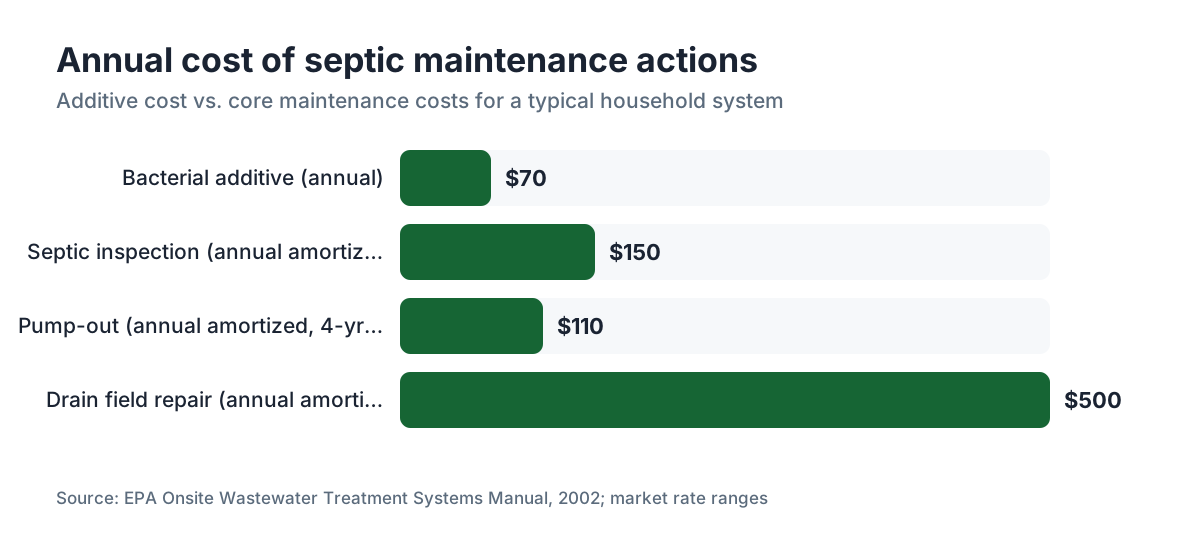
A typical monthly-dose bacterial additive like Bioforce costs $20-$50 for a package covering 3-6 months. Treat every month and you spend roughly $40-$100 a year. BioTab, sold as individual tablets, runs about $3-$5 per tablet at monthly dosing, so $36-$60 a year.
Set that against a pump-out, which runs $300-$600 in most U.S. markets (more in remote areas), and the picture is clear. The additive is cheap insurance or a cheap placebo depending on your view, but it's no cost driver either way.
The comparison that actually matters is additive versus drain field repair. If a bacterial additive stretched pumping intervals by even 10-15% (no proven evidence it does), the savings over a 20-year system life wouldn't move the needle against the cost of drain field replacement. But if skipping the additive were a symptom of a false sense of security and a missed pump-out, the downstream cost gets severe. For context, cost to install septic system runs $3,000-$15,000 for a new system in most states [7].
Here's the practical frame. If you want a bacterial additive as a low-cost habit on top of good care, fine. If you're buying it instead of a scheduled pump-out because you think it'll "take care of" the tank, rethink the math.
What are the most common mistakes homeowners make with septic additives?
The mistakes are predictable, and worth knowing before you open the package.
Using additives instead of pumping is the one that causes actual failures. Covered above, but it earns a repeat because it's the most consequential error.
Running a bleach toilet tablet at the same time. Drop a continuous-release chlorine tablet in your toilet tank, then wonder why the bacterial additive does nothing, and there's your answer. Chlorine kills bacteria. The two products fight each other directly.
Flushing the additive during peak use. Adding bacteria at 7 a.m. when five people are about to shower sends the dose through the tank in minutes without establishing. Night dosing beats it.
Buying without reading the label. Some products slap "septic safe" on the front and bury chemical surfactants in the fine print. If the ingredient list doesn't name bacterial species (Bacillus subtilis, Bacillus licheniformis, and similar are common) or it lists chemical solvents, it's not a pure bacterial product.
Expecting an additive to fix a failing system. Slow drains, a smelly yard, or effluent surfacing near the drain field are not problems bacteria solve. Those signal a system that needs professional inspection and probably septic system repair, not a bottle from the hardware store.
Not tracking what you've used. If a pumper services your tank, tell them what additives you've run. Some states require disclosure of additive use during inspections, and the information helps the operator read tank condition accurately. SepticMind's homeowner maintenance log makes this kind of record simple to keep over time.
What should you actually do to maintain a healthy septic system?
The EPA's SepticSmart program boils good maintenance down to a short list, and decades of field experience from pumpers and inspectors generally backs it up [1].
Pump on schedule. For most households that's every 3-5 years for a standard gravity system. Bigger household, smaller tank, or a garbage disposal? Lean toward the shorter interval. A septic tank pump out is the single most impactful thing you can do.
Conserve water. High volume flushes solids out of the tank before they're digested and floods the drain field. Fix running toilets and leaky faucets. They add hundreds of gallons a day.
Watch what goes down the drain. "Flushable" wipes are not septic-safe despite the label. Cooking grease, medications, paint, and harsh chemical cleaners all hurt the system. The EPA's guidance is blunt: "Flush only human waste and toilet paper" [1].
Protect the drain field. Don't park on it, plant trees near it, or aim roof drainage at it. Saturated soil in the drain field is the fastest road to failure.
Get inspected. A professional septic tank inspection every 1-3 years catches problems before they turn into failures. The inspector measures sludge and scum depth and tells you whether your pumping interval fits your system.
Want to add a bacterial product to the routine? Do it with accurate expectations. It's a low-cost supplement, not a cornerstone. The five habits above matter far more than anything in a bottle at the hardware store.
Frequently asked questions
Is Bioforce septic treatment safe for all types of septic systems?
Yes, pure bacterial products like Bioforce are considered safe for conventional gravity systems, aerobic treatment units, and mound systems. The bacteria are naturally occurring environmental strains. The one exception to check is if your system has a UV disinfection unit; continuous UV exposure in an ATU can reduce bacterial survival rates. Always check your system's manufacturer manual if you have a non-conventional design.
How often should I use Bioforce septic treatment?
Most bacterial additive manufacturers recommend monthly dosing. For a normally functioning system with steady daily use, monthly is sufficient. If you're using it after a disruption (heavy antibiotic use, chemical overload, extended vacancy), some products suggest a higher initial dose followed by monthly maintenance. Follow the package directions for your specific product rather than guessing at a schedule.
Can I use Bioforce with a garbage disposal?
Yes, but understand that garbage disposals raise the organic load on your tank substantially. Extension guidance estimates garbage disposal use can increase the solids volume entering a tank by 50% or more. A bacterial additive may marginally help with the extra load, but the more important response to having a disposal is shortening your pumping interval, typically to every 2-3 years instead of 3-5.
Will Bioforce treatment help a slow-draining septic system?
Probably not, and definitely not if the slow drainage comes from a full tank, a clogged inlet baffle, or a saturated drain field. Those are physical or structural problems bacteria can't fix. A bacterial additive only helps if slow drainage traces to reduced biological activity in a tank that's otherwise structurally sound. Have a professional diagnose the cause before buying any product to treat it.
What's the difference between Bioforce and Rid-X?
Both are biological septic additives in the same category. Rid-X is more widely distributed and has higher brand recognition. Both deliver a mix of bacteria and enzymes. The specific strains, CFU counts, and enzyme concentrations differ by formulation and are usually not disclosed in full by either maker. Independent comparative testing doesn't exist publicly, so specific performance differences can't be confirmed.
Does Bioforce septic treatment reduce odors?
A well-functioning bacterial colony produces less odor than a suppressed one, so an additive that genuinely improves digestion might cut tank odors marginally. But septic odors inside the home almost always come from plumbing issues (dried P-traps, damaged vent pipes) rather than tank biology. Smelling odors indoors? Check your plumbing before buying an additive. Outdoor odors near the tank often signal a full tank or failing seal.
Is BioTab septic tank treatment similar to Bioforce?
Yes, BioTab is in the same category: a biological septic additive delivered in tablet form. The tablet format offers convenience and consistent dosing. BioTab markets a stabilized enzyme matrix it claims protects bacteria during shipping and during contact with hot water. That's a plausible design improvement, but like Bioforce, independent efficacy data specific to BioTab isn't public. The general evidence for the product category applies to both.
Can I use Bioforce if I'm on a well and septic system?
Yes. Bacterial additives pose no documented groundwater risk from the bacteria themselves. The concern with well and septic proximity is always about effluent quality and drain field function, which proper pumping and water use habits address more directly. Your state may set required setback distances between your well and septic components; those are structural requirements no additive affects in any direction.
How long does it take for a bacterial additive to work?
Bacterial establishment in a septic environment typically takes 2-6 weeks for a meaningful colony to develop from a single dose. Enzymes in the product act faster, within hours to days, but enzymes degrade quickly in wastewater. If you're using an additive after a disruption event, give the system 4-6 weeks before judging whether it helped. For routine monthly use, the effect is cumulative and subtle enough that you probably won't notice a discrete change.
Do septic professionals recommend using bacterial additives?
Opinions vary widely among licensed pumpers and installers. Some recommend a monthly bacterial product as low-cost insurance, particularly after disruption events. Others consider it an unnecessary expense for a normally functioning system. The National Association of Wastewater Technicians and most state extension programs take a neutral to skeptical stance, consistent with EPA guidance. No professional consensus endorses additives as a required part of routine maintenance.
Where can I buy Bioforce septic treatment?
Bioforce and similar bacterial additives sell at home improvement stores, plumbing supply shops, and online retailers. Availability varies by region. Buying online, check the expiration date on the packaging when it arrives; bacterial products lose CFU viability over time and shouldn't be used past expiration. Buy from sellers with good inventory turnover rather than warehouse-stored stock that may have sat for months.
Does my state approve Bioforce for septic use?
State approval requirements vary. Massachusetts requires additives to be on a state-approved list under Title 5 regulations. Other states have no formal approval process but general prohibitions on products that harm systems or groundwater. Check your state environmental or health agency's onsite wastewater page for the current approved list or guidance. If a product isn't listed and your state runs an active approval process, using it may put you out of compliance.
What happens if I never use any septic additive?
Nothing bad, assuming you maintain the rest of your system properly. A well-maintained tank with regular pumping, conservative water use, and no harmful flushables sustains a healthy bacterial colony without any supplemental product. The vast majority of septic systems operated before bacterial additives existed on the market, and they worked fine. Additives are optional; pumping and proper habits are not.
Sources
- EPA SepticSmart program, Homeowner's Guide to Septic Systems: EPA does not endorse septic additives and recommends pumping every 3-5 years; core guidance is to flush only human waste and toilet paper
- Washington State Department of Ecology, Septic System Additives evaluation: 1994 study found no significant performance benefit from biological additives and documented harm from chemical additives
- University of Minnesota Extension, Septic System Owner's Guide: Bacterial additives did not measurably increase solids reduction or extend pump-out intervals under normal residential use
- Penn State Extension, Homeowner's Guide to Septic Systems: Sludge accumulates at roughly 50-90 gallons per person per year in a functioning septic tank
- North Carolina Department of Health and Human Services, Environmental Health: North Carolina requires inspection at least every 3 years for non-public onsite systems
- Massachusetts DEP, Title 5 Onsite Septic System Regulations: Massachusetts Title 5 requires septic additives to be on an approved list before legal use in the state
- EPA, Onsite Wastewater Treatment Systems Manual: Septic system installation costs range from roughly $3,000 to $15,000 depending on system type and site conditions; drain field restoration can exceed $20,000
- National Onsite Wastewater Recycling Association (NOWRA): NOWRA maintains state-by-state regulatory information on onsite wastewater systems including additive policies
- Virginia Department of Health: Virginia DOH states there is no scientific evidence that septic additives improve performance of a properly functioning system
Last updated 2026-07-10