Septic Service Software for Georgia Companies
By the SepticMind Editorial Team
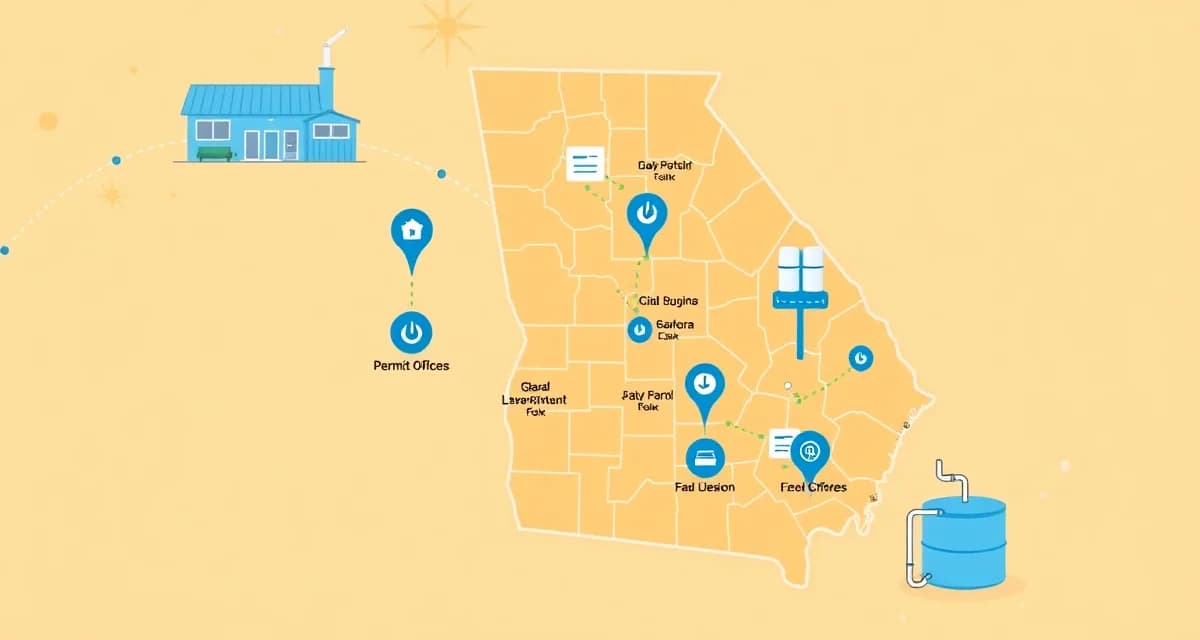
Georgia has 159 counties, more than any state except Texas. Every one of them has its own county board of health under the Georgia Department of Public Health. For septic companies operating across multiple Georgia counties, that's 159 different permit offices, 159 different relationships to maintain, and significant variation in processing times, documentation requirements, and fee structures.
TL;DR
- Georgia septic regulations are administered at the state level with enforcement typically delegated to county health or environmental departments.
- Licensing requirements for pumping, inspection, and installation work vary by county within Georgia and should be verified with local authorities.
- Operating, maintenance, and inspection reporting requirements in Georgia differ for conventional systems versus alternative systems like ATUs.
- Companies operating in multiple Georgia counties need to track permit and reporting requirements by county, not just by state.
- State-mandated inspection report formats in Georgia must be used for regulatory submissions; generic forms are typically not accepted.
- SepticMind's permit database covers Georgia county-level requirements to reduce the research burden for multi-county operations.
The Direct Answer
Georgia septic companies need software with GDPH-compliant inspection templates, permit tracking across all 159 Georgia counties, and scheduling tools for Georgia's mix of dense metro Atlanta service and rural multi-county routes. SepticMind covers all 159 Georgia counties in its permit database, includes Georgia Environmental Health inspection templates, and handles the scheduling complexity of Georgia's geographic range.
Georgia's Regulatory Framework
The Georgia Department of Public Health regulates onsite sewage management systems through its county boards of health under the Georgia On-site Sewage Management Systems (OSSMS) rules. Each county board of health issues permits for new installations, repairs, and certain maintenance activities.
Georgia requires contractors to be certified by the state's Environmental Health program. Licensed Drain Layer certification is required for installation work; the pumping contractor registration is a separate requirement. Real estate inspections in Georgia generate consistent demand, particularly in the Atlanta metro's outer suburban counties (Cherokee, Forsyth, Paulding, Henry, Coweta) where rural residential development is dense.
What Makes Georgia Different
159 counties, significant variation. The metro Atlanta counties (Fulton, Gwinnett, Cobb, DeKalb, Cherokee, Forsyth) have high-volume, well-staffed environmental health offices that process permits on relatively predictable timelines. Rural Southwest Georgia and Southeast Georgia counties may have a single environmental health inspector covering a large area with more variable processing times. Companies need a system that reflects this variation.
Real estate inspection volume. Georgia's active housing market generates consistent real estate inspection demand, particularly in the outer Atlanta suburbs and coastal areas (Savannah, Brunswick, Golden Isles). Lenders in these markets expect professional reports.
Septic system density in rural Georgia. Rural Georgia has high septic dependency, many communities never built municipal sewer systems. The Southeast Georgia coastal plain has a combination of soil types that make some areas highly suitable for conventional systems and others that require alternative designs.
Get Started with SepticMind
Operating in Georgia means navigating county-level variation in permit requirements, inspection formats, and reporting deadlines. SepticMind's permit database covers Georgia counties with forms, fee schedules, and timelines so you are prepared before you apply. See how it supports compliance in your service area.
FAQ
Does SepticMind cover all 159 Georgia county boards of health?
Yes. SepticMind's county permit database covers all 159 Georgia counties with specific permit requirements, fee information, and health department contact details. When a job is created in any Georgia county, the system loads the applicable requirements automatically.
What Georgia certification does SepticMind track for drivers?
SepticMind tracks Georgia's Drain Layer certification, pumping contractor registrations, and any additional county-specific certification requirements. The system sends alerts when certifications are approaching renewal deadlines.
How does SepticMind handle the scheduling difference between metro Atlanta and rural Georgia routes?
SepticMind's route optimization handles both dense suburban routes (12+ jobs per truck per day in metro counties) and rural multi-county routes (longer drive times, fewer jobs per day, more complex access logistics). The system adjusts route plans based on job type, location, and scheduled service windows.
What state agency regulates septic systems in Georgia?
Septic system regulation in Georgia falls under the state environmental or health agency, with day-to-day enforcement handled by county health departments or environmental offices. Licensing for pumping, installation, and inspection work is issued at the state level, but permit applications for individual projects are reviewed at the county level. Contact both the state agency and your specific county office to confirm current requirements, since county rules can differ from the state baseline.
Do Georgia septic inspection reports need to be filed with the county?
In Georgia, most inspection reports for real estate transactions and O&M permit systems must be filed with the relevant county health department or environmental office within the timeframe specified by state regulation. The required form and filing timeline vary by report type; real estate inspection reports typically have stricter deadlines than routine O&M reports. Using state-standardized digital report templates ensures the format meets Georgia's requirements and can be submitted electronically.
Try These Free Tools
Sources
- National Onsite Wastewater Recycling Association (NOWRA)
- US EPA Office of Wastewater Management
- NSF International
- Water Environment Federation
- National Environmental Services Center (NESC)