Different types of septic systems: a complete guide for homeowners
By the SepticMind Editorial Team

TL;DR
- There are at least eight common septic system types: conventional gravity, chamber, drip irrigation, mound, aerobic treatment units (ATUs), constructed wetlands, recirculating sand filters, and evapotranspiration systems.
- The right one depends on your soil's perc rate, lot size, water table depth, and local code.
- Conventional gravity systems cost the least upfront.
- ATUs and mound systems run two to four times more.
Why does the type of septic system matter so much?
Not every piece of land handles sewage the same way. Clay-heavy soil barely absorbs water. A high water table leaves almost no room for wastewater to filter before it reaches groundwater. A steep slope sends effluent downhill before bacteria can process it. Picking a septic system is a soil and site problem first, and a cost problem second.
About one in five U.S. homes runs on a septic system, and those systems handle roughly four billion gallons of wastewater a day [1]. Most failures trace back to a mismatch between what the soil can handle and what the system was designed to do. Choose the wrong type at the start and you're looking at repairs or a full replacement inside a decade.
State and county codes decide what's permitted on your land. A site evaluation, including a percolation (perc) test and often a soil profile analysis, is required almost everywhere before a permit gets issued. The perc test measures how fast water drains through your soil in minutes per inch (MPI). Conventional systems typically need soil that percs at 1 to 60 MPI. Anything slower forces an alternative design [2].
Once you know how each system type handles effluent, the permit process and the cost conversations with contractors make a lot more sense.
What are all the different types of septic systems?
Here's a plain rundown of every major system type, how it works, and the conditions it's built for.
1. Conventional gravity system
The oldest and most common design. Wastewater flows by gravity from the house to a septic tank, where solids settle to the bottom as sludge and oils float to the top as scum. The liquid in the middle, called effluent, leaves the tank and moves through a distribution box into a network of perforated pipes buried in gravel-filled trenches. Soil filters the effluent as it drains downward. No pumps. No electricity. No moving parts. These are the old types of septic systems most rural properties got decades ago, and plenty still work fine today with decent upkeep [1].
2. Chamber system
Chamber systems swap the gravel-and-pipe trenches for plastic arch-shaped chambers set in soil trenches. Effluent pools inside the chambers and drains out through the open bottom, giving more soil contact area than gravel. They install faster, weigh less to haul, and work well where gravel is expensive or the soil runs coarse. The EPA recognizes chamber systems as an accepted alternative to gravel leach fields in many states [1].
3. Drip distribution system
Drip systems use small-diameter tubing with emitters buried just six to twelve inches down. A pump doses small, frequent amounts of effluent into the tubing. Because the doses stay small and slow, the soil never gets overwhelmed, and the shallow depth puts effluent into the most biologically active soil layer. Drip systems need a pre-treatment step (usually an ATU or a filter) to strip particles that would clog the emitters. Maintenance runs high: filters need cleaning every few months, and emitters eventually wear out [3].
4. Mound system
When the water table sits too high, bedrock is too shallow, or the native soil percs too slowly, a mound system builds an artificial drainfield above grade. Sand fill gets trucked in and shaped into a mound, and a pump doses effluent into pipes buried in the sand. The mound supplies the vertical separation distance needed for treatment before effluent reaches the native soil. Mound systems are common in Minnesota, Wisconsin, and other states with thin topsoil over impermeable layers [11]. They need a pump, a dosing tank, and regular inspection of pump operation [4].
5. Aerobic treatment unit (ATU)
ATUs pump air into the treatment tank, feeding aerobic bacteria that break down waste far harder than the anaerobic process in a conventional tank. The result is cleaner effluent that can go through a smaller drainfield or, in some states, get surface-sprayed on the yard (with proper setbacks). They're common in Texas, Oklahoma, and other states with thin rocky soil. ATUs need electricity, an annual maintenance contract in most states, and disinfection (usually chlorine tablets or UV) before any surface dispersal [3].
6. Recirculating sand filter (RSF)
A sand filter system pumps effluent over a bed of sand in a lined, covered container. The effluent filters through the sand, which bacteria colonize and use to break down nutrients. Filtered effluent collects at the bottom and either recirculates several times or heads to a final dispersal area. RSFs produce very clean effluent and work on lots with poor soil or tight environmental limits. They need power and periodic media replacement.
7. Constructed wetland system
Constructed wetlands run effluent through a gravel-filled cell planted with wetland vegetation like bulrushes or cattails. The plants and their root-zone bacteria treat the effluent through settling, biological uptake, and filtration. People sometimes call these living machines. They show up mostly on commercial properties and stay rare for single-family homes, though a few states permit them.
8. Evapotranspiration (ET) system
ET systems use no soil absorption at all. Effluent goes into a sandy, lined bed where it evaporates through the surface or gets taken up by plants above. They only work in hot, dry climates with low rainfall, mostly in the southwestern U.S., because any real rain overwhelms them. Lined variants called absorptive ET systems add limited soil percolation as a backup.
| System Type | Needs Pump | Relative Cost | Best Soil/Site Condition |
|---|---|---|---|
| Conventional gravity | No | $ | Good perc, deep water table |
| Chamber | No | $ | Coarse soil, gravel-scarce area |
| Mound | Yes | $$$ | High water table, slow perc |
| Drip distribution | Yes | $$$ | Any perc, small lots |
| ATU | Yes | $$, $$$ | Poor soil, surface dispersal needed |
| Recirculating sand filter | Yes | $$$ | Poor soil, tight environmental limits |
| Constructed wetland | Sometimes | $$$$ | Large lots, mild climate |
| Evapotranspiration | No | $$$ | Hot, dry climates only |
How much do different septic system types cost to install?
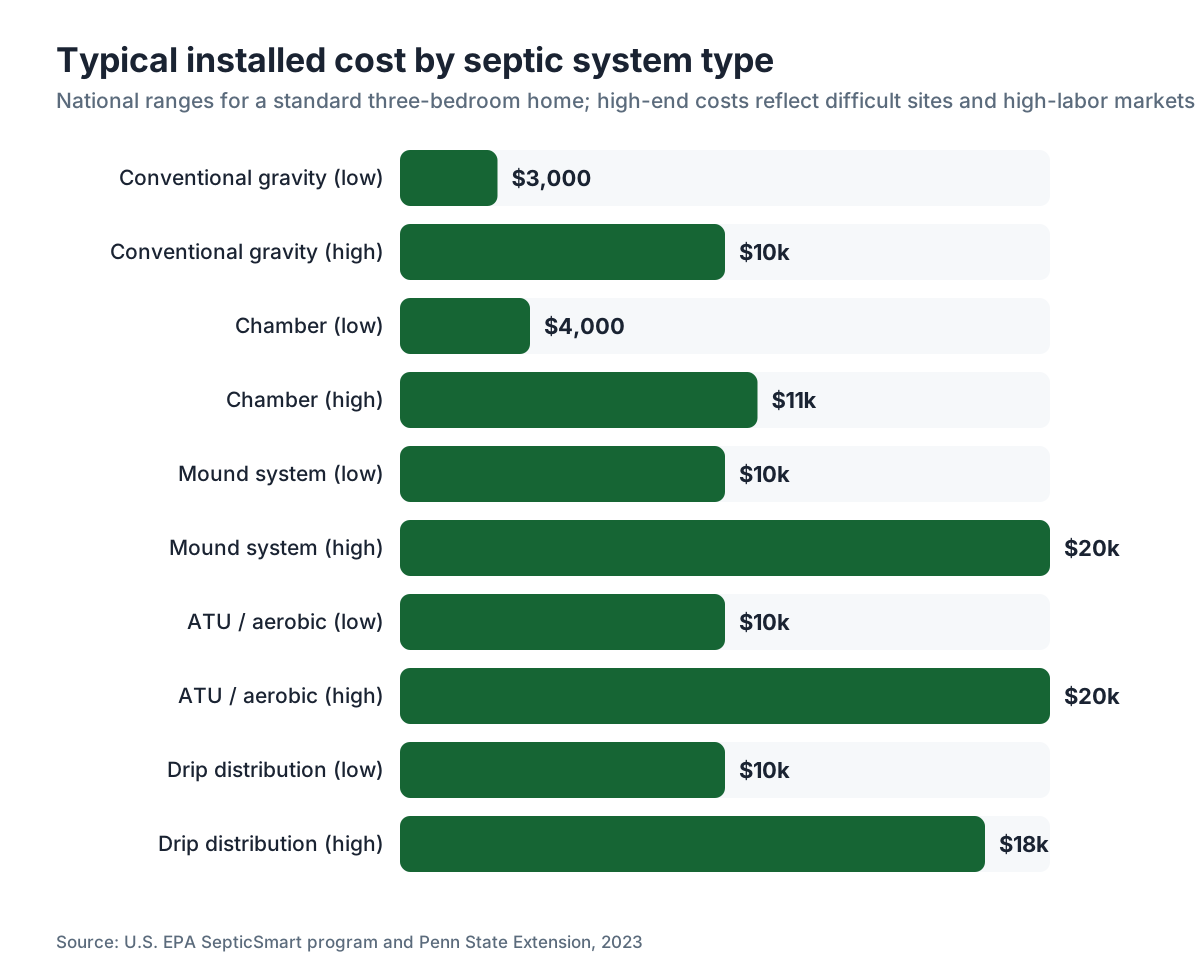
Installation cost swings hard depending on system complexity, soil conditions, and local labor rates. The figures below are national ranges. Expect the high end in coastal states and the low end across the rural Midwest and South.
Conventional gravity systems typically run $3,000 to $10,000 for a standard three-bedroom home [5]. Chamber systems land in a similar range, sometimes a bit higher because the chamber units cost more than gravel. Mound systems get pricey: $10,000 to $20,000 or more, thanks to the sand fill, pumping equipment, and extra labor [5]. ATUs fall in that same $10,000 to $20,000 range, with annual maintenance contracts adding $150 to $500 a year depending on your state [3]. Drip systems sit alongside mounds. Constructed wetlands and residential sand filters can top $15,000.
See our detailed breakdown in the cost to install septic system guide for state-by-state ranges, permit fees, and what drives costs up.
Here's what most homeowners underestimate: the ongoing cost gap. A conventional gravity system with no pump has almost no operating cost beyond routine septic tank pumping every three to five years. A mound or ATU adds electricity, a service contract, and more frequent inspections. Over twenty years, that gap can easily hit $5,000 to $10,000. Factor it in when you compare bids.
When you're weighing cost to put in a septic tank quotes, make bids spell out the system type, drainfield size, and whether the perc test and permit fees are baked in. They often aren't.
What determines which septic system type you're allowed to install?
Your state environmental or health agency writes the rules, and county or local health departments enforce them through permitting. The EPA does not regulate individual septic systems directly. It publishes guidance (including the SepticSmart program) and funds research, but the authority sits with states [1].
The perc test is usually the first gate. Soil that drains faster than 1 MPI or slower than 60 MPI typically knocks out a conventional gravity system in most state codes, though thresholds vary. North Carolina, for example, uses a soil morphology approach instead of a timed perc test in many cases [6]. Wisconsin runs one of the most detailed alternative-system classification systems in the country, organized by treatment level (primary, secondary, tertiary) matched to site constraints [4].
Site geometry matters too. Minimum horizontal setbacks from wells, property lines, surface water, and foundations are set by code. A typical state requires 50 to 100 feet from a potable well to any drainfield component, though this varies widely. A small or oddly shaped lot can rule out conventional trenches and push you into a drip or mound design that fits the footprint you've got.
Water table depth is another hard limit. Most state codes want at least two to four feet of unsaturated soil between the bottom of the drainfield and the seasonal high water table. A mound builds that separation artificially when the native soil can't.
Proximity to sensitive environments closes the loop. Coastal setback rules, karst geology areas, and wellhead protection zones often require ATUs or sand filters that produce higher-quality effluent even where the soil alone would support a conventional system.
What are the old types of septic systems still found in older homes?
If your home went up before 1980, or especially before 1960, there's a fair chance you've got a system type that new construction phased out. These legacy systems matter because they hit property value, insurance, and what surfaces during a septic tank inspection.
Cesspools. A cesspool is a pit, sometimes lined with rocks or concrete blocks with gaps, that takes raw sewage straight in. Liquid seeps out through the gaps or bottom, and solids pile up. Essentially no treatment happens. Cesspools are banned for new construction in nearly every state and have been tied to groundwater contamination with nitrogen, pathogens, and pharmaceuticals. Hawaii banned all cesspools and requires conversion by 2050 [7]. If you have one, your state likely makes you replace it when it fails, and some states require replacement on a set schedule.
Seepage pits (drywells). Seepage pits are large pits filled with rock or left open, built to take septic tank effluent and let it seep into surrounding soil. They beat cesspools because the solids get separated in a tank first, but they concentrate wastewater in one spot, usually deeper than ideal, and many have fouled shallow aquifers. Most states no longer permit them for new construction.
Single-compartment tanks. Many older tanks have just one compartment, which separates solids and scum from effluent less effectively than the two-compartment design that's standard now. A pumper will usually flag a single-compartment tank while inspecting or pumping it. These don't automatically need replacing, but they do need more frequent septic tank pump out service.
Steel tanks. Concrete and fiberglass are the standard materials now, but millions of older homes still have steel septic tanks installed from the 1940s through the 1970s. Steel corrodes from the inside out. The baffle (the part that keeps scum from escaping into the drainfield) usually fails first, and the tank walls can collapse. If you've got a steel tank, have a contractor check its condition during your next septic tank cleaning and budget for replacement.
Some of these old systems still run because the soil's been kind and the household load is light. None would pass a permit inspection today, and many states require disclosure during a home sale.
How do you know which type of septic system you already have?
Start with county or state health department records. Most counties digitized septic permits back to at least the 1980s, and plenty go earlier. The permit or as-built drawing shows the system type, tank size, drainfield dimensions, and install date. Search your county's environmental health or planning department website, or call them with your parcel number.
If records are missing or thin, a licensed inspector can usually pin down the system type during a septic tank inspection. They'll locate the tank, check the number of compartments and the material, trace the outlet pipe, and probe the drainfield. A pump tank, a control panel, or an air compressor cabinet is a clear sign you've got an ATU, mound, or drip system.
The drainfield surface gives hints too. Mound systems are obvious from above: a raised earthen berm, usually 2 to 4 feet above grade, often grassed over. Healthy conventional trenches leave no surface feature. Drip systems have a small irrigation controller box and tubing runs that look a lot like landscape irrigation.
Bought a home with no disclosure about the septic type, or sellers who didn't know? Budgeting for a professional inspection before trouble shows up is money well spent.
What maintenance does each septic system type need?
Maintenance requirements split hard by system type, and this is where the ongoing cost gap really shows.
Conventional gravity and chamber systems carry the lowest burden. Pump the tank every three to five years (EPA's SepticSmart guidance recommends inspecting at least every three years and pumping every three to five [1]). Keep grease, wipes, and garbage-disposal waste out of the drain. Keep vehicles and deep-rooted plants off the drainfield. That's genuinely most of it. For a pumping schedule tuned to your household size, see how often to pump septic tank.
Mound systems add pump maintenance. The dosing pump sits in a separate pump tank and runs on a timer or float switch. Test the pump alarm every year. The pump itself usually lasts 5 to 15 years and costs $300 to $800 to replace. The mound's grass cover needs mowing but no deep aeration or fertilizer (fertilizer pushes nutrients into the system).
ATUs are the most maintenance-heavy residential systems out there. Most state rules require a service contract with a licensed technician who inspects the air compressor, diffuser, clarifier, and disinfection unit at least yearly, sometimes quarterly. Texas, for one, requires ATU owners to keep a service contract for the life of the system [8]. Chlorine tablets or UV bulbs need periodic replacement. Let the contract lapse and you can pick up code violations and fines.
Drip systems need filter cleaning every three to six months, depending on effluent quality. The pump, pressure-regulating valves, and emitters all want periodic inspection. Budget about $200 to $400 a year for a residential drip system.
For any system, the leach field or drainfield is the part you cannot neglect. Soggy ground, sewage odors, or slow drains in the house should trigger an inspection right away, not a wait-and-see.
What are the pros and cons of aerobic septic systems specifically?
ATUs draw a lot of attention because they're marketed as the fix for hard lots, and for certain sites they genuinely are. They're also oversold plenty.
The upside is real. ATUs put out effluent that's much cleaner than a conventional tank's, cutting nitrogen and pathogen loads before dispersal. That cleaner effluent can go through a smaller drainfield (a big deal on tight lots) or get surface-sprayed. The Texas Commission on Environmental Quality notes that properly operating ATUs with disinfection can produce effluent approaching secondary treatment standards [8].
The downside is real too. ATUs need electricity around the clock (an outage of more than a day can stress the bacterial culture and drop performance temporarily). They cost more to install and a lot more to maintain. The air compressor is the most common failure point and typically needs replacing every 5 to 10 years. Leave the house empty for a long stretch and the bacterial population can starve without incoming organic material to feed on, which means a startup period when you fire the system back up.
For a homeowner who wants the least lifetime hassle and cost, and who has soil that supports a conventional system, I'd take the conventional every time. The ATU is the right call when the site genuinely can't support anything simpler, not as a prestige upgrade.
If your ATU is underperforming, or you want help checking whether your system type actually matches your site, operators using SepticMind can pull system records and service histories to spot patterns individual homeowners often miss.
For repair issues on any system type, see our septic system repair guide.
Can you convert from one septic system type to another?
Yes, and it happens more than people expect. The common scenarios are failing drainfields on conventional systems, older cesspools or seepage pits getting condemned, and lots where the original system was grandfathered but no longer meets code at sale or renovation.
Converting a cesspool or seepage pit to a modern system usually means installing a proper two-compartment concrete or fiberglass tank (if one isn't already there) and designing a new drainfield off a fresh perc test. If the soil and site support it, a conventional or chamber system is the cheapest conversion. If soil conditions have shifted (water table rise, soil compaction from construction) or lot constraints have tightened, you may get pushed to a mound or ATU.
Converting a failing conventional drainfield to a mound or drip system is common in the Upper Midwest and Southeast, where heavy rain years raise water tables. The existing septic tank may be reusable if it's in good shape. The drainfield is entirely new.
Permit requirements for conversions match new installations in most states. You'll need a new site evaluation, perc test (or equivalent), and an engineered design in many states. Costs vary, but converting a cesspool to a conventional system might run $8,000 to $15,000. Adding a mound or ATU to an existing tank can run $12,000 to $25,000.
For septic tank repair that stops short of full replacement, see what's actually fixable without a full system swap.
How does the EPA classify septic system types?
The EPA doesn't keep a rigid national typology. Its SepticSmart program (launched in 2011) and its onsite wastewater guidance group systems broadly into conventional systems and alternative systems, with alternative meaning anything that departs from the gravity-trench-and-gravel design [1].
The EPA's "Onsite Wastewater Treatment Systems Manual" (EPA/625/R-00/008, published 2002) is still the most thorough federal reference on system types and design criteria. It states that "alternative systems are needed when site conditions limit the use of conventional systems," and it lists pressure distribution, mound, at-grade, drip irrigation, constructed wetland, and evapotranspiration systems among them [3].
Beyond the EPA, NSF (formerly the National Sanitation Foundation) certifies ATU performance under NSF/ANSI Standard 40, which many states reference in their permitting codes. An ATU carrying NSF/ANSI 40 certification has been tested and shown to consistently produce effluent with BOD (biochemical oxygen demand) and TSS (total suspended solids) at or below 30 mg/L, on par with secondary sewage treatment [9].
For the most authoritative source specific to your location, your state's environmental agency or health department publishes its own onsite wastewater rules. Those are the documents that actually govern what gets permitted on your property.
What's the lifespan of each septic system type?
Lifespan hinges on maintenance, soil, and how hard you use the system, so treat these as reasonable expectations, not guarantees.
Conventional gravity systems with concrete tanks: 25 to 40 years for the tank, and potentially much longer for the drainfield if it never gets overloaded or flooded. Concrete tanks can last 40 to 50 years if corrosion or heavy vehicle traffic doesn't crack them [10]. Chamber systems have similar drainfield lifespans, and the plastic chambers are rated by manufacturers for 30 to 50 years.
Mound systems: the sand medium and drainfield components typically last 20 to 30 years. The pump and pump controls are shorter-lived at 5 to 15 years.
ATUs: the tank body lasts a long time, but the mechanical and electrical parts (air compressor, diffuser assemblies, clarifier, disinfection unit) realistically need replacement or major service on 5 to 15 year cycles.
Drip systems: tubing and emitters typically last 10 to 20 years depending on effluent quality and whether the pre-treatment filter gets maintained.
The single biggest thing shortening any drainfield's life is biomat formation, an organic layer that builds up at the soil interface and cuts absorption. It speeds up with inadequate tank pumping (which lets solids carry over into the drainfield), high water use, and heavy use of antibacterial soaps. A drainfield fed solid-free, properly treated effluent can outlast a neglected one by decades.
To work out whether your drainfield is still healthy or needs help, the leach field guide walks through the warning signs and remediation options.
How do septic service operators keep track of multiple system types across a service area?
For a homeowner, learning your system type is a one-time job. For operators running pump trucks or inspection crews across hundreds or thousands of properties, system type is a daily variable that drives scheduling, staffing, equipment, and compliance reporting.
An ATU on a service contract has a different visit cadence than a conventional gravity system pumped on a three-year rotation. Mound systems often need pump inspections documented for the county. Drip systems need filter service logs. Keeping all of that straight in paper files or a generic spreadsheet is how service calls get missed and contracts fall out of compliance.
SepticMind is built for exactly that problem, giving service companies a way to track system types, service histories, permit details, and maintenance schedules at the property level without records slipping through the cracks. If you run a septic operation across mixed-system service areas, that kind of structured data cuts down missed appointments and lets technicians pull up what they need on-site fast.
For homeowners, the parallel is simpler: keep a paper or digital file with your permit, as-built drawing, tank pumping receipts, and any ATU service reports. That file saves hours during a home-sale inspection or a warranty dispute.
Frequently asked questions
What is the most common type of septic system in the United States?
The conventional gravity system, by a wide margin. It uses a septic tank to separate solids from effluent, then gravity-feeds the effluent into perforated pipes in gravel-filled trenches where soil does the treatment. About one in five U.S. homes uses a septic system, and most of those are conventional gravity designs installed before the 1990s.
What type of septic system is best for a small lot?
Drip irrigation systems and ATUs usually fit small lots best because the drainfield footprint can be much smaller than a conventional trench system. Drip tubing can snake through irregular spaces, and the pre-treated effluent from an ATU stresses a small dispersal area less. Expect to pay more upfront and more each year in maintenance than with a conventional system.
What type of septic system works with a high water table?
A mound system is the standard fix for high water table sites. Sand fill goes above grade to build the vertical separation distance between the drainfield and the water table. Required separation varies by state but usually runs two to four feet. Drip systems can also work by dosing shallow and frequently, but they need ATU pre-treatment in most states.
How do I find out what type of septic system I have?
Check with your county health or environmental agency for the original permit and as-built drawing. If records aren't available, a licensed inspector can determine the system type on-site by locating the tank, checking for pump tanks or control panels, and tracing the drainfield configuration. A raised mound in the yard, an air compressor cabinet, or drip tubing are easy visual clues.
Are aerobic septic systems better than conventional ones?
ATUs produce cleaner effluent and work on sites where conventional systems can't, but they cost more to install and a lot more to maintain (annual service contracts, electricity, disinfection supplies). If your soil and lot support a conventional gravity system, that design is simpler and cheaper over the system's lifetime. ATUs make sense when the site genuinely demands higher-quality treatment.
What are the old types of septic systems I might find in a house built before 1970?
Cesspools (unlined or loosely lined pits taking raw sewage), seepage pits (pits taking septic tank effluent without proper dispersal), single-compartment tanks, and steel tanks are all common in pre-1970 homes. None would pass a new-installation permit today. Steel tanks corrode. Cesspools and seepage pits contaminate groundwater. A pre-purchase inspection should specifically identify these.
How long does a mound septic system last?
The sand bed and drainfield components in a mound system typically last 20 to 30 years with proper maintenance. The dosing pump, running on a float switch or timer, usually needs replacement every 5 to 15 years. Regular pump inspections, avoiding high-water-use events, and keeping the tank properly pumped stretch the mound's useful life a lot.
What is a chamber septic system and how does it differ from conventional?
A chamber system uses plastic arch-shaped chambers in drainfield trenches instead of gravel and perforated pipe. Effluent pools inside the chambers and drains through the open bottom into the soil. Chambers give a larger soil-contact area, install faster, and perform well in coarser soils or where gravel is expensive. Installation cost is similar to conventional, with no significant maintenance differences.
Do ATUs require a maintenance contract by law?
In many states, yes. Texas requires ATU owners to keep a service contract with a licensed installer for the life of the system. Other states have similar rules. These contracts typically cover quarterly or annual inspections of the air compressor, clarifier, and disinfection system. Letting the contract lapse can bring code violations and fines. Check your state's onsite wastewater regulations for the exact requirement.
Can a septic system type be upgraded or changed after installation?
Yes. Conversions happen most often when a conventional system fails, a cesspool is condemned, or a property sale triggers an inspection that turns up a non-compliant system. The new design goes through the same permitting as a new installation, including a fresh site evaluation and perc test. Conversion costs typically range from $8,000 to $25,000 depending on the target system and whether the existing tank can be reused.
What type of septic system is required near a lake or wetland?
Setbacks near water bodies and wetlands are strict in most states, and many require higher-treatment systems (ATUs, sand filters, or constructed wetlands) that cut nutrient and pathogen loads before dispersal. Some coastal and lakeside jurisdictions require nitrogen-reducing technology specifically to protect water quality. Contact your state environmental agency or county health department for the rules in your area.
How often should a conventional gravity septic system be pumped?
EPA's SepticSmart guidance recommends inspecting every three years and pumping every three to five years for an average household. Homes with garbage disposals, larger households, or smaller tanks may need pumping every two to three years. A tank that never gets pumped eventually carries solids into the drainfield, causing biomat buildup and premature drainfield failure that costs far more to fix than routine pumping.
Sources
- U.S. EPA, SepticSmart and septic systems program: Approximately one in five U.S. homes uses a septic system; EPA recommends inspecting every three years and pumping every three to five years; chamber systems recognized as conventional alternatives.
- U.S. EPA, Onsite Wastewater Treatment Systems Manual (EPA/625/R-00/008): Percolation rates of 1 to 60 MPI are typical for conventional system suitability; slower rates require alternative designs; alternative systems include pressure distribution, mound, drip irrigation, constructed wetlands, and evapotranspiration systems.
- U.S. EPA, Onsite Wastewater Treatment Systems Manual (EPA/625/R-00/008): Alternative systems are necessary when site conditions preclude use of conventional systems; drip and ATU systems described; ATU maintenance requirements noted.
- Wisconsin Department of Natural Resources: Wisconsin classifies alternative systems by treatment levels matched to site constraints; mound systems common in areas with thin topsoil over impermeable layers.
- U.S. EPA, SepticSmart consumer materials: Conventional gravity system installation typically $3,000 to $10,000; mound and ATU systems $10,000 to $20,000 or more.
- North Carolina Department of Environmental Quality: North Carolina uses soil morphology assessment rather than timed perc tests in many permitting cases.
- Hawaii Department of Health, Wastewater Branch: Hawaii requires conversion of all cesspools by 2050 and has banned new cesspool construction.
- Texas Commission on Environmental Quality, on-site sewage facilities program: Texas requires ATU owners to maintain service contracts for the life of the system; properly operating ATUs with disinfection can approach secondary treatment standards.
- NSF, NSF/ANSI Standard 40: Residential Wastewater Treatment Systems: NSF/ANSI 40 certification requires ATUs to consistently produce effluent with BOD and TSS at or below 30 mg/L, comparable to secondary sewage treatment.
- Penn State Extension: Concrete septic tanks can last 40 to 50 years if not cracked by corrosion or vehicle traffic; conventional drainfields can last 25 to 40 years with proper maintenance.
- University of Minnesota Extension: Mound systems common in Minnesota and the Upper Midwest due to thin topsoil over impermeable layers; annual pump and dosing timer inspection recommended.
- U.S. EPA, septic systems overview: Septic systems process roughly four billion gallons of wastewater per day across the United States.
Last updated 2026-07-09