Septic tank pump out: cost, frequency, and what to expect
By the SepticMind Editorial Team
TL;DR
- A standard septic tank pump out costs $250 to $600 for a typical residential tank.
- Larger tanks or bad access push it past $800.
- Most homes need pumping every 3 to 5 years, but the real interval depends on tank size and how many people live there.
- The job takes under two hours.
- Skip it and you risk drain field failure, which runs $5,000 to $25,000 to fix.
What actually happens during a septic tank pump out?
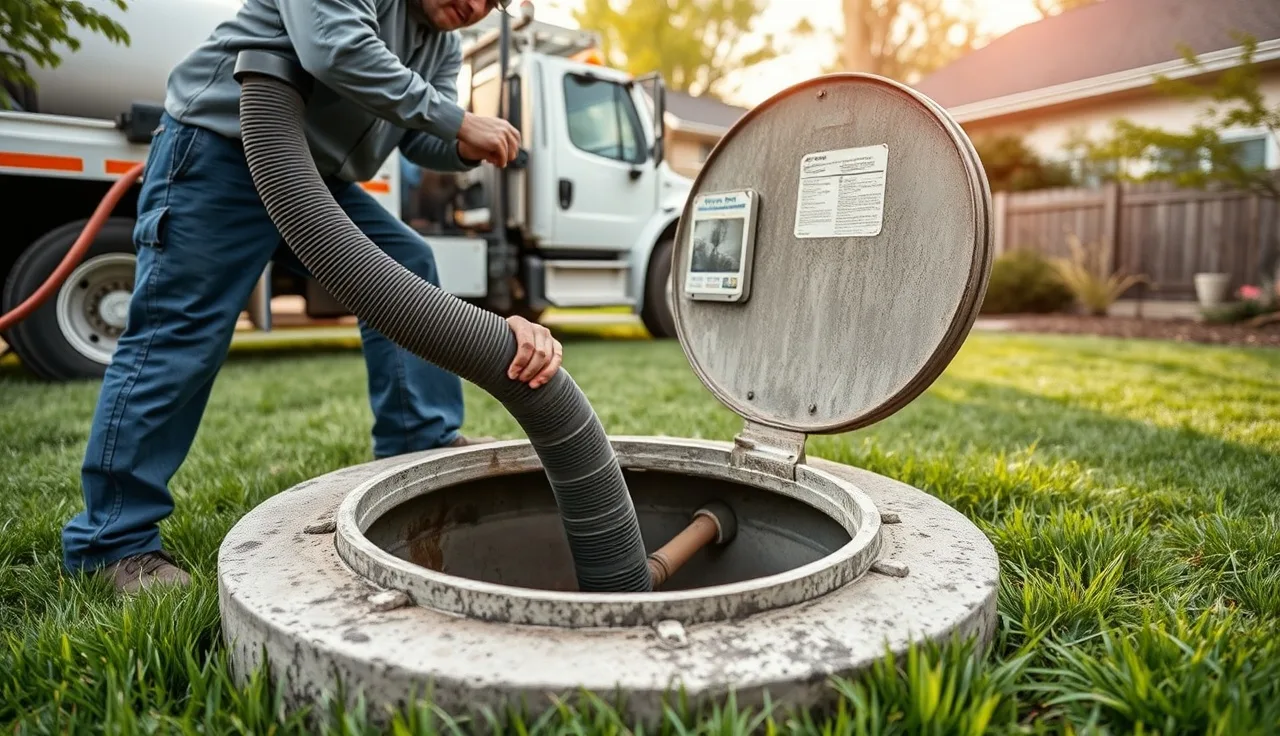
A pump out is simple work, but almost nobody has watched one. The technician finds your access lids, pulls them off, and drops a 3- to 4-inch vacuum hose into the tank. A truck-mounted pump creates suction strong enough to move 800 to 1,500 gallons per minute, so a typical 1,000-gallon tank empties in a few minutes of actual pump time [1].
A good technician inspects before and after. They check the inlet and outlet baffles, look for cracks in the tank walls, probe the scum and sludge layers with a measuring stick (a sludge judge), and note the liquid level. A level that sits abnormally high before pumping often points to a failing septic drain field, more than a full tank.
The solids and liquid hauled away are called septage. Licensed haulers have to take it to an approved treatment plant or a permitted land-application site. Federal rules under 40 CFR Part 503 govern septage disposal, and most states add their own requirements on top [2].
The whole visit, setup through cleanup, usually runs 30 to 90 minutes. Two-compartment tanks take a little longer because both chambers need access.
How much does it cost to pump a septic tank?
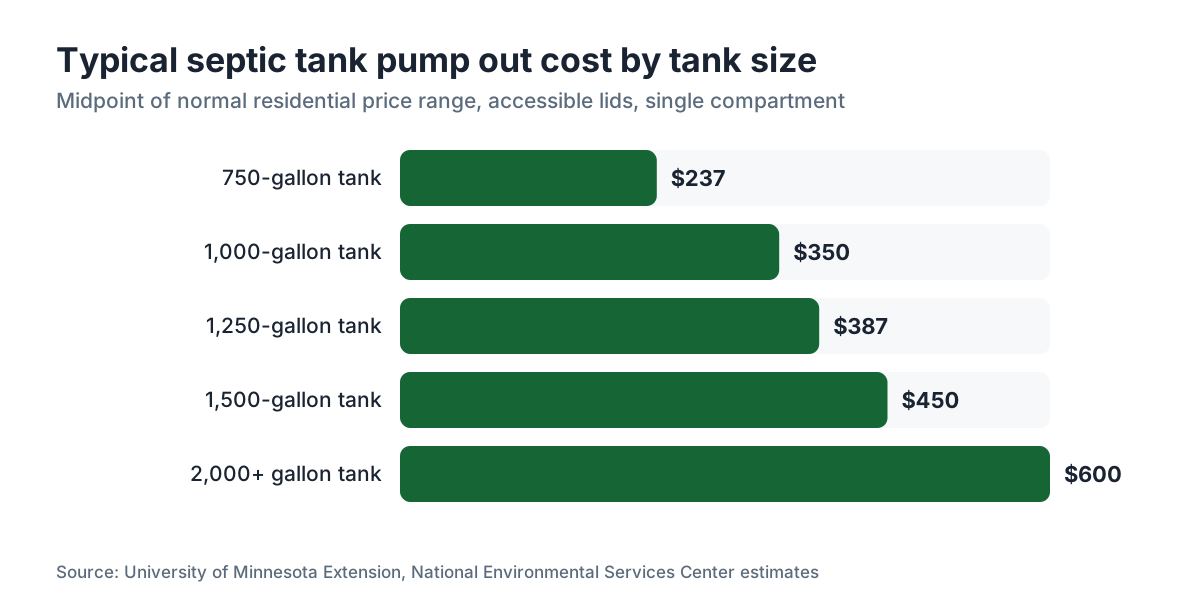
Most homeowners pay $250 to $600. The range is wide because so many things move the number. A standard 1,000-gallon single-compartment tank with lids you can reach runs $250 to $450. A 1,500-gallon tank usually lands at $300 to $600. Add a buried lid, years of skipped service, or a tight lot, and quotes climb to $700 to $900.
Here is the breakdown by tank size, based on contractor pricing surveys and state extension estimates [3][4]:
| Tank size (gallons) | Typical pump-out cost |
|---|---|
| 750 | $175, $300 |
| 1,000 | $250, $450 |
| 1,250 | $275, $500 |
| 1,500 | $300, $600 |
| 2,000+ | $400, $800+ |
Location drives a lot of the spread. Rural haulers often charge more because the drive to a disposal facility eats their day. Urban markets have more competition, which holds prices down. In high-cost states like California, Massachusetts, and New York, the same job can run $100 to $200 above the national median.
A few line items push the bill up:
- Lid locating or excavation. Buried lids can add $50 to $150 to probe and dig. Installing a septic tank riser afterward kills that charge on every future visit.
- Jetting or cleaning. Thick grease or a clogged outlet baffle means septic tank cleaning with high-pressure water jetting, another $100 to $300.
- Filter cleaning. Many modern tanks have an effluent filter on the outlet. Cleaning it adds $50 to $100 and is worth every dollar.
- After-hours or emergency service. Expect a 50 to 100 percent premium.
Want to see how pump-out spending stacks up against a failed system? The cost to install a septic system article puts it in perspective fast.
How often do you need to pump out a septic tank?
Every 3 to 5 years for most homes. The EPA's SepticSmart program says "the average household septic system should be inspected at least every three years by a septic service professional" and pumped "every three to five years" [1]. That is a good starting point, not a rule for every house.
Your real interval comes from a simple comparison: tank size against your household's daily water use and sludge rate. The University of Minnesota Extension publishes a table showing a 1,000-gallon tank serving four people needs pumping about every 2.6 years under normal use, while a 1,500-gallon tank on the same household stretches to roughly 4 years [3].
| Household size | 1,000-gal tank | 1,500-gal tank | 2,000-gal tank |
|---|---|---|---|
| 1 to 2 people | 5 to 7 years | 8 to 10 years | 10+ years |
| 3 to 4 people | 2.5 to 4 years | 4 to 5 years | 6 to 8 years |
| 5 to 6 people | 1.5 to 2.5 years | 2.5 to 4 years | 4 to 5 years |
These numbers assume no garbage disposal. A disposal roughly doubles the sludge load and cuts the interval in half [3]. Heavy cooking oil use, teenagers, or multiple laundry loads a day all argue for the shorter end.
For the full science behind these intervals, how often to pump septic tank breaks it down.
What are the signs that your septic tank needs pumping now?
A full tank almost always warns you before it backs up sewage into the house. Watch for slow drains across multiple fixtures, gurgling from drains, wet ground over the drain field, and sewage odors. Any one of these means call now, not next month.
Slow drains throughout the house, more than one fixture. A single slow drain is usually a clog in that line. When every toilet and sink drags at once, the tank is full or the outlet is blocked.
Gurgling from drains when no water is running. That sound is gas finding its way back up through the traps.
Wet or spongy ground over the drain field, sometimes with unusually green, lush grass. That means effluent is surfacing because the tank is overwhelmed [5].
Sewage odors inside or outside. Outside near the tank or field is more common. Inside almost always means the tank is overfull and gas is backing up.
An actual backup into the lowest drain in the house. That is the tank telling you it got ignored too long.
Don't wait on any of these. A surfacing drain field is past a pump-out problem. If you see wet spots over the leach lines, read the septic drain field guide before you call, because you may need more than routine service.
How do you find and vet a septic tank pump out company?
Ask for the state license number first, then verify it on your state environmental agency's website. Every state licenses septic pumping contractors, and most counties want them registered locally too. The check takes about two minutes and tells you plenty.
The National Onsite Wastewater Recycling Association (NOWRA) and the National Association of Wastewater Technicians (NAWT) both keep contractor directories [8]. NAWT also certifies inspectors to a standard competency level, which matters if you need a pre-sale inspection along with the pumping [6].
What to ask when you call:
- Are you licensed in this state and insured?
- What is in the base price? (Inspection? Both compartments? Filter cleaning?)
- Where do you haul the septage? A reputable company answers that without hesitating.
- Do you provide a written report after the service?
Get at least two quotes. Prices for the same job vary 20 to 40 percent between contractors in one market, and the cheapest bid is sometimes cutting corners on disposal or skipping the inspection.
For operators running a multi-truck pumping business, SepticMind's dispatch and route-scheduling software is built for septic service companies and cuts windshield time on days packed with pump-out jobs.
What does a septic tank pump out inspection cover?
A pump out without an inspection is just emptying a tank. The inspection is what makes the money worth spending. A thorough technician checks the inlet baffle, the outlet baffle or effluent filter, tank walls and lid seals, and the scum and sludge depth before pumping.
The inlet baffle. This tee directs incoming sewage downward so it doesn't short-circuit to the outlet. A missing or broken inlet baffle is the most common finding and an easy fix.
The outlet baffle or effluent filter. This side matters more. If it fails, solids ride straight into your septic drain field, clog the soil, and trigger a $5,000 to $25,000 repair [4].
Tank walls and lid seals. Cracks in concrete tanks let groundwater in (which overloads the system) or effluent out (a public health problem). A good technician hunts for hairline cracks and root intrusion.
Scum and sludge depth before pumping. This is the only way to know if your interval is right. Sludge at 40 percent of liquid depth means you waited too long. Sludge at 10 percent means you may be pumping too often.
The distribution box and riser, if visible. Not every technician looks past the tank, but the good ones note anything odd at the surface.
Most states require the technician to file a service report with the county health department. Ask for a copy. That paper trail protects you when you sell the house.
Can you pump a septic tank yourself, and should you?
No, and here is why. It is not legal, and it is not safe. Hauling septage falls under EPA 40 CFR Part 503 and state law. Homeowners cannot legally move raw septage on public roads or dump it without a licensed facility. People sometimes rent a small portable pump to move liquid out of a flooded yard in an emergency, but that is not a pump out in any real sense.
The safety risk is not theoretical. Septic tanks build up hydrogen sulfide and methane. Entering a tank without atmospheric testing and ventilation gear has killed multiple workers. OSHA classifies septic tank entry as a permit-required confined space [7]. This is not a weekend job.
What you can do yourself: find the lids, measure or estimate the tank size for the technician, keep a service log, and watch for the warning signs above. That prep makes the service call faster and cheaper.
What happens to the waste after the pump out?
Septage goes to a regulated destination, either a municipal treatment plant or a permitted land-application site. Both are governed by EPA Part 503 rules. A hauler who dodges the question of where it goes is a warning sign.
Municipal wastewater treatment. Most licensed haulers deliver septage to a permitted treatment plant that accepts it. The plant handles it like any other high-strength waste. This is the common pathway in urban and suburban areas [2].
Permitted land application. In farm country, treated septage can go on farmland as a soil amendment, under strict Part 503 rules on pathogen reduction, buffer distances, and application rates. Some states allow more than others.
You have every right to ask your hauler which facility they use. A company that can't or won't say is a red flag. Illegal septage dumping is an environmental violation with real consequences, and the homeowner who hired an unpermitted hauler can sometimes get pulled into the liability.
Does pumping a septic tank damage the good bacteria?
Pumping removes bacteria along with the solids, but the tank reseeds itself within days. This is one of the most common worries homeowners have, and it is a non-issue in practice.
Waste, food particles, and normal organic matter entering after pumping bring in new anaerobic bacteria fast. The EPA says a healthy tank doesn't need additives to restart after pumping, and the scientific evidence for commercial septic additives is generally weak [1].
State extension programs have looked harder at this. The University of Minnesota Extension concludes biological additives "have not been shown to reduce the need for pumping" [3]. Save the money.
One scenario where reseeding actually matters: pump the tank, then leave for a three-month vacation with nobody using the system. Bacterial populations will be low when you return. That is fine. A few days of normal water use gets the biology back without any product.
How does a septic pump out affect your drain field?
Regular pump outs protect the drain field. Skipping them destroys it. When solids build past about 30 to 40 percent of the tank's liquid depth, sludge carries over into the outlet and into the leach field pipes.
Those pipes and the surrounding soil clog with a biomat, a dense layer of anaerobic bacteria and solids that stops water from soaking through. Once a biomat sets in, no amount of pumping fixes it. You need septic system repair or full septic tank repair, and maybe a new field.
Drain field replacement runs $3,000 to $20,000 for a conventional system and can hit $50,000 for a mound or engineered setup on a hard lot [4]. A $350 pump out every three years is one of the best maintenance bargains a homeowner gets.
If your drain field already shows stress, a pump out can buy time by pulling the solid load out of the tank. It will not reverse soil clogging. The septic drain field article covers what can actually be done once the field itself is failing.
What should you do before and after a pump out?
Before the call, find the lids and note any symptoms. After, get the written report, ask about the baffles and filter, and mark your calendar for the next visit based on the measured sludge depth. Small prep saves real money.
Before the service call:
Locate the tank and lids. If you don't know where the tank sits, check your permit at the county health department, follow the pipe leaving the house in the basement or crawlspace, or probe the ground with a metal rod about 10 to 15 feet out from where that pipe exits. Mark the lids so the technician doesn't have to hunt.
Note any symptoms. Slow drains, odors, wet spots, tell the technician before they start. That context shapes what they look for.
Don't run excessive water the day of service. A tank that is 90 percent liquid is harder to read for accurate sludge depth.
After the service:
Get the written report and file it. You will want it when you sell the house or file a warranty claim on a new drain field.
Ask specifically about the baffle condition and the effluent filter. If either needs replacing, do it at the same visit or book a follow-up within a few weeks.
Mark your calendar for the next pump out based on the actual sludge depth the technician measured, not a generic three-year rule.
Want a structured way to track service history, set reminders, and log findings? SepticMind's homeowner maintenance tools handle exactly that.
Are there ways to reduce how often you need to pump out?
Yes, within limits. You can't eliminate pumping, but you can stretch the interval safely by cutting what goes into the tank and easing the hydraulic load. The single biggest lever is keeping solids and grease out.
Reduce what goes into the tank. Garbage disposals, cooking grease, and non-flushable wipes all speed up sludge buildup. The EPA SepticSmart program specifically warns against flushing wipes, even ones labeled flushable, along with grease, medications, and harsh chemicals [1]. Each of those either adds solids or kills the biology that breaks solids down.
Space out laundry loads. Six loads in one day sends a hydraulic surge through the system that can push solids toward the outlet before they settle. Spreading loads across the week costs nothing.
Fix leaking toilets. A toilet that runs nonstop can add 200 gallons a day to the tank, double the per-person flow. That overloads the biology and keeps solids from settling. A $10 flapper usually fixes it.
Go easy on antibacterial soaps and bleach. These kill the anaerobic bacteria in the tank. Some exposure is unavoidable, but dumping a gallon of bleach down the drain for spring cleaning is a bad idea.
Keep tree roots away from the tank and drain field lines. Roots crack tanks and clog pipes. The septic tank emptying article covers the full picture of what goes in and what comes out.
Frequently asked questions
How much does it cost to pump out a septic tank for a typical home?
Most homeowners pay $250 to $450 for a standard 1,000-gallon tank with accessible lids. A 1,500-gallon tank usually runs $300 to $600. Costs climb if the lids are buried and need locating, if the tank has gone years without service, or if the job needs high-pressure jetting. Emergency or after-hours service can double the normal rate.
How long does a septic tank pump out take?
Most residential pump outs take 30 to 90 minutes from arrival to departure. A small single-compartment tank with easy lid access can be done in 30 minutes. A large two-compartment tank, hard access, or heavy sludge from a long-overdue service pushes past an hour. The actual pumping takes only a few minutes once the hose is in.
How often should a septic tank be pumped out?
The EPA recommends every three to five years for most households. University of Minnesota Extension data shows a 1,000-gallon tank serving four people needs pumping about every 2.6 years. Larger tanks and smaller households can go longer. A garbage disposal roughly halves the interval. Have the sludge depth measured at each visit to calibrate your own schedule.
What happens if you never pump out your septic tank?
Sludge eventually carries over into the drain field and clogs the soil with a biomat that water can't penetrate. At that point the field fails. Replacing a failed drain field costs $5,000 to $25,000 for a conventional system, and much more for engineered alternatives. Sewage can also back up into the house before the field fails entirely.
Do I need to be home for the septic tank pump out?
Not strictly, but it helps. If you know where the lids are and mark them, the technician can work without you. Being present lets you hear the inspection findings directly, ask questions, and decide on the spot about repairs or follow-up. If you can't be there, at minimum mark the lids and unlock any gates.
Can a septic tank be pumped too often?
Not in terms of harm to the tank or drain field. You waste money pumping a tank that's only 10 percent full, but it doesn't damage anything. The tank reseeds with bacteria quickly after pumping. Pumping too rarely, on the other hand, causes real and expensive damage. If cost isn't a concern, pumping every two years for a busy household is fine.
Should I use septic tank additives after pumping?
No. Both the EPA and the University of Minnesota Extension conclude that biological additives have not been shown to reduce the need for pumping or improve tank performance afterward. The tank reseeds naturally from incoming waste within days. Chemical additives can actually harm the tank's biology, and multiple state health agencies warn against them.
What is the difference between a pump out and septic tank cleaning?
A pump out removes liquid, sludge, and scum through suction. Cleaning goes further and usually adds high-pressure water jetting to break up compacted sludge, scrub tank walls, and clear buildup from baffles or effluent filters. Cleaning costs more, usually $150 to $400 extra, and matters most when a tank has been neglected for many years.
How do I find a licensed septic tank pump out company near me?
Check your state environmental or health department website for a licensed contractor search tool. Most states keep public databases. The National Association of Wastewater Technicians (NAWT) and NOWRA both have online contractor directories. Ask any company for its state license number and verify it before booking. Get at least two quotes; prices in one market often vary 20 to 40 percent.
Does pumping a septic tank fix a failing drain field?
Temporarily, maybe. Pumping cuts the solid load reaching the drain field and can relieve pressure on an overloaded system, giving the biomat a chance to partially decompose. But once soil clogging is significant, pumping alone doesn't reverse it. If you see wet spots, lush grass, or sewage odors over the field, get a professional assessment rather than just booking a pump out.
Is a septic tank pump out required before selling a house?
Requirements vary by state and county. Some jurisdictions require a pump out and inspection during a home sale. Others require only an inspection, and some have no mandatory requirement. Buyers and their lenders often request one regardless of local law. Check your county health department's rules, and expect any sale to involve at least a visual inspection of the system.
What size septic tank do I have, and how does that affect pump out cost?
Most single-family homes built before 1980 have 750 to 1,000-gallon tanks. Newer or larger homes often have 1,250 to 1,500-gallon tanks. You can find the permitted size in your county health department records. Larger tanks cost more because they hold more septage and haulers price by the load. A 1,500-gallon job typically runs $50 to $150 more than a 1,000-gallon job.
What should a septic pump out service include at minimum?
At minimum: full removal of all liquids and solids, a visual inspection of inlet and outlet baffles, a check of tank walls and lids, and a written service record. A thorough company also measures scum and sludge depth before pumping, cleans or inspects the effluent filter if present, and notes concerns in writing. No inspection and no written report? Find another company.
Sources
- U.S. EPA SepticSmart Program: The EPA states the average household septic system should be inspected at least every three years and pumped every three to five years; septic additives have not been shown necessary after pumping
- U.S. EPA, 40 CFR Part 503 Standards for the Use or Disposal of Sewage Sludge: Federal regulations under 40 CFR Part 503 govern disposal of septage including land application pathogen reduction and treatment requirements
- University of Minnesota Extension, Septic System Owner's Guide: A 1,000-gallon tank serving four people needs pumping about every 2.6 years; garbage disposals roughly double sludge load; biological additives have not been shown to reduce the need for pumping
- National Environmental Services Center (NESC) at West Virginia University, Septic System Owner's Manual: Drain field replacement costs range from $3,000 to $20,000 for conventional systems; outlet baffle failure leads to solids entering the drain field
- U.S. EPA, How to Care for Your Septic System: Wet or spongy ground and unusually lush grass over the drain field are signs that effluent is surfacing, indicating the system is overwhelmed
- National Association of Wastewater Technicians (NAWT): NAWT certifies septic inspectors to a standardized competency level and maintains a contractor directory
- U.S. Occupational Safety and Health Administration (OSHA), Confined Spaces: OSHA classifies septic tank entry as a permit-required confined space due to hydrogen sulfide and methane gas accumulation hazards
- National Onsite Wastewater Recycling Association (NOWRA): NOWRA maintains a contractor directory for locating licensed septic pumping and service companies
- Texas Commission on Environmental Quality (TCEQ), On-Site Sewage Facilities: State-level example of licensing and registration requirements for septic service contractors and haulers
- Pennsylvania Department of Environmental Protection, Sewage Program: State-level septic service and hauler permitting requirements as an example of local regulatory overlay on EPA rules
Last updated 2026-07-09