Septic tank price: what you'll actually pay in 2025
By the SepticMind Editorial Team
TL;DR
- A new septic tank costs $3,500 to $12,000 installed, depending on tank material, size, soil, and local labor.
- Pumping an existing tank runs $250 to $600 for most homes.
- Concrete tanks dominate the market.
- Plastic and fiberglass cost more upfront but skip corrosion.
- Permits add $200 to $1,500 depending on your state.
What is the average septic tank price?
A complete septic tank installation in 2025 runs $3,500 to $12,000. Most single-family homes land between $5,000 and $8,000 once you count the tank, labor, excavation, and permits [1]. The spread is wide because "septic tank" means very different jobs in different places. A 1,000-gallon concrete tank dropped into sandy Florida soil is nothing like a 1,500-gallon fiberglass tank going into rocky Massachusetts ground that also needs a mound system.
The tank is only part of the bill. The tank and fittings run $700 to $2,500. Labor and excavation often match or beat the tank cost. Permitting, soil testing, and inspections pile on another $300 to $1,500.
Already have a working system and just need it pumped? That's a different number entirely. Figure $250 to $600 for most standard residential tanks [2]. More on that below.
For full-system costs (tank plus drain field), see our guide on cost to install septic system.
How does tank type and size affect the price?
Tank material is the first big cost lever.
| Tank Type | Tank Only Cost | Typical Lifespan | Notes |
|---|---|---|---|
| Concrete | $700 to $2,000 | 40+ years | Most common; heavy to ship |
| Plastic (HDPE) | $900 to $2,500 | 30 to 40 years | Lighter; can shift in high water table |
| Fiberglass | $1,200 to $3,000 | 30 to 40 years | Resists corrosion; good for acidic soils |
| Steel | $900 to $2,500 | 15 to 25 years | Rusts out; largely obsolete |
Concrete wins on price because it's made locally in most regions, which keeps shipping cheap and supply steady [3]. Steel tanks were common in mid-century builds and are now a liability. Once they corrode, they collapse and foul the soil around them.
Size matters too. Tank capacity gets sized to daily wastewater flow, which the EPA puts at roughly 100 gallons per person per day [4]. A three-bedroom home usually needs a 1,000-gallon tank at minimum, and many states now set 1,250 gallons as the floor.
| Bedrooms | Minimum Tank Size | Typical Tank Cost (concrete) |
|---|---|---|
| 1 to 2 | 750 to 1,000 gal | $700 to $1,200 |
| 3 | 1,000 to 1,250 gal | $900 to $1,500 |
| 4 | 1,250 to 1,500 gal | $1,100 to $1,800 |
| 5+ | 1,500 to 2,000+ gal | $1,400 to $2,500+ |
Going bigger costs more upfront and cuts how often you pump. Over a 20-year horizon, that's usually a good trade.
What does labor and installation actually cost?
Labor is where quotes split apart. In low-cost rural markets, installation labor runs $1,500 to $3,000. In high-cost metros (California, New England, the Pacific Northwest), the same work runs $4,000 to $7,000 or more.
Excavation is the big variable. Sandy or loamy soil digs fast. Clay or rock means more machine hours, sometimes blasting, and that alone can add $500 to $2,000. A contractor in Vermont faces nothing like the ground a contractor in Georgia sees.
Other line items on a real invoice:
- Soil percolation (perc) test: $150 to $500
- Septic permit: $200 to $1,500 depending on state and county [5]
- Inspection fee (often required at final): $100 to $400
- Tank delivery and crane (for large concrete tanks): $200 to $600
- Riser installation (makes future pumping easier): $100 to $400 each
Adding a septic tank riser at installation is one of the few real money-savers over a system's life. Without risers, every future pump-out means locating and digging up the lids, which tacks $50 to $200 onto each service call.
Get at least three quotes. The gap between the lowest and highest bid for identical work often hits 40 to 60 percent, and not always for reasons that track quality.
How much does it cost to pump a septic tank?
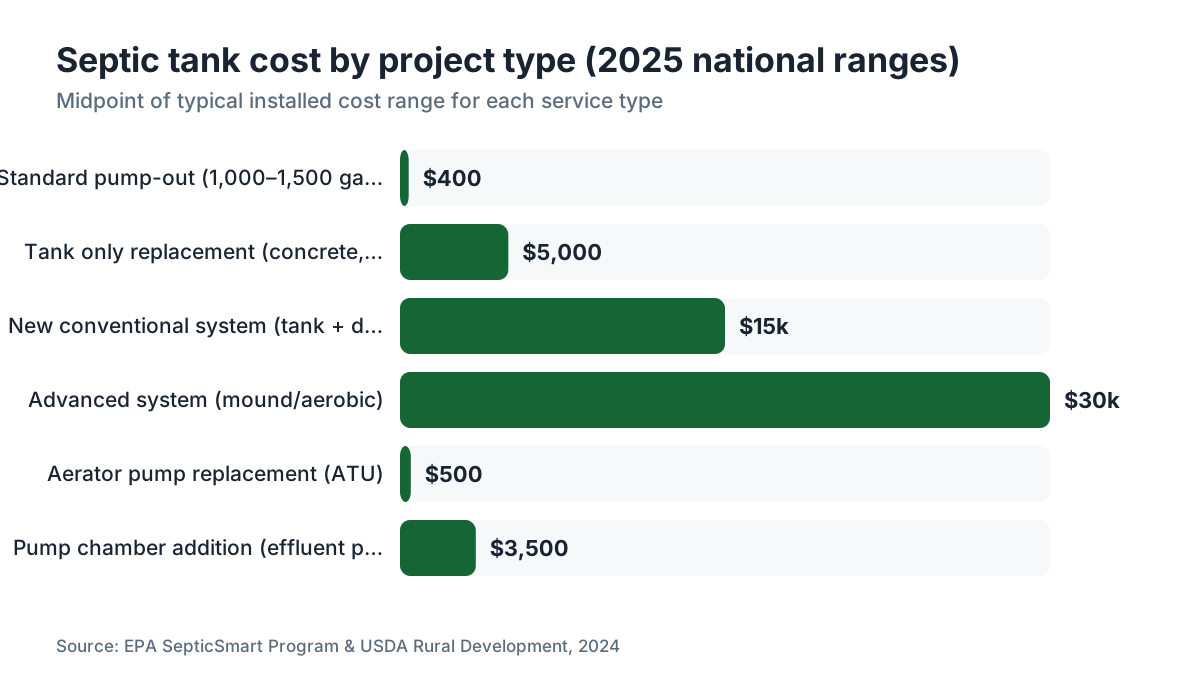
Pumping runs $250 to $600 nationally, with $350 to $450 being the most common range for a standard 1,000 to 1,500-gallon residential tank [2]. This is the routine maintenance cost most homeowners actually deal with.
What drives the price up:
- Tanks larger than 1,500 gallons (add $50 to $100 per 500 gallons)
- Buried lids with no risers (add $50 to $200 for locating and digging)
- Heavy sludge from years of skipped service
- Long travel distance in rural areas
- After-hours or emergency calls (can double the rate)
A pump-out does not include fixing anything. If the pumper finds a broken baffle, cracked inlet tee, or failing outlet filter, that's a separate repair invoice. See our guide on septic tank repair for what those jobs cost.
The EPA's SepticSmart program recommends pumping every three to five years for a typical family, though real frequency depends on tank size, household size, and what goes down the drain [4]. A family of five with a 1,000-gallon tank may need service every two years. A retired couple with a 1,500-gallon tank may go six or seven years without trouble.
For pump-out logistics, read our septic tank pump out guide. For the right schedule for your setup, how often to pump septic tank runs the math.
What does a septic tank aerator pump cost?
A replacement aerator pump costs $100 to $800 for the part, plus $150 to $400 in labor [6]. This pump only exists in aerobic treatment units (ATUs), not conventional gravity systems. It injects air into the sewage to speed up bacterial treatment.
Brands like Hiblow, Medo, and Gast are common. A Hiblow HP-80 runs about $150 to $200 in parts.
Aerobic systems cost more to run across the board. They need more frequent inspections (often annual under state permit), draw electricity around the clock, and carry more mechanical parts that fail. Texas requires aerobic systems to be under a maintenance contract with a licensed provider, which usually runs $150 to $300 per year [7].
If someone quotes you on pumps for an aerobic system, ask whether the price covers just the air pump or the effluent pump too. The effluent pump moves treated water out to the spray heads or drain field, and it's a different part with a different price. An effluent pump for an ATU runs $200 to $600 installed.
What are the costs for a septic pump tank (lift station)?
A septic pump tank, also called a dosing tank or pump chamber, is a separate tank you add when gravity can't move effluent from the septic tank to the drain field. Flat lots and drain fields that sit uphill from the house both need one.
The tank itself costs $600 to $1,500 for a 500 to 750-gallon polyethylene unit. The pump inside, usually a submersible effluent pump, runs $200 to $800. Total installed cost for a pump tank addition runs $2,000 to $5,000 depending on site and local labor.
The pump will fail eventually. Average pump life is 7 to 15 years, and replacement runs $350 to $800 installed. If the pump runs constantly or the control panel alarms, don't ignore it. A dead pump backs sewage into the house or floods the drain field.
Alarm floats and control panels are part of this system too. A panel swap runs $300 to $800. A single failed float switch runs $75 to $200 to replace. These repairs aren't exciting, but they're a lot cheaper than a new drain field.
What does a new septic system cost versus just replacing the tank?
Replacing just the tank runs $3,000 to $7,000 installed, assuming the drain field is healthy. Replacing the full system runs $10,000 to $30,000 for a conventional setup and $20,000 to $50,000 or more for advanced systems. People search this when an inspector tells them the tank is shot, and the gap between the two projects is huge.
A tank-only job means pumping the old tank, excavating it, and either crushing it in place or hauling it away, all of which add cost.
Full replacement, tank plus drain field, hits that $10,000 to $30,000 range for conventional systems, with mound, drip irrigation, and aerobic designs reaching $20,000 to $50,000 or more [1][5]. Soil conditions, lot size, and state rules push the high end.
If a contractor says the tank is fine but the drain field is failing, a new tank won't help. The septic drain field guide covers what field failure looks like and what repairs cost.
For full installation breakdowns, see septic tank installation and cost to put in a septic tank.
How do permits and regulations affect the price?
Every state regulates onsite wastewater treatment, and most hand enforcement to county health departments. There's no single national standard, which is exactly why installation costs swing so much between places.
The EPA sets guidance through its SepticSmart program but does not issue installation permits [4]. Your permit comes from the county. Fees range from $200 in low-cost rural counties to $1,500 in heavily regulated states like Massachusetts or California [5].
Massachusetts Title 5 (310 CMR 15.000) is one of the strictest state codes in the country. It requires inspections at property transfer, specific setback distances, and minimum soil absorption rates [8]. A system that passes in Georgia might not clear Title 5 in Massachusetts.
Florida requires a Department of Health permit for any new install or major repair under Chapter 381, F.S. and Florida Administrative Code Rule 64E-6 [9]. Texas regulates aerobic systems under 30 TAC Chapter 285 and requires ongoing maintenance contracts.
Planning a new install? Ask your contractor whether the permit fee is in the quote. Plenty of quotes are "tank and labor only," and the permit becomes your problem. That's a legal and financial gap you don't want to find at the inspection stage.
For operators juggling job files and permit tracking across counties, SepticMind's job management tools keep permit deadlines and inspection requirements in one place.
What do septic repairs cost and when should you repair versus replace?
Repairs are their own pricing category, and they come up often because a pump-out tends to expose problems.
| Repair Type | Typical Cost Range |
|---|---|
| Replace inlet/outlet baffle | $150 to $500 |
| Replace effluent filter | $75 to $250 |
| Repair cracked tank (concrete) | $500 to $1,500 |
| Replace pump (in pump chamber) | $350 to $800 |
| Add or replace riser and lid | $150 to $400 each |
| Drain field rejuvenation (aeration) | $1,000 to $3,000 |
| Drain field replacement | $5,000 to $20,000+ |
The repair-versus-replace call comes down to age and what's failing. A cracked concrete tank in year 15 that only needs a baffle is worth fixing. A steel tank in year 30 that's actively corroding should come out before it collapses and contaminates the drain field.
When a drain field fails, no amount of tank work saves it. Sewage surfacing in the yard, pooling near the field, or backing up into the house after a pump-out all point at the field. See septic system repair for the full picture.
For septic tank cleaning that goes past routine pumping, meaning jetting inlet lines and scraping out hardened scum, expect $400 to $900.
The EPA's guidance states that "properly designed, installed, and maintained septic systems are the most cost-effective method of wastewater treatment for rural households" [4]. The same logic holds for maintenance: staying current on pumping almost always beats paying for emergency repair.
How can you reduce your total septic cost over time?
The cheapest septic system is one you never have to emergency-repair. A few habits actually move the needle.
Pump on schedule. The septic tank pumping interval matters more than most homeowners think. Skip it and sludge builds until solids spill into the drain field. Replacing a drain field costs 10 to 30 times what a pump-out costs. This is not a close call.
Install risers now if you don't have them. The $200 to $400 you spend at installation, or during the next pump-out, wipes out the $50 to $200 location-and-dig fee on every future service call. Over 20 years the math is obvious.
Watch what goes down the drain. Grease, wipes (even the "flushable" ones), and heavy garbage disposal use all speed up sludge and can wreck the drain field. The EPA's SepticSmart program publishes a plain list of what not to flush [4].
Get a real inspection before buying a home with an existing system. A septic inspection by a licensed pro runs $200 to $500. That's cheap insurance against inheriting a $15,000 problem, and many states require it at property transfer anyway.
For operators, scheduling and reminder automation through tools like SepticMind cuts missed pump intervals and routes trucks efficiently, which holds down per-job cost for the company and keeps response times short for customers.
For ongoing maintenance and septic tank emptying logistics, see our linked guides.
What should you ask a contractor before signing a septic quote?
Two quotes at the same dollar figure can cover wildly different scopes, so the questions you ask matter as much as the number.
Ask directly: Does this quote include the permit fee? Who handles the perc test and site plan? Is tank delivery and crane work in there? What happens if you hit rock during excavation? Is old tank removal included if I'm replacing an existing one?
Licensing matters. All 50 states require some form of licensure for septic installers, though the credential varies. In most states, installers must hold a plumber's or drainlayer's license plus a separate onsite wastewater certification. Ask for the license number and verify it with your state health or environmental agency.
Warranties on new systems usually run one to two years on labor and follow the manufacturer's warranty on tanks, which are often lifetime or 30-plus years for concrete. Get the terms in writing before work starts.
One honest note: nobody has great national data on contractor pricing by region. The ranges in this article come from EPA cost estimates, state program data, and industry trade sources, but your local market may sit 20 to 30 percent above or below these figures depending on demand and regulatory burden [1][5]. Three quotes from licensed local contractors is still the best data you'll get.
Frequently asked questions
How much does it cost to pump a septic tank?
Most homeowners pay $250 to $600 to pump a septic tank, with $350 to $450 being the most common price for a 1,000 to 1,500-gallon residential tank. Larger tanks, buried lids without risers, heavy sludge, and rural locations all push the price higher. Emergency or after-hours service can roughly double the standard rate.
How often does a septic tank need to be pumped?
The EPA recommends pumping every three to five years for a typical household. Real frequency depends on tank size and how many people live in the home. A family of five with a 1,000-gallon tank may need service every two years. A couple with a 1,500-gallon tank may go six to seven years. Skipping pump-outs lets sludge overflow into the drain field, which causes expensive damage.
What is the cheapest septic tank option?
Concrete tanks are the most affordable in most regions, with the tank itself running $700 to $2,000 depending on size. They're widely available, made locally in most areas, and last 40-plus years. Plastic tanks cost a bit more upfront ($900 to $2,500) but are lighter and easier to install in tight sites. Steel tanks are cheaper to buy but corrode and should be avoided.
How much does it cost to replace a septic tank?
Replacing just the tank (assuming a healthy drain field) runs $3,000 to $7,000 installed. That covers pumping the old tank, excavation, removing or crushing the old one, buying and installing the new tank, and backfill. If the drain field also needs replacement, total costs jump to $10,000 to $30,000 for a conventional system, and higher for advanced systems.
What is the price to pump out a septic tank with no risers?
Without risers, a technician has to locate the buried lids (sometimes with a probe or electronic locator) and dig them up by hand. That adds $50 to $200 to the standard pump-out price, so expect $400 to $800 total. Installing risers during or after the next pump-out kills that charge on every future visit and usually costs $150 to $400 per riser.
How much does a septic tank aerator pump replacement cost?
A replacement aerator pump for an aerobic treatment unit (ATU) costs $100 to $800 for the part, plus $150 to $400 for installation labor. Common brands like the Hiblow HP-80 run $150 to $200 in parts alone. Aerobic systems also require annual inspections and maintenance contracts (typically $150 to $300 per year in states like Texas), so ongoing costs run higher than conventional gravity systems.
Does homeowner's insurance cover septic tank repair or replacement?
Most standard homeowner's policies exclude septic damage from normal wear, aging, or gradual deterioration. Sudden and accidental damage (a vehicle driving over the tank and cracking it, for example) may be covered under some policies. Read your policy carefully and ask your agent directly. Septic warranty products and home warranties are separate and sometimes cover pumps and mechanical parts.
How much do permits for a new septic tank installation cost?
Permit fees range from $200 in low-cost rural counties to $1,500 in heavily regulated states. Massachusetts, California, and Oregon tend toward the high end. The permit is often separate from the contractor's quote, so confirm who pulls and pays for it before signing anything. Perc tests required for the permit add another $150 to $500.
Can I pump my own septic tank to save money?
Legally and practically, no. Septage (the waste pumped from a tank) is regulated waste in every state and must be handled by a licensed hauler who disposes of it at an approved facility. You can't legally dump it on your property. There's no DIY path here. The $250 to $600 pump-out cost covers a vacuum truck, licensed operator, and proper disposal, none of which a homeowner can replicate.
What is included in a septic tank cleaning versus a pump-out?
A standard pump-out removes the liquid and sludge from the tank. A full cleaning goes further: jetting the inlet line, scrubbing the tank walls, clearing hardened scum layers, and inspecting baffles and filters. Cleaning runs $400 to $900 versus $250 to $600 for a basic pump-out. Most tanks only need a full cleaning every few pump intervals, not every time. Ask your provider whether your tank shows signs of needing it.
How much does a mound septic system cost compared to a conventional system?
A conventional gravity septic system with a standard drain field runs $10,000 to $20,000 fully installed. A mound system, required when soil depth or permeability doesn't meet standard requirements, runs $15,000 to $30,000 or more. The mound itself needs fill sand, a pump chamber, and more labor. State permit requirements for mound systems are also more involved, which adds engineering and inspection cost.
What factors make septic installation more expensive in some states?
Regulatory complexity is the biggest driver. Massachusetts Title 5, for example, requires third-party inspections, specific setbacks, and detailed soil testing that add $1,000 to $3,000 in compliance cost versus a simpler state code. Rocky or clay soils raise excavation cost. High water tables demand special designs. Urban labor markets charge more for the same work. None of these are contractor markup. They're real cost inputs.
Is financing available for septic tank installation or replacement?
Yes. The USDA Rural Development program offers loans and grants for septic installation in rural areas through its Section 504 Home Repair program and Rural Housing Service. Some states run onsite wastewater loan programs through their environmental agencies. Private financing through home equity or personal loans is also common. Contractor payment plans exist but vary widely. Check with your county health department for local assistance programs.
How long does a concrete septic tank last?
A well-installed concrete septic tank lasts 40 years or more with proper maintenance, meaning regular pumping and no harsh chemicals that kill the bacteria inside. Older concrete tanks (pre-1980s) were sometimes made with lower-grade concrete and can crack or spall earlier. Buying an older home? Have the tank inspected by camera or by a licensed inspector before assuming it's sound.
Sources
- EPA, Septic Systems (SepticSmart): National cost ranges for septic system installation and the EPA's framing of cost-effective wastewater treatment for rural households
- EPA SepticSmart Program, Homeowner information: Recommended pumping frequency of every three to five years and typical service cost context
- Penn State Extension: Concrete septic tanks are the most widely used material type due to local manufacturing and availability
- EPA SepticSmart, homeowner guidance: EPA guideline of approximately 100 gallons per person per day for sizing septic tanks; recommendation to pump every 3-5 years; list of items not to flush
- USDA Rural Development, Water & Waste Disposal programs: Cost ranges for septic system installation in rural areas and permit cost variability by state
- Texas Commission on Environmental Quality (TCEQ), On-Site Sewage Facilities: Aerobic treatment unit maintenance contract requirements and aerator pump specifications in Texas
- Texas Administrative Code, 30 TAC Chapter 285, On-Site Sewage Facilities: Texas requirement for maintenance contracts on aerobic systems, typically $150 to $300 per year
- Massachusetts Department of Environmental Protection, Title 5 (310 CMR 15.000): Massachusetts Title 5 mandates inspections at property transfer, setback distances, and minimum soil absorption rates
- Florida Department of Health, Onsite Sewage Programs (64E-6): Florida requires Department of Health permits for new septic system installations and major repairs under Chapter 381 F.S. and Rule 64E-6
- University of Minnesota Extension: Tank sizing by bedroom count and household occupancy; typical concrete tank cost ranges
- USDA Rural Development, Section 504 Home Repair Program: USDA financing programs available for septic system installation and repair in rural areas
Last updated 2026-07-09