Sand Filter Septic System Tracking Software
By the SepticMind Editorial Team
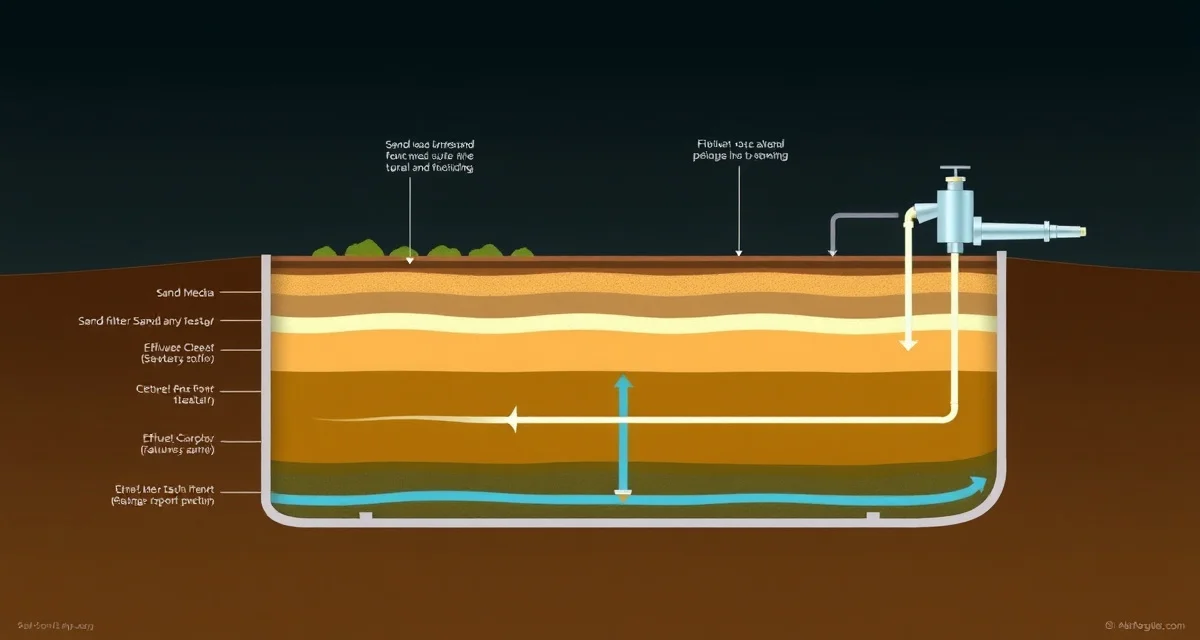
Sand filter septic systems, both intermittent sand filters (ISFs) and recirculating sand filters (RSFs), are treatment-before-dispersal systems. They pass effluent through a sand media bed to achieve higher treatment levels before dispersal to the drainfield. They're required in sensitive areas, near water bodies, and in situations where conventional treatment isn't sufficient.
TL;DR
- Sand filter systems require tracking of media condition, loading rates, and distribution uniformity that conventional inspection checklists do not address.
- Sand media replacement is typically required every 10-15 years depending on loading and pre-treatment quality.
- Effluent quality testing is required in most states for sand filter systems on a quarterly or annual basis.
- Distribution uniformity inspection at each service visit catches early signs of clogging before effluent quality degrades.
- Records of original design specifications alongside service history allow accurate comparison of current performance against design parameters.
- Sand filter systems are most common in areas where soil conditions limit conventional drainfield installation, particularly in environmentally sensitive receiving areas.
Sand filter systems have specific maintenance requirements that go well beyond routine pump-outs, and they almost universally require O&M permits with documented maintenance visits.
What Sand Filter System Maintenance Covers
Recirculating pump inspection. RSF systems recirculate effluent through the sand media multiple times before dispersal. The recirculating pump needs regular inspection, operation, flow rates, timer settings, and float switch function.
Sand media condition assessment. Over time, sand filter media can clog with biofilm (bio-mat) or accumulate fine particles that reduce infiltration rates. Maintenance visits should assess whether the media surface appears clogged and whether media cleaning or replacement may be approaching.
Distribution system inspection. Sand filters distribute effluent across the media surface through a distribution pipe network. Inspecting for clogged distribution pipes, blockages, or uneven distribution patterns is part of each maintenance visit.
Dosing pump inspection. The dosing pump that loads effluent onto the sand filter needs the same attention as any other pump system, operation, float switches, alarms.
Effluent quality assessment. Higher-treatment systems like sand filters are often installed because effluent quality requirements are elevated. Effluent quality documentation (BOD, TSS, fecal coliform) may be required by the O&M permit.
O&M permit reporting. Sand filter systems with O&M permits require maintenance reports filed at the specified interval. In most states, this is semi-annual or annual.
Get Started with SepticMind
SepticMind is designed around the actual workflows of septic service companies, from county permit tracking to automated maintenance reminders. Whether you are managing a single truck or a multi-county fleet, the platform scales with your operation. See how it works for your business.
FAQ
Does SepticMind support both ISF and RSF sand filter documentation?
Yes. SepticMind's sand filter template distinguishes between intermittent and recirculating configurations, with system-type-specific documentation fields for each. RSF systems have additional recirculation pump and flow rate documentation fields that aren't applicable to ISF systems.
How does SepticMind handle effluent quality documentation requirements for sand filter O&M permits?
Some sand filter O&M permits require effluent quality testing at specified intervals. SepticMind's maintenance template includes effluent quality documentation fields for systems with these requirements, test date, test type (BOD, TSS, fecal coliform), and results. These records are stored in the service history and included in maintenance reports generated for county health department submission.
What does SepticMind cost for a company with a mix of conventional and alternative system customers?
Pricing is based on truck count, not system type mix. The Starter plan ($149/month) covers 1-2 trucks and includes alternative system templates (ATU, mound, drip, sand filter) at no additional charge.
How is sand filter system maintenance documentation different from conventional system documentation?
Sand filter documentation requires tracking media condition assessments, loading rate calculations, effluent quality test results, and distribution uniformity measurements that conventional system checklists do not include. State regulations for sand filter systems typically require quarterly or annual effluent quality sampling in addition to physical inspection. Documentation must also capture the results of seasonal start-up and shut-down procedures for systems in cold climates. Digital inspection platforms that use system-type-specific checklists capture these items automatically when a work order is opened for a sand filter system.
When does sand filter media need to be replaced?
Sand media replacement is typically required when effluent quality testing shows degraded treatment performance that cannot be resolved by adjusting loading rates or distribution. Design life is typically 10-15 years depending on pre-treatment quality and loading rates, but early failure is possible if the pre-treatment system delivers poorly treated effluent or if the loading rate exceeds design capacity. A sand filter receiving effluent from a tank that is not pumped on schedule will clog faster than one receiving properly treated effluent. Regular pump-out of the pre-treatment tank is the most important factor in extending sand filter media life.
Try These Free Tools
Sources
- National Onsite Wastewater Recycling Association (NOWRA)
- US EPA Office of Wastewater Management
- NSF International
- Water Environment Federation
- National Environmental Services Center (NESC)