Sand Filter Septic System Inspection Checklist
By the SepticMind Editorial Team
Sand filter media replacement costs $1,800-4,000 and is often discovered only when the system fails. That's a predictable expense that becomes unpredictable because most inspections skip the media depth check, the primary indicator of impending media failure. Sand filter inspections that skip media depth checks miss exactly the finding that would have caught the problem while it was still manageable.
TL;DR
- Septic inspections require state-specific report formats that must be completed correctly before they are accepted by regulators, lenders, or buyers.
- Photo documentation with timestamps and GPS coordinates is the minimum standard for defensible inspection reports.
- Real estate inspection reports in most states must be filed with the county health department within a specified timeframe.
- Inspector credentials must be current and visible on every submitted report; expired credentials are grounds for report rejection.
- Digital inspection tools reduce report completion time from hours to minutes and eliminate transcription errors.
- Consistent documentation quality across all technicians protects company reputation in the real estate inspection market.
SepticMind's sand filter inspection template covers all 12 required component and condition checks so your team doesn't miss the findings that matter.
How Sand Filter Systems Work
Before running through the checklist, understanding the system helps you know what you're looking for and why each component matters.
A sand filter system treats septic effluent after it leaves the septic tank by passing it through a bed of sand media. The sand provides physical filtration and biological treatment. Effluent is distributed across the top of the sand bed, percolates through the media, and is collected at the bottom for further dispersal to a drainfield or other dispersal method.
Sand filter systems can be either open (no cover, subject to weather) or intermittent recirculating (effluent recirculated multiple times for additional treatment). The system type affects some inspection specifics, but the core checklist items apply to both.
Pre-Inspection: Review Records Before You Arrive
Pull the system records before arriving on site. You're looking for:
- Date of last inspection and what was found
- Date of last media replacement or addition
- Any reported problems: odors, wet areas, distribution issues
- System design: open vs. recirculating, dosing frequency, system sizing
- Permit documentation: are there permit records for any prior repairs?
Record age matters for sand filter systems. Media typically needs replacement every 5-10 years depending on loading and original installation quality. A system approaching that age warrants closer attention to media condition.
The 12-Point Sand Filter Inspection Checklist
1. Pre-treatment tank condition. Inspect the primary treatment tank (septic tank) before the sand filter receives effluent. Check sludge and scum levels. A poorly maintained primary tank sends excessive solids to the sand filter, accelerating media clogging. Document gallons pumped if the tank is pumped as part of the inspection.
2. Effluent pump condition and operation. Most sand filter systems use a pump to dose effluent to the filter. Check pump operation: does it run on cycle? Does it move the design flow? Check float switches for proper setting and function. Document pump model and installation date if available.
3. Distribution pipe and header condition. Inspect distribution laterals for clogs, breaks, or uneven distribution. Uneven distribution causes preferential flow paths through the media, reducing treatment effectiveness. Look for evidence of bypassing, are some laterals flowing while others aren't?
4. Distribution orifice condition. Check orifices for clogging. Clogged orifices create distribution problems that don't always show as visible system failure but degrade treatment quality. Document any orifices that appear blocked or restricted.
5. Surface distribution pattern. Observe distribution across the filter surface during a pump cycle. Uniform wetting across the full media surface indicates good distribution. Dry areas indicate distribution problems. Pooling in any area indicates media saturation at that point.
6. Media surface condition. Inspect the media surface for:
- Biomat formation (dark, mat-like material on the surface)
- Algal growth (surface greening)
- Soil intrusion at filter edges
- Debris accumulation
- Evidence of surface ponding or saturation
Some surface biological activity is normal. Extensive biomat covering the surface indicates overloading or inadequate rest periods.
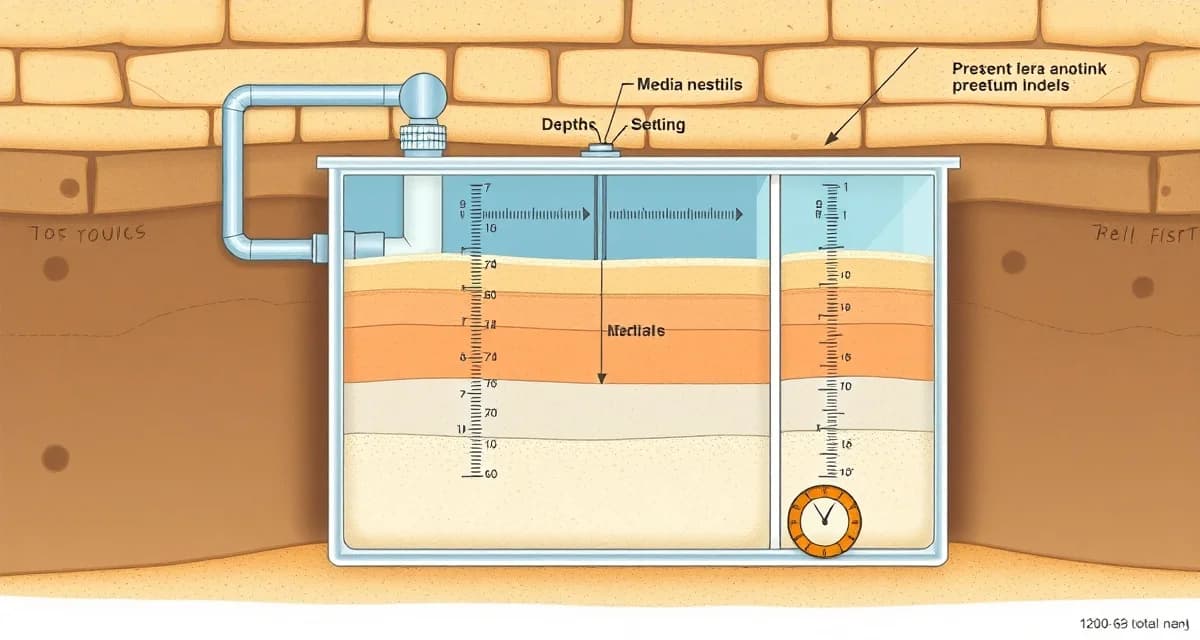
7. Media depth measurement. This is the step most inspections skip, and it's the one that matters most for predicting media life. Measure media depth at multiple points (minimum four corners and center). Original design media depth is typically 24-36 inches. Compare current depth to design depth. Media compression and biological clogging reduce effective depth over time. Document all measurements.
8. Filter box structural condition. Inspect the filter box itself: concrete or liner integrity, any evidence of cracking, erosion around edges, or berm failure. A structurally compromised filter box allows short-circuiting of effluent around the media rather than through it.
9. Underdrain collection system. If accessible, inspect underdrain pipes for condition and flow. Blocked underdrains back up treated effluent and can cause media saturation above them.
10. Effluent quality observation. Collect a visual sample of filter effluent if accessible. Cloudy or odorous effluent indicates treatment performance problems. Clear effluent with minimal odor indicates adequate media treatment. Note: visual inspection is not a substitute for laboratory testing when treatment performance is in question.
11. Disinfection component (if applicable). Some sand filter systems include UV disinfection or chlorination of filter effluent before dispersal. Check disinfection equipment for operation: UV lamp condition and age, chlorination feed rate, contact chamber condition.
12. Final dispersal system. Sand filter treatment is only part of the system. Inspect the final dispersal component (drainfield, drip dispersal, or other permitted dispersal method) for condition independent of the filter evaluation.
Documenting Your Findings
Document each checklist item with condition rating, specific observations, and photos. For media depth measurements, record the specific depth at each measurement point rather than just an average.
Digital septic inspection forms with a sand filter-specific template ensure all 12 components are documented in every inspection. Sand filter septic system tracking in SepticMind maintains the historical record that shows media depth trends over multiple inspections, the longitudinal data that predicts when replacement will be needed.
Get Started with SepticMind
Inspection work is the highest-visibility service in the septic trade, and your documentation quality directly affects your reputation with real estate agents, lenders, and county officials. SepticMind generates state-formatted inspection reports in the field with photo documentation attached. See how it supports your inspection workflow.
Frequently Asked Questions
What components are checked during a sand filter septic system inspection?
A complete sand filter inspection covers 12 components: the pre-treatment septic tank, effluent pump and float controls, distribution pipe and header condition, distribution orifice condition and flow, surface distribution pattern during dosing, media surface condition including biomat formation, media depth at multiple measurement points, filter box structural integrity, underdrain collection system condition, effluent quality observation, disinfection components if present, and the final dispersal system. Many inspections skip the media depth measurement and distribution orifice checks, the two items most likely to reveal performance problems before failure. A thorough inspection documents each component with specific observations and photographs.
How do I assess sand filter media condition without laboratory testing?
Visual and physical media assessment gives you reliable indicators without lab testing. Media depth measurement at multiple points shows compression and loss compared to design depth (a notable indicator of remaining media life. Surface condition inspection shows biomat formation: if more than 20-30% of the surface has dense biomat coverage, overloading or inadequate rest periods are occurring. Distribution pattern observation during a pump cycle reveals whether effluent is reaching the full media surface or channeling through limited areas. Effluent quality) clarity and odor, at the filter outlet provides a visual indicator of treatment performance. When you observe multiple concerning indicators together (notable media compression, extensive biomat, poor distribution, low effluent quality), laboratory testing and media replacement evaluation are warranted.
Does SepticMind include a sand filter-specific inspection checklist template?
Yes. SepticMind's inspection template library includes a sand filter-specific checklist covering all 12 inspection components. The template includes structured condition ratings for each component, photo attachment prompts at key inspection points, and a media depth recording section that accepts multiple measurement points and calculates the average. System records in SepticMind track media depth measurements across multiple inspections, providing the longitudinal data that shows whether media depth is declining at a rate that suggests near-term replacement. For companies servicing notable numbers of sand filter systems, this historical tracking is the practical tool for proactively advising clients when media replacement should be planned.
What is the difference between a septic inspection and a septic pump-out?
A pump-out removes accumulated sludge and scum from the tank. An inspection evaluates the condition of all accessible system components: tank structure, baffles, distribution box, drainfield, and in some cases the outlet line. A real estate or regulatory inspection produces a written report in the state-required format with findings and a pass/conditional pass/fail determination. Many inspection visits include a pump-out as part of the service, but the pump-out alone is not the inspection.
Can inspection reports be submitted electronically to the county?
Yes, most counties and state agencies accept electronic inspection report submissions and many now prefer or require them. The report must be in the state-required format and include all required fields, the inspector's credentials, and any required signatures or attestations. Purpose-built inspection software generates the report in the correct state format and can submit it electronically directly from the field.
Try These Free Tools
Sources
- National Onsite Wastewater Recycling Association (NOWRA)
- US EPA Office of Wastewater Management
- NSF International
- American Society of Home Inspectors (ASHI)
- Water Environment Federation