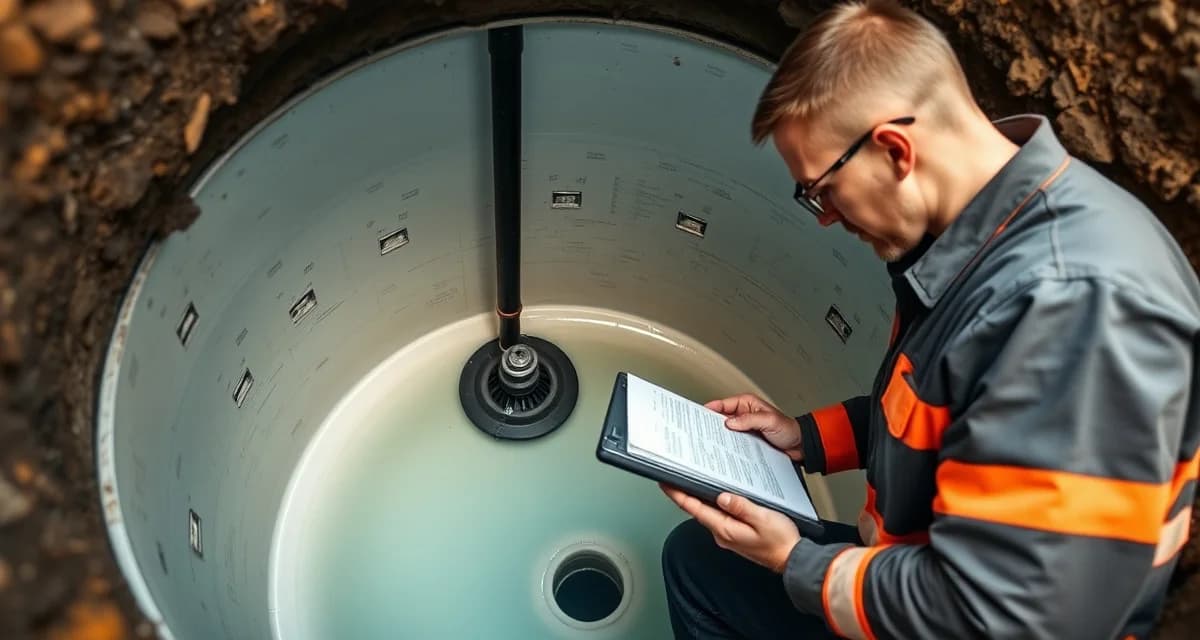
Septic Inspection Checklist for Conventional Systems
By the SepticMind Editorial Team
Incomplete inspections miss components that reveal early failure signs and create liability exposure. And the most common failure site in conventional systems, the drainfield, is exactly the component that gets skipped most often when an inspection is rushed or disorganized.
TL;DR
- Septic inspections require state-specific report formats that must be completed correctly before they are accepted by regulators, lenders, or buyers.
- Photo documentation with timestamps and GPS coordinates is the minimum standard for defensible inspection reports.
- Real estate inspection reports in most states must be filed with the county health department within a specified timeframe.
- Inspector credentials must be current and visible on every submitted report; expired credentials are grounds for report rejection.
- Digital inspection tools reduce report completion time from hours to minutes and eliminate transcription errors.
- Consistent documentation quality across all technicians protects company reputation in the real estate inspection market.
SepticMind's conventional system inspection checklist covers all 14 required inspection points. This guide covers each one and what you're looking for.
Before You Start: System Information Verification
Before the physical inspection, verify and record:
- Property address
- System type confirmed (conventional gravity-fed, this checklist)
- Tank material (concrete, fiberglass, polyethylene)
- Tank capacity in gallons
- Number of bedrooms the system is rated for
- Year of installation (if known)
- Date of last pumping (if known)
- Date of last inspection (if known)
- Name and credential number of inspector
Get this information from your records before arriving and verify with on-site evidence. Conflicts between your records and what you find on site should be noted.
Inspection Point 1: Access Port Location and Condition
Locate and document all access ports. Record whether ports are at grade (with risers) or require excavation. Note lid condition, lid seal condition, and any cracking or damage to the riser extension.
What you're looking for: cracked or broken lids, missing lids, lids without proper seals, settlement that has changed the access port relationship to grade.
Photograph: access port location with house visible in background for orientation.
Inspection Point 2: Tank Exterior (If Accessible)
If any portion of the tank is visible, inspect exterior for visible cracking, settlement, or uplift. Concrete tanks in wet areas sometimes float or shift.
What you're looking for: visible cracks, especially horizontal cracks indicating soil pressure; differential settlement; evidence of tank movement.
Inspection Point 3: Tank Interior - General Condition
With the lid removed and the tank at normal operating level, observe:
- Structural condition of walls, floor, and lid underside
- Evidence of infiltration (groundwater intrusion into the tank)
- Evidence of exfiltration (effluent seeping out through tank walls)
- Scum layer depth at inlet zone
- Liquid level relative to outlet pipe
What you're looking for: cracking, spalling, evidence of infiltration (muddy or clear water intrusion), unusual liquid level (too high suggests distribution issue; too low suggests exfiltration).
Inspection Point 4: Inlet Baffle
Locate and inspect the inlet baffle or inlet tee.
What you're looking for: presence (missing baffle is a finding), integrity (cracking or deterioration), adequate depth to deflect incoming flow away from the scum layer.
Should I inspect the baffle condition on every septic tank inspection? Yes, without exception. Inlet baffle condition is a primary inspection finding. Missing or failed inlet baffles allow short-circuiting of solids to the outlet zone, which is a notable drainfield protection failure.
Photograph: inlet baffle from above showing its condition.
Inspection Point 5: Outlet Baffle or Effluent Screen
Inspect the outlet baffle or effluent screen. This is the most critical component for drainfield protection.
What you're looking for: presence, integrity, adequate depth into the tank liquid (typically 40% of liquid depth), no bypass flow from inlet to outlet.
If an effluent screen is installed, check it for clogging. A clogged screen may have caused elevated liquid levels. Clean the screen and note its condition.
Photograph: outlet baffle or screen from above, showing condition and depth.
Inspection Point 6: Inlet and Outlet Pipe Condition
Observe the condition of the inlet and outlet pipes where they penetrate the tank.
What you're looking for: secure connections, no separation from the tank wall, no corrosion or cracking at penetration points.
Inspection Point 7: Pump or Distribution Box (If Present)
For conventional systems with a pump chamber or effluent distribution box, inspect:
- Distribution box structural condition
- Liquid level in distribution box (should not be flooded above outlet pipe inverts)
- Even distribution to all lateral outlets
- Evidence of preferential flow to one lateral
What you're looking for: flooding in the distribution box above pipe inverts (indicates hydraulic loading exceeding distribution capacity), differential flow indicating lateral blockage or failure.
Photograph: distribution box interior showing pipe inverts and liquid level.
Inspection Point 8: Drainfield Observation
Conventional system inspections that miss drainfield observation miss the most common failure site.
Walk the drainfield area systematically and observe:
- Surface moisture and saturation
- Relative grass condition compared to surrounding lawn
- Any depression over the drainfield (indicates collapse)
- Any mounding over the drainfield (indicates ponding)
- Surface odors
- Visible effluent at surface
How do I inspect a septic drainfield when there is no visible access point? If there are no clean-out risers over the drainfield laterals, drainfield inspection is limited to surface observation. Document the limitation. If a probe rod is available and access is appropriate for the site conditions, a drainfield probe can assess soil conditions below grade at strategic locations.
Photograph: drainfield area from multiple angles showing surface condition.
Inspection Points 9-14: Additional Assessment Items
9. Setback compliance observation. Note any apparent setback violations from wells, water features, or property lines that were not present at installation but may have developed since.
10. Vegetation concerns. Trees or large shrubs with root systems that could intrude on tank or drainfield.
11. Site drainage patterns. Surface water drainage patterns that could direct stormwater over the drainfield.
12. Nearby structure changes. New structures, paving, or driveways over system components that affect service access or system function.
13. Prior service observation. Any evidence of recent excavation or repair work that should be noted.
14. System component completeness. Confirmation that all expected components are present and accounted for.
Completing the Report
After completing all 14 inspection points, record your overall system determination: Pass, Conditional Pass, or Fail. Attach photos. Complete all required fields before submitting the report.
Digital septic inspection forms in SepticMind enforce completion of all 14 inspection points before the report can be submitted, which eliminates the risk of incomplete inspections.
Get Started with SepticMind
Inspection work is the highest-visibility service in the septic trade, and your documentation quality directly affects your reputation with real estate agents, lenders, and county officials. SepticMind generates state-formatted inspection reports in the field with photo documentation attached. See how it supports your inspection workflow.
Frequently Asked Questions
What components must be inspected in a conventional septic system evaluation?
A complete conventional system inspection covers the access port and lid condition, tank exterior (if accessible), tank interior structural condition, inlet baffle, outlet baffle or effluent screen, inlet and outlet pipe conditions, distribution box or pump chamber (if present), drainfield surface observation, setback compliance, vegetation concerns, site drainage patterns, nearby structure changes, evidence of prior repairs, and confirmation of system component completeness. Every component must be documented with findings, not just "checked."
How do I inspect a septic drainfield when there is no visible access point?
When no drainfield access risers or clean-out ports are present, drainfield inspection is limited to surface observation: walking the drainfield area systematically to assess surface moisture, relative grass health compared to surrounding lawn, surface depression or mounding, and surface odors. Document this limitation in the inspection report as "drainfield inspection by surface observation only, no access ports available." If probing is appropriate to site conditions, a probe rod can assess subsurface soil conditions at strategic points.
Should I inspect the baffle condition on every septic tank inspection?
Yes, every time, without exception. Inlet and outlet baffle condition is a primary inspection finding because failed baffles directly affect drainfield protection. A missing or failed inlet baffle allows short-circuiting of raw solids toward the outlet. A missing or failed outlet baffle allows solids to enter the distribution system. Baffle condition must be documented with a specific condition rating and photograph on every inspection. It is one of the findings lenders most commonly look for in inspection reports.
What is the difference between a septic inspection and a septic pump-out?
A pump-out removes accumulated sludge and scum from the tank. An inspection evaluates the condition of all accessible system components: tank structure, baffles, distribution box, drainfield, and in some cases the outlet line. A real estate or regulatory inspection produces a written report in the state-required format with findings and a pass/conditional pass/fail determination. Many inspection visits include a pump-out as part of the service, but the pump-out alone is not the inspection.
Can inspection reports be submitted electronically to the county?
Yes, most counties and state agencies accept electronic inspection report submissions and many now prefer or require them. The report must be in the state-required format and include all required fields, the inspector's credentials, and any required signatures or attestations. Purpose-built inspection software generates the report in the correct state format and can submit it electronically directly from the field.
Try These Free Tools
Sources
- National Onsite Wastewater Recycling Association (NOWRA)
- US EPA Office of Wastewater Management
- NSF International
- American Society of Home Inspectors (ASHI)
- Water Environment Federation