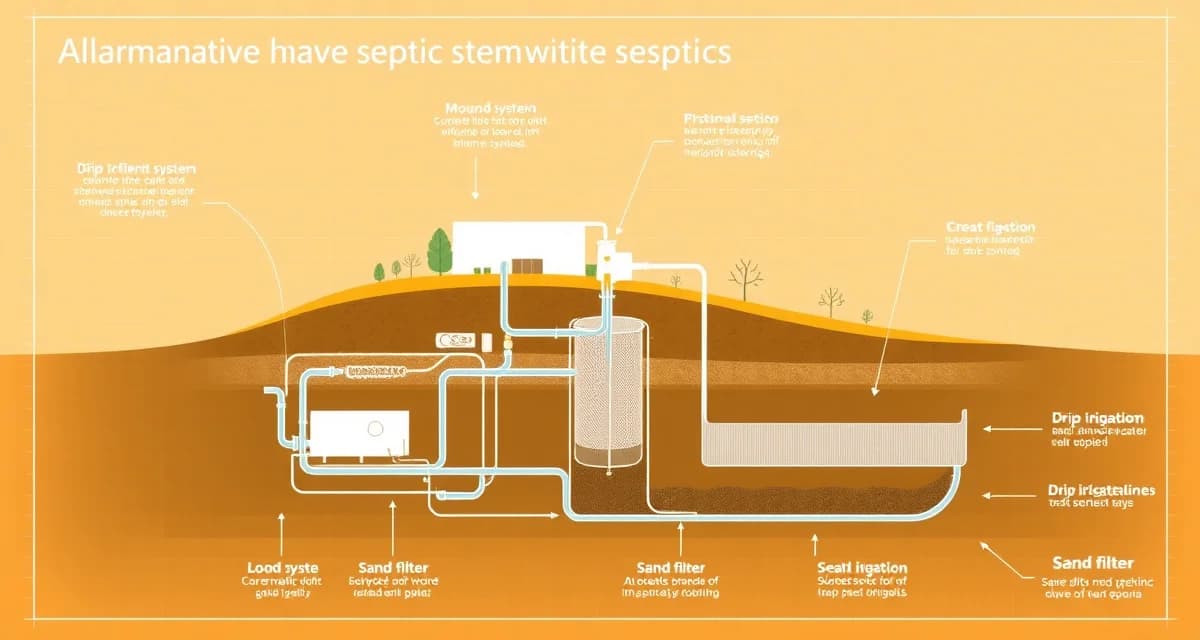
Alternative Septic System Management Software for Complex Systems
By the SepticMind Editorial Team
Alternative and innovative onsite wastewater systems now represent 12% of new septic installations nationally. That share is growing every year as soil limitations, lot sizes, and environmental regulations push more sites toward non-conventional solutions.
TL;DR
- Alternative systems including mound, drip irrigation, sand filter, and ATU units require system-type-specific inspection checklists that generic software cannot provide.
- State maintenance contracts and ATU maintenance permits apply to most alternative systems.
- ATU and drip irrigation systems typically require four visits per year, creating predictable recurring revenue.
- Missed quarterly reports for alternative systems carry the same license risks as missed ATU reports.
- Purpose-built platforms adapt inspection checklists to the specific system type on each work order.
- Software built for alternative systems tracks manufacturer-specific maintenance protocols across multiple system types in a single roster.
If your company services alternative systems, you already know the challenge. A recirculating sand filter needs different service tasks than a conventional drip system. A constructed wetland has monitoring requirements that don't appear on any standard inspection checklist. And a peat filter replacement schedule has nothing in common with routine tank pumping intervals.
Alternative system types require component-specific maintenance that generic FSM records cannot capture. That's the problem. SepticMind's system type database includes 24 alternative system configurations with custom service checklists, designed specifically for this work.
What Makes Alternative System Management Different
Conventional septic systems follow a consistent service model: pump the tank, inspect the outlet baffle, check the drain field, document findings. Most service companies can build a reliable routine around this.
Alternative and innovative onsite wastewater systems (often called IOWTSs) break that routine. Each system type has unique components, unique failure modes, unique monitoring requirements, and often unique state or county reporting obligations.
Maintenance Contract Requirements
Many alternative system types require state-mandated maintenance contracts with licensed service providers. This is common with ATUs, packed bed media filters, and constructed wetland systems. The maintenance contract specifies:
- Service frequency (monthly, quarterly, semi-annual, annual)
- Required service tasks at each visit
- Documentation that must be submitted to the county or state
- Effluent quality sampling requirements
Generic FSM tools don't have fields for maintenance contract compliance documentation. They can create a recurring job, but they can't enforce the specific task completion required by the state's maintenance program.
SepticMind's system type database includes the maintenance contract requirements for regulated system types by state. When you create a service job for a permitted alternative system, the checklist reflects what the state requires, not just what a generic inspection covers.
Alternative System Types in SepticMind's Database
Recirculating Sand Filters
Recirculating sand filters treat wastewater by repeatedly passing it through a sand media bed. The recirculation pump, distribution laterals, and filter media are the key service points.
What maintenance does a recirculating sand filter system require?
Service visits for recirculating sand filter systems typically include:
- Pump inspection and verification of recirculation rate
- Inspection of distribution laterals for clogging or root intrusion
- Filter media surface inspection for channeling, ponding, or media loss
- Valve and control panel inspection
- Recirculation tank level check
- Effluent quality assessment (where required by state)
Filter media replacement is a major service event that occurs every 10-20 years depending on loading rates and media type. Tracking the installation date and media type in SepticMind's property record means you can proactively schedule media replacement evaluations rather than waiting for performance degradation.
Constructed Wetland Systems
Constructed wetlands treat wastewater through a combination of filtration and biological uptake in a planted wetland cell. They're common in environmentally sensitive areas where effluent quality requirements are high.
How are constructed wetland septic systems serviced and documented?
Constructed wetland service is more ecological management than mechanical service. It includes:
- Vegetation health inspection (plant species must be appropriate and healthy for the system to function)
- Inlet distribution inspection for clogging
- Outlet water quality assessment
- Berm and liner integrity inspection
- Invasive species removal as needed
- Seasonal inspection of freeze protection if applicable
Documentation for constructed wetland systems typically includes photos of vegetation cover, water level observations, and effluent quality test results. SepticMind's photo documentation tools capture and attach these records to the service report automatically.
Peat Filter Systems (Bord na Mona, Premier Tech)
Peat filters use a natural peat medium to provide advanced treatment. They're common in coastal and environmentally sensitive areas, particularly in New England and the Pacific Northwest.
Service requirements for peat filter systems include:
- Peat medium inspection for surface clogging or channeling
- Inlet distribution inspection
- Effluent quality testing
- Ventilation system inspection
- Flow equalization component inspection
Peat filter systems have a defined service life for the peat medium, typically 10-20 years. Tracking installation dates in the property record supports proactive replacement planning.
Aerobic Treatment Units (ATUs)
ATUs are the most common alternative system type in many markets. They use air injection to accelerate biological treatment, producing effluent quality that conventional septic systems can't match. See our dedicated aerobic treatment unit software page for the full feature breakdown for ATU service providers.
ATU service requirements vary by brand and state, but typically include:
- Aerator inspection (air delivery rate and efficiency)
- Settling chamber inspection and pumping as needed
- Disinfection system service (UV lamp or chlorine tablet replacement)
- Spray irrigation head inspection and adjustment
- Alarm panel test
- Effluent quality sample collection (where required)
- Monthly service report submission to county or state
SepticMind's ATU service workflow includes brand-specific task variations for the major ATU manufacturers. Service techs see the correct task list for the specific unit they're servicing, not a generic ATU checklist.
Drip Irrigation Systems
Drip irrigation systems disperse treated effluent through a network of shallow subsurface emitters, distributed across a wider area than a conventional drain field. They're common on sites with limited drain field space or environmental constraints.
Service requirements include:
- Filter inspection and cleaning (drip emitters clog without maintained prefiltration)
- Emitter inspection and zone pressure testing
- Control panel and timer inspection
- Dose tank pump inspection
- Irrigation field inspection for surface ponding or odors
Drip systems are sensitive to filter maintenance. A clogged prefiltration filter quickly causes emitter clogging that requires expensive field remediation. Tracking filter service intervals in SepticMind and setting alerts when cleaning is due prevents this cascading failure.
Mound Systems
Mound systems are elevated drain fields installed above the natural soil surface when in-ground disposal isn't feasible due to high water table or limiting soil layers.
Service requirements for mound systems include:
- Pump chamber inspection (float switches, pump operation, alarm)
- Dose tank level monitoring
- Distribution pipe inspection
- Mound surface inspection (look for wet areas, subsidence, vegetation changes)
- Berm inspection for erosion
SepticMind's mound system tracking software handles the dose cycle documentation and pump performance tracking that mound systems require.
Constructed Drip and High-Pressure Dosing Systems
High-pressure dosing systems deliver effluent to drain field laterals in timed doses rather than continuous flow. They require more active monitoring than gravity-fed systems.
Service includes pump performance verification, pressure testing of laterals, timer and control panel inspection, and effluent distribution uniformity assessment.
Does SepticMind Track Unique Inspection Requirements for Alternative System Types?
Yes. This is one of the most important distinctions between SepticMind and general field service software.
Many alternative systems operate under state or county-specific inspection and reporting requirements that differ from standard septic inspection protocols. An ATU in Texas requires TCEQ-compliant maintenance documentation. An alternative system in a Massachusetts Title 5 jurisdiction has specific inspection report formats required for compliance documentation.
SepticMind maps inspection requirements by system type and state. When an alternative system job is created, the correct state-specific inspection form loads for that system type. The service report that's generated meets the county's reporting requirements without requiring the technician or company to manually verify compliance.
This is especially important for companies that service multiple alternative system types across multiple states. Remembering which ATU format goes to which county, which sampling frequency is required in which state, and which effluent quality thresholds trigger reporting obligations, is not manageable manually beyond a handful of accounts.
Alternative System Service Agreements
Alternative systems that require state-mandated maintenance contracts create a compliance obligation that service companies take on when they become the licensed maintenance provider.
The contract typically specifies:
- What tasks must be performed at each visit
- How quickly service must be performed after a system alarm
- What records must be maintained
- What must be reported to the county and how often
Missing a required service visit or failing to submit required documentation can void the maintenance contract and result in compliance action against both the system owner and the service company.
SepticMind tracks service agreements linked to each property. When a service agreement specifies quarterly visits, the system schedules those visits automatically and flags if a required visit hasn't been completed on schedule. Maintenance contract documentation is stored in the property record and can be pulled for county review on request.
Reporting and Documentation for Alternative Systems
Alternative systems generate more documentation per service visit than conventional systems. This documentation serves multiple purposes:
County compliance reporting: Many alternative system programs require submission of service records to the county or state on a regular schedule. Monthly for ATUs in some states, quarterly for others.
System performance monitoring: Effluent quality data and pump performance records help identify declining system performance before it becomes a failure.
Owner communication: Many alternative system owners are required by their state to maintain their system under a service contract. Regular service reports give them documented evidence that they're meeting their obligation.
Dispute protection: When an alternative system fails, documented service records demonstrate that the company performed the required maintenance. Without those records, the service company may bear some liability for a failure that wasn't caused by service failures.
SepticMind's service reports for alternative systems include the photo documentation, effluent data fields, and formatted output that county reporting requires. Reports can be emailed to the county directly from the system when a service visit is completed.
Get Started with SepticMind
The right software for a septic company handles compliance and documentation alongside scheduling and billing. SepticMind is built specifically for septic operations, from county permit tracking to ATU maintenance management. Start a free trial to evaluate it against your workflow.
FAQ
What maintenance does a recirculating sand filter system require?
Recirculating sand filter systems require inspection of the recirculation pump, distribution laterals, filter media surface, valve assembly, and control panel at each service visit. Effluent quality sampling is required in many states. Filter media replacement is a major event that typically occurs every 10-20 years. Pump performance should be checked against the design recirculation rate at each visit, as declining recirculation efficiency is an early indicator of performance problems.
How are constructed wetland septic systems serviced and documented?
Constructed wetland service combines ecological management with mechanical inspection. Each visit should include vegetation health assessment, inlet and outlet inspection, water level monitoring, and berm integrity inspection. Photo documentation is particularly important for constructed wetland systems because visual evidence of plant health and surface conditions is the primary performance indicator. Documentation must capture seasonal variation to be meaningful.
Does SepticMind track the unique inspection requirements for alternative system types?
Yes. SepticMind's system type database includes 24 alternative system configurations, each with its own service checklist and documentation requirements. State-specific inspection forms load automatically based on system type and job location. For systems operating under state maintenance contract programs, SepticMind tracks contract terms, required visit frequencies, and documentation submission requirements.
What types of alternative septic systems require the most specialized tracking?
Aerobic treatment units require the most documentation because most states mandate quarterly inspection reports and active maintenance contracts. Drip irrigation systems require valve and emitter inspection records that differ from conventional drainfield checks. Mound systems need frost-depth and distribution monitoring during seasonal transitions. Sand filter systems track media condition and loading rates. Each system type has unique inspection criteria a generic checklist will miss.
How does alternative system software differ from conventional septic management software?
The primary difference is system-type-aware inspection checklists. When a technician opens a work order for an ATU, the inspection form shows ATU-specific fields including blower status, disinfection level, and electrical checks. When they open a mound system work order, the form shifts to mound-specific criteria. Generic software uses the same checklist for every job, which leads to missed compliance items on alternative systems.
Try These Free Tools
Sources
- National Onsite Wastewater Recycling Association (NOWRA)
- US EPA Office of Wastewater Management
- NSF International
- Water Environment Federation
- National Environmental Services Center (NESC)