RV septic systems: how they work, what they cost, and how to keep them running
By the SepticMind Editorial Team
TL;DR
- An RV septic system handles wastewater from recreational vehicles.
- It's either on-board (gray and black tanks you dump at a station) or a fixed ground system at an RV park.
- Fixed park systems cost $15,000 to $500,000+ depending on site count and soil.
- Load swings and dump-station hygiene are the two failure points operators miss most.
What is an RV septic system and how does it actually work?
People mean two very different things by 'RV septic system.' The first is the on-board waste system built into any self-contained RV: a gray water tank (sinks and shower) and a black water tank (toilet). These are holding tanks, not treatment systems. They store waste until you connect a sewer hose and drain them at a dump station or full-hookup campsite. Nothing gets treated on the RV itself.
The second is a permanent ground-based septic system built to take wastewater from many RVs at once, either through individual site hookups or a central dump station. That system works much like a residential one: wastewater flows to a septic tank, solids settle and bacteria digest them, and clarified effluent moves out to a drain field (also called a leach field) where soil filters and treats it. [1]
The difference that trips up designers is load variability. A busy park sees usage spike hard on holiday weekends and drop to near zero in the off-season. That boom-bust pattern stresses components in ways a steady household flow never does. Tanks can sit for weeks without enough bacterial activity to keep sludge digestion healthy, then get slammed in 72 hours. Size for peak load, not average load. That's the only safe design choice.
On-board tanks usually hold 20 to 75 gallons each depending on RV size. A Class A motorhome might carry a 50-gallon black tank and a 70-gallon gray tank. A small travel trailer might have 20 gallons of each. [2] How often you dump depends entirely on how many people use the RV and for how long.
How does an RV park septic system differ from a residential system?
A residential system is sized for one household, usually 3 to 4 people generating roughly 50 to 100 gallons per person per day. An RV park system has to handle dozens or hundreds of units, each with its own rhythm of use. The EPA estimates RV wastewater at roughly 15 to 50 gallons per person per day, lower than a house because RV occupants use water carefully, but the combined load at even a 50-site park with two people per site is enormous. [1]
Design rules for RV park systems come from state environmental and health agencies, not one federal standard. Most states require a licensed engineer to design the system, a percolation test (perc test) to gauge soil drainage, and permits before construction. Skip that and you're not looking at a paperwork slap on the wrist. Operating an unpermitted or failed wastewater system can bring fines, park closure, and personal liability if discharge reaches a waterway. [3]
Park systems also take a waste stream that's chemically different from household sewage. Plenty of RV users pour strong tank deodorizers and biocides into their black tanks. Those chemicals kill the bacteria in the septic tank that break down solids. Formaldehyde-based treatments, popular for decades, are banned or restricted in several states for exactly this reason. [4]
For a technical look at drain field design, see our guide on leach fields, which covers the soil-based treatment side of any ground septic system.
One more practical gap: park hookup systems often include cleanouts and backflow prevention at each site because the sewer line sits exposed to vehicle traffic and physical abuse that a buried residential line never faces. Crushed laterals from heavy RVs are a frequent repair.
How much does an RV park septic system cost?
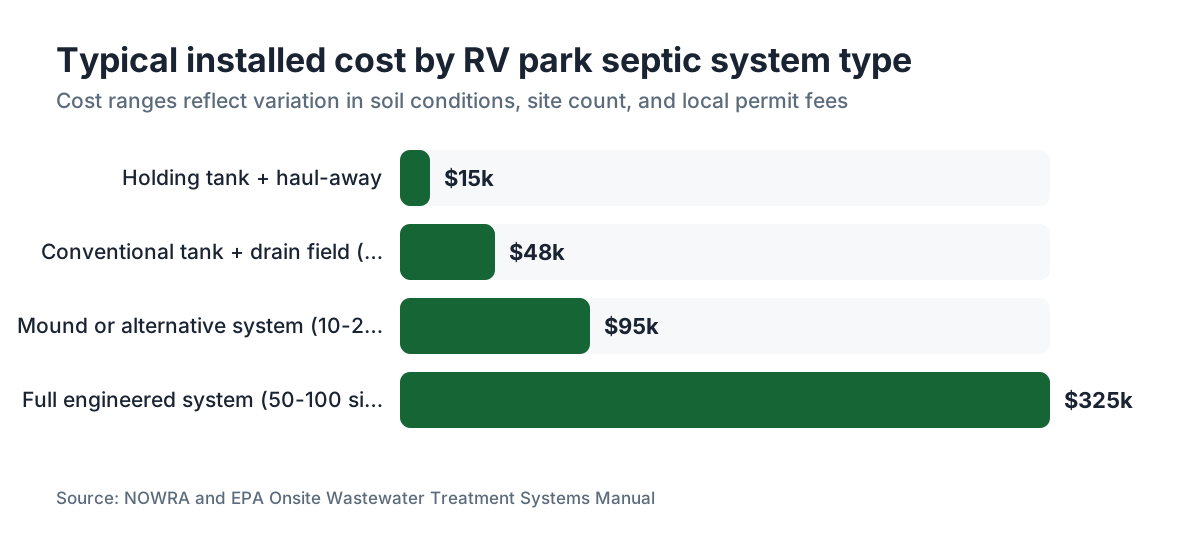
Costs swing so wide that any single number lies to you. Here's an honest breakdown by system type and scale.
A central dump station with a holding tank (no on-site treatment, waste hauled off by a pump truck) runs $5,000 to $25,000 installed. It's the cheapest way in, and it makes sense for small or seasonal parks where municipal sewer isn't available and the soil won't support a conventional drain field. You trade low upfront cost for ongoing pumping bills.
A conventional septic system with a tank and gravity drain field for a small park (10 to 20 sites) usually costs $15,000 to $80,000 depending on soil, depth to groundwater, tank size, and local permit fees. [5] Poor soil or high groundwater pushes you into alternative systems (mound systems, drip irrigation, aerobic treatment units) that can double or triple that figure fast.
Big park systems serving 50 to 200 sites live in a different tier. A properly engineered system for a 100-site park running year-round commonly costs $150,000 to $500,000 once you count the main collection lines, a lift station (if the park has any grade change), the septic or treatment tank, and the drain field acreage. Engineering and permitting alone run $10,000 to $40,000 before a shovel touches dirt.
For general installation costs on fixed ground systems, see cost to install septic system and cost to put in a septic tank.
Ongoing costs matter as much as install costs. A busy park dump station may need pumping every 2 to 4 weeks during peak season. At $200 to $600 per pump-out depending on tank size and local market, that's $2,400 to $14,400 per season just for hauling. [6] Build that into your model before you build the system.
| System Type | Scale | Typical Installed Cost |
|---|---|---|
| Holding tank + haul-away | Any | $5,000 to $25,000 |
| Conventional tank + gravity drain field | 10 to 20 sites | $15,000 to $80,000 |
| Mound or alternative system | 10 to 20 sites, poor soil | $40,000 to $150,000 |
| Full engineered system with collection lines | 50 to 100 sites | $150,000 to $500,000+ |
| Annual pumping costs (busy station) | Per year | $2,400 to $14,400 |
What are the rules for dumping RV waste? (state and federal regulations)
Federal law under the Clean Water Act prohibits discharging untreated sewage to navigable waters, and EPA regulations under 40 CFR Part 503 set baseline standards for sewage handling. [7] Day-to-day rules for where and how you dump RV waste come from individual states, and they vary a lot.
Every state requires that black water (sewage) from an RV go only into an approved sewage system: a permitted dump station, a full-hookup campsite tied to municipal sewer or an approved septic system, or your own property's approved system if you're a homeowner parked on your land. Dumping black water on the ground, into a storm drain, or into a gray water system not rated for sewage is illegal everywhere in the United States and carries real penalties.
Gray water rules bend more by state. Some states allow RV gray water on the ground under conditions (away from waterways, no public nuisance). Others treat gray water exactly like black water and require full disposal at an approved station. Check your state's environmental agency before you assume gray water is fine to dump anywhere. California, for one, keeps tight restrictions under its Porter-Cologne Water Quality Control Act. [8]
For park operators, running a dump station or hookup system without a valid wastewater permit is a serious violation. Most states require annual inspections of commercial wastewater systems, and many require the permit holder to report any failure to the state agency within 24 to 72 hours of finding it.
EPA's SepticSmart program aims mostly at homeowners, but its guidance protects any ground-based park septic system just as well: don't overload it, never flush harmful chemicals, keep up your pumping schedule. [1]
How often does an RV septic tank or dump station need to be pumped?
For on-board RV tanks, there's no fixed schedule. It hangs entirely on tank size and how many people are aboard. The rule most experienced RVers follow: dump the black tank at two-thirds to three-quarters full, never let it get completely full (solids dry out and harden if the tank sits unused), and never let it sit bone empty for a long stretch if you want bacteria doing their job.
For a ground-based park septic tank, EPA's standard residential guidance is pumping every 3 to 5 years, but that baseline barely means anything for a commercial park. [1] A busy dump station taking concentrated waste from dozens of units can fill a 1,500-gallon tank in days during peak season. High-use park tanks realistically need pumping every 1 to 4 weeks in the busy season and can stretch longer in winter.
Solid waste buildup is the measure that actually matters. Most operators use inlet inspection pipes or risers to check sludge and scum depth, or they hire a service company to do it. When the combined sludge and scum layers fill more than one-third of the tank's liquid depth, pump it. Wait longer and solids carry over into the drain field, which is the most expensive mistake on this list. [9]
For scheduling detail and what pumping involves, see septic tank pumping and how often to pump septic tank.
Operators who track pump-out frequency across a few seasons learn their system's real load and schedule ahead instead of reacting. That beats emergency service on a holiday weekend every time.
What are the most common RV septic system problems and failures?
On the RV side, the top problem is a clogged or slow-draining black tank. It comes from too little flushing water, pyramid plugs (solid waste piling up under the toilet because the tank wasn't wet enough), or a damaged dump valve. These are maintenance failures, not system failures. Use enough water per flush, keep the black tank valve closed until you dump (the gray tank you can leave open when hooked up), and flush the tank hard after each dump.
On the ground system side, drain field failure is the big catastrophic one. It's expensive, it develops slowly, and by the time you see it (sewage surfacing in the yard, slow drains, a sewage smell near the field), you're already in trouble. In park systems, drain field failure almost always traces to one of three causes: hydraulic overload (more water than the soil can absorb), solids carryover from an under-pumped tank, and chemical damage from RV tank treatments killing the soil's biological treatment layer. [9]
Lift station failures come in second for parks with any grade change. Lift stations are mechanical: pumps, floats, electrical controls. They fail. A lift station alarm going off at 2 a.m. on a busy holiday Saturday is a scenario every operator needs a plan for.
Crushed or offset lateral lines are common because heavy vehicles roll over buried lines all day. Schedule 40 PVC at adequate depth with proper bedding, plus line locations marked on a site map so guests don't park equipment on top of them, prevents most of these.
For repair options when problems surface, see septic system repair and septic tank repair.
Can you connect an RV directly to a home septic system?
Yes, with real caveats. If you park an RV on your property and want to dump the black and gray tanks straight into your home septic system, you can, but only if the home system was sized for the extra load. A standard 3-bedroom home system is usually designed for 300 to 450 gallons per day. Two or more full-time RV occupants can push daily flows well past that, and over time that stresses or wrecks the drain field. [5]
The mechanical connection is usually simple: a Y-connection or cleanout adapter on the main sewer line before it enters the tank, with a proper vented connection so sewer gas doesn't back up into the RV. Some homeowners install a sewer inlet port in the ground near where the RV parks. These connections have to be watertight, and they should sit where any spill during hookup runs away from the house and any water features.
Check local codes before you build anything permanent. Some jurisdictions require a permit for RV hookup connections, and some HOA agreements or local ordinances limit full-time RV occupation no matter how the waste is handled. A ten-minute call to your county environmental health office can save you a costly violation.
If your home system is already at or near its designed capacity, adding regular RV dumping without an upgrade invites failure. A septic tank inspection before you connect is money well spent. It tells you how much headroom, if any, you actually have.
What chemicals are safe to use in RV holding tanks?
This matters both for your RV's on-board tanks and for the ground septic system that receives your dump. The short answer: enzyme-based and bacterial (probiotic) treatments are safest for any system that discharges into a septic tank. They won't hurt the bacteria in the receiving tank, and they help break down waste in the RV tank too.
Formaldehyde-based treatments (usually the blue liquid deodorizers) control odor well but are toxic to the bacteria that make a septic tank function. Several states, including California and Washington, restrict or ban them. [4] Even where they're still legal, they're a bad choice if your waste lands in any septic system rather than a municipal plant.
Quaternary ammonium compounds (quats), found in many RV tank treatments and cleaning products, are also biocidal. They're fine at a dump station that routes to a municipal wastewater plant, but they can damage a septic system's bacterial population at high enough concentrations.
EPA's guidance on household chemicals and septic systems applies straight across: avoid biocides, use enzyme or bacterial additives if you use anything at all, and never pour solvents, pesticides, or big loads of disinfectant into any system feeding a septic tank. [1]
For routine odor control, water volume is the most underrated fix. Most RV tank odor comes from too little water, not from needing a stronger chemical.
How do you design an RV park septic system that won't fail in five years?
The one step that matters most: hire a licensed professional engineer with real onsite wastewater experience to design the system. Not a general contractor, not a plumber. A PE with a track record on commercial septic projects. Every state requires engineered designs for commercial wastewater systems above a certain flow threshold, usually around 1,000 to 2,000 gallons per day. [3] A 20-site park at full occupancy clears that easily.
Perc testing and soil borings come before you commit to a site or a building layout. Poor soil drainage is the number one reason park septic systems fail early. Finding out you need a mound system or drip irrigation field after you've built the hookup infrastructure is a very expensive surprise.
Size for peak load with a safety margin. With 50 sites at 80% occupancy on busy weekends and an average of 2.2 people per site, the system has to handle that flow, not your average Tuesday. Most engineers use 50 to 75 gallons per person per day for RV park design, though the real number tracks the amenities you offer (bathhouses raise flows a lot). [5]
Build in redundancy where you can. Two smaller tanks in series are more maintainable than one giant tank. A spare pump for the lift station isn't optional. Easy access for pump trucks (risers and lids at grade, turn radius for a vacuum truck) is something operators regret skimping on.
Operator-side documentation matters too. Septic service companies and RV park operators who use software platforms like SepticMind track pump-out schedules, inspection logs, and service history in one place, which makes it far easier to catch a system running heavier than expected before it turns into a failure.
Post clear signage at dump stations about prohibited substances. A sign reading 'no paint, no solvents, no formaldehyde treatments' is cheap insurance against a guest dumping something that kills your tank's bacteria overnight.
What does a septic inspection for an RV park system involve?
An inspection of a fixed park septic system runs deeper than a standard residential one because the stakes are higher and the system is more complex. A thorough inspection covers inlet and outlet conditions on each septic tank, sludge and scum depth measurements, baffle or effluent filter integrity, distribution box or manifold condition, and a visual check of the drain field for surfacing, saturation, or odd vegetation patterns that flag overloading. [10]
Lift stations get their own once-over: pump operation, float switch function, alarm test, wet well condition, and backup power if the system has it.
For individual site hookup lines, a camera inspection is the only reliable way to find crushed or offset pipe without digging. Most operators skip camera work until there's a specific problem, but a proactive camera scan of lateral lines every 5 to 7 years is a reasonable preventive spend for a park with heavy vehicle traffic.
State rules typically require a licensed inspector to check commercial wastewater systems on a set schedule, often annually. Operating permits can hinge on filing inspection reports with the state agency. Read your permit conditions closely: a missed inspection report is a compliance violation even if the system runs perfectly.
For homeowners eyeing property with an RV hookup, a septic tank inspection before closing is standard due diligence. A failing or overloaded system doesn't always show itself at a walkthrough.
See also our overview of septic tank cleaning for what happens during and after a pump-out inspection.
What maintenance schedule should RV park operators follow?
Here's a maintenance calendar built on what well-run parks actually do, not what a brochure claims.
Weekly during peak season: eyeball the dump station area for spills, check lift station alarm lights and pump cycle times (a pump running longer than usual is an early warning), and confirm tank riser lids are secure and undamaged.
Monthly during peak season: check sludge depth in the primary tank through the inspection port. If you don't own a sludge judge (a clear tube that samples tank depth), buy one. It costs about $50 and tells you more in two minutes than a walk across the yard ever will. [9]
Every 3 to 6 months: schedule a professional pump-out if sludge buildup calls for it. Don't wait on an annual schedule if your system runs hot. Have the service company inspect inlet and outlet baffles during the pump-out.
Annually: full system inspection including drain field condition, a camera inspection of problem laterals if any, a lift station pump and float test, and a review of the year's pump-out log to see if frequency is trending up (which signals either higher usage or declining drain field capacity).
Every 3 to 5 years: consider a load test of the drain field if the system is over 10 years old, especially if you've added sites since it was built.
Documentation isn't optional. Keep records of every pump-out, every inspection, every repair. If a regulatory inquiry or a liability claim over a discharge ever lands on you, those records are your best defense. They also make the park easier to sell, because a buyer's due diligence will ask for service history.
For pump-out procedures and what operators should verify during service, see septic tank pump out and septic tank emptying.
Frequently asked questions
Can I dump my RV at home if I have a septic system?
Yes, you can dump RV waste into a home septic system if it has enough capacity for the extra load. A standard 3-bedroom home system is designed for 300 to 450 gallons per day, and regular RV occupancy can stress it. Get an inspection first to confirm you have headroom, and make the connection through a proper cleanout or inlet port, never the tank lid.
How big does a septic tank need to be for an RV park?
It depends on site count, expected occupancy, and whether you have individual hookups or just a dump station. Many engineers use 75 gallons per person per day at peak occupancy. A 20-site park with 2 people per site at 80% occupancy could need a system handling 2,400 gallons per day. Your state environmental agency and a licensed PE set the actual required size from a site-specific design.
Are RV septic holding tanks the same as a real septic tank?
No. On-board RV holding tanks are storage containers with no treatment function. They hold waste until you dump it at an approved facility. A real septic tank is a buried, watertight vessel where bacterial digestion partially treats waste before it moves to a drain field for soil treatment. The two are completely different systems that happen to handle the same waste stream.
What are the best chemicals to use in an RV black tank that won't harm a septic system?
Enzyme-based and bacterial (probiotic) treatments are safest for systems discharging to a septic tank. They break down waste without killing the bacteria your septic system depends on. Avoid formaldehyde-based blue liquids and products with quaternary ammonium compounds, since both are biocidal and can damage a septic tank's biological culture. Using enough water per flush cuts odor more than most chemical additives do.
How much does it cost to pump an RV park dump station?
Pump-out costs for a commercial septic or holding tank at an RV dump station typically run $200 to $600 per service call, depending on tank size, local market rates, and how far the hauler drives to an approved disposal site. A busy dump station in peak season may need pumping every 1 to 4 weeks, so annual pumping costs can reach $2,400 to $14,400 for the season.
Do RV parks need a permit to operate a septic system?
Yes, in every state. Running a commercial wastewater system without a valid permit from the state environmental or health agency is a violation that can bring fines, mandatory closure, and personal liability. Most states require engineered designs, a percolation test, construction permits, and ongoing operating permits with annual inspection reporting. Check your state environmental agency's onsite wastewater program for specifics.
How do I know if my RV park drain field is failing?
Watch for sewage or spongy wet spots surfacing above or near the field, persistent sewage odor in the drain field area, slow drains across the park, and sewage backing up at low-lying hookup sites or the dump station. In advanced failure, you may see lush, unusually green grass over the field. Any of these warrants an immediate professional inspection.
Can formaldehyde RV tank treatments damage a septic system?
Yes. Formaldehyde-based deodorizers kill the anaerobic bacteria inside a septic tank that break down solids. One large dump from an RV that used heavy formaldehyde treatment can set back a tank's bacterial culture significantly. Several states, including California and Washington, restrict or ban formaldehyde treatments for this reason. Enzyme or bacterial alternatives do the job without the damage.
What is the difference between gray water and black water in an RV system?
Gray water comes from RV sinks and the shower. Black water comes from the toilet and contains human waste. Black water must always go to an approved sewage system. Gray water rules vary by state: some allow limited ground discharge under controlled conditions, others require it to go to the same approved system as black water. Never assume gray water is safe to dump anywhere without checking your state's rules.
How long does an RV park septic system last?
A well-designed and well-maintained park septic system can last 20 to 40 years. A concrete or fiberglass septic tank typically lasts 30 to 40 years with regular pumping. The drain field is the weak point: it can fail in under 10 years if overloaded or fouled with solids from an under-pumped tank, or last 30+ years with careful management of hydraulic and chemical loads.
Is a mound system required for an RV park with poor soil?
It depends on soil test results and your state's design standards. If percolation rates are too slow, or depth to groundwater or bedrock is too shallow for a conventional gravity drain field, your engineer will likely specify an alternative: a mound system, drip irrigation field, or aerobic treatment unit. These work well but cost far more than a conventional drain field, often 2 to 3 times as much to install.
What permits does an RV park need for a new septic system installation?
You typically need a site evaluation approval (including a percolation test), a construction permit for the system, and an operating permit once it's built and inspected. Most states also require a licensed engineer to sign and stamp the design, and some require a licensed wastewater installer for construction. Engineering and permitting can cost $10,000 to $40,000 before construction begins on a commercial-scale project.
Can an RV park connect to a municipal sewer instead of using a septic system?
Yes, and for parks in or near a municipality it's often the better option. A municipal sewer connection removes on-site treatment, drain field maintenance, and most of the regulatory weight around wastewater. The cost is a tap fee (from a few thousand to tens of thousands of dollars depending on the municipality) plus running sewer lines to each hookup. Ongoing sewer utility bills replace pumping costs.
Sources
- U.S. EPA, SepticSmart Program: EPA guidance on septic system maintenance, pumping frequency (every 3-5 years for residential), and avoiding harmful chemicals including biocides
- U.S. EPA, Office of Water: Onsite Wastewater Treatment Systems Manual: Design principles for onsite wastewater treatment systems including holding tanks and drain field sizing
- National Environmental Services Center (NESC), West Virginia University: State licensing and permit requirements for commercial wastewater systems and engineered design requirements
- California State Water Resources Control Board: California restrictions on formaldehyde-based RV tank treatments and gray water discharge regulations under the Porter-Cologne Water Quality Control Act
- University of Minnesota Extension, Septic System Owner's Guide: Residential septic system design for 300-450 gallons per day; RV park design flow figures of 50-75 gallons per person per day
- National Onsite Wastewater Recycling Association (NOWRA): Commercial pump-out cost ranges and frequency guidelines for high-use onsite wastewater systems
- U.S. EPA, Clean Water Act and 40 CFR Part 503 Biosolids Rule: Clean Water Act prohibition on discharging untreated sewage to navigable waters; baseline sewage handling standards under 40 CFR Part 503
- California State Water Resources Control Board, Porter-Cologne Water Quality Control Act: California gray water discharge restrictions requiring connection to approved sewage system
- Penn State Extension, Septic System Maintenance: Sludge and scum depth thresholds for pumping (one-third of tank liquid depth); drain field failure causes including solids carryover
- U.S. EPA, Septic System Inspection Guidance: Components of a thorough septic system inspection including baffle condition, sludge depth, and drain field surface assessment
- Washington State Department of Health, On-Site Sewage Systems: State regulatory requirements for commercial onsite wastewater systems; formaldehyde treatment restrictions
Last updated 2026-07-09