RV septic tank pumping service: the complete guide
By the SepticMind Editorial Team
TL;DR
- RV septic pumping empties the black water (toilet waste) and gray water in your holding tanks.
- Dump it yourself at a campground station for $15 to $45, or call a mobile truck for $75 to $200.
- Full-timers usually pump every 3 to 5 days; part-timers stretch it to 1 or 2 weeks.
- Never let a full tank sit past a week, or solids harden around the outlet.
What is RV septic tank pumping and how does it differ from a house septic pump-out?
An RV doesn't have a septic system in the usual sense. It has holding tanks, usually two: a black water tank for toilet waste and a gray water tank for sink and shower drainage. Pumping an RV means emptying those tanks into a dump station inlet or a vacuum truck. Nothing gets treated on site the way it does in a residential system.
A residential septic tank pump out pulls sludge from an in-ground concrete or fiberglass tank holding 750 to 1,500 gallons or more. An RV black water tank holds 15 to 55 gallons. The equipment looks similar. The smell is identical. The scale and the rules are not.
The EPA's SepticSmart program targets fixed onsite treatment systems, but the public health concern carries straight over to RVs. Untreated human waste holds pathogens including E. coli, Cryptosporidium, and Hepatitis A, and those have to be contained and discharged only at permitted facilities [1]. Dumping black water anywhere other than an approved sewer connection or licensed pump-out is illegal in all 50 states under the Clean Water Act [2].
Here's what trips people up. Gray water looks harmless, but it carries food bits, grease, and soap that feed bacteria and turn rank fast if it sits. Most states treat gray water discharge on public land under the same rules as black water.
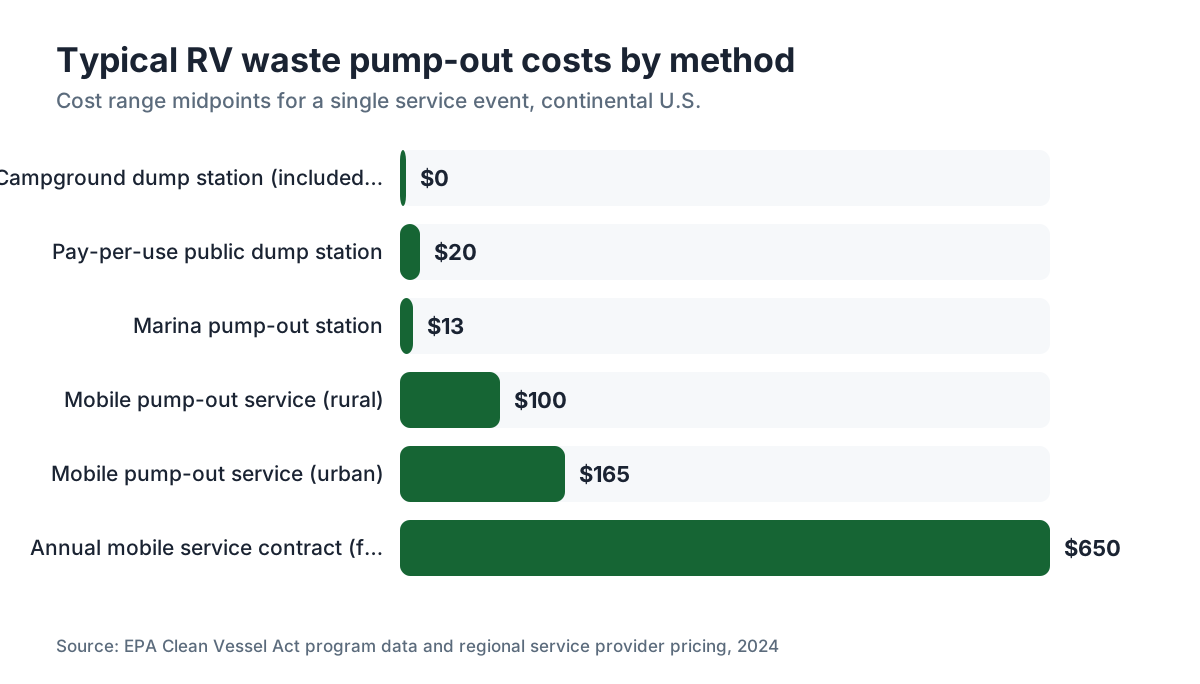
How much does RV septic tank pumping cost?
Cost swings hard depending on how you do it. Self-service dumping runs $15 to $45. Mobile service runs $75 to $200 per visit.
| Method | Typical Cost | Notes |
|---|---|---|
| Campground/RV park dump station (self-service) | $0, $25 included in site fee | Most campgrounds include this |
| Public dump station (pay-per-use) | $10, $30 per visit | Many Flying J/Pilot locations |
| Mobile pump-out service (technician comes to you) | $75, $200 per visit | Higher in urban areas |
| Marina pump-out (boats and some RVs) | $5, $20 | Federally funded at many marinas [3] |
| Annual pump-out contract (full-timers or RV parks) | $400, $900/year | Volume discounts from operators |
The cheapest path by a mile is a dump station you drive to yourself. You bring a sewer hose, connect to the inlet, open the black tank valve first, flush, then open the gray tank to rinse the hose. Ten minutes. Fifteen bucks at most.
Mobile pump-out earns its price when you're parked somewhere without sewer hookups and driving to a dump station is a pain. Think long stays in a driveway, a field, or a remote site. A vacuum truck rolls up, hooks to your sewer outlet, and pulls everything in under 30 minutes. Pricing is usually flat for the first 50 gallons, and since RV tanks rarely top 55, you almost never hit an overage.
Geography drives the number more than most people expect. A mobile pump-out in rural Montana might run $75. The same job in metro Los Angeles runs $150 to $200. Fuel surcharges and disposal fees (haulers pay to dump at a treatment plant) explain most of the gap.
How often should you pump an RV holding tank?
Pump when the tank hits two-thirds to three-quarters full, not on a calendar. Sensors read the level, but they lie constantly because toilet paper and waste cling to the probes and show false full.
Here's the real-world frequency by how you use the rig:
- Weekend campers (2 adults, 2 nights): every 2 to 3 trips, or roughly every 2 weeks
- Occasional travelers (1 to 2 weeks of use per month): every trip or every other trip
- Full-timers (2 adults living aboard): every 3 to 7 days depending on tank size
Leaving tanks under 30% full for weeks actually stinks worse than keeping them fuller, because dried waste off-gasses more ammonia. Some full-timers pour a cup of water into the tank before storing the RV, just to keep the sensor probes wet and the leftover waste from hardening.
The logic mirrors residential pumping, which we cover in how often to pump septic tank: volume in versus volume out, with solids buildup driving the schedule more than the calendar.
One firm rule. Never let a black water tank sit full and unused for more than a week. The solids compact and pyramid around the outlet fitting, and clearing that takes a professional flush with a tank wand. That's cost and time you created for nothing.
What equipment do you need to dump an RV tank yourself?
For a self-service dump you need a sewer hose, a bayonet fitting, gloves, and a way to rinse. That's the short list. Here's the full one:
- A 20-foot sewer hose (3-inch diameter is standard; some older dump stations use 4-inch fittings, so a reducer adapter helps)
- A bayonet-style sewer hose fitting that locks onto your RV's outlet
- A clear 90-degree elbow fitting (optional, but it lets you see when the flow runs clean)
- Nitrile gloves and a bucket of soapy water or a portable water source to rinse
- Sewer hose supports if you have a long run to the inlet
The Camco 39006 and Valterra D04-0006 are two hose kits you'll see stocked everywhere. That's not an endorsement, just the names on the shelf at Camping World or Amazon.
For mobile service you bring nothing. The technician carries a vacuum hose with a universal adapter that fits nearly every RV sewer outlet. You just need to know where your outlet cap is and keep the area clear.
Buy one thing even if you always use dump stations: a tank rinser wand (some call it a flush wand). You feed it through the toilet into the tank and blast high-pressure water at the walls and the pyramid zone around the outlet. It breaks up compacted solids that make sensors read full even after a dump. It costs $25 to $40 and it stretches the life of your tank sensors in a real way.
How do mobile RV pump-out services work?
You book online or by phone, give your location and the number of tanks, and a technician shows up with a vacuum truck. The rig looks like a shrunken version of a residential septic pumping truck, set up for the lower-volume job. Most RVs have one black and one gray tank; some big coaches carry two black tanks.
The whole thing takes 20 to 45 minutes:
- Tech connects a vacuum hose to your RV's 3-inch sewer outlet
- Opens the valves and pulls the black tank first
- Rinses with fresh water if you have a built-in tank flush system (some RVs do)
- Pulls the gray tank
- Caps everything, documents the service, and hauls the waste to a licensed treatment facility
Good operators carry their own water for flushing and rinse the tank as part of the job. Ask before you book. Charging extra for a rinse is fair. Never rinsing is a reason to call someone else, because dry solids left behind grow into a bigger problem by the next visit.
Licensing rules for mobile operators vary by state. In most states, operators must hold a liquid waste hauler or septage hauler license and must discharge at a permitted wastewater treatment plant or septage receiving station [4]. California requires a Liquid Waste Hauler registration through the State Water Resources Control Board [5]. If a service can't tell you where the waste goes, walk away. Illegal dumping is an environmental violation and a sign the business won't be around next time you call.
SepticMind's dispatch and job-tracking tools run this kind of route-based service for some mobile pump-out operators, including logging where waste gets discharged, which state compliance records depend on.
Where can you find RV dump stations and pump-out services?
Two crowd-sourced directories cover self-service dump stations best: Sanidumps.com and RVDumps.com. For federal campgrounds, check Recreation.gov. For mobile service, a Google Maps search plus a phone call still beats everything.
Self-service directories worth bookmarking:
- Sanidumps.com: User-submitted database of dump stations across North America, searchable by location
- RVDumps.com: Similar crowd-sourced directory with hours and fees
- Recreation.gov: Lists dump station availability at federal campgrounds [6]
- Campendium and The Dyrt: Campground apps where users note dump station availability in reviews
For mobile service, searching Google Maps for "RV pump out service" or "RV holding tank service" near you is the most practical start. Yelp covers metro areas decently. RV parks often keep a list of preferred operators they refer guests to, so asking at the office is underrated.
Flying J and Pilot travel centers run dump stations at many locations (usually $10 to $20 per use), and their app flags which ones have facilities. Love's Travel Stops is similar.
Federal lands under the Army Corps of Engineers and the National Park Service generally have dump stations at developed campgrounds. The EPA's Clean Vessel Act program has funded pump-out installations at thousands of marinas since 1992, and while those exist for boats, some take RVs parked nearby [3].
One practical habit: call ahead every time. Dump stations close for maintenance, freeze over in winter, or go offline without the directories catching up. A 10-minute call saves a 40-minute detour.
What chemicals and treatments actually work for RV holding tanks?
The one product that matters is a bacterial or enzyme treatment in the black tank, plus enough water on every flush. Everything else is marketing noise, and there are hundreds of bottles competing to sell it to you.
A tank treatment should do three things: control odor, break down waste, and keep the sensor probes readable. Nearly every product claims all three. Fewer deliver.
Formaldehyde-based treatments (the old blue Porta Potti fluid) break down waste well but are banned from most dump stations and sewer systems in states like California, Connecticut, and Michigan because formaldehyde kills the bacteria that treatment plants rely on [7]. Dump at a campground running on septic instead of municipal sewer, and formaldehyde products can wreck the tank biology. Skip them.
Enzyme and bacteria-based treatments (Happy Camper, Walex Bio-Pak, Unique RV Digest-It) use live cultures or enzymes to digest organic waste. They work fine above 55 degrees F. In cold weather the microbes slow down and lose their punch.
Plain deodorizers (Pine-Sol, baking soda blends) cover odor but do nothing for breakdown. Good enough for gray tanks, where breakdown matters less.
Most experienced RVers land in the same place: a solid bacterial or enzyme product in the black tank, dish soap or a gray water enzyme in the gray tank, and plenty of water on every flush. Too little water is the number-one cause of RV tank trouble. Every flush should sound like liquid moving, not a solid thud.
For how these chemicals hit residential systems, see our guide on septic tank cleaning.
What can go wrong with RV holding tanks and how do you fix it?
Five problems cover most RV tank trouble: pyramid plugs, stuck valves, odor, false sensor readings, and cracks. Each has an honest fix.
Pyramid plug: Solid waste stacks into a cone around the outlet valve and blocks drainage. Cause: too little flush water plus leaving the black tank valve open between dumps, which dries the bottom out. Fix: add a gallon of water, a cup of liquid dish soap, and drive a bumpy road to slosh it around. If that fails, a tank wand on a garden hose breaks it up mechanically. Prevention beats the cure every time.
Stuck tank valve: Slide valves corrode or jam, especially on older rigs or after a pyramid plug. Replacement valves cost $20 to $80 in parts. Shop labor adds $50 to $150 depending on access. It's not a residential septic repair, but it's the RV equivalent.
Persistent odor: Almost always a venting problem or a dried-out toilet seal, not tank chemistry. If you smell sewage inside the coach, check that the roof vent cap isn't blocked by a bird nest or debris, then pour water into any floor drains or sink overflows that may have dried out.
False full readings: Sensors crusted with waste read wrong. The flush wand handles it. Some people run enzyme treatments to dissolve the buildup. The GEO Method (dishwasher detergent plus fabric softener plus water, then drive around) is a popular DIY deep clean.
Tank cracks or leaks: A cracked polyethylene tank usually means replacement. That's an RV service center job. It runs $300 to $1,200 depending on tank size, location, and labor.
Are there regulations about where and how you can dump RV waste?
Yes, and they bite harder than most RV owners think. Black water goes to a designated facility, period. Gray water rules range from strict to lenient depending on the state and the land.
Federal law bans discharge of sewage from vessels (which some interpretations extend to RVs) into navigable waters under the Clean Water Act, 33 U.S.C. section 1322 [2]. On public land under the Bureau of Land Management or Forest Service, dumping black water outside a designated facility is a federal violation with fines up to $5,000 per occurrence [8].
State rules vary a lot. California's State Water Resources Control Board holds some of the strictest gray and black water discharge bans for mobile sources [5]. Texas allows limited gray water discharge on your own private property under certain conditions but bans it on public land and in waterways [9]. Most states run the same pattern: dump stations or sewer hookups for black water, with gray water rules stretching from "same as black" to "fine to seep on your own land if it doesn't reach groundwater."
Campground rules stack on top. Many campgrounds on septic (not municipal sewer) ask you to skip chemical treatments that harm tank bacteria. Some National Forest campgrounds have switched to pack-it-out policies in heavy-use areas.
The takeaway is simple. Dump at a designated facility, keep records when you use a mobile service (the operator should hand you a receipt or service document), and never discharge on the ground even when nobody's watching. Agencies near sensitive watersheds enforce this hard now.
Thinking about a permanent or semi-permanent hookup to a residential septic system for a long-term RV site? That's a different regulatory road. A residential septic tank installation permitted through your county health department is the proper route, and an inspection of the existing system's capacity comes first before adding an RV as a load.
How do RV pump-out services compare to other options for managing waste on a longer stay?
Parking an RV long-term gives you four real options: drive to a dump station, schedule a mobile pump-out, run a gravity sewer hookup, or switch to a composting toilet. Cost and hassle sort them out.
- Drive to a dump station: Fine if you're within 10 to 15 miles of one. Gets old fast when you're doing it weekly for months.
- Mobile pump-out on a schedule: The most hands-off choice. You pay a premium, but some operators run weekly contracts with discounts. Best when you can't easily move the rig.
- Gravity sewer hookup: If the property has a cleanout or the septic system has capacity, a licensed plumber can fit a clean-out adapter and you run a direct sewer hose from the RV. This may need a septic system repair or extension if the existing system has to be modified. Check local codes, because many jurisdictions require a permit for any RV connection to a private system.
- Composting toilet plus gray water management: Not for everyone, but composting toilets kill the black water problem outright. You still handle gray water, which is simpler (some jurisdictions allow limited subsurface gray water disposal). Products like Nature's Head and Air Head have a real following among long-term boondockers.
RV parks with heavy pump-out demand often run their own truck or hire a hauler on a route. That scheduling load, tracking tank counts, billing, and route efficiency, is exactly what software like SepticMind handles for operators running more than a handful of accounts.
Run the math on your own case. A gravity sewer hookup costs a one-time $300 to $800 in materials and labor if the connection point sits close, and that beats two years of weekly mobile pump-outs at $100 each.
What should you look for in an RV pump-out service provider?
Check five things before you book: a hauler license, a named disposal site, decent equipment, liability insurance, and a track record. The gap between a good operator and a bad one isn't obvious from the quote.
Licensing: Ask for their hauler license number or business license. A legitimate septage hauler or liquid waste transporter has one and won't hesitate to share it. Your state environmental agency can usually verify it.
Disposal documentation: Ask where the waste goes. The answer should name a municipal wastewater treatment plant or a licensed septage receiving facility. "We have a place we go" is not an answer.
Equipment condition: A truck with corroded fittings, frayed hoses, or no spill kit is a liability. A spill on your property becomes your cleanup problem.
Insurance: A reputable operator carries liability coverage. If they spill waste on your driveway, you want their insurer paying, not a fight.
Reviews and longevity: A company running 3 or more years with Google or Yelp reviews is less likely to vanish. New operators aren't automatically bad, but vet the other factors harder.
Price alone is a bad filter. The cheapest operator in a market is sometimes unlicensed, which means they're probably dumping illegally. That's an environmental hazard, and if it traces back, property owners who knowingly hired them can share the legal exposure.
For what a professional septic tank pumping job looks like on a residential system, the quality marks are identical: licensed hauler, proper disposal, documented service.
Frequently asked questions
Can I dump my RV black water into a residential septic tank?
Only if the system has capacity for the extra load and the property owner agrees. Many counties also require a permit for any new connection to a private septic system. A septic tank sized for a two-bedroom home already running at capacity can't safely absorb RV waste. Have the system inspected first. Overloading it can destroy the drain field, and repairs run $3,000 to $15,000.
How long can RV holding tanks go without being pumped?
Empty a black water tank at two-thirds to three-quarters full, not on a fixed calendar. For two adults using normal amounts, that's typically 3 to 7 days for a 40-gallon tank. Sitting full past 7 to 10 days risks solids compacting around the outlet valve. Never leave a full tank for more than two weeks. The pyramid plug and odor problems that follow are far harder to fix than regular pumping.
What is the difference between gray water and black water in an RV?
Black water comes from the toilet and holds human waste. Gray water comes from sinks, showers, and sometimes the washing machine. Black water requires disposal at an approved dump station or via a licensed pump-out in all states. Gray water rules vary: some states treat it exactly like black water, others allow limited ground disposal on private property. When in doubt, dump gray water at the same facility as black water.
How much does an RV black water tank cleaning cost compared to just dumping?
Basic dumping at a station costs $10 to $25. A professional cleaning (vacuum out plus high-pressure rinse) from a mobile service runs $100 to $175. Most owners dump themselves regularly and hire a professional rinse once or twice a year, or after a pyramid plug. The annual cleaning earns its keep for sensor health and odor control.
Is it illegal to dump gray water on the ground while camping?
On federal public land (BLM, National Forest, National Parks), dumping gray water on the ground is prohibited or heavily restricted. Some dispersed camping areas allow it more than 200 feet from water sources, but rules vary by district. On private land, state law governs. California bans it outright for mobile sources. Always check the specific land management rules for where you're camping.
Do RV dump stations accept gray water separately from black water?
No. Dump stations have a single inlet. You dump black water first, then open the gray water valve to flush the hose and outlet with the cleaner gray water. Both go into the same sewer connection. No separation is required or available at a standard dump station.
What causes bad smell from RV holding tanks even after pumping?
The usual culprits are a clogged roof vent pipe (which stops odor from venting upward), a dried-out toilet valve seal that no longer blocks tank gases, and residual waste on tank walls that bacterial treatments haven't broken down. Check the vent cap for bird nests or debris first. Then inspect the toilet foot pedal seal. If both are fine, a deep-clean with a flush wand and enzyme treatment usually clears it.
Can I use my RV at home long-term if there's no sewer hookup?
Yes, but you need a plan for waste. Options include regular trips to a dump station (usually every 3 to 7 days for full-timers), a scheduled mobile pump-out, or a connection to the home's septic or sewer cleanout if local codes allow it. A plumber can fit an RV sewer adapter at a cleanout for $200 to $600 in most cases, though a permit and septic capacity check may be required.
How do I find a licensed mobile RV pump-out service in my area?
Search Google Maps for 'RV pump out service' or 'holding tank service' near you. Verify the operator's liquid waste hauler license through your state environmental agency before booking. Ask specifically where they dispose of the waste. RV park offices often keep referral lists of trusted local operators. Flying J and Camping World locations sometimes offer pump-out or refer you to local services.
What happens if I leave my RV's black tank valve open all the time to drain continuously?
This is a classic mistake. An open valve lets liquid drain while solids pile up and dry around the outlet, building a pyramid plug that eventually blocks the opening entirely. Keep the valve closed until you're ready to dump a reasonably full tank. The liquid in the tank suspends solids and carries them out during a proper dump.
How do I know if my RV tank sensors are accurate?
If the tank reads full right after dumping, or holds one level no matter what you do, the sensors are probably coated with waste. A tank wand rinse, or the GEO Method (dishwasher detergent, fabric softener, water, and a drive), can clean the probes. Some aftermarket sensors like SeeLevel II mount externally and read more reliably than factory probes. Most full-timers end up tracking days since the last dump instead.
Can you add an RV to an existing residential septic system?
Sometimes, yes, but it takes a septic inspection to confirm the system has capacity for the added load, a permit from the county health department in most places, and proper plumbing to connect the RV outlet to a cleanout or new access point. This is not a DIY job. An undersized or aging drain field that takes on more load can fail, and replacement runs $5,000 to $25,000 or more.
Are there any formaldehyde-free RV tank treatments that actually work?
Yes. Enzyme and bacteria-based products like Happy Camper Organic Holding Tank Treatment, Walex Bio-Pak, and Unique RV Digest-It are formaldehyde-free and work above 55 degrees F. For cold weather, deodorizers with mineral-based odor absorbers (zeolite) help when bacterial products slow down. The single biggest lever is using enough water on every flush, which no chemical can replace.
Sources
- EPA SepticSmart Program: Untreated human waste contains pathogens that must be properly contained and discharged only at permitted facilities.
- U.S. Code, 33 U.S.C. § 1322, Clean Water Act vessel sewage discharge provisions: Federal law prohibits discharge of sewage from vessels into navigable waters of the United States.
- U.S. Fish and Wildlife Service, Clean Vessel Act Grant Program: The Clean Vessel Act program has funded pump-out installations at thousands of marinas since 1992.
- EPA, Onsite Wastewater and Septage Management: In most states, mobile pump-out operators must hold a liquid waste or septage hauler license and discharge only at permitted treatment or receiving facilities.
- California State Water Resources Control Board, Liquid Waste Hauler Registration: California requires Liquid Waste Hauler registration through the State Water Resources Control Board for operators transporting septage or holding tank waste.
- Recreation.gov, campground amenities including dump stations on federal lands: Recreation.gov lists dump station availability at federal campgrounds managed by agencies including the Forest Service and National Park Service.
- EPA, National Recommended Water Quality Criteria: Formaldehyde is toxic to wastewater treatment bacteria and is prohibited from dump station discharge in several states including California, Connecticut, and Michigan.
- Bureau of Land Management, Recreation Regulations (43 CFR Part 8360): Dumping black water outside a designated facility on BLM-managed public land can result in fines up to $5,000 per occurrence under federal regulations.
- Texas Commission on Environmental Quality, On-Site Sewage Facilities Rules: Texas rules for mobile waste discharge prohibit black water release on public land and into waterways; gray water rules vary by circumstance and property type.
- USDA Forest Service, Dispersed Camping Guidelines: National Forest dispersed camping guidance restricts gray water disposal within 200 feet of water sources, trails, and campsites, with specific rules varying by Ranger District.
Last updated 2026-07-10