Frozen septic system: causes, fixes, and how to prevent it
By the SepticMind Editorial Team
TL;DR
- A septic system freezes when frost gets into the soil around the pipes, tank, or drain field, blocking flow and pushing sewage back toward the house.
- Thawing a simple pipe freeze runs $300 to $800.
- A frozen drain field can top $5,000.
- Prevention costs almost nothing: keep a 6-inch snow cover over the field and keep water flowing through the system all winter.
What actually freezes in a septic system?
The tank itself almost never freezes solid. That surprises people. A septic tank holds a big thermal mass of liquid, plus active bacteria throwing off a little heat, so it usually stays above 32°F through a Minnesota or Maine winter. The parts that freeze are smaller and more exposed: the inlet and outlet pipes, the effluent filter, the pump chamber, pressure distribution lines, and the soil absorption area (the drain field, also called a leach field).
The inlet pipe freezes most often. It carries warm wastewater out of the house, which sounds protective, but a pipe that runs shallow, sits under an untraveled patch of yard, or sees very little daily flow loses that heat fast. A 4-inch schedule 40 PVC pipe six inches below grade, during a -10°F cold snap with almost no flow, can freeze in a matter of hours [1].
The drain field freezes by a different mechanism. Once frost in the soil reaches deeper than the distribution laterals, water stops moving through the pipe network. Frost in the northern US routinely reaches 36 to 48 inches, and laterals sit at 18 to 36 inches depending on state code [2]. Thin snow, compacted soil, or a truck that drove across the field strips the insulation and lets frost drop faster.
Pump chambers in pressure-dosed systems add one more weak spot. The float, the pump wiring, and the effluent sitting in the chamber can all freeze if the lid is cracked, if the system sits idle for a week, or if the chamber is uphill and out in the wind.
What are the warning signs that your septic system is frozen?
The first sign is almost always a slow or fully blocked drain that hits the whole house at once. Toilets, sinks, showers, all sluggish or dead at the same time in January. One slow drain is usually a household clog. Every drain slow together in freezing weather means the trouble is downstream, and freeze is the likely reason.
Gurgling from floor drains or toilets is the next warning. When wastewater can't push forward into the tank or out the tank's outlet, air gets forced back through the trap seals, and you hear that gulping sound.
Sewage odor inside the house is a late sign. By then backflow has already started and you're in an urgent situation. A wet or oddly warm patch of ground over the drain field in winter can mean the field is overwhelmed and pushing effluent to the surface, which is both a health hazard and a regulatory violation in every state [3].
Got a pressure-dosed system with a control panel? A pump alarm (a red light, an audible buzzer, or both) plus freezing temperatures points hard at a frozen pump chamber or frozen distribution lines.
Why do some systems freeze and others don't?
Three things decide it: insulation, flow, and history.
Insulation. Snow is the best free insulation a septic system will ever get. A 6-inch snow pack over the tank and field buffers the ground temperature in a real way. Systems in open, wind-swept yards, on south-facing slopes where snow melts off, or in yards where somebody rakes the lawn clean all lose that buffer. EPA's SepticSmart program suggests "letting leaves or mulch remain over the drain field area in fall" to help protect it, though the main benefit is trapping snow rather than the mulch itself [4].
Flow. Wastewater carries heat. A household that uses the system every single day keeps warm liquid moving and keeps the tank bacteria active. A vacation home empty for two weeks in February, a snowbird couple, a single person barely running water, all of them lose that heat source. Low-flow fixtures save water, but they also cut the warm volume feeding the system.
History. A system that partly froze last year and got thawed is more likely to freeze again. The first freeze may have damaged insulation, cracked a pipe, or disturbed the gravel around a lateral. A past freeze is the strongest single predictor of the next one when nothing gets fixed in between.
Installation depth is the one factor you can't change. Plenty of older systems went in shallower than current code allows, especially in states like Wisconsin, Minnesota, and Vermont that rewrote their onsite wastewater codes after years of documented freeze failures [5]. If your system predates 1990 and you live in USDA Hardiness Zone 5 or colder, the depth may just be wrong for your climate.
How do you thaw a frozen septic pipe or tank?
Start with the cheapest move: run warm water slowly and steadily from the tap closest to the problem. A trickle of 60 to 70°F water flowing through the line for a few hours often clears a minor inlet-pipe freeze. Never pour boiling water into the cleanout. The thermal shock can crack PVC fittings.
When warm running water won't clear a frozen cleanout or inlet pipe, a licensed plumber or septic contractor feeds a pipe-thawing machine through the line. These machines push hot water or run an electric resistance heating cable through the pipe to melt the ice. Most jobs take one to three hours. Expect $300 to $800 depending on access and severity [6].
The tank rarely needs direct thawing. But if the outlet baffle or effluent filter is iced up, a tech has to open the tank and deal with it there. That usually runs $400 to $900 including pumping if the tank is already backed up.
The frozen drain field is the expensive one. You cannot safely or effectively thaw a leach field by pouring hot water into the ground. Some contractors try ground-thawing gear (steam injection or electrical resistance ground heaters), but results are hit or miss, and the cost runs $1,000 to $5,000+ depending on field size and frost depth [6]. Worst case, the distribution pipes crack from the ice expanding and the system needs new sections.
Skip the chemical antifreeze. Propylene glycol or any other antifreeze poured in changes the tank chemistry, hurts the bacteria that treat the waste, and counts as a prohibited discharge to an onsite system in many states [3]. Don't salt the ground over the field either, for the same reasons.
How much does thawing a frozen septic system cost?
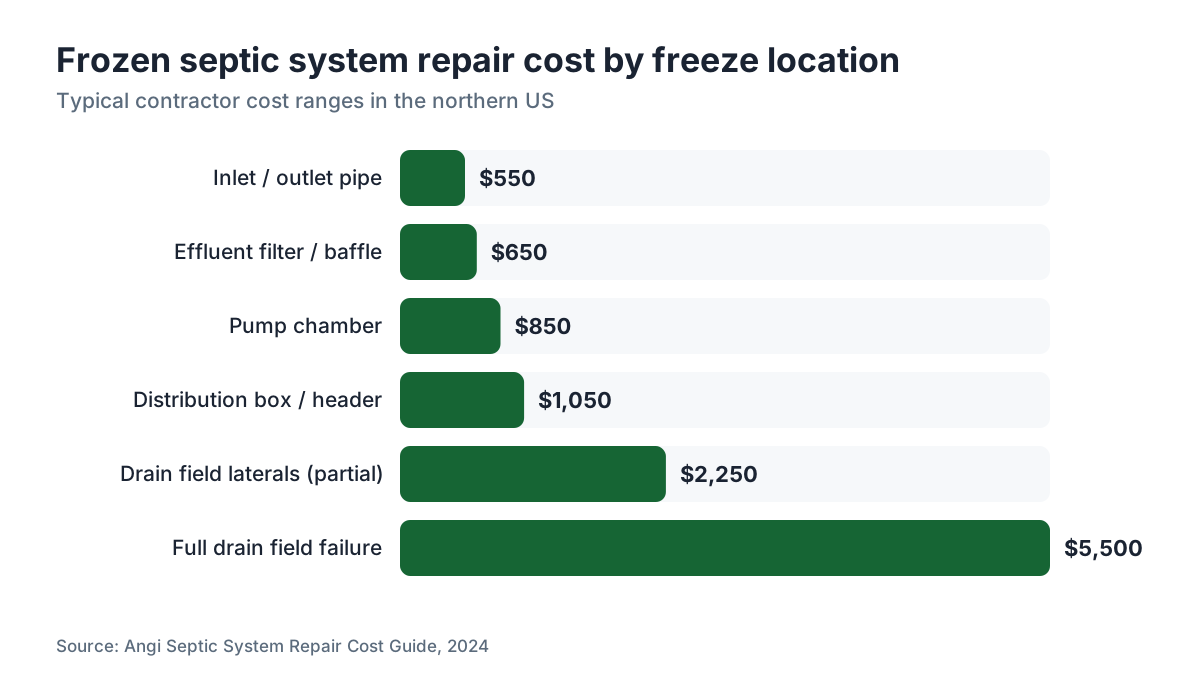
Cost comes down to where the freeze is and how long it's been frozen. A frozen inlet pipe caught early might cost $300. A cracked drain field can top $8,000. The table below shows realistic ranges from contractor reports and published regional estimates [6].
| Freeze location | Typical repair cost | Notes |
|---|---|---|
| Inlet or outlet pipe only | $300 to $800 | Pipe thaw machine, 1 to 3 hours |
| Effluent filter / baffle | $400 to $900 | Includes tank access, often pumping |
| Pump chamber | $500 to $1,200 | May need pump replacement if damaged |
| Distribution box / header pipe | $600 to $1,500 | Excavation often needed |
| Drain field laterals (partial) | $1,000 to $3,500 | Depends on field size and frost depth |
| Full drain field failure from freeze | $3,000 to $8,000+ | May require septic system repair or new leach field |
Emergency call surcharges add $150 to $300 on a weekend or during a storm. Digging down to a buried pipe through frozen ground can add $500 to $1,500 all by itself.
Here's the math that matters: prevention runs $50 to $200 for mulch, insulation blankets, or heat tape on a vulnerable inlet pipe. A single thaw call costs more than ten years of those measures combined.
What should you do right now if your system is frozen?
Stop using water heavily, right now. Laundry, the dishwasher, back-to-back showers, all of it backs up into the house if flow is blocked. Keep it to minimal toilet flushes and a light trickle at the sink until things are moving again.
Call a licensed septic contractor, not a plumber. Plumbers handle the pipes inside the house. Septic contractors have the gear and the experience to figure out whether the freeze sits in the building sewer, the tank, or the field, and they can run a camera down the line if they need to. Most states require a licensed contractor for any work past the building wall anyway [5].
Find your tank lids and cleanout access before the contractor shows up. Don't know where they are? Check your property's inspection report, the original installation permit (your county health department usually keeps it on file), or run a soil probe through the area you think the tank sits. Digging for lids under two feet of snow adds an hour to the call and dollars to the bill.
Write down what you see: wet spots on the ground, sewage odor, which drains are affected, how long since the last pump-out. Your contractor uses all of it to diagnose faster. If you track your system in SepticMind, pull up the maintenance log and have it ready.
Sewage surfacing outside? Call your local health department. Surface discharge is a public health concern and a reportable event in most states, and your county may have emergency resources or guidance on isolating the area until the repair is done [3].
How do you prevent a septic system from freezing in the first place?
Prevention works, and most of it is a few fall habits.
Leave the snow alone. This is the single most effective thing you can do. Don't shovel, plow, or blow snow off the ground above your tank and drain field. A 6-inch snow cover is real insulation and can hold the soil several degrees above freezing even when the air hits -20°F. Mark the field edges with stakes in October so a plow operator doesn't clear it by accident [4].
Add mulch when snow can't be trusted. In climates with frequent freeze-thaw swings, thin snow, or wind that scours the yard bare, put 8 to 12 inches of hay, straw, or wood chips over the tank lid area and the drain field before the ground freezes. This matters most for new systems, since fresh drain field soil is loose and sheds heat faster than settled soil.
Keep water flowing. Leaving for a week or more in winter? Ask a neighbor to run water in the house for 10 to 15 minutes every couple of days. Or have the system professionally winterized. Antifreeze isn't the answer here; the contractor pumps the system and may blow the pressure lines clear with air. For a cabin, ask whether the system should just be pumped and shut down for the season instead of left at risk see [how often to pump septic tank].
Insulate the vulnerable pipes. The inlet pipe where it leaves the foundation is a classic freeze point. Heat tape (also called heat cable) rated for pipes, installed to the manufacturer's instructions, stops freezing on a pipe that sits too shallow. The cable costs $30 to $80 at a hardware store and it's a legitimate permanent fix for a chronic problem.
Fix dripping faucets, but think twice in a deep freeze. A dripping faucet is a nuisance most of the year. In a hard cold snap, with a septic system, a small steady flow helps keep the inlet pipe open. Some homeowners deliberately let a cold-side faucet drip at one or two drops per second during extreme cold. It's not elegant. It works.
Pump on schedule. A full tank backs up faster, and the inlet pipe is more exposed when the tank isn't processing well. Keep up with your septic tank pumping schedule. EPA's SepticSmart program recommends pumping every 3 to 5 years for a typical household, though the real interval depends on tank size and how many people live there [4].
Never drive or park on the drain field. Compacted soil freezes faster and deeper than loose soil, so vehicle traffic over the field is the most common way homeowners set themselves up for a winter failure without knowing it. It also crushes the laterals, which is a whole separate headache leach field.
Does a frozen septic system damage the tank or drain field permanently?
A pipe freeze caught quickly and thawed without cracking rarely does lasting harm. The tank almost never suffers from a freeze.
The drain field is the part that can take permanent damage. When soil freezes around a distribution lateral, the expanding ice can crack or crush the perforated pipe. Even if the pipe survives, the freeze-thaw cycle can disturb the biomat layer that forms around the gravel bed and does part of the secondary treatment. Repeat freezes over several winters age a drain field faster.
The University of Minnesota Extension, which has documented cold-climate septic failures for years, notes that drain fields in high-clay soils (which hold more water and expand more when they freeze) take physical damage more easily than fields in sandy loam [2]. If your field froze and you see wet spots or slow drainage after the thaw, have it inspected before next winter to find out whether any pipes need replacing.
One hard freeze in a well-built, well-used system usually isn't a death sentence. But if you're asking whether your field will last another decade after repeated freeze damage, the honest answer is maybe not. A new leach field or full septic tank installation runs $3,000 to $15,000+ depending on soil, field size, and local permits see [cost to install septic system].
Are certain septic system types more vulnerable to freezing?
Yes. Conventional gravity systems in cold climates are fairly forgiving, since they have few moving parts and water finds its own level. Pressure-dosed systems, mound systems, drip irrigation systems, and aerobic treatment units (ATUs) all freeze more readily.
Mound systems sit above grade on purpose, to get treatment depth in shallow-soil areas. That above-grade mound gets very little insulation from surrounding soil, and the distribution pipes run just under the mound surface. A mound in a northern state without good snow cover can freeze within days of a sustained cold snap.
Drip irrigation systems pump treated effluent through small-diameter tubing at or near the soil surface. Those tiny emitter lines freeze almost right away below freezing. Drip manufacturers require winterization in any climate where the air stays below 32°F for sustained stretches, which means flushing the lines with air at season's end and not restarting until the soil comes back above freezing [5].
ATUs have a motor, an air blower, and internal parts that can freeze if the unit sits in a cold climate without insulated risers or a protective cover. If your ATU alarm trips in January after days below zero, a frozen blower or frozen control components belong on the suspect list right alongside an electrical fault.
If you manage multiple properties with different system types, keeping track of which ones need winterizing and which have a freeze history is exactly the operational detail SepticMind is built to organize across a service operator's whole customer base.
What do state codes and EPA guidelines say about winter septic protection?
EPA's SepticSmart program gives homeowners general best practices and says to "check with your local health department or state environmental agency for requirements specific to your area" [4]. It sets no federal minimum for installation depth or freeze protection, because onsite wastewater regulation is a state job [10].
State codes vary a lot. Minnesota's Pollution Control Agency requires new components installed at depths that account for local frost depth, and it addresses mound insulation directly [5]. Wisconsin's chapter SPS 383 sets minimum cover depths over distribution pipes and requires contractors to document frost depth in the site evaluation [7]. Vermont's Agency of Natural Resources requires an approved winterization plan as a permit condition for any new drip system in the state [9].
If you're in a northern state and your system went in before 1990, there's a real chance it sits at depths that predate current freeze-protection rules. Your county sanitarian (usually in the county health or environmental services department) has the installation permit on file and can read you the recorded depth. That 20-minute phone call is worth making before winter.
Booking a septic tank inspection before winter? Ask the inspector specifically to check cover depth over the inlet and outlet pipes and to judge whether the drain field has enough soil cover. Some inspectors rate frost-depth risk as part of a pre-winter review.
Can you use RV antifreeze or other chemicals to prevent freezing?
No. This one is a stubborn myth, and it does real damage.
RV antifreeze (propylene glycol) is labeled non-toxic for potable water systems, meaning it won't hurt you if you flush it out of a water line. But pouring real quantities into a septic system dumps a chemical load the tank's bacteria weren't built to handle. Propylene glycol does biodegrade, yet at concentrations high enough to lower the freezing point of water in a pipe, it knocks back microbial activity in the tank for a while. So you might delay a pipe freeze a little while cutting your tank's treatment efficiency at the same time. Bad trade.
Salt and calcium chloride are worse. They shift the ion balance in the tank, can eat at concrete tank walls over time, and change soil chemistry around the drain field in ways that reduce how much it can absorb long-term. Several state environmental agencies flatly prohibit any chemical additive in onsite systems without prior approval [3].
Here's the honest version: no chemical additive is an effective or safe stand-in for proper installation depth, real insulation, and steady water use. If a contractor or a hardware-store product promises a pour-in freeze fix, walk away.
How do you winterize a vacation home or seasonal property's septic system?
A seasonal place sitting empty through a northern winter needs real winterization, not hope.
Start with a pump-out. Have the tank professionally pumped before you close the property. A nearly empty tank has no residual solids to freeze into a mass and no effluent to back up. A septic tank pump out or septic tank emptying in October costs the same as any other time, roughly $300 to $600 for a standard residential tank, and it removes the biggest winter risk in one call.
For pressure-dosed systems, have the contractor blow the distribution lines clear with compressed air after pumping. Any water left in small-diameter pressure lines will freeze and crack the pipe.
For ATUs, follow the manufacturer's winterization steps. Most want you to bypass the aeration unit and return to passive septic mode, or physically pull and store the internal components.
Insulate the tank lids. A foam insulation board cut to fit over the lids and held down with something heavy gives you real thermal protection. Commercial insulated riser covers work too.
Close the building right so no interior pipe drips or leaks into the system all winter. Even a slow drip from a leaking toilet flapper adds up over four months and can keep the inlet pipe from clearing that last bit of water before it freezes.
In spring, have the system inspected before you resume full use. After a winter you want to confirm no pipes cracked and the field is taking flow normally before a full summer rental load lands on it. Our guide on septic tank inspection covers what that process looks like.
Frequently asked questions
How do I know if my septic system is frozen or just clogged?
A frozen system slows or blocks every drain in the house at once during or after a cold snap. A household clog usually affects one fixture or one branch of the plumbing. If all your toilets and sinks are slow in January and temperatures have run below freezing for several days, assume frozen until proven otherwise. Call a septic contractor, not a drain cleaner, since the blockage is likely past the building wall.
Can I pour hot water down the drain to thaw a frozen septic pipe?
You can run warm tap water (not boiling) slowly and steadily for several hours to thaw a mildly frozen inlet pipe. Boiling water risks cracking PVC fittings. Warm water is worth trying before calling a contractor, but if the pipe doesn't clear within a couple of hours, stop. Adding more water volume to a blocked system just backs it up into the house faster.
Will my septic tank freeze solid?
Rarely. The tank holds a large volume of liquid and gets a little heat from bacterial activity, so it stays above freezing in most conditions. What freezes is the inlet pipe, the outlet pipe, the pump chamber, or the drain field, not the bulk tank volume. Tanks that are nearly empty from a recent pumping, or systems unused for weeks, carry the highest risk of the tank itself freezing.
How much does it cost to fix a frozen septic system?
A frozen inlet or outlet pipe runs $300 to $800 to thaw. A frozen pump chamber may cost $500 to $1,200 and could need a pump replacement. A frozen drain field is the expensive case, from $1,000 to $5,000+ for thawing attempts and $3,000 to $8,000+ if pipes cracked and need new sections. Emergency weekend calls add $150 to $300 to any service.
Is it safe to use the toilet if the septic system is frozen?
Minimize all water use until the system is confirmed flowing. Every flush adds volume to a blocked system. If the inlet pipe is frozen, flushing backs wastewater up in the building drain and possibly onto the floor. Use a portable toilet or a neighbor's facilities if you have to, and call a contractor the same day. Skip chemical drain openers; they won't thaw frozen pipes and they harm the tank's bacteria.
How deep does a septic pipe need to be to avoid freezing?
It depends on local frost depth, which ranges from under 12 inches in the mid-South to 60 inches or more in northern Minnesota and North Dakota. Most state codes require distribution pipes below the local frost depth or with equivalent insulation. Your county sanitarian has the recorded installation depth on your permit. If the inlet pipe sits shallower than local frost depth, heat tape is a practical fix.
Does a frozen septic system mean the drain field is ruined?
Not necessarily. A single freeze resolved without pipe cracking usually causes no permanent damage. Repeated freezes, or a severe freeze left unaddressed for weeks, can crack distribution laterals and disturb the drain field's biomat layer. After any drain field freeze, have an inspection done in spring to confirm the pipes are intact and the field is absorbing normally before you assume all is well.
Can I prevent my septic system from freezing without spending money?
Yes. The most effective free prevention is leaving snow undisturbed over the tank and drain field. A 6-inch snow cover insulates the ground a lot. Consistent daily water use also keeps warm liquid moving through the system. If you're leaving for an extended period in winter, having someone run water in the house every few days costs nothing and prevents most pipe freezes.
Should I pump my septic tank before winter?
For a home you'll use year-round, pump on your normal schedule, not specifically for winter. For a vacation or seasonal property sitting empty through winter, pumping in October is genuinely good practice. An empty tank has nothing to freeze solid, nothing to back up, and the pump-out removes solids that could otherwise cause problems when the system restarts in spring.
Does a mound septic system freeze more easily than a conventional system?
Yes. Mound systems sit above grade with distribution pipes running near the mound's surface, where they get very little soil insulation compared to conventional below-grade systems. Mounds in cold climates need consistent snow cover or added mulch. Some state codes require extra insulation board over mound systems in northern regions specifically because the freeze risk is higher.
What should I do to prevent the septic system from freezing at a cabin?
If the cabin sits vacant all winter, have the tank pumped and the pressure lines blown clear with compressed air before the first hard freeze, typically before November 1 in zones 5 and colder. Insulate the tank lids, make sure no interior plumbing is dripping, and close the building so no passive water enters the system. Check on it in spring with an inspection before bringing it back to full use.
Can antifreeze or salt prevent my septic system from freezing?
No, and adding either to a septic system is a bad idea. Propylene glycol disrupts the tank's bacterial activity, and salt damages soil absorption capacity over time. Several state codes prohibit chemical additives to onsite systems without agency approval. There is no safe pour-in solution for preventing septic freeze. Insulation, snow cover, and steady water use are the only methods that actually work.
Sources
- University of Minnesota Extension, Septic System Owner's Guide: PVC inlet pipes near the soil surface are the most common freeze point in residential septic systems during cold snaps
- University of Minnesota Extension, Cold Climate Septic System Performance: Frost depth in northern US routinely reaches 36 to 48 inches; clay soils expand more on freezing and are more vulnerable to distribution pipe damage
- EPA, SepticSmart / Managing Your Septic System: Surface discharge of septic effluent is a health concern and reportable event; chemical additives to onsite systems are regulated by state agencies
- EPA, SepticSmart Homeowner Best Practices: Leaving mulch or leaves over the drain field helps protect it; pump every 3 to 5 years for a typical household; check local health department for area-specific rules
- Minnesota Pollution Control Agency, Subsurface Sewage Treatment Systems: Minnesota code requires new system components installed at depths accounting for local frost depth; drip systems require approved winterization plans
- Angi, Septic System Repair Cost Guide: Typical cost to thaw a frozen septic pipe is $300 to $800; frozen drain field thawing or repair is $1,000 to $5,000+
- University of Wisconsin-Madison Division of Extension: Wisconsin chapter SPS 383 requires minimum cover depths over distribution pipes and frost depth documentation in site evaluations
- National Environmental Services Center at West Virginia University: Consistent daily water use and 6-inch snow cover over tank and field are the most effective freeze prevention measures for residential onsite systems
- Vermont Agency of Natural Resources: Vermont ANR requires an approved winterization plan as a permit condition for drip irrigation septic systems
- EPA, Septic Systems Overview: Onsite wastewater regulation is a state function; EPA does not set federal minimums for installation depth or freeze protection
Last updated 2026-07-09