Fort Wayne septic inspection services: what to expect and what it costs
By the SepticMind Editorial Team
TL;DR
- A standard septic inspection in Fort Wayne costs $150 to $500, driven by tank size, inspection type, and whether the tank gets pumped first.
- Inspectors check the tank, baffles, lids, inlet and outlet pipes, and drain field.
- Indiana requires a licensed inspector for real estate deals.
- Most inspections take one to three hours.
What does a septic inspection in Fort Wayne actually involve?
A septic inspection is a physical examination of every accessible part of your onsite wastewater system. That means the tank, the inlet and outlet baffles, the distribution box (if your system has one), the drain field, and any risers or lids sitting above grade. In Fort Wayne and the rest of Allen County, inspectors follow Indiana's onsite sewage rules under 410 IAC 6-8.1, which set the baseline for what a licensed inspector has to evaluate. [1]
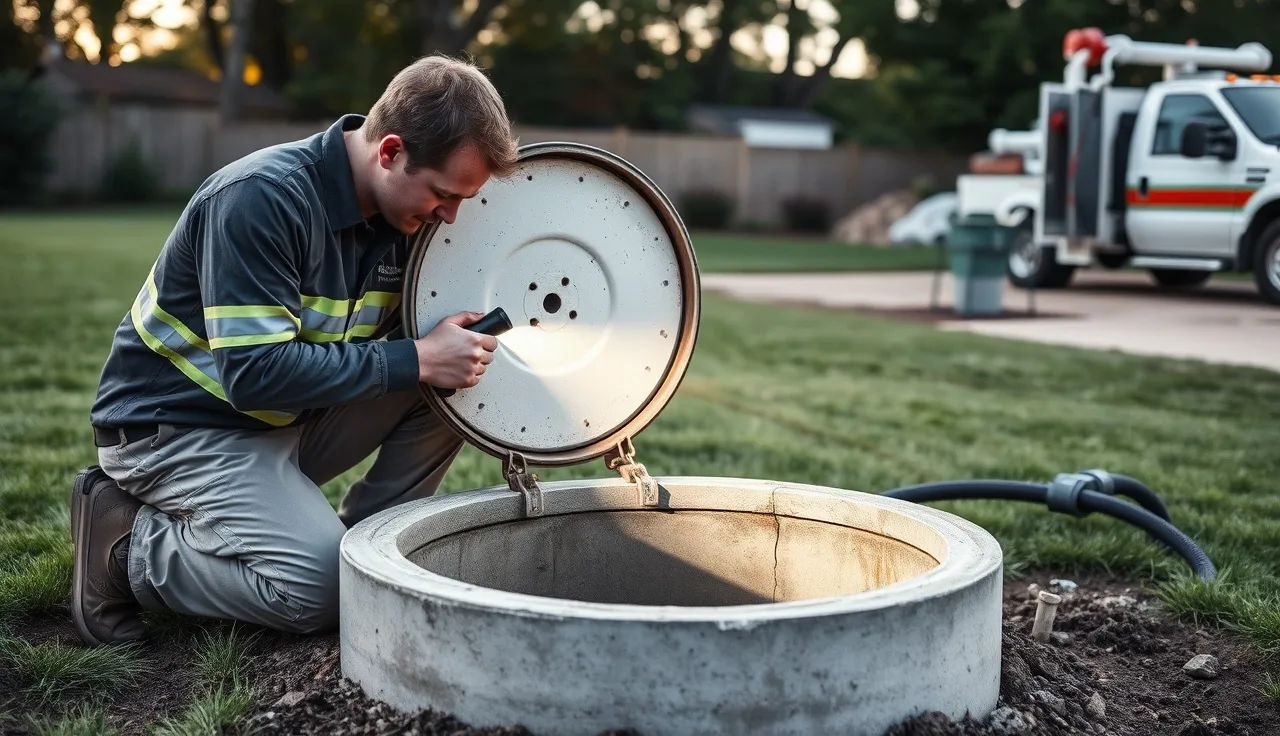
The visit usually starts with the inspector finding the tank. No as-built diagram? That search alone eats 20 to 40 minutes with a soil probe or an electronic locator. Once the lid is open, the inspector measures the liquid level, confirms the baffles are intact, looks for backflow from the drain field, and reads the sludge and scum layers. If those layers sit within 12 inches of the outlet baffle, the tank is due for pumping no matter when it was last serviced. [2]
Then comes the drain field. A good inspector walks it looking for soft spots, standing water, sewage odors, a single strip of unusually lush grass, and any surface breakout. Those are the tells that the field is saturated or failing. A visual field check needs no digging, but some inspectors run a dye test or a load test to see whether effluent is actually moving through the soil at an acceptable rate.
The whole visit runs one to three hours. You get a written report, sometimes same day, sometimes inside 48 hours. That report is what you hand a buyer, a lender, or a county health official.
How much does a septic inspection cost in Fort Wayne?
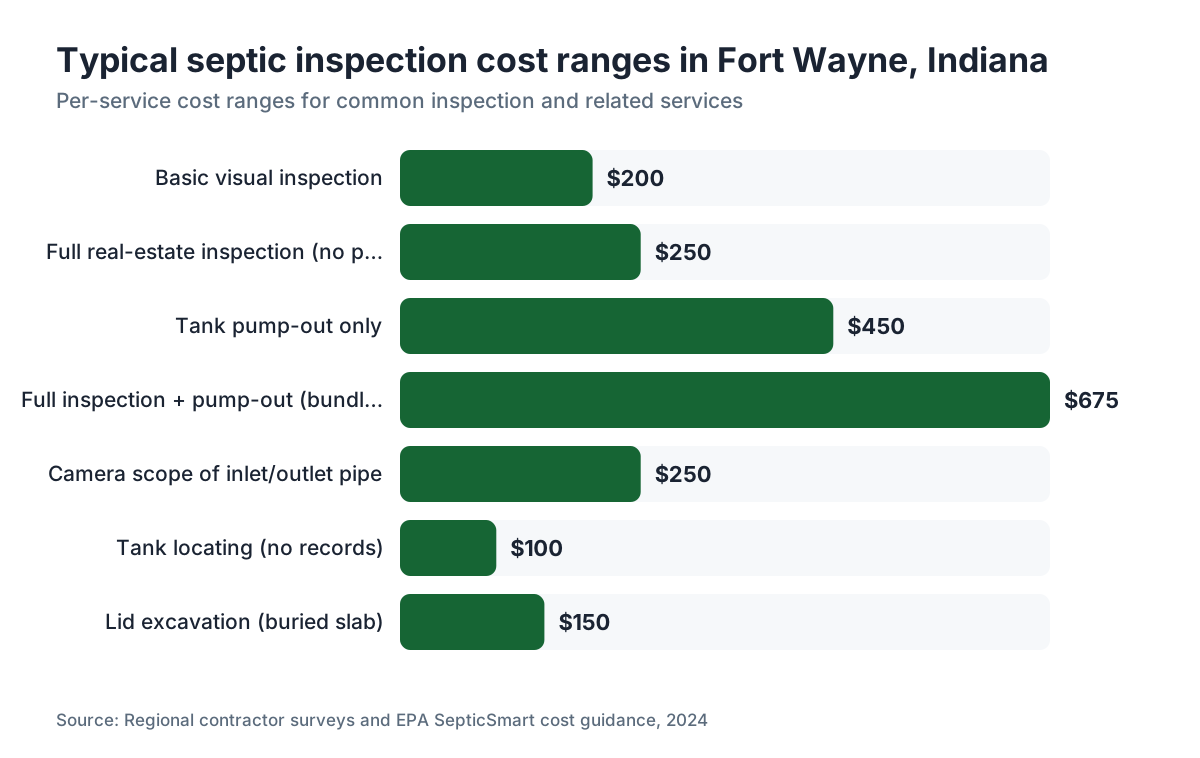
Expect $150 to $500 for a standard inspection in the Fort Wayne area, with most straightforward residential jobs landing between $200 and $350. The spread is wide because the scope varies so much.
A basic visual inspection, sometimes called a maintenance inspection, runs $150 to $250. The inspector opens the lid, checks the visible parts, and writes a report. Fine for routine peace of mind or a refinance.
A full real-estate inspection, the kind lenders and buyers want, costs $250 to $500. It usually includes pumping the tank so the inspector can see the walls, check the baffles from inside, and judge the structure. Pumping alone costs $300 to $600 in this market, so a company that bundles both may save you $50 to $100 over scheduling them apart. Our guide on septic tank pumping breaks down current pumping prices and what drives them.
Locating a buried tank with no records adds $50 to $150. A concrete slab lid that has to be dug up adds another $100 to $200 in labor. A camera scope of the inlet or outlet pipe runs $150 to $350 on top of the base fee.
Here is how the pieces price out:
| Service | Typical Fort Wayne Range |
|---|---|
| Basic visual inspection | $150, $250 |
| Full real-estate inspection (no pump) | $200, $300 |
| Full inspection with tank pump-out | $450, $900 |
| Tank locating (no records) | $50, $150 |
| Lid excavation (buried slab lid) | $100, $200 |
| Camera scope of inlet/outlet pipe | $150, $350 |
These are real-market ranges drawn from regional contractor surveys and homeowner cost reports, and individual quotes will move around. Get two or three quotes before you commit. Ask flat out what the inspection includes before you assume pumping is part of it.
When do you actually need a septic inspection in Fort Wayne?
The obvious trigger is a home sale. Indiana has no universal statewide law forcing a septic inspection on every sale, but lenders following FHA and USDA rules require proof of a working system for those loan types. USDA Rural Development, which covers big chunks of Allen County, says the septic system has to be inspected and found acceptable before closing. [3] Even on conventional loans, most Fort Wayne buyers' agents push for an inspection as a standard contingency. A seller who won't agree to one is telling you something.
Outside of a sale, the EPA's SepticSmart program recommends inspecting your system every one to three years, depending on system type and household size. [2] Most Fort Wayne providers echo that. Conventional gravity systems get a two- to three-year cycle. Systems with pumps or advanced treatment units get checked every year.
Call for an unscheduled inspection if you see slow drains across more than one fixture, hear gurgling toilets, smell sewage indoors or in the yard, or find wet spots over the drain field with no heavy rain to explain them. These symptoms don't always mean the system is dead, but ignoring them gets expensive. Early fixes almost always beat a drain field replacement, which runs $5,000 to $20,000 or more here. [4] Our leach field guide walks through what field failures look like and what they cost to fix.
Bought a house without a pre-purchase inspection? Get one in the first year, especially if the age and service history are a mystery. Plenty of homes in Allen County's older rural pockets run on systems installed in the 1970s and 1980s that are near or past their design life.
What are Indiana's rules for septic inspectors and systems?
Indiana regulates onsite sewage systems mainly through 410 IAC 6-8.1, the Residential Onsite Sewage Systems rules administered by the Indiana Department of Health (IDOH). [1] Under those rules, anyone who installs, repairs, or operates an onsite system in the state has to hold a valid IDOH license. Inspectors doing evaluations for real estate or permits are generally required to be licensed onsite sewage system installers or certified professionals recognized by the local health department.
At the county level, the Allen County Department of Health is the authority for permits and complaints in Fort Wayne and the surrounding townships. [5] Buying a property or changing an existing system means permits go through Allen County, not the state directly. The county can also require inspections beyond the state minimums.
For new systems or major repairs, Indiana requires a soil evaluation and a site assessment before it issues a permit. The soil evaluation decides whether the site can carry a conventional system or needs an alternative design. This matters if you're buying raw land or replacing a failed system, because some Allen County soils run heavy on clay, which limits conventional drain field options. [10]
One practical note. If an inspector flags a code violation, that violation usually gets reported to the county health department. That can trigger a repair requirement with a compliance deadline, which changes how you negotiate a real estate deal. Ask your inspector upfront whether they have to report findings, and to whom.
What types of septic inspections exist and which one do you need?
Not every inspection is the same, and picking the wrong one for the situation costs you time and money.
A maintenance inspection is an informal check you schedule yourself, with no transaction or permit attached. The inspector opens the tank, looks at the major parts, and gives you a verbal or written summary. Good for annual peace of mind. Usually the cheapest option.
A real estate inspection is a formal written evaluation for a lender, buyer, or escrow company. It follows a defined scope, often a lender's own requirement. This one nearly always requires pumping the tank to judge interior condition. Our septic tank inspection guide lays out what a formal report should contain.
A code compliance inspection is ordered by the county health department, usually after a complaint or when a permit needs verification. This type carries legal weight. The inspector documents findings against specific IAC code sections, and the homeowner has to fix any violations inside a set timeframe.
A Level 1 through Level 3 framework, borrowed from the National Association of Wastewater Transporters (NAWT), is showing up more in Indiana. Level 1 is a visual check with no pumping. Level 2 requires pumping and an internal inspection. Level 3 adds pressure testing of the drain field. Most Fort Wayne real estate deals need at least a Level 2. [6]
If you're just sorting out how often to pump septic tank for routine upkeep, the inspection and pumping can usually ride on one trip to save a service charge.
How do you find a licensed septic inspector in Fort Wayne?
Start with the Indiana Department of Health's licensed installer database. IDOH keeps a public list of licensed onsite sewage professionals by county, and Allen County has a decent number of active licensees. [8] Cross-check that list against the National Onsite Wastewater Recycling Association (NOWRA) member directory if you want inspectors with training beyond the state minimum. [7]
Ask whether the company is licensed for both inspection and pumping, since you may need both on one visit. A shop that does both saves a scheduling headache and often bundles a small discount. Ask for a sample inspection report before you hire anyone. A good report runs three to five pages, includes photos, names the system type and estimated age, notes deficiencies against the relevant code section, and gives a clear pass/fail or functional/non-functional call.
On a home sale, your real estate agent probably has a short list of inspectors they've used. Convenient, sure. Verify the license yourself anyway. The agent's interest and yours don't always line up on inspection thoroughness.
Avoid any inspector who quotes a flat pass/fail over the phone without seeing the property. A legit inspector needs the tank size, system age, and access conditions before giving an accurate quote. If the price sounds too low, ask what's included and whether pumping is separate.
SepticMind's operator directory (septicmind.com) lists licensed septic service companies by region, including inspection providers in the Fort Wayne area. It's one reasonable starting point if you'd rather filter by service type and location before you start calling.
What do inspectors find most often on Fort Wayne septic systems?
Based on patterns septic providers report across Allen County and nearby areas, the common findings sort out roughly like this.
Overfull tanks top the list. Plenty of homeowners have never pumped their tank, or haven't touched it in over five years. An overfull tank pushes solids into the drain field, and that shortens field life fast. The EPA estimates that failing septic systems affect 10 to 20 percent of the nation's onsite systems at any given time, and deferred pumping is the most common cause behind it. [2]
Broken or missing baffles show up a lot in older systems. The outlet baffle matters most. It keeps the floating scum layer inside the tank instead of letting it wash out to the drain field. Plastic tee baffles installed after the mid-1990s hold up better than the old concrete ones, but they still fail. Replacing a baffle is a simple fix at $100 to $300. Our septic tank repair guide covers what that work involves.
Cracked or shifted concrete lids are both a safety hazard and a code issue. A child or an animal can fall through a rotted lid. Replacement runs $200 to $600 depending on lid size and whether risers get added.
Drain field saturation is the pricey finding. Inspectors see it more in Allen County's heavier clay soils, where percolation is naturally slow. If the field is saturated but not fully dead, resting it for six to twelve months while you route laundry water elsewhere can sometimes bring it partway back. If it's failed, you're into septic system repair or full replacement.
The oldest systems in the county sometimes predate modern standards entirely, with cesspools or seepage pits that would never pass a current permit. Finding one of those during a pre-purchase inspection changes the negotiation in a hurry.
How should you prepare your property for a septic inspection?
Prep saves time and money. Locate your tank before the inspector shows up if you can. Check your home's as-built documents, county permit records, or the last inspection report. Allen County may have permit records on file for systems installed after the state licensing rules took effect. [5]
If you know the lid location but it's buried, dig it out yourself. Not glamorous work, but it saves the $100 to $200 excavation fee the company would charge. In older systems without risers, the lid usually sits 6 to 18 inches below grade.
Skip the toilets and heavy water use for the 24 hours before a dye test. For a standard pump-and-inspect, normal water use is fine. If the inspector is running a load test or watching drain field performance, you want a clean baseline, not a system already loaded down by three loads of laundry.
Have your service records handy, even if it's just a handwritten note with pump-out dates. An inspector can work without them, but knowing the service history helps them read what they find.
Clear vehicles, equipment, and stored junk from around the tank and drain field. Access to both the tank and the field surface is part of the inspection, and an inspector who can't walk the field can't give you a full picture.
After the inspection, read the report carefully. If it flags deficiencies, get repair quotes fast. A seller floating the "we'll fix it after closing" delay is a real negotiating position, and you push back on it with a concrete cost estimate in hand.
What happens after a failed septic inspection in Fort Wayne?
A failed inspection doesn't always kill the deal or drop a $15,000 bill on you. It means something needs fixing, and the severity decides your options.
Minor deficiencies, like a cracked lid, a missing baffle, or a tank that needs pumping, are cheap. A seller can handle these for $200 to $800 in most cases. Buyers should ask for the repair to be done before closing, not a credit, because a credit doesn't guarantee the work actually happens.
Moderate findings, like a shifted or cracked distribution box, or signs of partial drain field saturation, need a closer look before anyone quotes repairs honestly. A licensed installer has to scope the field lines and maybe run a percolation test on an adjacent area to see whether a repair or a new field section is workable. Costs here swing widely, $1,500 to $8,000. [4]
A fully failed system is the worst case. In Allen County, a failed system that poses a public health risk requires a repair permit and a compliance timeline. Living in a home on a known failed system can bring county enforcement action. If the seller won't deal with the failure, the buyer either walks or negotiates a real price cut with eyes open about the repair coming.
For buyers, here's the line that matters: get the inspection done before you remove the inspection contingency from the contract, not after. Once you waive that contingency, you own whatever the system's condition turns out to be.
For sellers, inspecting before you list kills surprises and lets you make repairs on your schedule instead of under contract pressure.
If the system needs more than minor work, our guides on septic tank repair and cost to install septic system lay out realistic ranges for both repair and full replacement.
How does a Fort Wayne septic inspection differ for real estate vs. routine maintenance?
The difference is practical. A maintenance inspection is yours to control. You set the scope, you pick the timing, and the findings go only to you. You use it to plan ahead, catch minor problems while they're cheap, and document your system for later.
A real estate inspection runs on third-party terms. The lender, the buyer, or the escrow company sets the scope, and the report lands in the transaction record. That report can move the sale price, the loan approval, and the closing date.
For routine upkeep, the EPA SepticSmart program tells homeowners to "have your system inspected by a service professional every three years" and pump the tank every three to five years depending on household size. [2] Your real interval depends on tank size and use. A 1,000-gallon tank serving a family of four usually hits the recommended pump-out threshold in three to four years. A single occupant in the same house might stretch to five to seven. Our how often to pump septic tank guide runs the math for your situation.
SepticMind's maintenance scheduling tools help homeowners track inspection and pumping intervals, which earns its keep if you're managing a complex system type or you've cycled through several inspectors over the years. Consistent recordkeeping is one of those quiet habits that pays off the day you sell the house.
For operators running inspection and pumping routes in Allen County, steady inspection documentation also satisfies the growing number of lenders who want multi-year service records during underwriting.
What does a septic inspection report in Indiana look like?
A proper report for an Indiana onsite system should carry the property address and parcel number, the date and name of the licensed inspector, the system type (conventional gravity, pressure distribution, aerobic treatment unit, and so on), the tank size and estimated age, a condition assessment of each major component with photos, the sludge and scum depth relative to the outlet baffle, a drain field condition assessment, any deficiencies referenced to the applicable 410 IAC 6-8.1 section, and a clear overall status: functioning, functioning with deficiencies, or non-functioning. [1]
A one-page report with check boxes and no photos is not adequate for real estate transactions in this market. If that's what lands in your inbox, ask for supplemental documentation or find a different inspector.
For lenders, an inspection report used for a mortgage should document all observable components and state clearly whether the system appeared to be working at the time of inspection. That language sets the legal scope of what the inspector certified, so it's worth reading closely.
Keep your inspection reports permanently. They're part of the property's documented history. A buyer ten years from now will want to see them, the same way you want to see them now.
Frequently asked questions
How much does a septic inspection cost in Fort Wayne, Indiana?
Most Fort Wayne homeowners pay $150 to $500 for a septic inspection. A basic visual inspection runs $150 to $250. A full real-estate-grade inspection that includes pumping the tank runs $450 to $900 when you combine inspection and pump-out fees. Extra costs apply if the tank has to be located or if buried lids need excavation.
Is a septic inspection required when selling a home in Fort Wayne?
Indiana has no blanket statewide law requiring a septic inspection on every sale, but FHA and USDA loan programs require documented proof that the system works. USDA Rural Development loans, common in Allen County rural areas, require an acceptable septic inspection before closing. Many buyers also include it as a standard contingency regardless of loan type.
How long does a septic inspection take?
Expect one to three hours for a standard inspection. The range depends on whether the tank location is known, whether lids are already exposed, how large the system is, and whether pumping is included. A simple maintenance inspection on a known, accessible system with risers can finish in under an hour. Add time for any dye or load testing.
How often should a septic system in Fort Wayne be inspected?
The EPA's SepticSmart program recommends inspections every one to three years for conventional systems. Pump the tank every three to five years depending on household size and tank capacity. Systems with pumps, aerobic treatment units, or other mechanical parts need annual inspections because the moving parts require more frequent checks.
What can fail a septic inspection in Indiana?
Common failure points include a fully saturated or surfacing drain field, sewage backing up into the house, a structural failure of the tank (collapsed walls, major cracks), missing or broken baffles letting solids reach the field, and components that don't meet current 410 IAC 6-8.1 standards. Minor deficiencies like cracked lids or overdue pumping usually get a conditional pass rather than an outright failure.
Who can perform a septic inspection in Indiana?
Indiana requires inspectors to hold a valid IDOH license as an onsite sewage system installer or an equivalent credential recognized by the local health department. In Allen County, the county health department is the permitting authority. Check the IDOH licensed professional database before hiring anyone, and ask to see their license number before scheduling.
Does a septic inspection include pumping the tank?
Not automatically. A basic visual inspection may skip pumping. For a real estate inspection, pumping is generally required so the inspector can see the tank's interior walls, baffles, and inlet and outlet pipes clearly. Ask the company outright what's included in the quoted price before scheduling. Some companies bundle both, others quote them separately.
What is the difference between a septic inspection and a septic pumping?
Pumping removes accumulated solids from the tank. Inspection evaluates the condition and function of the whole system, including tank, baffles, distribution components, and drain field. You can pump without inspecting and miss a cracked baffle or a failing field. Most experts recommend doing both on one visit so the interior of the pumped tank can be examined while it's empty.
How do I find my septic tank if I don't know where it is?
Start with the Allen County Department of Health, which may have permit records or as-built drawings on file. Your property disclosure documents or a previous inspection report may show a diagram. If no records exist, a septic company can locate the tank with a soil probe, an electronic pipe locator, or by tracing the main sewer line from the house. Expect $50 to $150 for this.
Can a seller refuse a septic inspection in a real estate transaction?
A seller can refuse, but refusal has consequences. If the buyer has a financing contingency tied to FHA or USDA approval, the lender will require an inspection and the deal can't close without one. For conventional loans, a seller's refusal to allow a septic inspection is a significant red flag that most experienced buyers' agents will advise their clients to walk away from.
What does it cost to fix a failed septic system in Fort Wayne?
Minor repairs like replacing a baffle or a lid run $100 to $600. Partial drain field repairs or distribution box replacement cost $1,500 to $8,000. A full system replacement, including a new tank and drain field, typically runs $10,000 to $25,000 in Allen County depending on soil conditions, system size, and access. Get multiple licensed contractor quotes before committing to any major repair.
Does homeowners insurance cover a failed septic inspection finding?
Standard homeowners policies generally exclude septic failures caused by gradual deterioration, lack of maintenance, or normal wear. Some policies cover sudden and accidental damage, like a tank collapse from external impact. Specialty home warranty products sometimes cover certain septic components. Read your policy carefully and call your insurer before assuming coverage applies.
What is a dye test for a septic system?
A dye test flushes a non-toxic fluorescent dye into the household plumbing, then watches whether it surfaces on the ground, in nearby ditches, or in surface water. If the dye surfaces, the drain field isn't absorbing effluent properly. Dye tests are cheap (often $50 to $100 as an add-on) but limited: a passing dye test doesn't guarantee the system holds up under heavy load.
How do I prepare my property for a septic inspection?
Locate and expose the tank lid if you can to dodge excavation fees. Gather any service records, permits, or previous inspection reports. Clear vehicles and equipment from the tank and drain field areas. Avoid heavy water use in the 24 hours before any load test or dye test. Have the tank's approximate size and age ready if you know it.
Sources
- Indiana Department of Health, 410 IAC 6-8.1 Residential Onsite Sewage Systems: Indiana regulates onsite sewage systems under 410 IAC 6-8.1, requiring licensed professionals for installation, repair, and permitted inspection.
- U.S. EPA, SepticSmart: Protect Your Investment: EPA SepticSmart recommends inspecting septic systems every 1 to 3 years and pumping every 3 to 5 years; failing systems affect 10 to 20 percent of onsite systems nationally.
- USDA Rural Development, Single Family Housing Guaranteed Loan Program: USDA Rural Development requires septic system inspection and acceptable findings before loan closing for properties in rural areas including Allen County, Indiana.
- U.S. EPA, Septic Systems Homeowner Information: Drain field replacement costs range widely; EPA guidance notes that early intervention on failing systems is substantially less expensive than full replacement.
- Allen County Department of Health, Environmental Health Division: The Allen County Department of Health is the local permitting and enforcement authority for onsite sewage systems in Fort Wayne and Allen County, Indiana.
- National Association of Wastewater Transporters (NAWT), Inspection Standards: NAWT defines a three-level inspection framework: Level 1 visual, Level 2 pump-and-inspect, and Level 3 pressure testing; Level 2 is the standard for real estate transactions.
- National Onsite Wastewater Recycling Association (NOWRA), Member Directory: NOWRA maintains a directory of trained onsite wastewater professionals who have completed training beyond state minimum licensing requirements.
- Indiana Department of Health, Licensed Onsite Sewage System Professionals: IDOH maintains a public database of licensed onsite sewage system installers and professionals by county, searchable for Allen County licensees.
- U.S. EPA, How to Care for Your Septic System: EPA guidance states homeowners should have their septic system inspected by a qualified professional every one to three years and pump the tank every three to five years.
- Purdue University Extension, Homeowner's Guide to Septic Systems in Indiana: Purdue Extension guidance for Indiana homeowners covers soil evaluation requirements and the impact of clay-heavy soils on conventional drain field performance in counties including Allen.
Last updated 2026-07-09