Most effective septic tank treatments: what actually works
By the SepticMind Editorial Team
TL;DR
- Bacillus-species bacterial powders are the most evidence-backed septic additive for maintaining digestion between pumpings.
- Enzyme and yeast products show mixed results.
- Chemical additives often harm the drain field.
- No treatment replaces pumping every 3 to 5 years.
- The EPA says it cannot endorse any additive and that proper maintenance is the only proven approach.
What is a septic tank treatment and what is it supposed to do?
A septic tank treatment is any product you add to your tank, drain, or toilet to change the microbial or chemical environment inside. Sellers pitch three jobs: boost bacterial populations to speed sludge digestion, add enzymes to break down fats and solids, or use chemicals to dissolve scum and grease.
The tank works because billions of anaerobic bacteria naturally colonize it and digest organic waste. Fresh waste enters, bacteria break it down, liquid effluent flows to the drain field, and solids settle at the bottom as sludge. That sludge still has to be pumped out, no matter what you pour in. [1]
Treatments promise to slow sludge buildup, kill odors, or wake up a sluggish system. Whether they deliver is a separate question. The honest answer depends on the product type, and for most categories the evidence is thin.
Are septic tank treatments actually effective?
Some are mildly useful, most are neutral, and a few are genuinely harmful. The EPA's SepticSmart program says the scientific evidence behind most commercial additives is limited, and that homeowners should not treat additives as a substitute for regular pumping. [2]
The most cited independent review comes from a 2000 University of Wisconsin-Extension study that tested 10 biological and 3 chemical additive products. Biological additives did not statistically reduce sludge accumulation compared to control tanks over the test period. Some chemical additives actually made effluent quality worse. [3]
A 2008 review in Small Flows Quarterly reached a blunter conclusion: no additive has been shown in rigorous field studies to eliminate or reduce the need for routine pumping. [4]
None of this makes every additive snake oil. A healthy bacterial colony matters. If yours got wiped out by antibiotics, bleach, or a long empty house, a bacterial additive can rebuild the population faster than waiting on nature. But for a working tank that gets pumped on schedule, most treatments buy you almost nothing you can measure.
What types of septic treatments are sold and how do they differ?
Four main categories exist, and they are not interchangeable.
Biological additives (bacteria): These hold live or dormant bacterial cultures, usually Bacillus species, meant to supplement the natural anaerobic community. They come as powders, tablets, or liquids. This is the most studied category and the least harmful. Some list a colony-forming unit (CFU) count. Look for 1 billion CFU or more per dose as a rough quality signal.
Enzyme additives: These contain enzymes (lipases, proteases, amylases) that break down fats, proteins, and starches. Enzymes are not alive, so they can't multiply. They may help chip away at material in the inlet zone but don't persist or colonize. Most researchers call them mildly useful at best, redundant at worst, since healthy bacteria produce their own enzymes.
Yeast-based products: Yeast (Saccharomyces cerevisiae) shows up as a home remedy, often a packet of baking yeast flushed monthly. Yeast is a facultative anaerobe and can survive in the tank, but it favors oxygen and doesn't digest the same substrates as the anaerobic bacteria your tank runs on. The real benefit is probably tiny. It won't hurt anything. It's also not the same as adding Bacillus.
Chemical additives: Solvents (methylene chloride, trichloroethylene), acids, bases, and surfactants sold to dissolve grease and clear clogs. Avoid this category. Several states ban chemical septic additives outright. California prohibits the sale of septic additives containing inorganic chemicals and solvents under Health and Safety Code Section 17922.12. [5] New Mexico, Washington, and other states have similar rules. These solvents can pass through the tank into the drain field, kill soil bacteria, and reach groundwater.
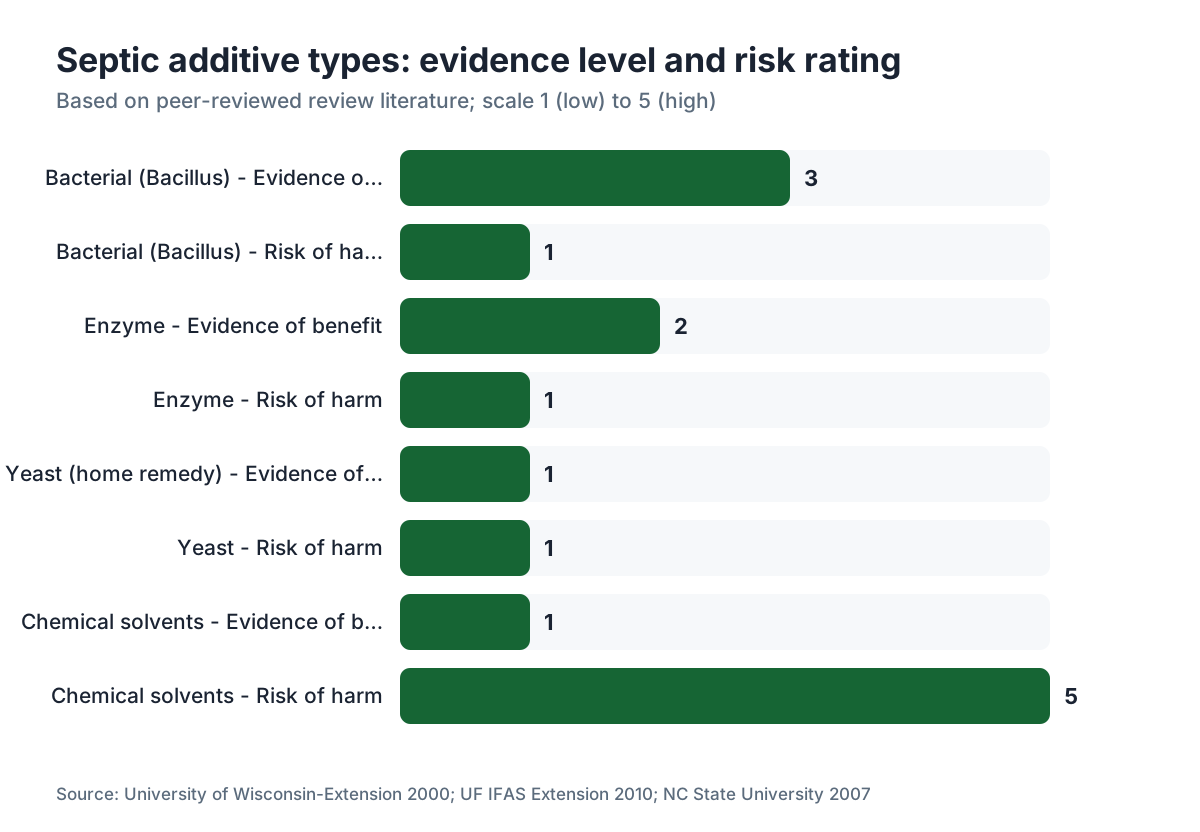
| Treatment Type | Evidence of Benefit | Risk of Harm | Typical Cost/Year |
|---|---|---|---|
| Bacterial (Bacillus) | Low to moderate | Very low | $25 to $80 |
| Enzyme | Low | Very low | $30 to $100 |
| Yeast (home remedy) | Very low | Negligible | Under $5 |
| Chemical solvents | None | High | $20 to $60 |
| Chemical acids/bases | None | High | $20 to $60 |
Which bacterial additives have the strongest evidence behind them?
Bacillus-based products are the most studied and the most defensible choice if you're going to use anything. Bacillus strains form spores, so they survive storage, shipping, and the shock of hitting the tank. They're facultative anaerobes, able to work in the low-oxygen environment that defines a healthy septic tank.
A 2010 review from University of Florida IFAS Extension found that Bacillus additives may have a modest positive effect on digestion efficiency in systems that have taken a microbial hit, but cautioned that the effect in normal operating tanks was not significant. [6]
Products that name specific strains (Bacillus subtilis, Bacillus licheniformis) and publish CFU counts are more credible than vague "proprietary blend" labels. NSF International certification adds some quality assurance, since NSF tests whether the label claim is true, not whether the product works in the field.
For most homeowners using a product monthly, the realistic payoff is odor control and a little insurance against bacterial die-off from household chemicals. It is not a measurable change in sludge depth between pumpings.
How do you know if your septic system actually needs a treatment product?
Most tanks that get pumped on schedule and aren't abused with harsh chemicals need nothing. The bacteria that digest your waste are already there, already tuned to your household's waste stream, already working.
A few situations do make a bacterial product worth it. If your household just finished a heavy course of antibiotics that flushed through the system, the bacterial population may be down. If your home sat empty for months, the colony may have thinned out from lack of feeding. If you just had the tank pumped and cleaned with high-pressure water (which physically removes a big chunk of the colony), re-inoculating in the first few weeks makes sense.
A gurgling drain, slow flush, or sewage smell near the tank is not a sign you need a product. Those are signs of a problem that needs professional inspection, maybe repair. Pouring bacteria into a failing drain field doesn't fix a failing drain field. Clogged distribution lines or biomat-saturated soil won't budge for any additive.
Seeing those warning signs? Call a licensed installer or pumper first.
What does the EPA say about septic tank additives?
The EPA's SepticSmart initiative, the agency's main homeowner education program on onsite wastewater, takes a skeptical stance that stops short of a ban. Its guidance states: "Although some additives may not harm your septic system, the EPA cannot endorse any septic system additive products." [2]
That wording is careful on purpose. There's no federal ban on biological additives, but there's no federal recommendation either. The position boils down to: don't count on them, don't swap them for pumping, and skip the chemical ones.
State rules vary a lot. Some states require product registration before additives can be sold for septic use. Wisconsin regulates septic additives, and the state DNR has published evaluations of registered products. [7] Massachusetts and Connecticut publish guidance advising against additive use without banning it.
Want the rules for your state? Your local cooperative extension office or state environmental agency is the place to start. Extension services tend to have current, unbiased summaries of the local regulatory picture.
Can a septic treatment product save a failing system or drain field?
No. This is the single most important line in any article on this subject.
A biomat, the layer of organic material that clogs soil pores in a failing drain field, does not dissolve when you add bacteria. The microorganisms that build a biomat aren't the same as the ones in your tank, and dumping more tank bacteria into the system doesn't break it down or reverse the clog.
Some products sold for "drain field restoration" claim to add aerobic bacteria that eat the biomat. The evidence is weak. A 2007 North Carolina State University study tested four commercial biomat-treatment products and found no statistically significant improvement in hydraulic conductivity versus controls over 12 months. [8]
What does have some evidence for biomat problems: soil aeration (physical or pneumatic), resting the drain field, and in some cases hydroxyl radical treatment. Those are professional services, not bottles you pour down a drain.
A failing drain field needs a licensed contractor and likely a system repair or partial replacement. That's real money, often $5,000 to $20,000 depending on system type and location. [9] It's also the only path that works. Spending $50 on a bottle of bacteria while that clock runs is wasted time and money.
What household products actually harm your septic tank bacteria?
Knowing what kills your tank's bacteria matters as much as knowing what might help. This is where your own habits move the needle most.
Antibacterial soaps with triclosan or benzalkonium chloride pass through the system and can knock down bacterial counts. A 2010 study in Environmental Science and Technology found triclosan concentrations in septic tank effluent high enough to inhibit certain bacterial strains common in onsite systems. [10] The FDA banned triclosan from consumer hand soaps in 2016, so it's less of a live concern now, but antibacterial dish soaps and cleaning sprays still count.
Bleach cleaners used heavily (several cups a week going into the system) can suppress bacterial activity. Occasional toilet-bowl cleaning at normal doses is fine. The tank volume dilutes it enough that the hit is temporary.
Water softener discharge, especially the brine regeneration cycle, has been studied as a concern. A Penn State Extension review found evidence that high sodium discharge can degrade drain field soil structure over time, though the effect on tank bacteria specifically is less settled. [11]
The clearly harmful stuff: flushing non-degradable wipes (yes, even "flushable" ones), pouring cooking grease down the drain, dumping medications in the toilet, and using chemical drain cleaners. None of these are additive problems. They're maintenance problems. No monthly product cancels out chronic abuse.
SepticMind's maintenance log lets homeowners track pump dates, chemical use events, and inspection records in one place. That makes it easier to see whether a bacterial crash lines up with a specific event like a renovation or antibiotic course.
How much does septic tank treatment cost and is it worth the money?
Monthly bacterial products run about $8 to $40 a month depending on brand and dose, so $100 to $500 a year. High-dose "shock" treatments for systems recovering from a disruption run $60 to $150 for a single application.
For comparison, a septic tank pump-out costs $300 to $600 for a standard 1,000-gallon tank and should happen every 3 to 5 years for a typical household. [12] A septic tank inspection runs $100 to $300. A drain field repair runs $2,000 to $20,000.
Against those numbers, spending $100 to $200 a year on a bacterial additive isn't ruinous. If it gives a homeowner peace of mind and maybe some marginal benefit during a bacterial crash, fine. But it should never replace pumping on schedule. Nobody has good data showing any additive stretches pump intervals by a measurable amount. The studies that exist don't support that claim.
Want the best return on money spent to protect the system? Pump on the right schedule, keep harmful products out, protect the drain field from compaction and excess water, and get a septic inspection when you buy a home or notice symptoms. That's the whole strategy with actual evidence behind it.
What do septic service professionals actually recommend?
Ask ten pumpers and you'll get honest variation. Many licensed pumpers and inspectors will tell you additives are unnecessary for a well-maintained system. A subset will name a specific bacterial product they've watched help customers recover from a die-off event. Very few reputable pros recommend any chemical additive.
The National Onsite Wastewater Recycling Association (NOWRA), the main industry body for onsite professionals, doesn't endorse specific products. Its guidance acknowledges that biological additives may be appropriate for systems recovering from microbial disruption, while warning against using them in place of pumping. [13]
The working consensus among experienced operators runs like this: a good Bacillus product used monthly is probably harmless and occasionally helpful, enzyme products are mostly neutral, yeast is the wrong organism but won't hurt anything, and chemical products are off the table.
The bigger professional worry isn't what people add. It's what they flush. Wipes, grease, and too much water loading cause the failures behind the expensive repair calls. Teaching homeowners those habits is where the real prevention lives. SepticMind's operator platform helps service companies track customer pump history and send automated maintenance reminders, so operators get ahead of those problems before they turn into emergencies.
What is the best overall septic maintenance routine, including treatments?
Here's what a reasonable, evidence-based routine looks like.
Pump every 3 to 5 years for a typical household, more often for larger households or smaller tanks. The EPA SepticSmart guidance uses 3 to 5 years as a general baseline, but the real interval depends on tank size, household size, and what you send down the drain. [2] A 1,000-gallon tank serving four people probably needs pumping every 3 years. A 1,500-gallon tank serving two people might stretch to 5 to 7. Ask your pumper to measure sludge depth at every visit so you build real data on your own system.
Inspect the tank and drain field when you pump. Have the pumper check inlet and outlet baffles, look for drain field surfacing, and confirm the distribution box works. Our guide on septic tank cleaning covers what that visit should include.
Protect the drain field. No parked vehicles, no trees within 30 feet of the field lines, and divert roof drains and sump pumps away from the field to avoid hydraulic overloading.
Watch what goes in. No wipes (including "flushable"), minimal garbage disposal use, no cooking grease, no medications.
If you want an additive, a Bacillus powder used monthly is a reasonable low-cost insurance measure, especially after antibiotic use or a long vacancy. Don't expect it to change pump intervals. Don't let it replace pumping.
For anything past routine care (slow drains, gurgling, odors, wet spots over the field), call a licensed professional. See our breakdown of septic tank repair costs and options.
Frequently asked questions
Do I need to use a septic tank treatment every month?
No. A healthy, regularly pumped tank has its own stable bacterial colony and doesn't need monthly supplements. The main case for a monthly bacterial additive is insurance against periodic disruption from antibiotics, heavy bleach use, or a vacant house. If your system runs normally and you pump on schedule, monthly treatments are optional, not necessary.
Are enzyme septic treatments better than bacterial ones?
Not really. Enzymes break down specific organic compounds but can't multiply or colonize the tank. Bacterial products, especially Bacillus-based ones, can establish a population and keep producing their own enzymes. A live bacterial product is generally more useful than a standalone enzyme product, though neither has strong evidence of dramatic benefit in a healthy system.
Can I use RID-X or similar products and skip pumping?
No. RID-X and similar consumer products contain bacterial cultures and enzymes that may support digestion, but they don't remove sludge. The manufacturer's own packaging doesn't claim to replace pumping. Skipping pump-outs while using any additive eventually pushes sludge into the drain field, which is expensive to reverse. Pump on schedule regardless of additive use.
Is yeast a good home remedy for septic tanks?
Yeast is harmless but the wrong organism. Septic tanks are anaerobic; yeast (Saccharomyces cerevisiae) prefers oxygen and doesn't digest the same substrates as the anaerobic bacteria your tank needs. Flushing a packet of baking yeast monthly won't hurt anything, but a Bacillus-based commercial product is a better fit if you want a biological boost.
What septic additives are illegal in some states?
Chemical additives with solvents like methylene chloride, trichloroethylene, or strong acids and bases are banned in several states, including California, Washington, and New Mexico. California Health and Safety Code Section 17922.12 specifically prohibits inorganic chemical and solvent-based septic products. Some states also require biological additives to be registered before sale. Check your state environmental agency's rules.
Can a septic treatment product fix slow drains or a bad smell?
No. Slow drains and sewage odors are symptoms of mechanical or biological problems that need diagnosis. Slow drains usually mean a clog, a full tank, or a drain field problem. Odors near the tank suggest a venting issue, a cracked lid, or a failing baffle. Adding a bacterial treatment to these symptoms delays the real fix and can hide a problem that keeps getting worse.
How do I know if a septic additive product is legitimate?
Look for a stated CFU count (1 billion or more per dose is a reasonable threshold for bacterial products), named bacterial strains (Bacillus subtilis, Bacillus licheniformis), and NSF International certification. Avoid products claiming to 'eliminate pumping' or 'restore failing systems.' Products registered under state programs have at least passed basic regulatory review.
Does a new septic tank need a starter treatment?
Not necessarily. A tank inoculates itself within a few weeks of use as bacteria from household waste colonize it. Some installers suggest flushing a Bacillus product in the first month to speed things up, which is reasonable but not proven to give a long-term advantage. The tank will establish itself regardless. It needs nothing special beyond normal use and patience.
Are there any septic treatments that actually restore a failing drain field?
No product has strong evidence for restoring a biomat-clogged drain field. Professional services like soil aeration (Terralift or similar pneumatic methods) have some case-study support but limited controlled research. Resting the field by temporarily diverting flow sometimes helps. Most failing fields need professional assessment and possibly partial or full replacement. Treat drain field restoration products with skepticism.
How often should I pump my septic tank if I use a treatment product?
The same schedule as without one. The EPA recommends pumping every 3 to 5 years for a typical household, and no additive has been shown in peer-reviewed studies to reliably extend that interval. Sludge builds up regardless of bacterial activity because not all solids are biodegradable. Have your pumper measure sludge depth at each visit to build real data on your system's rate.
What is the best septic tank treatment for a system with heavy grease buildup?
A lipase-rich enzyme product or a bacterial product with strong lipase-producing strains (look for Bacillus licheniformis, a strong lipase producer) may help manage grease in the tank inlet zone. The more effective fix is behavioral: stop pouring grease down the drain. A grease trap under the kitchen sink beats any additive for households with heavy cooking fat output.
Do septic treatments work differently in older or concrete tanks versus plastic ones?
Tank material doesn't meaningfully change how bacterial additives behave. Older concrete tanks may have rougher surfaces that give biofilm more attachment sites, which some researchers say supports a more established colony. Deteriorating concrete can also shift pH in ways that affect bacteria. Neither changes whether an additive is worth using. System age and condition matter far more than tank material.
What should I do after my septic tank is pumped to restore bacteria?
Your tank re-establishes its colony naturally within a few weeks of normal use. You don't need to do anything special. To speed it up, flushing a Bacillus-based product the day after pumping is a reasonable, low-cost option. Avoid heavy bleach use or antibacterial product flushing for the first few weeks to give the new colony time to settle in.
Sources
- EPA SepticSmart: How Your Septic System Works: Septic tanks separate solids from liquid effluent; sludge accumulates at the bottom and must be pumped out regardless of bacterial activity.
- EPA SepticSmart Homeowner's Guide: EPA states it cannot endorse septic additive products and recommends pumping every 3 to 5 years as the primary maintenance action.
- University of Wisconsin-Extension, Evaluation of Septic Tank Additives (2000): Study of 10 biological and 3 chemical additive products found biological additives did not statistically reduce sludge accumulation compared to controls.
- Small Flows Quarterly, Review of Septic Additives (2008): Review concluded no additive has been shown in rigorous field studies to eliminate or reduce the need for routine pumping.
- California Health and Safety Code Section 17922.12: California prohibits sale of septic additives containing inorganic chemicals and solvents.
- University of Florida IFAS Extension, Septic System Additives Review (2010): Bacillus-based additives may have modest positive effect on digestion efficiency in systems that have experienced microbial disruption, but effect size in normal tanks was not significant.
- Wisconsin DNR, Septage and Septic Additive Regulations: Wisconsin requires registration of septic additive products before they can be sold for septic use in the state.
- North Carolina State University, Evaluation of Biomat Treatment Products (2007): Four commercial biomat-treatment products showed no statistically significant improvement in hydraulic conductivity compared to controls over 12 months.
- EPA Onsite Wastewater Treatment Systems Manual: Drain field repair and replacement costs range from several thousand to tens of thousands of dollars depending on system type and site conditions.
- Environmental Science and Technology, Triclosan in Septic Tank Effluent (2010): Triclosan concentrations in septic tank effluent were sufficient to inhibit certain bacterial strains commonly found in onsite systems.
- Penn State Extension, Water Softeners and Septic Systems: High sodium discharge from water softener brine cycles can degrade soil structure in drain fields over time.
- EPA SepticSmart: Maintain Your System: Average septic tank pump-out costs $300 to $600 for a standard residential tank; pumping frequency recommended every 3 to 5 years.
- National Onsite Wastewater Recycling Association (NOWRA), Additive Guidance: NOWRA acknowledges biological additives may be appropriate for systems recovering from microbial disruption but cautions against use as a replacement for pumping.
Last updated 2026-07-09