Mobile home septic systems: everything you need to know
By the SepticMind Editorial Team
TL;DR
- A mobile home can use a conventional septic system, an aerobic treatment unit, or a mound system depending on soil and local code.
- Installation costs run $3,000 to $15,000 or more.
- The tank must be sized for actual occupancy, typically 1,000 gallons minimum, and pumped every 3 to 5 years.
- Most states treat manufactured homes the same as site-built homes under onsite wastewater rules.
Do mobile homes need a special septic system?
No, a mobile home does not require a fundamentally different septic system than a site-built house. The same basic components apply: a septic tank, a distribution box or manifold, and a drain field (also called a leach field or absorption field). What changes is how you size it, how you connect it, and sometimes which system type local code allows on your specific lot.
The term "mobile home" covers several kinds of structure. Homes built after June 15, 1976 are legally called manufactured homes and are regulated under the HUD Manufactured Home Construction and Safety Standards [1]. Homes built before that date are older mobile homes and may face stricter lending or permitting hurdles, but the septic rules themselves depend on occupancy and wastewater flow, not the age of the structure.
State and county onsite wastewater programs set the actual requirements. The EPA's SepticSmart program notes that "an estimated 21 million homes in the United States rely on septic systems" and that those systems are regulated primarily at the state level [2]. So your county health department or state environmental agency is the authority, not a national standard.
One real difference with manufactured homes is the plumbing connection point. A site-built home has a sewer line that exits through the foundation. A manufactured home typically has a belly-mounted drain line that exits from under the home's chassis. You need a proper transition fitting, often called a sewer boot or ground anchor kit, to connect that underbelly drain to the buried sewer pipe leading to the tank. A poorly made connection is one of the most common sources of leaks and odor complaints on manufactured home sites.
What types of septic systems work for a mobile home?
The right system type depends almost entirely on your soil and your lot, not on the fact that you own a mobile home. Here are the main options.
Conventional gravity system. A septic tank drains by gravity into a gravel-and-pipe or chamber leach field. This is the least expensive option and works fine on lots with adequate soil permeability and sufficient setback distances. Most rural manufactured home communities use this setup.
Mound system. When the water table is shallow or the native soil has poor permeability, a mound system places the drain field above grade in imported fill material. Mound systems cost more (roughly $10,000 to $20,000 depending on region) because of the fill material and the pump required to dose the mound [3].
Aerobic treatment unit (ATU). An ATU uses an aerobic bacteria process to treat wastewater to a higher standard before dispersal. These are common in Texas and parts of the Southeast where lots are small or soil conditions are challenging. ATUs need more maintenance, typically a service contract with a licensed provider, but they allow smaller drain fields and can work on lots that wouldn't pass for a conventional system.
Pressure distribution system. Instead of gravity flow, a pump doses the drain field in timed intervals, spreading the load more evenly. This extends drain field life and is often required in sandy soils or when the lot is not level.
Package treatment plants. Some manufactured home parks and subdivisions use a shared or community system rather than individual tanks. If you're buying in a park, ask the management whether you have an individual system or share one, because maintenance responsibility differs significantly.
The leach field is often the component that limits system life. A leach field on a well-maintained gravity system can last 25 to 30 years. One that receives unseparated solids from an unpumped tank may fail in under 10.
How much does a septic system for a mobile home cost?
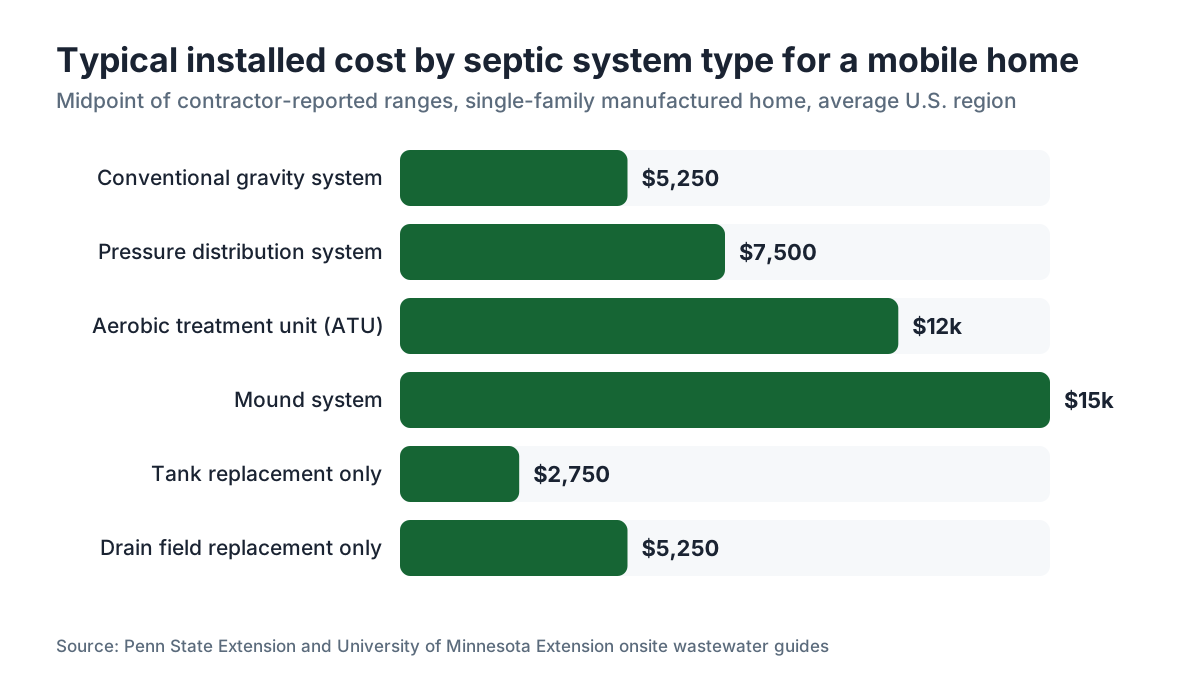
The mobile home septic system cost range is wide because soil conditions, system type, local labor markets, and permit fees all vary a lot. Here are honest ranges based on contractor data and published state extension guidance [3][4].
| System type | Typical installed cost |
|---|---|
| Conventional gravity (new install) | $3,000, $7,500 |
| Pressure distribution system | $5,000, $10,000 |
| Mound system | $10,000, $20,000 |
| Aerobic treatment unit (ATU) | $8,000, $15,000 |
| Tank replacement only (existing field) | $1,500, $4,000 |
| Drain field replacement only | $2,500, $8,000 |
These figures are for single-family manufactured homes with typical occupancy. Costs in the Northeast or Pacific Coast states run toward the top of each range. Rural Midwest and South installations run lower.
Permit fees add $100 to $1,000 depending on the county. A perc test or soil evaluation, which is almost always required for a new install, costs $250 to $1,000. Some states require a licensed engineer to sign off on system design, which adds $500 to $2,000 [4].
If you're comparing the cost to put in a septic tank on its own versus a full system install, see our breakdown at cost to put in a septic tank and cost to install septic system for the full picture.
Here's what genuinely surprises homeowners: connecting to an existing septic system (say, you're moving a manufactured home onto a lot with an old tank) is not always cheaper than installing new. An undersized, aging tank may need replacement anyway, and you still pay for the soil evaluation and permits. Get the tank inspected before you assume it's usable.
How do you size a septic tank for a mobile home?
Tank sizing follows the same principle as any residential system: estimated daily wastewater flow, which correlates to the number of bedrooms. The logic is that bedrooms proxy for occupancy, and occupancy drives water use.
Most state codes set a minimum tank size of 1,000 gallons for homes up to three bedrooms, then add 250 gallons per additional bedroom [4]. A 4-bedroom manufactured home would typically need a 1,250-gallon tank. A 5-bedroom home needs 1,500 gallons.
There's a caveat the codes don't always make obvious: if the home has high-flow fixtures, a water softener discharging to the septic system, a garbage disposal, or a hot tub, actual wastewater volume can exceed what the bedroom count predicts. A water softener in particular dumps high-salt backwash that can harm the drain field biology. Many installers recommend either a larger tank or, better, routing the softener discharge to a separate drywell or utility drain if local code allows.
Tank material matters too. Concrete tanks are the standard in most regions and last 30 to 40 years with proper maintenance. Polyethylene (plastic) and fiberglass tanks are lighter and easier to deliver to remote sites, which can matter when access to a manufactured home lot is limited. Plastic tanks can work fine but may warp under certain soil conditions if not properly backfilled. Your installer should know the local track record with each material.
Remember that tank size affects pumping frequency. A 1,000-gallon tank serving a 3-person household accumulates solids more quickly than a 1,500-gallon tank serving the same household. The EPA recommends that most households pump their septic tank every 3 to 5 years [2].
What are the rules and permits for installing a mobile home septic system?
Every state has an onsite wastewater treatment program, and every new septic installation requires a permit. There is no federal permit for residential septic systems. The EPA sets general guidance but defers to states, which often delegate to counties.
The typical permit process looks like this: soil evaluation or perc test, system design (sometimes requires a licensed designer or engineer), permit application with the county health or environmental department, installation by a licensed contractor, inspection by the local authority, and final approval before the system can be used. Some states also require a final inspection tied to a certificate of occupancy for the home [10].
For manufactured homes specifically, HUD's construction standards require that the home be connected to an approved sewage disposal system before occupancy [1]. That means you can't legally move in before the septic system passes inspection. If you're buying a home in a park, the park operator is responsible for the shared system. If it's an individual lot, that responsibility is yours.
Setback requirements are strict and vary by state. Common minimums include 10 feet from the tank to any structure, 50 to 100 feet from a well, 25 feet from a property line, and 50 to 100 feet from surface water [10]. Manufactured home lots in rural areas are often smaller than suburban lots, and setback conflicts are a real deal-breaker. Get the soil eval and a site plan review done before you close on a lot.
If you're in a state with an onsite wastewater general permit or a registration-based system (some states use this for lower-flow systems), the process is faster but the soil evaluation requirement doesn't go away.
How do you connect a mobile home to a septic system?
The physical connection from a manufactured home to a septic system is simpler than it sounds, but it needs to be done right. A bad connection causes persistent odor, ground saturation under the home, and potential sewer gas exposure inside the living space.
Most manufactured homes have a 3-inch or 4-inch ABS or PVC drain line that exits from the undercarriage. The connection sequence generally goes: home drain line, sewer boot/ground anchor fitting (which transitions from the flexible belly drain to a rigid buried pipe), a cleanout access port, a 4-inch buried PVC sewer line sloped at roughly 1/4 inch per foot toward the tank, and then the tank inlet baffle.
The skirting around a manufactured home can complicate access. If the ground clearance under the home is tight, connecting and later servicing the sewer line is harder. Some installers put a cleanout just outside the skirting line for exactly this reason.
One common mistake: running the buried sewer line too flat or with sags that hold water and solids. The 1/4 inch per foot slope isn't arbitrary. Less than that and the line surges. More than 1/2 inch per foot and the liquid outruns the solids, leaving buildup in the pipe. Get the grade right at installation and you'll almost never have a line blockage.
If you're relocating a manufactured home to an existing lot that already has a septic system, have a licensed inspector assess the tank and drain field before making the connection. Older systems may be undersized, the drain field may be partially failed, or the tank may lack proper baffles. See septic tank inspection for what that evaluation should cover.
How does a septic home inspection work for a manufactured home?
A septic home inspection for a manufactured home follows the same general process as for any residential property, with a few practical differences worth knowing before you schedule one.
A standard septic inspection involves locating the tank, pumping it or checking solids levels, inspecting the inlet and outlet baffles, checking the distribution box for even flow, and probing or observing the drain field for signs of saturation. A thorough inspector also checks the ground surface over the field for wet spots, odors, or unusually lush grass (classic signs of a surfacing system).
For a manufactured home, the inspector needs to access the undercarriage connection point, which may require removing part of the skirting. The sewer boot and the first few feet of buried pipe are common failure points on older manufactured homes because the connections flex when the home settles. If the home is on a permanent foundation versus pier-and-beam, access methods differ.
Inspection types matter. A Level 1 or visual inspection tells you about obvious failures and general condition. A Level 2 inspection typically includes dye testing and sometimes a camera scope of the sewer line. If you're buying a manufactured home, push for at least a Level 2, and ask specifically whether the inspector will scope the line from the home to the tank. That segment is where you'll find offset joints, root intrusion, and bellies that won't show up in a tank inspection alone.
Home septic system inspections typically cost $150 to $500 for a standard evaluation, more if pumping is included (often $200 to $600 more depending on region) [6]. Some states require a licensed inspector. Others allow any contractor. Check your state's requirements. SepticMind's maintenance tracking tools can help homeowners log inspection dates and service history so nothing falls through the cracks year to year.
For a full walkthrough of what inspectors check and what passes or fails, see septic tank inspection.
How often does a mobile home septic tank need to be pumped?
The EPA's answer is every 3 to 5 years for most households [2]. That's a reasonable starting point, but actual pumping frequency depends on tank size, household size, and what goes into the system.
A 1,000-gallon tank with 4 occupants will accumulate solids faster than a 1,500-gallon tank with 2 occupants. Some pumping contractors use a rule of thumb that a typical household generates about 50 to 70 gallons of sludge and scum per person per year. That would put a 4-person household in a 1,000-gallon tank at the pumping threshold in roughly 3 years.
Factors that speed up solids buildup: garbage disposals (which add significant food solids), frequent guests or temporary occupants, use of antibacterial soaps and bleach cleaners in large quantities, and flushing anything other than toilet paper. Manufactured homes sometimes have smaller original plumbing footprints that make these habits even more consequential.
Septic additives are widely marketed but the evidence for them is thin. The EPA's SepticSmart program explicitly states that additives "have not been shown to benefit a properly functioning system" [2]. Save the money. Spend it on pumping instead.
For specific guidance on pump intervals based on household size and tank volume, see how often to pump septic tank. For the actual service, septic tank pumping covers what to expect from the service visit.
What are common problems with mobile home septic systems?
A few failure modes show up more often with manufactured homes than with site-built homes, mostly because of the connection geometry and the reality that many manufactured home lots were developed quickly and cheaply.
Undersized tanks. Older manufactured home parks sometimes have 500- or 750-gallon tanks that were adequate for smaller families in the 1960s but are undersized for modern usage. If you're pumping every year or the drain field is perpetually soggy, check the tank size first.
Failed sewer boot or belly drain connection. The junction between the home's underbelly drain and the buried pipe is a flex point. Over time, frost heave, settlement, or simple aging of the rubber boot causes leaks. Signs include wet soil directly under the home, sewer odor under the skirt, or slow drains that clear when you pour water down the pipe.
Crushed or offset sewer line. Manufactured homes are sometimes moved and reinstalled on existing sewer connections. If the home is not set precisely, the connection can be torqued, and the buried line can crack or offset. A camera scope is the only reliable way to catch this.
Drain field saturation. This is not unique to manufactured homes, but it's common when systems are undersized or the soil was never properly evaluated. Surfacing effluent (sewage coming to the surface over the leach field) is a public health concern and in most states triggers a mandatory repair order. See leach field for what happens when the field fails and what your options are.
Tree root intrusion. If the manufactured home site has mature trees or large shrubs near the tank or field, roots find the pipes. This shows up first as slow drains and eventually as complete blockage. Septic tank repair and septic system repair cover the fixes, from simple cleanout to field replacement.
Can you use a septic system in a manufactured home park or community?
Yes, and this is actually the most common setup in manufactured home communities. Most parks were built before municipal sewer reached rural areas, so they installed community or individual septic systems for each lot.
There are two models. In a community system model, the park operator owns and maintains a shared treatment system, which may be a large septic tank with a shared drain field, a package treatment plant, or in larger parks, a system regulated as a small wastewater treatment facility. Residents pay for this as part of lot rent, and the operator is responsible for permits and maintenance. In an individual system model, each lot has its own tank and drain field, and the homeowner is responsible for maintenance.
Know which model your park uses before you buy. Ask to see the most recent inspection report for any community system. State environmental agencies often have online databases of permitted onsite systems where you can check a property's permit status and inspection history [10].
One ownership complication: if you own your manufactured home but rent the lot, and the lot has an individual septic system that the park considers "part of the lot," maintenance responsibility can be ambiguous. Get the answer in writing before you sign a lease.
For operators managing service across multiple manufactured home community accounts, tools like SepticMind help track pump schedules, inspection records, and permit renewal dates across large portfolios, which is genuinely hard to do in a spreadsheet once you're managing more than a dozen sites.
How does buying a mobile home with an existing septic system work?
Buying a manufactured home with an existing septic system introduces a few risks that a standard home purchase often glosses over. Here's what actually matters.
Get a full septic tank inspection before closing, more than a visual check. The inspection should include pumping the tank to assess sludge and scum depth, checking baffles, and either a dye test or camera scope of the main line. If the seller won't allow or pay for this, treat it as a red flag. A failed or undersized system can cost $5,000 to $20,000 to replace, and in most states, that liability transfers with the property.
Ask for records. How old is the tank? When was it last pumped? Has the drain field ever had work done? Many states require disclosure of known septic system defects in a real estate transaction, but disclosure rules vary, and sellers don't always know the history if they bought the property themselves without records.
Check whether the system has a valid operating permit. Some states require onsite systems to be registered or permitted, and an unpermitted system can create problems when you try to sell or renovate. The county health or environmental office can tell you whether a permit exists for the property.
If you're purchasing in a park and the lot uses a community system, ask the park operator for the system's last state inspection report. Under the EPA's small wastewater system rules, community systems above certain flow thresholds are subject to periodic inspection and reporting [7].
One practical move: budget $500 to $1,500 for a pre-purchase inspection even if the seller resists. It's a fraction of what a failing system costs to fix, and it gives you real negotiating room if problems are found.
How do you maintain a mobile home septic system long-term?
Good maintenance comes down to four habits: pump on schedule, watch what goes in, protect the drain field, and inspect periodically.
Pump on schedule. Use the 3-to-5-year guideline as a starting point and adjust based on your household size. After your first pump, the contractor can tell you how much sludge and scum they found, which tells you whether you should be on a 2-year or 5-year schedule. Keep records: date, contractor, volume pumped, and any notes. See septic tank cleaning for what to expect from the service.
Watch what goes in. No "flushable" wipes (they don't break down in tanks), no grease down the kitchen drain, no medications, no paint or solvents. These harm the bacterial population that breaks down solids in the tank.
Protect the drain field. Don't park vehicles on it. Don't plant trees or large shrubs over it. Don't divert roof gutters or sump pump discharge onto it. Saturating the field with extra water shortens its life fast.
Inspect periodically. Between pump-outs, walk the drain field after heavy rain and look for wet spots or odors. Check the sewer boot under the home every year or two. If you notice slow drains in the home, address them before they become a tank or field problem.
Manufactured homes on pier-and-beam foundations can shift seasonally, which puts stress on the sewer connection over time. Add a quick visual inspection of the underbelly connection to your annual home maintenance checklist. It takes five minutes and can catch a leak before it becomes a saturated yard and a health code complaint.
Frequently asked questions
Can a mobile home use a regular septic tank?
Yes. A manufactured home uses the same types of septic tanks as a site-built house: concrete, polyethylene, or fiberglass, sized by bedroom count and daily flow. The only physical difference is the connection fitting from the home's underbelly drain to the buried sewer pipe. State sizing rules apply equally regardless of whether the home is manufactured or site-built.
What is the minimum septic tank size for a mobile home?
Most state codes require a minimum of 1,000 gallons for a home with up to three bedrooms, with 250 additional gallons per bedroom above that. A 4-bedroom manufactured home typically needs a 1,250-gallon tank. Check your specific state's onsite wastewater code, because some states set higher minimums or adjust sizing based on daily flow calculations rather than bedroom count.
How much does it cost to put in a new septic system for a mobile home?
A conventional gravity system installed new runs $3,000 to $7,500 in most U.S. regions. A mound system costs $10,000 to $20,000. An aerobic treatment unit runs $8,000 to $15,000. Permit fees, soil evaluations, and engineering add $500 to $3,000 on top. The total cost to install a septic system for a mobile home varies most by soil conditions and system type, not the home itself.
Do mobile homes need a perc test before installing a septic system?
Yes, in virtually every state. A percolation test or soil evaluation is required before any new septic system permit is issued, whether the home is manufactured or site-built. The test determines whether the soil can absorb effluent at an acceptable rate. Some modern state programs have replaced the traditional perc test with a soil morphology evaluation by a licensed soil scientist, but some form of site evaluation is always required.
Can I install a septic system for a mobile home myself?
In most states, no. Septic system installation requires a permit and must be performed by a licensed contractor, with inspection by the county health or environmental authority before use. Some states allow a licensed homeowner to install their own system on their primary residence, but this is the exception rather than the rule. Attempting an unpermitted install creates legal liability and can make the property unsaleable.
How do I find the septic tank on a mobile home lot?
Start by following the main drain line from under the home toward the yard. Tanks are typically 5 to 10 feet from the home's exterior. A metal probe rod can locate the concrete lid. Your county health department may have a site plan on file from the original permit. If the lot is in a park, the operator may have as-built drawings. A plumber or septic service company with a line locator can find it in minutes.
What happens if a mobile home septic system fails a county inspection?
A failed inspection typically results in a repair order specifying what must be fixed and a deadline. You can't receive a certificate of occupancy or legally occupy the home until the system passes. Depending on severity, the required fix ranges from replacing a broken baffle (a few hundred dollars) to installing a full replacement drain field ($2,500 to $8,000 or more). Repeat failures or surfacing effluent can result in fines.
Can I add a bathroom to a mobile home without upgrading the septic system?
Maybe. Adding a bathroom increases daily wastewater flow, which may require a larger tank or expanded drain field under your state's rules. Before any addition, contact your county health department. They'll review the current system's permitted capacity against the projected new flow. If you're already at the permitted limit, you'll need a system upgrade, which requires a new permit and likely a new soil evaluation.
How long does a septic system last under a mobile home?
A well-maintained concrete tank lasts 30 to 40 years. A drain field on a properly sized, regularly pumped system typically lasts 25 to 30 years. The variables that shorten life most are infrequent pumping (solids overflow into the field), excess water loading, and flushing materials that kill tank bacteria. The connection fitting between the home and the buried pipe often needs replacement in 10 to 20 years on older manufactured homes.
What are signs that a mobile home septic system is failing?
Slow drains throughout the home (more than one fixture) are the first sign. Gurgling sounds from toilets, sewage odor inside the home or near the tank, wet or unusually green patches over the drain field, and sewage surfacing in the yard are all serious warning signs. Any surfacing effluent is a public health hazard and triggers mandatory repair in all states. Don't wait. Call a licensed septic contractor.
Is a septic inspection required when buying a mobile home?
It depends on your state and lender. Some states require a septic inspection as part of a real estate transfer. FHA and VA loans have specific requirements for well and septic adequacy. Even where it's not legally required, any buyer's agent worth listening to will recommend one. A pre-purchase inspection costs $300 to $800 and can reveal problems that would cost $5,000 to $20,000 to fix after closing.
Can a mobile home connect to a neighbor's septic system?
Generally no, unless the system was specifically permitted and sized as a shared or community system. Adding an unpermitted connection to another property's septic system violates the permit terms and local code in virtually every jurisdiction, voids the existing permit, and can trigger enforcement action against both property owners. If you need shared treatment, apply for a community system permit through the county.
What's the difference between a septic system and a cesspool for a mobile home?
A septic system has a tank that separates solids from liquid and a drain field that treats the liquid effluent in soil. A cesspool is a simple pit lined with perforated block or stone where untreated waste seeps directly into the ground. Cesspools are banned for new construction in all states and are a health risk. If your mobile home lot has a cesspool, it needs to be decommissioned and replaced with a permitted septic system.
Sources
- HUD Office of Manufactured Housing Programs, Manufactured Home Construction and Safety Standards: Homes built after June 15, 1976 are regulated under HUD Manufactured Home Construction and Safety Standards; the standards require connection to an approved sewage disposal system before occupancy.
- US EPA SepticSmart Program: An estimated 21 million homes rely on septic systems; EPA recommends pumping every 3 to 5 years; septic additives have not been shown to benefit a properly functioning system.
- Penn State Extension, Onsite Sewage Disposal: Mound Systems: Mound system installed costs and general septic system cost ranges for residential properties in the northeastern US.
- University of Minnesota Extension, Septic System Owner's Guide: State codes typically require 1,000-gallon minimum tank for up to three bedrooms, adding 250 gallons per additional bedroom; permit and design cost ranges.
- National Association of Realtors, Home Inspection Cost Guide: Septic inspection costs typically $150 to $500 for a standard evaluation, with pumping adding $200 to $600 depending on region.
- US EPA, Small Wastewater Systems: Community systems above certain flow thresholds are subject to periodic inspection and reporting requirements under EPA small wastewater system rules.
- US Census Bureau, American Housing Survey: Manufactured homes represent a significant share of rural housing stock, many served by individual onsite wastewater systems.
- Texas Commission on Environmental Quality, Aerobic Sewage Treatment Systems: Aerobic treatment units are common in Texas and parts of the Southeast; ATUs require a maintenance service contract with a licensed provider.
- North Carolina Department of Environmental Quality, Onsite Wastewater Section: Permit process for new septic installation includes soil evaluation, design, permit application, licensed contractor installation, and local authority inspection before use; setback minimums and permit database availability.
Last updated 2026-07-10