9.8 oz powder septic tank treatment: what it does (and doesn't do)
By the SepticMind Editorial Team

TL;DR
- A 9.8 oz powder septic treatment adds live bacteria and enzymes to your tank to help break down solids between pump-outs.
- Used correctly, it can slow sludge buildup.
- It cannot fix a failing drain field, replace regular pumping, or compensate for heavy antibacterial product use.
- Expect to pay $10, $30 per packet.
- The EPA's SepticSmart program calls regular pumping, not additives, the cornerstone of septic care.
What is a 9.8 oz powder septic tank treatment?
A 9.8 oz powder septic treatment is a measured single-dose packet of dried microorganisms, typically a blend of aerobic and anaerobic bacteria strains plus enzyme concentrates, packaged to treat a standard residential septic tank. The 9.8 oz size is not arbitrary. Most manufacturers sized this format to match the claimed effective dose for tanks in the 500 to 1,500 gallon range, which covers the vast majority of residential systems installed in the United States.
You flush it, pour it down a drain, or mix it with warm water first, depending on the brand. The powder rehydrates in your tank, the bacteria colonize the liquid layer, and they start producing enzymes that break down fats, proteins, and carbohydrates in the incoming wastewater. The idea is that a healthier microbial population keeps sludge and scum accumulation slower, which buys you more time between septic tank pump-outs.
Most products in this format contain between 2 billion and 100 billion CFU (colony-forming units) per dose. That range is enormous and meaningful. A 2-billion CFU product and a 100-billion CFU product at the same price are very different propositions, and most packaging buries the CFU count in fine print.
How does the bacteria in the powder actually work?
Your septic tank already has billions of bacteria in it. They arrived with the waste, and they're doing the same job the additive bacteria are supposed to do. The question is whether adding more, or adding specific strains, makes a measurable difference.
Here's the mechanism. Solid waste entering the tank separates into three layers: a floating scum layer (fats, oils, grease), a middle liquid layer called effluent, and a bottom sludge layer of heavier solids. Bacteria break down organics in all three layers, but they work fastest in the liquid zone. The bottom sludge accumulates partly because digestion is incomplete, and partly because inorganic material (grit, hair, synthetic fibers) simply cannot be digested at all.
When you add a powder treatment, you're seeding the tank with extra bacterial colonies and often a concentrated enzyme package. The enzymes don't replace bacteria; they are catalysts produced by bacteria that speed up the initial breakdown of large organic molecules into smaller ones that bacteria can actually consume. Some manufacturers add cellulase, lipase, protease, and amylase to target different waste types.
Whether this supplement produces a measurable real-world outcome is where the science gets murky. The EPA's SepticSmart guidance states that the evidence for biological additives is mixed, and that "although some additives may not harm your system, they've not been proven to help" [1]. That's a carefully worded sentence worth reading twice. It's not saying they're useless; it's saying rigorous proof of benefit is thin.
Does the research actually support using powder septic additives?
The honest answer is: modestly, in some conditions, with a lot of caveats.
The most-cited independent study is a 1994 review by Weaver et al. for the National Small Flows Clearinghouse (now part of the National Environmental Services Center at West Virginia University), which examined over 100 additive products and found that biological additives posed no harm and showed potential benefit in systems stressed by antibiotic use, cold temperatures, or intermittent use. Systems under normal, consistent use showed minimal measurable difference [2].
A 2006 review by the Cooperative Extension at the University of Minnesota found no scientific consensus that additives reduce pumping frequency, though they noted biological products were preferable to chemical solvents or surfactant-based additives, which can mobilize solids into the drain field and cause real damage [3].
Nobody has good data on long-term sludge accumulation rates in real homes with and without regular powder treatment. The closest study design would require years of controlled measurement in identical systems. That research doesn't exist at scale.
The practical takeaway: a powder biological additive is unlikely to hurt anything, may help in specific situations (cabin systems that sit idle, systems recovering from a course of antibiotics, tanks in cold climates where biological activity slows significantly in winter), and is not a substitute for septic tank pumping on a regular schedule.
How often should you use a 9.8 oz powder treatment?
Most manufacturers recommend monthly dosing for maintenance, with an initial heavy dose (sometimes two packets) when you're starting a new system or restarting one after pumping. Monthly is a reasonable cadence if you're going to use an additive at all. The bacterial population you're adding has a finite lifespan, and the tank environment is constantly being diluted by incoming water.
Some products recommend quarterly dosing. If the CFU count is higher per packet, quarterly may be sufficient. Read the label carefully for the tank size the dosage is intended for. A 9.8 oz packet targeting a 1,000-gallon tank is being dramatically under-dosed in a 1,500-gallon system.
Specific situations where more frequent dosing makes sense:
- After a course of antibiotics in the household. Antibiotics are not perfectly absorbed; a meaningful fraction exits the body and enters your drain system, which can kill off a significant portion of your tank's bacterial population.
- After heavy chemical use: drain cleaners, bleach-heavy cleaning sessions, or excessive disinfectant use.
- When restarting a system after a vacation home sits empty for more than a few weeks.
- After a tank pump-out, since pumping removes most of the existing bacterial population along with the sludge.
For most households with a consistently occupied home, a healthy diet entering the drain, and no antibiotic or chemical disruptions, once a month is probably more than necessary. Once every two to three months is what I'd actually do.
What does a 9.8 oz powder septic treatment cost, and is it worth the price?
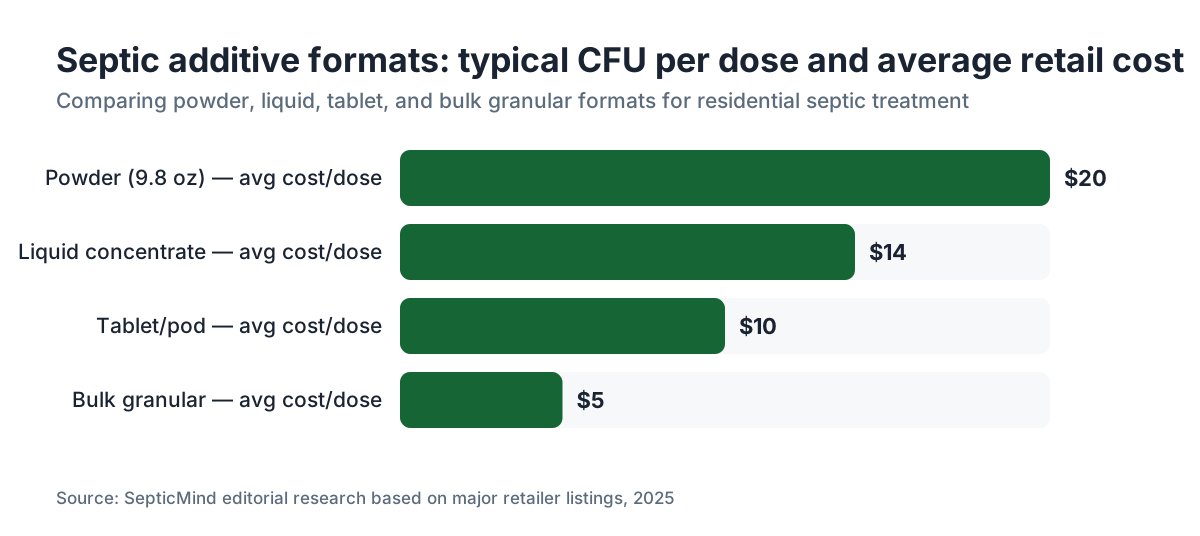
Single 9.8 oz packets typically retail between $10 and $30 at hardware stores, plumbing supply houses, and online. Subscription bundles (12 packets for a year of monthly dosing) usually run $60 to $150, which brings the per-dose cost down.
At $15 per month, you're spending $180 per year on additive. A septic tank pump-out for a residential system averages $300 to $600 nationally, with significant regional variation [4]. If monthly additive use genuinely extended your pump-out interval by even one year, the math works in your favor. The problem is there's no way to know whether the additive extended that interval, or whether your tank just happened to accumulate sludge slowly on its own.
The products I'd avoid entirely: anything marketed as "enzyme only" with no live bacteria, chemical-based additives using solvents, and anything claiming to permanently eliminate the need for pumping. That last claim is flatly false and, in some states, illegal to market [5].
If budget matters (and it always does), buy one packet at a time, dose after pump-outs and after antibiotic courses, and skip the monthly maintenance dose. That probably captures most of the real benefit at a fraction of the cost.
How do you use a powder septic treatment correctly?
Application is simple but a few details matter.
First, time it right. Flush or pour the powder when water use will be low for the next several hours, ideally at night before bed. You want the bacteria to have time to rehydrate and colonize before a surge of incoming water dilutes or flushes them toward the outlet baffle.
Second, use warm water if mixing. Most bacteria in these products are dormant spores. Warm water (not hot, not cold) reactivates them faster. Cold water slows rehydration and reduces the viable count that makes it into your tank.
Third, don't dose right after using heavy bleach or drain cleaners. Give the tank 24 to 48 hours to dilute the chemical load first, or you're killing the bacteria you just added.
Fourth, pour it down the toilet closest to your tank's inlet, not a remote bathroom. The shorter the travel distance, the more viable bacteria arrive.
Fifth, don't mix the powder with food waste disposal output if you can avoid it. Garbage disposal effluent is high in solids and can clog the powder before it disperses. The EPA and most state extension programs recommend against garbage disposals with septic systems for this reason [1].
Finally, store unused packets in a cool, dry location away from direct sunlight. Moisture and heat kill the dormant spores before they ever reach your tank.
Can a powder treatment fix a failing septic system or drain field?
No. This is the single most important thing to understand about any septic additive.
A failing leach field is almost always caused by biomat formation: a dense, nearly impermeable layer of microbial slime and soil particles that builds up at the soil-pipe interface when effluent quality is poor or hydraulic loading is too high. No amount of bacteria poured into the tank can reverse biomat once it's established. The problem is downstream of where the additive acts.
Similarly, cracked or deteriorated septic tank components require physical repair. A powder won't seal a cracked inlet baffle or a corroded distribution box.
If you're seeing sewage backing up into the house, wet spots or lush green patches over your drain field, slow drains throughout the house, or sulfur smell near the tank, you have a mechanical or hydraulic problem that needs a septic system inspection and likely repair work. Using more additive at that point is the wrong move and delays a real fix.
The EPA's SepticSmart program is direct on this: "Have your septic system inspected and pumped regularly" is the guidance, not "treat regularly" [1]. Pumping removes what has accumulated. Additives slow the accumulation rate, maybe. Those are very different functions.
Are all 9.8 oz powder septic treatments the same, or does brand matter?
Brand matters more than most people expect, mostly because quality control and CFU concentration vary widely with no mandatory federal labeling standard for septic additives.
The EPA does not certify or test septic additives for efficacy. The National Sanitation Foundation (NSF) has a standard, NSF/ANSI 40, but it applies to treatment systems, not additives [6]. Some states, including California and Washington, maintain approved additive lists or have restrictions on additive marketing claims, but there is no national required performance testing.
What to look for on a 9.8 oz powder product:
- Live bacterial count in CFU per dose, stated on the label. Below 5 billion CFU is probably not worth much.
- Multiple bacterial strains rather than a single species. Waste breakdown benefits from a community of organisms.
- Enzyme content listed by type (lipase, protease, amylase, cellulase). More specific is better.
- Shelf life and storage conditions. Live bacteria have expiration dates and can die in shipping if exposed to heat.
- No chemical solvents or surfactants in the ingredient list.
Some state cooperative extension programs maintain comparison guides for additive products. The University of Florida's IFAS extension and Purdue's Agricultural and Biological Engineering department have published useful comparisons [7]. I'd start there before trusting marketing copy on any packaging.
Does a powder treatment reduce how often you need to pump your tank?
Probably not by much, and you should not count on it.
The EPA recommends pumping a residential septic tank every 3 to 5 years for a household of 4 people using a 1,000-gallon tank, though the actual interval depends on household size, water use, and what goes down the drain [1]. The rule of thumb from most state guidance is to pump when the sludge layer reaches 33% of the tank volume, measured at inspection.
For perspective: at typical accumulation rates, a 1,000-gallon tank with 4 occupants accumulates roughly 90 to 150 gallons of sludge per year. An additive that reduced accumulation by even 20% (optimistic based on available research) would add perhaps 6 to 12 months to a 3-year pumping interval. That's real, but it's not a dramatic change, and the cost of monthly dosing over 3 years likely exceeds the cost savings on a single pump-out.
Learn more about typical pumping intervals at how often to pump septic tank. Septic tank cleaning is the only reliable way to remove accumulated sludge once it's there; no powder changes that.
What states regulate or restrict septic tank additives?
Several states have taken formal positions on septic additives, ranging from approval lists to outright restrictions on marketing claims.
Washington State's Department of Health maintains guidance stating that additives are not required and that some chemical-based additives can damage drain fields; the state has restricted certain solvent-based products under WAC 246-272A [5]. California's State Water Resources Control Board advises against chemical additives and maintains inspection standards that do not credit additive use as a substitute for pumping [8].
Massachusetts Title 5 (310 CMR 15.000), one of the most detailed state septic codes in the country, sets maintenance and inspection requirements and does not recognize additive use as reducing required pumping frequency [9].
Florida's Department of Health regulates onsite sewage systems under Chapter 64E-6 of the Florida Administrative Code and requires permitted maintenance entities for certain system types, but does not mandate or prohibit biological additives for conventional systems [10].
The general pattern across states: biological additives (bacteria and enzymes) are tolerated, chemical additives (solvents, surfactants) are often restricted or banned, and no state I'm aware of credits regular additive use as a substitute for required pumping intervals. Check your state's environmental or health department for current guidance, as these rules update periodically.
Operators managing multiple systems and trying to track maintenance schedules across accounts can find tools like SepticMind useful for logging treatment dates, inspection records, and pump-out history in one place.
What should you never pour down the drain if you're on a septic system?
This matters more than any additive. The fastest way to kill your tank's bacteria and overwhelm your drain field is to abuse the drain.
Chemical drain cleaners are the worst single offender. Products based on sodium hydroxide (lye) or sulfuric acid kill bacteria instantly and can disrupt the tank environment for weeks [1]. If you have a slow drain on septic, mechanical clearing (snake or plunger) is always the right move first.
Antibacterial soaps and household cleaners used in normal quantities are not a crisis, but heavy regular use of bleach, quaternary ammonium disinfectants, or concentrated pine-oil cleaners does measurably reduce bacterial populations. Normal use of antibacterial dish soap in reasonable quantities is fine; cleaning the entire bathroom weekly with undiluted bleach is not.
Other materials that don't belong in a septic system: grease and cooking oils, coffee grounds, cat litter (even "flushable" varieties), wet wipes (even "flushable" labeled ones), feminine hygiene products, condoms, and medications. These either don't break down, accumulate in the scum layer faster than bacteria can process them, or actively harm the microbial community.
If your household relies on a water softener, the brine discharge can be a problem too. High salt loads reduce bacterial activity. Some state codes restrict water softener discharge to septic systems for this reason.
How does powder treatment compare to liquid septic additives and other formats?
Powder, liquid, tablet, and pod formats all exist. The format is less important than the CFU count, strain diversity, and shelf stability of the product.
Powder has one genuine advantage: shelf stability. Dormant bacterial spores in powder form survive longer in storage than live cultures in liquid products, which can lose viability quickly if exposed to temperature extremes during shipping or storage. A liquid product with 10 billion CFU on the label may deliver far fewer viable bacteria after sitting in a warehouse through summer.
Liquid concentrates work fine if they're stored and shipped properly. Tablets and pods are convenient but often have lower CFU counts per dose and more filler material.
The 9.8 oz powder format matches the roughly 275-gram dose that most manufacturers settled on for single-tank residential treatment. It's a practical size: enough to dissolve and distribute through a 1,000 to 1,500 gallon tank without being so large it's wasteful for smaller systems.
| Format | Typical CFU/dose | Shelf stability | Avg. cost/dose |
|---|---|---|---|
| Powder (9.8 oz) | 5B to 100B | High (12-24 months) | $10-$30 |
| Liquid concentrate | 1B to 50B | Medium (6-12 months) | $8-$20 |
| Tablet/pod | 1B to 20B | Medium-high | $5-$15 |
| Granular (bulk) | Varies widely | High | $3-$8 per dose |
Prices are retail approximations based on major hardware and home improvement retailers; they vary by brand and region.
When is a powder septic treatment actually worth using?
Here's my honest opinion after going through the research: most healthy, consistently occupied septic systems with reasonable household habits don't need monthly additive treatment. The existing microbial community handles the load. What you're paying for is insurance against specific disruption events.
The situations where a powder treatment earns its cost:
- Right after a pump-out. Pumping removes the majority of the active bacterial population. A dose shortly after helps reestablish the colony faster. This is the single most clearly justified use.
- After significant antibiotic use in the household. Ask your prescribing doctor about the antibiotic's excretion profile; some antibiotics are heavily excreted unchanged in urine and feces and hit your tank hard.
- Seasonal or vacation homes. A system that sits dormant for months loses its bacterial population and benefits from re-inoculation before full use resumes.
- Very cold climates. Bacterial activity slows significantly below 50°F. Systems in northern climates where soil temperatures drop near freezing may benefit from cold-tolerant bacterial strains available in some specialty products.
For everyone else, the money is better spent on keeping the septic tank inspection current, pumping on schedule, and protecting the leach field from hydraulic overload. SepticMind's maintenance tracking tools can help you stay on top of those intervals so a $15 additive packet doesn't become the distraction from the $4,000 drain field repair you didn't see coming.
Frequently asked questions
Can I use a 9.8 oz powder septic treatment in a new septic system?
Yes, and new systems are actually one of the better use cases. A brand-new tank has no established bacterial colony. Seeding it with a high-CFU powder product helps establish the microbial community faster, which means more complete waste breakdown in the first few weeks of use. Follow the manufacturer's instructions; some recommend a double dose for initial startup. After that, monthly or quarterly maintenance doses are optional.
Is it safe to use powder septic treatment with a garbage disposal?
You can, but garbage disposals are already problematic on septic systems. They increase the solids load significantly, and the heavy organic slurry can interfere with the powder dispersing properly. If you use a disposal, add the treatment after a low-water-use period, not right after running the disposal. The EPA's SepticSmart program recommends minimizing or eliminating garbage disposal use on septic systems entirely.
How long does it take for the powder bacteria to start working?
Rehydration begins within minutes, and active bacterial metabolism starts within a few hours under normal tank temperatures (roughly 60 to 80°F). You won't notice any visible change; bacterial activity isn't something you see. The powder's effect is gradual: over days and weeks, the colony establishes and produces more enzymes that slow sludge accumulation. There's no dramatic before-and-after to observe.
Does powder septic treatment work in cold weather?
It works, but more slowly. Bacterial metabolism slows significantly below 50°F. Some manufacturers offer cold-climate formulations with psychrotrophic (cold-tolerant) bacterial strains. If your tank soil temperature drops significantly in winter, a cold-formulated product is worth the premium. For standard products, dosing in early fall before temperatures drop gives bacteria time to establish before activity slows.
Will a powder septic treatment help with septic odors?
Sometimes. Sulfur or sewage odors can come from incomplete breakdown of organic waste, which a healthy bacterial population can reduce over time. But odors can also come from a full tank, a broken inlet or outlet baffle, a venting problem, or a failing drain field. If odors are strong or sudden, treat it as a diagnostic signal, not something to mask with additives. Get the tank inspected before assuming a treatment packet will fix it.
How much powder septic treatment do I need for a 1,500-gallon tank?
Most 9.8 oz packets are rated for tanks up to 1,000 to 1,500 gallons. Check the specific product's label. If your tank is 1,500 gallons and the product is rated to 1,000, use 1.5 doses. Underdosing is the most common mistake. The CFU count per unit volume matters; a bacterial colony needs to reach a critical density to have measurable effect.
Can powder septic treatment unclog a slow drain?
No. Slow drains are mechanical problems: partial blockages in the pipe, a clogged inlet baffle, or a failing drain field creating backpressure. Bacteria cannot dissolve physical obstructions or reverse biomat formation quickly enough to clear a drain. Use a snake or plunger for pipe blockages. If the slow drain is throughout the house, call a septic professional; it may signal a tank that needs pumping or a field that's failing.
Is it worth buying a year's supply of powder septic treatment upfront?
Only if the product has a long shelf life clearly stated on the package and you have proper storage conditions (cool, dry, away from humidity). Bacterial spores in powder form can last 12 to 24 months under good conditions. If you're buying 12 packets and storing them in a damp garage in a humid climate, you may be applying dead bacteria by month 8. Buy 3 to 6 months at a time unless the storage situation is ideal.
Does the EPA approve or recommend any specific powder septic treatments?
No. The EPA does not certify or endorse specific septic additive products. The EPA's SepticSmart program provides general guidance that biological additives have not been proven to help and should not replace regular pumping. NSF International has testing standards for septic treatment systems but not for additives. No federal body maintains an approved product list. Your state's health or environmental department may have guidance specific to your region.
Can I use powder septic treatment after pumping my tank?
Yes, and this is one of the clearest situations where it helps. Pumping removes most of the active bacterial population along with the sludge. Adding a powder treatment within a day or two of pump-out helps re-seed the tank. Some septic service companies actually include or sell a bacterial starter dose at the time of service. Whether you buy it from them or separately, a post-pump-out dose is a reasonable investment.
What happens if you use too much powder septic treatment?
Very little, practically speaking. The bacterial population in a tank self-regulates based on available food source. Adding extra bacteria when the food supply is limited just means more competition and a faster die-off of the excess. There's no documented harm from overdosing a biological product. Enzyme overdosing at extreme levels could theoretically disrupt the scum layer structure, but realistic overdosing (two packets instead of one) has no meaningful negative effect.
Does powder septic treatment affect the drain field or leach field?
Indirectly and positively, in theory. Better digestion in the tank means higher-quality effluent flowing to the drain field, with fewer suspended solids that can clog soil pores. Over years of use, this could slow biomat formation in the leach field. However, once a drain field is failing, no additive repairs it. Learn more about leach field health at the leach field guide, and address any field issues with a professional inspection.
Sources
- U.S. EPA, SepticSmart Homeowner Guide: EPA SepticSmart states that although some additives may not harm your system, they've not been proven to help, and recommends regular pumping as the cornerstone of septic maintenance.
- National Environmental Services Center, West Virginia University, Septic Additives Review: 1994 review examined over 100 additive products and found biological additives showed potential benefit in systems stressed by antibiotic use or cold temperatures, with minimal measurable difference in normally operating systems.
- University of Minnesota Extension, Septic System Owner's Guide: University of Minnesota Extension found no scientific consensus that additives reduce pumping frequency, but noted biological products are preferable to chemical solvent or surfactant-based additives.
- U.S. EPA, Septic System Maintenance and Costs: Residential septic tank pump-out costs average $300 to $600 nationally with significant regional variation.
- Washington State Department of Health, Onsite Sewage Systems (WAC 246-272A): Washington State WAC 246-272A restricts certain chemical solvent-based septic additives and states additives are not required for system operation.
- NSF International, NSF/ANSI 40 Standard for Residential Wastewater Treatment Systems: NSF/ANSI 40 applies to wastewater treatment systems, not to septic additives; no NSF standard certifies additive efficacy.
- University of Florida IFAS Extension, Septic Tank Additives: University of Florida IFAS Extension has published comparisons of septic additive product types and their evidence base.
- California State Water Resources Control Board, Onsite Wastewater Treatment Systems Policy: California State Water Resources Control Board advises against chemical additives and does not credit additive use as a substitute for required pumping.
- Massachusetts Department of Environmental Protection, Title 5 Septic Regulations (310 CMR 15.000): Massachusetts Title 5 (310 CMR 15.000) sets maintenance and inspection requirements for onsite septic systems and does not recognize additive use as reducing required pumping frequency.
- Florida Department of Health, Onsite Sewage Treatment and Disposal Systems (Chapter 64E-6): Florida Chapter 64E-6 regulates onsite sewage systems and requires permitted maintenance for certain system types but does not mandate or prohibit biological additives for conventional systems.
- Purdue University Extension, Septic Systems and Additives: Purdue Agricultural and Biological Engineering extension has published useful comparisons of septic additive product formats and ingredient types.
Last updated 2026-07-10