ASI septic inspection: what it is, what it costs, and what to expect
By the SepticMind Editorial Team
TL;DR
- An ASI (advanced septic inspection) is a component-by-component evaluation of your whole septic system, well past a basic visual check.
- Inspectors verify tank condition, inlet and outlet baffles, effluent levels, pump operation, and drain field absorption.
- Plan on 2 to 4 hours on site and $300 to $600 in most U.S.
- markets.
What is an ASI septic inspection?
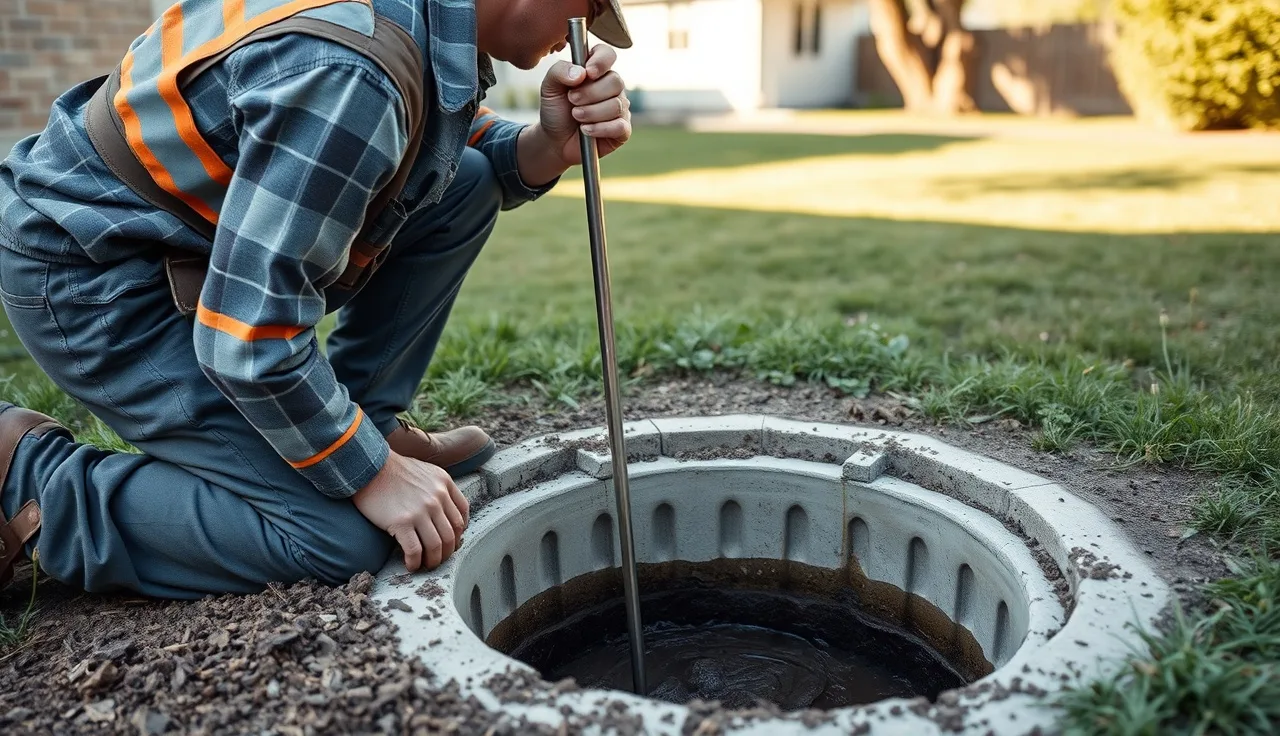
ASI stands for Advanced Septic Inspection. It is a structured, multi-step evaluation of a residential or light-commercial onsite wastewater treatment system, covering every component from the house cleanout to the far end of the drain field. The word "advanced" separates it from the quick look-over that sometimes gets called an inspection at a closing. Those cursory checks miss a lot. An ASI does not.
The scope of an ASI usually tracks the guidance the EPA lays out in its SepticSmart program, which recommends that homeowners have their septic systems inspected by a professional at least every three years [1]. An ASI meets that standard and usually goes further, using probes, cameras, dye testing, and sometimes electronic locating gear to assess parts you can't see from ground level.
The inspection covers the septic tank itself (capacity, structural integrity, inlet and outlet baffles, scum and sludge layers, effluent level), any distribution box or manifold, the drain field or leach field trenches, and if present, any pump chamber, dosing pump, alarm float, and effluent filter. On systems with aerobic treatment units or drip-irrigation fields, the inspector also checks aeration, chlorination, and spray heads.
An ASI is not the same as pumping. The inspector may require the tank to be pumped before completing certain measurements, but the inspection and the pump-out are separate services. You can read more about septic tank pump out to understand what that process involves on its own.
Why would you need an ASI septic inspection?
Four situations push people toward an ASI instead of a basic inspection.
Home purchase comes first. Most lenders and many state real-estate disclosure laws require some form of septic inspection before closing. Buyers who want to actually know the condition of the system, rather than get a form stamped, ask for an ASI. The extra detail can reveal a failing drain field that a basic visual pass would miss, and that is the kind of discovery that should happen before you sign a mortgage, not after.
Routine maintenance is second. The EPA recommends professional inspection every three years for conventional systems [1]. An ASI gives you the documentation and measurement data to track system health over time.
Troubleshooting is third. Slow drains, odors in the yard, or wet spots over the drain field are symptoms. An ASI with a camera and dye test can confirm or rule out specific failure modes fast instead of guessing.
Regulatory compliance is fourth. Some states and counties require a documented inspection before issuing permits for home additions or when a property changes hands. Massachusetts, for one, requires a Title 5 inspection at point-of-sale for virtually all properties served by onsite systems [2]. An ASI-level evaluation satisfies those requirements in most jurisdictions, though you should confirm with your local authority.
If you are thinking about repair work after the findings come in, septic system repair and septic tank repair are the logical next reads.
What does an inspector actually check during an ASI?
Here is what a thorough ASI covers, roughly in the order a good inspector works through it.
Locating and accessing the tank. If you don't have a system map, the inspector uses a probe rod or electronic locator to find the tank and risers. If risers aren't at grade, they'll excavate access to the lids. Note: excavation fees are often extra.
Inlet and outlet baffle condition. Baffles direct flow in and out of the tank and keep scum from escaping into the drain field. Plastic tees or fiberglass baffles can crack; concrete baffles deteriorate in acidic effluent. The inspector checks both visually and with a probe.
Scum and sludge measurement. Using a Tillet stick or a sludge judge, the inspector measures how much of the tank's liquid capacity has been consumed by floating scum on top and settled sludge on the bottom. When combined scum and sludge take up more than roughly 25-33% of the tank's capacity, pumping is due [7]. This is one of the most actionable numbers you get from an ASI.
Effluent level. The liquid level in the tank should sit at the outlet pipe. A level higher than the outlet suggests the drain field is backing up. A level lower than the outlet suggests a crack or leak in the tank wall.
Tank structural integrity. The inspector checks for cracks, spalling concrete, corrosion in steel tanks, and deformation in plastic tanks. A compromised tank can collapse or contaminate groundwater.
Distribution box (D-box) condition. The D-box splits effluent evenly among the drain field trenches. A tilted or cracked D-box sends too much flow to one trench and starves the others, accelerating failure in the overloaded run.
Drain field assessment. The inspector probes the soil above each trench line for softness or saturation, looks for surface breakout (effluent visible above ground), checks for odors, and reviews any perc test or soil evaluation records. Some ASI providers run a dye test, flushing a non-toxic tracer dye from the house and watching for it to surface in the yard or nearby water.
Pump and controls (if applicable). On systems with a dosing pump or effluent pump, the inspector verifies pump operation, checks float switch settings, and tests the high-water alarm.
Effluent filter. Many modern tanks have an effluent filter at the outlet baffle. These need cleaning every 1-3 years. An ASI notes whether the filter is present, clogged, or missing.
A good inspector hands you a written report with photos, measurements, and a condition rating for each component. If all you get is a pass/fail checkbox, you didn't get an ASI.
How long does an ASI septic inspection take?
Plan for 2 to 4 hours on site for a standard single-family residential system. Larger systems, systems with multiple tanks or pump chambers, or properties with no system map can run 4 to 6 hours.
The time breaks down roughly like this: 30-60 minutes locating and opening the tank, 30-45 minutes on tank measurements and baffle inspection, 20-30 minutes on the D-box and distribution piping, 30-60 minutes on drain field probing and observation, and 30-45 minutes for any dye testing (which requires flushing and then waiting to see where the dye goes). Camera inspection of the inlet pipe or outlet line adds another 30-60 minutes.
Be home, or have someone available who can show the inspector the cleanout location, the utility map if you have one, and the electrical panel if the pump has a dedicated breaker. The inspector may also want to run water through the system during the test, so know where the main shutoff is.
What does an ASI septic inspection cost?
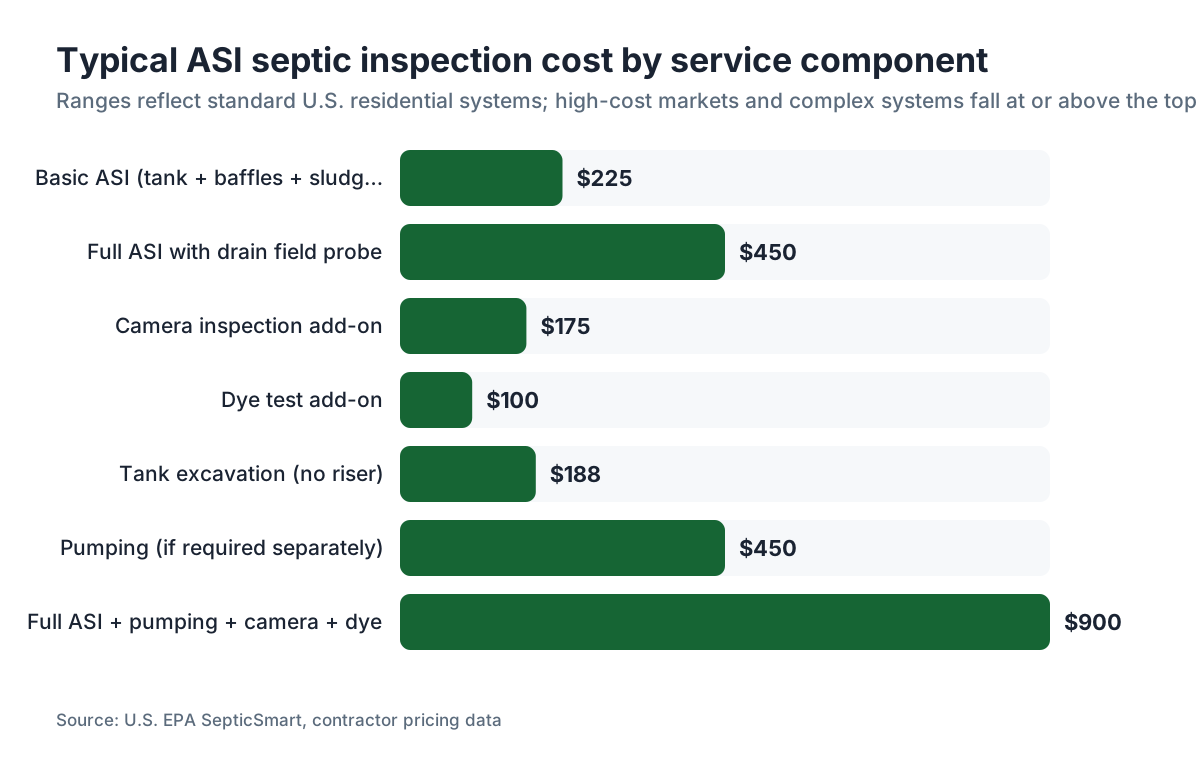
Cost varies a lot by region, system complexity, and what's included. Here is a realistic breakdown.
| Service component | Typical cost range |
|---|---|
| Basic ASI (tank + baffle + sludge measurement) | $150 - $300 |
| Full ASI with drain field probe and D-box check | $300 - $600 |
| Camera inspection of inlet/outlet pipe | $100 - $250 add-on |
| Dye test | $50 - $150 add-on |
| Tank excavation (if no riser) | $75 - $300 add-on |
| Pumping (if required before inspection) | $300 - $600 separate |
| Full ASI with pumping, camera, and dye test | $600 - $1,200 |
These ranges come from contractor pricing guides and home services cost aggregators; actual prices in high-cost urban markets or rural areas with few providers can fall outside them. Northeast states like Massachusetts and Connecticut tend to run at the high end because their regulatory requirements are more demanding [2].
For context, the EPA notes that septic system replacement can cost $3,000 to $7,000 or more [1], and in many markets full replacement of a drain field runs $5,000 to $20,000. An ASI that catches a fixable problem early is cheap next to those numbers.
If the inspection turns up work that needs doing, septic tank repair and cost to put in a septic tank will help you scope what comes next.
How is an ASI different from a standard septic inspection?
This is a fair question, and the industry doesn't always use these terms the same way, which causes confusion.
A basic or visual inspection is exactly what it sounds like. The inspector opens the tank lid, looks inside, maybe checks the effluent level, and issues a pass or fail. Real-estate transactions in some states still accept this. It takes 30-45 minutes and costs $100-$200. The trouble is it misses baffle condition in older tanks, skips sludge and scum measurement, never probes the drain field, and doesn't test the pump.
A full inspection (sometimes called an advanced inspection, hence "ASI") does all of the above plus sludge and scum measurement, baffle inspection, D-box check, drain field probing, and pump and float testing. It produces a written report with measurements.
Some states have written down exactly what must be in a septic inspection. Massachusetts Title 5, for example, sets precise sludge and scum thresholds, requires inspection of the distribution system, and mandates a specific report form [2]. The Title 5 inspection is essentially a state-defined advanced inspection. Other states leave the scope to the inspector and the client.
When you're shopping for a septic inspection, ask flat out: "Do you measure sludge and scum depth? Do you probe the drain field? Do you check baffles? Will I get a written report with measurements?" If any answer is no, you're not getting an ASI-level evaluation.
What are the most common findings in an ASI septic inspection?
Based on inspection programs and state reporting data, these are the issues that show up most.
Sludge or scum at or near the pumping threshold. A large share of tanks that haven't been pumped on schedule are overdue. The EPA recommends pumping every 3-5 years for most households [1]. Plenty of tanks go 8-10 years between pump-outs. If you're overdue, how often to pump septic tank gives the full guidance. See also septic tank pumping and septic tank cleaning for what the service involves.
Missing or deteriorated outlet baffle. The outlet baffle is a primary guard against solids escaping into the drain field. Concrete baffles in tanks more than 20-30 years old often deteriorate. A missing baffle is a critical finding because solids reaching the drain field clog the soil pores and speed up field failure.
Clogged effluent filter. Tanks installed since the mid-1990s in many states have an effluent filter. These are cheap to clean but easy to forget. A badly clogged filter can back sewage up all the way to the house.
Cracked or tilted distribution box. A tilted D-box loads the trenches unevenly. You often won't know it's tilted without opening it. Fixing a tilted D-box is cheap ($200-$500); replacing the trench it damaged is not.
Drain field soft spots or surface breakout. This is the finding that turns the conversation from maintenance to replacement. Surface breakout means the soil is saturated and effluent is reaching ground level, which is both a public health issue and a system failure.
Tank cracks or structural damage. Less common but serious. A cracked concrete tank can collapse and lets untreated sewage escape to groundwater.
The National Environmental Services Center at West Virginia University has documented that the leading cause of early drain field failure is solids escaping from the tank because of infrequent pumping or baffle failure [3]. That fact alone justifies the cost of a thorough inspection.
What happens if your system fails an ASI inspection?
"Fail" means different things depending on what the inspector finds and what your jurisdiction requires.
Some findings are minor and quick to fix. A clogged effluent filter needs cleaning, not replacement. A missing riser lid needs a new lid. An overdue pump-out needs scheduling. None of these means the system failed in a serious sense.
More serious findings, like a deteriorated outlet baffle, may call for a repair that costs a few hundred dollars but keeps the system alive. An inspector can usually point you to a licensed installer for the work.
Critical findings, like surface breakout, a collapsed distribution pipe, or a structurally compromised tank, typically trigger a mandatory repair or replacement order from the local health department. In states with point-of-sale inspection rules, a failed inspection means the property can't close until repairs are made or an escrow arrangement is negotiated.
If you're at the repair or replacement stage, septic tank repair, leach field, and cost to put in a septic tank are the next reads. Replacing a drain field is the most expensive common outcome, typically $5,000 to $20,000 depending on site conditions, system type, and local labor.
One practical note. If you're a buyer and the ASI reveals a problem before closing, you have options: negotiate a price reduction, require the seller to remediate before closing, or walk away. Discover the same problem after closing and those options are gone.
How do you find a qualified ASI septic inspector?
Licensing rules for septic inspectors vary by state, and this is one place homeowners get burned by assuming anyone with a pump truck can run a thorough inspection.
In states with formal onsite wastewater regulations, inspectors usually have to hold a license from the state environmental or health agency. Massachusetts requires inspectors to be approved through MassDEP [2]. Many other states require a NAWT (National Association of Wastewater Technicians) certification or an equivalent state credential [5].
Here's how to find one:
- Ask your state's environmental or health department for a list of licensed onsite system inspectors. Most states publish this online.
- Check the NAWT directory at nawt.org, which lists certified inspectors by state.
- Ask your county health department; they often keep a referral list or can tell you which inspectors they accept reports from.
- If you get a referral from a real estate agent, verify the inspector's license yourself. Agents sometimes refer inspectors who are fast and cheap rather than thorough.
When you call an inspector, ask: What does the inspection include? Will you measure sludge and scum? Will you check the drain field? Do I get a written report? What is your license number? A qualified inspector answers all of these without hesitation.
For operators who manage multiple inspection workflows and want to track findings, report generation, and follow-up scheduling across a client base, SepticMind's operations software is built for that kind of volume and documentation.
How do state regulations shape what an ASI must include?
State regulations are the floor, not the ceiling, for what a good inspection covers. And the floor varies a lot.
Massachusetts runs one of the most detailed regulatory inspection programs in the country. Title 5 (310 CMR 15.000) sets exact sludge and scum thresholds that trigger a system failure determination, requires inspection of the distribution system, and mandates a standard inspection form filed with the local board of health [2]. An inspection done to Title 5 standards is, by definition, an advanced inspection.
The EPA's SepticSmart program, which gives voluntary guidance for states without their own detailed requirements, recommends inspecting every three years and evaluating the tank, pumping as needed, and checking the drain field for signs of failure [1]. The guidance is less prescriptive than Title 5 but sets a reasonable minimum.
Many states in the South and Midwest have lighter regulations and leave inspection scope largely to the inspector and the homeowner. That makes inspection quality in those states highly variable. An ASI from a thorough, NAWT-certified inspector in Georgia can be excellent; a so-called inspection from an unqualified contractor in the same state might be worthless [5].
If your state requires inspection at point-of-sale, look up the specific rule. Search terms that work: "[your state] onsite wastewater inspection requirements" or "[your state] septic inspection real estate."
How should you prepare your property for an ASI?
A little prep saves time and money on inspection day.
Locate your system map if you have one. Many homes built after the 1980s have a septic permit on file with the county health department, and it includes a diagram showing tank and drain field locations. Call the health department and ask; they'll often email you a scan. This alone can save an hour of locating work.
Clear access to tank lids. If you know where the lids are, mow the area and move any furniture, firewood, or landscaping features on top. Inspectors can find lids, but you'll pay for their time doing it.
Go easy on water for 24-48 hours before the inspection. Running a lot of laundry or taking a lot of showers the day before fills the tank and can throw off sludge and scum measurements.
Have your maintenance history handy. When was the tank last pumped? Any repair work done? The inspector reads findings better with that context.
Know where your electrical panel is. If your system has a pump, the inspector may need to check the pump's dedicated circuit and alarm wiring.
And here's something most guides skip: keep kids and pets inside. Inspectors are opening tanks and handling probes and equipment that you do not want curious bystanders near.
How often should you schedule an ASI septic inspection?
The EPA recommends professional inspection every three years for a conventional gravity-fed septic system [1]. Systems with mechanical parts, such as pumps, aerators, or dosing equipment, should be inspected annually because those parts can fail without visible warning [6].
For pump-out frequency, the EPA's guidance is every three to five years for a typical household, but the right answer depends on household size, tank size, and how much waste the system processes. A four-person household with a 1,000-gallon tank likely needs pumping every 3-4 years. A single person with a 1,500-gallon tank might go 7-10 years. How often to pump septic tank walks through the math in detail.
Just bought a home with a septic system and no records? Schedule an ASI immediately, whatever the previous owner claims about the last one. You have no other way to know what you're working with. The inspection gives you a baseline, a list of any deferred maintenance, and a pumping recommendation specific to your system.
One honest caveat: nobody has great population-level data on exactly how many septic systems fail because of skipped inspections versus other causes. The closest documented figure comes from the EPA's own estimate of roughly 2.5 million failing onsite systems in the U.S. [4]. That's a big number, and inadequate maintenance is a consistent contributing factor in the literature, even if the precise share tied to missed inspections is not well quantified.
For homeowners who want a tool to track their system's history and set reminders, SepticMind's homeowner tools are built for that.
Frequently asked questions
What does ASI stand for in septic inspection?
ASI stands for Advanced Septic Inspection. It refers to a thorough, multi-component evaluation of an onsite wastewater system that goes beyond a basic visual check. An ASI includes sludge and scum measurement, baffle inspection, drain field probing, and pump and float testing, and produces a written report with measurements and photos.
How much does an ASI septic inspection cost?
A full ASI typically costs $300 to $600 for a standard residential system. Add-ons like camera inspection ($100-$250), dye testing ($50-$150), and tank excavation if no riser is present ($75-$300) push the total higher. If pumping is required before or during the inspection, that's a separate cost of $300-$600. High-cost urban markets and states with more demanding regulations tend to fall at the top of those ranges.
Is an ASI required when selling a home?
It depends on the state. Massachusetts requires a Title 5 inspection at point-of-sale for virtually all properties served by onsite systems, and many other states have similar rules. Even where it is not legally mandated, most buyers' lenders or real estate attorneys will require some form of septic inspection. Buyers who want real information about system condition, rather than a checkbox, should insist on an ASI-level evaluation.
What is the difference between a septic inspection and a septic pump-out?
A septic inspection evaluates the condition of every component and produces a written report. A pump-out removes accumulated solids and liquids from the tank. They're separate services. Some inspectors require the tank pumped before they can accurately assess baffle condition and tank walls, so both are sometimes scheduled together, but you should understand you're paying for two distinct services.
How long does an ASI septic inspection take?
Most ASI inspections on a standard single-family system take 2 to 4 hours. Larger systems, systems with multiple tanks or pump chambers, or properties without a system map can take 4 to 6 hours. Dye testing adds time because the inspector flushes dye and then watches for it to appear in the yard, which requires a waiting period of 20-40 minutes after flushing.
What happens if my septic system fails an ASI inspection?
Minor findings like a clogged effluent filter or overdue pump-out are correctable quickly and cheaply. Serious findings like a deteriorated baffle need repair but can often extend system life significantly. Critical findings like surface breakout or a structurally failed tank typically trigger a health department order requiring repair or replacement before the property can be occupied or sold. If you're at the buying stage, you may be able to negotiate a price reduction or require seller remediation.
Can I do my own septic inspection instead of hiring someone?
You can watch for warning signs yourself (slow drains, yard odors, wet spots over the drain field, unusually lush grass above the tank), but you cannot perform an ASI. Accurate sludge and scum measurement takes specific tools and experience. Baffle inspection means opening the tank, which exposes you to toxic gases. Drain field probing and dye test interpretation take training. For regulatory or lender purposes, a self-inspection is not accepted; a licensed professional is required.
How do I find a licensed ASI septic inspector in my state?
Start with your state's environmental or health agency website, which usually keeps a list of licensed onsite system inspectors. The NAWT (National Association of Wastewater Technicians) also maintains a certified inspector directory at nawt.org. When you contact an inspector, ask for their license number and verify it with the state before booking. Confirm that the inspection includes sludge measurement, baffle inspection, and a written report.
What do sludge and scum measurements mean in a septic inspection?
The inspector measures how much of the tank's liquid capacity has been consumed by floating scum (fats, oils, grease) on top and settled sludge (solids) on the bottom. When combined scum and sludge occupy roughly 25-33% of the tank's volume, pumping is recommended. Past that threshold, there is a real risk of solids escaping into the drain field, which can permanently damage the soil absorption system.
How often should I get an ASI septic inspection?
The EPA recommends professional inspection every three years for conventional gravity-fed systems. Systems with mechanical components like pumps or aerators should be inspected annually. If you've just bought a home with a septic system and have no maintenance records, schedule an inspection immediately regardless of the system's apparent age. That baseline inspection tells you what you actually have and what, if anything, needs attention.
What is a Title 5 inspection and is it the same as an ASI?
Title 5 is Massachusetts' onsite system regulation (310 CMR 15.000) that defines precise inspection requirements at point-of-sale, including exact sludge and scum thresholds that trigger a system failure determination and a specific report form filed with the local board of health. A Title 5 inspection is functionally an ASI tailored to Massachusetts standards. Other states have their own equivalents; the specific requirements vary a lot by jurisdiction.
What is an effluent filter and why does an inspector check it?
An effluent filter is a screened cartridge installed at the outlet baffle of the septic tank. It stops solids from escaping into the drain field, which is the leading cause of early field failure. Tanks installed since the mid-1990s in many states include one. Filters need cleaning every 1-3 years; a severely clogged filter can back sewage up to the house. An ASI checks whether the filter is present, clogged, or damaged.
Does a septic inspection include the drain field?
A true ASI does, but a basic visual inspection often does not. During an ASI, the inspector probes the soil above each drain field trench to check for saturation, looks for surface breakout (effluent at ground level), observes for unusual odors, and may run a dye test. The drain field is the most expensive part of the system to replace, so this part of the inspection is arguably the most valuable.
How should I prepare my property before an ASI septic inspection?
Locate your system map (check with the county health department if you don't have one), clear access to tank lids, and go easy on water for 24-48 hours before the inspection. Have your maintenance history available, including when the tank was last pumped and any repair records. Know where your electrical panel is if your system has a pump. Keep children and pets inside on inspection day.
Sources
- U.S. EPA, SepticSmart: Protect Your Investment: EPA recommends professional septic system inspection every three years and pumping every three to five years; replacement can cost $3,000 to $7,000 or more
- Massachusetts Department of Environmental Protection, Title 5 Septic System Regulations (310 CMR 15.000): Massachusetts requires a Title 5 inspection at point-of-sale for virtually all properties served by onsite systems; the regulation specifies sludge and scum thresholds and a mandated report form filed with the local board of health
- National Environmental Services Center, West Virginia University: The leading cause of early drain field failure is solids escaping from the tank due to infrequent pumping or baffle failure
- U.S. EPA, Onsite Wastewater Treatment Systems Manual: EPA estimates approximately 2.5 million failing onsite wastewater treatment systems exist in the United States
- National Association of Wastewater Technicians (NAWT), Inspector Certification Program: NAWT maintains a national directory of certified septic system inspectors and offers inspector certification programs used as a credential standard in multiple states
- U.S. EPA, SepticSmart: How to Care for Your Septic System: EPA guidance recommends inspecting septic systems with mechanical components annually and pumping conventional systems every three to five years based on household size and tank capacity
- University of Minnesota Extension, Onsite Sewage Treatment Program: Sludge and scum accumulation exceeding roughly 25-33% of tank liquid capacity indicates the tank is due for pumping
- Penn State Extension: Effluent filters installed at the outlet baffle require cleaning every 1-3 years and are a standard feature on tanks installed in many states since the mid-1990s
- Oregon Department of Environmental Quality, Onsite Wastewater Management: State onsite wastewater regulations establish licensing requirements for septic inspectors and define minimum inspection scope for point-of-sale and routine evaluations
- U.S. EPA, Septic Systems: Septic drain field replacement typically costs significantly more than routine inspection and maintenance, reinforcing the cost-benefit of regular ASI-level evaluations
Last updated 2026-07-09