ATU septic systems: how they work, what they cost, and when you need one
By the SepticMind Editorial Team
TL;DR
- An ATU (aerobic treatment unit) is an advanced septic system that pumps air into wastewater to grow bacteria that break down waste far more thoroughly than a plain tank.
- Expect $10,000 to $20,000 installed, plus a mandatory service contract in most states.
- You need one when your soil or lot size won't support a standard drain field.
What is an ATU septic system and how does it work?
An aerobic treatment unit, almost always called an ATU, is an onsite wastewater system that uses forced air to fuel aerobic bacteria, the same kind that thrive in your gut and in municipal sewage plants. A conventional septic tank relies on anaerobic bacteria (no oxygen) that only partly digest waste. An ATU takes that process a lot further.
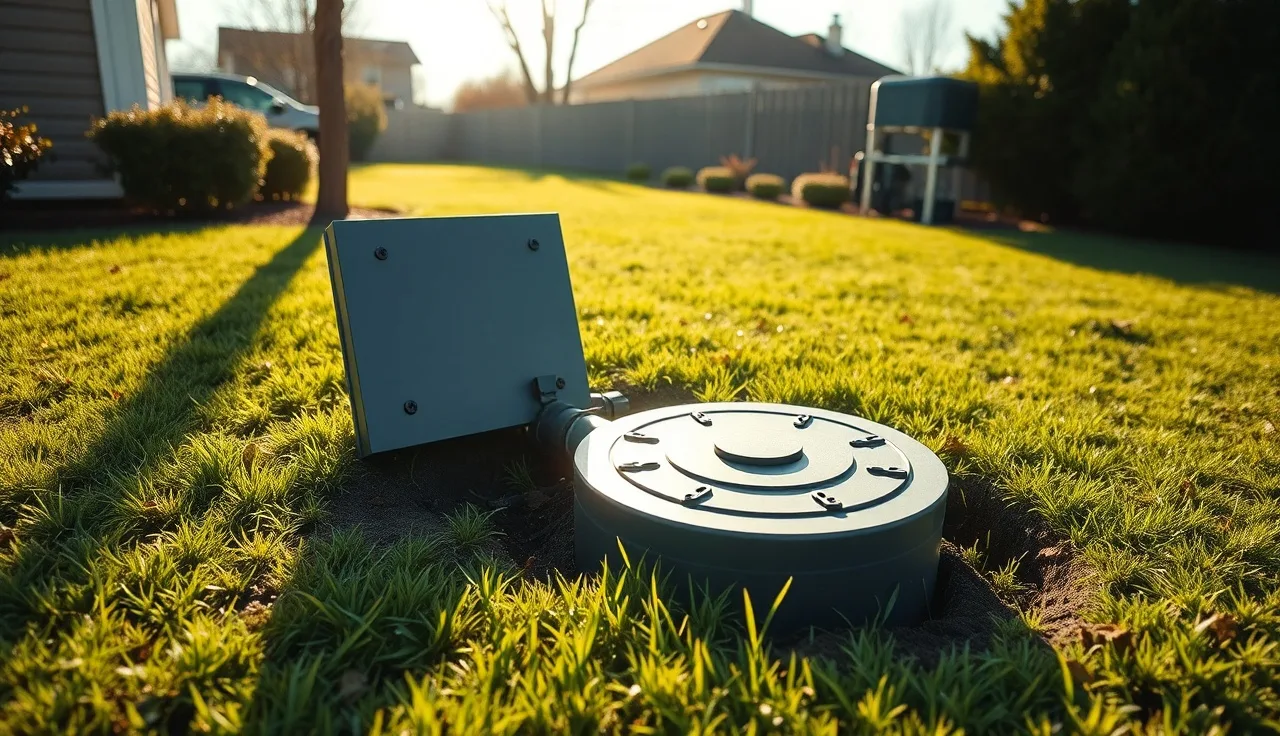
Most residential ATUs move wastewater through three or four chambers. First, a pre-treatment or trash tank drops out solids. Then an aeration chamber gets continuous air from a compressor, creating a turbulent, oxygen-rich soup where aerobic bacteria chew through pathogens, nitrogen, and organic solids fast. After that, a clarifying chamber lets leftover solids settle. The treated effluent then flows to a disinfection chamber, usually chlorine tablets or a UV light, before heading to the drain field or a surface spray system [1].
The EPA describes aerobic units as producing effluent that gets "a higher level of treatment than a standard septic system," which is why states permit ATUs where a conventional system would fail or be illegal [1].
The compressor runs continuously or cycles on its own. That's the heartbeat of the system. It's also the first thing to check when something goes wrong.
Why would a property require an ATU instead of a conventional septic system?
This is the question that matters most to homeowners who just found out a standard system won't work for their lot. A handful of reasons come up again and again.
Soil that won't perc. A conventional system needs soil that absorbs liquid within a specific range. Too slow (heavy clay) or too fast (coarse sand near groundwater) and the county won't approve a standard drain field. ATU effluent is clean enough that many states allow a smaller or alternative dispersal area, sometimes called a reduced-area drainfield [3].
Lot size. If your property is small, or the setbacks to wells, property lines, and surface water eat up the buildable space, a standard leach field simply won't fit. Because ATU effluent is higher quality, the required dispersal area can shrink. Some states allow reductions of 50 percent or more in the required leach field size when you use an ATU [3].
Proximity to sensitive water. Properties near lakes, coastal waters, or wellhead protection zones face tighter nitrogen and pathogen limits than a plain tank can meet. ATUs pull out a good chunk of nitrogen and kill pathogens before effluent reaches groundwater.
Replacing a failed system. When a conventional system dies and there's no room for another one in an approved spot, an ATU can sometimes be retrofitted into the existing structure or a compact footprint. Our guide on septic system repair walks through what that looks like.
State or local mandate. Some counties require ATUs across whole geographic areas regardless of your lot or soil. Texas runs a detailed aerobic system program under 30 TAC Chapter 285 that spells out where and when these systems are required [4].
What does an ATU septic system cost?
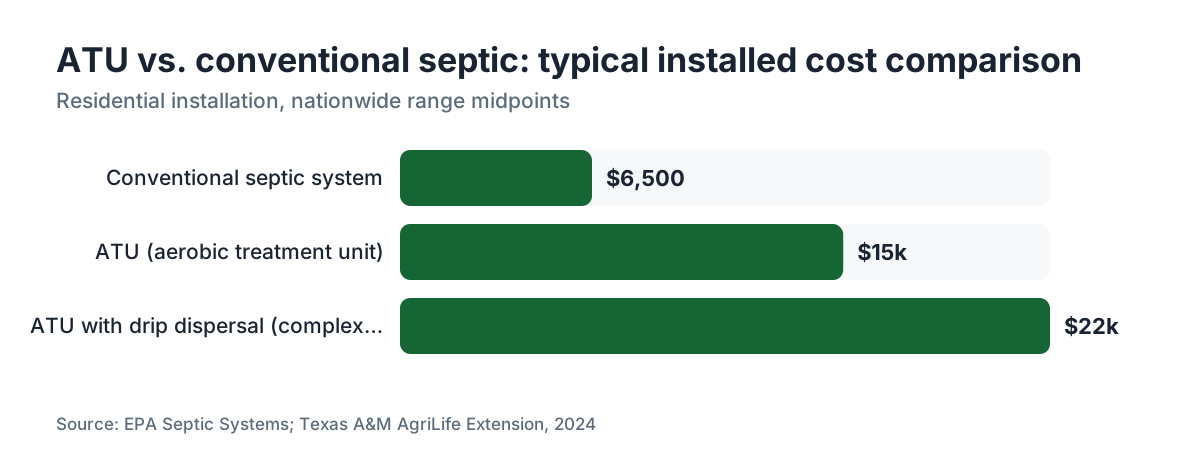
The honest answer: it depends heavily on your state, your lot, and the manufacturer. Most residential ATU installs land between $10,000 and $20,000, with outliers on both ends.
Here's a realistic breakdown of where the money goes:
| Cost component | Typical range |
|---|---|
| ATU unit itself (tank + aeration chamber) | $3,000, $7,000 |
| Installation labor and excavation | $2,500, $6,000 |
| Dispersal system (drip, spray, or reduced drainfield) | $2,000, $6,000 |
| Permits and soil/perc testing | $500, $2,000 |
| Electrical hookup for compressor | $300, $1,000 |
| Disinfection equipment (UV or chlorine) | $200, $800 |
| Total installed (typical residential) | $10,000, $20,000+ |
Big homes, rocky or steep ground, spray irrigation with a large dispersal field, or premium brands can push the total past $25,000. Region matters too. Labor in rural Appalachia runs different from suburban Texas or coastal New England.
Compare that to a conventional system, which usually runs $3,000 to $10,000 installed on a straightforward lot [5]. The ATU premium is real. But on a lot where a conventional system isn't permitted, the comparison is moot. It's either an ATU or no building permit.
For the full cost picture from permits through final inspection, our cost to install septic system guide breaks down every line item.
What are the ongoing maintenance costs of an ATU system?
This is where ATUs really part ways with conventional systems, and where some homeowners get blindsided. Most states that permit ATUs require a maintenance contract with a licensed service provider as a condition of operation. It's not optional. Texas mandates inspections for aerobic systems at least three times a year under its onsite sewage rules [4].
Typical ongoing costs:
- Annual or quarterly service contract: $150 to $500 per year, depending on your state's required inspection frequency and your provider's pricing.
- Chlorine tablets (if the system uses a chlorinator rather than UV): roughly $50 to $150 per year.
- Compressor or aerator replacement: $300 to $800, usually every 5 to 10 years.
- Septic tank pump out of the pre-treatment chamber: every 2 to 5 years, $250 to $600 depending on tank size and region. How often to pump your ATU's pre-treatment tank follows the same logic as any septic tank, driven by how fast solids build up.
Over 10 years, plan for $3,000 to $7,000 in maintenance on top of the install price. That's not a knock on ATUs. It's honest accounting. The system does more work, with more moving parts, and it needs more attention.
One thing I'd actually do: when comparing service bids, ask each provider exactly what they inspect, whether they test effluent quality, and how fast they respond when the alarm trips. A cheap contract where somebody drives by and glances at the panel is not the same as one that logs dissolved oxygen and counts your chlorine tablets.
How do ATU septic systems compare to conventional septic systems?
The table below covers the differences that actually matter when you're deciding between systems or trying to understand what you're buying.
| Factor | Conventional septic | ATU (aerobic treatment unit) |
|---|---|---|
| Treatment level | Primary (partial) | Secondary to tertiary |
| Pathogen reduction | Moderate | High |
| Nitrogen removal | Low | Moderate to high |
| Required lot size | Larger drain field | Smaller dispersal area often allowed |
| Installation cost | $3,000, $10,000 | $10,000, $20,000+ |
| Annual maintenance cost | $100, $300 (pumping only) | $300, $700 (contract + consumables) |
| Mechanical parts | Few (gravity-fed) | Compressor, pump, alarm, disinfection |
| Power dependency | None | Continuous electricity required |
| Lifespan | 25 to 40+ years (tank) | 20 to 30 years (mechanical parts vary) |
| State oversight required | Varies | Required in most states |
Conventional systems are simpler, cheaper, and more forgiving because there's almost nothing to break. ATUs do more but carry more complexity. If your soil and lot support a conventional system, that's still the right pick for most homeowners. The ATU earns its keep when the conventional tool won't fit the problem.
What types of ATU systems are on the market?
"ATU" names a category, not a single product. Within it, the differences matter.
Fixed-film systems (like the Infiltrator IM Series or Bio-Microbics FAST units) grow bacteria on media inside the aeration chamber. The media gives surface area, so bacteria colonize it and don't wash out with the effluent. These handle variable flow reasonably well, which helps for vacation homes or households with uneven water use [8].
Suspended-growth systems (like the Norweco Singulair or AquaKlear) keep bacteria floating in the liquid through constant aeration. They can be a bit more sensitive to sudden heavy loads, like a holiday weekend full of houseguests, but they're well proven and widely approved across states.
Some manufacturers pack pre-treatment, aeration, clarification, and disinfection into one tank. Others use a separate pre-treatment tank (often an existing conventional septic tank) feeding an add-on aerobic unit. Retrofitting an existing tank this way can trim the cost of putting in an ATU when a conventional tank is already on the property.
Brand approval varies by state. Texas keeps a published list of approved aerobic units through its onsite sewage program [4]. Your state's environmental or health agency has a similar list, and your installer has to use an approved product. Don't let a contractor push a unit that hasn't cleared state approval, no matter what he's charging.
What permits and inspections are required for an ATU?
Every state regulates ATUs, and the details vary a lot. The short version: expect more paperwork, more inspections, and more ongoing oversight than a conventional system.
You'll typically need a site evaluation (soil borings, sometimes a percolation test), a system design by a licensed designer or engineer, a construction permit, a final inspection before the system gets covered, and an operating permit or registration. In Texas, the installing company has to hold a license for aerobic systems, and the homeowner must carry a maintenance contract before the final permit is issued [4].
The EPA recommends that homeowners "have their system inspected by a service professional at least every three years," and more often for systems with mechanical or electrical components, which puts ATUs in the frequent-inspection camp [1].
A septic tank inspection for an ATU goes well past checking liquid levels. The inspector should confirm the compressor is running, check dissolved oxygen in the aeration chamber (EPA guidance points to roughly 1.0 to 2.0 mg/L as adequate for most systems), verify disinfection is active, and observe or test effluent quality [9].
Buying a home with an ATU? Pull the maintenance records. A system serviced on schedule looks nothing like one ignored for five years. SepticMind's inspection tracking tools let service operators keep those records digital, which matters when a buyer's attorney asks for documentation at closing.
What can go wrong with an ATU, and what are the warning signs?
ATUs fail in ways conventional systems don't, because they have parts conventional systems don't.
Compressor failure. The aerator or air blower is the most common mechanical failure. When it quits, the system slides back to anaerobic conditions and effluent quality drops fast. Most ATUs sound an alarm and light a panel when dissolved oxygen falls below the setpoint. If your alarm light is on, call your service provider the same day. Don't wait.
Disinfection failure. Chlorine tablets run out. UV bulbs burn out. When disinfection fails, partly treated effluent reaches your dispersal field and possibly groundwater. Quarterly service contracts exist partly to catch exactly this.
Solids carryover. If the aeration chamber runs too turbulent or the clarifier is undersized, solids slip into the disinfection chamber and dispersal system. Over time that clogs drip emitters or spray heads, then the drainfield itself. A clogged drainfield is expensive. See what septic tank repair and septic system repair usually involve when dispersal systems get damaged.
Electrical issues. The compressor needs continuous power. A tripped breaker nobody notices for weeks is a real problem. Some systems dial out or send a text alert. If yours doesn't, the quarterly inspection is your safety net.
Odor at the spray heads. Surface spray systems discharge treated, disinfected effluent. But if disinfection is failing or the system is overloaded, odor shows up. Neighbors notice. Health departments notice. Fix it promptly.
How do you maintain an ATU septic system day to day?
Most of the heavy lifting belongs to your service contractor. But there's plenty a homeowner can and should do.
Keep the chlorinator stocked. If your system uses tablet chlorination, check it every month or two. Tablets are cheap. Running out is not.
Don't bury the spray heads or air vent risers under landscaping. Grass is fine. Shrubs growing into the hardware are not.
Protect the compressor housing. The air blower (usually in a small cabinet at grade or on the tank riser) needs airflow. Don't stack anything against it or paint over the vents.
Watch what goes down the drain. This holds for every septic system but matters more with an ATU, because the biology in the aeration chamber can crash. Bleach by the gallon, antibacterial soap dumped in bulk, and flushed medications all hammer the bacterial population. The University of Florida IFAS Extension advises ATU owners to keep medications, antibacterial products, and household chemicals out of the system [11].
Keep records. Your contractor should hand you a report after every visit. Keep them all. They prove you've met your state's operating permit terms, and they're worth real money at resale.
Schedule septic tank cleaning and pumping of the pre-treatment compartment on the schedule your designer set, usually every 2 to 3 years for a full-time home. Septic tank emptying that waits too long lets solids carry over into the aeration chamber, and that gets expensive to fix. Pair it with routine septic tank pumping so the pre-treatment side never overloads the aerobic zone.
Are ATU systems worth it, and who should actually get one?
If your only alternative is no system at all, the answer is obviously yes. But if you're choosing between an ATU and a conventional system on a lot where both are permitted, the math changes.
A conventional system on that same lot costs $7,000 to $10,000 less upfront and several hundred dollars less per year to maintain. Over 20 years, that gap runs $10,000 to $15,000 or more. Real money.
Where ATUs earn their cost even when they aren't required: properties near sensitive water where nitrogen loading is a concern, lots so tight that an ATU's reduced dispersal area lets you skip a variance, and cases where you want the cleanest possible effluent for environmental reasons.
For a vacation home used off and on, I'd lean toward a fixed-film ATU over a suspended-growth unit if an aerobic system is required, because fixed-film handles dormant stretches and uneven loading better [8]. Even so, any ATU at a vacant property still needs periodic checks. The compressor runs whether you're home or not.
The ATU market has grown up. Units from established manufacturers are reliable when they're maintained. The old reputation, that aerobic systems break constantly and stink, reflects dated equipment and neglected maintenance more than what's on the market now.
For operators running ATU maintenance programs, a platform like SepticMind can hold inspection logs, alarm histories, and contract renewals in one place so nothing slips between quarterly visits.
What does ATU septic system installation look like, step by step?
Knowing the sequence helps you ask sharp questions and spot contractors who cut corners.
- Site evaluation. A licensed evaluator (sometimes a soil scientist, sometimes the installer, depending on your state) takes soil borings and documents soil type, depth to groundwater, and any limiting layers. This decides whether an ATU is required and which dispersal system fits.
- System design. A designer (often an engineer or licensed designer) draws a site plan showing tank placement, dispersal area, setbacks, and specs. It goes to the county health or environmental department with the permit application.
- Permit issuance. Figure 2 to 8 weeks depending on your jurisdiction. Some rural counties move fast. Some suburban ones sit on a backlog.
- Excavation and tank placement. The contractor digs, sets the ATU tank (or tanks, if the design uses a separate pre-treatment tank), runs electrical conduit to the panel, and installs the dispersal system.
- Inspection before backfill. In most states the county inspector has to see the system before it's covered. Don't let your contractor skip it. If he wants to backfill before the inspection, that's a red flag.
- Backfill, seeding, and startup. The compressor fires up, dissolved oxygen gets verified in the aeration chamber, disinfection is initialized, and the system goes live.
- Operating permit or registration. In states that require ongoing oversight, you get an operating permit after final inspection. It's tied to your maintenance contract.
The whole process, site evaluation through final permit, usually takes 2 to 5 months. Budget your time the same way you budget your money. For cost comparisons on conventional septic tank installation versus the ATU route, see our breakdown on cost to put in a septic tank.
Frequently asked questions
How long does an ATU septic system last?
The concrete or polyethylene tank can last 30 to 50 years with normal care. The mechanical parts, compressor, pump, and UV lamp, usually need replacement every 5 to 15 years depending on the component and how hard the household runs the system. A well-maintained ATU with timely part swaps can work for 20 to 30 years before the system as a whole needs a major overhaul or replacement.
Do ATU septic systems require electricity?
Yes, continuously. The air compressor or blower runs around the clock, or cycles automatically on sensors. Most residential ATU compressors draw 200 to 500 watts, adding roughly $15 to $45 a month to your electric bill depending on your rate. A power outage lasting more than a day lets anaerobic conditions build in the aeration chamber, degrading treatment until air comes back on.
Can I install an ATU system myself?
In most states, no. ATU installation needs a licensed installer, a permitted design, and an inspection before backfill. Texas requires both a licensed installer and a licensed maintenance provider as conditions of the operating permit. Even in lighter-licensing states, the electrical connections and tank placement almost always need separate permits. A DIY install without permits can bring fines, forced removal, and trouble selling the property.
How often does an ATU septic system need to be pumped?
The pre-treatment or trash tank usually needs pumping every 2 to 5 years for a full-time home, about like a conventional septic tank. Frequency depends on household size, tank volume, and solids loading. Your state-required contractor checks solids at each inspection and schedules pumping when levels hit the threshold, usually around 30 to 50 percent of tank capacity.
What is the difference between an ATU and a conventional septic system?
A conventional system uses anaerobic bacteria in a tank followed by passive soil absorption in a drain field. An ATU pumps air into the wastewater to grow aerobic bacteria, producing effluent that's much cleaner in pathogens, biochemical oxygen demand, and often nitrogen. ATUs cost more, need electricity and a service contract, and are typically required when soil or lot conditions won't support a conventional system.
What maintenance does an ATU septic system require?
Most states require a maintenance contract with a licensed provider who inspects the system quarterly or annually. Homeowners should refill chlorine tablets every month or two if the system uses tablet disinfection, watch for alarm lights on the panel, and keep the area around the compressor and spray heads clear. The pre-treatment tank needs pumping every 2 to 5 years. Budget $300 to $700 a year for routine maintenance.
Is an ATU system better for the environment than a conventional septic system?
Generally yes, on effluent quality. ATU effluent carries much lower pathogen counts and biochemical oxygen demand than conventional septic effluent. Many ATUs also cut total nitrogen, which matters where nitrate in groundwater or nitrogen loading to coastal waters is a concern. The tradeoff is continuous electricity use, with its own footprint, plus the chlorine disinfection many installations rely on.
How much does it cost to maintain an ATU septic system per year?
Plan for $300 to $700 a year covering the mandatory service contract ($150 to $500), chlorine tablets or UV bulb replacement ($50 to $150), and minor consumables. Every 5 to 10 years, expect a compressor or aerator replacement at $300 to $800. Pre-treatment tank pumping every 2 to 5 years adds $250 to $600 per visit. Over 10 years, total maintenance typically runs $3,000 to $7,000.
What happens if the ATU compressor fails?
Most ATUs sound an alarm and light a panel when the compressor fails or dissolved oxygen drops below the setpoint. Without air, the aeration chamber reverts to anaerobic conditions within 24 to 48 hours and treatment quality drops hard. Call your service provider immediately and cut back on water use in the meantime. Compressor replacement usually takes 1 to 2 days once parts arrive. Running a failed ATU for weeks risks overloading the dispersal field.
Can an ATU be used with a drip irrigation dispersal system?
Yes, and it's a common pairing. ATU effluent is usually clean enough to meet the treatment standards for subsurface drip irrigation, which spreads treated effluent through small emitters buried a few inches down. Drip works well on sloped or oddly shaped lots where a conventional drain field can't be laid out. It needs periodic flushing and emitter checks but disperses in a smaller footprint.
Do ATU septic systems smell?
A properly running ATU with working disinfection shouldn't produce noticeable odor at the spray heads or around the tank. Aerobic treatment actually reduces the sulfur compounds behind the classic septic smell. If you catch odor near the spray heads or riser lids, it usually means disinfection has lapsed, the system is overloaded, or solids are carrying over into the dispersal field. All three are fixable but need prompt attention.
Will homeowner's insurance cover an ATU septic system?
Standard homeowner's policies typically exclude septic system failure, ATUs included. Some insurers sell septic riders or endorsements that cover mechanical failure of parts like the compressor or pump. A few specialty home warranties also cover ATU mechanical components. Read the language carefully: coverage for "sudden and accidental" mechanical breakdown is very different from coverage for gradual failure or neglect. Get the exclusions in writing before you assume you're covered.
How do I know if my property requires an ATU?
Your county or state health or environmental agency decides, based on soil evaluation results, lot size, setback constraints, and proximity to sensitive water. A licensed evaluator runs soil borings and, in some states, a percolation test. If the soil fails conventional system requirements, or the required dispersal area won't fit after setbacks, the evaluator specifies an alternative system, which often means an ATU.
Sources
- EPA, Septic Systems (SepticSmart and homeowner guidance): ATUs inject air to grow aerobic bacteria producing effluent that receives a higher level of treatment than a conventional system; EPA recommends professional inspection at least every three years, more often for systems with mechanical components.
- University of Minnesota Extension: Advanced treatment systems like ATUs can allow reduced dispersal area compared to conventional drain fields in states that recognize the higher effluent quality.
- Texas Commission on Environmental Quality, On-Site Sewage Facilities (30 TAC Chapter 285): Texas requires aerobic system inspections at least three times a year, a licensed installer, and a maintenance contract as a condition of the operating permit, and maintains a list of approved aerobic units.
- EPA, Septic Systems: Conventional septic systems typically cost $3,000 to $10,000 installed on a straightforward residential lot.
- Penn State Extension, Aerobic Treatment Units: Aerobic treatment units consist of a pre-treatment compartment, aeration chamber, clarifier, and disinfection zone before effluent reaches the dispersal system.
- NC State Extension: ATUs require continuous electricity for the air compressor and ongoing licensed maintenance to keep permitted operating status.
- National Environmental Services Center, West Virginia University: Fixed-film aerobic treatment units tolerate variable and intermittent flow better than suspended-growth units, making them a common recommendation for seasonal or vacation properties.
- EPA, Onsite Wastewater Treatment Systems guidance: Adequate dissolved oxygen levels in ATU aeration chambers are typically in the range of 1.0 to 2.0 mg/L for effective aerobic treatment.
- Texas A&M AgriLife Extension: Residential ATU installation in Texas typically ranges from $10,000 to $20,000 depending on system size, soil conditions, and dispersal method.
- University of Florida IFAS Extension: Homeowners with ATUs should avoid flushing medications, antibacterial products, and household chemicals that can disrupt the aerobic bacterial community.
- EPA, Septic Systems (what not to flush guidance): EPA advises against flushing medications, wipes, and household chemicals into septic systems, including ATUs.
Last updated 2026-07-09