Portable septic systems: what they are, what they cost, and when they make sense
By the SepticMind Editorial Team
TL;DR
- A portable septic system is a self-contained or relocatable waste unit used where a permanent system isn't practical or permitted.
- Types range from holding tanks and composting toilets to aerobic treatment units and package plants.
- They cost $500 to $20,000 or more depending on capacity and treatment level.
- Every type still needs regular pumping or maintenance, and most need a permit.
What is a portable septic system?
A portable septic system is any self-contained, relocatable, or temporary wastewater setup that handles sewage without a permanent in-ground drainfield tied to a fixed structure. The term is a catch-all, and that creates confusion fast.
Here's the honest breakdown. Some products called "portable" are genuinely movable, like a trailer-mounted holding tank at a construction site. Others are permanent once installed but get marketed as portable alternatives for remote cabins, tiny homes, or lots that fail a perc test. The distinction changes your permit path, your maintenance schedule, and whether the system is even legal where you live.
The EPA's SepticSmart program groups on-site wastewater treatment broadly, but it's clear that alternative systems, including mound systems, drip irrigation, and aerobic treatment units, are regulated under state and local codes just like conventional septic [1]. Portable does not mean unregulated.
You'll run into five main categories: holding tanks, composting toilets, aerobic treatment units (ATUs), package treatment plants, and trailer-mounted or contained portable restrooms. Each has a different cost profile, a different maintenance demand, and a different legal footprint. We'll cover all five.
What are the different types of portable septic systems?
Holding tanks. The simplest option. A watertight tank, buried or above ground, stores all wastewater with zero treatment. Nothing leaves until a pump truck empties it. Cheap to buy ($800 to $3,000 for a polyethylene tank in the 500 to 1,500-gallon range) and expensive to run, because every gallon has to be hauled away. A family of four generates roughly 200 to 300 gallons a day, so a 1,000-gallon tank fills in three to five days [2]. Holding tanks make sense for seasonal cabins with very low use, or as a stopgap while a permanent system gets permitted. They are not a long-term answer for full-time residents.
Composting toilets. These handle toilet waste (blackwater) only, breaking it down aerobically into a dry, compost-like material. They produce no liquid effluent from solids, but most units still generate some leachate that has to be evaporated or disposed of separately. Self-contained units cost $900 to $2,500. Central systems for a whole house run $3,000 to $7,000 [3]. They need consistent carbon material added, the compost chamber emptied every few months to once a year depending on use, and steady attention to avoid odor or pathogen problems. Most states require a separate greywater system for sink and shower water.
Aerobic treatment units (ATUs). Compact, self-contained treatment systems that pump air into the waste to speed up bacterial breakdown, producing cleaner effluent than a conventional septic tank. Many jurisdictions let ATU effluent discharge to a smaller drainfield, or even surface spray in some cases. They cost $6,000 to $15,000 installed and require an annual maintenance contract in most states, because the blowers and pumps need regular inspection [4]. ATUs aren't really portable, but they get proposed as alternatives when a full conventional system won't work.
Package treatment plants. Scaled-up ATU-style systems, usually fiberglass or concrete tanks with built-in aeration, clarification, and sometimes UV disinfection. Used at remote lodges, RV parks, small subdivisions, or big construction sites. Costs start around $15,000 and climb fast with capacity. Most states regulate them as wastewater treatment facilities, not on-site septic systems.
Trailer-mounted and portable restroom systems. The classic porta-potty and its fancier cousins: self-contained restroom trailers with flush toilets, sinks, and built-in holding tanks. These are rental items for events and job sites, not permanent solutions. Rental runs $100 to $500 per week per unit. Luxury restroom trailers run $500 to $2,000 for a weekend event [5]. Pumping is usually built into the rental agreement on a set schedule.
What does a portable septic system cost?
Cost swings so hard by type that a single number tells you nothing. Here's a real comparison:
| System type | Purchase/install cost | Ongoing annual cost | Notes |
|---|---|---|---|
| Holding tank (1,000 gal) | $800 to $3,000 | $2,000 to $10,000+ (pumping) | Depends entirely on usage frequency |
| Composting toilet (self-contained) | $900 to $2,500 | $50 to $200 (supplies) | Still need greywater handling |
| Composting toilet (central) | $3,000 to $7,000 | $100 to $400 | Installation not included |
| Aerobic treatment unit | $6,000 to $15,000 | $300 to $600 (service contract) | Permit and drainfield cost extra |
| Package treatment plant | $15,000 to $80,000+ | $1,500 to $5,000 | Regulated as treatment facility |
| Porta-potty (rental) | N/A | $1,200 to $6,000/year | For construction, not residential |
The holding tank fools people. The tank is cheap. But if you're paying $200 to $400 per pump-out and doing it weekly or biweekly, you're looking at $10,000 or more a year in hauling for a full-time household [6]. That math kills the holding tank as a permanent residential option in a hurry.
A composting toilet paired with a simple greywater system is the most common "portable" setup for off-grid cabins. Total installed cost usually lands between $3,000 and $8,000, well under a conventional septic system at $10,000 to $25,000 for a basic install [7]. See our guide to cost to install septic system for the conventional baseline.
People underestimate permits. In most states you'll pay $200 to $1,500 for an alternative system permit, and some counties require a licensed engineer to design it and a licensed installer to put it in. That adds another $1,000 to $3,000 in professional fees.
Do portable septic systems require permits?
Yes, in almost every state and county. This is the part that surprises people most.
The EPA leaves on-site wastewater regulation to the states, and every state writes its own rules. The pattern holds anyway: any system handling sewage on a property, conventional or alternative, needs a permit before you install it [1]. A few states carve out self-contained composting toilets under a certain capacity, but even those usually want a notification or registration with the local health department.
Holding tanks get permitted under the same process as septic tanks. Composting toilets often fall under a separate alternative system permit. ATUs almost always require a full on-site wastewater permit plus an ongoing maintenance contract filed with the state.
The National Environmental Services Center at West Virginia University, which trains regulators and installers nationwide, notes that "most state regulations do not have specific provisions for alternative toilets and will defer to the manufacturer's installation manual and local health department requirements" [8]. In plain English: call your county health department before you buy anything.
Temporary installs, like a construction site or a seasonal event, usually run under a separate temporary use permit for portable restrooms. Those are simple, and the rental company handles them.
Skipping the permit is a real mistake. An unpermitted system can bring fines, a forced removal, and headaches when you sell. Home inspections increasingly flag unpermitted wastewater systems, and buyers walk.
When does a portable septic system actually make sense?
There are legitimate use cases, and then there are people who want a portable system to dodge the cost and hassle of a real one. Those are different things.
Good use cases:
Remote or seasonal property with very low use. A composting toilet plus a simple greywater system works for a cabin you visit 10 to 20 weekends a year. The compost chamber fills slowly, maintenance stays manageable, and you skip the cost of a full septic system on land that may have bad soils anyway.
Property that fails a perc test. If your soil won't support a conventional drainfield, an ATU or a mound system may be your legal route to living there. These aren't truly portable, but they fill the same alternative-system niche.
Construction sites and temporary events. The classic porta-potty case. OSHA requires it on any construction site where workers can't reach sanitary facilities within a reasonable walk [9].
Tiny homes and RVs on permanent lots. Some jurisdictions allow a composting toilet with a small greywater system for structures under a certain size. Check local zoning carefully. This varies enormously.
Off-grid homesteading. For people committed to low water use and willing to actively manage a composting system, it's a reasonable long-term choice.
Bad use cases: running a holding tank as a permanent solution for a full-time household (the pumping bills are brutal), or using a portable system to skip permitting on a property that could support a conventional system. County inspectors know the workarounds. They aren't charmed by them.
How often does a portable septic system need to be pumped or serviced?
It depends entirely on the type, but no portable system is maintenance-free. That's the most common misconception, and it's the one that costs people money.
Holding tanks need pumping whenever they fill. For full-time use that's every three to seven days. For a seasonal cabin used two weekends a month, you might pump two to four times a year. Schedule pump-outs before you need them. Overflowing a holding tank is a health hazard and often a legal violation. Our guide to septic tank pumping walks through what a pump-out service involves.
Composting toilets need the solids chamber emptied every one to three months for full-time use, or once or twice a year for seasonal use. Finished compost, if properly processed, can often go on non-food garden areas, but check your state rules. Some states ban land application of humanure no matter how well it's composted.
ATUs require quarterly or semi-annual inspections by a licensed maintenance provider in most states. The blower that oxygenates the tank, the clarifier, and any effluent pump all get checked. Expect $150 to $300 per service visit, usually bundled into an annual contract.
Package treatment plants carry monthly or quarterly inspection requirements in most jurisdictions, often with reporting to the state environmental agency.
For any system that needs pump-outs, septic tank emptying and septic tank pump out are worth understanding in depth. The process is the same whether you're pumping a holding tank or a conventional tank. A licensed hauler vacuum-trucks the contents to a permitted treatment facility.
Can you use a portable septic system in a tiny home or off-grid cabin?
You can, in many jurisdictions but not all, and you need to be precise about the problem you're actually solving.
A tiny home on a permanent foundation gets treated like any other dwelling by most county health departments. You need a permitted wastewater system. A composting toilet with an approved greywater system can qualify in states that explicitly allow it. California, Oregon, and Vermont, for example, have fairly clear pathways for alternative systems in their state plumbing and health codes [10]. Other states are stricter.
A tiny home on wheels is legally an RV in most states. RVs use self-contained holding tanks for blackwater and greywater, emptied at dump stations. That's a portable system by default.
Off-grid cabins in rural areas often see lighter oversight, but lighter doesn't mean none. Most states set minimum standards for any structure people live in, even seasonally. The agency in charge is usually the county environmental health department or the state department of environmental quality.
Here's the practical move. Before you buy a composting toilet for your cabin or tiny home, call your county health department with the specific address of the property. Ask directly what systems they approve for a structure of your type and size. That call takes 20 minutes and saves you from buying a $2,000 toilet the county will make you tear out.
If you're managing multiple cabins with alternative systems, tracking service schedules and compliance records across jobs is where software like SepticMind helps operators stay organized.
What are the real limitations of portable septic systems?
People buy portable systems on optimistic assumptions and learn the constraints the hard way. Here they are.
Capacity is the main issue. Composting toilets are sized for a set number of users per day. Go over that and you get incomplete composting, odor, and leachate overflow. Most residential units are rated for one to four people. Beyond that, you're in package plant territory.
Greywater is usually a separate problem. A composting toilet handles blackwater only. Your sink, shower, and laundry still make greywater, and that needs its own disposal path. In many states a simple greywater system (a mulch basin, subsurface irrigation, or a small drainfield) requires its own permit. Some jurisdictions won't permit greywater disposal from a composting toilet setup at all, which quietly blocks the whole approach.
Climate affects composting performance. Composting is biology. In a cold, unheated cabin in winter, microbial activity slows way down and the compost stops breaking down properly. Some units add heaters to compensate, but that means more complexity and more power draw.
Resale and financing get complicated. Properties with non-conventional systems can be harder to finance and insure. Some lenders require a conventional system inspection during the mortgage process, and an unusual setup raises questions. Our septic tank inspection guide covers what inspectors look for in alternative systems.
Odor control takes active management. A well-run composting toilet is genuinely low-odor. A neglected one is not. The difference is consistent carbon additions, good airflow, and not overloading the unit. It asks more of you than a conventional toilet does.
How does a portable system compare to a conventional septic system?
A conventional septic system has a concrete or polyethylene tank (typically 1,000 to 1,500 gallons for a three-bedroom home) that separates solids from liquids, with the liquid effluent flowing to a drainfield for soil treatment. It's built for decades of service, with pumping every three to five years and almost no day-to-day attention [11].
Portable alternatives trade lower installation cost and portability for a heavier maintenance load. Here's the honest trade-off:
| Factor | Conventional septic | Composting toilet + greywater | Holding tank |
|---|---|---|---|
| Upfront cost | $10,000 to $25,000 | $3,000 to $8,000 | $800 to $3,000 |
| Annual maintenance | $200 to $600 (pumping) | $100 to $400 | $2,000 to $10,000+ |
| User engagement needed | Very low | Moderate to high | Low (just schedule pump-outs) |
| Capacity | High | Low to moderate | Unlimited (just pay for hauls) |
| Regulatory complexity | Standard | Variable by state | Standard |
| Resale impact | Neutral | Possible complications | Possible complications |
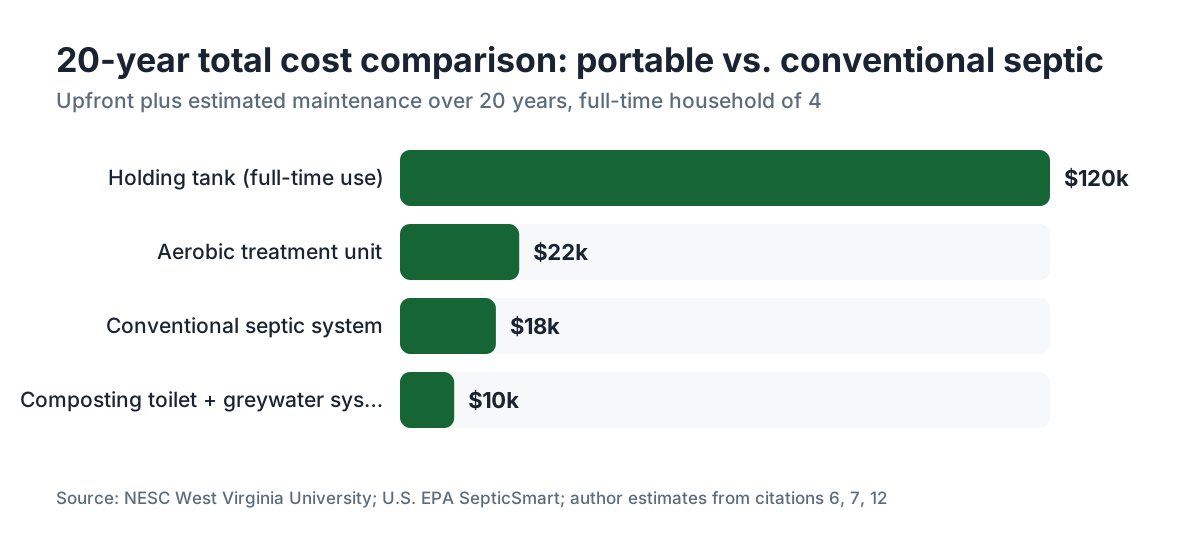
For a full-time household on a lot that can support a conventional system, the conventional system almost always wins on total cost over 20 years despite the higher upfront price. A $15,000 septic system pumped every three years at $400 costs about $17,700 over 20 years [12]. A holding tank for a family of four can easily hit $5,000 to $8,000 a year in hauling, which totals $100,000 to $160,000 over the same stretch.
The composting toilet scenario reads differently. Over 20 years, the system plus supplies and occasional service runs $5,000 to $12,000, genuinely cheaper. But only if your usage pattern, your climate, and your county rules all line up.
What should you look for when buying a portable septic system?
Quality runs across a wide spectrum. Here's what matters.
NSF International certification. NSF/ANSI Standard 41 covers non-liquid saturating composting toilets [13]. An NSF 41-listed unit has been independently tested for pathogen reduction and performance. For ATUs, NSF/ANSI Standard 40 is the one to look for. An uncertified unit saves money upfront but creates permitting problems, because many states only approve NSF-listed alternatives.
Honest capacity ratings. Manufacturers rate composting toilets in adult uses per day. A unit marketed for "2 to 4 adults" is often realistically a 2-adult-per-day unit under full-time use. Read the fine print in the installation manual, not the box.
Parts and service availability. A composting toilet with a proprietary fan assembly or a controller board sold by one supplier is a risk. Ask the manufacturer how long they've made the unit and whether parts are stocked domestically.
Tank material for holding tanks. High-density polyethylene tanks are common and durable, but confirm they're rated for below-grade burial if that's your plan. Above-ground tanks need UV resistance if they sit in the sun.
Local installer support for ATUs. An aerobic treatment unit needs service every three to six months. If there's no licensed ATU provider within a reasonable distance of your property, the system is a liability. Confirm there's a service company in the area before you buy.
For operators running a fleet of portable units or coordinating service across multiple sites, SepticMind's scheduling and dispatch tools are built for exactly that kind of recurring service coordination.
What happens when a portable septic system fails?
Failures look different depending on the type.
A holding tank that overflows or leaks is a straightforward health hazard and a regulatory violation. Raw sewage on the ground or seeping into groundwater can trigger fines, mandatory cleanup, and even property liens in some jurisdictions. The fix is an emergency pump-out plus tank inspection and repair. See septic tank repair for what patching or replacing a damaged tank involves.
A composting toilet failure usually means one of three things: the compost chamber is overloaded and pushing liquid leachate into the vault, the fan or heater has quit and the unit is putting out serious odor, or the compost isn't processing because of cold temperatures or a bad carbon-to-nitrogen balance. Most of these are fixable with maintenance and product knowledge, not a major repair.
ATU failures are more serious because mechanical parts are involved. A dead blower means the system stops treating effluent and starts sending undertreated water to the drainfield. That damages the drainfield over time the same way a failing conventional tank does when it stops separating solids. If an ATU's drainfield clogs from poor treatment, you're looking at a leach field restoration or replacement, which starts around $3,000 and can top $20,000 for a full replacement.
For any system, the fastest path to failure is neglect. The EPA's SepticSmart program puts it plainly: "Have your system inspected every three years and pumped as recommended by your inspector" [1]. That was written for conventional systems, but the principle covers every type.
Frequently asked questions
Is a portable septic system legal for a full-time residence?
It depends on your state and county. Holding tanks are usually permitted but impractical for full-time use because of pumping costs. Composting toilets with an approved greywater system are legal for permanent residences in some states like California, Oregon, and Vermont, but not all. An aerobic treatment unit is a legal alternative in most states if properly permitted and maintained. Always check with your county health department before you buy.
How long does a portable septic system last?
A polyethylene holding tank lasts 20 to 30 years if it isn't damaged. A quality composting toilet has a similar tank lifespan, though electrical parts like fans and heaters may need replacement every 5 to 10 years. Aerobic treatment units typically last 15 to 25 years with regular maintenance. Package treatment plants can last 30 years or more. Every type lasts longer with consistent maintenance than with deferred service.
Can a composting toilet handle all the waste from a household?
No, not alone. A composting toilet handles toilet waste (blackwater) only. Sink, shower, bathtub, and laundry water (greywater) still needs a separate disposal system, usually a permitted greywater system or small drainfield. In some jurisdictions a combined composting toilet plus greywater setup is approved for permanent residences; in others only for seasonal or low-use structures. The greywater piece is where many people get tripped up.
How much does it cost to pump a portable holding tank?
A standard pump-out of a residential holding tank runs $150 to $400 per service call, similar to a conventional septic tank. Costs climb in rural areas with long hauling distances, or for after-hours emergency calls. A full-time household generating 200 to 300 gallons a day fills a 1,000-gallon tank every three to five days, putting annual hauling at $10,000 to $30,000 or more. That math is why holding tanks don't work for full-time residential use.
Do portable septic systems smell?
Holding tanks, sealed properly, have minimal odor above ground. Composting toilets can have a mild earthy smell; good ventilation and proper carbon additions keep it manageable, but a neglected or overloaded unit will stink. Porta-potties smell because of chemical suppression of a high-use holding tank, not because portable systems are inherently smelly. ATUs and package plants are largely odor-free when running right. Odor is almost always a sign of a system that's overloaded or not maintained.
What's the difference between a portable septic system and a regular septic tank?
A conventional septic tank is a permanent in-ground structure that separates solids from liquid, with the liquid flowing to a drainfield for soil treatment. It's built for decades of use with little intervention. A portable or alternative system either stores waste for hauling (holding tank), treats it biologically in a contained unit (composting toilet, ATU), or uses a package plant with mechanical treatment. Portable systems generally carry higher maintenance demands and lower capacity than a properly sized conventional system.
Can I install a portable septic system myself?
A self-contained composting toilet can be installed by a capable DIYer in most cases; the manufacturer's instructions cover ventilation and drainage. A holding tank burial usually needs a licensed installer and a permit. An aerobic treatment unit almost always requires a licensed installer and a signed maintenance contract as permit conditions. Doing electrical or plumbing connections yourself may also violate local codes. Check your county requirements before you buy, not after.
Are portable septic systems good for tiny homes?
For tiny homes on wheels, a self-contained RV holding tank system is standard and practical. For tiny homes on permanent foundations, a composting toilet plus greywater system can work in states that permit it, and the lower cost compared to a full septic system is a real advantage for small structures. The main risk is buying a system before confirming your county will approve it for a permanent dwelling. Some counties simply won't permit alternative systems for full-time residences regardless of size.
What is an aerobic treatment unit and how is it different from a regular septic tank?
An aerobic treatment unit (ATU) pumps air into the waste stream to speed up bacterial decomposition, producing cleaner effluent than a conventional septic tank. The treated effluent can discharge to a smaller drainfield or, in some states, through surface spray irrigation. ATUs cost $6,000 to $15,000 installed and require quarterly or semi-annual service by a licensed provider. They're used when soil won't support a conventional drainfield or when local rules demand a higher treatment standard.
How do I find a permitted hauler for my holding tank or portable septic system?
Your state environmental agency or county health department keeps a list of licensed septage haulers. The National Association of Wastewater Technicians also has a member directory. Don't use an unlicensed hauler. They're required to dispose of septage at a permitted facility, and using an unlicensed one can expose you to liability if the waste gets dumped illegally. Ask for the hauler's license number before you schedule service.
Can a portable septic system freeze in winter?
Yes. Holding tanks buried below the frost line are generally safe, but above-ground tanks and exposed pipes can freeze in severe cold. Composting toilets can stop processing effectively in cold temperatures even with insulation; many units offer optional heaters for cold climates. ATUs have blowers and pumps that freezing can damage. In a climate with hard winters, confirm the system you're considering is rated for your minimum temperatures before you buy.
Does a portable septic system affect property value?
It can, either way. A well-maintained, permitted composting toilet on a remote cabin is expected and generally doesn't hurt value. An unpermitted holding tank, or a non-standard system on a property that should have conventional septic, raises red flags for buyers and lenders. Some mortgage lenders won't finance properties with holding tanks as the primary wastewater system. Disclosure is required in most states, so any system needs to be documented and in compliance.
What regular maintenance does a composting toilet need?
Add a carbon material (wood shavings, coconut coir, or peat) after each use or on the manufacturer's schedule. Check the liquid level in the leachate chamber monthly and drain or evaporate as needed. Clean the bowl and interior every one to two months with a composting-safe cleaner, not bleach. Empty the finished compost chamber every one to three months for full-time use. Inspect the fan and vent pipe yearly; replace the fan every five to ten years as needed.
Sources
- U.S. EPA, SepticSmart: Protect Your Investment: EPA SepticSmart guidance that alternative systems are regulated under state and local codes; recommends inspection every three years and pumping as recommended
- U.S. EPA, Septic System Fact Sheet: Average household generates approximately 70 gallons per person per day in wastewater
- National Environmental Services Center, West Virginia University, Small Flows Quarterly: Cost ranges and operational requirements for composting toilet systems for residential use
- U.S. EPA, Onsite Wastewater Treatment Systems Manual, Chapter 4: Aerobic treatment units require periodic mechanical inspection and most states mandate maintenance contracts
- American Restroom Association, Portable Restroom Industry Overview: Rental cost ranges for portable restroom units and luxury restroom trailers for events
- National Environmental Services Center, West Virginia University, Holding Tanks factsheet: Operational cost analysis of holding tanks for residential use; hauling costs make them impractical for full-time households
- University of Minnesota Extension, Septic System Costs and Alternatives: Conventional septic system installation cost range of $10,000 to $25,000 for a basic system in the Upper Midwest
- National Environmental Services Center, West Virginia University, Alternative Toilets Factsheet: Most state regulations do not have specific provisions for alternative toilets and defer to manufacturer installation manuals and local health departments
- OSHA, Sanitation Standard 29 CFR 1926.51: OSHA requires toilet facilities at construction sites accessible within reasonable walking time for workers
- California State Water Resources Control Board, Graywater Program: California has established regulatory pathways for alternative greywater disposal systems paired with composting toilets
- U.S. EPA, How Your Septic System Works: Conventional septic systems designed for decades of service with pumping every three to five years
- U.S. EPA, SepticSmart: Protect Your Investment: Typical septic system pump-out frequency and cost guidance for household systems
- NSF International, NSF/ANSI Standard 41: Non-Liquid Saturating Composting Toilets: NSF/ANSI 41 is the certification standard for composting toilet performance and pathogen reduction, required for permitting in many states
Last updated 2026-07-09