Engineered septic system: costs, types, and when you need one
By the SepticMind Editorial Team

TL;DR
- An engineered septic system is a custom-designed wastewater treatment system required when standard gravity septic won't work, usually because of poor soil, a high water table, or a small lot.
- Costs run $10,000 to $50,000 or more depending on system type.
- A licensed engineer designs it to meet state code, and permitting plus installation typically takes two to six months.
What is an engineered septic system?
A conventional septic system is basically a tank plus a gravel-filled trench. Wastewater flows by gravity from the house into the tank, solids settle out, and liquid effluent seeps slowly through the soil. That works great on a lot with deep, permeable soil and a low water table. A lot of lots don't have that.
An engineered septic system is any onsite treatment system that needs a licensed engineer or state-registered designer to size, specify, and stamp the plans before the health department will issue a permit. The engineering requirement kicks in when the site falls outside what a standard system can handle. Think clay-heavy soils that drink liquid too slowly, sandy soils that move it too fast to treat it, ledge rock near the surface, high groundwater, steep grades, or a lot too small for the required setbacks.
The EPA's SepticSmart program describes alternative systems as those that treat wastewater to a higher standard before it reaches the soil compared to conventional septic. That's the whole point. An engineered system adds components, or changes the flow path completely, to make treatment work where a conventional system would fail. [1]
The design is site-specific. Two neighbors fifty feet apart can end up with completely different systems based on their soil evaluations. One gets a mound. The other needs a drip field fed by an aerobic treatment unit. The engineering step exists because there is no one-size answer.
State onsite wastewater codes set the specific triggers. In most states the rule reads something like this: if a site fails the standard siting criteria, a licensed professional engineer (PE) or soil scientist has to design a system that reaches equivalent treatment. The National Environmental Services Center at West Virginia University tracks these regulations across all 50 states. [2]
What types of engineered septic systems are there?
There are roughly half a dozen system families you'll run into, each solving a different problem.
Mound systems build an elevated sand bed above the existing soil. Effluent gets pumped up into the mound, where it filters down through engineered sand before reaching the native soil. This is the go-to when the seasonal high water table sits within 24 inches of the surface, or when a restrictive soil layer sits close to grade. Mounds are common across the Upper Midwest and Mid-Atlantic. They're visible from the yard, sometimes a lot, which some homeowners hate. [3]
Aerobic treatment units (ATUs) add an air injection stage inside a multi-compartment tank. Oxygen lets aerobic bacteria chew through waste faster than the anaerobic process in a standard tank. The effluent comes out much cleaner, so it can go into a smaller drainfield or through surface spray. ATUs are common in Texas and the Southeast, often where state code blocks conventional systems near surface water. They need electricity, a maintenance contract, and inspections three to four times a year.
Drip irrigation systems push effluent through buried drip tubing across a wide, shallow area. Dosing is slow and controlled, so even problem soils can take the hydraulic load. These work on tough slopes and tight lots. They need a filter, pump, controls, and regular flushing.
Low-pressure pipe (LPP) systems pump effluent through small-diameter perforated pipes under low pressure, spreading each dose more evenly across the field than gravity would. Simpler than drip, and a good fit when you have enough area but uneven ground.
Recirculating media filters (sand filters, textile filters, peat systems) run effluent through a treatment medium before dispersal. They often serve as a pretreatment step ahead of a small drainfield when the site can't support a full conventional field. [4]
Constructed wetlands and drip-to-surface spray systems show up less often, mostly in states that allow surface discharge for heavily treated effluent.
Most engineered systems mix and match. A mound still has a septic tank and usually a pump chamber. An ATU often feeds a drip field. The engineering report spells out each component, the sizing basis, and the loading rates.
How much does an engineered septic system cost?
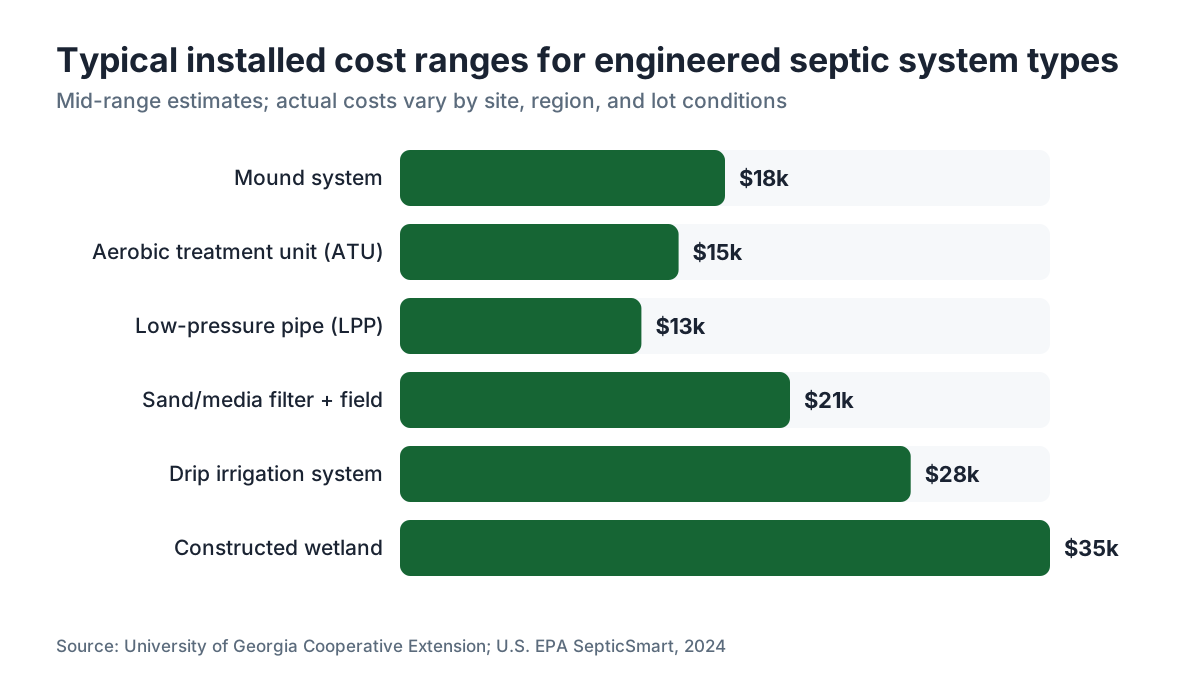
Everyone asks this first, and the honest answer is that it swings hard with system type and local labor rates. The range is wide.
| System Type | Typical Installed Cost | Main Cost Driver |
|---|---|---|
| Mound system | $10,000, $25,000 | Sand fill, earthwork, pump |
| Aerobic treatment unit (ATU) | $10,000, $20,000 | Unit cost, electrical, maintenance contract |
| Drip irrigation system | $15,000, $40,000 | Tubing, controls, pump, filter |
| Low-pressure pipe (LPP) | $8,000, $18,000 | Pump, distribution network |
| Sand/media filter + field | $12,000, $30,000 | Filter media, liner, secondary field |
| Constructed wetland | $20,000, $50,000+ | Cell construction, media, liner |
Those ranges come from state extension programs and installer surveys, not from firm quotes. Your actual number depends on excavation difficulty, local permit fees, the engineer's design fee, and whether the site needs prep work like tree clearing or rock removal. [5]
The engineering and permitting piece alone usually runs $1,500 to $5,000, more in states with a dual-permit process (health department plus environmental agency). That's separate from the installation contract and comes on top of it.
Don't forget the ongoing costs. ATU service contracts typically run $200 to $500 a year. Drip systems need periodic filter changes and pump inspections. Mounds need the same pumping schedule as any septic system, roughly every three to five years, plus attention to the pump float switches. [6]
The cost to install a septic system page breaks down conventional versus alternative pricing if you want to compare against a standard gravity system on a suitable lot.
How much does it cost to fix a septic system?
Repair costs swing wildly based on what broke. A small fix, like replacing a cracked baffle inside the tank or swapping a dead pump, runs $200 to $800. Bigger fixes climb fast.
A failed drainfield on a conventional system costs roughly $3,000 to $15,000 to replace, depending on field size, soil, and whether the whole system needs a redesign. On an engineered system, a failed component drags in the same permitting chain that governed the original install in most states. That adds time and money.
On a drip system, a failed pump or clogged emitter zone runs $500 to $2,500. Replacing an ATU blower or diffuser runs $400 to $1,500. A full ATU swap runs $5,000 to $12,000 for the unit plus installation. Mound pump failures, usually the effluent pump or float switch, run $500 to $1,500.
The expensive scenario is a failed mound or drip dispersal field. Once biomat saturates the sand, restoration can mean rebuilding the mound from scratch: $8,000 to $20,000.
See the septic system repair and septic tank repair pages for component-level repair costs. Regular septic tank pumping every three to five years is still the cheapest maintenance move you can make, no matter the system type. Solids carryover from an under-pumped tank is a leading cause of drainfield failure across every engineered design. [7]
When does a site require an engineered septic design?
A site needs engineered design when it fails the standard siting criteria: perc rate outside the acceptable range, water table too high, not enough suitable soil depth, or a lot too small for required setbacks. Fail one of those and the standard permit gets denied, pushing you onto the engineered track. Most states use perc tests and soil profile evaluations (soil morphology, which tells you more than a perc test does) to judge suitability.
Specific triggers vary by state. Minnesota requires engineered design when a site has less than 36 inches of unsaturated soil above the seasonal high water table in many soil types. [8] Texas requires engineered plans for any system in a county under TCEQ's On-Site Sewage Facilities rules when the site doesn't meet standard criteria. [9]
New construction on a vacant lot hits the requirement most often. But existing homeowners get pushed there too. When a failed conventional system needs replacing and the original site was documented as marginal, regulators won't approve a like-for-like swap. They require an upgrade to a system that can actually treat the wastewater given the real constraints.
A licensed soil scientist or PE evaluates the site before design starts. That evaluation usually includes a soil profile description to identify texture, structure, and any restrictive horizon; a percolation test (in states that still require one, since some have moved to morphology-only); and a seasonal high water table call, read from iron and manganese mottling in the soil or from monitoring wells. The engineer then picks the system type and sizes it against design flow (bedroom count, or metered water use if you have it).
What does the engineering and permitting process look like?
The process runs more steps than a conventional permit, and it usually adds two to four months to the project. Here's the sequence.
Step one is the site evaluation. A soil scientist or PE visits, digs test pits, pulls soil samples, and runs any required perc tests. That generates the soil report the whole design rests on. Budget $500 to $2,000 for the evaluation by itself.
Step two is system design. The engineer picks the system type, sizes each component, specifies setbacks and construction details, and produces stamped plans. In most states those plans have to meet a specific standard, like NSF/ANSI 245 for nitrogen-reducing systems or state treatment performance rules. The design fee usually runs $1,500 to $4,000, higher for complex sites.
Step three is the permit application. The engineer or homeowner submits the stamped plans to the local health department (and sometimes a separate state agency) along with the site report, application form, and fee. Permit fees range from under $100 in some rural counties to over $1,000 in others.
Step four is review and approval. Agencies may kick back revisions. Typical review runs two to eight weeks, longer at understaffed health departments.
Step five is installation. The contractor builds to the stamped plans. In many states the engineer has to do construction observation, visiting at key stages (excavation, component placement, backfill) and signing a completion certification.
Step six is final inspection and as-built documentation. The health department typically does a final inspection, and the engineer produces an as-built drawing showing where everything actually went in. That document matters for future maintenance and resale.
Start to finish, a straightforward engineered system takes two to six months. Complex sites or backlogged agencies can stretch that to a year.
How do you maintain an engineered septic system?
Engineered systems demand more upkeep than conventional ones, and most states make that upkeep legally binding through a recorded Operation and Maintenance (O&M) agreement tied to the property deed. Skip it and you can lose the permit.
The pumping baseline is the same: pump the septic tank every three to five years. The EPA recommends inspecting your septic system every one to three years and pumping as needed based on solids. [1] For engineered systems with pretreatment units, inspection frequency often jumps to annual or quarterly.
ATUs have the heaviest maintenance profile. Texas, for one, requires a maintenance contract with a licensed service provider as a condition of the permit. Service providers visit two to four times a year, check dissolved oxygen, inspect the blower, clean filters, pull effluent samples for permit compliance in some counties, and service any UV disinfection unit.
Drip systems need the distribution filters flushed or replaced, usually once or twice a year depending on effluent quality. The pump, controls, and dosing timer get an annual inspection. If emitters clog, zones can be flushed or pressure-checked to find the problem.
Mounds need the pump chamber inspected yearly: pump, float switches, high-water alarm. The mound surface should carry grass to hold against erosion, but no trees or shrubs, whose roots clog the sand.
For every engineered system, keep the O&M manual the engineer produced. It spells out exactly what to check and when. Lose it and you're guessing. Many states require the manual to pass to new owners at resale.
Operators running multiple engineered systems across client accounts can track O&M schedules, inspection records, and permit compliance dates in SepticMind's service operations platform, which integrates with state permit databases in several states.
How long does an engineered septic system last?
A well-maintained mound should last 20 to 30 years before the sand fill saturates and needs replacing. ATU tanks from major manufacturers carry 20-plus-year lifespans, though internal parts (blowers, diffusers, pumps) need swapping every five to ten years. Drip systems run similar component lifespans, with the tubing itself good for 20 to 25 years if it's protected from roots and UV.
Nobody has great national data on engineered system longevity. Most of what's published comes from state extension programs with small sample sizes. University of Minnesota Extension guidance says properly maintained alternative systems in that state perform well for 25 to 30 years. [3]
The biggest longevity killers are the same across every system type: too much water going in, skipped pumping, heavy garbage disposal use (it makes far more solids), and flushing things that don't break down. An engineered system running at 50 gallons per day per bedroom when it's sized for 75 will outlast one that sits at or above design capacity year after year.
Water conservation extends system life in a way you can measure. EPA's WaterSense program estimates that swapping old toilets for low-flow models cuts per-capita daily water use by roughly 20 to 60 gallons, which drops the hydraulic load on the dispersal field directly. [10]
Can you build a house on a lot that fails standard perc?
Usually yes, but it costs you. A lot that fails standard siting criteria isn't automatically unbuildable. It just needs an engineered solution. The real question is whether that solution's cost keeps the project worth doing.
Buying a lot for new construction? Get the soil evaluation done before you close. Plenty of buyers negotiate a site evaluation contingency specifically to avoid committing to a lot where the engineered system cost blows up the budget. A lot might appraise at $80,000, but if an engineered system adds $40,000 to $50,000 on top of the house build, the math changes fast.
Some lots are genuinely unbuildable under current rules, even with engineering. If the water table sits within inches of the surface year-round, if there's no space meeting setbacks, or if the agency decides no system can hit the required treatment, no permit gets issued. Rare, but real.
Replacement systems on existing homes are a different story. If your conventional system fails and your lot only supports an engineered replacement, you don't really have a choice: you need the engineered system to keep the house habitable. Regulators often work with homeowners on phased approaches or hardship variances, but the system has to meet current standards eventually.
See cost to put in a septic tank and septic tank installation for standard install costs so you can benchmark the premium an engineered design carries.
How does an engineered system affect your property at resale?
Disclosure rules for septic systems vary by state, but most require the seller to disclose the system type, last inspection date, and any known deficiencies. Buyers in many markets now routinely request a septic tank inspection as a condition of sale.
Engineered systems cut both ways at resale. A newer ATU or mound in good working order, with current O&M records, is not a deal-killer. It shows the site has a permitted, code-compliant solution. That beats an old conventional system with unknown condition.
The trouble starts when the O&M records go missing, the maintenance contract lapses, or the system falls out of compliance with its permit. Some ATU permits require annual reporting to the county. A seller who skipped that reporting can face costly remediation before closing.
The as-built drawing and the O&M manual are the two documents that matter most at resale. Keep them with the house files. If you bought a home with an engineered system and those papers are gone, call the local health department. Permitted systems usually have a file on record. If the engineer who designed it is still in business, they should have copies too.
SepticMind's operations software gives service operators a digital record trail of every inspection and service visit, which homeowners can request as part of a resale package. That kind of documentation makes for cleaner transactions and lowers buyer risk.
How do you find a qualified engineer for an engineered septic design?
Start with your state health department's website. Most states keep a roster of licensed designers or engineers approved to design onsite wastewater systems. Some states require a specific onsite wastewater license or registration separate from a general PE license. California, Texas, Minnesota, and others have these specialty registrations.
Or just ask the county health department's environmental staff who designs most of the engineered systems in your area. They read the permit applications every day and will tell you which designers turn in complete, approvable plans. That informal referral often beats any directory.
When you're sizing up an engineer, ask one question: how many systems of this exact type have you designed and seen through to completion in this county? State rules vary enough that local experience counts. An engineer who has done fifty mound systems in your state's soil types is worth more than a generalist who has done two.
Get itemized quotes. A lump-sum design fee with no defined scope invites scope creep. A clean scope should cover the site visit, soil evaluation review, system design and stamped plans, permit application support, construction observation visits (say how many), and as-built documentation. Some engineers bundle more, some less.
The National Onsite Wastewater Recycling Association (NOWRA) keeps a member directory that includes engineers and designers. [11] The EPA's Onsite Wastewater Treatment Systems Manual is the closest thing to a national technical reference for this field and cites the design standards your engineer should be working to. [4]
Frequently asked questions
How much does an engineered septic system cost on average?
Most engineered septic systems cost between $10,000 and $50,000 installed, depending on system type, site conditions, and regional labor. Mound systems run $10,000 to $25,000. Drip irrigation systems run $15,000 to $40,000. Add $1,500 to $5,000 for engineering and permitting on top of the installation price. Complex sites or large homes can run past $50,000.
How much does it cost to fix a septic system?
Simple repairs like a failed pump or broken baffle cost $200 to $1,500. Replacing a failed drainfield runs $3,000 to $15,000. On an engineered system, repairing an ATU blower costs $400 to $1,500. Rebuilding a failed mound can cost $8,000 to $20,000. The total depends heavily on what failed and whether the repair requires new permits from the local health department.
What triggers the requirement for an engineered septic design?
A site requires engineered design when it fails standard siting criteria: perc rate outside the acceptable range, seasonal high water table too close to the surface, not enough depth to bedrock or a restrictive soil layer, or too little lot area for required setbacks. Each state sets its own thresholds. Some states now require engineered design for all new systems regardless of site conditions.
How long does it take to get an engineered septic permit?
Expect two to six months from initial site evaluation to final permit approval for a straightforward engineered system. Complex sites, revision requests from the health department, or backlogged county agencies can push that to a year. The design and review phase alone usually takes four to ten weeks after the engineer submits stamped plans. Start early, especially on new construction.
Do engineered septic systems require more maintenance than conventional ones?
Yes. Conventional systems need pumping every three to five years and occasional inspections. Engineered systems add to that: ATUs typically need quarterly or annual service contracts, drip systems need filter service and pump inspections, and mounds need annual pump chamber checks. Most states record a mandatory O&M agreement on the property deed, making maintenance a legal obligation tied to the permit.
Can a failed conventional septic system be replaced with another conventional system?
Only if the site still meets current siting criteria under today's code, which is often stricter than the code in place when the original system went in. Many failed conventional systems have to be replaced with an engineered alternative because the marginal conditions that caused the original failure disqualify a like-for-like swap. Your local health department makes that call after a site evaluation.
What is the difference between a mound system and a conventional septic system?
A conventional system relies on gravity flow into a gravel trench below grade and needs deep, permeable soil with low groundwater. A mound system pumps effluent up into an elevated bed of engineered sand built above the existing ground. The mound creates the soil depth and treatment distance the native site lacks. Mounds cost significantly more and sit visibly raised above yard grade.
Are aerobic treatment units (ATUs) worth the extra cost?
ATUs produce cleaner effluent than standard septic tanks, allowing smaller drainfields and use in areas where conventional systems are banned near surface water. On a site that genuinely needs one, yes, they're worth it because they're the option that gets a permit. The downside is ongoing electricity and mandatory service contracts costing $200 to $500 a year. On a site where a simpler system would work, they're unnecessary.
Does a septic system inspection reveal whether the system is engineered?
A thorough inspection should identify the system type, including whether it has an ATU, pump chamber, mound, or drip field. The inspector locates and checks each component. To confirm it's a permitted engineered system, ask to see the as-built drawing and the permit from the local health department. Properties with engineered systems should have both documents on file, either with the homeowner or at the county office.
How often does an engineered septic system need to be pumped?
The septic tank in an engineered system needs pumping on the same schedule as any tank: roughly every three to five years for a typical household, based on solids accumulation. The EPA recommends inspecting the system every one to three years. Some engineered system permits set a mandatory inspection interval. If the system includes a pump chamber, that chamber also needs solids removed during pumping service.
What happens if you don't maintain an engineered septic system?
Skipping maintenance leads to component failures and eventually drainfield failure, often faster than on a conventional system because engineered systems carry more moving parts. ATUs with dead blowers revert to anaerobic treatment, dropping effluent quality and potentially clogging the dispersal field. In states with mandatory O&M programs, non-compliance can bring permit violations and fines, and failing to disclose at resale can expose sellers to liability.
Can I design my own engineered septic system to save money?
No. States that require an engineered design require it to be prepared and stamped by a licensed professional engineer or state-registered designer. A homeowner-prepared plan won't be accepted for permitting. You can trim costs by being organized during the engineer's site visit, having survey data ready, and getting multiple design quotes, but the PE stamp requirement is non-negotiable.
Does an engineered septic system affect property value?
A permitted, well-maintained engineered system generally doesn't reduce property value compared to a functioning conventional system, and in some markets it reads as a plus because it signals a code-compliant solution on a tough lot. Problems show up when maintenance records are missing or the system is out of permit compliance. Missing O&M documentation or lapsed maintenance contracts can complicate or delay a sale.
What is the NSF/ANSI 245 standard for engineered septic systems?
NSF/ANSI 245 is a voluntary performance standard for residential wastewater treatment systems that certifies a unit reduces total nitrogen by at least 50 percent compared to conventional septic effluent. Several states require NSF 245-certified systems in nitrogen-sensitive areas near coastal water or lakes. If your property sits in a Chesapeake Bay watershed state or a Florida nutrient-sensitive zone, ask your engineer whether an NSF 245-certified system is required.
Sources
- U.S. EPA, SepticSmart homeowner information: EPA describes alternative systems as treating wastewater to a higher standard before it reaches the soil; EPA recommends inspecting septic systems every one to three years and pumping as needed.
- National Environmental Services Center, West Virginia University, Onsite Wastewater Treatment Systems: NESC tracks onsite wastewater regulations and design requirements across all 50 states.
- University of Minnesota Extension, Mound Septic Systems: Minnesota Extension guidance on mound system performance, indicating properly maintained alternative systems last 25 to 30 years; mound systems are common when seasonal high water table is close to the surface.
- U.S. EPA, Onsite Wastewater Treatment Systems Manual (EPA/625/R-00/008): Describes treatment media filters (sand filters, textile filters, peat systems) as pretreatment for sites unable to support full-size conventional drainfields; serves as a national technical reference citing design standards.
- University of Georgia Cooperative Extension, Septic System Costs and Types: State extension cost ranges for alternative system types including mound, ATU, drip, and LPP systems.
- U.S. EPA, SepticSmart, Protect Your Investment: EPA recommends pumping septic tanks every three to five years as part of routine maintenance.
- U.S. EPA, How to Care for Your Septic System: Solids carryover from under-pumped tanks is a leading cause of drainfield failure across septic system types.
- Minnesota Pollution Control Agency, Mound Septic Systems in Minnesota: Minnesota rules require engineered design when seasonal high water table is less than 36 inches from the surface in many soil types.
- Texas Commission on Environmental Quality (TCEQ), On-Site Sewage Facility Rules: Texas TCEQ requires engineered plans for systems in counties under OSSF rules when sites do not meet standard siting criteria; ATU systems require maintenance contracts.
- U.S. EPA, WaterSense Program: Replacing old toilets with WaterSense-certified models reduces per-capita daily water use by roughly 20 to 60 gallons per day.
- National Onsite Wastewater Recycling Association (NOWRA): NOWRA maintains a member directory of onsite wastewater engineers and designers.
- NSF International, NSF/ANSI 245 Standard for Residential Wastewater Treatment Systems: NSF/ANSI 245 certifies residential wastewater treatment systems that reduce total nitrogen by at least 50 percent compared to conventional septic effluent.
Last updated 2026-07-09