Emergency septic tank treatment: what actually works and what doesn't
By the SepticMind Editorial Team
TL;DR
- A real septic emergency (sewage backup, gurgling drains, ponding over the field) needs a pump-out first, not a bottle of bacteria.
- Additives can re-seed a stressed system after pumping, but no product fixes a full tank, a failed drain field, or a broken pipe.
- Act within 24 hours to avoid health code violations and thousands in repair costs.
How do you know you have a real septic emergency?
Some signs are annoying. Others are urgent. Knowing the difference changes what you do in the next hour.
A real emergency looks like this: multiple drains backing up at once, the toilet gurgling when the washing machine runs, sewage surfacing in the yard over the drain field, or a rotten-egg smell (hydrogen sulfide) inside the house. Any one of these means the system is overwhelmed right now, well past overdue for routine service.
A slow single drain is almost always a household plumbing clog, not a septic failure. Don't pump the tank for a slow bathroom sink. Do pump the tank if every fixture in the house drains slowly or not at all.
The EPA's SepticSmart program puts it plainly: "A failing septic system can contaminate groundwater and nearby surface water, posing a public health risk." [1] That's why most county health departments treat active sewage surfacing as a public health violation that needs a licensed contractor within 24 to 48 hours, not a DIY weekend project.
In Washington, for example, Snohomish County (which covers Bothell) requires you to report a failing system to the county environmental health division and get a repair permit before substantial work begins. [2] That permit requirement doesn't disappear because it's a Friday night.
What should you do in the first hour of a septic emergency?
Stop adding water to the system. Every gallon you flush pushes sewage closer to backing up into living space or surfacing in the yard. Shut off the dishwasher, hold the laundry, and tell everyone in the house to skip showers until a pumper arrives.
Call a licensed septic pumping company. Most areas have emergency after-hours service. It costs more, usually 1.5x to 2x the standard rate after hours, but a same-day pump-out on an overloaded tank is far cheaper than sewage soaking into flooring, subfloor, or insulation. [3]
While you wait, find your tank's access lid. On older systems it's sometimes buried under 6 to 12 inches of soil. If you know where it is, mark it with a flag or stake so the technician can find it fast.
Don't add anything to the drains. No bleach, no Drano, no "emergency septic treatment" product, nothing. Whatever is in those pipes needs to stay put until a pumper can read the tank level and condition. Dumping chemicals into an already overwhelmed system can kill the bacterial colony you'll need to rebuild later.
A standard septic tank pump out on a 1,000-gallon tank runs $300 to $600 in most markets. Emergency or after-hours calls run $500 to $900 or higher depending on region. [3]
Does emergency septic tank treatment actually work?
Here's the honest answer, not a product pitch.
Bacterial and enzymatic additives sold as "emergency septic tank treatment" do one thing: they add or boost microbes in the tank. The bacteria and enzymes in these products (mostly Bacillus strains and cellulase/protease enzymes) help break down organic solids in a tank that still has healthy hydraulic capacity to spare. [4]
What they can't do is remove sludge and scum that already built up past the outlet baffle. They can't unclog a drain field sealed by biomat (a layer of anaerobic biomass that plugs soil pores). They can't fix a cracked pipe, a broken baffle, or a shifted distribution box.
The EPA reviewed the science on septic additives and found, in its own words, "no scientific evidence that biological additives improve the performance of a properly functioning septic system," and noted that some chemical additives can harm the system or contaminate groundwater. [1] That covers the whole category.
So where do additives earn their keep? After an emergency pump-out, when you're re-seeding the bacterial population that got disrupted. Or as a monthly dose in a system that sees irregular use, like a vacation home. Not as a first response to a backed-up system.
Here it is straight: if your tank is full or your drain field is failing, a $25 bottle of bacteria will not fix it. A septic tank pumping visit will.
What are homemade septic tank treatments and do any of them help?
The most common homemade recipe online involves flushing yeast, warm water, and sometimes brown sugar down the toilet once a month. The theory is that baking yeast (Saccharomyces cerevisiae) adds live organisms to the tank.
Yeast does make enzymes that break down starches and some organics. But a healthy septic tank already holds billions of bacteria doing far more complex biochemistry than yeast can manage, so in a normal system, adding yeast does essentially nothing measurable. In a stressed or freshly pumped system, it probably doesn't hurt and might give a small boost while native populations rebuild. No controlled study shows a benefit specific to septic tanks.
Another popular recipe mixes water with Epsom salt. There's no plausible mechanism by which magnesium sulfate helps septic biology. Skip it.
Some people flush plain yogurt or buttermilk for the live cultures. The Lactobacillus in those isn't what dominates septic chemistry (mostly anaerobic gram-positive cocci and facultative anaerobes), but the organic load is small and unlikely to cause harm.
The best homemade septic treatment is behavioral, not chemical. Don't flush wipes, feminine products, or grease. Spread laundry across the week instead of six loads on Saturday. Fix the faucet that drips into the system 24 hours a day. These habits do more for tank health than any additive. [5]
For how pump frequency ties into overall system health, see our guide on how often to pump septic tank.
What happens after the emergency pump-out: steps to stabilize the system
The pump-out ended the crisis. Now comes the work of figuring out why it happened.
Ask the pumper to inspect the inlet and outlet baffles while the tank is open. Baffles are the plastic or concrete tees that direct flow inside the tank and keep scum from escaping to the drain field. A broken outlet baffle is one of the most common causes of drain field failure, and it's a $50 to $200 fix if you catch it early versus tens of thousands if the field gets destroyed. [6]
If the drain field has wet, spongy areas or surface ponding, ask whether the pumper runs a basic load test (running water and watching draw-down) or can refer you to an inspector. A septic tank inspection at this stage costs $200 to $600 and tells you whether the field just needs rest or has genuinely failed.
For the first two to four weeks after pumping, cut water use by 20 to 30 percent if you can. That gives the soil in the drain field time to dry out and get its oxygen back. A biomat-clogged field sometimes recovers partway with a rest period. A field saturated for months usually doesn't.
One dose of a commercial bacterial additive (or a yeast-based homemade version) after the pump-out is reasonable to speed up the microbial rebound, though the system recovers on its own given a few weeks of normal use. Don't over-dose. More is not better.
If the field has failed, you're looking at conventional repair or alternative treatment. Read up on septic system repair before you talk to a contractor.
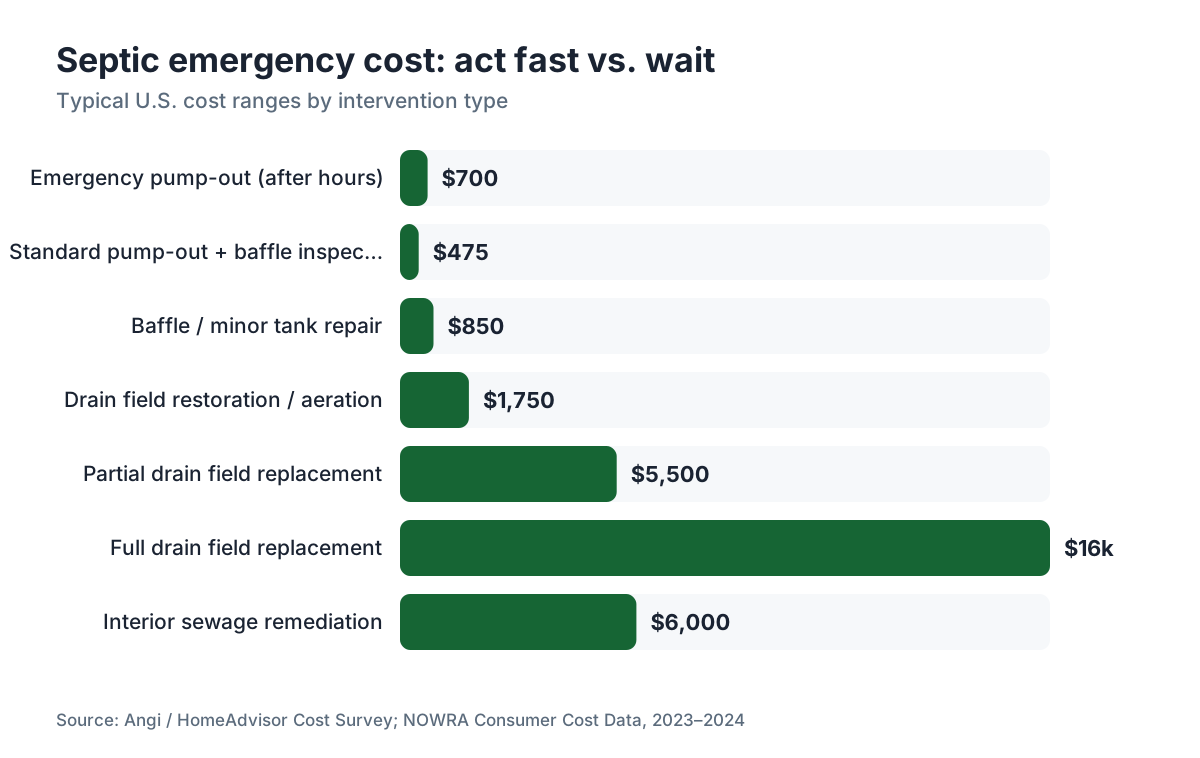
How much does emergency septic service cost compared to letting it go?
This is the comparison worth memorizing, because the gap between acting fast and waiting is enormous.
| Scenario | Typical cost range |
|---|---|
| Emergency after-hours pump-out | $500 to $900 |
| Standard pump-out + baffle inspection | $350 to $600 |
| Septic tank repair (baffle, lid, riser) | $200 to $1,500 |
| Drain field restoration (aeration/rest) | $500 to $3,000 |
| Partial drain field replacement | $3,000 to $8,000 |
| Full drain field replacement | $8,000 to $25,000+ |
| Interior sewage cleanup / remediation | $2,000 to $10,000+ |
Those numbers come from national cost surveys and state extension programs. Specific prices vary by region, soil, and local labor markets. [3] [7] Bothell and the wider Seattle metro tend to run 20 to 40 percent above national medians because of high labor costs and strict Snohomish and King County permitting. [2]
The math is simple. A $600 pump-out that catches a failing baffle before biomat kills the field is one of the best moves a homeowner can make. Waiting three months to "see if it clears up" is how people end up replacing drain fields.
For total replacement costs if it comes to that, see cost to install septic system.
Are there regulations about septic emergencies and who can treat them?
Yes, and they matter more than most homeowners realize.
All 50 states regulate onsite wastewater treatment systems, and most require that any repair beyond basic maintenance (adding a riser, replacing a lid, adjusting a float) be done by a licensed contractor and, depending on scope, permitted through the local health department. [8]
In Washington State, the governing rule is WAC 246-272A, which covers on-site sewage systems. Snohomish County Environmental Health (which includes Bothell) requires a site evaluation and permit for any repair to a drain field or tank component. [2] Skipping the permit can void future title insurance and create liability at sale.
The EPA's SepticSmart initiative recommends inspection by a licensed professional every three to five years and pumping every three to five years depending on household size and tank volume. [1] In many counties these aren't just suggestions. They're conditions attached to building permits or mortgage lending.
Think about liability. If your system fails and a neighbor's well tests positive for fecal coliform, you have a problem. Acting fast, documenting the pump-out, and getting a licensed inspector's report builds a paper trail that protects you. Pouring a bottle of enzymes down the drain and hoping for the best does not.
Operators running service calls across multiple jurisdictions, especially in permit-heavy markets like the Pacific Northwest, may find a platform like SepticMind helps track permit status and compliance documents across jobs.
What causes septic emergencies and how do you prevent the next one?
Most septic emergencies trace back to one of four root causes.
One, the tank was overdue for pumping. The rule of thumb is every three to five years for a typical household, but the real number depends on tank size and daily water use. A 1,000-gallon tank serving four people takes in roughly 400 gallons per day, and with sludge building, it can hit the 30 percent sludge-plus-scum threshold (the point where solids start leaving toward the field) in as little as two to three years under heavy use. [9]
Two, non-organic solids got in. Wipes (even the "flushable" ones), paper towels, feminine hygiene products, and dental floss don't break down in a septic tank. They pile up in the scum layer and eventually clog the outlet baffle.
Three, a big hydraulic load overwhelmed the system. Running the dishwasher, three loads of laundry, and multiple showers in the same four-hour window can push 400 to 500 gallons through a tank built for steady flow, briefly flooding the drain field with partly treated effluent.
Four, the drain field was already compromised. A biomat that's been building for years gives no warning until the system backs up. By the time you see surface ponding, the field has usually been failing slowly for one to three years.
Prevention is straightforward. Pump on schedule, flush only toilet paper, spread water use across the day, and get a septic tank inspection every three to five years. Review the leach field guide for early field-stress signs you can catch before they turn into emergencies.
Can you treat a septic tank yourself in an emergency, or do you need a pro?
Here's the honest breakdown.
What you can legitimately do yourself: stop water use, locate the tank access lid, check that the lid is intact (a collapsed lid is a physical hazard and an entry point for surface water), and dose the system with a bacterial additive after pumping.
What you need a licensed professional for: opening and inspecting the tank (hydrogen sulfide gas in a full tank has killed people, that's chemistry, not hyperbole), pumping the tank, repairing or replacing baffles, any work on the distribution box or drain field pipes, and anything that requires a permit. [12]
Some states let homeowners pump their own tanks if they own the property and have a licensed hauler for the septage. Most people don't own a vacuum truck. That exception is more theoretical than practical.
If you're rural and a pumper is hours away, the most useful thing you can do while waiting is cut water use to zero, document what you're seeing (photos of surface ponding, timestamps of when backups started), and call your county health department to report a possible sewage surfacing event. That call creates a record and can sometimes speed up a contractor response.
For a full picture of what professional service involves, see septic tank cleaning and septic tank emptying.
What products are genuinely worth having for septic emergencies?
Keep a short list. Most of what gets marketed for septic emergencies isn't worth the shelf space.
Actually useful to have: the name and after-hours number of a licensed septic pumper near you, the location of your tank lid marked on a property sketch, and records of your last pump-out date and tank size.
Modestly useful: a mid-range bacterial/enzyme additive for post-pump re-inoculation. Products with live Bacillus spores (more than enzymes) stay stable on the shelf longer and are more likely to survive the pH and temperature inside the tank. Rid-X, Bio-Sol, and similar products in this category aren't endorsed here specifically, but the category is fine for maintenance dosing after a pump-out. Expect to pay $10 to $30 per dose.
Not worth it: anything marketed as "emergency septic tank treatment" that promises to clear a clogged field or dissolve years of buildup overnight. No product dissolves biomat fast. A few contain hydrogen peroxide or sodium hydroxide and can damage soil structure in the drain field. [4]
The single best "product" for a septic system is a pump-out on schedule, before an emergency. A septic tank pump out every three to five years costs $300 to $600 and eliminates the conditions that create emergencies in the first place.
SepticMind's maintenance scheduling tools help homeowners track pump-out history and set reminders so systems don't reach critical sludge levels silently. [10]
What are the signs that emergency treatment isn't enough and you need full repair?
Pumping bought you time. Now you need to know whether time is what you actually have.
Signs the tank is repairable and the field may recover: the backup started suddenly after a high-water-use event, the ponding appeared within the last week, and the pumper found the sludge and scum layers extremely thick (meaning the field was likely getting relatively clean effluent until recently). In that case, a pump-out plus a rest period can genuinely restore function.
Signs you're looking at real repair or replacement: surface ponding has been present more than a month, the drain field soil is saturated and smells of sewage even after pumping, the pumper found a broken outlet baffle that had been letting raw solids escape for an unknown period, or a dye test shows effluent surfacing far from the tank. These are field failure indicators, not temporary overload.
If your leach field has failed, options include conventional replacement, alternative drip-irrigation systems, mound systems (common where the water table is high), and aerobic treatment units. Costs run from roughly $8,000 for a simple conventional replacement to $30,000 or more for engineered alternatives in difficult soil. [7]
Get at least two bids from licensed contractors, and ask both to walk you through the site evaluation data (soil percolation rate, seasonal high water table depth). A contractor who quotes a price without a soil evaluation is guessing.
For full system replacement costs, see cost to put in a septic tank and septic tank installation.
Frequently asked questions
Can I flush baking soda and vinegar as an emergency septic tank treatment?
Small occasional amounts of baking soda or vinegar won't harm the system, but they do nothing meaningful in an emergency. The reaction between the two makes carbon dioxide, water, and sodium acetate, none of which clears a full tank or restores a failing drain field. In an active backup, stop adding anything to the system and call a pumper.
How long can I wait before calling a septic professional during an emergency?
Don't wait. If multiple drains are backing up or sewage is surfacing in the yard, call within the hour. Most county health codes treat surfacing sewage as a public health violation with a 24 to 48 hour response requirement. Waiting lets solids push further into the drain field, potentially turning a pump-out-and-rest situation into a $10,000 to $25,000 field replacement.
What is the best homemade septic tank treatment for everyday maintenance?
The most effective homemade approach is behavioral: flush only toilet paper, spread laundry across the week, fix dripping faucets, and keep grease out of the drains. If you want a biological add, a packet of active dry yeast dissolved in warm water and flushed once a month is harmless and may marginally support the microbial community, though no controlled study confirms a measurable benefit in residential tanks.
Are septic tank emergency treatment products regulated by the EPA?
Most bacterial and enzymatic additives aren't regulated as pesticides by the EPA because they don't claim to kill organisms. Chemical additives using solvents or caustics can fall under RCRA if they contain hazardous substances. The EPA has reviewed the evidence and found no scientific support for biological additives improving a properly functioning system, and warns chemical additives may harm the system or contaminate groundwater.
What emergency septic services are available in Bothell, WA?
Bothell is served by licensed septic contractors working under Snohomish County and King County environmental health rules. Emergency after-hours pump-outs are available through several regional companies, and pricing tends to run 20 to 40 percent above national medians. Any repair beyond pumping needs a permit from Snohomish County Environmental Health under WAC 246-272A. Call the county at the first sign of surfacing sewage.
Can a septic treatment product really save a failing drain field?
No product reliably restores a genuinely failed drain field. Some aeration-based systems (Terralift, SoilAir) can break up biomat mechanically and have helped in some cases, but results are inconsistent and these are contractor-installed, not off-the-shelf additives. Rest periods (routing wastewater to a second field or conserving water heavily) have the best evidence for partial recovery of overloaded fields.
How do I find my septic tank in an emergency if I don't know where it is?
Start with your property's as-built septic diagram, which should be on file with your county health department and is often available online or by phone. If you can't get it, trace the main sewer line leaving the house foundation. The tank is almost always within 10 to 25 feet of the house. A metal probe rod (or a coat hanger) pushed into soft soil can find the lid. Most tanks sit 12 to 24 inches below grade.
Does homeowners insurance cover septic emergencies?
Standard homeowners policies usually exclude septic system failures, including backup cleanup and field repair. Some insurers offer a sewer and drain backup endorsement for $50 to $100 per year that covers interior sewage damage from a backup, though coverage for the tank or field itself is rarely included. Check your policy declarations page before assuming you're covered. The exclusions are usually spelled out plainly.
What should I not flush or pour down the drain to avoid septic emergencies?
Never flush: wipes (including "flushable" ones), paper towels, feminine hygiene products, dental floss, medications, or cat litter. Never pour down drains: cooking grease, paint, solvents, large amounts of bleach, or any chemical drain cleaner. These items either build up in the tank as non-degradable solids or kill the microbes that process waste. The EPA SepticSmart program publishes a full list of what not to flush.
How do I know if my drain field is failing versus just temporarily overloaded?
Temporary overload: ponding appeared after a specific high-use event (a party, a week of heavy rain), and the ground dries out and drains improve within a few days of cutting water use. Field failure: ponding lasts more than a week after reducing use, smells of sewage, or shows up in several spots over the field. A dye test or inspection by a licensed septic professional is the only way to confirm the difference.
How often should a septic tank be pumped to prevent emergencies?
The EPA and most state programs recommend every three to five years for a household of four with a standard 1,000-gallon tank. A smaller tank, more occupants, or a garbage disposal can shorten that to every two to three years. A pumper who measures sludge and scum depth at each visit can tell you exactly when the next pump is due for your usage, which beats any calendar rule.
What permits do I need for emergency septic repairs in Washington State?
In Washington State, septic repair is governed by WAC 246-272A and administered by county health departments. Any repair beyond routine maintenance needs a site assessment and repair permit. In Snohomish County (Bothell) and King County, emergency verbal authorizations may be available for active surfacing sewage, but the paperwork still follows. Using an unlicensed contractor or skipping permits can void future title insurance and create civil liability.
Is Rid-X or a similar product worth using as emergency septic tank treatment?
Not as a substitute for pumping in a real emergency. As a post-pump re-inoculation dose or a monthly maintenance additive in a low-use system, products like Rid-X are cheap and unlikely to cause harm. The active ingredients are Bacillus spores and enzymes. The EPA's position is that additives don't improve a properly functioning system, so the realistic use is re-seeding after disturbance, not rescuing an overloaded tank.
Sources
- EPA SepticSmart Program: EPA review of septic additives; no scientific evidence biological additives improve properly functioning systems; chemical additives may harm systems or contaminate groundwater; septic failures pose public health risk
- Washington State Legislature, WAC 246-272A On-Site Sewage Systems: Washington State on-site sewage systems governed by WAC 246-272A; Snohomish County requires site evaluation and repair permit for drain field or tank component work
- HomeAdvisor / Angi, Septic Tank Pumping Cost Guide: National average septic pump-out $300 to $600 for 1,000-gallon tank; emergency/after-hours rates $500 to $900
- Washington State University Extension, Septic System Care: Additives contain Bacillus strains and cellulase/protease enzymes; some chemical additives contain hydrogen peroxide or sodium hydroxide that can damage drain field soil structure
- EPA SepticSmart, What Not to Put Down the Drain: Behavioral practices (not flushing wipes, grease, etc.) are primary prevention tool for septic health
- University of Minnesota Extension, Onsite Sewage Treatment Program: Broken outlet baffle is a common cause of drain field failure; early baffle repair costs far less than field replacement
- National Onsite Wastewater Recycling Association (NOWRA): Drain field replacement costs range from $8,000 to $25,000+ for conventional systems; engineered alternatives in difficult soils can exceed $30,000
- EPA, Septic Systems and State Regulation Overview: All 50 states regulate onsite wastewater treatment; most require licensed contractor and permit for repairs beyond basic maintenance
- University of Florida IFAS Extension, Septic System Maintenance: Typical household of four with 1,000-gallon tank produces ~400 gallons per day; sludge accumulation can reach 30% threshold in two to three years with heavy use
- SepticMind, Septic Service Operations Platform: Maintenance scheduling and compliance tracking tools for septic service operations
- CDC, Onsite Wastewater Treatment Systems: Hydrogen sulfide exposure in confined septic spaces is a documented hazard; fatalities have occurred from tank entry without proper equipment
Last updated 2026-07-09