Emergency septic tank pumping: what to do right now
By the SepticMind Editorial Team
TL;DR
- Emergency septic pumping is needed when sewage backs up inside the house, toilets gurgle and won't flush, or you smell raw sewage near the tank or yard.
- Expect to pay $400, $900 for weekend or after-hours service versus $250, $550 for a scheduled pump-out.
- Call a licensed pumper right away and stop all water use until the truck shows up.
How do you know if your septic emergency is real?
A true septic emergency is sewage backing up inside your house, more than one drain gurgling at once, or a raw sewage smell near the tank lid or yard. A single slow drain usually isn't. Knowing the difference saves you money and protects your family's health.
The clearest sign of a real emergency is sewage coming up through a floor drain, toilet, or tub. That means the tank is full or the outlet is blocked, and wastewater has nowhere to go but back into your living space. Stop using water immediately. Every flush, every load of laundry, every sink draining pushes more effluent against that blockage.
Other red flags that justify an emergency call:
- Multiple fixtures gurgling or draining slowly at the same time (more than one clogged drain)
- A strong sulfur or sewage odor indoors or right outside near the tank lid
- Wet, spongy ground over the drain field that wasn't there yesterday
- A tank alarm light or buzzer going off on an aerobic treatment unit
A single slow drain is probably just a clogged pipe. A backed-up toilet with no odor elsewhere might be a simple obstruction. If you're unsure, call your pumper and describe what you're seeing. Most licensed companies will tell you over the phone whether it warrants emergency dispatch. [1]
What causes a sudden septic backup?
Three things cause almost every real septic emergency: a full tank, a broken baffle, or a saturated drain field. A crushed inlet pipe is the rare fourth. Figure out which one you have and you know whether one pump-out ends it or a bigger repair is coming.
The first is a full tank. A standard 1,000-gallon tank serving a family of four should be pumped every three to five years, according to EPA SepticSmart guidance. [2] Miss that window and the tank fills with solids, the scum layer rises high enough to escape through the outlet baffle, and solids start moving toward the drain field. Once solids reach the field, you have a much bigger and more expensive problem than a pump-out.
The second cause is a blocked inlet or outlet baffle. The baffles direct flow and keep scum from escaping. They crack and corrode, especially the older concrete ones. A broken outlet baffle lets solids flow out early. A broken or partly blocked inlet baffle can back the incoming pipe up into the house. Your pumper can inspect and replace baffles during the pump-out, usually for $50, $150 in parts and labor.
The third cause is a saturated or failed drain field. Heavy rain, a high water table, or years of grease and solids loading can leave the soil in the leach field unable to absorb effluent. When the field won't accept liquid, the tank fills faster than normal even if you pumped it recently. Emergency pumping relieves the immediate crisis but doesn't fix a failed field. You'll need a septic system repair conversation once the emergency is handled.
A less common but nasty cause is a crushed or root-invaded inlet pipe between the house and the tank. That's a plumbing emergency as much as a septic one, and you may need a plumber and a pumper at the same time.
How much does emergency septic pumping cost?
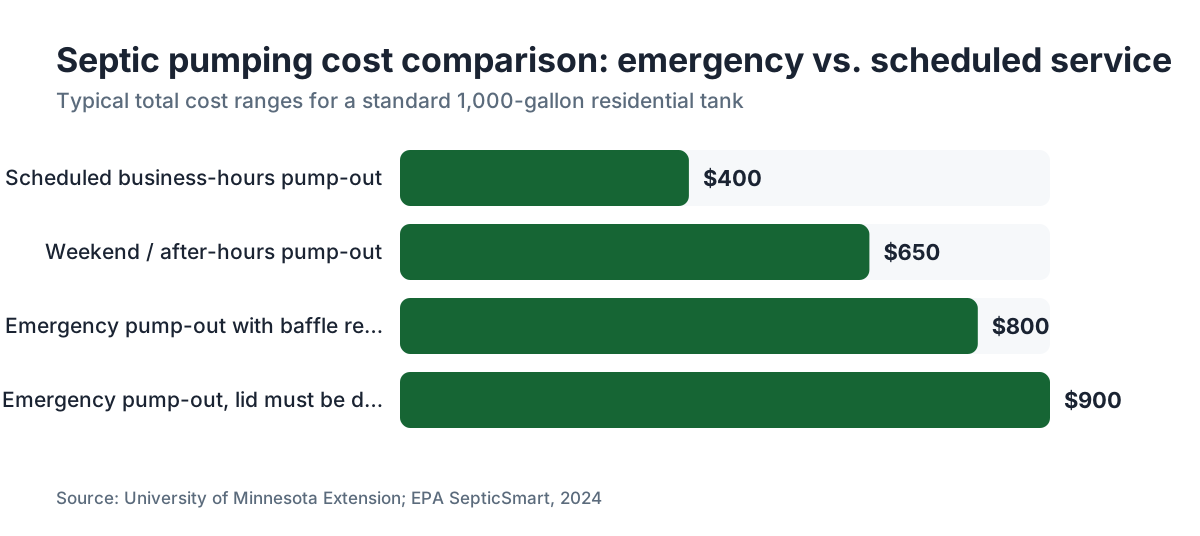
Emergency septic pumping runs $400, $900 for most residential after-hours jobs on a standard 1,000-gallon tank. A scheduled pump-out during business hours is $250, $550. The gap is the after-hours surcharge, usually $100, $300 on top of the base rate.
Weekend septic tank pumping tends to land in the middle of the emergency range. Many companies staff for it but still charge a premium. Here's what pushes the number up:
| Factor | Typical added cost |
|---|---|
| Tank over 1,500 gallons | $50, $150 more |
| Tank lid must be dug up | $50, $200 more |
| After-hours or holiday dispatch | $100, $300 surcharge |
| Grease or sludge heavier than normal | $50, $100 more |
| Travel beyond 20-mile radius | $50, $150 more |
| Baffle replacement | $50, $150 more |
Some companies quote a flat emergency rate. Others charge the standard rate plus an after-hours fee. Ask before they dispatch so the invoice doesn't surprise you.
Compare that to doing nothing. A failed drain field replacement runs $5,000, $25,000 depending on soil conditions, system size, and your state's requirements. [4] Emergency pumping is cheap insurance against that outcome.
For a deeper look at what drives pump-out pricing in general, see our guide to septic tank pumping.
What actually happens during an emergency pump-out?
An emergency pump-out is the same job as a scheduled septic tank pump out, just faster and at an odd hour. A truck arrives, the tech opens the tank, and a vacuum hose pulls out scum, effluent, and sludge. The whole thing takes 30 to 60 minutes for a standard tank.
The truck carries a vacuum tank, typically 1,500 to 3,000 gallons capacity. The technician locates your tank lid (you should know where it is before an emergency happens), opens the access port, and drops in the hose. A proper pump-out removes everything, including the sludge at the bottom. A company that only sucks off the liquid and leaves the sludge is not doing the job right.
A good technician also does a quick visual inspection. They'll check the inlet and outlet baffles, look for cracks in the tank walls, and note whether the drain field looks saturated. Ask for that in writing. It tells you what you're dealing with beyond the immediate backup.
Cleanup is minimal because the vacuum process is mostly self-contained. The technician tells you if they found anything that needs follow-up, like a cracked baffle or evidence of field saturation.
After the pump-out, the tank needs time to rebuild its bacteria. Don't dump bleach or heavy antibacterial cleaners down the drains for at least two weeks. The bacteria that break down waste got hauled off with everything else.
How do you find an emergency septic pumping company fast?
Start with your state's licensed pumper directory. Most state environmental or health departments keep a searchable list of licensed septic contractors, and checking it takes a couple of minutes. It also keeps you away from unlicensed operators who might dump your tank illegally or botch the job. [5]
No time for that? A search for "emergency septic pumping near me" will surface local companies. Look for one that's been operating for several years, has a physical address (more than a phone number), and holds your state's liquid waste hauler license. You can usually verify the license on your state agency's website fast.
What to tell them when you call:
- Your address and how far you are from their base
- Tank size if you know it (check your permit or inspection records)
- Exactly what you're seeing: sewage backing up, gurgling toilets, wet yard, alarm light
- When the tank was last pumped
That information helps them send the right truck and give you an honest time estimate. Most emergency calls get a response within two to four hours. In rural areas, it can run longer.
A note on weekend septic tank pumping: most established companies in metro and suburban areas staff for weekend calls, but smaller rural operators may not. If you live rural, find two or three companies now and save their numbers before you need one at 10 p.m. on a Sunday.
What should you do while waiting for the pumping truck?
Stop using water. That's the single most effective thing you can do while you wait.
Every gallon down a drain adds pressure to a system already at or past capacity. Shut off the washing machine, skip the dishwasher, take no showers, and ask everyone to avoid flushing unless they truly have to. Got a guest bath or a second bathroom? Those are offline too.
If sewage backed up into a floor drain or tub, don't clean it up until the pump-out is done. Sewage carries bacteria and viruses that can make you seriously sick. [6] If you have to be near it, wear rubber gloves and keep your hands away from your face. Once the system is flowing again, clean any surfaces that touched sewage with a disinfectant solution.
Skip the septic additives and enzyme products. They won't empty a full tank or clear a blockage, and some can throw off the bacterial balance you'll need to rebuild after the pump-out. The EPA has found no scientific evidence that biological additives improve septic performance in a way that reduces pumping frequency. [7]
Locate your tank lid if you can. If it's buried under soil or grass, dig it up before the truck arrives. That saves the technician time and saves you money on a job where you're already paying emergency rates.
Is it ever safe to wait until the next business day?
Sometimes, yes. If you have slow drains with no sewage backup, no indoor odors, and only one fixture acting up, you're probably looking at a simple pipe clog rather than a septic emergency. Try a plunger. If clearing that one fixture fixes it and nothing else is misbehaving, schedule a routine pump-out and skip the emergency rate.
If the problem is an alarm light on an aerobic treatment unit (ATU) rather than sewage backup, check whether it's a high-water float (the tank is filling faster than it should) or a pump failure. A high-water alarm on a Friday night with no indoor backup can often wait until Monday if you cut water use hard. A pump failure in an ATU needs faster attention, because those systems rely on aeration to treat effluent before it reaches the field. [8]
What should never wait: any sewage inside the house, strong odors from multiple drains, or a wet, mushy yard over the drain field during dry weather. Those get worse with time, not better.
Will emergency pumping fix the problem, or is it just a temporary fix?
It depends entirely on what caused the emergency. An overdue tank or a broken baffle gets fixed in one visit. A saturated drain field does not; pumping buys you days to weeks, then the field saturates again.
If the tank was simply overdue, one pump-out ends it. Get on a proper how often to pump septic tank schedule and you shouldn't see this again. The EPA's general guidance is every three to five years for a standard household, but real frequency depends on household size, tank size, and water habits. [2]
If the cause was a broken baffle, the pumper can usually replace it during the same service call. Problem solved.
If the cause was a saturated drain field, the pump-out is a stopgap. You'll get normal function back while the field dries out, but if it's genuinely failing (biomat buildup, soil compaction, undersized field), it saturates again. You need a septic tank inspection to confirm field condition, then a conversation about septic tank repair or field replacement.
A failing drain field is the most expensive outcome in residential septic. Replacement costs swing widely by state and soil type. Our guide to the cost to install septic system covers what a full replacement involves and what drives those numbers.
Operators managing fleets of service calls need to know which jobs are pump-and-done and which need follow-up. That's where SepticMind helps: the platform tracks service history, field condition notes, and generates follow-up reminders so nothing slips after an emergency visit.
What are the health and legal risks of ignoring a septic backup?
A septic backup is a health hazard and, in many states, a legal violation. Sewage carries pathogens that can make people sick, and a discharge that reaches a waterway or a neighbor's yard can trigger fines running into the thousands.
The health side is straightforward. Sewage holds fecal coliform bacteria, Salmonella, Giardia, hepatitis A, and other pathogens. The CDC treats untreated sewage as a real exposure risk, especially for children, older adults, and immunocompromised people. [6] If sewage backed up into your home, anyone who touches it is at risk. Document what happened, clean affected surfaces with a 1:10 bleach-to-water solution once the system is restored, and see a doctor if anyone develops gastrointestinal symptoms.
The legal side varies by state but tends to have teeth. Most states require homeowners to keep their septic systems working and to notify the local health department when a system fails. Texas, for example, treats an unauthorized discharge from a failing on-site system as a violation of the Texas Water Code, which authorizes civil penalties of up to $25,000 per day per violation. [9] Your state has equivalent rules.
A documented septic failure can also affect your homeowner's insurance claim. Some policies exclude sewage backup damage if you knew about the problem and didn't act promptly. Read your policy before you assume you're covered.
Don't delay. The cost of calling an emergency pumper tonight is almost always less than the cost of waiting.
How can you prevent the next septic emergency?
Most septic emergencies are predictable, which means they're preventable. The tank that backed up Saturday night had been filling for months or years. The field that saturated did so because solids escaped the tank over a long stretch. Regular pumping and a little attention head off nearly all of it.
The foundation is a consistent pumping schedule. Pump the tank every three to five years, more often with a large household or a garbage disposal. [2] A septic tank cleaning done on schedule runs about $300, $500. Avoiding one emergency call saves you $400, $900, plus the risk of field damage.
Know where your tank is and keep the lid reachable. Buried lids mean longer service calls and higher bills. Install a riser if the lid sits more than a foot below grade. Risers cost $100, $300 installed and pay for themselves the first time a tech doesn't have to dig.
Watch what goes in. Flushable wipes are not septic-safe, whatever the label says. Grease, medications, and heavy cleaning chemicals all wear the system down over time. The EPA's SepticSmart program publishes a plain list of what not to flush or drain. [7]
Get a professional inspection every one to three years if your system is over 20 years old or you're in an area with high water tables. A good septic tank inspection catches baffle deterioration, rising sludge, and early field stress before any of it becomes an 11 p.m. emergency.
Operators, reach out to customers who are past due before they call you in a crisis. SepticMind's customer tracking tools are built for that kind of outreach, which is better for the customer and more efficient for the business.
What records should you keep after an emergency pump-out?
Get a written service record before the pumping company leaves. It should list the date of service, tank size, volume pumped, condition of the baffles and tank walls (with any problems noted), and whether the technician saw signs of drain field trouble. Some states legally require the pumper to hand you this documentation. [5]
File that record with your other home maintenance documents. When you sell, a history of regular pump-outs is evidence of responsible maintenance and can shape the negotiation or the result of a buyer's septic tank inspection. When you're weighing whether a repair is worth it, that record shows how fast sludge and scum have piled up across multiple visits.
If the emergency turned up a baffle failure or another component issue, ask the pumper for a written description of what they found and what they did about it. That builds a repair history you'll want if the issue comes back or if a septic tank repair contractor has to do more extensive work later.
The septic tank emptying guide on this site has more detail on what a proper service report should include and what to ask when you review it.
Frequently asked questions
How much does emergency septic pumping cost on a weekend?
Weekend septic tank pumping typically runs $400, $900 for a standard residential tank, compared to $250, $550 during normal business hours. The difference is an after-hours surcharge that most companies set between $100 and $300. Tank size, how far the truck has to travel, and whether the lid needs to be dug up can all push the total higher.
How fast can a septic pumping company respond to an emergency?
In metro and suburban areas, most licensed emergency septic companies respond within two to four hours. Rural areas can take longer, sometimes four to eight hours, especially on nights and weekends when staffing is thinner. Call multiple companies at once if the backup is severe. Whoever dispatches first gets the job.
Can I pump my own septic tank in an emergency?
No. Septic pumping requires a licensed vacuum truck and a permitted disposal site for the waste. Hauling or dumping septic waste without a license is illegal in every state and carries serious fines. Some homeowners try renting small pumps, but those can't move the sludge at the tank bottom, so the job gets done wrong and the problem comes right back.
Will adding enzyme or bacteria products fix a backed-up septic tank?
No. Additives can't empty a full tank or clear a blockage. The EPA has reviewed the science and found no evidence that biological additives reduce pumping frequency or improve system function in a meaningful way. If your system is backed up, you need a pump-out, not a product. Save the additives for after the truck leaves if you want to use them at all.
What should I do if sewage is in my house right now?
Stop all water use immediately. Don't flush any toilets or run any appliances. Call a licensed emergency septic pumper and give them your address and a clear description of what's happening. While you wait, keep everyone away from the affected area. Sewage carries pathogens that can cause illness, so don't attempt cleanup until the system is restored and flowing correctly.
Does homeowner's insurance cover emergency septic pumping?
Standard homeowner's policies usually don't cover septic pump-outs because they're maintenance, not sudden damage. Some policies include sewer or water backup riders that may cover cleanup costs if sewage backed up into the home. Check your specific policy. If you knew the system was failing and delayed action, the insurer may deny the claim even with a rider.
How long does an emergency septic pump-out take?
The actual pumping takes 30 to 60 minutes for a typical 1,000 to 1,500 gallon residential tank. Add 15 to 30 minutes for locating the lid, setup, and a basic inspection. If the lid is buried and needs digging, add another 30 to 60 minutes. Total time from truck arrival to departure is usually one to two hours.
Is a wet yard over the drain field a septic emergency?
Yes, especially if the ground is wet during dry weather and other fixtures in the house are slow or gurgling. A saturated drain field means the soil can't absorb effluent, so the tank fills faster than normal and indoor backup can follow quickly. Call for emergency pumping and stop heavy water use. The field condition will need professional assessment afterward.
Can heavy rain cause a septic emergency?
Yes. Heavy rain raises the water table and can temporarily saturate the drain field, slowing or stopping absorption. It can also let groundwater seep into the tank through cracks, filling it faster than normal. A system that was borderline full before a big rain event can back up after it. This is most common in spring or after long wet stretches.
How soon can I use water normally after an emergency pump-out?
You can resume normal water use as soon as the pump-out is done and the technician confirms the system is flowing correctly. There's no mandatory waiting period. Still, go easy for the first 24 to 48 hours: space out laundry loads, take shorter showers, and skip big water events like filling a hot tub. Give the field and tank a chance to stabilize.
What's the difference between an emergency pump-out and a regular pump-out?
The pumping process itself is identical. The differences are timing, availability, and cost. An emergency call happens outside business hours or on short notice because the system is failing right now. Regular pump-outs are scheduled in advance during normal hours at standard rates. The result is the same empty tank, but you'll pay a premium of $100, $300 for the urgency.
After emergency pumping, do I need to have the system inspected?
If the emergency revealed anything beyond a simply overdue tank (a broken baffle, a saturated field, a cracked tank wall), yes, schedule a formal inspection within a few weeks. Most pumpers do a basic visual check during the pump-out, but a proper inspection involves probing the field, checking the distribution box, and sometimes a camera run through the inlet pipe. That tells you whether the emergency was a one-time event or a symptom of something bigger.
How do I find a licensed emergency septic pumper in my area?
Start with your state environmental or health agency's website, which usually has a searchable directory of licensed liquid waste haulers. Search the company name there before you let them dispatch. In a pinch, national directories like the National Onsite Wastewater Recycling Association (NOWRA) member locator can help. Avoid any operator who can't give you a license number when asked.
Sources
- EPA SepticSmart - Homeowner Guidance: Signs of septic system failure including sewage backups, slow drains, and odors near the system
- EPA SepticSmart - Maintain Your System: EPA recommends pumping a typical septic tank every three to five years
- EPA - Septic System Costs and Funding: Drain field replacement costs ranging from thousands to tens of thousands of dollars
- EPA - State Septic System Programs: State licensing requirements for septic pumpers and service documentation requirements
- CDC - Sewage and Wastewater Health Risks: Sewage contains pathogens including bacteria and viruses that pose health risks to exposed individuals
- EPA SepticSmart - Septic System Dos and Don'ts: EPA has found no scientific evidence that biological additives improve septic system performance or reduce pumping frequency
- University of Florida IFAS Extension - Environment: Aerobic treatment units rely on aeration to treat effluent and require prompt attention when pumps fail
- Texas Commission on Environmental Quality - On-Site Sewage Facilities: Texas Water Code authorizes civil penalties up to $25,000 per day per violation for unauthorized discharges
- National Onsite Wastewater Recycling Association (NOWRA): Industry body maintaining directory of licensed septic service professionals nationwide
Last updated 2026-07-09