Presby septic system: how it works, costs, and what to expect
By the SepticMind Editorial Team

TL;DR
- A Presby septic system treats wastewater through fabric-wrapped pipes instead of a gravel-and-pipe drainfield.
- Installed cost usually runs $8,000 to $20,000, depending on site and system size.
- These systems work on tight, sloped, or shallow lots where a conventional field won't fit.
- They need annual inspections and tank pumping every 3 to 5 years to stay reliable.
What is a Presby septic system and how does it work?
Presby Environmental makes a family of drainfield systems, most commonly the Enviro-Septic and Multi-Flo lines, that replace the gravel-and-perforated-pipe drainfield most homeowners picture when they think of a septic system. Instead of gravel, wastewater flows through corrugated polyethylene pipes wrapped in a geotextile fabric. The fabric does the work. It filters solids, gives bacteria a surface to grow on, and spreads effluent evenly into the surrounding soil.
Here's the basic flow. Household wastewater goes to the septic tank first, same as any system. Solids settle, and the liquid effluent moves on to the Presby field, where it enters a run of fabric-wrapped pipes laid in shallow trenches. The geotextile acts as a biomat layer, slowing the effluent enough that aerobic bacteria colonize it and treat the waste before it reaches the native soil. Treated effluent then soaks downward into the ground.
The Multi-Flo line adds a pump chamber and dosing timer between the tank and the field. It cycles effluent through the pipes in timed bursts instead of a continuous drizzle. That intermittent dosing gives the field time to rest and treat between doses, which helps a lot on sites with slower-draining soils.
Presby systems are certified under NSF/ANSI Standard 40 for residential wastewater treatment [1] and accepted in most U.S. states. Each state keeps its own approval list and installation rules, so you have to confirm locally before you buy anything.
What makes a Presby system different from a conventional drainfield?
No gravel, smaller footprint, shallower installation. That's the short version. A conventional drainfield needs a bed of washed gravel, usually 12 inches deep or more, under perforated pipe. That gravel stores effluent temporarily and provides the contact surface for biological treatment. Digging it in takes real excavation.
Presby pipes sit in much shallower trenches, sometimes as little as 6 to 12 inches below grade, because the fabric wrapping supplies the treatment surface that gravel would normally give you. Shallow installation matters on sites with a high seasonal water table or bedrock close to the surface. Those two conditions routinely kill a permit application for a conventional field.
The table below lays out the main differences:
| Feature | Conventional gravel/pipe | Presby Enviro-Septic |
|---|---|---|
| Trench depth | 18 to 36 in typical | 6 to 12 in typical |
| Gravel required | Yes | No |
| Footprint vs. conventional | Baseline | Often 50% smaller |
| Soil contact surface | Gravel aggregate | Geotextile fabric |
| NSF/ANSI 40 certified | Not applicable | Yes [1] |
| Suitable for slopes | Limited | Moderate slopes OK |
| Typical installed cost | $3,000, $10,000+ | $8,000, $20,000+ |
The smaller footprint is real, with one condition. Presby systems still need soil that can accept some effluent. If the soil truly can't perc, no textile system fixes that. What these systems do is work at slower perc rates and on lots where gravel trenches can't be dug deep enough to meet setback requirements from seasonal high groundwater.
What does a Presby septic system cost to install?
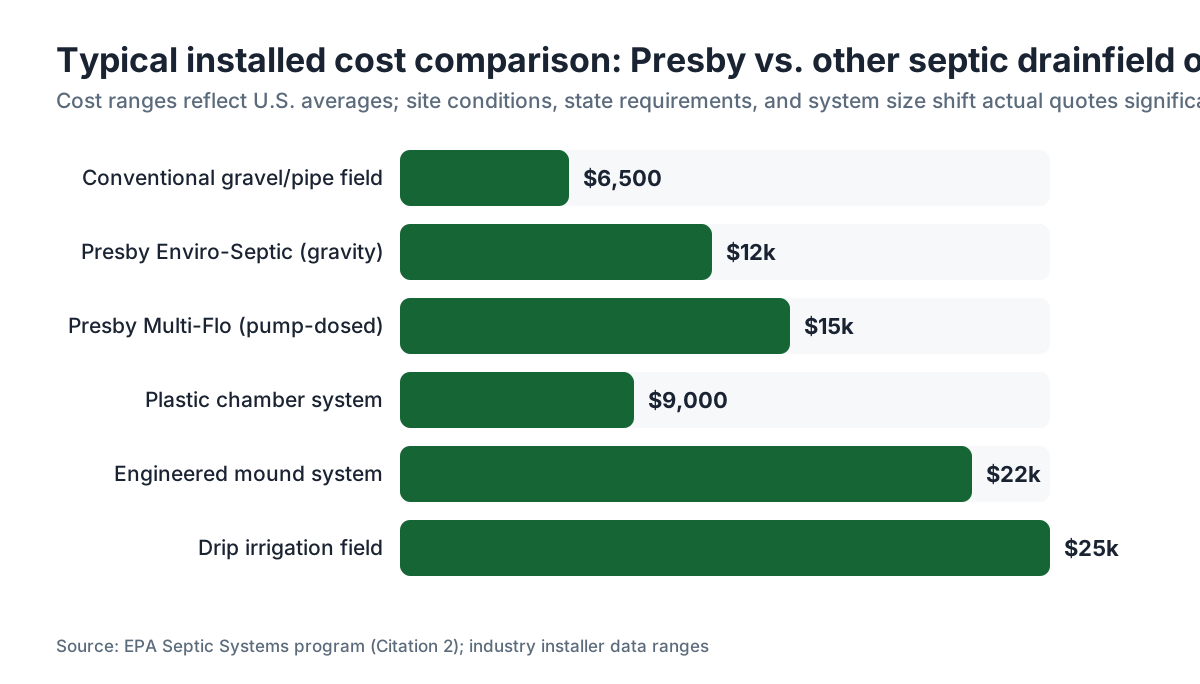
Expect to pay between $8,000 and $20,000 for a complete Presby installation. You'll see quotes outside that range in both directions depending on where you live and what your site demands [2]. The pipe and fabric cost little. Labor, excavation, permit fees, and site prep drive the total.
A few things push costs up fast:
- Pump required: Multi-Flo systems need a dosing pump, pump chamber, and electrical connection. Add roughly $1,500 to $3,000 for that alone.
- Site access: Rocky terrain or a lot that heavy equipment can't reach easily raises excavation costs a lot.
- Permit and engineering fees: Some counties require a licensed engineer to stamp the design. That's $500 to $2,000 on top of contractor labor.
- System size: Presby sizes systems by bedrooms and daily flow. A three-bedroom home at 150 gallons per bedroom per day drives roughly a 450 GPD design. If your household uses more water, the installer has to upsize the field.
- State-required inspection fees: Several states mandate a third-party inspection at installation. It adds cost, but it also protects you.
Compare that to a conventional septic system installation at $3,000 to $10,000 for a basic gravity system on an easy site. You're paying a premium for the Presby's ability to work on a constrained lot. Whether that premium beats the alternative, which is often an engineered mound at $15,000 to $30,000, depends on the site.
For the full picture on what drives system cost, the cost to install a septic system page breaks it down.
How long does a Presby system last?
Presby Environmental has claimed 20-plus-year service life for well-maintained systems, and that matches what installers see on well-managed sites. The geotextile fabric doesn't compact the way a gravel bed can over decades. But lifespan is almost entirely a maintenance and loading question, not a materials question.
Systems that get overloaded, that take regular grease and garbage-disposal waste and harsh cleaners, or that never get the tank pumped can fail in under 10 years. Solids that bypass a neglected tank clog the fabric. Once the biomat goes anaerobic and plugs the pores, recovery is hard.
There's no authoritative national study tracking Presby longevity as a product category. The EPA notes that alternative drainfield systems have lifespans that swing widely based on soil, loading rates, and maintenance, and that regular service is the best thing you can do for any system [4]. That guidance applies here.
One honest caveat. Presby systems have been installed at scale since the early 1990s, and many of those early installations are now near 30 years old with no reported widespread failure pattern specific to the product. That's encouraging. It's not the same as a controlled study.
What maintenance does a Presby system need?
Presby systems need the same core maintenance as any septic system, plus a few things specific to the fabric-and-pipe design.
Start with the tank. Pump it on schedule. For most households that means every 3 to 5 years, though heavy use or a smaller tank may need service sooner [4]. Let solids build up and carry over into the field, and the fabric clogs and the field fails. There's no workaround. The septic tank pumping guide covers sizing and scheduling.
For Multi-Flo systems with a pump, inspect the pump, float switches, and timer every year. Pump failures are quiet. By the time you notice wet spots in the yard, the field has been taking gravity overflow for days or weeks.
Presby's own installation and maintenance documentation calls for annual inspections of the whole system, including a check of effluent distribution across the field pipes. An inspector inserts a probe or opens inspection ports to confirm effluent is moving through all the pipes and not pooling at one end.
A few hard no-go items for Presby systems:
- No garbage disposal, or very limited use. Ground food waste jacks up suspended solids loading.
- No septic tank additives or biological enhancers. EPA's SepticSmart guidance is blunt: "Additives are not necessary and can be harmful to your system" [3]. The biomat develops on its own.
- No heavy vehicles or equipment over the field. The shallow install depth makes compaction a real risk.
- No trees or deep-rooted shrubs within the field footprint. Roots will find the pipes.
If you track maintenance records digitally, SepticMind lets operators log pump dates, inspection findings, and alarm history in one place, which helps when you're managing multiple clients on alternative systems like Presby.
For tank maintenance beyond the field, septic tank cleaning covers what happens during a service visit.
Can a Presby system fail, and what are the warning signs?
Yes, Presby systems fail. The most common cause is a neglected tank sending solids into the geotextile. When the fabric pores plug, effluent backs up, and you get the classic signs of drainfield failure: slow drains inside, gurgling toilets, wet or spongy areas over the field, and sometimes a sewage smell at grade.
Pump failures in Multi-Flo systems are the second most common problem. A dead pump or stuck float means the field either gets dosed nonstop (overloading) or not at all (waste backs up in the tank). Alarms help, but only if the alarm is wired, audible, and someone actually responds.
Fabric clogging from grease and fats is a slower failure mode. It builds over years of heavy grease loading, and once the pores close it doesn't respond to additives or bacteria treatments.
Early warning signs to watch:
- Alarm light or buzzer on the control panel (Multi-Flo systems)
- Any moisture or standing water over the field after a dry spell
- Sewage smell in the yard
- Slow draining in several fixtures at once
- Effluent surfacing near inspection ports
Catch a problem early and septic system repair options range from resting the field to swapping out partial pipe runs. Full field replacement is expensive. Early detection is cheaper every single time.
Is a Presby system approved in my state?
Presby Environmental holds NSF/ANSI Standard 40 certification [1], which gives it a baseline approval path in most states. But septic regulation happens at the state and often county level, and approval status changes. National certification does not mean local approval.
As of publication, Presby systems have approvals across most of the continental U.S. Several states set specific installation requirements that differ from Presby's base specs, and a handful of counties inside otherwise-approving states have their own restrictions.
The right move: before you buy anything, call your local health department or environmental agency. In states like Massachusetts, New Hampshire, and Vermont, alternative systems like Presby go through a formal state approval process run by the state environmental agency, and approved products are listed publicly online [5][6]. In other states, approval happens at the county level with less public documentation.
Your installer should know local requirements cold. If they don't, that's a red flag. An experienced septic contractor in your region will know whether Presby is routinely permitted locally, what the required setbacks are, and whether your soil type and lot layout will pass health department review.
EPA's septic resources don't keep a state-by-state product approval list, but their onsite wastewater guidance links to state contacts [2]. That's a reasonable place to start if you're researching before calling a contractor.
How is a Presby system inspected and what do inspectors look for?
A proper Presby inspection covers the tank, the distribution, and the drainfield separately, and it should happen annually or at minimum before any real estate sale.
For the tank, the inspector checks liquid levels, scum and sludge depth, inlet and outlet baffles, and general structural condition. If sludge is within about 12 inches of the outlet, it's time to pump regardless of schedule. The septic tank inspection guide covers a tank inspection in detail.
For Presby-specific components, the inspector checks:
- Inspection ports or risers on the field pipes. These small capped access points let you see whether effluent is present and at what level in each pipe run.
- Distribution box or pump chamber, if the system has one. Is effluent reaching all lateral runs equally? Uneven distribution starves part of the field and overloads the rest.
- Pump operation test on Multi-Flo systems. Does the pump cycle correctly? Does the alarm float trigger at the right level?
- Visual surface inspection. Any wet areas, ponding, or oddly lush growth over the field?
- Setback compliance. Has anything changed near the field, like a new garden bed, a tree planted too close, or vehicle traffic?
State rules on inspections vary. New Hampshire requires inspection by a licensed evaluator for real estate transactions [6]. Massachusetts has similar rules under Title 5 [5]. If you're selling a home with a Presby system, confirm what your state requires well ahead of time. Some states have a specific form the inspector must complete.
Can you install a Presby system as a replacement for a failing drainfield?
This is one of the more common real-world uses for Presby systems. You retrofit a lot that had a conventional field that failed and can't be rebuilt in kind because the soil or the available space won't support a new conventional install.
Presby systems often fit tighter spaces and shallower soil profiles than a replacement gravel field would need, which makes them a legitimate option for lot-constrained replacement projects. The process still needs a site evaluation, usually a perc test or soil morphology review, and a fresh permit from the health department. You're not exempt from soil requirements just because you're using a fabric-based system.
If the original field failed because of a high seasonal water table, confirm with your evaluator that the table hasn't risen further, or that the Presby install depth keeps the bottom of the system above the seasonal high water mark. Most states require 2 to 4 feet of separation between the bottom of the drainfield and seasonal high groundwater [2].
Replacement cost tends to match new installation: $8,000 to $20,000, plus demolition or abandonment of the old field, which can add $1,000 to $3,000 depending on what has to come out.
For broader context on drainfield replacement, the leach field article covers multiple system types and what drives the choice between them.
What are the pros and cons of a Presby system compared to other alternatives?
No septic system is right for every site. Here's an honest comparison against the alternatives a homeowner or installer would actually weigh:
Presby Enviro-Septic vs. mound system: A mound imports fill soil to create enough separation above the seasonal high water table. Mounds work on very wet sites but cost $15,000 to $30,000 and stick up in the yard. Presby systems, where the soil allows, cost less and disappear once grass regrows. If the water table is truly too high for Presby's minimum separation, a mound or drip system wins by necessity.
Presby vs. drip irrigation (pressure-dosed drip): Drip systems dose highly treated effluent through small-diameter tubing near the surface. They need more advanced treatment (often a secondary treatment unit ahead of the drip field), more maintenance, and more money up front. Presby is simpler to install and maintain. Drip wins on extreme sites where even Presby can't get enough soil separation.
Presby vs. chamber systems (Infiltrator and similar): Plastic chamber systems also skip gravel and are widely used. They tend to cost slightly less than Presby per linear foot of field, but they're gravity-fed and don't provide the same fabric-based treatment layer. Where the perc rate is fine and you just want to avoid gravel, chambers are often the cheaper pick. On sites with marginal perc rates, Presby's treatment capacity gives it an edge.
Presby vs. conventional gravel/pipe: If your lot has easy soil, room to spare, and good perc, a conventional system costs less. Presby's value shows up on constrained sites.
Honest summary: Presby fills a real niche between conventional gravity fields and expensive engineered alternatives. It's not always the best answer, but for rocky, shallow, or tight lots, it regularly beats the alternatives on cost and practicality.
How often should you pump the tank connected to a Presby system?
The same rules that apply to any septic system apply here. Pump when sludge reaches about 25 to 33 percent of tank volume, or on a schedule tied to household size and tank capacity. For a typical 1,000-gallon tank serving a three-bedroom home with four people, that usually means every 3 to 5 years [4].
Pumping matters more on a Presby system than on some other alternatives because solids carryover clogs the geotextile directly. There's no gravel layer to catch stray solids. The fabric is the treatment surface, and once it plugs, the field is compromised. EPA's septic guidance says to "have your system inspected and pumped regularly," and with a Presby system you really don't want to let the tank pass the point of carryover [4].
If your household leans on a garbage disposal or you have more people than the system was designed for, shorten the interval. A 1,500-gallon tank with light use could stretch to 5 to 7 years, but have it inspected at 3 years the first time so you learn your actual accumulation rate.
For how tank size, household size, and pumping frequency interact, how often to pump a septic tank walks through the math.
The septic tank pump out article explains what happens during the actual service visit.
What should homeowners know before buying a house with a Presby system?
Get a full inspection before closing. That means the tank, any pump chamber, and the Presby field itself, with a written report documenting effluent levels in the inspection ports, pump function, and alarm test results.
Ask for the original permit, the as-built drawing showing exactly where the pipes are, any service records, and the installer's warranty documentation. Presby Environmental has offered limited product warranties on the pipe and fabric, but that warranty is usually conditioned on proper installation and maintenance. If records are missing, assume the worst and price a possible replacement into your offer.
A real estate septic inspection is not an inspector lifting a lid and calling it fine. In states with mandatory Title 5-style inspections (Massachusetts) [5] or equivalent requirements (New Hampshire) [6], the inspection follows a set protocol. In states without mandatory real-estate inspection laws, hire a licensed septic inspector independently rather than leaning on a general home inspector.
One thing to verify: is the system sized right for the house? A three-bedroom design feeding a five-bedroom house is a ticking clock. Check the original permit against actual bedroom count. Some states tie maximum occupancy to the permitted system size, which can affect financing or insurability.
SepticMind's inspection reporting tools help operators generate clear, documented reports buyers and lenders want to see, which cuts down on back-and-forth at closing on properties with alternative systems like Presby.
For general pre-purchase guidance on septic condition, the septic tank inspection page covers what a thorough inspection includes.
Frequently asked questions
How much does a Presby septic system cost to install?
Installed cost typically runs $8,000 to $20,000, depending on system size, site conditions, and whether a pump is required. Multi-Flo systems with a dosing pump add $1,500 to $3,000 over a gravity-fed Enviro-Septic design. Difficult site access or engineering requirements push totals higher. Compare this to conventional gravity fields at $3,000 to $10,000 and mound systems at $15,000 to $30,000.
How long does a Presby Enviro-Septic system last?
Well-maintained Presby systems routinely reach 20 to 30 years of service. The geotextile fabric doesn't compact the way gravel does, but a system fails early if solids overflow from a neglected tank or heavy grease loading clogs the fabric pores. Longevity is almost entirely a maintenance question. Annual inspections and regular tank pumping are the two best things you can do.
Do Presby systems require a pump?
The Enviro-Septic line is gravity-fed and needs no pump if site slope allows. The Multi-Flo line uses a pump chamber and timed dosing, which is required on sites with flatter grades or slower-draining soils. If your design calls for Multi-Flo, budget for annual pump and float inspections, and make sure the control panel alarm is wired and audible.
Are Presby systems approved everywhere in the United States?
Presby holds NSF/ANSI Standard 40 certification, which supports approval in most states, but septic approval is state-regulated and sometimes county-regulated. Before committing, confirm approval status with your local health department. Several states like Massachusetts and New Hampshire keep public lists of approved alternative systems. Your licensed septic installer should know local status cold.
Can I use a garbage disposal with a Presby system?
Technically you can, but it's a bad idea. Ground food waste raises suspended solids in the tank effluent, which increases the chance solids carry over into the geotextile fabric and clog it. Presby's installation documentation and most septic professionals recommend avoiding garbage disposals entirely on these systems, or at minimum using them very rarely.
What happens if a Presby system fails?
Early failures often show as wet ground or ponding over the field, slow drains, or odors. Caught early, resting the field and pumping the tank aggressively sometimes allows partial recovery. Severe fabric clogging usually means replacing the affected pipe sections or the whole field. Replacement cost runs similar to original installation: $8,000 to $20,000 plus disposal of old materials.
How deep are Presby system pipes installed?
Enviro-Septic pipes typically sit in trenches 6 to 12 inches deep, much shallower than conventional gravel fields at 18 to 36 inches. That shallow install is what lets Presby work on sites with high seasonal water tables or shallow bedrock, provided the required separation between the system bottom and the seasonal high water table is still met under your state's code.
Can a Presby system be used to replace a failing conventional drainfield?
Yes, and this is one of the most common applications. When a conventional field fails on a lot that can't support a new conventional system due to space or soil constraints, Presby often fits where a gravel field won't. You still need a soil evaluation, a new permit, and confirmation that water table separation requirements are met. Budget $8,000 to $20,000 plus old-field abandonment costs.
How do I know if my Presby system is working properly?
Have a licensed inspector check the system annually. They probe the inspection ports on the field pipes to confirm effluent is present but not backed up, test the pump and alarm on Multi-Flo systems, and check the tank sludge level. Signs of trouble between inspections include wet areas over the field, sewage odor in the yard, slow drains, or an alarm light on the control panel.
What should I not put down the drain with a Presby system?
Avoid grease, fats, and cooking oils, which clog the geotextile fabric. Skip septic tank additives and biological boosters; EPA's SepticSmart guidance says these are unnecessary and sometimes harmful. Go easy on antibacterial cleaners and bleach, and never flush non-biodegradable items. The same no-go list applies to conventional systems, but it matters more here because the fabric has less tolerance for solids overload.
How do I find a contractor who installs Presby systems?
Contact Presby Environmental directly; they maintain an installer locator on their website and train authorized installers. Your state health department or environmental agency may also list licensed alternative-system installers. Get at least two quotes and ask each contractor how many Presby systems they've installed in your specific county, because local permit requirements vary and experience with local health department expectations matters.
Does a Presby system need a separate inspection from the septic tank inspection?
The tank and field are part of the same system inspection, but a thorough Presby inspection requires accessing the field's inspection ports and testing the distribution pattern, which goes beyond what many basic tank inspections include. For real estate transactions, some states require an inspection protocol covering both tank and field. Confirm what your state requires and hire an inspector with specific alternative-system experience.
Does household water usage affect a Presby system differently than a conventional system?
High water usage matters for any septic system, but it's especially sharp for Presby because the field is sized to a design flow. If a household runs 50 to 100 percent over the designed daily flow, the fabric doesn't get adequate rest between doses, which speeds up biomat clogging. Spreading laundry across the week, fixing leaky fixtures, and skipping marathon showers all cut peak loading.
Sources
- NSF, Wastewater Treatment System testing and certification: NSF/ANSI Standard 40 is the certification standard for residential alternative wastewater treatment systems including Presby Enviro-Septic
- EPA, Septic Systems (onsite wastewater treatment) program pages: Alternative drainfield system installed costs vary widely based on site conditions, soil type, and local requirements; most states require 2 to 4 feet of separation between the drainfield bottom and seasonal high water table
- EPA, SepticSmart homeowner guidance on additives: EPA states septic additives are not necessary and can be harmful to a system; the biomat develops naturally
- EPA, How to Care for Your Septic System: EPA recommends inspecting and pumping a household septic tank roughly every 3 to 5 years; frequency depends on tank size and household size, and regular service is the best predictor of system longevity
- Massachusetts Department of Environmental Protection, Title 5 septic system regulations (310 CMR 15.00): Massachusetts Title 5 requires a licensed inspection of the septic system before real estate transfer and governs alternative system approval
- New Hampshire Department of Environmental Services, subsurface/wastewater program: New Hampshire requires inspection by a licensed evaluator for septic systems in real estate transactions and maintains an approved alternative system list
- University of Minnesota Extension, Septic Systems: Solids carryover from an overfull septic tank is a leading cause of drainfield failure in alternative systems
- North Carolina State University Extension (NC State Extension): Shallow-installation textile-based drainfield systems can perform on sites with soil or depth constraints that prohibit conventional gravel fields
- U.S. Census Bureau, American Housing Survey: Roughly one in five U.S. households relies on an onsite septic system rather than a public sewer connection
Last updated 2026-07-09