Price of a new septic system: what to expect in 2025
By the SepticMind Editorial Team
TL;DR
- A conventional new septic system costs $3,500 to $10,000 installed for most homes.
- Aerobic and alternative systems run $10,000 to $20,000 or more.
- Soil type, system size, local permit fees, and site access drive the price.
- Get at least three bids from licensed installers, and get a perc test result before you sign anything.
How much does a new septic system cost?
The honest answer is $3,500 on the low end for a simple conventional system on easy soil in a rural county with cheap permits, and $20,000 or more for an aerobic treatment unit (ATU) or mound system on a tight suburban lot. Most homeowners land between $6,000 and $12,000 all-in.
That range sounds frustrating. It reflects real variation in what goes into the ground. A septic system is not a commodity you can price like a water heater. The type your county requires depends on how well your soil absorbs water, your lot size, how close you sit to wells and water bodies, and local health department rules. All of those cost differently in different places.
Break septic prices into four buckets: the tank, the drain field or treatment unit, the labor and equipment, and permits plus inspections. Each bucket has its own range, and they stack.
| Cost component | Typical range |
|---|---|
| Septic tank (concrete, 1,000 to 1,500 gal) | $700, $2,000 |
| Conventional drain field / leach field | $2,000, $5,000 |
| Mound system (replaces drain field) | $5,000, $10,000 |
| Aerobic treatment unit (ATU) | $6,000, $12,000 |
| Labor and equipment (excavation, install) | $1,500, $5,000 |
| Perc test and soil evaluation | $250, $1,500 |
| Permits and inspections | $200, $1,500 |
Those ranges overlap in ways that matter. A conventional system on easy sandy loam in a low-fee state can come in under $5,000. The same house on clay-heavy soil in a state with strict nitrogen-reduction rules can hit $25,000. [1][2]
What type of septic system do you actually need?
The type your installer can legally put in gets decided by your soil evaluation, not your preference or your budget. That's the part most homeowners miss until they've already called for bids.
A licensed soil evaluator or engineer runs a percolation test (perc test) or a more detailed soil morphology assessment. If water drains through the soil fast enough, a conventional gravity-fed system is usually allowed. If not, your local health department requires an alternative system. [1]
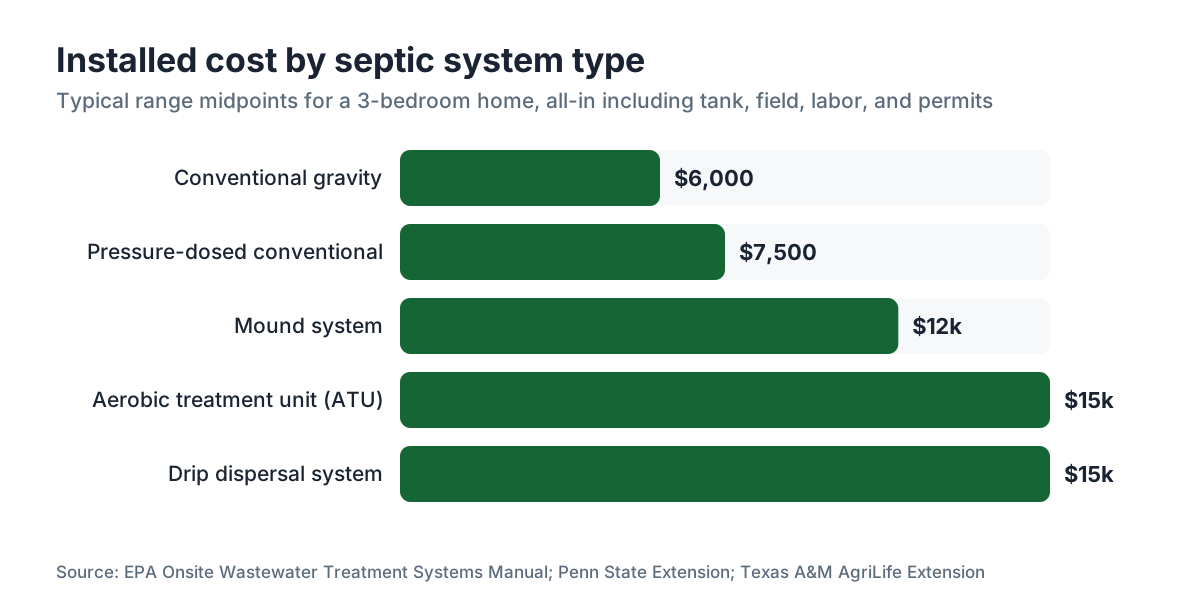
Here's how the main types compare on price and what triggers each one:
| System type | Installed cost (typical) | When it's required |
|---|---|---|
| Conventional gravity | $3,500, $8,000 | Soil percs well, adequate setbacks |
| Pressure-dosed conventional | $5,000, $10,000 | Soil is marginal, needs timed dosing |
| Mound system | $8,000, $15,000 | High water table or slow perc |
| Aerobic treatment unit (ATU) | $10,000, $20,000 | Very poor soil, small lot, near water |
| Drip irrigation / drip dispersal | $10,000, $20,000 | Sites where a mound isn't feasible |
| Constructed wetland / chamber | $6,000, $15,000 | Varies by state; rare |
Aerobic prices catch people off guard. An ATU uses air injection to treat wastewater to a higher standard before it enters the soil. The units cost $3,000 to $8,000 before installation, and many states require a service contract, which adds $150 to $500 a year on top. [3][4]
If your site requires an aerobic or mound system, that's not negotiable. An installer who says he can put in a cheaper conventional system when the soil won't support it is selling you a future failure, not a bargain.
What size septic system does your house need?
Tank and drain field size come from bedroom count and, in some states, expected daily wastewater flow. The EPA's SepticSmart program puts a typical household at about 70 gallons of wastewater per person per day, and most local codes use that number to calculate required capacity. [1]
A two-bedroom home usually needs a 750 to 1,000-gallon tank. A three-bedroom home requires 1,000 gallons minimum. Four bedrooms push you to 1,250 or 1,500 gallons in most states. Going undersized to save a few hundred dollars is one of the fastest ways to a failed system and a much bigger bill.
Drain field sizing follows the same logic. Bigger systems need more lateral lines and more soil absorption area. On a small lot, that becomes a constraint that forces you into a pricier system type even when the soil is fine.
Adding bathrooms or bedrooms after installation? Tell your county health department before you build. In many states, adding a bedroom legally requires upgrading the septic system to match, and doing it without a permit turns into a headache when you sell.
How does soil type change the price?
Soil is the single biggest variable in septic prices, and it's the one you have the least control over.
Sandy, well-draining soil is cheap to work with. Excavation goes easy, and a conventional system usually clears permitting without a fight. Clay-heavy or compacted soil is the opposite. It drains slowly or not at all, so the county requires a mound or ATU, both much more expensive.
High water tables create another problem. In coastal areas, low-lying lots, and land near rivers, the seasonal water table can sit close enough to the surface that a conventional leach field would contaminate groundwater. Most states set a minimum vertical separation between the bottom of the drain field and the seasonal high water table, often 24 to 36 inches. If your lot can't meet that without building up, you're looking at a mound. [2]
Rocky soil drives up excavation even when it drains fine. Blasting or mechanical rock removal adds $500 to $3,000 fast.
The perc test or soil evaluation runs $250 to $1,500 depending on state requirements and whether you need a licensed engineer. It's worth every dollar before you buy land or commit to a system type. Our guide to septic tank inspection covers what that evaluation actually looks at.
What are the permit and inspection fees for a new septic system?
Permit fees swing more than almost any other cost in this project. Rural counties in low-regulation states sometimes charge $100 to $300 for a septic permit. Suburban counties in states with strict environmental rules (parts of the Chesapeake Bay watershed, Florida, coastal California) can run $1,000 to $3,000 in fees alone before a shovel touches the ground. [2]
Most states require, at minimum, a permit before installation, an inspection during installation (before backfilling), and a final inspection after completion. Some add a required soil evaluation by a state-licensed evaluator as a separate line item.
Florida's Department of Health requires a septic permit issued by the county health department under Chapter 64E-6 of the Florida Administrative Code, and the required setbacks and system specifications are written into state rule. Other states follow similar structures. [5]
Ask your installer to itemize permit fees in the bid. Some contractors roll them into the total. Others bill them separately at cost. Either way, you want the number in front of you before you sign.
Don't skip the final inspection to save time. An uninspected system becomes a problem at resale, and some lenders require proof of a permitted, inspected system before closing.
How do labor and site conditions affect installation cost?
Labor costs track general construction costs by region. Rural areas in the South and Midwest sit on the lower end. The Northeast, Pacific Coast, and Hawaii run substantially higher.
Site access matters a lot. A compact excavator gets into most suburban yards, but a steep slope, a narrow driveway, or a backyard reachable only through a gate changes the equipment picture fast. Any location that forces hand-digging or a smaller machine adds time, and time is money.
Distance from the house to the drain field adds cost too. Longer pipe runs and more trench mean more labor. Some sites are simple. Others force you to route around a pool, a mature tree with roots, or a property-line setback that tacks on 60 feet of trench.
On replacement jobs, removing and disposing of the old tank and field adds $500 to $2,000 depending on tank size and local disposal rules. Some old tanks hold materials that need special handling.
What does a new septic system cost by region?
Nobody has a perfect national dataset on this. The closest reliable aggregates come from contractor survey data and state extension programs, not a single government study. The ranges below reflect installer bid data from multiple states as reported by state cooperative extension programs and industry associations. [6][7]
| Region | Conventional system (installed) | ATU or alternative system |
|---|---|---|
| Southeast (GA, AL, TN, MS) | $4,000, $8,000 | $10,000, $16,000 |
| Midwest (OH, IN, IL, MO) | $4,500, $9,000 | $10,000, $17,000 |
| South Central (TX, OK, AR) | $3,500, $8,000 | $9,000, $18,000 |
| Northeast (MA, NY, PA, CT) | $6,000, $15,000 | $15,000, $25,000 |
| Pacific Northwest (OR, WA) | $5,000, $12,000 | $12,000, $22,000 |
| Mountain West (CO, ID, MT) | $4,500, $10,000 | $10,000, $20,000 |
| Florida | $3,500, $10,000 | $10,000, $20,000 |
These are estimates, not quotes. Your actual bid depends on everything above. But a quote that falls far outside the regional range for your system type is worth a question, not a celebration.
What's included in a septic system installation bid, and what isn't?
A good bid spells out exactly what's in scope. A bad bid is one number with no detail. Ask for a line-item breakdown before you sign anything.
Typically included in a full-service installation bid:
- Excavation and backfill
- Tank purchase and installation
- Drain field or treatment unit installation
- Distribution box or manifold
- Risers and access lids to grade
- Seeding or rough grading of disturbed soil
- Permit application (sometimes; confirm)
Typically NOT included unless you ask:
- Perc test or soil evaluation (usually billed separately by the evaluator)
- Engineering drawings (required in many states for alternative systems)
- Electrical connection for pump systems or ATUs
- Landscaping restoration beyond rough grading
- Annual ATU service contracts
- Tank abandonment and disposal if replacing an old system
For systems with a pump, make sure the bid covers the electrical work or get a separate electrical quote. Running a circuit to a pump chamber adds $500 to $2,000 depending on distance from the panel.
Replacing rather than installing new? Read our full breakdown at cost to install septic system and the specifics of putting in a tank at cost to put in a septic tank.
Can you get financing or assistance for a new septic system?
Yes, and more options exist than most homeowners realize. USDA Rural Development offers loans and grants for septic installation through its Section 504 Home Repair program and the Water and Waste Disposal Loan and Grant program for qualifying rural residents. Income limits apply. [8]
The EPA's SepticSmart program keeps a list of financial assistance resources by state, including state revolving fund loans, county health department programs, and nonprofit lenders. Some states run dedicated funds for homeowners upgrading failing systems to meet nitrogen-reduction or watershed-protection standards. [1]
Homeowners in the Chesapeake Bay watershed can tap cost-share programs in Maryland, Virginia, Pennsylvania, and Washington D.C. for systems that cut nitrogen loading. These cover 50 to 100 percent of upgrade costs depending on the program and income. [9]
Some installers work with third-party financing. That's fine, but check the rate. A 12 to 18 percent personal loan turns a $10,000 system into a much larger expense over time.
State cooperative extension programs are usually the fastest route to what's available in your county. Search your state's extension service plus "septic financial assistance" and you'll typically land on a current resource page.
How can you keep costs down without cutting corners?
The most reliable way to control septic prices is to get multiple bids, but that only works when you're comparing the same scope. Get at least three quotes, all for the same system type and size as your soil evaluation specifies.
Timing matters some. Installers in colder climates slow down in late fall and winter, which can hand you negotiating room. Peak season in most markets is spring through early fall, when demand runs high and crews book out weeks ahead.
Don't save money on the tank or the drain field material. A cheap concrete tank with a low PSI rating cracks. Drain field aggregate that doesn't meet spec clogs faster. These are not places to cut.
Where you can sometimes save with no risk: ask whether an existing tank can be reused if it's structurally sound and properly sized. In a drain field replacement, a licensed inspector can tell you whether the tank has to go or can stay. See septic tank repair for what's fixable versus what needs full replacement.
The real long-term savings live in maintenance after installation. A properly maintained conventional system lasts 25 to 40 years. A neglected one can fail in under 10. septic tank pumping every 3 to 5 years is the highest-return maintenance action you can take, usually $300 to $600 per service. Compare that to $10,000 for a new drain field.
Managing multiple properties or running a service operation that tracks system data and service intervals? Tools like SepticMind help you stay ahead of maintenance before small problems turn into replacement-level ones.
What are the ongoing costs after a new septic system is installed?
The purchase price isn't the whole financial picture. Ongoing costs vary by system type more than almost anything else.
Conventional systems are cheapest to run. Pump the tank every 3 to 5 years ($300 to $600 per pump-out), inspect it periodically, and don't flush what doesn't belong. That's most of it. See how often to pump septic tank for the factors that set your specific interval.
Aerobic systems cost a lot more to maintain. Most states mandate an annual or semi-annual service contract with a licensed ATU provider. Those contracts run $150 to $500 a year. The air pump and chlorination gear (or UV system) need periodic replacement at $200 to $800 per component. Over 20 years, total cost of ownership on an ATU can beat a conventional system by $5,000 to $10,000 even if nothing breaks.
Mound systems fall in the middle. The pump that doses wastewater to the mound needs maintenance and eventual replacement (usually $500 to $1,500 for the pump, plus labor). The mound itself needs the grass mowed and nothing planted on it that could root into the distribution pipes.
Drain field restoration, if a field fails before full replacement is due, runs $2,000 to $8,000 depending on extent. Full details at leach field.
What signs mean your old system needs replacement rather than repair?
Not every septic problem calls for a new system. Some do, and knowing the difference keeps you from throwing money at a repair that won't hold.
Signs that point toward replacement:
- Sewage surfacing in the yard again and again, especially right after pumping
- A drain field that has fully saturated and shows no recovery after resting
- A tank with severe structural cracks or collapse
- A system that never met current setback or design requirements and is causing a public health issue
- A tank so old (pre-1970 in many areas) that it's steel and has corroded through
Signs that often mean repair is possible:
- A single broken pipe or cracked distribution box
- A failed pump in an otherwise sound system
- A deteriorated tank baffle where the tank itself is intact
- A partially failing field that might respond to aeration or biomat treatment
A licensed inspector can tell you which situation you're in. If you haven't had a recent inspection, start there before you collect replacement bids. The septic system repair guide covers what's fixable and what isn't in more detail.
Buying property with an existing system? A pre-purchase inspection is not optional. The National Onsite Wastewater Recycling Association (NOWRA) recommends a full inspection before any real estate transaction involving a septic system. [10]
How long does installation take, and what disrupts your yard?
A conventional septic installation on a straightforward site usually takes one to three days of active work, not counting permitting time. Permitting is often the long pole in the tent. In some counties you wait two weeks. In others you wait three months. Ask your installer what the current local permit timeline looks like before you plan anything.
Expect real disruption to the yard. Excavation for the tank and drain field kills grass, may take out small shrubs or trees, and leaves disturbed soil that needs time to settle and re-establish. The installer should rough-grade and seed or sod (confirm which in your bid), but the yard will look rough for several weeks to a few months.
Alternative systems often take longer to install. An ATU brings more components, electrical connections, and in some states a post-installation inspection by a licensed engineer before the system can go into service.
During installation you typically can't use any water in the house, so plan for a hotel night or two if the work runs long. Most crews try hard to restore service by end of day one.
For service operators, tracking installation dates, system specs, and future service intervals from day one makes the ongoing maintenance side much easier to manage across a customer portfolio. That's the sort of record-keeping SepticMind is built for.
Frequently asked questions
How much is a new septic system for a 3-bedroom house?
A 3-bedroom home usually needs a 1,000-gallon tank and a drain field sized for roughly 300 gallons per day. Installed cost for a conventional system runs $5,000 to $10,000 in most regions. If your soil requires a mound or aerobic system, expect $12,000 to $20,000. Get a soil evaluation before assuming which system type your county will approve.
What is the cheapest type of septic system?
A conventional gravity-fed system with a concrete tank and a standard leach field is the least expensive option, often $3,500 to $8,000 installed. It's only available where the soil percolates adequately and setbacks can be met. Trying to install one where it isn't permitted to protect groundwater creates liability and a future failure.
How much does an aerobic septic system cost?
Aerobic septic system prices typically run $10,000 to $20,000 installed, depending on unit brand, site conditions, and whether electrical work is included. The unit itself costs $3,000 to $8,000; the rest is labor, permits, and the drain field or drip system. Add $150 to $500 a year for the service contract most states require.
Does the drain field cost more than the tank?
Usually yes, especially for alternative systems. The tank runs $700 to $2,000 for most residential sizes. A conventional drain field adds $2,000 to $5,000. A mound system replaces the conventional field at $5,000 to $10,000. On a total installed basis, the field and its preparation typically make up 40 to 60 percent of the project cost.
Can I install a septic system myself to save money?
In most states, no. Septic installation requires licensed contractors and permitted inspections. A handful of rural states allow owner-installation on your own property with a permit, but a failed DIY system can contaminate groundwater, create legal liability, and disqualify you from selling the property. Check your state health department's rules before attempting any self-install.
How long does a new septic system last?
A well-installed, properly maintained conventional septic system typically lasts 25 to 40 years. The tank often outlasts the drain field. Aerobic systems have more mechanical parts that wear out; expect major repairs every 10 to 15 years. Pumping every 3 to 5 years is the single most effective way to extend system life.
Does homeowners insurance cover a new septic system?
Standard homeowners insurance generally does not cover septic replacement. Most policies exclude underground systems from structural coverage, and they treat gradual failure (the most common cause of replacement) as maintenance rather than a covered loss. Some insurers sell septic riders or service line coverage as add-ons. Read your policy carefully and ask your agent.
What permits do I need for a new septic system?
At minimum, you need a local health department or county environmental permit before installation begins. Most states also require a soil evaluation by a licensed evaluator, an installation inspection before backfilling, and a final approval. Some states require a licensed engineer to sign off on alternative system designs. Your installer should handle the permit application, but confirm it's in the bid.
How do I know if my lot will support a septic system?
A percolation test or soil morphology evaluation tells you whether your soil absorbs water fast enough for a conventional system. If not, your state may require a more detailed evaluation. Sites with very slow-draining soil, high water tables, or inadequate lot size for setbacks may be limited to certain system types or, in rare cases, may not be buildable with onsite wastewater at all.
Are there grants or loans for a new septic system?
Yes. USDA Rural Development's Section 504 program offers loans and grants for qualifying rural homeowners. Many states run cost-share programs for systems in sensitive watersheds. The EPA SepticSmart program lists assistance resources by state. Some county health departments keep emergency assistance funds for failing systems that pose public health risks. Income limits and eligibility vary.
What is the difference between a septic tank and a full septic system?
The septic tank is just the holding and primary treatment vessel, usually one concrete or plastic tank buried near the house. A full septic system includes the tank plus the drain field (or alternative treatment unit), the connecting pipes, distribution equipment, and any pumps. The tank alone costs $700 to $2,000; the full system installed is $3,500 to $20,000 or more.
How much does it cost to replace just the drain field?
Drain field replacement without a new tank runs $3,000 to $10,000 for a conventional leach field, or $8,000 to $15,000 for a mound system. If the existing tank is structurally sound and properly sized, keeping it saves $700 to $2,000. A licensed inspector should verify the tank condition before you commit to field-only replacement.
What happens if I don't replace a failing septic system?
A failing system left alone eventually discharges untreated sewage to the surface or into groundwater. That creates a public health hazard, can contaminate nearby wells, and in most states counts as a code violation subject to fines. Some counties can place a property on a failing-system registry that blocks sale or occupancy until the system is repaired or replaced.
Sources
- EPA SepticSmart Program: Typical household generates about 70 gallons of wastewater per person per day; EPA SepticSmart program maintains financial assistance resources by state
- EPA, Onsite Wastewater Treatment Systems Manual (2002): Soil type, water table depth, and minimum vertical separation requirements determine which system types are permissible on a given site
- Penn State Extension, Septic System Types: Aerobic treatment units use air injection to treat wastewater to a higher standard before soil dispersal
- National Environmental Services Center (NESC) at West Virginia University: ATU installed costs and annual service contract requirements for aerobic septic systems
- Florida Department of Health, Onsite Sewage Program (Chapter 64E-6 F.A.C.): Florida requires a septic permit issued by the county health department; setbacks and system specifications are written into state rule under Chapter 64E-6
- Penn State Extension, Onsite Wastewater Treatment: Installed cost ranges for conventional and alternative systems in the Northeast and Mid-Atlantic
- Texas A&M AgriLife Extension, Onsite Wastewater Treatment: Installed cost ranges for conventional and alternative systems in Texas and the South Central region
- USDA Rural Development, Single Family Housing Repair Loans and Grants (Section 504): USDA Section 504 provides loans and grants for septic system installation for qualifying rural, low-income homeowners
- Chesapeake Bay Program: Cost-share programs in Chesapeake Bay watershed states can cover 50 to 100 percent of upgrade costs for nitrogen-reducing systems
- National Onsite Wastewater Recycling Association (NOWRA): NOWRA recommends a full septic inspection before any real estate transaction involving an onsite wastewater system
Last updated 2026-07-09