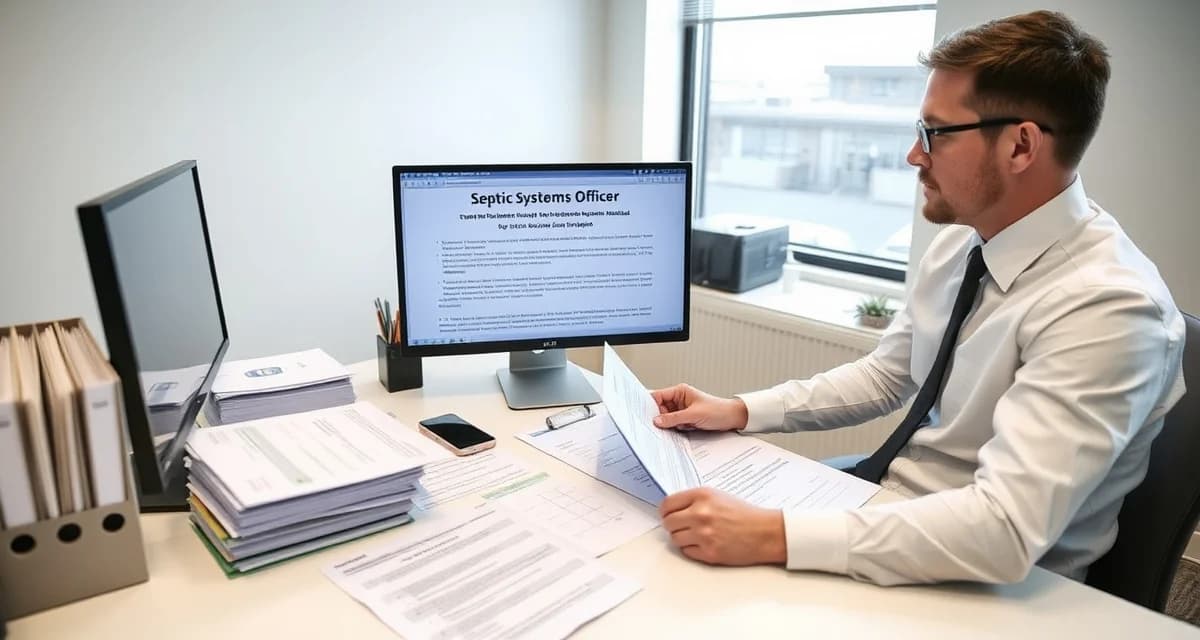
State-by-State Septic Compliance Guide for Service Companies
By the SepticMind Editorial Team
Regulatory compliance failures are the second-leading cause of septic company license revocations in the US. That's not a statistic you want to learn the hard way. And yet, most septic companies operating across state or county lines rely on a patchwork of printed handouts, remembered rules, and phone calls to county offices to stay current.
TL;DR
- Septic permit and compliance requirements are set at the state level but administered at the county level, creating significant variation within a single state.
- Operating without required permits or missing compliance deadlines can result in fines, stop-work orders, and license referrals.
- Permit applications must include specific documentation (soil evaluations, site plans, contractor license) that varies by county.
- Multi-county operations need a systematic approach to tracking permit applications, status updates, expiration dates, and renewal deadlines.
- Digital permit tracking reduces the risk of missed deadlines that compound into compliance notices and license risk.
- SepticMind's county permit database covers all 50 states with current forms, fees, and review timelines.
This state by state septic compliance guide exists because no single resource previously covered what septic service companies actually need: permit requirements, inspection documentation standards, and enforcement structures across all 50 states in one place.
Why Septic Compliance Is So Hard to Track
Every state regulates onsite wastewater systems differently. Some states centralize authority at the environmental agency level. Others delegate everything to county health departments, meaning a company operating in three counties inside one state can face three entirely different permit processes.
Add to that the reality that regulations change. States update their rules. Counties add local amendments. And unless you're actively monitoring those changes, you'll find out about them when an inspector rejects your documentation.
Most field service tools aren't built for this. Generic FSM platforms have no concept of permit sequencing, state-specific inspection checklists, or county-level rule variations. They treat a septic job like a plumbing job, which is a problem.
What Good Compliance Actually Looks Like
Good compliance isn't just filing the right paperwork. It's a system that makes it impossible to miss steps.
That means knowing which permits are required before work starts, tracking inspection milestones as the job progresses, storing documentation in a way that's retrievable when an auditor asks, and getting notified when renewal deadlines approach.
SepticMind's permit tracking software auto-loads the right compliance template when a job is created in any state. That's the baseline. You shouldn't have to manually research what's required every time you cross a county line.
State-by-State Compliance Overview
Here's what septic companies need to know about compliance structures across all 50 states. These are organized by regulatory complexity and regional considerations.
Alabama
Alabama's onsite sewage program is managed by ADEM (Alabama Department of Environmental Management), but enforcement runs through county health departments. All 67 counties have their own permit offices, and requirements vary county to county. Soil evaluations must be performed by a licensed engineer or soil scientist before installation permits are issued.
Alaska
Alaska regulates septic through the Department of Environmental Conservation. The state's Onsite Wastewater Program handles permits for most systems, though municipalities like Anchorage have their own programs. Cold-weather performance standards are strict and most alternative systems require engineer-stamped designs.
Arizona
ADEQ (Arizona Department of Environmental Quality) manages onsite wastewater permits for systems under 3,000 gallons per day. Counties handle single-family residential systems. Arizona requires nitrogen-reducing systems in environmentally sensitive areas near lakes and groundwater recharge zones.
Arkansas
The Arkansas Department of Health's Engineering Division oversees onsite wastewater. Installation permits are issued at the county level. The state mandates licensed installers and inspectors, and inspection documentation must be submitted to the county within 30 days of system completion.
California
California has arguably the most complex onsite wastewater regulatory environment in the country. The state OWTS Policy (Order WQ 2012-0016) created a tiered permitting structure that counties must implement, but each of California's 58 counties maintains its own environmental health department with local variations. Regional Water Quality Control Boards add another layer of oversight, particularly near water bodies.
Companies operating in California need county-specific compliance documentation. See the full breakdown in our California onsite wastewater regulations guide.
Colorado
Colorado's Water Quality Control Division manages onsite wastewater treatment systems through OWTS regulations. Counties issue permits and conduct inspections. Areas near the Colorado River and major water bodies have enhanced setback requirements.
Connecticut
Connecticut's Public Health Code covers subsurface sewage disposal. The state has one of the highest percentages of functioning mound systems in the Northeast due to shallow soil conditions. Local health departments issue permits and conduct inspections.
Delaware
Delaware's Division of Water manages onsite wastewater through the OSDS program. The state has strict setback requirements from the coast and tidal areas. All installers must be licensed through the state.
Florida
Florida's OSTDS (Onsite Sewage Treatment and Disposal Systems) are regulated by the Department of Health through its 67 county health departments. Each county maintains its own enforcement, and requirements differ meaningfully between Miami-Dade, the panhandle, and rural north Florida counties.
See our dedicated Florida onsite wastewater regulations guide for the full county breakdown.
Georgia
Georgia's Environmental Protection Division oversees onsite wastewater through county environmental health offices. A licensed soil classifier must evaluate sites before permits are issued. The state has distinct rules for conventional and alternative systems.
Hawaii
Hawaii's DOH Environmental Management Division regulates onsite wastewater. Each island county has its own permit office. Hawaii's volcanic soil conditions create unique percolation testing requirements, and the state's groundwater sensitivity means alternative systems are common.
Idaho
Idaho's Department of Environmental Quality manages the statewide Onsite Sewage Disposal program. Counties issue permits. The state requires licensed designers for systems over a certain size and has specific rules for systems near surface water.
Illinois
Illinois regulates private sewage disposal through county health departments under state oversight. The Private Sewage Disposal Licensing Act governs who can install systems. Cook County has the most complex local requirements.
Indiana
Indiana's Residential Sewage Disposal Systems program is administered by local health departments. The state has a licensing program for sewage system installers and requires inspections at several stages of installation.
Iowa
Iowa Department of Natural Resources oversees onsite wastewater through county sanitarian offices. Iowa has specific rules for agricultural properties and systems near waterways.
Kansas
Kansas Department of Health and Environment manages sewage treatment and disposal. Local environmental health offices handle permits. The state has simplified certain requirements in rural counties.
Kentucky
Kentucky's Division of Water regulates onsite sewage through county health departments. The state requires licensed septic system contractors and has specific rules for alternative systems including mound and aerobic treatment systems.
Louisiana
Louisiana Department of Health's Office of Public Health issues permits for onsite sewage. Parishes enforce rules locally. Louisiana's high water table creates unique design challenges and requires elevated or mound systems in many areas.
Maine
Maine's Subsurface Wastewater Disposal Rules are administered by the Department of Environmental Protection. Local plumbing inspectors issue permits. Maine has detailed rules for replacement systems and seasonal camps.
Maryland
Maryland's MDE (Maryland Department of the Environment) manages onsite disposal through county health departments. The Chesapeake Bay-sensitive areas require enhanced nitrogen treatment systems, and Maryland's Bay Restoration Fund supports system upgrades.
Massachusetts
Massachusetts Title 5 is one of the most prescriptive inspection and compliance frameworks in the country. BOH (Boards of Health) enforce Title 5 at the local level. Pre-sale inspections are required for most real estate transactions. See our Title 5 compliance software guide for more on documentation requirements.
Michigan
Michigan's Part 41 Sewage program is managed by EGLE (Department of Environment, Great Lakes, and Energy) with local health departments handling permits. The state has specific rules for lake-adjacent properties.
Minnesota
Minnesota Pollution Control Agency regulates individual sewage treatment systems with broad county authority. The state requires compliant systems for real estate transfers in most counties.
Mississippi
Mississippi Department of Health manages onsite wastewater through county health departments. The state has a licensing program for installers and inspectors.
Missouri
Missouri Department of Health and Senior Services oversees on-site sewage. Counties with their own health departments enforce rules locally; state environmental field offices cover the rest.
Montana
Montana Department of Environmental Quality manages subdivision septic approval, while counties handle individual systems. The state's varied geology creates diverse design requirements.
Nebraska
Nebraska's Department of Health and Human Services manages onsite wastewater. Counties issue permits. The Platte River corridor and other sensitive areas have enhanced standards.
Nevada
Nevada Division of Environmental Protection handles onsite sewage in most of the state. County health departments take over in Clark and Washoe counties. The arid climate allows for some design exceptions not common elsewhere.
New Hampshire
New Hampshire's DES (Department of Environmental Services) manages subsurface sewage disposal with town health officers handling local enforcement. New Hampshire requires certified designers for all systems.
New Jersey
New Jersey's DEP manages individual subsurface sewage through county and municipal health departments. New Jersey has strict regulations around systems near the Pinelands and coastal areas.
New Mexico
New Mexico Environment Department's Liquid Waste Bureau manages onsite wastewater through district offices. The state has specific rules for arid conditions and alternative systems.
New York
New York's DOH sets minimum standards, but counties and local health departments administer permits. Suffolk County on Long Island has some of the strictest onsite wastewater rules in the country due to groundwater concerns.
North Carolina
North Carolina's Rules for Sanitary Sewage are enforced by 100 county environmental health departments. The state requires Authorized Onsite Wastewater Evaluator certification for system design and site evaluation.
See our full North Carolina onsite wastewater regulations guide for what this means for your operation.
North Dakota
North Dakota Department of Health manages onsite sewage. County sanitarians issue permits. The state has specific rules for properties with high groundwater and frozen ground conditions.
Ohio
Ohio's Department of Health manages HSTS (household sewage treatment systems) through county health boards. Ohio has a tiered system with different requirements based on system type and location.
Oklahoma
Oklahoma Department of Environmental Quality manages onsite wastewater through a permit program. The state requires licensed engineers or installers for most system designs.
Oregon
Oregon Department of Environmental Quality manages onsite sewage through regional offices. Counties can adopt stricter local rules. Oregon has specific programs for system upgrades in sensitive areas.
Pennsylvania
Pennsylvania's DEP manages sewage facilities through delegated local agencies (municipalities and counties). Act 537 Sewage Facilities Planning is required for new development. The state runs a licensed sewage enforcement officer program that covers all municipalities.
Rhode Island
Rhode Island DEM's Office of Water Resources manages ISDS (Individual Sewage Disposal Systems). The state requires licensed installers and has specific rules for the coast and wetlands.
South Carolina
South Carolina DHEC manages onsite wastewater through regional offices. The state has a licensed contractor requirement and distinct rules for beachfront and lakefront properties.
South Dakota
South Dakota Department of Agriculture and Natural Resources manages onsite wastewater. Counties issue permits. The state has simplified rules for low-density rural areas.
Tennessee
Tennessee Department of Environment and Conservation manages subsurface sewage disposal through county health departments. The state requires licensed septic tank contractors.
Texas
TCEQ's OSSF (On-Site Sewage Facility) program governs over 2 million private systems across all 254 Texas counties. The state requires designated maintenance providers for aerobic treatment units.
See our full Texas onsite wastewater regulations guide.
Utah
Utah Division of Water Quality manages onsite wastewater. Local health departments issue permits. Utah has specific rules for mountain areas and sensitive watersheds.
Vermont
Vermont Agency of Natural Resources manages WSMD (Wastewater System and Potable Water Supply) permits. The state requires licensed designers for all systems. Vermont's Act 250 land use permits can involve septic capacity reviews.
Virginia
Virginia Department of Health manages onsite sewage through local health departments. The state requires licensed Onsite Soil Evaluators for system design. Chesapeake Bay Preservation Act areas have enhanced nutrient removal requirements.
Washington
Washington's DOH manages sewage systems through local health districts. The state has a Type 1-4 system classification with different inspection frequencies per type.
West Virginia
West Virginia DEP and county health departments share onsite sewage oversight. The state has specific rules for systems on steep slopes, which are common in much of the state.
Wisconsin
Wisconsin's SPS 383 code covers private sewage systems. Counties license inspectors and issue permits. The state has specific rules for replacement systems and mound systems in high water table areas.
Wyoming
Wyoming DEQ manages onsite sewage. County health departments issue permits. The state has simplified rules for low-density areas and specific guidance for systems at high altitude.
The States With the Most Complex Compliance Requirements
Which states have the most complex septic compliance requirements?
California, Massachusetts, North Carolina, Texas, and Florida consistently present the most complex compliance environments for septic companies. California's multi-layer RWQCB oversight combined with 58-county variation is the hardest to navigate without dedicated software. Massachusetts Title 5 has the most prescriptive inspection and documentation requirements. Texas's 254-county OSSF structure creates the most sheer volume of local variations. North Carolina's 100-county enforcement with authorized evaluator certification requirements is the most demanding in the Southeast.
Staying Current With Regulatory Changes
How often do state septic regulations change and how do I stay current?
State septic regulations change more often than most companies realize. Major regulatory updates happen every 2-5 years in most states, but counties amend local rules more frequently. The most reliable approach is to subscribe to your state environmental agency's rulemaking notifications, join your state septic industry association, and use software that actively tracks regulatory updates. SepticMind's permit tracking flags regulatory changes that affect jobs in your active counties.
Can SepticMind alert me when state compliance rules are updated?
Yes. SepticMind monitors state and county regulatory databases and pushes notifications when compliance requirements change in states where you have active jobs or registered service areas. You'll see the alert in your compliance dashboard before it affects a job in progress.
Compliance Templates by State
The practical challenge for most septic companies isn't understanding that regulations exist. It's having the right documentation ready at the right time.
SepticMind's state compliance templates cover all 50 states. When you create a job, the platform auto-loads the correct permit checklist, inspection documentation, and reporting format for the job's state and county. No manual research. No missed steps.
This is especially valuable for companies expanding into new counties or states. You don't have to rebuild your compliance process from scratch every time you cross a state line.
Get Started with SepticMind
Permit compliance across multiple counties is one of the first places a growing septic business loses control. SepticMind's permit database and tracking tools cover all 50 states with county-level detail, automated deadline alerts, and document storage by project. See how permit management works.
What are the consequences of performing septic work without a required permit?
Performing septic work without required permits can result in stop-work orders halting the project, fines on a per-day or per-violation basis, mandatory removal of unpermitted work at the contractor's expense, and referral to the contractor licensing board for potential license action. In some states, unpermitted septic work also creates civil liability for the contractor if the system later fails and the homeowner can show the work was not properly inspected. Obtaining permits before beginning work protects both the contractor and the property owner.
How should a septic company track permit deadlines across multiple counties?
A spreadsheet can work for a single county, but multi-county permit tracking requires a system with automated deadline alerts, status tracking, and the ability to store permit documents by project. The most common failure mode is a permit that was applied for and approved but whose inspection deadline was missed because no one was actively monitoring it. Purpose-built septic software with a permit tracking module flags upcoming deadlines automatically and keeps all permit documentation attached to the relevant project record.
Try These Free Tools
Sources
- National Onsite Wastewater Recycling Association (NOWRA)
- US EPA Office of Wastewater Management
- NSF International
- Water Environment Federation
- National Environmental Services Center (NESC)