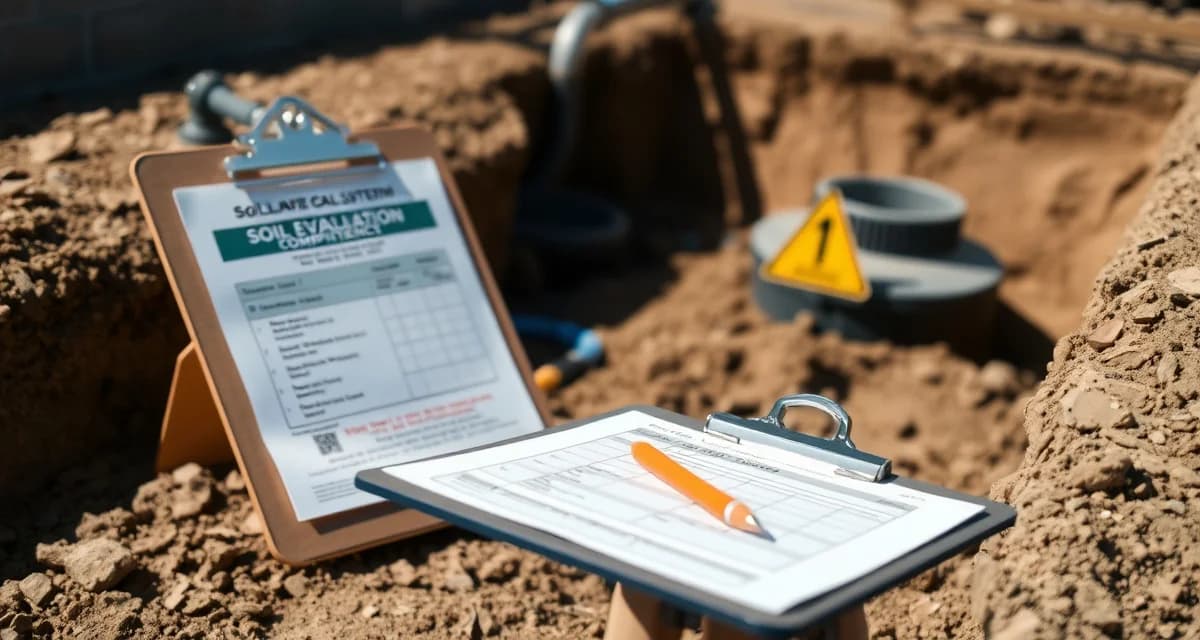
New Construction Septic Compliance: A Guide for Installers and Companies
By the SepticMind Editorial Team
New septic system permits take an average of 6 weeks from application to approval. That's six weeks of permit sequencing, soil evaluation scheduling, county review, and compliance documentation before a single shovel goes in the ground.
TL;DR
- Septic permit and compliance requirements are set at the state level but administered at the county level, creating significant variation within a single state.
- Operating without required permits or missing compliance deadlines can result in fines, stop-work orders, and license referrals.
- Permit applications must include specific documentation (soil evaluations, site plans, contractor license) that varies by county.
- Multi-county operations need a systematic approach to tracking permit applications, status updates, expiration dates, and renewal deadlines.
- Digital permit tracking reduces the risk of missed deadlines that compound into compliance notices and license risk.
- SepticMind's county permit database covers all 50 states with current forms, fees, and review timelines.
For installation companies, that window is where most compliance problems happen. Miss a step in the permit sequence and the project stalls. Submit incomplete soil evaluation documentation and the clock resets. Start excavation before the permit is in hand and you're facing a stop-work order and fines.
New construction septic compliance isn't harder than routine service compliance. It just has more steps, and those steps have to happen in the right order.
Why New Construction Is Different
Routine pumping and inspection work involves permits too, but the permit process is usually straightforward: you pull the permit, do the work, submit documentation. In most counties, that's a one or two-step process.
New construction installation is different. It typically involves multiple sequential permits, inspections at specific construction stages, and documentation requirements that span from initial site evaluation through final system approval.
Installation companies using generic FSM tools miss permit sequencing requirements for new construction because those tools are built around single-event jobs, not multi-stage projects. A job record that can only capture one permit number and one inspection date can't track a new construction project with four separate permit or inspection milestones.
The Typical New Construction Permit Sequence
While requirements vary by state and county, most new construction septic projects follow a similar permit sequence.
Stage 1: Site Evaluation and Soil Testing
Before a permit can be applied for, the site must be evaluated. This typically involves:
- A licensed soil evaluator or engineer assessing soil conditions
- Percolation testing or soil morphology evaluation
- Site measurements for setbacks to property lines, wells, buildings, and water features
- Documentation of site conditions in a format required by the permitting authority
In many states, the site evaluation report must be submitted with the permit application. In others, the county reviews it separately before the permit application is even accepted. Know which process your state uses.
SepticMind's installation workflow tracks permit stages from soil evaluation through final inspection. When you create a new construction project, the system walks through each required stage in sequence and doesn't allow you to jump ahead.
Stage 2: Design Approval
Based on soil evaluation results, a system design is prepared. In most states, this requires:
- A licensed engineer or OWTS designer to prepare the design
- The design to specify system type, dimensions, setbacks, and installation specifications
- County review and approval of the design before installation permits are issued
The system type permitted depends directly on soil evaluation results. A site with good drainage might qualify for a conventional trench system. A site with high water table or poor percolation might require a mound system, an ATU, or another alternative design.
This is one of the most common compliance issues: the design goes in for a conventional system, the soil evaluation data actually supports only an alternative system, and the project gets sent back.
Stage 3: Installation Permit
Once the design is approved, the installation permit can be issued. This permit authorizes excavation and installation to begin. Most states require:
- Permit posted at the site during construction
- Installation performed by a licensed installer
- No deviations from the approved design without county approval
Starting excavation before the permit is in hand is the most expensive compliance mistake in new construction septic work. Stop-work orders, removal of improperly placed materials, and fines for proceeding without a permit can cost more than the permit delay itself.
Stage 4: Construction Inspections
Most states require one or more inspections during the installation process. Common inspection points include:
- Pre-cover inspection: Before any system components are covered, the county inspector must verify the installation matches the approved design
- Tank installation inspection: Some counties inspect tank placement, backfill, and riser installation separately
- Drain field inspection: Inspection of trenches, gravel, distribution pipes, and geotextile before covering
The contractor must request each inspection and wait for approval before proceeding to the next phase. Covering components before an inspection has been completed is a violation in virtually every jurisdiction.
Stage 5: Final Permit and System Approval
After all construction inspections are complete, a final permit or certificate of occupancy is issued for the system. This typically involves:
- As-built documentation showing the actual installed location of system components
- Final inspection by county health department
- Issuance of operation permit or system registration
In many states, the final permit is required for the property to receive a certificate of occupancy. That's the link between your compliance and the builder's ability to close the project.
Soil Evaluation Results and System Type
How do soil evaluation results affect the type of system permitted? This is one of the most frequently misunderstood aspects of new construction compliance.
Soil evaluation results determine which system designs will be approved for a specific site. The key factors are:
Percolation rate: How quickly water moves through the soil. Fast percolation allows for standard trench systems. Very fast percolation may require modified designs to prevent groundwater contamination. Very slow percolation may require elevated systems like mounds.
Seasonal high water table: If seasonal high water table is within 24 inches of the natural ground surface, conventional in-ground trench systems are typically not permitted. Mound systems or elevated drain fields are required.
Soil texture and structure: Clay-heavy soils have limited permeability. Sandy soils have high permeability. The soil evaluation identifies these characteristics and the approved design must account for them.
Site geometry and setbacks: Lot size, shape, slope, and proximity to wells and water features limit what's possible. The design must fit within the space available after required setbacks.
An installer who proceeds with a conventional design before soil evaluation results are formally reviewed by the county is taking a risk that the design will be rejected after work has already begun.
What Inspections Are Required During and After Construction?
Required inspections during and after new construction vary by state, but most programs include a minimum of three inspection events:
- Site evaluation sign-off before permit application
- Pre-cover inspection before system components are buried
- Final inspection before the operation permit is issued
Some states and counties require additional inspections: a tank placement inspection, a drain field distribution line inspection before aggregate is placed, and an electrical inspection for ATU installations.
The septic permit tracking software in SepticMind tracks each inspection milestone for new construction projects. When an inspection is scheduled, the job record updates. When the inspection passes, the next stage unlocks. If an inspection fails, the system flags the project for rework before proceeding.
Documentation Requirements for New Construction
New construction projects generate more documentation than any other septic work type. You need to retain and be able to produce:
- Site evaluation report
- System design documents (stamped by engineer if required)
- All permit applications and approval letters
- Inspection sign-off sheets for each required inspection
- As-built survey showing final component locations
- Final operation permit or system registration
This documentation package often travels with the property through subsequent sales. In states with real estate inspection requirements, a new buyer's inspector will request these records. Missing documentation from the original installation creates problems that can show up years later.
Multi-Stage Projects and Staff Coordination
New construction projects often span weeks or months. Different staff may be involved at different stages: the soil evaluator, the designer, the installation crew, the county inspector, and your office staff coordinating permits.
A single job record that shows the current stage, who's responsible for the next action, and what documentation is pending makes coordination possible. Without that visibility, new construction projects depend on whoever remembers to follow up.
SepticMind's installation workflow lets you assign different project milestones to different team members. When a stage is completed, the next person in the sequence is notified that their step is ready. No one has to chase anyone.
Get Started with SepticMind
SepticMind is designed around the actual workflows of septic service companies, from county permit tracking to automated maintenance reminders. Whether you are managing a single truck or a multi-county fleet, the platform scales with your operation. See how it works for your business.
FAQ
What permits are required before new septic system construction can begin?
At minimum, most states require a site evaluation sign-off, a design approval, and an installation permit before excavation can begin. Some states and counties issue these as separate permits with separate applications; others issue them as stages of a single project permit. You should have all pre-construction approvals in hand, with the installation permit posted at the site, before any ground is broken.
How do soil evaluation results affect the type of system permitted?
Soil evaluation results directly determine which system types will be approved for a site. Soil percolation rate, seasonal high water table depth, soil texture, and site geometry all influence the approval. A site with high seasonal water table can't receive a conventional in-ground trench system; it requires a mound or elevated drain field. Proceeding with a design that doesn't match the soil evaluation findings will result in plan rejection.
What inspections are required during and after new construction?
Most jurisdictions require a minimum of three inspection events: a site evaluation sign-off before permit application, a pre-cover inspection before any system components are buried, and a final inspection before the operation permit is issued. Many counties add additional inspection points such as tank placement and distribution line inspections. Your county health department's permit application packet will list all required inspection stages for your jurisdiction.
What are the consequences of performing septic work without a required permit?
Performing septic work without required permits can result in stop-work orders halting the project, fines on a per-day or per-violation basis, mandatory removal of unpermitted work at the contractor's expense, and referral to the contractor licensing board for potential license action. In some states, unpermitted septic work also creates civil liability for the contractor if the system later fails and the homeowner can show the work was not properly inspected. Obtaining permits before beginning work protects both the contractor and the property owner.
How should a septic company track permit deadlines across multiple counties?
A spreadsheet can work for a single county, but multi-county permit tracking requires a system with automated deadline alerts, status tracking, and the ability to store permit documents by project. The most common failure mode is a permit that was applied for and approved but whose inspection deadline was missed because no one was actively monitoring it. Purpose-built septic software with a permit tracking module flags upcoming deadlines automatically and keeps all permit documentation attached to the relevant project record.
Try These Free Tools
Sources
- National Onsite Wastewater Recycling Association (NOWRA)
- US EPA Office of Wastewater Management
- NSF International
- Water Environment Federation
- National Environmental Services Center (NESC)