Septic Inspections for New Construction Homes: What Builders Need
By the SepticMind Editorial Team
New construction septic systems must pass three to four inspection milestones before occupancy permits are issued. Builders without structured septic inspection milestones face permit hold-ups at critical construction stages, a closed-in house that can't get a certificate of occupancy because the septic final inspection was never scheduled is a builder's operational failure and a buyer's nightmare.
TL;DR
- Septic inspections require state-specific report formats that must be completed correctly before they are accepted by regulators, lenders, or buyers.
- Photo documentation with timestamps and GPS coordinates is the minimum standard for defensible inspection reports.
- Real estate inspection reports in most states must be filed with the county health department within a specified timeframe.
- Inspector credentials must be current and visible on every submitted report; expired credentials are grounds for report rejection.
- Digital inspection tools reduce report completion time from hours to minutes and eliminate transcription errors.
- Consistent documentation quality across all technicians protects company reputation in the real estate inspection market.
Understanding the full inspection sequence for new construction septic systems helps builders, contractors, and inspectors coordinate effectively and avoid the closing delays that come from missed milestones.
The New Construction Septic Inspection Sequence
Unlike resale inspections that assess a system's current condition, new construction inspections are phased through the installation process. Each phase must be approved before the next begins.
Phase 1: Site Evaluation and Soil Testing
Before any design or permit application, the site must be evaluated for its ability to support a septic system. This is the foundational step that drives everything else.
Perc test (percolation test): Holes are dug at the proposed drainfield location, saturated with water, and observed over a defined period to measure how quickly water drains. The perc rate is expressed in minutes per inch. Too fast suggests inadequate treatment; too slow means the soil can't absorb effluent at the required rate.
Soil profile evaluation: A backhoe or hand-dug pit reveals the soil layers, depth to bedrock, depth to seasonal high water table, and soil texture and structure. A licensed soil evaluator or engineer conducts this evaluation in most states.
This is not an inspection per se, it's a pre-permit evaluation. But without passing site evaluation results, no permit can be issued and no design can proceed. If the site doesn't pass, the builder may be looking at an engineered alternative system or, in some cases, a site that can't support onsite wastewater at all.
Phase 2: Design Review and Permit Issuance
The health department or appropriate authority reviews the proposed system design and issues the installation permit. This is an office review, not a field inspection, but it's a milestone that must be completed before installation begins.
Some jurisdictions require the permit to be posted on-site during installation. Confirm local requirements.
Phase 3: Installation Inspections
The number of installation inspections varies by jurisdiction, but typically includes:
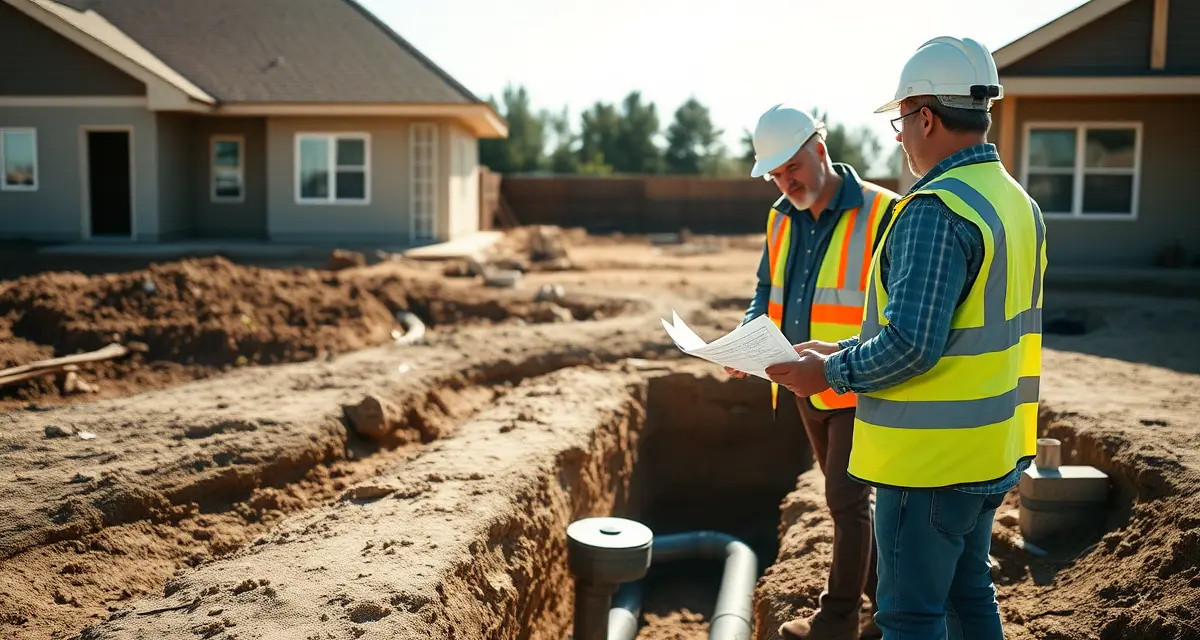
Excavation inspection (before gravel or pipe is placed): The health department inspector confirms that the excavation location, dimensions, and depth match the approved design. The inspector may probe the soil to confirm conditions match the site evaluation. This is the inspection most often missed because builders assume they can go ahead once they've broken ground.
Installation inspection (during or after pipe and gravel placement, before backfill): With the distribution system visible, the inspector confirms that pipe placement, gravel depth, and layout match the approved design. This is the critical quality control inspection, once you cover it with soil, any installation errors are hidden.
Some jurisdictions combine these into a single pre-cover inspection. Others require both. Know what your jurisdiction requires and schedule accordingly.
Phase 4: Final Inspection and Certificate
After installation is complete and backfill is placed, a final inspection confirms the system is complete and the site has been properly graded and restored. After passing the final inspection, the jurisdiction issues a final approval or certificate, which is what the building department needs to issue the certificate of occupancy.
Critical timing issue: The final septic inspection and certification must be complete before the building department can close out the CO. Builders who schedule the CO inspection without having the septic final on file cause a last-minute scramble that delays the buyer's closing.
Who Orders the New Construction Septic Inspection?
The responsibility for ordering inspections typically falls on:
The permit applicant. Whoever pulled the installation permit (typically the licensed installer, occasionally the builder or property owner) is responsible for scheduling required inspections. The inspector isn't going to show up uninvited; someone needs to call and request the inspection.
The general contractor. On new construction projects with a GC, the GC often coordinates all inspections including septic. The GC's superintendent should have the inspection schedule for every milestone and be calling to schedule each inspection at least several days in advance.
The licensed installer. In many states, only licensed installers can perform the actual installation, and they're responsible for scheduling inspections that verify their work.
The coordination failure that causes delays is usually not knowing who's responsible. Establish this clearly at the start of the project so no one assumes someone else is making the calls.
How New Construction Inspections Differ From Resale Inspections
This is where third-party inspectors (septic inspection companies that do real estate inspections) sometimes get confused when they receive a new construction inspection request.
You're verifying installation compliance, not system condition. A resale inspection evaluates a system that's been in use. A new construction inspection verifies that the system was installed per the approved design and applicable standards. The evaluation criteria are completely different.
You're not looking for failure signs. A brand-new system that was just installed correctly shouldn't show any signs of failure. If it does, that's a major installation problem. What you're looking for is installation compliance.
The primary inspector is usually the health department. On new construction, the health department conducts the milestone inspections because they issued the permit. A third-party inspector may be involved in a pre-final quality check or in markets where the health department delegates certain inspection functions, but the primary inspection authority is the jurisdiction.
Lender inspections for new construction. For buyers financing a new construction home with a septic system, lenders may require a final inspection certificate from the health department confirming the system passed final inspection. This is different from a third-party inspection, it's the official documentation from the permitting authority.
SepticMind's new construction job type tracks all required milestone inspections from soil evaluation through final approval. This is particularly useful for installation companies managing multiple new construction projects simultaneously.
For the septic installation permit requirements in your specific jurisdiction, confirm the full inspection sequence with the local health department at the time the permit is applied for, not when the first inspection is due.
Get Started with SepticMind
Inspection work is the highest-visibility service in the septic trade, and your documentation quality directly affects your reputation with real estate agents, lenders, and county officials. SepticMind generates state-formatted inspection reports in the field with photo documentation attached. See how it supports your inspection workflow.
Frequently Asked Questions
What inspections are required for a new home with a septic system?
New construction septic systems typically require three to four phased inspections before a final approval is issued: a pre-construction soil evaluation and percolation test to establish that the site can support onsite wastewater treatment; an excavation inspection to confirm the drainfield location and dimensions match the approved design before installation materials are placed; a during-installation or pre-cover inspection to verify pipe placement, gravel depth, and distribution system layout before the system is buried; and a final inspection after completion to confirm the installation is complete and the site is properly restored. The specific requirements vary by state and county. Some jurisdictions combine phases; others require additional steps. The issuing health department will provide the complete inspection schedule when the permit is issued.
Who orders the septic inspection for a new construction home?
The responsibility for scheduling milestone inspections on new construction septic systems falls on the permit holder (typically the licensed installer who applied for the installation permit. The installer is responsible for calling the health department to schedule each required inspection at the appropriate stage of construction. On projects with a general contractor, the GC often coordinates inspection scheduling as part of overall project management. Builders who leave inspection coordination undefined at the start of a project often discover) too late, that nobody scheduled the inspections and the project is now behind on the occupancy permit timeline. Establish clearly at project kickoff who is responsible for calling each inspection.
How do new construction septic inspection requirements differ from resale home inspections?
New construction and resale septic inspections serve completely different purposes. New construction inspections are milestone verifications (confirming that the installation was done correctly per the approved design at each stage of installation, before the system is buried where problems can't be seen. Resale inspections assess an existing system's current condition) looking for signs of failure, documenting component condition, and confirming the system is functioning adequately at the time of inspection. New construction inspections are typically conducted by the health department as part of the permitting process. Resale inspections are usually performed by licensed third-party inspectors hired for real estate transaction purposes. The documentation formats, evaluation criteria, and questions being answered are entirely different between the two contexts.
What is the difference between a septic inspection and a septic pump-out?
A pump-out removes accumulated sludge and scum from the tank. An inspection evaluates the condition of all accessible system components: tank structure, baffles, distribution box, drainfield, and in some cases the outlet line. A real estate or regulatory inspection produces a written report in the state-required format with findings and a pass/conditional pass/fail determination. Many inspection visits include a pump-out as part of the service, but the pump-out alone is not the inspection.
Can inspection reports be submitted electronically to the county?
Yes, most counties and state agencies accept electronic inspection report submissions and many now prefer or require them. The report must be in the state-required format and include all required fields, the inspector's credentials, and any required signatures or attestations. Purpose-built inspection software generates the report in the correct state format and can submit it electronically directly from the field.
Try These Free Tools
Sources
- National Onsite Wastewater Recycling Association (NOWRA)
- US EPA Office of Wastewater Management
- NSF International
- American Society of Home Inspectors (ASHI)
- Water Environment Federation