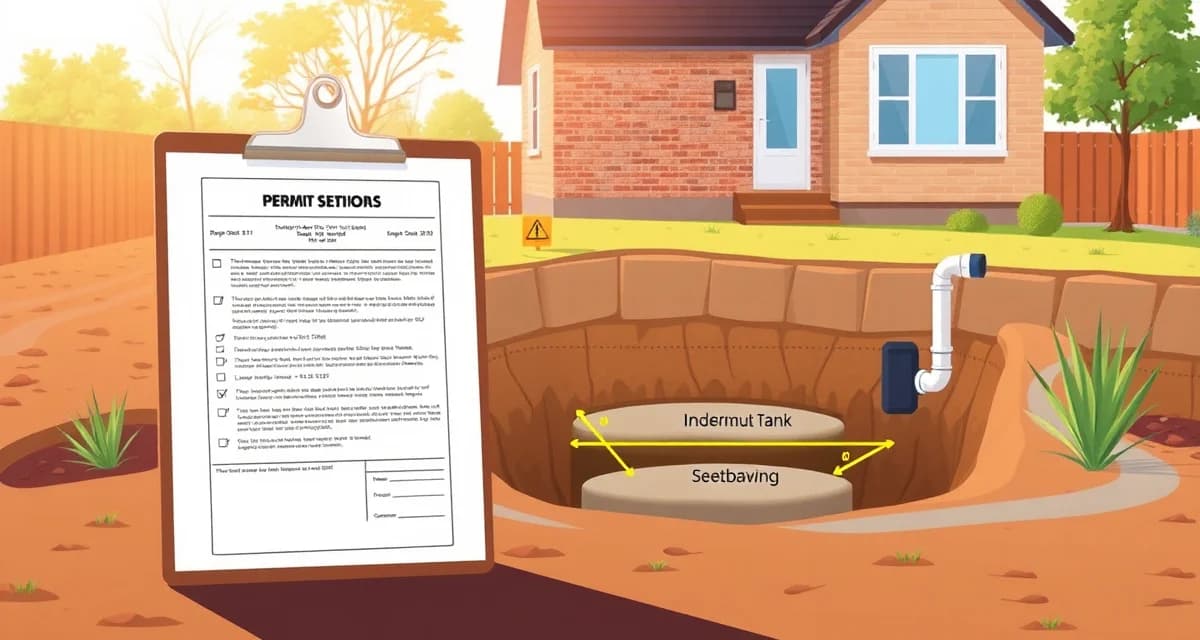
Septic Installation Permit Requirements by State and County
By the SepticMind Editorial Team
New septic system installation is where the permit requirements get complicated fast. You've got a property, a buyer or builder pushing for a timeline, and a permit process that moves at its own speed regardless of what closing date is on the purchase agreement.
TL;DR
- Septic permit and compliance requirements are set at the state level but administered at the county level, creating significant variation within a single state.
- Operating without required permits or missing compliance deadlines can result in fines, stop-work orders, and license referrals.
- Permit applications must include specific documentation (soil evaluations, site plans, contractor license) that varies by county.
- Multi-county operations need a systematic approach to tracking permit applications, status updates, expiration dates, and renewal deadlines.
- Digital permit tracking reduces the risk of missed deadlines that compound into compliance notices and license risk.
- SepticMind's county permit database covers all 50 states with current forms, fees, and review timelines.
Permit violations during installation can require full system removal and reinstallation. I've seen it happen. A system installed in the wrong setback from a well, without proper permits, got flagged during a later inspection. The original contractor was long gone, but the current owner was stuck with the remediation costs. That's the downstream consequence of skipping permits, and it follows the property, not just the contractor.
What every installer needs before breaking ground is a clear understanding of what permits are required, who issues them, and what they take to obtain.
Why Installation Permits Are Different From Service Permits
A routine pump-out permit, where one is required at all, is relatively simple, register the job, pull the manifest, document disposal. An installation permit involves a series of approvals that can span weeks or months:
Site evaluation phase, Before an installation permit is issued, most jurisdictions require a site evaluation to determine whether the soil and lot configuration can support an onsite system. This involves a licensed soil evaluator or engineer assessing percolation rates, soil morphology, seasonal high water table, and setback distances.
Design approval phase, The system design must be approved by the permitting authority before construction begins. Designs are typically prepared by licensed engineers or designers, reviewed by the county or state, and approved with conditions or returned for revision.
Construction permit issuance, Once the design is approved, the construction permit is issued. This is the document that authorizes you to break ground. The permit will specify the approved design, setback requirements, required inspections during construction, and any conditions.
Construction inspections, Most jurisdictions require inspections at specific construction stages: rough inspection before tank burial, component inspection before system burial, and final inspection before backfill. The inspector must sign off at each stage before work can proceed.
Final approval and as-built documentation, After construction is complete, most jurisdictions require as-built drawings showing the actual installed location of all system components, and a final inspection before the system can be placed in service.
Miss any step in this sequence and you create a compliance gap that can surface years later at the worst possible time, usually when the property is being sold.
What Every Installation Permit Application Requires
The core documentation is relatively consistent across states, though the specific forms vary:
Site evaluation report, Soil testing results, perc test data (where still used), and the site evaluator's determination of system type and size that the lot can support. Some states have moved away from perc tests toward soil morphology-based evaluations. Massachusetts Title 5 uses a soil evaluator process; North Carolina uses site evaluations conducted by licensed professionals.
System design, A scaled site plan showing the property, proposed tank location, drain field or alternative treatment component layout, setbacks to all relevant features (wells, property lines, streams, drainage ditches, structures), and specifications for all system components.
Installer credentials, Most states require the permit application to identify the licensed installer. Your license number, classification, and expiration date will appear on the application. If your license is expired or in the wrong classification for the system type, the application will be rejected.
Property documentation, Typically a current plat or survey, proof of ownership, and any deed restrictions or easements that might affect system location.
Engineer's seal, Required for non-standard or alternative system designs in most states. Some states require an engineer's seal on all installation designs above a certain size or complexity.
Permit fee, Fees vary significantly. Rural counties might charge $75-150 for residential installation permits. Urban and suburban counties can charge $500 or more. Some states have additional state-level fees on top of county fees.
Timeline Realities for Installation Permit Approval
The biggest source of frustration in new septic installation work is that permit timelines are largely outside your control. Here's what drives the variation:
County workload, A rural county with 50 permit applications per year processes them differently than a suburban county handling 500. During construction booms, processing times stretch.
Seasonal factors, Many jurisdictions restrict soil testing to specific seasons when soil conditions are representative. If the site evaluation has to wait for the right season, the permit timeline extends accordingly. North Carolina requires a minimum of two soil borings in specific locations; these can't always be completed year-round.
Design revisions, Applications returned for revision restart the review clock. Getting the design right the first time, and using engineers who know the local jurisdiction's standards, shortens the overall timeline.
Public notice requirements, Some jurisdictions require public notice for certain installation types (large systems, systems near water bodies), which adds a comment period to the timeline.
Board of Health review, In states where local Boards of Health have final approval authority (Massachusetts, parts of New England), applications go through a board meeting schedule that may only happen monthly.
Typical timelines by state type:
- Rural counties in flexible states: 2-4 weeks from complete application to permit issuance
- Suburban counties in moderate states: 4-8 weeks
- States with strict review processes (Massachusetts, California coastal, New York): 8-16 weeks or more
Build this timeline into your project scheduling. If a builder expects to break ground in 6 weeks and you haven't started the site evaluation yet, the timeline doesn't work.
Setback Requirements That Vary by State and County
Setback requirements, minimum distances between system components and other features, are where most installation errors occur. Every county has them; not all of them are the same.
Standard setbacks (most jurisdictions):
- 10 feet minimum from property lines
- 25-50 feet from any water well (100 feet in many states)
- 50-100 feet from surface water (streams, ponds, drainage ditches)
- 5-10 feet from structures
- 50-100 feet from water supply springs
Stricter setbacks in specific jurisdictions:
- California coastal counties: 100 feet from coastal bluffs
- Chesapeake Bay watershed (Virginia, Maryland): 100 feet from water features with additional buffer requirements
- Wisconsin shoreland zoning: 75-foot setbacks from ordinary high water marks
- Florida: strict setbacks from any water body given the state's hydrology
When you're working in a new county or near water features, verify the specific setback requirements before finalizing the design. A 5-foot error in the tank location can require the system to be relocated after installation if it fails a final inspection.
Alternative System Installation: Stricter Requirements
Conventional gravity-fed septic systems are the most straightforward installation from a permit perspective. Alternative system types add complexity:
Mound Systems
Mound systems are required when the seasonal high water table is too close to the surface for a conventional drainfield. They involve imported fill material to elevate the distribution system above the native soil.
Permit requirements for mounds typically include a design with engineered fill specifications, a soil report supporting the design, and construction inspections at the fill placement, pipe installation, and capping stages. The added height of a mound system can trigger additional setback considerations not required for conventional systems.
Aerobic Treatment Units (ATUs)
ATUs are small wastewater treatment plants. They require not just installation permits but operating permits in most states, and ongoing O&M agreements are required as a condition of the installation permit in Florida, Texas, North Carolina, and many other states.
The installation permit for an ATU typically requires manufacturer specifications for the specific unit, a designed distribution system, and in many cases, state approval of the ATU model before it can be permitted for installation.
Drip Irrigation Systems
Low-pressure drip distribution systems require engineered designs and typically higher design flow calculations than conventional systems. Installation permits require extensive documentation of the dispersal field layout, emitter specifications, and control system parameters.
Mound and Drip in High Water Table Areas
Florida and the Gulf Coast states have significant portions of their territory where conventional systems aren't viable and alternative systems are the default. Contractors in these markets need to be fluent in the alternative system permit requirements for their specific counties.
State-Specific Installation Permit Quirks
Texas, TCEQ's OSSF rules require a licensed Designated Representative to be involved in the permit process. The application process goes through TCEQ directly (or the county OSS authority if the county has adopted its own rules) and typically takes 45-90 days.
Massachusetts, Title 5 installations require a licensed site evaluator, a designer, and an installer, each with separate licensing. The local Board of Health approves designs, and the Board must inspect at specified construction stages. Timeline from site evaluation to permit issuance typically runs 8-14 weeks.
California, Coastal county installations near sensitive water bodies can require Coastal Commission approval in addition to county permits, adding another layer to an already complex process.
Pennsylvania, Municipal Sewage Enforcement Officers (SEOs) handle the site evaluation, design review, and construction inspection. Timeline depends heavily on the specific municipal SEO's workload. Rural municipalities often have a single SEO handling all municipal responsibilities; they can't always schedule site visits on short notice.
North Carolina, The NC Improvement Permit process requires an authorized site evaluator to conduct the site evaluation, after which the county issues an Improvement Permit. The Authorization to Construct is issued separately after design approval. Two separate documents for a single installation.
Get Started with SepticMind
Permit compliance across multiple counties is one of the first places a growing septic business loses control. SepticMind's permit database and tracking tools cover all 50 states with county-level detail, automated deadline alerts, and document storage by project. See how permit management works.
FAQ
What permits are required to install a new septic system?
At minimum, a new residential septic installation requires a site evaluation approval, a system design approval, and a construction permit from the county health department or applicable permitting authority. Most jurisdictions also require construction stage inspections and a final permit approval before the system can be placed in service. Some states require separate state-level environmental permits for systems above a certain size or near water bodies. Alternative system types (ATUs, drip irrigation, mound systems) often require additional permits and operating permits that carry annual renewal requirements.
How long does septic installation permit approval take?
Timeline varies significantly by jurisdiction. Rural counties in less regulated states can issue installation permits in 2-4 weeks from a complete application. Suburban and urban counties in moderately regulated states typically take 4-8 weeks. States with complex multi-step approval processes, Massachusetts (Title 5), California coastal counties, New York suburban counties, can take 8-16 weeks or longer. Seasonal soil testing restrictions, Board of Health meeting schedules, and design revision cycles can extend these timelines further. Build the permit timeline into your project schedule from the start rather than assuming a fast turnaround.
Who is responsible for pulling installation permits?
In most states, the licensed installer of record is responsible for ensuring the installation permit is properly obtained before work begins. On new construction projects, the general contractor sometimes manages permit coordination, but the septic installer should verify the septic-specific permits are in place before beginning. If a job starts without proper permits, the installer faces the consequences, not the property owner or GC. When using SepticMind, the installer can create the permit record, track submission and approval, and store all permit documentation in the job file where it's accessible to the field team.
What are the consequences of performing septic work without a required permit?
Performing septic work without required permits can result in stop-work orders halting the project, fines on a per-day or per-violation basis, mandatory removal of unpermitted work at the contractor's expense, and referral to the contractor licensing board for potential license action. In some states, unpermitted septic work also creates civil liability for the contractor if the system later fails and the homeowner can show the work was not properly inspected. Obtaining permits before beginning work protects both the contractor and the property owner.
How should a septic company track permit deadlines across multiple counties?
A spreadsheet can work for a single county, but multi-county permit tracking requires a system with automated deadline alerts, status tracking, and the ability to store permit documents by project. The most common failure mode is a permit that was applied for and approved but whose inspection deadline was missed because no one was actively monitoring it. Purpose-built septic software with a permit tracking module flags upcoming deadlines automatically and keeps all permit documentation attached to the relevant project record.
Try These Free Tools
Sources
- National Onsite Wastewater Recycling Association (NOWRA)
- US EPA Office of Wastewater Management
- NSF International
- Water Environment Federation
- National Environmental Services Center (NESC)