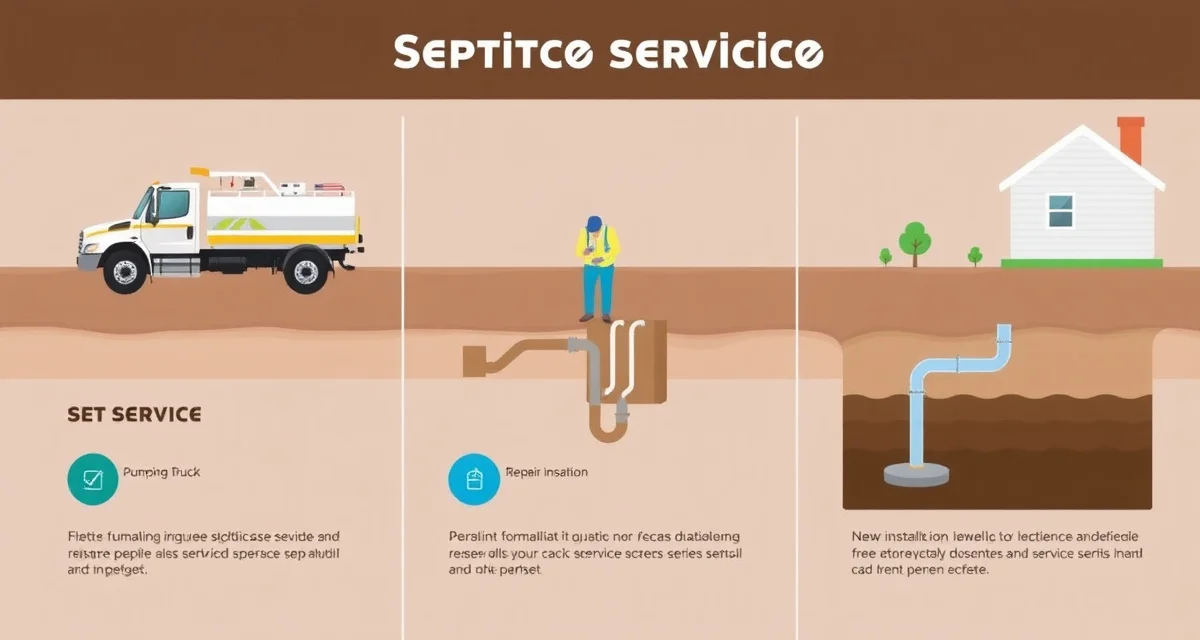
Septic Permit Requirements by Service Type: Pumping vs Repair vs Install
By the SepticMind Editorial Team
Here's a mistake that trips up septic companies expanding their service offerings: assuming that because they know the permit rules for pumping, they know the rules for everything else they do. They don't.
TL;DR
- Septic permit and compliance requirements are set at the state level but administered at the county level, creating significant variation within a single state.
- Operating without required permits or missing compliance deadlines can result in fines, stop-work orders, and license referrals.
- Permit applications must include specific documentation (soil evaluations, site plans, contractor license) that varies by county.
- Multi-county operations need a systematic approach to tracking permit applications, status updates, expiration dates, and renewal deadlines.
- Digital permit tracking reduces the risk of missed deadlines that compound into compliance notices and license risk.
- SepticMind's county permit database covers all 50 states with current forms, fees, and review timelines.
Different service types trigger different permit requirements in 94% of US counties. Companies that apply the same permit logic to all service types face violations when repair work crosses a threshold they didn't know existed. That's not a paperwork problem. It's a license risk.
This guide breaks down permit requirements by service type so you know exactly when you need a permit, for what, and who issues it.
Routine Pumping: The Lowest Permit Threshold
Routine septic pumping, removing accumulated solids from an existing tank with no repair or alteration work, has the lowest permit threshold of any service type. In most states, routine pumping of an existing septic system does not require a permit at all.
But "routine" has limits. State-specific exceptions include:
Volume thresholds. Some states require a permit when removing solids from large commercial systems above a certain gallon capacity.
Disposal site requirements. While the pumping itself may not require a permit, the disposal of septage nearly always does. Your disposal facility's permit covers this in most cases, but some states require the hauler to hold a separate transport permit.
Coastal and environmentally sensitive areas. Properties in coastal protection zones, shoreland protection areas, or near public water supplies may have additional permit requirements for any septic service activity.
First-service documentation. Some counties require a service notification or record submission for the first pump on a system that has no prior service record.
Repairs: Where Permit Thresholds Get Complex
Repairs are where the permit picture gets complicated, and where violations most commonly occur. The key question in most states is whether the repair constitutes a "notable alteration" to the existing system.
Minor repairs typically below a permit threshold:
- Replacing an access lid or riser
- Repairing or replacing a single baffle component
- Minor pipe repairs within the tank
- Effluent filter replacement
Repairs that typically require permits in most states:
- Replacing or adding distribution boxes
- Any work on the drainfield or absorption area
- Pipe replacement from tank to drainfield
- Pump replacement in pump chambers
- Any repair that alters flow paths or distribution
- Work on alternative system components (blowers, UV disinfection, etc.)
At what point does a repair require the same permit as an installation? That threshold varies, but a useful rule of thumb is this: if the repair changes how effluent flows through the system, or replaces a major structural component, treat it as a permitted repair. SepticMind's job creation workflow automatically identifies the permit requirement based on selected service type, which removes the guesswork.
The cost of pulling a permit you didn't need is the application fee. The cost of doing permitted work without a permit is potentially your license.
New Installations: The Highest Permit Requirement
New septic installations involve the most thorough permit process. The sequence typically looks like this:
- Soil evaluation/perc test. Usually conducted by a licensed evaluator (engineer, soil scientist, or certified evaluator depending on state). Most states require a permit or registration for this step.
- System design. A licensed engineer or system designer produces a site plan and system specification.
- Installation permit application. Submitted to the county health department or state environmental agency, with the soil evaluation and design documents attached.
- Installation permit issuance. Upon approval, the permit authorizes construction.
- Inspection at key milestones. Most states require inspection at excavation, before backfill, and at final completion.
- Certificate of completion or final approval. Issued after final inspection passes.
The timeline for installation permits varies notably. Rural counties with low staff capacity may take 4-8 weeks. Counties with well-staffed health departments may turn around permits in 1-2 weeks.
Check out the full county permit requirements guide for specific county-level information in your service area.
ATU Maintenance: A Separate Permit Category
Aerobic treatment unit maintenance exists in its own permit category in most states. The requirements are distinct from conventional pumping and repair in two key ways:
Provider designation requirements. Over 30 states require ATU maintenance providers to hold a specific designation or certification from the manufacturer or state. This is separate from your general septic contractor license.
Maintenance contract requirements. Many states require an active maintenance contract to be on file with the state or county for every ATU in your service portfolio. The contract, not just the service, is what makes the maintenance legal.
Quarterly reporting. Most states require quarterly maintenance reports for ATUs to be filed with the county health department. The report must document specific inspection components, disinfection status, and effluent quality observations.
If you're doing ATU work without understanding your state's provider designation and reporting requirements, you're likely out of compliance even if the physical work is done correctly.
Inspections: Credentials and Permits
Septic inspections, particularly for real estate transactions, have their own credential and permit structure. In 22 states, septic inspection permits require a separate licensed evaluator credential from pumping. Being licensed to pump does not automatically authorize you to perform licensed inspections in those states.
Real estate inspection requirements often include:
- Specific inspector credential (certified evaluator, licensed inspector, or similar)
- Report format compliance with state or lender standards
- Submission of report to county database (in some states)
For inspection permit and credential details by state, see the septic inspection compliance guide.
Managing Permits Across Service Types
The operational challenge is that most active septic companies do more than one type of work. You're pulling different permits for different jobs, possibly in different counties, with different timelines and documentation requirements.
A permit tracking system that understands service type is essential once you're managing volume. When you create a job in SepticMind and select the service type, the platform identifies the permit requirement for that service type in that county automatically. That means no manual lookup, no missed permits, and a complete permit history tied to each job record.
How Permit Requirements Differ for ATU vs Conventional
The differences between conventional system and ATU permit requirements are worth understanding in detail because many companies add ATU work without fully accounting for the compliance difference.
Conventional pumping: Generally no permit required in most states for routine service.
ATU quarterly maintenance: Requires provider designation in most states, maintenance contract on file, quarterly report submission.
Conventional repair: Depends on scope. Minor repairs may not require a permit; notable component replacement almost always does.
ATU repair: Any component repair or replacement typically requires a permit and, in some states, notification to the state environmental agency.
New conventional installation: Full permit process with soil eval, design, installation permit, and inspection milestones.
New ATU installation: Same as conventional plus additional manufacturer certification requirements and often extended inspection milestone requirements.
Get Started with SepticMind
Permit compliance across multiple counties is one of the first places a growing septic business loses control. SepticMind's permit database and tracking tools cover all 50 states with county-level detail, automated deadline alerts, and document storage by project. See how permit management works.
Frequently Asked Questions
Does routine septic pumping require a permit in most states?
No. Routine pumping of an existing septic system, removing accumulated solids without altering or repairing the system, does not require a permit in most states. However, septage disposal does require compliance with disposal facility permitting. Some states have exceptions for large commercial systems, coastal protection zones, and systems with no prior service record. When in doubt, contact your county health department to confirm requirements for your specific service area.
At what point does a septic repair require the same permit as an installation?
The threshold varies by state and county, but repairs that require permits are generally those that alter the flow path, replace major structural components (pump chambers, distribution boxes, drainfield laterals), or involve any work on the absorption area. Minor repairs like baffle replacement, access lid replacement, or effluent filter service typically fall below permit thresholds in most states. Work that changes how effluent is distributed or treated crosses into permitted territory in virtually all states.
How do permit requirements differ for aerobic treatment unit maintenance vs conventional pumping?
ATU maintenance is substantially more regulated than conventional pumping. Most states require ATU maintenance providers to hold a specific state or manufacturer designation, maintain an active maintenance contract on file for each unit they service, and submit quarterly maintenance reports to the county health department. Conventional routine pumping requires none of these in most states. If you're expanding into ATU maintenance, research your state's specific provider designation and reporting requirements before taking on your first ATU contract.
What are the consequences of performing septic work without a required permit?
Performing septic work without required permits can result in stop-work orders halting the project, fines on a per-day or per-violation basis, mandatory removal of unpermitted work at the contractor's expense, and referral to the contractor licensing board for potential license action. In some states, unpermitted septic work also creates civil liability for the contractor if the system later fails and the homeowner can show the work was not properly inspected. Obtaining permits before beginning work protects both the contractor and the property owner.
How should a septic company track permit deadlines across multiple counties?
A spreadsheet can work for a single county, but multi-county permit tracking requires a system with automated deadline alerts, status tracking, and the ability to store permit documents by project. The most common failure mode is a permit that was applied for and approved but whose inspection deadline was missed because no one was actively monitoring it. Purpose-built septic software with a permit tracking module flags upcoming deadlines automatically and keeps all permit documentation attached to the relevant project record.
Try These Free Tools
Sources
- National Onsite Wastewater Recycling Association (NOWRA)
- US EPA Office of Wastewater Management
- NSF International
- Water Environment Federation
- National Environmental Services Center (NESC)