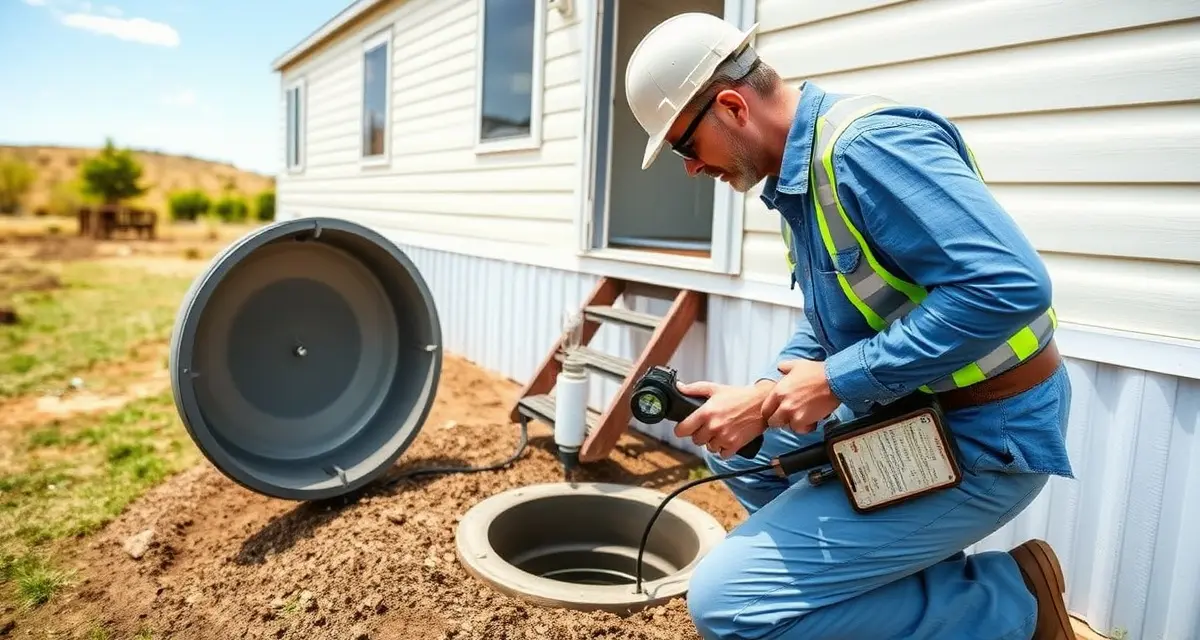
Septic Inspections for Single and Double Wide Mobile Homes
By the SepticMind Editorial Team
Mobile home septic systems over 30 years old have a failure rate 3x higher than newer installations, and many mobile home septic tanks were installed in the 1970s-80s and are approaching or past their expected lifespan. Inspecting a mobile home septic system often means working with older infrastructure in configurations that don't match modern residential systems.
TL;DR
- Septic Inspections for Single and Double Wide Mobile Homes is designed to address the specific workflow and compliance requirements of septic service operations.
- Purpose-built septic software handles permit tracking, state inspection report templates, and tank data management that generic platforms do not offer.
- Companies managing ATU contracts, multi-county permit portfolios, or real estate inspection volume need software designed around those workflows.
- Mobile access allows field technicians to complete and submit inspection reports before leaving a property.
- Cloud-based platforms ensure records are accessible from any device and backed up automatically.
- Switching costs from generic software are real, so evaluating septic-specific platforms early saves migration pain later.
SepticMind inspectors can flag aging mobile home septic systems for enhanced inspection protocols, applying age-appropriate assessment when the system's installation date indicates elevated risk.
Get Started with SepticMind
Inspection work is the highest-visibility service in the septic trade, and your documentation quality directly affects your reputation with real estate agents, lenders, and county officials. SepticMind generates state-formatted inspection reports in the field with photo documentation attached. See how it supports your inspection workflow.
Frequently Asked Questions
What are the unique inspection requirements for mobile homes on private septic systems?
Mobile home septic inspections have several distinct challenges. Tank access is often more difficult than at site-built homes: tanks may have been installed with no access risers (common in pre-1990 installations), requiring excavation to locate and open the tank. System age documentation is frequently incomplete -- permit records for manufactured housing developments from the 1970s and 1980s may not be readily available, making system age estimation from physical evidence necessary. Many mobile home septic tanks are steel tanks installed before fiberglass or concrete became the standard, and steel tanks from this era are often at or past service life. The inspector should assess tank material on arrival and specifically evaluate structural integrity for any steel tank in the 30+ year range. Additionally, manufactured housing developments sometimes used community septic systems rather than individual site systems, which affects both inspection scope and the documentation that the lender or buyer needs.
How do I inspect a septic tank that has minimal or difficult access at a mobile home?
When a mobile home septic tank has no above-ground access riser, the first task is locating the tank. Probe the soil systematically from the home's drain outlet toward likely tank locations -- typically within 10-20 feet of the home's plumbing exit. Ground-penetrating probe rods help identify the tank edges and lid locations. Once located, excavation is usually required to expose the lid for inspection. Document the excavation effort in your report and note that access is limited -- an inspector cannot be expected to complete a full interior inspection through a lid they had to excavate under emergency conditions without prior notice. The appropriate recommendation is typically to install an access riser as part of the service, which makes future access practical and protects the property owner from the same excavation cost at the next service. If excavation isn't possible during the inspection (time constraints, frozen ground, etc.), document the limitation clearly.
Does SepticMind have age-based inspection protocol adjustments for older mobile home septic systems?
Yes. SepticMind flags mobile home septic systems based on installation date and applies enhanced inspection protocols for systems over 20 years old -- the same age-based protocol adjustment that applies to residential systems generally, but with additional attention to the access and material issues common to manufactured housing installations of that era. For systems identified as likely steel tanks based on visual observation or property records, the enhanced protocol includes specific tank structural assessment elements -- probing accessible tank walls for compromise, checking seams and connections, and providing a professional assessment of remaining useful life. The inspection report for a flagged mobile home septic includes an age notation and space for the inspector's judgment about current condition versus expected service life.
What makes Septic Inspections for Single and Double Wide Mobile Homes different from general field service software?
The primary differences are septic-specific features: county permit databases, state inspection report templates formatted for regulatory submission, tank size and system type records that drive service interval calculations, and ATU maintenance contract management. General field service platforms can handle scheduling and invoicing but require manual workarounds for every compliance and documentation task that purpose-built septic software handles automatically.
Is there a free trial available to test the software?
SepticMind offers a free trial period so you can evaluate the platform with your actual workflow before committing. The trial includes access to the permit database, inspection report templates, and scheduling tools. Most companies complete their evaluation within two to three weeks and have a clear picture of how the platform fits their operation before the trial ends.
Try These Free Tools
Sources
- National Onsite Wastewater Recycling Association (NOWRA)
- US EPA Office of Wastewater Management
- NSF International
- American Society of Home Inspectors (ASHI)
- Water Environment Federation