Private sewer vs septic: which system fits your property?
By the SepticMind Editorial Team
TL;DR
- About 21 million U.S.
- households run on septic systems; the rest connect to municipal sewer.
- Sewer costs less to maintain but carries monthly fees and a connection charge.
- Septic costs more upfront and needs pumping every 3 to 5 years, but has no recurring utility bill.
- Your soil, lot size, distance to a sewer main, and local code usually decide the question for you.
What is a private sewer line vs a septic system?
A private sewer line is the pipe that runs from your house to the municipal (or sometimes a shared private) sewer main in the street. Wastewater leaves your home, travels that lateral pipe, enters the public collection system, and gets treated at a regional plant. You own and maintain the lateral from the house to the connection at the main. The treatment itself is someone else's problem.
A septic system handles all that treatment on your own property. Wastewater flows to an underground tank, solids settle out as sludge, and liquid effluent moves to a drain field (also called a leach field) where soil microbes finish the job. Every component sits on your land, which means every component is your responsibility. [1]
The phrase "direct sewer line vs septic tank" you see on real estate listings means one thing: is this house on the municipal system, or does it treat its own waste? That single distinction drives almost every cost, maintenance, and resale question below.
How many homes use septic systems vs public sewer?
The EPA estimates about 21 million U.S. households use septic systems or other onsite wastewater treatment, roughly one in five American homes. [1] The split isn't random. Septic dominates rural areas and low-density suburbs where running a sewer main costs too much to justify. Dense cities and older inner suburbs are almost entirely on sewer.
Want a rough map for your county? The U.S. Census Bureau's American Housing Survey publishes data on housing plumbing characteristics by geography, and many state environmental agencies post interactive maps of sewer service areas. [2] Your county health department is usually the most current local source.
The national average hides big regional swings. New England states like Maine and Vermont have septic rates above 50 percent. Urban counties in the Northeast and Midwest are sewer-dominant. Buy in a transitional suburban county and the mix can flip street by street.
What does each system cost to install?
Installation is where the two systems split hardest, and the numbers are tough to pin down because they swing with location, soil, and permitting.
Connecting to municipal sewer typically costs $1,500 to $20,000 depending on how far your house sits from the main and whether the street has to be cut. Many municipalities also charge a one-time connection or "tap-in" fee, from a few hundred dollars to more than $10,000. [3] If a new sewer line is being extended down your street, expect a special assessment spread over years on your property tax bill.
A new conventional septic system runs $3,000 to $15,000 for most single-family homes. That range climbs fast when soil is bad. Mound systems, aerobic treatment units, and drip irrigation systems built for clay soils or high water tables can hit $15,000 to $30,000 or more. [4] You also pay for a soil perc test (usually $500 to $1,500) and permits before a shovel touches dirt. Our cost to install septic system breakdown covers what drives those numbers.
For rural land where sewer extension isn't an option, the comparison is moot. Septic is the only path, so you budget for it.
What are the ongoing costs for sewer vs septic?
This is where daily life diverges, and most homeowners underestimate the septic side.
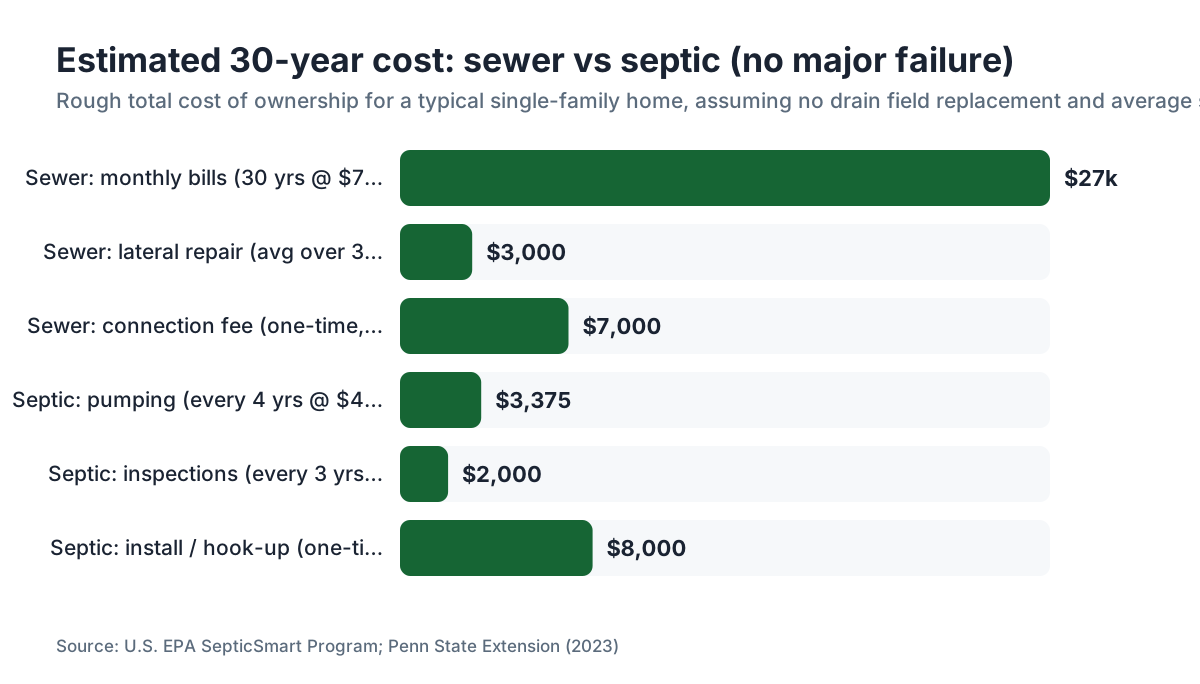
Sewer users pay a monthly utility bill. Nationally, residential sewer bills run roughly $40 to $100 per month depending on water use and the local utility, though rates in some cities top $150 per month. [5] You own your lateral pipe too, so if it cracks, roots invade, or it collapses, you pay to fix it, anywhere from $1,000 to $15,000 depending on depth and material. That's the whole picture.
Septic owners pay no monthly sewer bill, but the system needs periodic pumping. The EPA's SepticSmart program recommends pumping every 3 to 5 years for a typical household. [1] Pumping costs $300 to $600 in most markets, more in remote areas. Add an inspection every 1 to 3 years ($100 to $300) and you're looking at a few hundred dollars a year averaged out. Our guide on how often to pump septic tank walks through the household-size math.
The real financial risk with septic isn't the pumping. It's the drain field. Replacing one costs $5,000 to $20,000, and failure comes faster when the tank hasn't been maintained. Sewer users don't carry that risk. Our leach field article covers the failure modes and repair options in detail.
| Cost item | Sewer | Septic |
|---|---|---|
| Monthly utility bill | $40-$150/mo | $0 |
| Installation (new connection/system) | $1,500-$20,000 | $3,000-$30,000+ |
| Routine maintenance | Minimal | Pump every 3-5 yrs ($300-$600) |
| Major repair (lateral / drain field) | $1,000-$15,000 | $5,000-$20,000+ |
| Annual average (rough estimate) | $700-$2,000 | $400-$1,500 (when no failure) |
Which system requires more maintenance from the homeowner?
Sewer wins on simplicity. Pay the bill, keep grease out of the drains, and call a plumber if the lateral backs up. That's mostly it. Municipal systems handle treatment with licensed operators, and the utility absorbs most of the failure risk.
Septic demands active ownership. The EPA's SepticSmart program puts it plainly: "Homeowners who don't maintain their septic systems risk system failures, which can be costly and can pose a risk to public health and the environment." [1] You track pumping history, watch for slow drains and wet spots over the field, avoid flushing wipes and medications, and keep heavy vehicles off the tank and field.
Operators who manage service accounts across many properties have a harder tracking job. Software like SepticMind helps companies schedule and document service visits across a portfolio, which matters when regulations require maintenance records.
The practical split for a typical homeowner: septic means booking a pump-out every few years and paying attention to what goes down the drain. Sewer means writing a monthly check and forgetting the system exists. Neither is hard. Septic just asks for engagement that sewer doesn't.
Does having a septic system affect property value or resale?
The honest answer is: it depends, and nobody has airtight national data. The closest research runs regional or methodology-limited.
In rural and exurban markets where septic is the norm, buyers expect it and it doesn't discount the price. In transitional suburban areas where some homes have sewer and some don't, being the septic house can matter. A buyer who has to schedule pumping and faces drain field liability may push for a lower price, especially on an older system.
One factor definitely moves value: condition. A failed or undersized system discovered during inspection is a deal-killer or a hard price cut. Septic tank inspection before listing is smart seller behavior. You find the problem first and price or repair accordingly. [9]
If a sewer main ever reaches your street, connecting usually raises value in markets where sewer is preferred, though you pay the connection fee and possibly a special assessment to get there. Some municipalities require connection once sewer becomes available within a set distance, so check your local code before assuming you can stay on septic forever. [6]
Which system is better for the environment?
Neither is categorically better. Both get done well or done badly.
A well-maintained septic system with a healthy drain field treats wastewater in place, recharges local groundwater, and skips the energy cost of pumping sewage to a central plant. The EPA notes that properly functioning onsite systems protect both human health and water quality. [1]
A neglected or failing septic system is a serious pollution source. Untreated effluent reaching groundwater carries pathogens and nitrates. The EPA has tied failing septic systems to contamination of drinking water wells, shellfish beds, and surface water in many documented cases. [8]
Municipal sewer uses real energy to pump and treat wastewater, and combined sewer overflows (CSOs) in older cities can dump raw sewage during heavy rain. The EPA's Clean Water Act programs track CSO communities, and there are still more than 700 of them in the U.S. [7] That's a documented risk, not a hypothetical one.
So the comparison lands here: a well-maintained septic system in the right soil is genuinely good for the local water cycle. A neglected one is a real hazard. Sewer is managed more consistently but brings its own infrastructure and overflow risks.
Can you switch from septic to sewer, and what does it cost?
Yes. If a sewer main runs near your property and your municipality allows or requires connection, you can abandon the septic system and tie in. The process usually means hiring a licensed plumber to run the new lateral, pumping the old tank, and either removing the tank or filling it with an approved material (crushed stone or concrete) and permitting it as abandoned. [6]
A typical suburban conversion runs $5,000 to $25,000 depending on distance to the main, site conditions, and local labor. Connection fees and any special assessment from the sewer district stack on top.
Going the other direction, sewer to septic, is rare and harder. Most jurisdictions won't permit a new septic system in an area already served by public sewer. It comes up mainly for properties being subdivided or structures added on large rural parcels.
If your septic system fails and a sewer main is accessible, conversion is sometimes the cheaper long-term move, especially for an aging system that would need serious septic system repair anyway. Run conversion cost against drain field replacement cost before you commit either way.
How do you find out which system your property uses?
For most homeowners, the fastest answer is your water bill. A separate sewer charge means you're on municipal sewer. No sewer line on the bill, plus a house outside a dense urban area, strongly points to septic.
For a definitive answer, your county health department or environmental agency holds permit records for every permitted septic system in the jurisdiction. If your address has a septic permit on file, you have a septic system. Many counties have put these records online. [6]
Real estate disclosures are required in most states. Sellers have to identify the wastewater system type, though the detail varies. If you're buying, ask for the most recent septic inspection report and the pumping history. If neither exists, make a septic tank inspection a condition of purchase.
Some states publish GIS-based sewer service area maps that let you look up an address and see whether public sewer is available. Search your state environmental agency plus "sewer service area map" or "wastewater service area." These beat national datasets for currency.
What are the biggest risks with each system?
Sewer risks are mostly acute and localized. Your lateral (the pipe you own) can crack, clog with roots, or collapse, and when it does you get a backup or a slow drain. Repairs run from a few hundred dollars for hydrojetting to $10,000 or more for a full lateral replacement, especially in older clay-pipe neighborhoods. You carry no risk for the main system itself.
Septic risks move slower but hit harder. The biggest failure mode is drain field saturation. It happens when the tank isn't pumped and sludge overflows into the field, when too much water enters at once, or when soil around the field compacts or gets damaged. A failed drain field is a five-figure repair in most cases. [4] Read our leach field article for the early warning signs.
There's a health dimension too. A failing septic system that pushes effluent to the surface or into a drinking water well is a public health event, more than a property problem. State environmental agencies can order emergency repairs and lien the property if the owner stalls. [8]
For septic owners, the fix is simple in principle: pump on schedule, inspect regularly, and don't abuse the system with harsh chemicals or heavy water loads. Our septic tank pump out guide covers what a proper service visit includes.
Sewer vs septic: which is the right choice for a new build or purchase?
If you're building or buying where sewer is available, sewer is usually the lower-maintenance, lower-risk option. The bill is predictable, treatment is off your plate, and you never manage a pumping schedule or worry about drain field life. For buyers who want simplicity, sewer wins.
Septic makes sense, and is often the only option, for rural land, large lots, and areas where the math on public sewer extension doesn't work. A properly designed and maintained septic system can last 25 to 40 years before major components need replacement. [4] The key word is maintained. Budget for pumping, inspection, and eventual repairs from day one and septic is manageable.
For new construction, your perc test results and lot size often make the call for you. If the soil can't support a conventional system, you're into an engineered alternative and a higher install cost. Read cost to put in a septic tank and septic tank installation before you lock a build budget.
My honest take: if sewer is available and the connection fee is reasonable, take it. If you're on a large rural lot and septic is the norm, that's fine too, just go in clear-eyed about the upkeep. The homeowners who get burned are the ones who buy a house with a 25-year-old septic system, skip the inspection, skip the pumping, and eat a $15,000 drain field replacement three years later.
Service companies that maintain septic for property managers and landlords across many sites can track inspection and pumping schedules with software like SepticMind, which heads off exactly that kind of deferred-maintenance surprise.
Frequently asked questions
Is septic or sewer more expensive over time?
Over 20 to 30 years, the costs are closer than most people expect. Sewer bills of $40 to $150 per month add up to $10,000 to $45,000 over 30 years. Septic has no monthly bill but needs pumping every 3 to 5 years ($300 to $600 each), annual inspections, and possibly a $5,000 to $20,000 drain field replacement. If the septic system stays healthy, septic is often cheaper long-term. One major failure closes that gap fast.
What is the life expectancy of a septic system vs a sewer connection?
A conventional septic system, well maintained, typically lasts 25 to 40 years before the tank or drain field needs serious work. The lateral pipe in a sewer connection can last 50 to 100 years depending on material, since PVC outlasts old clay or cast iron. In both cases, neglect drives failure more than age does.
Can a failing septic system contaminate a well?
Yes, and it's the most serious health risk tied to failing onsite systems. The EPA has documented cases where failing septic systems contaminated nearby drinking water wells with pathogens and nitrates. Standard minimum separation between a septic system and a drinking water well is 50 to 100 feet depending on state code, but soil and failure severity determine the real risk. Test your well water annually if you're on septic.
Do you need a perc test for a sewer connection?
No. A percolation (perc) test measures how fast soil absorbs water, which only matters for sizing a drain field. Connecting to municipal sewer needs no perc test. The test is required when designing a new septic system or confirming a lot can support one, usually as part of permitting for new construction on unsewered land.
How can I find out if my property is on septic or sewer?
Check your water bill for a separate sewer charge. If there isn't one and you're outside a dense urban area, you're likely on septic. Your county health or environmental department holds septic permit records by address. Real estate disclosures should also identify the system. For a definitive answer, a licensed inspector can locate and assess the system in a few hours.
Does a septic system lower property value compared to sewer?
In rural areas where septic is universal, no meaningful value difference exists. In mixed suburban markets, a well-maintained system on a properly sized lot is generally fine with buyers. A poorly maintained or failing system can seriously hurt value or kill a deal. Condition matters far more than system type. Get an inspection before listing if the system hasn't been serviced recently.
What can you not flush or put down the drain with a septic system?
Flushable wipes (they aren't actually flushable), feminine hygiene products, medications, large amounts of bleach, heavy use of antibacterial soap, grease, and harsh chemical drain cleaners all harm a septic system. Wipes and solids clog pumps and build sludge faster. Antibacterials and bleach kill the bacteria that break down waste in the tank. Sewer users can be a bit less cautious, but grease and wipes damage laterals too.
How often does a septic tank need to be pumped?
The EPA recommends pumping every 3 to 5 years for a typical household. Homes with garbage disposals, more people, or smaller tanks may need pumping every 2 to 3 years. A 1,000-gallon tank serving a family of four typically needs service every 3 to 4 years. Your pumper can check sludge and scum depth and set a site-specific schedule. Our full guide on pumping frequency covers the math.
Are there areas where you must connect to sewer if it becomes available?
Yes. Many municipalities have mandatory connection ordinances requiring owners to connect to public sewer within a set period (often 1 to 2 years) once the main is extended within a certain distance of the property, commonly 200 to 300 feet. Penalties can include fines or liens. Check with your local health department or zoning office when a new sewer project is announced in your area.
What is an aerobic septic system and how does it compare to sewer?
An aerobic treatment unit (ATU) is a more complex onsite system that injects air into the treatment process, producing cleaner effluent than a conventional anaerobic tank. They're used where soil or proximity to sensitive water bodies demands higher treatment. They cost more to install ($10,000 to $30,000) and need more frequent maintenance than conventional septic, but they're still an onsite system, not a sewer connection.
What happens to the old septic tank when you connect to sewer?
The tank has to be properly decommissioned. That means pumping it out and either removing it or crushing and filling it with an approved material, with sand or concrete fill common. Simply abandoning a tank creates a collapse hazard and can be an environmental violation. Most jurisdictions require a permit for tank abandonment and an inspection to confirm it was done right. Your local health department sets the specifics.
Is it possible to build a new home on a lot without sewer access?
Yes, if the lot can pass a perc test and meets the minimum size for the septic system type needed. Many rural counties permit new construction on septic every year. The constraint is soil: if the lot can't absorb effluent well, you'll need an engineered system (mound, ATU, drip irrigation) that costs more. Some lots can't be permitted for any onsite system, making sewer access a prerequisite for development.
Does homeowners insurance cover septic system failures?
Standard homeowners policies generally exclude septic failures, treating them as maintenance rather than sudden covered events. Some insurers offer septic-specific riders or service contracts. A drain field replacement costing $10,000 to $20,000 typically comes out of pocket. That's one of the strongest arguments for steady pumping and inspection. Catching a problem early costs far less than a full replacement insurance won't touch.
Sources
- U.S. EPA, SepticSmart Program: Approximately 21 million U.S. households use septic systems; EPA recommends pumping every 3-5 years and states that homeowners who don't maintain systems risk failures that pose risks to public health and the environment.
- U.S. Census Bureau, American Housing Survey: Data on housing plumbing characteristics and wastewater system type by geography, used to estimate regional septic vs sewer prevalence.
- U.S. EPA, WaterSense: Municipal sewer connection fees and tap-in charges vary widely by jurisdiction; the EPA provides guidance on water and wastewater system cost structures.
- Penn State Extension: Conventional septic system installation costs, drain field replacement costs ($5,000-$20,000), and system life expectancy of 25-40 years with proper maintenance.
- U.S. EPA, Water Finance Center: National average residential sewer utility bills and rate ranges across U.S. municipalities.
- U.S. EPA, Septic Systems: County health departments maintain septic permit records; some municipalities require mandatory sewer connection when a main becomes available within a specified distance; tank abandonment requirements.
- U.S. EPA, National Pollutant Discharge Elimination System (NPDES): More than 700 combined sewer overflow communities exist in the U.S., where heavy rain can cause discharge of raw or undertreated sewage.
- U.S. EPA, Septic Systems and Water Quality: Failing septic systems have been linked to contamination of drinking water wells and surface water; state agencies have enforcement authority over failing systems.
- University of Minnesota Extension: Condition of septic system affects real estate value; inspection before listing recommended; well-maintained systems in rural markets do not typically discount property value.
- North Carolina State University Extension: Aerobic treatment unit costs, engineered system alternatives for poor soil conditions, and perc test requirements for onsite system permitting.
- U.S. EPA, SepticSmart Homeowners Guidance: What not to flush on septic systems; guidance on chemicals and products that harm tank bacteria; grease and wipes as top causes of system problems.
Last updated 2026-07-09