AdvanTex septic system cost: what to budget in 2025
By the SepticMind Editorial Team
TL;DR
- An AdvanTex septic system usually costs $8,000 to $20,000 installed, driven by your soil, lot size, permit rules, and whether you can reuse an existing tank.
- Annual maintenance contracts run $400 to $900 on the mainland, $600 to $1,200 in Hawaii.
- High-regulation coastal markets push costs to the top of the range.
What is an AdvanTex septic system and why does it cost more than conventional?
AdvanTex is a textile-based aerobic treatment unit (ATU) made by Orenco Systems. It treats wastewater to a much higher standard than a plain septic tank and drain field. Effluent passes through fabric textile sheets that give aerobic bacteria surface area to grow, then a pump doses the treated effluent to a drain field or a secondary dispersal area. The output typically meets NSF/ANSI Standard 40 Class I treatment, which means the water leaving the unit carries far less biochemical oxygen demand (BOD) and total suspended solids (TSS) than a septic tank alone. [1]
That higher treatment level is the whole reason AdvanTex gets specified where a conventional system would fail. Lots with high water tables, poor-draining soils, tight footprints, or surface water nearby often can't get a permit for a standard gravity system. AdvanTex, or a competing ATU, is the path through permitting.
The tradeoff is cost. A conventional 1,000-gallon tank with a 300-linear-foot drain field might run $5,000 to $12,000 depending on your market. AdvanTex adds the textile pod, an effluent pump, a control panel, and a mandatory maintenance contract on top of that baseline. You're paying for mechanical parts and certified oversight, more than holes in the ground.
How much does an AdvanTex system cost installed?
Installed costs across the U.S. usually fall between $8,000 and $20,000, with most residential jobs landing in the $10,000 to $16,000 range. Honest ranges need honest caveats. There's no national database of AdvanTex-specific installed costs, and prices swing hard by region, soil type, and local labor rates.
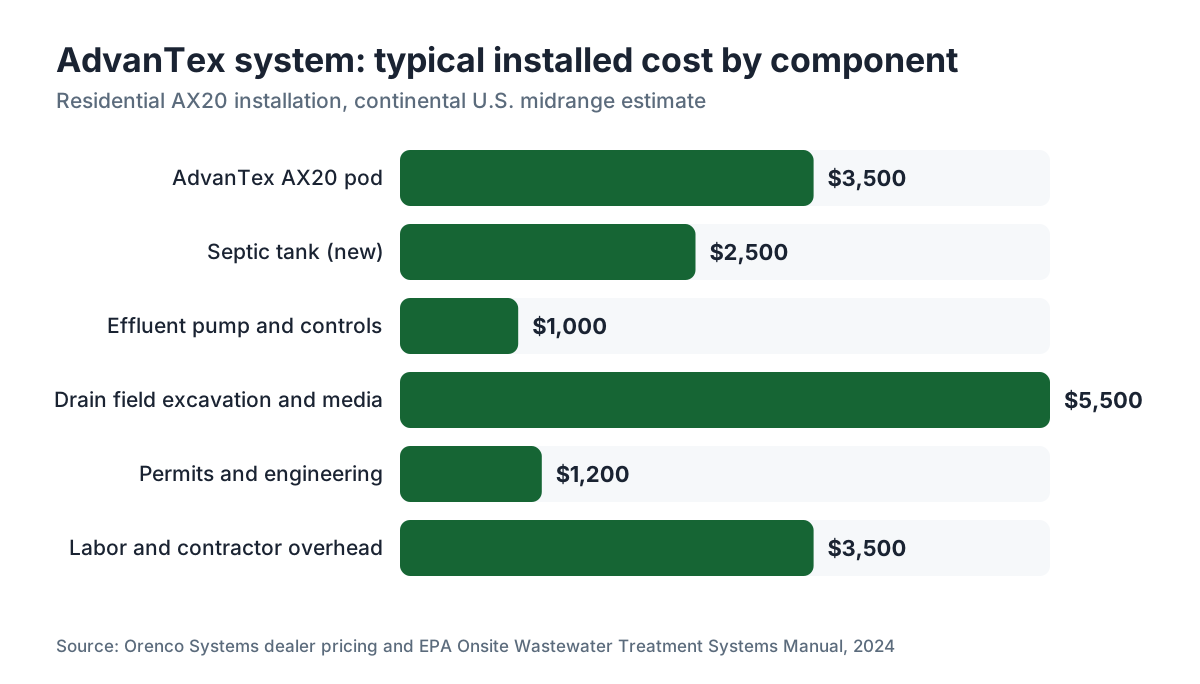
Here's how the pieces usually stack up:
| Component | Typical cost range |
|---|---|
| AdvanTex AX20 pod (residential, most common unit) | $2,500 to $4,500 |
| Septic tank (new, 1,000 to 1,500 gal, concrete or fiberglass) | $1,200 to $3,500 |
| Effluent pump and controls panel | $600 to $1,500 |
| Drain field excavation and media | $3,000 to $8,000 |
| Permits and inspection fees | $300 to $1,500 |
| Labor and contractor markup | $2,000 to $5,000 |
Those ranges compound. A lot that needs a pump-dosed, pressure-distributed drain field instead of a gravity field adds $1,500 to $3,000 easily. If you already have a tank in good condition, your installer may reuse it, shaving $1,200 to $2,500 off the total.
Nobody should quote you a firm number without a site visit and a perc test or soil evaluation. A contractor who quotes over the phone without seeing the lot is guessing.
What does AdvanTex installation cost in Hawaii, including Kauai?
Hawaii sits at the high end of AdvanTex pricing, and Kauai is among the priciest islands. Three things push it up.
First, the rules. Hawaii's Department of Health Wastewater Branch enforces Title 11, Chapter 62 of the state administrative rules, which require ATUs or comparable advanced treatment for a large share of new and replacement systems, especially near the ocean and in areas with shallow rock. [2] More regulation means more engineering hours per job.
Second, everything costs more on an island. Equipment ships by barge or air. Contractor availability is tight. Permits on Kauai can take months, and holding costs add up.
On Kauai specifically, homeowners report all-in installed costs in the $15,000 to $25,000 range for AdvanTex, with complex jobs running higher when heavy earthwork or engineered designs come into play. Those figures come from contractor discussions and public permit records, not a published statewide survey. If you're planning a Kauai project, three local bids are the only reliable way to calibrate.
Maintenance runs higher too. Annual O&M contracts in Hawaii often land at $600 to $1,200, against $400 to $700 on the mainland. Orenco-certified providers on smaller islands sometimes have little competition, and that shows up in the price.
What ongoing maintenance costs should you expect with AdvanTex?
This is where buyers get surprised. AdvanTex is not install-and-forget. Most state regulations, and Orenco's own warranty terms, require a maintenance contract with a certified service provider. [3]
A typical annual maintenance contract runs $400 to $900 on the mainland and $600 to $1,200 in Hawaii. That usually buys two to four site visits per year, inspection of the textile media, pump testing, control panel checks, and a report to your local health department if your permit demands one.
Beyond the contract, budget for these periodic costs:
- Pumping the septic tank: every 3 to 5 years for most households, roughly $300 to $600 depending on your market. See our guide on septic tank pumping for regional pricing.
- Textile pod cleaning or replacement: the AX20 textile pack is designed to last 10 to 20 years with good maintenance, but a deep cleaning might cost $200 to $500 if the media gets loaded. Replacement packs run $500 to $1,200 for material alone, plus labor.
- Pump replacement: effluent pumps last 7 to 15 years. Replacement with labor runs $400 to $900.
- Control panel or float replacement: minor repairs, usually $150 to $400.
Over a 20-year ownership horizon, a rough maintenance total lands at $15,000 to $25,000 on top of the original install, assuming no major failures. Factor that into your total cost of ownership, especially against a conventional system that needs only periodic septic tank pump out.
The EPA's SepticSmart program says regular maintenance saves money by heading off costly repairs, and that "a well-maintained system can last 25 to 30 years." [4]
How does AdvanTex cost compare to other advanced treatment systems?
AdvanTex is one of several NSF 40-certified ATUs on the market. Its main residential competitors are aerobic treatment units from Norweco, Jet, and BioMicrobics, plus other fabric-media systems. The comparison depends heavily on local distributor networks and what your installer works with every week.
| System type | Installed cost range | Annual maintenance |
|---|---|---|
| Conventional gravity septic | $5,000 to $12,000 | $0 to $400 (pumping only) |
| AdvanTex (Orenco) | $8,000 to $20,000 | $400 to $900 |
| Norweco Singulair ATU | $8,000 to $18,000 | $350 to $800 |
| Jet ATU | $7,500 to $17,000 | $350 to $750 |
| Drip irrigation system | $12,000 to $30,000+ | $500 to $1,200 |
| Mound system (no ATU) | $10,000 to $25,000 | $200 to $600 |
These ranges overlap for a reason. Local conditions matter more than brand. An AdvanTex on an easy lot with gravity flow can beat a mound system on a hard lot.
One place AdvanTex pulls ahead is consistency of treatment quality. Third-party testing under NSF International's certification process shows the AX20 hitting very low effluent BOD and TSS levels reliably. [1] Whether that matters depends on whether your jurisdiction requires a specific treatment level, or whether your installer is simply more comfortable with one product.
If you need a system from scratch, our cost to install septic system guide covers the full picture across system types.
What factors drive your specific AdvanTex installation price up or down?
Contractors price these jobs on actual site conditions, not the equipment list. The biggest single variable is how much earthwork the drain field demands.
Soil and site:
- Shallow bedrock or clay soils force more excavation and sometimes imported fill. That can add $3,000 to $10,000.
- A steep lot may need retaining walls or a pumped distribution system.
- Distance from the house to the dispersal area adds pipe, wire, and labor.
- Rocky ground on islands like Kauai means jackhammering, which costs real money by the hour.
Regulatory and engineering:
- Some counties require a licensed engineer to stamp the design. Engineering fees typically run $500 to $2,500 for residential work.
- Jurisdictions that require tertiary treatment or UV disinfection on top of the ATU add another $2,000 to $5,000.
- Permit fees vary enormously. Hawaii counties can charge $500 to $1,500 or more for onsite wastewater permits. [2]
System sizing:
- The AX20 handles roughly 600 to 1,500 gallons per day. Most 3-to-4 bedroom homes are fine. Larger households or accessory dwelling units may need an AX100 or two units in series, which changes the cost picture a lot.
Reusing existing infrastructure:
- If your site has a concrete tank in good shape, an installer can sometimes plumb the AdvanTex pod inline. Get the tank inspected first. Our septic tank inspection guide covers what that involves and costs.
Contractor experience:
- Orenco certifies dealers and installers. An experienced Orenco dealer installs faster and with fewer callbacks than a general contractor who has done two AdvanTex jobs. Faster install means lower labor cost.
Does AdvanTex qualify for any tax credits, rebates, or financing?
The federal picture is thin. There's no dedicated federal tax credit for ATU installation as of 2025. The residential clean energy credit under IRS Section 25D covers solar, wind, and geothermal, but not septic systems. [5]
State and local programs help more, but they come and go:
- Several states run low-interest loan programs for septic upgrades, usually through state environmental or agriculture agencies. Maryland's Bay Restoration Fund has historically provided grants to homeowners replacing failing septic systems with nitrogen-reducing systems. [6] Programs like this rise and fall with budget cycles, so check directly with your state environmental agency.
- Hawaii's Department of Health runs programs tied to cesspool conversion, since the state has a statutory deadline to phase out cesspools by 2050. If you're converting a cesspool to an advanced system like AdvanTex, ask your contractor whether any current incentive applies. [7]
- Some counties offer property tax exemptions or deferred payment plans for mandated upgrades. Call your county assessor's office.
Contractor financing or a home equity line of credit is the most common way homeowners spread the cost. A few Orenco dealers partner with third-party lenders for equipment financing, though terms vary.
How long does AdvanTex installation take?
Once permits are in hand, the physical install usually takes one to three days for a crew of two to four. Tank placement, pod connection, pump wiring, and drain field construction can normally be sequenced to finish in a single mobilization.
The permit process is the wild card. In straightforward jurisdictions, permits may take two to four weeks. In Hawaii counties, especially Kauai, six to twelve weeks is common. Maui has run permit backlogs well beyond that at times.
If you need a site evaluation or perc test first, schedule it well before you plan to start construction. Many county environmental health offices book soil evaluations weeks out. The total timeline from "I want a new system" to "the system is running" is often three to six months in Hawaii, two to four months in most mainland states.
Plan for the long lead time. If you're replacing a failing system, talk to your health department early about any variance or provisional operating permit that might let you keep using a limited or degraded system while you wait.
Is AdvanTex worth the cost, or are there cheaper alternatives?
The honest answer: it depends on whether you have a choice.
If your local health department requires an ATU for your lot, then AdvanTex and its competitors are your options. The comparison isn't AdvanTex versus conventional. It's AdvanTex versus whatever other NSF 40-certified system your local installers know and stock.
If you do have a choice, a few things drive the math.
Lot size and resale come first. In many coastal and high-regulation markets, an advanced treatment system is a selling point or a flat requirement at sale. A leach field failure on a conventional system in a sensitive area gets very expensive to remediate. The upfront cost of AdvanTex may beat the cost of a failed conventional system five years out.
Usage patterns matter next. AdvanTex handles household chemicals, garbage disposals, and normal swings in flow without the fragility that worries some people about conventional systems. The aerobic process shrugs off shock loads better.
The ongoing cost is real, and it's the strike against AdvanTex. At $400 to $900 a year plus periodic pump replacements, the lifetime cost runs $10,000 to $20,000 above a conventional gravity system over 25 years in most scenarios. If a conventional system is genuinely permitted and right for your lot, it will almost certainly cost less over time.
For operators managing multiple client properties with AdvanTex systems, tracking O&M contract schedules, pump test results, and maintenance history is where software like SepticMind earns its keep. The documentation requirements on certified ATU systems are heavier than standard septic records.
If you're in the repair-versus-replace decision, our guide on septic system repair covers when repair makes sense and when replacement is the smarter call.
What happens if you skip maintenance or let the contract lapse?
Skipping maintenance on an AdvanTex system sets off a chain of consequences most homeowners don't see coming when they write that first maintenance check.
The textile media needs oxygen flow and periodic flushing. Without maintenance, the sheets can go anaerobic and clog, and treatment quality drops fast. Effluent from an unmaintained ATU can sink to conventional septic quality or worse, which is exactly the opposite of why you installed it.
The mechanical parts fail silently if nobody checks them. A float switch stuck in the wrong position can starve the drain field or overfill it. Both damage the dispersal area. Replacing a wrecked drain field runs $3,000 to $15,000 or more depending on your site. That's an expensive lesson.
In most jurisdictions that require AdvanTex, the maintenance contract isn't optional. It's a condition of the operating permit. Your county or state may require an annual or semi-annual compliance report from your service provider. If the reports stop, some health departments flag the property, and that can foul up a sale.
Orenco Systems' guidance states that "failure to maintain the system as required may void the warranty and could result in regulatory action by the local authority having jurisdiction." [3]
The maintenance cost is real, but it's tiny next to a failed drain field or a regulatory violation. Budget for it from day one.
How do you find and vet an AdvanTex installer?
Orenco Systems runs a dealer locator on its website where you can find certified dealers and service providers by zip code. An Orenco-certified installer matters for two reasons: factory training, and access to genuine parts and technical support. A contractor who has done ten AdvanTex installs will price and execute the job better than one who has done one.
Ask these questions directly:
- How many AdvanTex systems have you installed in this county?
- Are you current on your Orenco certification?
- What's included in your annual O&M contract, and what's billed separately?
- Can you give references from AdvanTex customers in the last two years?
- Who handles emergency service calls if the alarm panel goes off at 9 PM?
Get at least two bids. In Hawaii, where contractor availability is thin, three bids may take patience, but the spread between bids on a $15,000 to $20,000 job can be $3,000 to $5,000. That's worth the effort.
Check your county health department's records too. Some counties post issued permits online. A contractor with a long track record of permitted AdvanTex installs in your county is a good sign. One with no local record who claims to do them all the time is a yellow flag.
SepticMind's service provider directory includes certified ATU maintenance operators in many markets. That helps operators expand their AdvanTex service coverage, and it helps homeowners find a second-opinion provider.
Frequently asked questions
How much does an AdvanTex AX20 unit cost by itself?
The AdvanTex AX20 textile pod typically costs $2,500 to $4,500 for the unit alone, not including the tank, pump, controls, drain field, or installation labor. The pod price varies by dealer and region. In Hawaii, expect the higher end because of shipping. The AX20 is the most common residential model and handles most single-family homes up to about 5 bedrooms.
Can I install AdvanTex myself to save money?
Almost certainly not legally. Nearly every jurisdiction that permits AdvanTex requires a licensed contractor for installation and a certified provider for maintenance. Orenco's warranty also requires certified installation. A DIY install would likely fail inspection, void the warranty, and put you in violation of your operating permit. The savings aren't real once you count those risks.
How often does an AdvanTex system need to be pumped?
The septic tank portion needs pumping every 3 to 5 years for a typical household, about the same as a conventional septic tank. Homes with a garbage disposal or heavy usage may need it closer to every 2 to 3 years. Your technician should check sludge and scum levels at each maintenance visit and tell you when pumping is due. See our guide on how often to pump a septic tank for more.
Does AdvanTex work in cold climates?
Yes. Orenco designed the AX series for cold-climate operation. The pod can be insulated, and the biological activity in the textile media makes some heat. Many AdvanTex systems run reliably across the northern U.S. and Canada. Very cold winters may call for extra insulation around piping and the pod. Your installer in a cold climate should build that into the design.
What is the lifespan of an AdvanTex system?
Orenco rates the AX-series pods for 20-plus years with proper maintenance. The textile media lasts 10 to 20 years depending on loading and care, and replacement packs are available. The drain field is usually the life-limiting part of any septic system; a well-designed and maintained AdvanTex drain field should last 25 to 30 years or more. The EPA notes a well-maintained system can last 25 to 30 years.
Is an AdvanTex system required in Hawaii?
Not everywhere, but AdvanTex or a comparable advanced treatment unit is required for many Hawaii lots. Hawaii's Department of Health Wastewater Branch requires advanced treatment for properties near shorelines, high-groundwater areas, cesspool conversions, and many new-construction situations. The exact requirement depends on the county and lot conditions. Check with your county's environmental health division before assuming a conventional system will pass.
What does the AdvanTex alarm panel mean and what does it cost to fix?
The alarm panel monitors the effluent pump float, high-water level, and sometimes air flow. A red alarm light usually means the pump failed to cycle or there's a high-water condition. Common causes are a tripped float, a failed pump, or a power interruption. A service call to diagnose and reset usually costs $150 to $300. Replacing the pump runs $400 to $900 with labor. Call your provider before assuming the worst; many alarms are minor.
Can an existing septic tank be reused with a new AdvanTex system?
Sometimes, yes. If the existing concrete or fiberglass tank is structurally sound, the right size, and meets current code for your jurisdiction, many installers will plumb the AdvanTex pod inline with it. Have the tank inspected first. Tanks with cracked walls, bad baffles, or tree root intrusion should be replaced, not reused. Reusing a good tank can save $1,200 to $2,500 on your project.
How does the AdvanTex O&M contract work and is it mandatory?
Most jurisdictions that require AdvanTex also require a maintenance contract with a certified provider as a condition of the operating permit. Contracts typically cover 2 to 4 site visits a year, which include inspecting the textile media, testing pumps and floats, reviewing the control panel, and filing a report with the health department if required. Annual cost is $400 to $900 on the mainland, $600 to $1,200 in Hawaii. Letting it lapse can violate your permit.
What is the difference between AdvanTex and a standard aerobic treatment unit?
Both are ATUs and both can hit NSF/ANSI Standard 40 Class I treatment. AdvanTex uses fixed-film textile media that biofilm colonizes; standard ATUs usually use a submerged aeration tank with suspended growth. AdvanTex tends to be quieter, uses no air compressor (relying on natural ventilation and controlled dosing), and is often more forgiving of intermittent use. Maintenance requirements and costs are broadly similar across ATU types.
How do I get permits for an AdvanTex system in Hawaii?
Start with your county's environmental health division, not the state DOH directly. Each of Hawaii's four counties (Honolulu, Maui, Hawaii County, Kauai) administers onsite wastewater permits locally under state rules. You'll need a site plan, a soil evaluation, and usually an engineered design. Your licensed installer should handle most of this, but the timeline is long. Budget 6 to 12 weeks for Kauai and Maui; Oahu may be faster depending on the current backlog.
Does AdvanTex need electricity and how much does it use?
Yes, AdvanTex needs electricity for the effluent pump and control panel. Power use is modest: the AX20 pump runs in short cycles and uses roughly 200 to 400 kWh per year, which is $30 to $70 annually in most U.S. electricity markets. In Hawaii, where residential rates are among the highest in the nation at roughly $0.38 per kWh as of 2024, annual electricity cost might run $75 to $150. [9]
What are signs that an AdvanTex system is failing or needs repair?
Common warning signs include an active alarm on the control panel, odors near the drain field or the pod, slow drains inside the house, wet or spongy ground over the drain field, and sewage surfacing above ground. Any of these warrant an immediate call to your service provider. A partial failure caught early usually costs $300 to $1,500 to fix. A full drain field replacement runs $5,000 to $15,000 or more.
Sources
- NSF International, NSF/ANSI 40: Residential Wastewater Treatment Systems: AdvanTex AX-series systems are certified to NSF/ANSI Standard 40 Class I treatment, requiring effluent BOD and TSS below specified thresholds
- Hawaii Department of Health, Wastewater Branch, Title 11 Chapter 62 Rules: Hawaii DOH requires advanced treatment units for many onsite wastewater situations including proximity to shorelines and high-groundwater lots, and administers permitting through county environmental health offices
- Orenco Systems, AdvanTex AX-Series Operation and Maintenance Manual: Orenco requires maintenance contracts with certified providers and states that failure to maintain the system may void the warranty and could result in regulatory action by the local authority having jurisdiction
- U.S. EPA, SepticSmart: Maintain Your System: EPA SepticSmart program states that regular maintenance saves money over the long term and that a well-maintained system can last 25 to 30 years
- IRS, Residential Clean Energy Credit (Section 25D): Federal residential clean energy credit covers solar, wind, and geothermal systems but does not include septic or wastewater treatment systems
- Maryland Department of the Environment, Bay Restoration Fund: Maryland's Bay Restoration Fund has provided grants to homeowners upgrading failing septic systems to nitrogen-reducing advanced treatment systems
- Hawaii Department of Health, Wastewater Branch (cesspool conversion): Hawaii has a statutory deadline to phase out cesspools by 2050 and the DOH administers related conversion guidance and programs
- U.S. EPA, Onsite Wastewater Treatment Systems Manual (EPA/625/R-00/008): EPA onsite wastewater manual documents treatment performance requirements and cost comparisons for various advanced treatment unit types including textile-based systems
- Hawaii Public Utilities Commission, Electricity Rate Data: Hawaii residential electricity rates were among the highest in the nation, approximately $0.38 per kWh as of 2024
- U.S. EPA, Septic System Costs and Maintenance Overview: EPA references typical septic system maintenance cost ranges and emphasizes that skipping maintenance leads to premature drain field failure and significantly higher repair costs
Last updated 2026-07-09