Sanitary sewer vs septic system: which is better for your home?
By the SepticMind Editorial Team
TL;DR
- Municipal sewer sends your wastewater to a shared treatment plant and charges monthly fees.
- A septic system treats waste on your property in a tank and drain field, with no monthly bill but occasional pumping costs.
- Neither is universally better: sewer wins on hands-off convenience, septic wins on long-term cost in rural areas where sewer access doesn't exist anyway.
What is the actual difference between a sanitary sewer and a septic system?
Both systems remove wastewater from your home. That's where the similarity ends.
A sanitary sewer is a network of pipes owned and operated by a municipality or sewer district. Your toilet flushes, the pipe carries it to a central treatment plant, and trained operators handle everything from there. You pay a monthly utility bill, typically $20, $80 depending on your city and water usage, and you don't own or maintain any equipment beyond your indoor plumbing. [1]
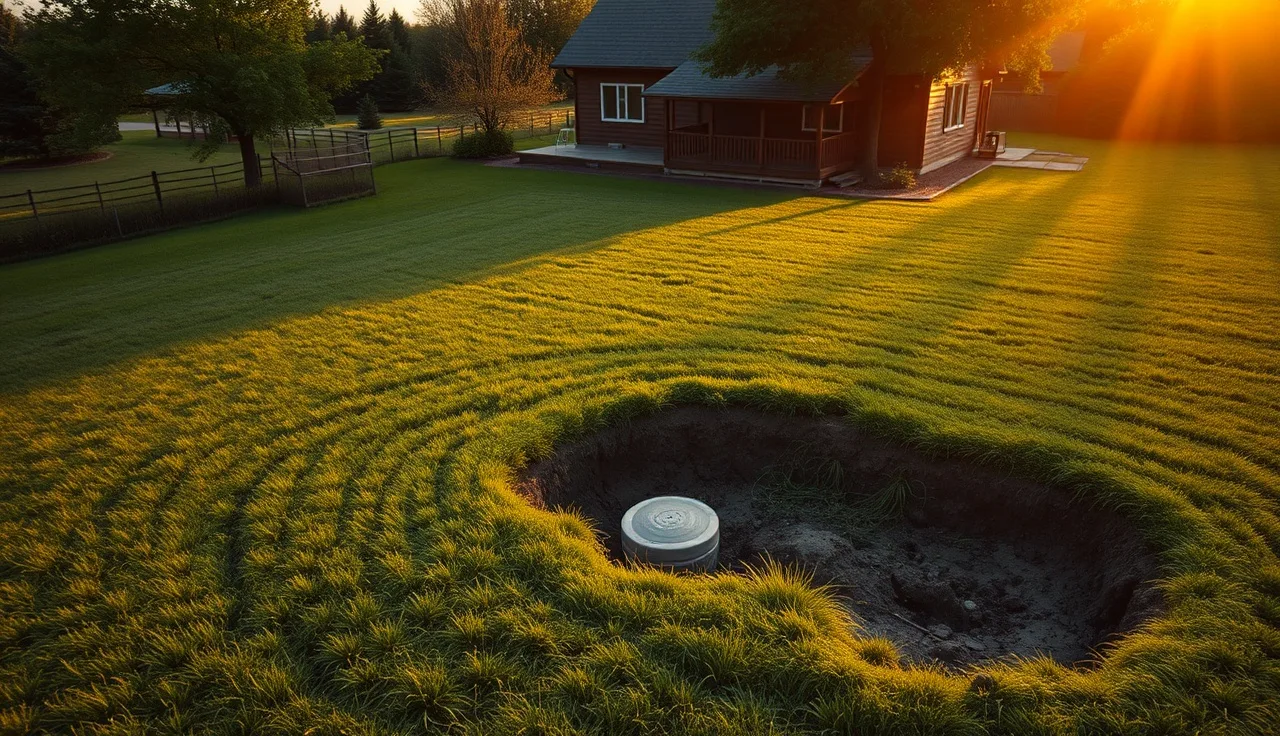
A septic system is a private, onsite wastewater treatment setup buried in your yard. Wastewater flows from the house into a buried tank where solids settle out and begin decomposing. The liquid effluent then flows to a drain field (also called a leach field), where it slowly percolates through soil and gets filtered naturally before reaching groundwater. You own all of it. You maintain all of it. [2]
About 21 percent of U.S. households rely on septic systems, according to the EPA, which is roughly 60 million people. The rest are on municipal sewer. The split shapes nearly every comparison below: cost, responsibility, resale value, and what happens when something breaks.
How do the upfront installation costs compare?
Connect to a sewer main that's already at your lot and you'll almost always pay less upfront than installing a septic system. That's the short version. The numbers swing hard on location and site conditions.
Connecting to a municipal sewer line typically costs $3,000, $10,000 for the lateral connection from your house to the main, plus any local tap or connection fees charged by the district. Some utilities waive or subsidize connection fees. Some charge $5,000 before a shovel hits the ground. If sewer infrastructure doesn't run in front of your property yet, don't count on it being cheap. Extension projects can run $50, $200 per linear foot of new main, and that cost often gets assessed to benefiting properties. [3]
Installing a conventional septic system runs $10,000, $30,000 for most residential properties, though complex or alternative systems push higher. A basic gravity-fed system with a concrete or fiberglass tank on a site with decent soil might come in around $10,000, $15,000. A pressure-dosed or mound system on a site with high water tables or poor percolation can easily hit $20,000, $40,000 or more. [4]
Here's the honest read. If sewer access sits at your lot, connection is the cheaper move upfront. If you're buying rural land, you're installing a septic system whether you want one or not.
See our detailed breakdown of the cost to install a septic system for a full range by system type and state.
What does each system cost to maintain over time?
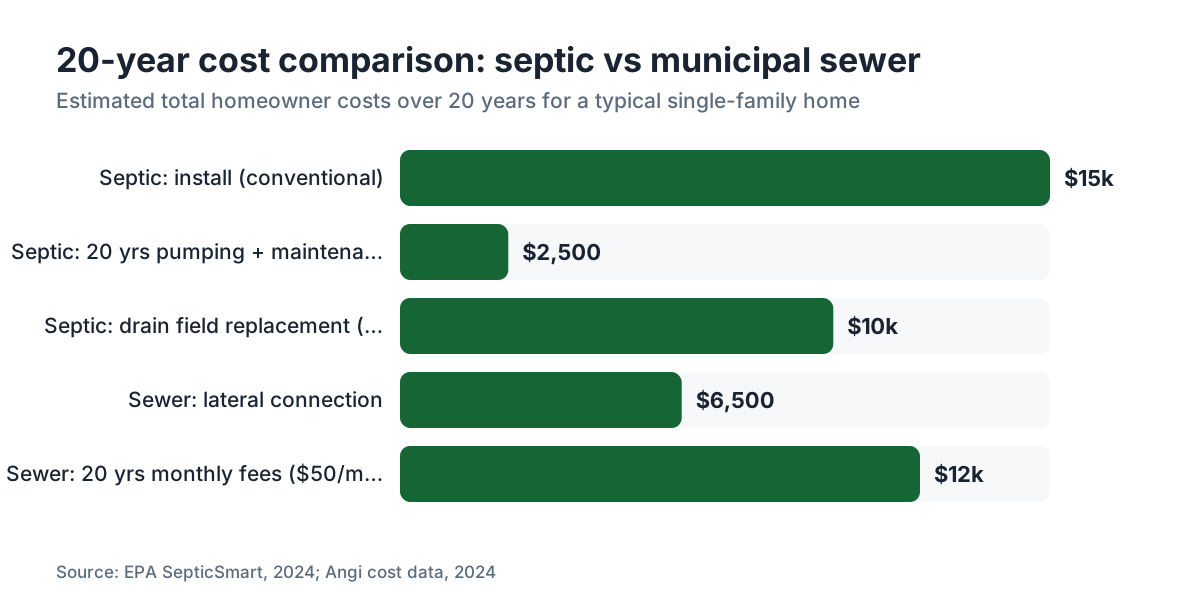
Sewer costs you a monthly bill and nothing else you control. Septic costs you nothing monthly but bills you in lumps every few years. Over 20 years the sewer homeowner usually pays more, as long as the septic owner keeps up on pumping.
Sewer rates across U.S. cities averaged about $45, $55 per month as of recent years, but the range is wide. New York City charges residential customers differently than a small Texas municipality. You have zero say in rate increases. Over 20 years, that's $10,800, $13,200 at average rates, before counting rate hikes. [1]
Septic has no monthly bill, but you pay for pumping every 3 to 5 years. A standard pump-out costs $300, $600 in most markets. [5] That's $600, $2,000 over 20 years just for routine pumping. Add inspections, risers, filter cleaning, and the occasional repair, and a well-maintained system might run $1,500, $3,000 total over two decades. Compare that to $12,000+ in sewer fees over the same period.
Here's the catch. Septic failures aren't minor. A failed drain field can cost $5,000, $20,000 to replace. [6] Municipal sewer users never face that bill. So septic's long-term cost advantage holds only if the system is properly maintained and eventually replaced or repaired when it legitimately wears out. Ignore pumping for 15 years and you'll spend the savings in a single repair.
For how often you should be pumping, see how often to pump a septic tank. For what pumping actually involves, septic tank pumping covers it end to end.
Which system is better for the environment?
It depends on how well each one is run. Both can treat wastewater cleanly. Both can foul the water when neglected.
Municipal treatment plants are regulated under the Clean Water Act and must meet effluent standards set by the EPA. They handle nitrogen, phosphorus, pathogens, and increasingly, pharmaceutical compounds. A well-run plant does this well. A poorly funded plant, or one overwhelmed by storm flows through combined sewer overflow events, can discharge undertreated wastewater directly into waterways. The EPA estimates there are 850 communities with combined sewer systems that overflow during rain events. [7]
Septic systems, when they work, treat wastewater slowly through soil, which is an effective natural filter. But a failing or improperly sited septic system leaches nitrates and pathogens directly into groundwater and nearby surface water. In coastal and lake communities especially, failing septic tanks are a documented driver of water quality decline.
The EPA's SepticSmart program states that "properly designed, installed, and maintained septic systems are generally quite good at removing disease-causing pathogens and nutrients from household wastewater." [2] The word "maintained" carries all the weight there. A neglected system is an environmental liability.
Neither system wins unconditionally on environmental grounds. Dense suburban areas with centralized treatment often do better with sewer. Dispersed rural homes on good soils with properly maintained tanks often do fine with septic.
How does each system affect home resale value and inspections?
Buyers in suburban markets often read sewer as a plus. The perception is "nothing to worry about," which is mostly accurate. For buyers unfamiliar with septic, an onsite system can feel like an unknown liability, and that hesitation sometimes shows up in offers.
In rural markets where septic is the norm, a properly functioning system rarely hurts value. What hurts value is a failing system or one that needs replacement. A buyer's home inspector may flag a septic system for a dedicated inspection, and if the system is old or overdue for pumping, the results can hand the buyer negotiating room or kill a deal.
The practical advice: get a septic tank inspection before you list if you're selling, and pump the tank beforehand. A clean inspection report is worth more than the cost of pumping.
For buyers: always request a septic inspection as a contingency on any home with an onsite system. Ask for service records. A system that's been pumped regularly every 3 to 5 years is a green flag. A seller who can't produce any records is a yellow one.
What are the maintenance responsibilities for a septic system owner?
This is probably the biggest lifestyle difference between the two systems. Sewer: you flush, you forget. Your responsibility ends at the cleanout. The utility handles everything downstream.
Septic ownership means you're the operator. The core responsibilities are:
- Pump the tank every 3 to 5 years, depending on household size and tank volume. [5]
- Watch what goes down the drain. Flushable wipes, grease, medications, and harsh chemicals all damage the bacterial ecosystem or clog the drain field.
- Protect the drain field. No parking on it, no planting deep-rooted trees near it, no diverting roof downspouts over it.
- Inspect the system on a schedule. Some states require inspections at property transfer. Others recommend every 1 to 3 years.
These aren't heavy burdens, but they need attention. The homeowners who end up with expensive failures are almost always the ones who bought a house with septic and genuinely didn't know they were supposed to do anything.
The EPA's SepticSmart program offers a free homeowner guide at their website and frames it directly: regular maintenance "can prevent the high cost of septic system failure." [2]
For a complete guide to routine care, see septic tank cleaning and septic tank pump out.
Can you switch from septic to sewer, and what does it cost?
Yes, but only if a municipal sewer main runs close enough to your property to make a lateral connection feasible, and your local government allows or requires the connection.
In some jurisdictions, if a sewer main is extended to your street, you're required to connect within a set period (often 1 to 2 years) and decommission your septic system. In others, connection is optional as long as your septic system passes inspection.
Costs for switching: the lateral pipe from your house to the main typically runs $3,000, $10,000 depending on distance and site conditions. [3] Add connection fees, permit fees, and the cost of properly abandoning the septic tank (usually $500, $2,000 to pump, crush, or fill). Total cost of switching: $5,000, $15,000 is a reasonable ballpark, though it varies.
If you're being assessed as part of a new sewer district formation, costs can run much higher and are often financed over time through a special assessment on your property tax bill.
Why would you switch? Mainly because your septic system is failing and the lot doesn't support a replacement drain field, or because your jurisdiction requires it. Switching purely for convenience rarely pencils out.
Septic vs sewer: a side-by-side comparison
Here's the full picture in one place.
| Factor | Municipal Sewer | Septic System |
|---|---|---|
| Upfront cost (connection/install) | $3,000, $10,000 | $10,000, $30,000+ |
| Monthly/annual fees | $20, $80/month | $0/month |
| Pumping cost | None | $300, $600 every 3 to 5 yrs |
| Major failure cost | N/A to homeowner | $5,000, $20,000 (drain field) |
| Owner maintenance burden | Very low | Moderate |
| Lifespan (system) | Indefinite (utility manages) | 25 to 40 years (tank); 20 to 30 yrs (drain field) [6] |
| Environmental risk | Combined sewer overflows | Nitrate/pathogen leaching if failing |
| Availability | Urban/suburban areas | Rural and some suburban areas |
| Resale perception | Positive in most markets | Neutral if maintained; negative if failing |
There's no universal winner. Sewer is cheaper upfront and lower-effort. Septic is cheaper over 20+ years if maintained well and it never suffers a major failure. Rural homeowners often don't have a choice anyway.
What are the signs that a septic system is failing compared to a sewer backup?
Both systems can back up into your house, but the causes and fixes are different.
Septic failure shows up as slow drains throughout the house (more than one fixture), gurgling toilets and drains, sewage odors inside or outside, wet soggy patches over the drain field that don't dry out, and unusually green or lush grass over the leach field area. Any of these means the system is overwhelmed or the drain field is saturated. [8]
Sewer backup shows up as multiple fixtures backing up at the same time, a gurgling toilet when you run the washing machine, or sewage coming up through floor drains. This often means either the main lateral from your house to the street is blocked (your problem, your cost) or the municipal main itself is backed up (their problem, eventually their cost). Tree roots are the most common culprit in lateral blockages.
Here's the key difference. A septic backup is a system-health problem that usually needs a professional diagnosis and possibly a major repair. A sewer backup is more often a plumbing obstruction that a plumber can clear, though a deteriorating lateral pipe could need replacement.
If you suspect septic failure, stop adding water to the system immediately and call a septic service company. Continuing to run water into a failing system makes the problem worse fast. For repair options see septic system repair and septic tank repair.
Are there regulations that affect which system you can use?
Yes, and this is where homeowners get surprised.
At the federal level, the EPA sets guidelines for onsite wastewater systems but leaves actual regulation to states. Almost every state has its own onsite wastewater code that dictates minimum lot size, setback distances from wells and property lines, soil testing requirements, and which system types are approved for a given site. [9]
At the local level, health departments or building departments typically issue permits and conduct inspections. Some counties require a percolation test (perc test) before any septic permit is issued. Others use a soil morphology evaluation. The outcome of that test determines whether a conventional gravity system is allowed or whether you'll need a more expensive alternative design.
Municipal sewer connections also require permits. And in some jurisdictions with failing or inadequate private septic systems, local governments have the authority to compel connection to a newly extended sewer main and charge the cost back to property owners.
Check with your county health department or building department before you assume you can install or modify either type of system. State environmental agencies publish the applicable rules, and the EPA's National Pollutant Discharge Elimination System (NPDES) framework governs any larger-scale discharge. [7]
Some states, like North Carolina and Florida, have particularly detailed onsite wastewater rules that spell out exactly what's permitted by soil type. If you're in a state with a history of groundwater contamination from septic systems, expect stricter rules.
How do septic systems and sewers affect rural vs urban property buyers differently?
If you're buying in a city or a dense suburb, you almost certainly have municipal sewer. You're not making a choice. It's already made.
If you're buying rural land or a property more than a few miles from a town center, septic is almost certainly the only option. Rural sewer infrastructure is expensive to build and operate, and most municipalities don't extend mains far beyond their service boundaries. About 26 million homes in rural America use private wells and septic systems, according to the EPA. [2]
The buyer calculus changes with context. A city buyer looking at a suburban home on septic should ask: is sewer coming to this area? Is connection mandatory? What's the system's age and history? A rural buyer should accept septic as the normal operating condition of rural ownership and budget accordingly for maintenance.
For operators who manage multiple properties or provide service across a mixed urban/rural territory, knowing which regulatory framework applies at each address matters day to day. Tools like SepticMind help service companies track system records and inspection history by address, which is especially useful when service territories cross county lines with different rules.
One more thing worth knowing: the USDA Rural Development program offers loans and grants to help rural homeowners repair or replace failing septic systems. [10] If you're rural and facing a big repair bill, that program is worth a look before you assume you're paying everything out of pocket.
Frequently asked questions
Is a septic system or sewer better for a home?
It depends entirely on availability and your situation. Sewer is lower-effort and has no major failure risk for the homeowner. Septic costs less over 20+ years if maintained properly, but requires active management and carries the risk of expensive drain field replacement. In most rural areas, septic is the only option anyway. Neither is inherently superior.
How much does it cost to connect to a municipal sewer?
Most residential sewer lateral connections cost $3,000, $10,000, covering the pipe from your house to the street main, labor, and permits. Municipal tap or connection fees vary widely and can add $1,000, $5,000 or more. If your area is forming a new sewer district, you might face a special assessment of $10,000, $25,000 spread over years on your property tax bill.
How long does a septic system last compared to a sewer connection?
A concrete or fiberglass septic tank typically lasts 25 to 40 years with proper maintenance. The drain field usually lasts 20 to 30 years before soil permeability degrades. A sewer connection has no real lifespan limit from the homeowner's perspective since the utility maintains the infrastructure. Your own lateral pipe can last 50+ years if it's PVC, shorter for older clay or cast iron.
Can you have both a septic system and a sewer connection?
No. When you connect to municipal sewer, you decommission the septic system. Operating both at once is not permitted by any jurisdiction, since it creates cross-contamination risk and violates local health codes. If you switch to sewer, the septic tank must be properly pumped, crushed or filled with sand or concrete, and the permit closed out.
Does a septic system affect a home's value?
A well-maintained septic system in a rural or low-density market rarely hurts value and is expected by buyers. In suburban markets near sewer-served neighbors, some buyers see septic as a negative, particularly if they're unfamiliar with how it works. A failing or aging system can significantly reduce offers or kill deals. Get a pre-listing inspection and pump the tank before you sell.
What should you not flush or put down the drain with a septic system?
Avoid flushing wipes (including those labeled flushable), feminine hygiene products, condoms, medications, and paper towels. Down the drain: avoid grease, bleach in large amounts, paint, and harsh drain cleaners. These either clog the inlet baffle and tank, kill the beneficial bacteria that break down solids, or damage the drain field's soil permeability over time.
How often does a septic tank need to be pumped?
The EPA recommends pumping every 3 to 5 years for a typical household. A smaller tank, more occupants, or a garbage disposal that adds solids can shorten that interval. A 1,000-gallon tank serving four people should be pumped closer to every 3 years. Going beyond 5 years without pumping risks solids reaching the drain field, which is far more expensive to fix than a pump-out.
What happens if a septic system fails?
A failing septic system backs sewage up into the house, creates wet saturated patches over the drain field, and produces strong odors. Biologically, it can leach pathogens and nitrates into groundwater. Costs depend on what failed: a clogged baffle or pump might run $200, $1,500 to repair. A saturated drain field that needs replacement can run $5,000, $20,000 or more depending on soil and system type.
Is septic system water the same as sewer water?
Both start as the same household wastewater. The difference is where and how it gets treated. Sewer sends it to a centralized plant using mechanical and chemical processes. Septic treats it on your property through bacterial breakdown in the tank and natural soil filtration in the drain field. Properly functioning systems in both cases produce treated effluent that meets health standards before it reaches the environment.
Do septic systems smell more than sewer connections?
A properly functioning septic system has no detectable odor at ground level. Occasional faint smells on cool mornings from the vent stack are normal and harmless. Persistent sewage odor inside or outside the home is a warning sign of a full tank, failed baffle, or saturated drain field. Sewer-connected homes can also get odor from dry P-traps or a failed wax ring, but infrastructure failures are not the homeowner's problem.
Are there financial assistance programs for septic system repairs or replacement?
Yes. The USDA Rural Development program offers Section 504 loans and grants for low-income rural homeowners to repair or replace failing septic systems. Some states have their own revolving loan funds. The EPA also works with states on clean water infrastructure funding that occasionally covers onsite systems. Contact your county health department or USDA Rural Development state office to see what's available in your area.
How do I know if my property is on septic or sewer?
Check your monthly utility bills. If you pay a sewer fee, you're on municipal sewer. If there's no sewer line item, you're likely on septic. You can also check your property's disclosure documents, ask the local health department, or look for a buried access riser or cleanout cap in your yard. Many counties maintain public GIS maps that show which properties are connected to sewer infrastructure.
What is a leach field and how does it relate to the septic system?
A leach field (drain field) is the network of perforated pipes buried in gravel trenches that distribute pre-treated liquid from the septic tank into the soil. The soil does the final treatment, filtering pathogens and absorbing nutrients. It's often the most expensive component to replace and the most vulnerable to damage from overloading, compaction from vehicles, and root intrusion.
Sources
- EPA SepticSmart Program homeowner information: About 21 percent of U.S. households (roughly 60 million people) use onsite septic systems; EPA quotes that properly designed, installed, and maintained septic systems are generally quite good at removing disease-causing pathogens and nutrients
- HomeAdvisor / Angi cost data, sewer line installation: Residential sewer lateral connection typically costs $3,000, $10,000 depending on distance and local fees
- EPA, "Types of Septic Systems" overview: Conventional septic systems and alternative designs vary widely in cost depending on site conditions and system type
- North Carolina State University Cooperative Extension, Onsite Wastewater Systems: Drain field lifespan typically 20 to 30 years; replacement can cost $5,000, $20,000 depending on system type and site conditions
- EPA, "Combined Sewer Overflows" national overview: EPA estimates 850 communities have combined sewer systems subject to overflow events during rain; NPDES framework governs wastewater discharge
- EPA SepticSmart, "How to Care for Your Septic System": Slow drains, odors, soggy patches over the drain field, and lush grass over the leach area are documented signs of septic system failure
- USDA Rural Development, Single Family Housing Repair Loans and Grants (Section 504): USDA offers Section 504 loans and grants to low-income rural homeowners for repair or replacement of failing septic systems
- EPA, "How Your Septic System Works": Describes the two-component system: tank for solids separation and drain field for soil-based treatment of effluent
Last updated 2026-07-10