SC DHEC perc test application online: the complete guide
By the SepticMind Editorial Team
TL;DR
- South Carolina requires a soil and site evaluation (the official name for what most people call a perc test) before any new septic permit.
- You apply through South Carolina's environmental permitting portal or submit the paper application to your county environmental office.
- The application fee runs $100 to $325 depending on lot size and project type.
- The state targets a 30-day review, but real timelines vary by county.
What is the SC DHEC perc test and why do you need one?
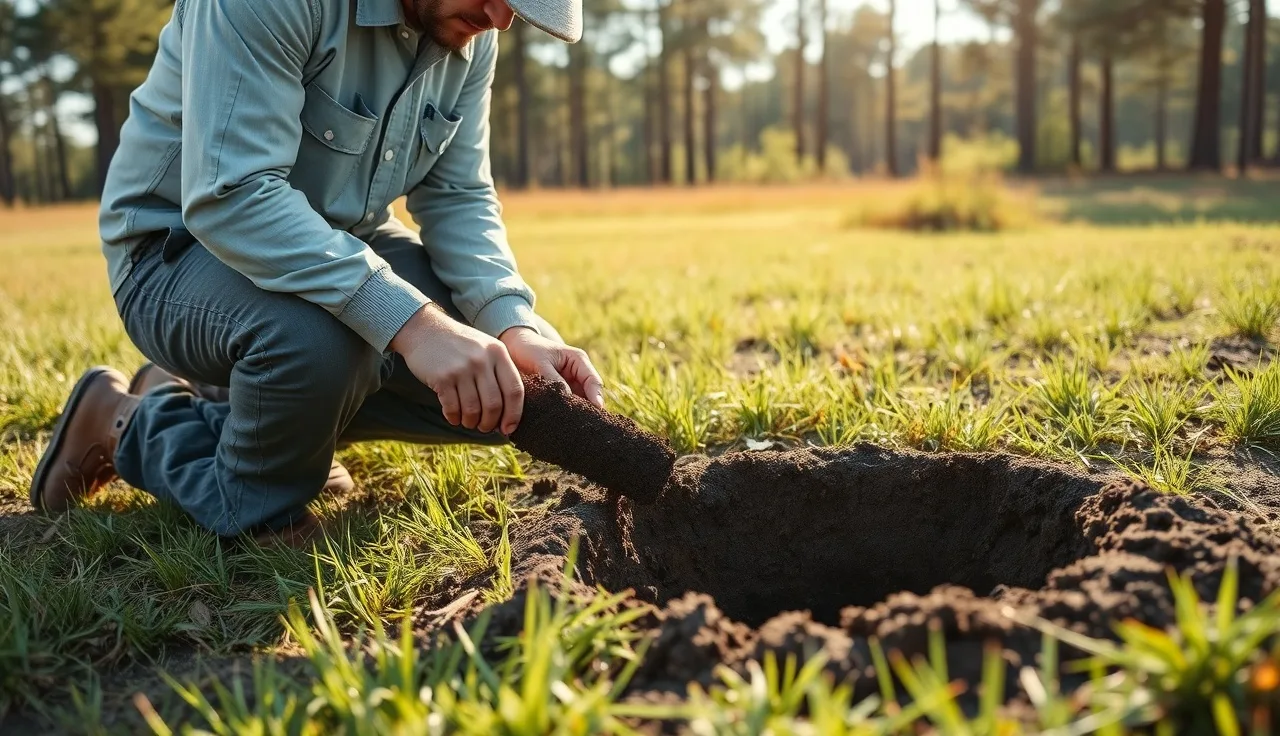
South Carolina dropped the term "percolation test" from its official code years ago. What people still call a perc test is now formally a soil and site evaluation, governed by SC Regulation 61-56, the state's Onsite Wastewater Systems standard [1]. The evaluation measures how fast water moves through your soil, checks soil texture and structure, finds the seasonal high water table, and maps the usable area of your lot. All of that data drives every decision about your septic system: tank size, drain field design, and whether you need an advanced treatment system at all.
You can't pull a septic construction permit in South Carolina without a passed soil and site evaluation on file. Full stop. Lenders and title companies want to see one before closing on a property with a planned new system, so getting the evaluation done early is smart even if you're not breaking ground tomorrow.
The state moved away from the old 30-minute percolation test for a simple reason. A water-absorption rate tells you almost nothing useful on its own. Soil morphology, seasonal saturation depth, and available lot area matter far more to how a system performs over decades. National technical guidance backs this up: the National Environmental Services Center notes that soil texture and structure predict long-term hydraulic performance more reliably than a timed drain test [10]. SC Reg. 61-56 reflects that science, requiring a licensed soil classifier or professional engineer to read the site rather than just clocking how fast a hole empties.
Planning a septic tank installation on a new lot, or rebuilding a failed system? This evaluation is step one.
Can you apply for a SC DHEC perc test online?
Yes, though how much you can do online depends on your county. South Carolina runs an environmental permitting portal for online submissions, and most routine septic applications, including the soil and site evaluation request, go through it [2]. You create an account, select onsite wastewater, and complete the application fields there. The portal takes payment by credit or debit card, which beats mailing a check.
Some rural county offices still handle applications partly online and partly on paper. If your property sits in Allendale, Bamberg, or another small county, call the local environmental office before you assume everything happens digitally. County contacts are listed on the state environmental site [2].
The paper alternative is the sc dhec perc test application pdf, formally the Application for Onsite Wastewater System Permit. You download it from the state forms library [3], fill it out, and deliver or mail it with the fee to your county environmental office. There's no penalty for going paper. Some applicants like it because a paper trail is easier to track when an office is slammed.
Either way, the application is only the first step. The real work is the on-site evaluation done by a licensed soil scientist or PE, whom you hire separately.
What information does the application ask for?
Online or PDF, the application asks for roughly the same information. Have these ready before you start:
- Property address and TMS (tax map) number (your county assessor's website has this)
- Lot size in acres
- Type of proposed use: single-family, commercial, repair of an existing system, and so on
- Number of bedrooms, or for commercial, the design flow in gallons per day
- Name and contact info for the licensed soil classifier or PE who will conduct the evaluation (you hire them; the state doesn't send someone out)
- Plat or survey of the property (required attachment, PDF upload if online)
- Any existing well locations on or next to the lot (setback rules apply)
The most common hold-up is a missing or illegible plat. Get a clean copy from your county register of deeds before you start. If the lot has never been platted, a licensed surveyor has to produce one, and that costs time and money you'll want to budget separately.
Commercial applications also need a design flow calculation, which your engineer usually prepares. Residential is simpler: bedroom count drives the design flow table in SC Reg. 61-56 [1].
How much does the SC DHEC soil evaluation application cost?
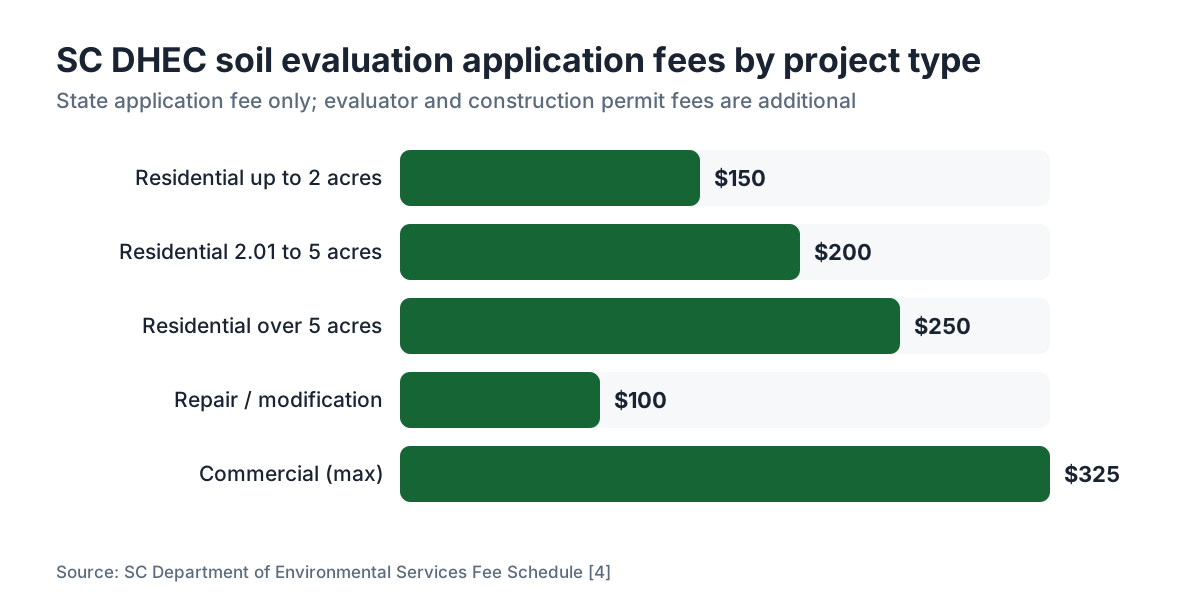
South Carolina publishes its onsite wastewater fees in the state environmental fee schedule [4]. As of the most recent published schedule, the application fee for a residential soil and site evaluation runs like this:
| Lot or System Type | Application Fee |
|---|---|
| Residential (up to 2 acres) | $150 |
| Residential (2.01 to 5 acres) | $200 |
| Residential (over 5 acres) | $250 |
| Repair/Modification of existing system | $100 |
| Commercial (by design flow) | $150 to $325 |
Those are the state fees only. The licensed soil classifier or PE you hire charges separately. A residential soil evaluation in South Carolina typically runs $400 to $900 depending on lot complexity, travel, and whether the classifier has to hand-dig multiple test pits. Nobody has great statewide data on this. The range comes from published rates from SC-licensed soil classifiers and contractor forums, not a formal survey.
If the evaluation passes and you move to a construction permit, there's a separate construction permit fee on top of everything above. Budget the whole pipeline: evaluation application, evaluator fee, construction permit fee. Our breakdown of the cost to install septic system covers the full picture.
How long does DHEC take to process a perc test application?
SC Reg. 61-56 sets a 30-day standard for the state to act on a complete application [1]. In practice, timelines swing hard by county and season. The Midlands and Upstate offices serving growing counties like Lexington, Richland, and Greenville often run four to eight weeks during peak construction season (spring and fall). Low-country coastal counties can run longer when storm-related repair permits flood the queue.
The online portal gives you a status tracker, which is a real edge over paper. You can see whether your application is in review, on hold for missing documents, or approved. With paper you have to call the office to check, and that call doesn't always come back fast.
Here's the mistake that adds time almost every time. The evaluator you hire schedules the on-site visit separately from your application submission. Some applicants submit the state application and wait for approval before hiring the soil classifier. Don't. Hire the classifier at the same time you apply. The approval gives them permission to conduct the evaluation on your property and file their report, and you want them ready to move the day that permission lands.
Total time from application submission to a passed evaluation report in the state's system: realistically six to fourteen weeks in most counties. Plan around any loan closing deadline.
Step-by-step: how to submit the SC DHEC perc test application online
Here's the sequence that works. Skip a step and you'll waste time.
1. Pull your property information. Get the TMS number from your county assessor and download a current plat from the register of deeds. No plat exists? Stop here and hire a surveyor first.
2. Hire a licensed soil classifier or PE. South Carolina licenses soil classifiers through the Department of Labor, Licensing and Regulation, and the public registry lists who's currently licensed [5]. Call two or three, get quotes, and get a signed agreement before you apply. Ask each one how backed up they are.
3. Create your portal account. Go to the state environmental permitting portal [2], register with your email, and verify. About five minutes.
4. Start a new onsite wastewater application. Select your county, choose soil and site evaluation, and fill in all required fields. Upload your plat as a PDF. If the plat is oversized, scan it in sections and combine them.
5. Enter your soil classifier's information. The portal has a field for the evaluator's license number. Have it ready. The state uses this to tie the eventual evaluation report to your permit record.
6. Pay the fee. Credit or debit card online. Save the confirmation number.
7. Coordinate the on-site visit. Once the application is approved (you'll get an email through the portal), contact your soil classifier to schedule the visit. Be there on the day. Questions about well locations, lot lines, and proposed building footprints come up.
8. Receive and review the evaluation report. Your soil classifier files the report directly with the state. You should get a copy. Read it before you assume everything passed. Any site restrictions are listed here.
9. Move to construction permit. If the evaluation passes, you or your contractor applies for the construction permit, a separate application with its own fee.
Operators managing permit applications across a service territory know how messy this gets by hand. SepticMind's project tracking tools let crews and office staff see permit status, evaluation dates, and deadlines in one place instead of hunting through email threads.
What if you prefer the PDF application instead of the online portal?
The sc dhec perc test application pdf is the Application for Onsite Wastewater System Permit, available on the state forms and publications page [3]. Print it, complete it by hand or in a PDF editor, and either deliver it in person to your county environmental office or mail it with a check for the correct fee amount.
In-person delivery is better if your timeline is tight. Ask the clerk to date-stamp your copy at the counter. That timestamp officially starts the 30-day review clock.
One honest downside of paper: no status tracker. You'll call or email the county office to check on your application. County numbers and addresses are on the state environmental affairs county contacts page [2]. Some offices answer fast, others are understaffed and slow. If you go paper, follow up by email so you have a written record.
Nothing about the PDF is technically inferior. The state processes both routes the same way internally. If you're more comfortable with paper, or helping an elderly relative through this, paper is fine.
What happens during the actual soil and site evaluation?
The on-site evaluation is done by the licensed soil classifier or PE you hired, not by a state employee. They visit your property and run several assessments.
They'll dig or hand-auger test pits, typically 36 to 60 inches deep, to read the soil profile. They're looking at color (grey mottling flags seasonal saturation), texture (clay versus sandy loam versus gravel), and structure (how the soil aggregates). They'll pin down the seasonal high water table depth, which SC Reg. 61-56 requires to sit at least 18 inches below the proposed drain field bottom for a conventional system [1].
They'll also survey the usable area of the lot, noting slopes, distance to wells, property lines, structures, and water features. SC Reg. 61-56 sets mandatory setbacks: 50 feet from a well to the drain field edge, 10 feet from property lines, and specific distances from streams and wetlands [1].
The percolation rate, the actual water-absorption test, may or may not get run. Modern soil morphology interpretation can often determine the hydraulic loading rate from soil texture and structure alone, and many evaluators work that way. Some sites and some evaluators still run a timed percolation test as a check.
At the end, your evaluator produces a written report with a site sketch, soil descriptions, and a recommended system type. Pass, and that report goes to the state and clears you for a construction permit. Fail, and the report explains why, and your options narrow considerably. Understand the leach field design constraints before you buy a lot if you can.
What if my property fails the soil evaluation?
A failed evaluation doesn't automatically mean the lot is unbuildable. It means a conventional gravity-fed septic system can't work there under current soil and site conditions. You have a few paths.
First, ask your soil classifier whether an alternative system could work. SC Reg. 61-56 allows engineered alternatives including drip irrigation systems, aerobic treatment units, and mound systems when a conventional system won't fit [1]. These cost more to install (often $15,000 to $40,000 versus $8,000 to $15,000 for a conventional system) and carry ongoing maintenance requirements, but they're legal and they work on many marginal sites.
Second, check whether a different part of the lot could pass. On a large parcel, your evaluator may not have tested every possible drain field location. A second evaluation focused on a different zone might turn up better soil.
Third, look at public sewer. If a municipal sewer line runs within a reasonable distance, connecting to it may cost less than an engineered septic alternative.
Fourth, if you haven't bought the lot and the evaluation was a pre-purchase contingency, this is your contractual out. Walk away. A lot that can only support a $35,000 engineered system changes the economics of any project. Our overview of septic tank installation costs helps you stress-test the budget before you commit.
The state does not grant variances to the setback and soil depth rules in Reg. 61-56. If the rule says 18 inches of unsaturated soil and you have 12, no amount of appealing changes the physics.
How long is a passed SC DHEC soil evaluation valid?
A passed soil and site evaluation in South Carolina is valid for five years from the approval date, as long as site conditions don't change materially [1]. Let it expire before pulling a construction permit and you repeat the evaluation, pay the fee again, and hire the evaluator again.
Five years sounds long until a project stalls. Complicated land transactions, estate settlements, and financing snags all burn that clock. Mark the expiration date on your calendar the day the approval letter arrives.
Changes that can void an approval before it expires include adding a well, moving the proposed building footprint onto the approved drain field area, or adding impervious surfaces (driveways, parking pads) that shift drainage. If any of those happen, tell the state and your evaluator before you proceed. Finding out after the fact that your approval is dead costs far more than a proactive call.
For a repair permit on an existing system, the validity and process differ a bit. The EPA's SepticSmart program says "a septic system that is used and maintained properly can last for decades," and generally puts a well-run system in the 20-to-30-year range [6]. Systems that fail before that need immediate attention, and the repair permit process is separate from a new construction evaluation. Our section on septic system repair walks that path.
What are the SC DHEC contact points for perc test applications?
South Carolina's environmental affairs division handles onsite wastewater permits, and the contact structure is by county, not one statewide phone number.
Start with the state environmental affairs landing page [2], which lists every county environmental office with phone, fax, and mailing address. Find your county, write down the direct number, and call before you submit anything. Ask whoever answers:
- Are you processing applications fully through the online portal, or is a paper supplement required?
- What's your current processing time for new residential soil and site evaluation applications?
- Are there any local requirements beyond what the standard application asks for?
Three questions, five minutes on the phone. You'll save weeks of back-and-forth.
For technical questions about what Reg. 61-56 requires, the regulation is public [1] and surprisingly readable. Clemson University Cooperative Extension also publishes plain-language homeowner guidance on SC septic requirements, soil types, and maintenance that lines up with the regulation [7]. The state onsite wastewater program posts guidance documents periodically, and the forms library [3] is the best place to find current versions.
If you hit a dispute with a county office over a permit decision, the state Administrative Law Court is the formal appeal path. That's rare for routine evaluations, but worth knowing it exists.
How does the SC DHEC permit process fit into the full septic system timeline?
Here's the honest sequence with realistic time estimates for a typical residential new-construction septic project in South Carolina:
| Step | Who Does It | Typical Time |
|---|---|---|
| Gather property documents, hire soil classifier | You | 1 to 2 weeks |
| Submit soil evaluation application (online or PDF) | You | 1 day |
| State reviews and approves application | State | 2 to 6 weeks |
| Soil classifier conducts on-site evaluation | Licensed evaluator | 1 day on-site; report in 1 to 2 weeks |
| State reviews evaluation report | State | 2 to 4 weeks |
| Construction permit application | Contractor or you | 1 to 2 weeks |
| State issues construction permit | State | 2 to 4 weeks |
| System installation | Licensed installer | 1 to 3 days |
| Final inspection | State | 1 to 2 weeks after installation |
Total realistic range: three to six months from first application to a permitted, inspected system. In busy counties during peak season, six months beats three. If you're financing home construction and the lender needs a septic permit before releasing funds, start this before you think you need to.
Once your system is in the ground and approved, routine septic tank pumping every three to five years keeps it out of the state's problem files. The EPA SepticSmart program recommends inspection every one to three years and pumping every three to five years for a typical household [6]. Get that on a schedule and you likely won't deal with the state again for decades.
Frequently asked questions
Where do I find the SC DHEC perc test application online?
Go to South Carolina's environmental permitting portal on the state environmental site, create a free account, and select onsite wastewater to start a soil and site evaluation application. Prefer paper? Download the Application for Onsite Wastewater System Permit from the state forms library and submit it with your fee to your county environmental affairs office.
What is Form DHEC 1769?
Form DHEC 1769 is South Carolina's official Application for Onsite Wastewater System Permit, covering both new construction and repairs. It's the paper equivalent of the online portal application. You fill it out with your property details, attach a plat, and submit it with the applicable fee to your county environmental affairs office.
How much does a perc test cost in South Carolina?
The state application fee runs $100 to $325 depending on lot size and system type. On top of that, the licensed soil classifier or PE you hire to conduct the evaluation typically charges $400 to $900 for a standard residential lot. Total out-of-pocket before a construction permit is commonly $600 to $1,200, not counting the construction permit fee itself.
Do I need to hire someone to do the perc test, or does the state send an inspector?
You hire a licensed soil classifier or professional engineer separately. The state does not conduct the evaluation itself. South Carolina maintains a public registry of licensed soil classifiers. Your evaluator submits their report directly to the state after the on-site visit, and the state then reviews that report as part of your permit file.
How long is a SC DHEC soil evaluation approval valid?
Five years from the date of approval, as long as site conditions don't change materially. If you change your building footprint, add a well, or alter drainage patterns on the lot, the approval may be voided before it expires. Mark the expiration date and pull your construction permit well before it arrives.
Can I submit the perc test application by mail in South Carolina?
Yes. Download the Application for Onsite Wastewater System Permit (Form DHEC 1769) from the state forms library, complete it, and mail it with a check for the correct fee to your county environmental affairs office. Include a copy of your property plat. In-person delivery is better if timing is tight, because you can get the application date-stamped at the counter, which starts the review clock.
What soil conditions cause a perc test to fail in South Carolina?
The most common failures are too little depth to the seasonal high water table (SC Reg. 61-56 requires at least 18 inches of unsaturated soil below the proposed drain field bottom for a conventional system) and very slow or very fast hydraulic conductivity. High clay content, shallow bedrock, and closeness to wetlands also fail sites. An alternative engineered system may still be approved on a failed site.
How long does the state take to process a perc test application?
SC Reg. 61-56 sets a 30-day standard for a complete application. Real timelines in growing counties like Lexington and Greenville often run four to eight weeks during peak season. After the application is approved, your evaluator still has to schedule the on-site visit and submit their report, which the state then reviews separately. Total time to a passed evaluation commonly runs six to fourteen weeks.
Can a perc test be done in winter in South Carolina?
Yes, and winter is sometimes preferred. Soil evaluators assess the seasonal high water table, which is at its highest in wet months (roughly November through April in most of SC). A winter evaluation captures the worst-case saturation depth, giving you a conservative and defensible site assessment. Frozen ground is rarely an issue in South Carolina's climate.
Do I need a perc test to repair an existing septic system in SC?
Usually yes, at least a partial site evaluation. The state requires an evaluation to confirm adequate soil conditions and available area before issuing a repair permit, though the scope is sometimes narrower than a full new-construction evaluation. The fee is lower for repairs ($100 as of the current fee schedule). Your county environmental affairs office can tell you exactly what's required for your specific repair.
What is the minimum lot size for a septic system in South Carolina?
SC Reg. 61-56 doesn't set a single minimum lot size. It requires enough usable area to fit the drain field with all required setbacks met. In practice, lots under half an acre in certain soil conditions often can't clear the setbacks and still leave room for a drain field. Usable area is assessed during the soil and site evaluation, not calculated from lot size alone.
Can I check my perc test application status online?
Yes, if you applied through the state's environmental permitting portal. Log into your account and check the application status tab for your submission. Paper applicants have to call or email the county office to check status, which is slower. The portal's status tracker is one real advantage of the online route, especially in counties with slow phone response.
What setbacks does SC DHEC require for a septic drain field?
SC Reg. 61-56 requires at least 50 feet from any well to the drain field edge, 10 feet from property lines, and specific distances from streams, wetlands, and structures. The exact distance from your proposed house depends on system type and local conditions. Your soil classifier maps these setbacks during the evaluation, and any area outside the compliant zone can't count toward your usable drain field area.
Sources
- South Carolina Department of Environmental Services (formerly SC DHEC), Regulation 61-56: Onsite Wastewater Systems: SC Reg. 61-56 governs soil and site evaluations, sets the 18-inch seasonal high water table minimum, 5-year evaluation validity, required setbacks, and the 30-day review standard for complete applications.
- South Carolina Department of Environmental Services, Environmental Permitting Portal and County Contacts: South Carolina's environmental permitting portal accepts online onsite wastewater applications; county environmental affairs office contacts are listed by county on the state site.
- South Carolina Department of Environmental Services, Forms and Publications Library: The Application for Onsite Wastewater System Permit (Form DHEC 1769) is available as a downloadable PDF from the state forms library.
- South Carolina Department of Environmental Services, Environmental Affairs Fee Schedule: Residential soil and site evaluation application fees range from $150 (up to 2 acres) to $250 (over 5 acres); repair applications are $100; commercial applications run $150 to $325.
- SC Department of Labor, Licensing and Regulation, Soil Classifier License Registry: South Carolina licenses soil classifiers through LLR; the public registry lists currently licensed evaluators available to conduct soil and site evaluations.
- US EPA, SepticSmart: Caring for Your Septic System: The EPA SepticSmart program states that a properly used and maintained septic system can last for decades (generally 20 to 30 years) and recommends inspection every 1 to 3 years and pumping every 3 to 5 years.
- Clemson University Cooperative Extension, Septic Systems in South Carolina: Clemson Extension provides homeowner guidance on SC septic system requirements, soil types, and maintenance aligned with SC Reg. 61-56.
- US EPA, Types of Septic Systems: EPA guidance describes alternative and conventional septic system types, hydraulic loading rates, and the role of soil permeability in system design.
- South Carolina Department of Environmental Services, Onsite Wastewater Program: The state onsite wastewater program administers construction and operating permits for septic systems statewide under authority of SC Reg. 61-56.
- National Environmental Services Center (NESC) at West Virginia University, Percolation Testing Guidance: NESC technical guidance notes that soil morphology interpretation has largely replaced timed percolation tests in modern state onsite wastewater codes because texture and structure predict long-term hydraulic performance more reliably.
Last updated 2026-07-09