Septic vs sewer: which system actually benefits you more?
By the SepticMind Editorial Team

TL;DR
- Septic systems cost more upfront (typically $3,000 to 15,000 installed) but wipe out monthly sewer bills, hand homeowners full control over their wastewater, and often cost less over a 20-30 year horizon.
- Sewer connections are simpler to live with but charge ongoing fees and tie you to municipal decisions.
- The right answer depends on your lot, your local sewer rates, and how hands-on you want to be.
What are the real differences between septic and sewer?
A septic system is a private, on-site wastewater treatment setup. Wastewater leaves your home, flows into a buried tank where solids settle and bacteria break them down, then the liquid (effluent) travels out to a leach field where soil filters it before it rejoins groundwater. You own it. You maintain it. It sits entirely on your property.
A municipal sewer is a shared public system. Wastewater leaves your home through a lateral line that connects to a city or county main, travels to a centralized treatment plant, and the treated water is discharged according to EPA permits. You pay the municipality for this service whether you use a lot of water or a little.
That ownership distinction is the root of nearly every practical difference between the two. With septic, you're running a small treatment plant. With sewer, you're a customer of one.
Roughly 21 million households in the United States rely on septic or other individual onsite systems, according to the EPA [1]. That's about one in five homes. They're most common in rural and suburban areas where running sewer mains would cost more than the density of customers can support, but plenty of homes within city limits still have them.
What are the main financial benefits of septic vs sewer?
The money is genuinely complicated, and anyone who gives you a clean one-sentence answer is oversimplifying. Here's how it actually breaks down.
Upfront costs: Connecting to a municipal sewer typically costs $1,500 to 5,000 for the lateral line hookup, plus a one-time connection fee that varies wildly from a few hundred dollars to over $10,000 depending on the municipality. A new septic system costs $3,000 to 15,000 depending on soil type, system type, and local regulations, with conventional gravity systems on the low end and advanced treatment units or mound systems on the high end [2]. If you're buying a home that already has a working septic system, this comparison shifts hard in septic's favor.
Ongoing costs: Sewer customers pay monthly or quarterly bills. The American Water Works Association found that average residential sewer rates in the U.S. run roughly $30 to 70 per month, with many large cities charging more [3]. That's $360 to 840 per year, every year, with rate increases baked in over time. Septic homeowners pay for pumping every 3 to 5 years, which typically costs $300 to 600 [4], plus occasional repairs. A realistic annual average for septic maintenance, including pumping amortized over the pump cycle and minor repairs, comes out to roughly $100 to 300 per year for a system in good condition.
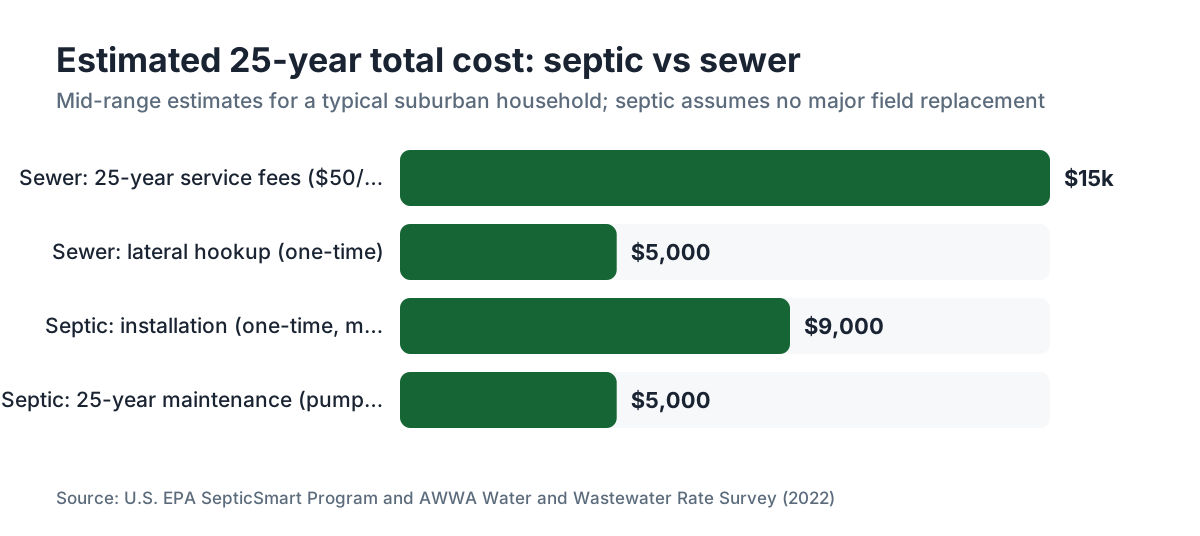
Long-term horizon: Over 25 years, a sewer customer paying $50/month spends $15,000 on service fees alone, before rate increases. A septic owner might spend $4,000 to 6,000 on pumping, inspections, and minor repairs over that same period. A drain field replacement, which is the big-ticket failure, costs $5,000 to 20,000 if it happens, but a well-maintained system regularly lasts 25 to 40 years without one [5].
The honest conclusion: septic is usually cheaper over time for rural homeowners who maintain their system. The math flips if you have a failing drain field or live somewhere with very low sewer rates.
| Cost category | Septic | Sewer |
|---|---|---||
| Initial installation/hookup | $3,000 to 15,000 | $1,500 to 15,000 |
| Annual ongoing cost (average) | $100 to 300 | $360 to 840 |
| 25-year total (mid estimates) | $5,500 to 12,500 | $13,500 to 24,000 |
| Major failure cost | $5,000 to 20,000 (drain field) | $0, $5,000 (lateral repair) |
Does septic or sewer affect your property value?
A functioning, documented septic system usually doesn't hurt your resale value, and the old assumption that sewer always wins no longer holds. The data here is messier than most blog posts admit.
The conventional wisdom used to be that sewer connection always adds value. That's not universally true anymore. A study from the University of Connecticut Extension found that in rural and exurban markets, homes on septic did not consistently sell for less than comparable sewer-connected homes, and in some submarkets sold for slightly more because they were on larger lots (which is often why they have septic in the first place) [6].
In dense suburban and urban markets, sewer connection is often preferred by buyers because it removes the inspection contingency, the maintenance responsibility, and the perceived risk of a failing system. Lenders sometimes require a passing septic inspection before approving mortgages, which adds a step to the transaction.
The practical answer: septic doesn't hurt your value if the system is in good working order and you have documentation to prove it. A clean septic tank inspection report is genuinely valuable at resale. A failing or aging system without records is a negotiating liability.
One thing is unambiguous. Being on septic means your property isn't subject to municipal annexation sewer connection mandates. Some municipalities can require you to abandon a functioning septic system and connect to sewer when they extend mains to your area, which costs real money. Homeowners outside those boundaries don't face that risk.
Which system is better for the environment?
A maintained septic system on suitable soils is genuinely good for the environment. A neglected one is genuinely bad. That single distinction decides almost the whole question.
A properly functioning septic system with a healthy drain field gives you strong biological and filtration treatment. The EPA notes that properly operated and maintained onsite systems can be as effective as centralized systems for treating wastewater, and they return treated water to local groundwater rather than discharging to surface water [1]. That groundwater recharge is a real benefit in areas facing aquifer depletion.
The problem is "properly functioning." The EPA's SepticSmart program was created specifically because failing septic systems are a significant source of nitrate contamination in groundwater and pathogen contamination in surface water [1]. A leaking tank or saturated drain field is an environmental liability, not an asset.
Municipal treatment plants are heavily regulated under the Clean Water Act and must meet strict discharge standards. They also benefit from economies of scale in treatment technology. But centralized systems have their own failure modes: sewer overflows during heavy rain events can release raw sewage directly to waterways. The EPA has estimated tens of thousands of sanitary sewer overflows per year nationally, though infrastructure investment has reduced this in many areas [7].
So the scoreboard isn't septic bad, sewer good. Municipal systems are more reliable in that they're professionally operated. They aren't perfect.
What are the practical day-to-day benefits of having septic?
Septic gives you independence. No utility bill for wastewater. No service disruptions when a sewer main breaks two streets over. No rate hikes voted through by a city council.
You also get full visibility into what's happening with your wastewater. You can see when your tank needs pumping, watch for slow drains, and call a service provider of your choosing. With sewer, if you have a blockage between your house and the main, you're often in a grey zone of responsibility that requires negotiation with the municipality.
The main trade-off is mindfulness. Septic homeowners need to watch what goes down the drain. Wipes, grease, garbage disposal waste, and certain medications can harm the bacterial ecosystem in the tank or clog the drain field. The EPA's SepticSmart guidelines are explicit: "Have your system inspected every 3 years by a professional and your tank pumped every 3 to 5 years" [1]. Sewer customers can largely ignore what they flush, because the treatment plant handles it downstream.
For most households that have been on septic a few years, the routine becomes second nature. You pump the tank on a regular schedule, you don't flush things you shouldn't, and the system runs quietly for decades. The learning curve is real but short.
People who struggle most with septic are those who move from a lifetime of city living and treat their drains like a municipal sewer. That's when problems start.
Are there situations where sewer is clearly the better choice?
Yes, and it's worth being direct about them.
If your lot doesn't perc, sewer wins by default. Perc (percolation) testing determines whether your soil can absorb treated effluent. Clay-heavy soils, high water tables, and very small lots can make septic installation either impossible or so expensive (think engineered mound systems or aerobic treatment units at $15,000 to 25,000) that sewer becomes the obvious choice financially.
If sewer is available and the connection fee is low, and you're in a dense area where lot size makes septic a squeeze, the convenience argument for sewer is strong. You're trading ongoing fees for zero maintenance responsibility.
If you're a landlord with rental properties, sewer removes a big variable. Tenants don't always follow septic-safe practices, and a trashed tank or a failed drain field on a rental is an expensive, disruptive repair. Many landlords with a choice prefer sewer specifically because it removes that liability.
High-volume water use, like a large family or a home with a water softener that backwashes often, can stress a septic system. Municipal sewer handles volume increases without complaint.
And if your municipality is likely to extend sewer mains within 10 to 15 years and will require hookup, spending $10,000 on a new septic installation is a questionable investment. Check your local land use plan or call your planning department before committing.
How does maintenance compare between septic and sewer?
Sewer maintenance is minimal from the homeowner's side. Keep the lateral line clear, don't pour grease down the drain, and that's mostly it. If the lateral backs up, you call a plumber. Everything downstream is the municipality's problem.
Septic maintenance is more involved but not complicated. The EPA recommends four basic practices: inspect regularly, pump regularly, use water efficiently, and protect the drain field [1]. In practice that means:
- Schedule a pump out every 3 to 5 years (more often if you have a garbage disposal or a large household)
- Get a professional inspection every 1 to 3 years depending on your state's requirements
- Avoid putting anything harmful down the drain
- Don't drive over or plant trees near the drain field
A good septic tank cleaning appointment every few years also lets a technician check baffles, look for cracks, and spot early problems before they become expensive failures. On how often to pump a septic tank, the right interval depends on tank size and household size more than on a fixed calendar.
The total time investment for a septic homeowner is maybe 2 to 3 hours per year: scheduling service, being present when the pumper comes, keeping basic records. Operators who track their customers' pump histories and send reminders have a big edge here. Platforms like SepticMind are built to manage that customer communication and service scheduling at scale, which helps both the operator and the homeowner stay on track.
Skip maintenance and the costs compound fast. Septic system repair for a failed component costs far more than regular pumping ever would.
Does being on septic affect what you can do with your property?
Sometimes, and it's worth knowing the constraints before you buy or build.
Adding a bedroom, a guest suite, or an accessory dwelling unit (ADU) requires your septic system to be sized for the extra load. Most systems are designed around a specific number of bedrooms, which works as a proxy for daily wastewater volume. Adding living space without upgrading the system is both a code violation and a fast way to overwhelm your drain field. Your state's onsite wastewater regulations govern what's required, and most demand a permit and a new engineering evaluation for any addition that increases bedroom count [8].
Sewer connections don't carry that constraint. You can add bedrooms, build ADUs, and increase density without worrying about wastewater capacity on your lot, as long as the municipal system can handle it.
Septic systems also require setback distances from property lines, wells, surface water, and foundations. These are set by state code and typically range from 10 to 100 feet depending on the feature [8]. If your lot is small or oddly shaped, those setbacks can constrain where you build, add, or landscape.
For homeowners planning big additions or densification, this is a real constraint worth evaluating early. Getting a septic tank inspection and capacity review before you submit permit applications saves a lot of frustration.
What does a failing septic system cost compared to sewer problems?
Septic failures are scary specifically because the costs are visible and yours alone. There's no shared infrastructure to absorb them.
A basic septic tank repair, like replacing a broken baffle, a cracked lid, or a failed pump in a pressure-dosed system, typically runs $200 to 1,500. Replacing a pump in an advanced system can reach $2,000 to 3,000 installed. Those are manageable.
A drain field failure is the big one. Depending on your lot, soil, and local codes, replacing a leach field costs $5,000 to 20,000, with complex systems (mound systems, drip irrigation systems, aerobic treatment units) on the high end [2]. You can sometimes extend a failing field's life with remediation or resting sections, but you can't pump your way out of a genuinely saturated, biomat-clogged field.
For perspective, the most common sewer-side homeowner expense is lateral line repair or replacement. Trenchless lateral lining typically costs $3,000 to 8,000. Full excavation and replacement runs $5,000 to 15,000 depending on depth, length, and soil conditions. So the catastrophic failure costs are actually comparable, but sewer failures are less common because the homeowner's exposure ends at the property line.
The smart play for septic homeowners is simple: don't skip pumping. Tanks that overflow solids into the drain field are the primary cause of premature field failure. Regular septic tank emptying is insurance against the $10,000 to 20,000 repair. That's not a metaphor. It's literally what the data shows.
How do septic and sewer compare in rural vs suburban vs urban settings?
Location shapes this comparison more than any other single factor.
In rural areas, septic is almost always the practical choice because there's no sewer to connect to. The question isn't septic vs sewer. It's which type of septic system fits your soil and lot. The cost to install a septic system in a rural area with good soils usually lands at the lower end of the range.
In suburban areas, both options often exist. Here the math on long-term costs matters most, and so does the lot size. Suburban homeowners on septic generally have larger lots and fewer neighbors, which means the drain field has more room and less risk of cross-contamination from adjacent systems.
In urban areas and dense inner-ring suburbs, septic is rare and usually a legacy situation. Lots are small, pavement covers much of the ground, and municipal sewer is standard. Urban homeowners who still have septic often face pressure from local health departments to connect when sewer becomes available.
The state regulatory environment matters too. States like North Carolina, Virginia, and Florida have detailed onsite wastewater codes that govern system design, installation, and maintenance [8][9]. Some states require periodic inspections and run programs to identify and remediate failing systems. Others leave it almost entirely to homeowners. Knowing your state's framework tells you how much compliance overhead you're taking on with a septic system.
Should you choose septic if you're buying a home?
If you're buying a home and septic is part of the picture, here's what actually matters.
First, get an inspection from a licensed septic inspector before closing. Not a visual glance, a full inspection that includes locating the tank, checking the baffles, measuring scum and sludge levels, and ideally a load test or inspection of the distribution box [10]. Many home inspectors aren't qualified to do this. Hire a dedicated septic inspector or a licensed pumper who also does inspections.
Second, find out how old the system is and when it was last pumped. A 30-year-old conventional system that's never been pumped is a liability. A 15-year-old system with good records and regular pumping is probably fine.
Third, ask whether the property could connect to municipal sewer and at what cost. If sewer is available at the street, that's a potential future expense (or upgrade, depending on your perspective).
Fourth, know the cost to put in a septic tank for your area. If the existing system is failing, you need to know whether replacement is feasible on that lot and what it would cost. Some lots with poor soils can't support a new conventional system and would require an engineered alternative at much higher cost.
Buying a home on septic isn't risky if you do the homework. It's risky if you skip the inspection and discover a failing field six months after closing.
SepticMind's inspection tracking tools help buyers and homeowners build a documented maintenance history that actually holds up at resale, which is something most paper-record systems do poorly.
What do state and federal regulations say about septic vs sewer?
At the federal level, the EPA doesn't mandate whether you use septic or sewer. That's a state and local decision. The EPA does regulate septic indirectly through the Clean Water Act, because failing septic systems contribute to nonpoint source pollution, and through programs like SepticSmart and the Nonpoint Source Management Program under Section 319 of the Clean Water Act [7].
State regulations vary enormously. Most states require permits for new septic installation and for any significant repair. Many require a passing perc test and soil evaluation before a permit is issued. Some states, including Florida, North Carolina, and Virginia, run detailed onsite wastewater management programs with licensed installers, required inspections, and maintenance contracts for advanced systems [8][9][11].
The EPA SepticSmart program offers this guidance: "Properly treating your wastewater is important for your health, your neighbors' health, and the environment" [1]. That's the federal framing. It's about pollution prevention, not system preference.
Local health departments and planning boards often hold the most immediate authority. They set minimum lot sizes for septic, govern setback requirements, and decide when sewer extension will require abandonment of private systems. If you're making a long-term property decision involving septic, a call to your local environmental health office is worth more than any article you'll read online.
Frequently asked questions
Is septic cheaper than sewer in the long run?
For most rural and suburban homeowners, yes. Sewer customers typically pay $360 to 840 per year in service fees, while septic maintenance averages $100 to 300 per year including amortized pumping costs. Over 25 years, that gap is significant. The math flips if your septic system needs major repair, like a drain field replacement at $5,000 to 20,000, or if your local sewer rates are unusually low.
Does septic affect home resale value?
A functioning, documented septic system generally doesn't reduce home value compared to sewer, especially in rural and suburban markets where septic is the norm. Buyers do expect a current inspection report before closing. A failing or undocumented system is a negotiating liability. In dense urban markets where buyers expect sewer, septic can create hesitation, though it rarely kills a deal if the system is in good shape.
How often does a septic tank need to be pumped?
The EPA recommends pumping every 3 to 5 years for most households. The right interval depends on tank size and the number of people in the home. A 1,000-gallon tank serving four people needs pumping more often than a 1,500-gallon tank serving two. Households with garbage disposals should pump more frequently. Skipping pumping lets solids overflow into the drain field, which is the leading cause of expensive field failures.
Can you connect to sewer if you already have septic?
Yes, if a municipal sewer main runs near your property. You'd abandon the septic system (typically filling or collapsing the tank under permit), install a lateral line to the main, and pay a connection fee. The total cost ranges from $3,000 to $15,000 or more depending on distance and local fees. Some municipalities mandate this when they extend mains to your area, even if your septic system is working fine.
What are the signs that a septic system is failing?
Slow drains throughout the house, sewage odors indoors or outdoors, wet or spongy ground over the drain field, unusually green or lush grass above the field, and sewage backups are all warning signs. Any of these warrants an immediate call to a septic professional. Catching a failure early, before solids have saturated the drain field, can mean the difference between a minor repair and a full system replacement.
Is septic bad for the environment?
A properly maintained septic system on suitable soils is not bad for the environment. It treats wastewater on-site and returns clean water to local groundwater, which supports aquifer recharge. The EPA's SepticSmart program recognizes well-maintained systems as a legitimate treatment method. Failing systems, however, can contaminate groundwater with nitrates and pathogens. The environmental outcome depends almost entirely on maintenance.
Does a septic system affect what you can build on your property?
Yes. Most states size septic systems around bedroom count. Adding a bedroom or an accessory dwelling unit typically requires demonstrating that the existing system can handle the added load or upgrading it. Systems also have setback requirements from property lines, wells, and water bodies. Small or oddly shaped lots can face real constraints. Check with your local environmental health department before planning any addition.
How long does a septic system last compared to sewer infrastructure?
A well-maintained conventional septic system typically lasts 25 to 40 years. The tank itself can last 40 years or more if it's concrete or fiberglass in good soil conditions. The drain field is usually the limiting component. Municipal sewer infrastructure varies widely by city, with older systems using clay or cast iron that can last 50 to 100 years but is prone to root intrusion and corrosion. Neither system is permanent without maintenance.
What happens during a septic inspection when buying a house?
A thorough septic inspection locates the tank and access points, measures scum and sludge accumulation, checks inlet and outlet baffles, inspects distribution boxes, and often includes a hydraulic load test where water is run to observe how the system responds. A qualified inspector will also note the age of the system and any visible issues with the drain field. The result is a written report you can use in negotiations.
Are there any tax benefits or incentives for septic systems?
Some states offer tax credits or low-interest loans for upgrading to advanced septic systems, particularly nitrogen-reducing systems in sensitive watershed areas like the Chesapeake Bay region. The federal tax code doesn't offer a broad deduction for residential septic installation or maintenance, though improvements to a rental property may be depreciable. Check your state environmental agency's website for current incentive programs.
What's the difference between a conventional septic system and an advanced treatment system?
A conventional system uses a septic tank plus a gravity-fed drain field for soil-based treatment. Advanced treatment systems, including aerobic treatment units, drip irrigation systems, and mound systems, are used where soils or site conditions don't support conventional systems. They treat effluent to a higher standard before dispersal but cost more to install ($15,000 to 25,000) and need more maintenance, including periodic inspection of mechanical components.
Can a garbage disposal be used with a septic system?
Technically yes, but with caveats. Garbage disposal waste adds significant organic solids to the tank, which speeds up sludge accumulation. The EPA and most septic professionals recommend that households with garbage disposals pump their tanks more frequently, roughly every 1 to 2 years instead of 3 to 5. Some septic pros advise avoiding garbage disposals entirely on septic. If you do use one, choose a model designed for septic compatibility and sized conservatively.
Who is responsible for the sewer lateral line?
Generally the homeowner owns and is responsible for the lateral line from the house to where it meets the public main, typically at the property line or a cleanout near the street. The municipality is responsible from that point downstream. This boundary varies by city, so check with your local utility. Lateral failures, including root intrusion, cracks, and collapse, are the homeowner's repair expense and can run $3,000 to 15,000 depending on method and depth.
Sources
- U.S. EPA, SepticSmart Program: Roughly 21 million U.S. households use septic or individual onsite systems; EPA recommends inspections every 3 years and pumping every 3 to 5 years; properly maintained systems can be as effective as centralized treatment
- U.S. EPA, Onsite Wastewater Treatment Systems Manual: Conventional septic installation costs and advanced system cost ranges; drain field replacement cost ranges referenced in system failure context
- American Water Works Association, Water and Wastewater Rate Survey: Average residential sewer rates in the U.S. run roughly $30 to 70 per month
- U.S. EPA, How to Care for Your Septic System: Routine septic tank pumping is recommended every 3 to 5 years for most households
- National Environmental Services Center (NESC), West Virginia University: A well-maintained conventional septic system typically lasts 25 to 40 years
- University of Connecticut Extension: In rural and exurban markets, homes on septic did not consistently sell for less than comparable sewer-connected homes
- U.S. EPA, National Pollutant Discharge Elimination System and Section 319 Nonpoint Source Program: EPA regulates sanitary sewer overflows and nonpoint source pollution; tens of thousands of sanitary sewer overflows occur annually
- North Carolina Department of Health and Human Services, Onsite Wastewater Program: State onsite wastewater codes govern bedroom-based sizing, setback distances, and permit requirements for additions
- Florida Department of Health, Onsite Sewage Program: Florida maintains a detailed onsite wastewater management program with licensed installers, required inspections, and maintenance contracts for advanced systems
- U.S. EPA, How to Care for Your Septic System: Full septic inspection should include locating the tank, checking baffles, measuring scum and sludge levels, and evaluating the drain field
- Virginia Department of Health, Onsite Sewage and Water Programs: Virginia has detailed onsite wastewater codes including maintenance requirements and inspection programs
Last updated 2026-07-10