Fixing a drain field: what actually works and what doesn't
By the SepticMind Editorial Team
TL;DR
- A failing drain field can sometimes be restored with pumping, resting, or aeration, but true soil clogging from biomat buildup usually needs partial or full replacement costing $5,000, $20,000+.
- Additives and shock treatments rarely fix a structurally failed field.
- This guide covers every repair option, what each costs, and the honest signs that replacement is your only real path forward.
How do you know your drain field is actually failing?
Confirm the drain field is the problem before you spend a dollar. Many symptoms that look like field failure are actually septic tank issues, and those cost far less to fix.
The classic signs of a failing leach field: sewage odors in the yard above the field, wet or spongy ground over the trenches, slow drains throughout the house (more than one fixture), and sewage backing up into the lowest fixtures. Standing water or lush green grass growing directly over the field lines in a dry season is a strong indicator. If toilets gurgle when you run the washing machine, that points to the distribution system being overwhelmed.
None of those symptoms on their own prove the field is done. A tank that hasn't been pumped in a decade can produce every one of those symptoms by pushing solids into the field. The EPA's SepticSmart program lists "wet, soggy areas, or lush green grass above the drainfield" among the warning signs of system failure, but also notes that regular pumping prevents most premature field problems [1]. Get the tank pumped and inspected first. If symptoms clear up within a few weeks, the field itself may be fine.
A proper diagnosis includes a tank inspection, checking the distribution box for flow balance, and often a soil probe or camera inspection of the laterals. Some inspectors do a dye test. Skip the diagnosis and go straight to field replacement, and you may replace a functioning field while a failing tank keeps causing trouble. See our guide on septic tank inspection for what that process involves.
What causes a drain field to fail?
The failure mode tells you which fixes have any chance of working. Get the cause wrong and you'll pay for a repair that was never going to help.
The most common cause is biomat. Wastewater carries fine organic particles and anaerobic bacteria into the soil surrounding the perforated pipes. Over time, a dark, slimy layer called biomat builds up at the soil interface. Biomat is dense enough to block water infiltration almost completely. This is the failure mode that's genuinely hard to reverse [2].
The second most common cause is compaction. Driving vehicles over the field, parking on it, or letting heavy equipment cross it during construction crushes the soil structure and the gravel bed. Compacted soil can't drain no matter what you add to it.
Hydraulic overloading is another one. If the household uses far more water than the field was designed for, the soil stays saturated and never has time to process effluent. New occupants, a new high-efficiency washer doing daily loads, or a leaking toilet running 200 gallons a day can tip a marginal field over the edge.
Tree roots intrude into laterals and crack pipes. High groundwater in a wet year can saturate a field that worked fine in normal conditions. Pipe collapse from age or cheap corrugated pipe is another possibility, especially in systems over 30 years old.
Then there's bad design from the start. Undersized fields, poor soil that was never properly tested, or fields installed in unsuitable soil types will fail on a schedule regardless of how carefully you maintain them. The original perc test or soil evaluation matters enormously.
Which drain field repairs actually work?
This is where homeowners get burned by bad advice. Here's an honest read on each option, from cheap and hopeful to expensive and certain.
Rest and rotation. If your system has two drain fields or two zones and a diverter valve, resting the failing side for 6 to 12 months sometimes lets biomat partially oxidize and soil permeability recover. This works best when overloading was the primary cause and the biomat isn't too thick. It's cheap (just a valve switch) and worth trying when the option exists. Most older systems have only one field, so this isn't available.
Hydro-jetting the laterals. High-pressure water jetting cleans roots, accumulated solids, and some surface biomat from inside the pipes. It won't fix saturated soil or deep biomat, but it can restore flow in a field where the pipes themselves are clogged. Cost is typically $300 to $600 for a standard field. Think of it as a maintenance procedure, not a cure for a failed field.
Aeration and terralift. Some contractors use a terralift machine, which drives a probe into the ground near the laterals and blasts compressed air to fracture the soil, then injects polystyrene pellets to hold the fissures open. Claims vary wildly. Some fields show meaningful improvement, particularly where compaction is the dominant problem. Independent evaluations are thin. Costs run $1,000 to $3,000. It's not a cure for severe biomat.
Aerobic treatment unit (ATU) upgrade. Replacing a conventional septic tank with an aerobic treatment unit produces much higher-quality effluent that doesn't feed biomat as aggressively. When the field isn't completely destroyed, upgrading the treatment unit can arrest further deterioration and let the field partially recover. Regulators in some states increasingly favor this over full field replacement. Cost for the ATU conversion: $5,000 to $15,000, depending on local requirements [3].
Partial replacement or expansion. If one zone of the field has failed but others are intact, targeted replacement of the damaged section costs less than full replacement. If the lot has room, adding a new field section and alternating between them gives the system more capacity. Cost depends heavily on soil conditions and local permit fees, typically $3,000 to $8,000 for partial work.
Full replacement. When biomat is severe, pipes are collapsed, soil is hopelessly compacted, or the original field was simply undersized, full replacement is the only reliable fix. A conventional gravity-fed replacement field on a standard lot runs $5,000 to $12,000 in most regions. In states with strict regulations, hard soil conditions, or sites needing engineered systems, costs reach $20,000 or more [4].
Additives and shock treatments. Enzyme products, bacterial packets, and chemical treatments sold at hardware stores have no real evidence behind them for restoring a failed field. The EPA SepticSmart program warns that "additives may harm your system" and specifically notes that homeowners should "never" use septic tank additives as a substitute for regular maintenance [1]. I'd skip all of them.
How much does fixing a drain field cost?
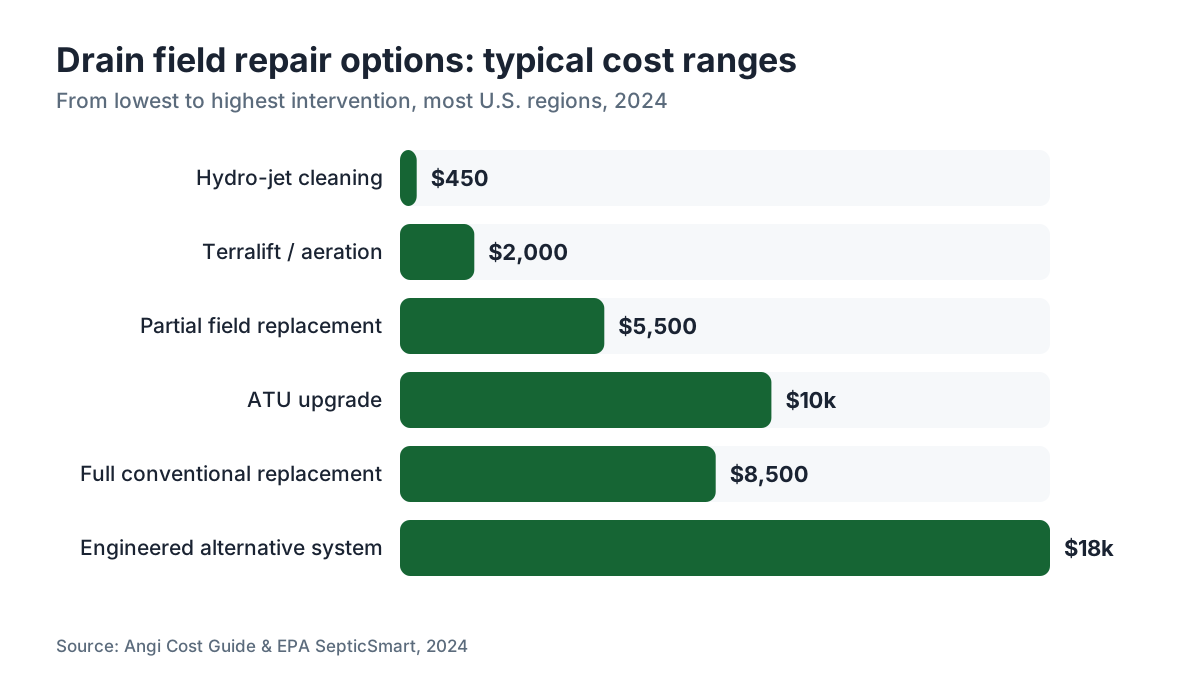
Costs vary more than almost any septic repair. They ride on soil type, lot size, local permit fees, system type, and how much access the site allows.
| Repair type | Typical cost range | Works best when |
|---|---|---|
| Hydro-jet cleaning | $300, $600 | Pipes are clogged with roots/solids |
| Field rest (valve switch) | $0, $200 | Dual-field system, overloading was cause |
| Terralift / aeration | $1,000, $3,000 | Compaction is primary issue |
| ATU upgrade | $5,000, $15,000 | Field is marginal, not destroyed |
| Partial field replacement | $3,000, $8,000 | One zone failed, others intact |
| Full conventional replacement | $5,000, $12,000 | Standard soil, adequate lot space |
| Engineered alternative system | $10,000, $25,000+ | Poor soil, small lot, high water table |
Permit fees add $200 to $1,500 depending on your county. A soil evaluation or perc test, required in most states before any replacement, runs $500 to $1,500 on its own [5]. If you need a professional engineer to stamp the design, add another $500 to $2,000.
Get at least three bids from licensed septic contractors. In many states, only a licensed septic engineer or system installer can design and install a new field. Work done without permits can void your homeowner's insurance coverage for related damage and create serious problems when you sell.
For a sense of what full system installation runs, our cost to install septic system breakdown covers the regional variation in detail.
Can you fix a drain field yourself?
Short answer: almost never legally, and almost never effectively.
In every U.S. state, septic system installation and major repair requires permits and, in most jurisdictions, a licensed contractor. Digging up and rerouting drain field laterals without permits exposes you to fines, forced removal of non-compliant work, and liability if the system contaminates groundwater. The Virginia Department of Health, to cite one example, requires a permit for any repair that involves the drainfield area, and most other state programs have equivalent requirements [6].
Here's what you can do yourself. Identify symptoms. Keep the area unmowed and accessible for inspection. Redirect surface drainage away from the field. Cut unnecessary water loads (fix running toilets, spread laundry across the week). Make sure the tank is pumped on schedule. You can also call your county health department to learn local rules before hiring anyone.
Some homeowners consider renting a terralift machine or jetting the pipes themselves. Jetting equipment is available for rental, but without a camera inspection beforehand you're working blind and can dislodge a pipe joint or push debris deeper into the field. Hire a pro for anything involving the actual pipes.
Regular septic tank pumping is the most powerful thing a homeowner controls directly. Fields consistently protected from solids overload last decades longer than neglected ones.
What are alternative systems when conventional replacement isn't possible?
Not every lot can support a conventional gravel-and-pipe leach field. Tight clay soils, high water tables, small lots, and proximity to wells or water bodies can all make a standard replacement impossible. That's where alternative systems come in.
Mound systems. When the water table is too high or the soil too slow, a mound system builds an elevated sand bed above grade. Effluent is pumped up into the mound, treated as it moves through the sand, then absorbed into native soil below. Mound systems cost $10,000 to $20,000 and need a large footprint, but they're among the most widely accepted alternatives by state regulators [7].
Drip irrigation systems. Treated effluent is distributed through a network of drip emitters installed just below the soil surface, often across a larger area than a conventional field. Drip systems require an ATU upstream to produce the effluent quality the emitters need. They work well on irregular lots and slopes. Cost: $10,000 to $25,000.
Constructed wetlands. Some states allow subsurface flow wetlands as secondary treatment. These are complex to permit and maintain.
Cluster or community systems. In some rural areas, multiple homes can share a permitted community drainfield. If your county has a program, this can be far cheaper than individual replacement.
The right alternative depends on your soil evaluation results, your state's approved system list, and your lot configuration. Your county's onsite wastewater program or a licensed designer will tell you which options are even on the table for your specific site. The National Environmental Services Center at West Virginia University maintains state-by-state onsite wastewater program contacts that can help you find the right regulator [8].
What does the repair process look like step by step?
You've confirmed the field is failing and you're moving toward repair. Here's the realistic sequence.
First, have the septic tank pumped and inspected. If it hasn't been done recently, this is non-negotiable before any field work begins. Solids pushed into a field by an overfull tank will re-clog any repaired field quickly. Our septic tank pump out guide covers what to expect.
Second, have a licensed inspector or system designer evaluate the field. This usually means probing the field, sometimes pulling a lateral end cap to check for ponding, and reviewing the original system design if records exist. Many counties keep system records on file.
Third, get a soil evaluation if replacement or expansion is on the table. In most states, you can't install a new drainfield without a current perc test or morphology-based soil evaluation on the proposed replacement area. Schedule this early. In some counties there's a wait.
Fourth, pull permits. Your contractor should handle this, but verify they have. Never let a contractor start work without permits.
Fifth, the actual repair or installation. A conventional field replacement usually takes one to three days of equipment work. The site will look rough afterward. Topsoil and seeding follow.
Sixth, the inspection. Most jurisdictions require a final inspection before the system is covered. Do not let the contractor backfill before that inspection.
Seventh, protect the new field. No vehicles on it, ever. Set proper setbacks from new plantings. Treat this as your fresh start and maintain the tank on schedule going forward. The EPA recommends pumping every three to five years for average households [1].
Operators managing multiple properties can track inspection schedules and pump intervals with software like SepticMind, built specifically for service companies handling onsite wastewater systems.
How long does a repaired or replaced drain field last?
A properly designed and installed conventional drain field, on suitable soil, maintained correctly, lasts 20 to 30 years. Some last longer. The EPA notes that "properly maintained systems can last for decades" [12].
The main factors that cut that lifespan short: infrequent pumping (the single biggest killer), garbage disposals adding solids load, high water use, driving over the field, planting trees nearby, and any diversion of surface water onto the field.
A replacement field in marginal soil, or a mound system pushed to its hydraulic limits, may need attention in 15 years. An ATU-fed drip system with a proper maintenance contract can perform well for a long time, though the mechanical components (pumps, aerators) need periodic replacement.
Buying a house with a recently repaired drain field? Ask for the permit records, the soil evaluation, and the installer's name. If those documents don't exist, treat the field as an unknown and budget for a professional inspection before closing. Our septic tank inspection guide covers what a pre-purchase inspection should include.
The honest reality is nobody has great aggregate data on drain field lifespans across soil types and climates. The closest source is the EPA's wastewater management program data, which supports the 20-30 year figure for properly functioning systems but acknowledges that failure rates hinge heavily on maintenance behavior.
Does homeowner's insurance cover drain field repair?
Usually no. Standard homeowner's policies exclude damage to septic systems and drain fields unless the damage comes from a covered peril like a sudden, accidental event (a contractor rupturing a line, for example). Gradual failure from biomat buildup, age, or poor maintenance is almost universally excluded as a maintenance issue.
Some insurers offer septic system riders or home warranty products that cover repair or replacement up to a set limit, often $3,000 to $10,000. Read the fine print carefully. Many exclude pre-existing conditions, which is exactly what a failing field is.
If you're financing a home purchase and the septic system fails during escrow, the repair negotiation is between you and the seller. FHA and USDA loan programs have specific requirements: a failing septic system is often a deal-stopper until repaired and certified by a licensed inspector. FHA guidelines require that the system "be in good working order" with no evidence of failure at the time of appraisal [9].
Budget for drain field repair as a capital expense, not an insurance claim. Put the money in a dedicated maintenance fund if you can.
What regulations govern drain field repair?
Septic regulation in the United States happens at the state level, with counties often layering more requirements on top. There is no single federal standard for residential onsite wastewater, though the EPA provides guidance through its SepticSmart program and its voluntary guidelines for onsite wastewater treatment [1].
Every state has an onsite wastewater code that sets minimum setback distances (from wells, property lines, foundations, and surface water), minimum soil depth requirements, allowable system types, and design standards. Many states have adopted or adapted the NSF/ANSI 40 standard for residential aerobic treatment units, which sets effluent quality benchmarks [10].
In practice, this means one thing: call your county health department or environmental health office before you hire anyone. Ask what permits are required for a drain field repair, what the soil evaluation requirements are, which system types are approved for your soil class, and whether the proposed contractor is licensed in your jurisdiction.
Some states (Florida, California, Texas, among others) have particularly detailed and frequently updated onsite wastewater rules. Texas, for example, operates under Title 30 of the Texas Administrative Code, Chapter 285, which governs all on-site sewage facilities and spells out design, installation, and repair standards in detail [11]. California's rules are administered at the county level under the state's environmental health standards.
Work without permits creates problems far beyond a fine. An unpermitted repair can become a material defect disclosure issue when you sell, and some mortgage lenders require county records showing a compliant system.
When should you just replace the whole system instead of repairing the field?
This is the question most homeowners want answered directly, so here it is directly.
Replace the full system (or at minimum the entire drain field) when the field has been saturated for more than a year and remediation attempts haven't worked, when multiple laterals have collapsed, when soil testing shows the native soil has failed as a treatment medium, when the system is more than 30 years old and undersized by current standards, or when your state regulator has issued a failing system notice requiring replacement.
Repair or remediate first when the tank has never or rarely been pumped and the field failure is recent, when only one zone of a multi-zone field is showing problems, when pipes are root-damaged but soil is still functional, or when the system is less than 15 years old and was properly designed for the lot.
The economics sometimes favor replacement even when repair might work. A field remediation that costs $3,000 and buys you 3 more years is worth less than $10,000 on a replacement that lasts 25 years, especially if you plan to stay in the home. Run the numbers.
For broader perspective on full system costs and what replacement involves end to end, the septic system repair and leach field guides cover those angles.
SepticMind's operator platform helps service companies track system age, repair history, and regulatory compliance across a client portfolio, which is useful when advising homeowners on this exact decision.
One more thing. If you're selling the house, a functioning drain field that passes inspection is far more valuable than a repaired one with a cloudy history. Buyers and their lenders will ask, and the documentation has to be clean.
Frequently asked questions
How do I know if my drain field can be saved or needs full replacement?
Start with a professional inspection, not guesswork. Get the tank pumped first. If the field has been failing for less than a year and the cause is overloading or infrequent pumping, recovery is possible. If the soil has been saturated for years, multiple pipes have collapsed, or remediation attempts have failed repeatedly, replacement is likely your only real option. A licensed inspector can probe the field and tell you the state of the soil.
Can septic additives or enzymes fix a failing drain field?
No credible evidence supports using additives to restore a failing drain field. The EPA's SepticSmart program specifically warns that additives can harm your system and should not substitute for proper maintenance. The biomat clogging the soil is not dissolved by enzyme products in field conditions. Save your money. What actually helps is reducing water load, pumping the tank, and getting a professional evaluation.
How long does drain field repair or replacement take?
Hydro-jetting or minor lateral work takes one day. Full field replacement usually takes one to three days of excavation and installation, but the permitting and soil evaluation process beforehand can take two to eight weeks depending on your county. Plan for a month or more from first call to finished installation if you need permits, a soil evaluation, and contractor scheduling in a busy market.
What is the cheapest way to fix a drain field?
If the problem is primarily solids buildup in the tank pushing into the field, pumping the tank (typically $300 to $600) is the cheapest fix and should always come first. Hydro-jetting the laterals runs $300 to $600 and helps when pipes are root-clogged. Beyond that, resting a dual-field system costs almost nothing. The cheap options only work when the soil itself hasn't failed.
Can you put a drain field in the same location after replacement?
Sometimes yes, sometimes no. Many codes require a fresh soil evaluation before any replacement, and if the original location's soil has been degraded, you may be required to use a different area of the lot. Some jurisdictions require that you use a designated "reserve area" identified during the original system design. Check with your county health department before assuming you can replace in place.
How do I reduce water use to help a struggling drain field?
Fix any running toilets immediately (a flapper leak can waste 200 gallons per day). Spread laundry over multiple days rather than doing all loads at once. Install low-flow fixtures. Redirect roof drains and sump pumps away from the drain field. Reduce garbage disposal use or eliminate it. Each of these cuts the hydraulic load on the field and gives saturated soil time to drain and recover between water use events.
Do I need a permit to repair a drain field?
Yes, in virtually every U.S. jurisdiction. Any work that involves digging up, replacing, or extending drain field laterals requires a permit from your county health department or environmental authority. Minor jetting or cleaning inside existing pipes may not require a permit, but installation of any new components does. Work without permits can result in fines, required removal of the work, and problems when you sell the property.
What plants can I put over a drain field?
Grass is best. Shallow-rooted perennials and wildflowers are acceptable. Avoid any woody plants, shrubs, or trees within 10 feet of the field (many codes require larger setbacks from trees). Tree roots actively seek moisture and will infiltrate and crack lateral pipes. Vegetables should not be grown over a drain field due to pathogen risk from surfacing effluent. The area needs to stay mowable and accessible for inspection.
How often should a septic tank be pumped to protect the drain field?
The EPA recommends pumping every three to five years for a typical household. Homes with garbage disposals, more occupants than the system was sized for, or older systems should pump closer to every two to three years. Pumping frequency is the single most controllable factor in drain field longevity. Solids that escape an overfull tank are the leading cause of biomat buildup and premature field failure.
What is a terralift and does it actually work?
A terralift machine drives a metal probe into the ground near drain field laterals and blasts compressed air to fracture compacted soil, then injects polystyrene beads to keep fissures open. It can improve drainage in fields where compaction is the main issue. It is not effective for severe biomat or completely saturated soil. Results vary. Costs run $1,000 to $3,000. It's a reasonable option to try before committing to full replacement if a contractor offers a realistic assessment.
What happens if I ignore a failing drain field?
Continued failure leads to sewage surfacing in your yard, contaminating groundwater and nearby wells. In many states, a known failing system is a code violation with escalating fines and, eventually, an order to stop using the property until it's repaired. A surfacing system can also be a public health hazard reportable by neighbors. Ignoring it makes the soil damage worse and more expensive to remediate. It never gets cheaper by waiting.
Can a drain field be repaired in winter?
Depends on your climate and the extent of the repair. Minor jetting work can often proceed in cold weather. Full replacement that involves excavation is difficult or impossible in frozen ground, and most jurisdictions won't permit work when the ground is frozen because proper compaction and installation require unfrozen soil. In northern states, plan repairs for spring through fall. Emergency situations may require temporary solutions until ground thaws.
Will a new drain field affect my property value?
A properly permitted, recently replaced drain field with documentation generally has a neutral to slightly positive effect on property value compared to a system of unknown or failing condition. Buyers and their lenders (especially FHA and USDA loan programs) require a functioning, compliant septic system. An undocumented or unpermitted repair is a liability. Keep all permits, inspection records, and installer information permanently.
Sources
- EPA SepticSmart Program: EPA warns against septic additives, recommends pumping every 3-5 years, and lists wet soggy areas above the drainfield as warning signs of system failure
- NSF International, NSF/ANSI 40 Standard for Residential Wastewater Treatment Systems: NSF/ANSI 40 sets effluent quality benchmarks for residential aerobic treatment units, which produce higher-quality effluent than conventional septic tanks
- Angi, Septic System Cost Guide: Full drain field replacement typically costs $5,000 to $20,000 or more depending on soil conditions, system type, and regional labor rates
- University of Georgia Extension, Soil Evaluation and Perc Testing for Septic Systems: Soil evaluations and percolation tests required before drainfield replacement typically cost $500 to $1,500
- Virginia Department of Health, Onsite Sewage and Water Programs: Virginia requires a permit for repairs involving the drainfield area, and most other states have equivalent requirements
- National Environmental Services Center, West Virginia University: NESC maintains state-by-state contacts for onsite wastewater programs to help homeowners identify applicable regulations
- HUD/FHA Single Family Housing Policy Handbook 4000.1: FHA guidelines require that septic systems be in good working order with no evidence of failure at the time of appraisal for FHA-insured loans
- NSF International, NSF/ANSI Standard 40 Certification: Many states have adopted NSF/ANSI 40 as the standard for certifying residential aerobic treatment units used as alternatives to conventional septic tanks
- Texas Administrative Code, Title 30, Chapter 285 (On-Site Sewage Facilities): Texas governs all on-site sewage facilities under 30 TAC Chapter 285, which specifies design, installation, and repair standards
- EPA, How Your Septic System Works: EPA states that properly maintained septic systems can last for decades, with longevity depending heavily on soil conditions and maintenance behavior
Last updated 2026-07-09