Hoot aerobic septic system: how it works, costs, and maintenance
By the SepticMind Editorial Team
TL;DR
- A Hoot aerobic septic system is an aerobic treatment unit (ATU) that pumps air through wastewater to grow bacteria that break down solids faster and more completely than a conventional septic tank.
- The treated effluent gets disinfected, usually by a chlorine tablet, before it disperses.
- Installed cost runs $4,000 to $15,000.
- Most states require a maintenance contract, and the system needs inspection every 3 to 6 months.
What is a Hoot aerobic septic system and how does it differ from a conventional septic tank?
A Hoot system is a packaged aerobic treatment unit (ATU) made by Hoot Systems LLC in Shreveport, Louisiana. Like all ATUs, it forces air into the wastewater so aerobic bacteria can do the heavy lifting of treatment. A conventional septic tank relies on anaerobic bacteria and gravity to separate solids from liquids. The liquid that leaves a standard tank still carries heavy biological oxygen demand (BOD) and pathogens, which is why it needs a healthy leach field to finish the treatment job underground.
Hoot ATUs go much further before the effluent ever reaches the soil. ATUs certified to NSF/ANSI Standard 40 must produce effluent with BOD5 at or below 25 mg/L and total suspended solids (TSS) at or below 30 mg/L on a rolling 30-day average. [1] A conventional septic tank typically discharges effluent with BOD5 in the 150 to 200 mg/L range. That gap matters on small lots, high water table sites, and locations where soil conditions would fail a conventional perc test.
The Hoot brand is common across Texas, Louisiana, Oklahoma, and the rest of the Gulf Coast, partly because Texas Commission on Environmental Quality (TCEQ) rules require ATUs in many areas with certain soil or setback constraints. [2] Hoot systems are approved in more than 30 states, and the company publishes a state-by-state approval list.
Here's the honest read. If your county requires an ATU, or your lot can't support a conventional drain field, a Hoot is the right tool for the job. If you have plenty of suitable land and no regulatory requirement, a conventional system costs less to install and far less to run.
How does a Hoot ATU actually treat wastewater? (the four-chamber process)
Hoot ATUs use a multi-chamber design inside a single polyethylene or fiberglass tank. The chamber count varies by model, but the core process runs in four stages.
Trash trap (pretreatment). Raw sewage enters a settling compartment that captures large solids, grease, and floatables. This stage works much like the inlet side of a conventional septic tank. Solids settle to the bottom as sludge. Lighter material floats as scum. Those trapped solids are why the tank still needs periodic septic tank pumping, usually every 2 to 3 years.
Aeration chamber. Liquid overflows into the aeration compartment, where a surface aerator or submersible diffuser pumps air continuously. The oxygen-rich environment lets aerobic bacteria multiply fast, consuming dissolved organics and suspended solids. This is the stage that drops BOD and TSS to NSF 40 levels.
Clarifier (settling) chamber. Treated water passes into a final settling zone where any leftover bacterial floc drops out before the effluent moves to disinfection. In some Hoot models this zone is a separate conical clarifier. In others it's a baffle arrangement inside the main tank.
Disinfection. The Hoot manual specifies a chlorine tablet feeder as the default, typically a floating or in-line feeder using standard chlorine tablets. UV disinfection is available and is increasingly required in some states because of concerns about chlorine residuals in surface water. After disinfection, the effluent gets pumped to a spray irrigation system (surface or subsurface drip) or discharged to a small drain field, depending on site conditions and local rules. [3]
The aeration motor is the only moving part that runs around the clock. Most Hoot models use a 1/4 to 1/2 horsepower aerator drawing roughly 300 to 700 watts, which adds $25 to $60 per month to a typical electric bill depending on local rates and the motor. [7]
One thing homeowners consistently underestimate: the system has an alarm circuit tied to a control panel, usually mounted on the outside of the home or near the tank. That alarm trips for high water (motor failure, pump failure, inlet surge), low water (leak), or loss of chlorine. Know where your panel is and what each light means before you need it.
What does a Hoot aerobic septic system cost to install?
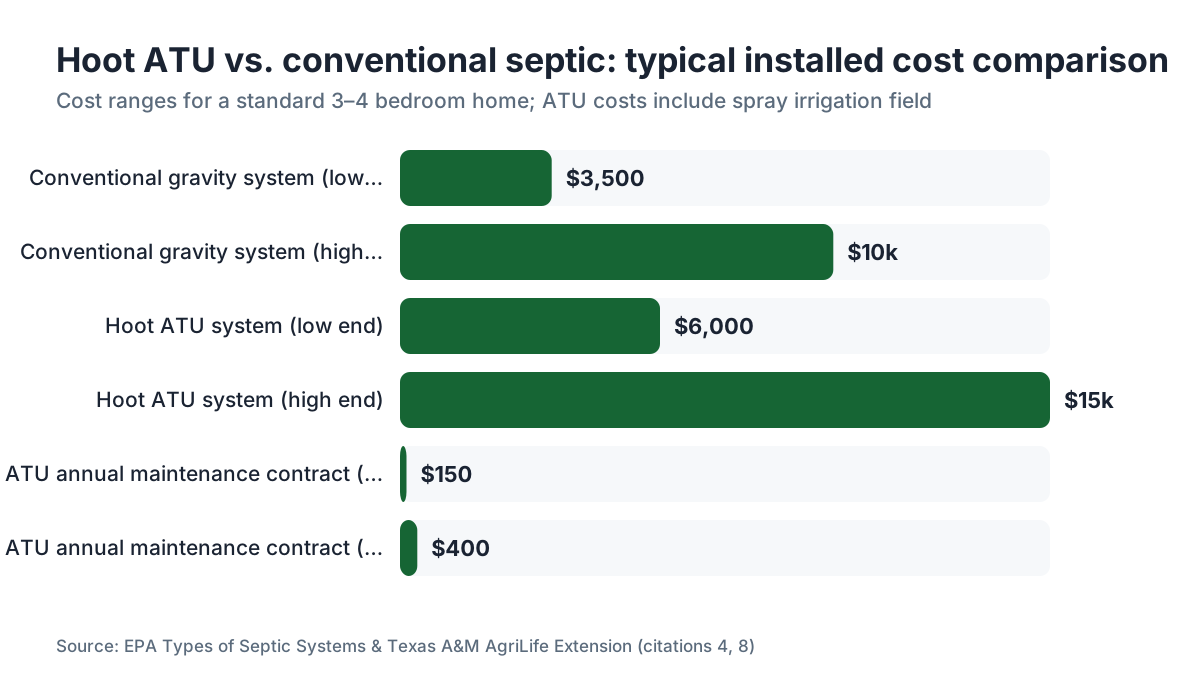
Installed cost for a Hoot ATU runs from about $4,000 on the low end (small lot in a rural Texas county with simple soil and light permitting) to $15,000 or more on complex sites with spray irrigation, mound systems, or difficult access. [4] The most common range for a standard 3 to 4 bedroom home is $6,000 to $10,000 all-in.
The table below shows where the money goes.
| Cost component | Typical range |
|---|---|
| Hoot ATU tank (500 to 1,500 gal, by model) | $2,000 to $4,500 |
| Aeration motor and control panel | Included in most unit prices |
| Chlorine tablet feeder | $50 to $200 |
| Spray irrigation heads or drip field | $1,500 to $4,000 |
| Excavation and installation labor | $1,500 to $4,000 |
| Permits and inspections | $300 to $1,500 |
| Site evaluation / soil testing | $200 to $600 |
Compare that to a conventional septic system, which typically runs $3,500 to $10,000 for a basic gravity setup on a good site. See cost to install septic system for a fuller breakdown. Aerobic systems cost more up front, and they cost more every year to run, so the math only works when a conventional system won't pass permitting or when your lot is too small.
A word on aerobic septic system kits. Some suppliers sell what they call an "aerobic septic system kit" (sometimes branded as a Hoot ATU kit) that bundles the tank, aerator, control panel, and disinfection feeder into one purchase. These target licensed installers, not homeowners doing their own work. Self-installation is illegal in most states without a licensed contractor, because ATUs require engineered site plans and permitted inspections. Supplying your own unit can shave $500 to $1,500 in markup if your installer allows it, but check local licensing rules first.
What are the ongoing maintenance requirements for a Hoot system?
This is where ATUs part ways hardest from conventional tanks, and where new owners get blindsided.
Most states that allow ATUs require the homeowner to carry an active maintenance contract with a licensed service provider. Texas requires maintenance contracts for all ATUs by rule. [2] Louisiana, Oklahoma, and Florida have similar requirements. [10] The provider inspects the system on a fixed schedule, services the aerator, refills the chlorine feeder, checks the control panel, and submits inspection reports to the county or state health department. Let the contract lapse and you can void your operating permit.
Annual maintenance contracts typically run $150 to $400, depending on the state, the number of visits, and whether parts (chlorine tablets, aerator service) are bundled. [8] Some providers charge per visit instead ($75 to $150 each) plus parts.
What happens at each maintenance visit?
- Visual inspection of all compartments through access risers
- Check and record effluent turbidity and clarity
- Test or replace chlorine tablets, and check chlorine residual in the disinfection chamber (target: 1 mg/L free chlorine in most state standards)
- Inspect aerator motor amperage and confirm air flow
- Test alarm floats and control panel indicator lights
- Check spray heads for clogging or misdirection (if spray irrigation is the dispersal method)
- Record sludge depth in the trash trap and recommend a pump-out if sludge nears the overflow baffle
Between visits, the homeowner has three jobs. Keep the chlorine feeder loaded (check it monthly, since tablets dissolve faster in summer). Keep anything that kills aerobic bacteria out of the system (antibacterials, large volumes of bleach, cooking grease, medications). And pay attention to the alarm panel.
The EPA SepticSmart program tells ATU owners to only flush toilet paper and keep household chemicals out of the system, because aerobic treatment bacteria are more sensitive to toxic inputs than the anaerobic process in a conventional tank. [5]
Neglect an aerobic system and the sequence is ugly. The aeration bacteria die, the system reverts to anaerobic conditions, effluent quality crashes, and you end up with a public health violation stacked on top of a repair bill. It's not a fire-and-forget technology.
How often does a Hoot ATU need to be pumped?
The trash trap accumulates solids the same way a conventional septic tank does, so most Hoot manuals and service providers recommend pumping every 2 to 3 years for a typical household. [8] The real interval depends on household size, use patterns, and whether a garbage disposal is running. Disposals add a lot more solids. With one in heavy use, annual pumping may be necessary.
For a deeper look at how pumping schedules work across system types, how often to pump septic tank walks through the math. The EPA recommends a professional inspection every 3 years at minimum and pumping every 3 to 5 years for conventional tanks, but ATU trash traps often warrant more frequent attention because the clarifier depends on the pretreatment chamber staying relatively clear. [5]
The septic tank pump out for a Hoot system costs the same as for a conventional tank: typically $250 to $500 depending on your region and the hauler. The difference is that some maintenance providers include the pump-out inspection but bill the vacuum truck service separately.
One overlooked point. After the pump-out, let the aeration chamber rebuild its bacterial colony before you stress it. Avoid heavy water use (big laundry days, back-to-back showers) for 48 to 72 hours after a full pump-out.
What are common Hoot ATU problems and how are they fixed?
ATUs carry more mechanical parts than a passive septic tank, which means more ways to fail. These are the ones techs see most.
Aerator motor failure. The most common problem, and the most urgent. When the aerator stops, the aeration chamber goes anaerobic within 24 to 48 hours. The alarm float should trip, but alarms get silenced or ignored. Replacement motors for Hoot systems typically cost $200 to $600 for the part, plus $100 to $250 for labor. [12] Most licensed providers stock common Hoot aerator models. Don't run the system without a working aerator. The effluent will not meet your permit requirements.
Clogged spray heads. Spray nozzles clog with iron deposits, hard water scale, and biofilm, especially in well-water areas. Routine maintenance should include cleaning heads, but homeowners often catch the problem first when one zone stops spraying or a head sticks open. Replacement nozzles cost $5 to $20 each. Cleaning with diluted vinegar or a spray-head cleaning kit is often enough.
Chlorine feeder problems. The tablet feeder clogs with residue, especially when generic pool tablets (which sometimes use different binders) go in instead of the manufacturer-recommended type. The Hoot manual specifies the tablet type. Use it. Consistently low chlorine residual at inspection is a permit violation in most states.
High-water alarm with no visible cause. This usually points to an inlet surge from heavy rain (if the system lacks proper inlet baffling, or the trash trap hasn't been pumped), a stuck float, or a failed effluent pump. Don't reset the alarm without finding the cause.
Odor from spray zones. Inadequately treated effluent, chlorine feeder failure, or spray heads hitting structures or pooling in low spots. Adjust the spray pattern and check chlorine levels. If the odor persists, the system may need a pump-out and aerator check.
For anything past a chlorine refill and alarm reset, call your maintenance contractor or a licensed septic system repair technician. Some ATU compartments carry effluent that hasn't been disinfected yet. This is not DIY territory.
Where can I find the Hoot aerobic septic system manual?
Hoot Systems makes installation and operation manuals available through its website (hootsystems.com) and through licensed distributors. If you bought a home with a Hoot already installed, the previous owner should have gotten a manual at installation. If you don't have it, you have two options.
- Contact Hoot Systems directly with the model number stamped on the tank or control panel. They can send the correct manual for your unit.
- Ask your county health department or state environmental agency. In Texas and several other states, the permit documentation includes the manufacturer's manual, and agencies sometimes keep copies.
The manual earns its keep for a few specific reasons. It gives the exact chlorine tablet specification (use the wrong tablet and the feeder clogs), the motor amperage spec (so you can verify the aerator is running right when a tech tests it), and the alarm wiring diagram (handy if the control panel needs replacement).
The manual also lists the NSF 40 certification number for your model, which you may need when you renew your operating permit or sell the home. [11]
For operators who manage fleets of ATUs across many clients, tracking manual versions and model-specific specs across dozens of Hoot installs is a real workflow headache. Software like SepticMind handles it by keeping system records, inspection logs, and service schedules in one place.
What are the regulatory requirements for Hoot ATU systems?
Aerobic treatment units sit under several regulatory layers, and the rules vary a lot by state and sometimes by county.
NSF/ANSI Standard 40 certification. Most states require that any ATU installed for single-family residential use be certified to NSF/ANSI 40 by an accredited testing lab. NSF publishes a searchable database of certified products, and Hoot models that carry the certification are listed there. In its program materials, NSF says products certified to the standard have been "tested and certified to meet strict requirements for effluent quality, structural integrity, and materials safety." [1]
State onsite wastewater rules. In Texas, TCEQ Chapter 285 governs on-site sewage facilities (OSSFs), including ATUs. [2] The chapter requires an annual inspection of all ATUs by a licensed maintenance provider, a two-year maintenance contract at installation, and reporting of inspection results. Louisiana's Department of Health governs ATU approvals through the state's onsite sewage rules. Florida's Department of Health administers onsite sewage treatment and disposal systems under Chapter 64E-6. [10] Other states have their own frameworks that look similar.
Operating permits. An ATU generates a different type of effluent than a conventional tank, and many jurisdictions issue a separate operating permit (on top of the installation permit) that must be renewed periodically, usually every 1 to 2 years. A lapsed operating permit can snarl a home sale.
Spray irrigation setbacks. Where the dispersal method is surface spray, extra setbacks apply to property lines, structures, driveways, wells, and surface water. Texas requires 50-foot setbacks from property lines for spray systems in most cases, though specific distances vary by jurisdiction. [2]
If you're planning a septic tank installation or weighing an ATU for a new build, pull the exact rules for your county before you commit to a dispersal method. Setback requirements sometimes rule out spray irrigation entirely and push you toward more expensive drip or subsurface dispersal.
Is a Hoot aerobic system right for your property? (decision framework)
A Hoot ATU is the right answer in some situations and a more-expensive-than-necessary answer in others.
When an ATU makes sense:
- Lot is too small for a full-size conventional drain field
- Soil fails perc tests (clay, high water table, bedrock)
- Setbacks to wells, surface water, or property lines rule out a conventional field
- County or state rules require ATU-level treatment
- An existing conventional system has failed and the original drain field site is compromised (see septic system repair and leach field for failure options)
When a conventional system is probably better:
- Suitable land is available and the soils pass
- No regulatory mandate for an ATU
- Owner wants minimal mechanical complexity
- The home is a part-time or seasonal property where continuous aeration is wasteful
The honest tradeoff: a Hoot ATU produces much better effluent, which protects groundwater and allows dispersal where a conventional system couldn't go. You pay for that performance with a higher upfront cost, a mandatory annual maintenance contract (typically $150 to $400), electricity for the aerator ($25 to $60 per month), and more frequent service attention.
Over a 20-year horizon, the total cost of ownership for an ATU can run $8,000 to $15,000 more than a comparable conventional system on a site where both would pass. That premium is worth every dollar when the alternative is a failed system or no system at all. It's a waste when you have options.
Buying a home with a Hoot already installed? Get a septic tank inspection before closing. Ask for the last 12 months of maintenance reports, confirm the operating permit is current, and have the aerator amp-draw tested during the inspection.
How do you find a qualified Hoot ATU service provider?
Not every septic company is licensed or equipped to service ATUs. In states with strict ATU rules (Texas, Louisiana, Oklahoma, Florida), look for a provider who holds a specific on-site sewage facility maintenance technician license, which is separate from the general septic installer license. TCEQ runs a public license lookup on its website. [2]
Hoot Systems keeps a distributor and service network, and calling the company directly is a reasonable way to find licensed providers near you. The National Onsite Wastewater Recycling Association (NOWRA) also has a member directory that includes ATU specialists. [6]
When you vet a provider, ask four questions:
- Are you licensed for ATU maintenance in this state?
- Do you carry the Hoot-specific service agreement, or a generic contract?
- How many Hoot units are you servicing right now?
- What's your response time on an alarm call?
A provider who can't answer the third question with a real number is probably not your best pick. ATU service is a specialty. Generalist pumpers who add ATU contracts as a side business sometimes miss model-specific issues.
For operators juggling multiple ATU contracts, the paperwork of tracking permit renewals, inspection report submissions, and maintenance schedules across dozens of properties adds up fast. SepticMind's operator tools are built for this kind of recurring-inspection workflow, keeping site records, service history, and permit deadlines in one place.
Can you convert a conventional septic system to a Hoot ATU?
Yes, and it's done fairly often when a conventional drain field fails and the site can't support a new one. The existing septic tank is sometimes repurposed as the pretreatment (trash trap) stage, with a new Hoot aeration chamber added in series. More often, the old tank gets decommissioned and a new Hoot unit goes in at a location that meets current setback requirements.
Conversion cost is generally similar to a new ATU install: $5,000 to $12,000, depending on how much existing infrastructure can be reused and whether you need a new dispersal field. The septic tank repair versus replacement call hinges on the condition of the existing tank. Tanks over 25 to 30 years old, or with structural cracks, usually aren't worth adapting.
Permitting a conversion requires a new site evaluation, a new design plan from a licensed engineer or designer, and a new permit from the county or state authority. You can't just bolt an aerator onto an old tank and call it an ATU. That arrangement won't meet NSF 40 certification requirements or pass a permit inspection.
If a failing conventional leach field is what's driving the conversion talk, get a full site assessment first. Sometimes the field can be rehabilitated (rested, fractured, or treated) at lower cost. Sometimes the only path forward is an ATU with spray dispersal. A licensed site evaluator can tell you which situation you're in.
Frequently asked questions
How long does a Hoot aerobic septic system last?
With proper maintenance, a Hoot ATU tank (polyethylene or fiberglass) lasts 20 to 30 years or more. The aerator motor is the weak link. Expect to replace it every 5 to 10 years at $200 to $600 for parts. Control panels typically last 10 to 15 years. Overall lifespan matches a conventional system if you keep the maintenance contract current and replace the aerator promptly when it fails.
What chlorine tablets does a Hoot system use?
Hoot manuals specify trichlor (trichloroisocyanuric acid) tablets sized for the feeder, not cal-hypo (calcium hypochlorite) pool tablets. Cal-hypo tablets dissolve too fast, raise pH, and leave a calcium residue that clogs the feeder. Use only the tablet type in your model's manual. Check the feeder monthly, since tablets dissolve faster in summer or during heavy use.
Why is my Hoot aerobic system alarm going off?
The usual causes are a failed aerator motor (check whether you hear it running), high water from a surge or pump failure, a stuck float switch, or loss of power to the panel. Don't silence and ignore it. Check the panel indicator lights against the legend in your manual. If the aerator is silent, call your service provider right away. The system goes anaerobic within 24 to 48 hours without air.
Do I need a maintenance contract for my Hoot ATU by law?
In most states that permit ATUs, yes. Texas requires a maintenance contract under TCEQ Chapter 285. Louisiana, Oklahoma, and Florida have similar mandates. The contract must be with a licensed ATU maintenance technician who submits inspection reports to the relevant state or county agency. Operating without a current contract can bring permit violations and fines. Check your state's onsite wastewater regulations to confirm.
How much does Hoot ATU maintenance cost per year?
Annual maintenance contracts typically run $150 to $400 for 2 to 4 scheduled inspections, depending on the state and whether chlorine tablets and minor parts are included. Add $25 to $60 per month for electricity to run the aerator. Pump-outs, needed every 2 to 3 years, cost another $250 to $500. Budget roughly $500 to $800 per year all-in for a well-maintained Hoot in normal use.
Can I install a Hoot aerobic system myself?
In almost every state, no. ATU installation requires a licensed contractor, a permitted engineered site plan, and inspections by the county or state authority. Hoot sells through licensed distributors, and self-installation without permits violates onsite wastewater codes in Texas, Louisiana, Florida, and most other states. Some homeowners supply their own tank kit to the installer to save on markup, but the installation work itself must be licensed and permitted.
How does a Hoot system handle heavy rain or power outages?
Heavy rain can cause an inlet surge if the system isn't isolated from surface runoff, so check that all lids and risers are sealed. A power outage stops the aerator and any effluent pump. The system keeps accepting wastewater by gravity but won't treat it properly. Most ATUs handle 6 to 12 hours without power before effluent quality slips. For long outages, minimize water use and call your provider. Battery backup or a generator hookup is an option some owners add.
What is the spray irrigation setback for a Hoot ATU?
Setbacks vary by state. In Texas, TCEQ Chapter 285 requires spray dispersal at least 50 feet from property lines and public areas, 150 feet from water wells, and set distances from structures. Louisiana and other states have comparable rules. These setbacks often limit spray irrigation to larger lots. Drip or subsurface dispersal has different (usually shorter) setbacks and may work on tighter sites. Always verify with your county before designing a system.
Does a Hoot aerobic system smell?
A working Hoot ATU with a running aerator and adequate chlorine residual should have minimal odor at the tank or spray field. Odor usually signals a problem: failed aerator (anaerobic conditions), depleted chlorine feeder, clogged spray heads causing ponding, or a full trash trap. A faint chlorine smell near the spray field is normal. Persistent sewage odor is always worth investigating. Call your provider instead of waiting for the next scheduled visit.
How is a Hoot ATU different from a Bio-Microbics or Norweco system?
All three are NSF/ANSI 40-certified ATUs that use aerobic treatment to produce high-quality effluent. The differences are in mechanical design (surface aerator vs. diffused air vs. rotating disc), tank material, regional availability, and service network density. Hoot dominates in Texas and the Gulf Coast. Bio-Microbics (FAST units) and Norweco (Singulair) are more common in the Midwest and Southeast. Effluent quality from any NSF 40-certified unit should be comparable. Service access in your area often decides it.
What happens if I stop using a Hoot ATU for several months (vacation home)?
Long stretches without flow starve the aerobic bacteria. The colony dies, the aeration chamber goes inert, and re-establishing treatment after restart can take 2 to 4 weeks. For seasonal properties, some owners run a low-flow maintenance mode with the aerator on a timer. Others coordinate a pre-season startup check with their provider. Chlorine tablets also need removal before an extended shutdown to prevent a chlorine spike when flow restarts.
Will a Hoot ATU affect my home's resale value or sale process?
ATUs are not a negative for resale where they're common and code-required. Buyers in Texas and Louisiana expect them. What matters is an active operating permit, a current maintenance contract, and up-to-date inspection reports. Lapsed permits are a red flag that can delay or kill a sale. Get a septic inspection before listing, confirm the permit is current, and confirm the maintenance contract transfers to the new owner. Some buyers will request the last 2 years of service reports.
How do I find my Hoot system's model number?
The model number is stamped or molded into the tank exterior, usually near the inlet or on the top lid. It's also printed on the control panel label. If neither is legible, check the original installation permit documents, which list the certified model as part of the approved design. Your county health department or state agency may have a copy if you don't. Hoot Systems customer service can sometimes identify the model from the serial number or installer records.
Sources
- NSF International, NSF/ANSI Standard 40: Residential Wastewater Treatment Systems: NSF/ANSI 40 requires ATU effluent to meet BOD5 ≤25 mg/L and TSS ≤30 mg/L; products certified to NSF/ANSI 40 are tested for effluent quality, structural integrity, and materials safety.
- Texas Commission on Environmental Quality (TCEQ), On-Site Sewage Facilities (Chapter 285): TCEQ Chapter 285 governs on-site sewage facilities including ATUs; requires maintenance contracts, annual inspections by licensed providers, and 50-foot spray setbacks from property lines in most cases.
- EPA, Septic Systems Overview: Aerobic treatment units force air into wastewater to allow aerobic bacteria to treat solids and BOD before effluent is dispersed; disinfection is a required final step in most ATU systems.
- EPA, Types of Septic Systems: ATUs cost more to install than conventional septic tanks due to mechanical components, electrical requirements, and more complex permitting; conventional gravity systems are less expensive where soils permit.
- EPA, SepticSmart Program: EPA recommends inspecting septic systems every 3 years and flushing only toilet paper; ATU owners should keep household chemicals out of the system to protect treatment bacteria.
- National Onsite Wastewater Recycling Association (NOWRA), Member Directory: NOWRA maintains a member directory of licensed onsite wastewater professionals including ATU service specialists.
- University of Florida IFAS Extension, Aerobic Treatment Units for On-Site Sewage Treatment: ATU aerator motors typically draw 300 to 700 watts continuously; electric costs add meaningfully to annual operating expenses for aerobic systems.
- Texas A&M AgriLife Extension, On-Site Sewage Facilities in Texas: Maintenance contracts for ATUs in Texas typically cost $150, $400 per year; pump-outs are recommended every 2 to 3 years depending on household size and garbage disposal use.
- Florida Department of Health, Onsite Sewage Treatment and Disposal Systems (Chapter 64E-6): Florida Chapter 64E-6 regulates ATU approvals, required maintenance contracts, and operating permits for aerobic treatment units in the state.
- NSF International, Certified Wastewater Treatment Systems Listing: NSF publishes a searchable database of products certified to NSF/ANSI 40, including specific Hoot ATU models with their certification numbers.
- University of Missouri Extension, Aerobic Sewage Treatment Systems: Aerator motor replacement is the most common ATU repair; replacement parts cost $200, $600 and the motor is typically the first major component to fail in an ATU.
Last updated 2026-07-09