On-site septic vs public sewer: which is better for your home?
By the SepticMind Editorial Team

TL;DR
- Septic costs more upfront ($3,000 to $15,000 installed) but less every year ($325 to $615).
- Public sewer often connects cheaper but locks in municipal fees of $300 to $1,200 a year, and you control nothing.
- Neither wins for everyone.
- Your lot size, soil, local rates, and appetite for responsibility decide it.
What is the core difference between on-site septic and public sewer?
Public sewer moves your wastewater off your property through underground pipes to a municipal treatment plant. You pay the utility, they handle treatment, and you forget it exists until there's a backup or a rate hike. That's the whole deal.
On-site septic treats your wastewater on your own land. Solids settle in a buried tank, liquid effluent flows to a leach field (also called a drain field), and soil microbes finish the job before the water reaches groundwater. The system belongs to you. So does every problem it ever has.
Both do the same public health work: keeping human waste out of drinking water and surface water. The EPA's SepticSmart program states that "more than 1 in 5 U.S. households rely on an individual septic system or small community cluster system to treat their wastewater," which works out to roughly 60 million Americans on septic [1]. That's not a fringe setup. It's mainstream.
The real tradeoff is control versus convenience. Septic gives you full control and full responsibility. Sewer gives you convenience and a monthly bill you can't argue with.
How much does each system cost upfront and every year?
This is where most people start, and the numbers are messier than most comparison sites let on.
On-site septic installation runs $3,000 to $15,000 for a conventional gravity system. The wide range comes from soil type, tank size, lot conditions, and local permit costs [2]. Alternative systems (mound systems, aerobic treatment units, drip-irrigation setups) for bad soil can push $15,000 to $30,000 or more. Our full breakdown of cost to install a septic system covers what drives each line item.
Sewer connection costs swing hard by municipality. If sewer already runs to your street, the physical connection (a "tap fee" or "connection fee") usually costs $1,000 to $5,000, plus whatever one-time capacity fee your utility charges. That capacity fee ranges from a few hundred dollars to over $10,000 in fast-growing areas [3]. If sewer isn't at your street and the city has to extend it, you might eat a special assessment of $5,000 to $30,000 or more.
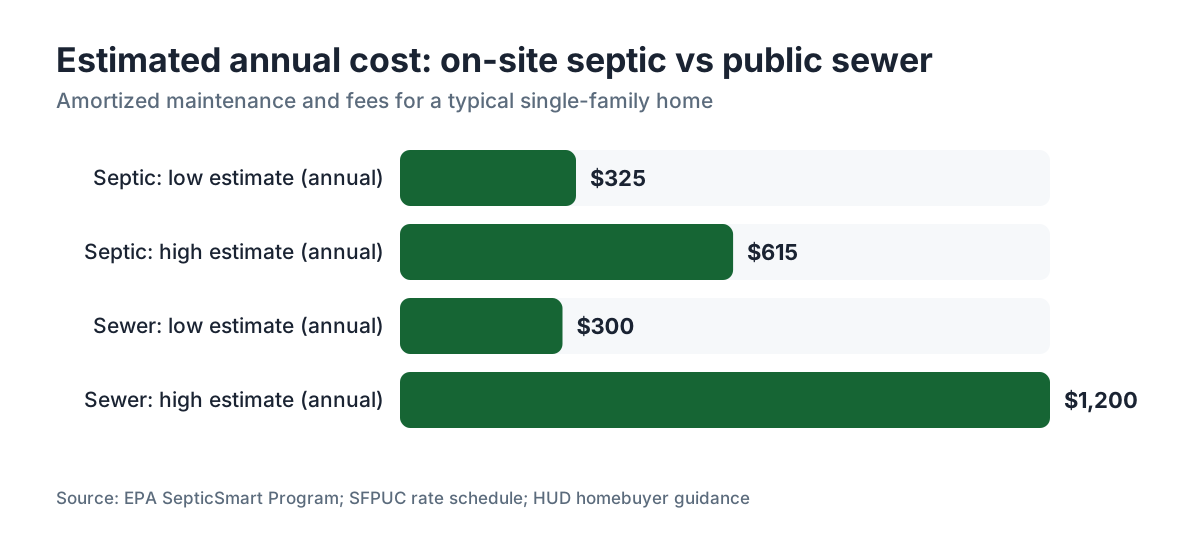
Annual operating costs are where septic usually wins on paper:
| Cost category | On-site septic | Public sewer |
|---|---|---|
| Monthly utility fee | $0 | $25, $100/month |
| Annual pumping | $250, $500 every 3 to 5 years (amortized: ~$75, $165/yr) | $0 |
| Inspection | $100, $250 every 1 to 3 years | $0 |
| Typical repair fund | $150, $300/yr (set aside) | $0 (utility's problem) |
| Estimated annual total | $325, $615/yr | $300, $1,200/yr |
Some cities charge much more. San Francisco's combined sewer service runs over $100 a month for a single-family home [4]. Rural water districts often charge less. "Sewer is cheaper" is not a rule you can trust. It depends entirely on your utility's rate structure.
One honest caveat. Septic's annual cost looks great until something breaks. A drain field replacement can cost $5,000 to $20,000. Sewer doesn't carry that risk, though the sewer lateral from house to street is still yours to fix, usually $3,000 to $10,000.
What are the long-term maintenance requirements for each system?
Septic asks for active participation. The EPA recommends pumping a septic tank every three to five years for an average household [1]. Real frequency depends on tank size and how many people use it. A 1,000-gallon tank serving four people realistically needs pumping closer to every three years. A 1,500-gallon tank for two people can often stretch to five. Our guide on how often to pump a septic tank works through the math.
Beyond pumping, get a septic tank inspection every one to three years so small problems don't turn into drain field damage. That inspection costs $100 to $250. Skip pumping and inspections long enough and you trade a $350 pump-out for a septic system repair bill or a full replacement. The math on deferred maintenance is always bad.
What goes down the drain matters more on septic. Grease, so-called flushable wipes (not flushable on septic), harsh chemical cleaners, and medications all stress the bacteria in your tank. On sewer you get more room to be careless, though cities still ban grease and certain chemicals.
Sewer maintenance, from the homeowner's chair, is close to nothing: don't flush things that shouldn't be flushed, and call a plumber for a slow drain or backup. The treatment plant is the utility's headache. You do own the lateral pipe from your house to the municipal main, and that pipe cracks, takes root intrusion, or collapses over the decades. Those repairs land on you.
Here's the honest tally. Septic wants maybe two to four hours of your attention a year (scheduling, keeping records) plus one service call every three to five years. Sewer wants almost none. If you travel constantly or just refuse to think about wastewater, that gap is real.
Which system is better for property value?
This question deserves more nuance than real estate agents usually give it.
Conventional wisdom says sewer connection adds value. That holds in urban and suburban markets where buyers expect sewer and treat septic as a liability. A buyer who's never lived with septic may ask for a price cut or walk. Some loans, FHA and VA in particular, require a passing septic inspection before closing, which can snag a sale if the system is old [5].
In rural markets, septic is normal and expected. Those buyers get it. A well-maintained septic system on rural land is not a discount driver.
What actually hurts value is a failing or aging system, not septic itself. A field that's ten years from replacement shows up on the buyer's inspection and gets negotiated out of the price. A system pumped last year with a clean report? Barely an issue.
Septic can even be the stronger position. On properties where sewer connection would trigger a large assessment, or where the connection fee runs past what the market credits back in value, a working on-site system is the better financial spot.
Selling in the next five years? Get a septic tank inspection now. Know exactly what you have. Don't let a buyer's inspector surprise you with something you should have caught first.
What are the environmental differences between septic and sewer?
Both systems can run clean or dirty. The condition decides it, not the type.
A working septic system returns treated water to the local water table, which supports groundwater recharge in some regions. The EPA's SepticSmart program treats well-maintained septic systems as real environmental infrastructure, not a problem to be erased [1].
A failing septic system is a direct hazard. Untreated sewage reaching groundwater or surfacing in the yard contaminates drinking water and dumps nitrogen and pathogens into nearby water bodies. The EPA links failing septic systems to nutrient pollution in coastal and inland watersheds [6].
Public sewer concentrates treatment at one plant, which should produce cleaner effluent under regulatory watch. Municipal plants fall under the Clean Water Act and must meet discharge limits written into their NPDES permits [7]. That's a layer of accountability individual septic systems never get.
Centralized sewer has its own ugly failure mode: combined sewer overflows. Heavy rain overwhelms the system and raw sewage discharges straight to waterways. The EPA reports about 860 U.S. cities with combined sewer systems, discharging roughly 850 billion gallons of untreated wastewater a year during wet-weather events [8].
So the honest read: a well-maintained septic system is environmentally sound, and a failing one is a mess. Modern municipal sewer is generally cleaner at steady state, but combined systems carry a serious wet-weather liability. Neither is a clean win under all conditions.
Can you switch from septic to public sewer, and how much does it cost?
Yes. If sewer runs to your street, you can usually connect. The process looks like this:
- A permit from your local building or health department
- A licensed plumber to install the lateral from your house to the street tap
- A connection (tap) fee paid to the municipality
- Abandonment of your old septic tank (usually pumping, then crushing or filling with sand or concrete, plus a permit)
A straightforward conversion typically runs $5,000 to $15,000 depending on distance to the main, depth of the existing lateral, and local labor [3]. Some municipalities force the issue: they require you to connect within a set window (often 1 to 3 years) after sewer becomes available on your street, even if your septic works fine [9]. Check your local ordinance.
Whether the switch pays off comes down to connection cost versus the life left in your septic. A ten-year-old system in good shape? Converting now may cost more than running the septic another fifteen years and reassessing then. A failing system facing a $12,000 drain field replacement, with sewer connection at $8,000? Now the math flips.
People miss one thing. After you connect to sewer, the old tank still sits in your ground. An abandoned tank that wasn't properly filled can collapse and open a sinkhole. Proper abandonment isn't optional. It's a safety issue and usually a code requirement.
What are the regulations and permits for on-site septic systems?
Septic sits under state and local control, not federal. The EPA sets research and guidance frameworks like SepticSmart but doesn't permit individual systems [1]. Every state writes its own onsite wastewater rules, and counties stack their own requirements on top.
Most state rules cover the same ground: minimum lot size for septic, required soil testing (percolation tests or soil profile evaluations), setbacks from wells, property lines, and water bodies, tank sizing tied to bedroom count or daily flow, and installer licensing.
Examples make it concrete. North Carolina requires a soil and site evaluation before any permit issues, and many systems must be designed by a licensed soil scientist or professional engineer [10]. California's rules vary by county but generally follow the California Plumbing Code and local environmental health department. Texas runs state minimum standards under 30 TAC Chapter 285, enforced at the county level [11].
Installing new? The septic tank installation process starts at your county health department or environmental health office. They tell you what site evaluation the permit requires. Don't buy land assuming you can put a septic system on it before the site evaluation. Soil that won't perc can't support a conventional system, and the alternatives get expensive fast.
Operators running service jobs across multiple counties know this pain. Permit requirements and inspection records vary by jurisdiction, and tracking that across accounts gets complicated. Tools like SepticMind help service companies hold that compliance layer together across their customer base.
What happens when a septic system fails, and how does that compare to sewer problems?
Septic failure has a clear signature: slow drains in the house, sewage odor in the yard, wet or spongy ground over the drain field, and sometimes sewage surfacing on top. None of that stays subtle once it starts.
Common causes line up predictably. Neglected pumping lets solids overflow into the field and clog it. Tree roots invade. Too much water use hydraulically overloads the system. And eventually, age. Conventional drain fields carry a design life of 20 to 30 years with proper maintenance, though many run longer [12]. When the field goes, options range from rejuvenation treatments to full replacement. Our guides on septic tank repair and septic system repair cover the full spectrum.
Sewer problems at the homeowner level almost always stop at the lateral pipe between house and street. Roots, settling, and corrosion block or break it. A sewer backup is miserable and can ruin a finished basement, but it's typically a $3,000 to $10,000 repair, not a $20,000 field replacement. The municipal main is the utility's problem.
The risk profiles differ. Septic failure risk is all yours, but it's also largely preventable with maintenance. Sewer backup risk is lower on average, but a basement backup can trash flooring, drywall, and belongings, and standard homeowner's insurance often won't cover it without a sewer backup rider.
Strip it to risk management: sewer is lower-variance. Septic is manageable risk if you stay on top of it, and high-consequence risk if you ignore it.
Is septic or sewer better for rural vs. urban properties?
This nearly answers itself, but let's be specific.
In rural areas, public sewer usually doesn't exist. You have no choice. The real question is which on-site system your soil and lot can support, and whether the cost to put in a septic tank makes sense against the land's other value.
In suburban areas, both options may exist. The answer turns on which side of a sewer service boundary you sit on, what the local tap fee structure looks like, and neighborhood norms. Suburban properties on septic often face pressure to connect when sewer reaches their street.
In urban areas, on-site septic is rare to nonexistent. Lots don't have room for the required setbacks and drain field square footage, and sewer already runs everywhere. If you're buying urban property with a septic system (it happens with older homes on big lots), scrutinize it hard.
The general rule: septic is normal and fully functional for rural and low-density suburban property. It breaks down at high density because there isn't enough land to safely treat the wastewater volume, which is exactly why cities built centralized sewer in the first place.
Should you choose a home with septic over one with sewer?
Buying a home and have the choice? Here's how to think it through.
Start with the septic system's condition. A home inspection tells you about the structure, not the septic system's health. Get a dedicated septic inspection, with pumping if it hasn't happened recently. Nail down the tank size, age, and material (concrete tanks generally outlast older steel ones), and when the drain field was last evaluated. Our septic tank pump out guide walks through what that service looks like.
Next, find out what a sewer connection would cost if you wanted it later. Call the municipality. Sometimes it's $2,000. Sometimes it's $20,000. That number changes the whole calculation.
Then be honest about your maintenance tolerance. If you'll actually schedule septic tank pumping every three years and septic tank cleaning as needed, septic is fine and will likely cost you less over a decade than sewer fees. If you know you're the type to defer maintenance forever, the lower-variance option (sewer) is probably safer for your wallet.
Last, factor in the price gap. Rural homes on septic often list below comparable homes on sewer partly because buyers discount for septic. If that discount beats your realistic maintenance cost over your ownership window, septic is the better deal.
SepticMind's homeowner tools set maintenance reminders and track service history so the system never sneaks up on you.
There's no universal answer. But an informed buyer who maintains the system is almost never worse off on septic than paying sewer fees for the rest of the mortgage.
What do septic service operators need to know about the septic vs. sewer landscape?
For anyone running pumping and inspection work, the on-site versus sewer question shapes your entire market.
Watch where sewer is expanding into previously rural or suburban ground. Those are the places your customer base shrinks. Track local municipal sewer expansion plans. In some jurisdictions, ordinances force homeowners to connect within a set window after sewer reaches their street. That's your customer converting away from you.
The flip side holds too. Areas that can't economically justify sewer extension (low-density rural, difficult terrain) stay durable markets for on-site service. Those customers need you for the life of their property.
The biggest opportunity is the customer who doesn't know they need service yet. Most septic failures follow years of skipped pumping and inspections. The homeowners who end up with $15,000 drain field replacements are overwhelmingly the ones who never scheduled a septic tank emptying in the previous decade. Build recurring maintenance reminders and scheduling into your operation. It protects those customers and gives you predictable revenue.
Frequently asked questions
Is septic or sewer cheaper in the long run?
It depends on local sewer rates and your maintenance habits. Septic runs roughly $325 to $615 a year in amortized maintenance. Public sewer fees average $300 to $1,200 a year depending on the municipality. Septic is often cheaper annually, but a drain field failure at $5,000 to $20,000 can erase years of savings. Consistent pumping every 3 to 5 years is what keeps septic economical.
How long does a septic system last compared to sewer connection?
A conventional concrete septic tank typically lasts 40 years or more. The drain field carries a design life of 20 to 30 years with proper maintenance, often longer. Steel tanks corrode in 20 to 30 years. A sewer lateral (the pipe you own from house to street) lasts 50 to 100 years in PVC or cast iron, though clay tile pipes in older homes can fail in 40 to 60 years.
Can a septic system handle the same water volume as sewer?
Yes, if it's sized correctly. Septic tanks are designed around expected daily flow, typically 100 to 150 gallons per bedroom per day. A properly sized system handles normal household use fine. Trouble comes from excessive hydraulic loading: multiple laundry loads daily, a toilet running continuously, or water softener backwash overloading the tank. Sewer has no practical household volume limit.
Do I need a permit to install or replace a septic system?
Yes, in every U.S. state. Septic permits come through your county health department or local environmental health office. You'll typically need a site evaluation or soil test before the permit issues, a licensed installer, and a final inspection after installation. Skipping permits risks fines, forced removal, and problems when you sell. Requirements vary a lot by state and county.
What are the signs that a septic system is failing?
The common signs: slow drains across the house (more than one fixture), sewage odor inside or outside, wet or unusually green grass over the drain field, and sewage surfacing in the yard. Gurgling in toilets or drains can point to a full tank or field backup. Any of these warrants an immediate inspection and likely pump-out before it gets worse.
Does FHA or VA financing require a septic inspection?
FHA and VA loans both require the septic system to be in good working condition under their property standards. FHA guidelines require an inspection when there's evidence of a problem or the appraiser flags it. VA guidelines are similar. Many lenders order a passing septic inspection proactively on rural or suburban properties even without visible problems, especially on older systems.
Can I connect to public sewer if I currently have septic?
Yes, if sewer is available at your street. The process needs a permit, a licensed plumber to install the lateral, a tap or connection fee to the municipality (typically $1,000 to $5,000 plus any capacity charges), and proper abandonment of the old tank, usually by pumping and filling with sand or concrete. Some municipalities require connection within 1 to 3 years after sewer reaches your street.
What happens to a septic system during heavy rain?
Heavy rain can saturate the soil around a drain field and temporarily cut its ability to absorb effluent, causing backups or slow drains during and after storms. That's usually temporary. Chronic flooding of the drain field area points to a site drainage problem or a failing field. You can help by directing roof gutters and surface runoff away from the drain field.
Are there septic systems that work on small or difficult lots?
Yes. For lots where conventional gravity systems fail because of poor soil, high water tables, or limited space, alternatives include mound systems (drain field raised above natural grade), aerobic treatment units, drip irrigation systems, and constructed wetlands. These cost more, typically $10,000 to $30,000 or more, and often need extra maintenance including regular service contracts.
Does having a septic system affect what I can put down the drain?
Yes, meaningfully. Septic relies on tank bacteria to break down solids. Antibacterial soaps, large amounts of bleach, chemical drain cleaners, medications, grease, and so-called flushable wipes all harm that bacteria or clog the system. On sewer you get more flexibility, though cities still ban grease and hazardous chemicals. The difference is real but manageable with normal habits.
How does septic tank size affect performance and pumping frequency?
Tank size is the main driver of pumping frequency. A 1,000-gallon tank serving four people typically needs pumping every 2 to 3 years. A 1,500-gallon tank for the same household can stretch to 4 to 5 years. The EPA recommends pumping every 3 to 5 years as a general guideline. An undersized tank fills faster, and solids can overflow into the drain field if pumping gets neglected.
Is well water plus septic a safe combination?
Yes, as long as setback distances hold. Most state codes require a minimum horizontal separation of 50 to 100 feet between a septic system and a drinking water well, with some states requiring more depending on soil type and groundwater depth. A properly installed, maintained system doesn't contaminate a properly located well. Problems come from failed systems, bad siting, or wells too shallow for local conditions.
What should I ask about when buying a home with a septic system?
Ask for the as-built drawing (shows tank and field location), the date of last pumping and any service records, the tank size and material, the system's age, any prior repairs or inspections, and whether permits were pulled for modifications. Then get an independent inspection and pump-out before closing. Don't take the seller's word that it's fine without documentation.
Sources
- EPA SepticSmart Program: More than 1 in 5 U.S. households rely on an individual septic system or small community cluster system; EPA recommends pumping every 3 to 5 years
- EPA, Onsite Wastewater Treatment Systems Manual: Conventional septic system installation cost range and factors including soil type, tank size, and permitting
- U.S. Department of Housing and Urban Development: Sewer connection (tap) fee and lateral installation cost ranges for homeowners converting from septic
- San Francisco Public Utilities Commission, Sewer Service Charge Rate Schedule: Combined sewer service rates exceeding $100/month for single-family residential customers in San Francisco
- FHA Single Family Housing Policy Handbook 4000.1, HUD: FHA loan requirements for septic system condition and inspection at property sale
- EPA, Nonpoint Source Pollution: Failing septic systems contribute nutrient pollution and pathogens to coastal and inland water bodies
- EPA, National Pollutant Discharge Elimination System (NPDES): Municipal wastewater treatment plants regulated under Clean Water Act NPDES permits with required discharge limits
- EPA, Combined Sewer Overflows (CSOs): Approximately 860 U.S. cities have combined sewer systems; roughly 850 billion gallons of untreated wastewater discharged annually during wet weather
- U.S. Department of Housing and Urban Development: Municipal mandatory sewer connection ordinances typically require connection within 1 to 3 years after sewer becomes available
- North Carolina Department of Health and Human Services, On-Site Water Protection: North Carolina requires a soil and site evaluation before a septic permit issues; systems often require design by a licensed soil scientist or professional engineer
- Texas Commission on Environmental Quality, 30 TAC Chapter 285, On-Site Sewage Facilities: Texas state minimum standards for on-site sewage facilities under 30 TAC Chapter 285 with county-level enforcement
- EPA, How to Care for Your Septic System: Conventional drain field design life of 20 to 30 years with proper maintenance; septic tank sizing based on household daily flow
Last updated 2026-07-10